
Poetry of Birds: Winged Jewels Chatter With Art of the Middle East
L’ÉCOLE Middle East’s Poetry of Birds exhibition unfolds like a poem. Guided by a hoopoe rendered in golden calligraphy, visitors set out on a journey in search of art, beauty, and meaning.
Sense of Wander: ★★★★★
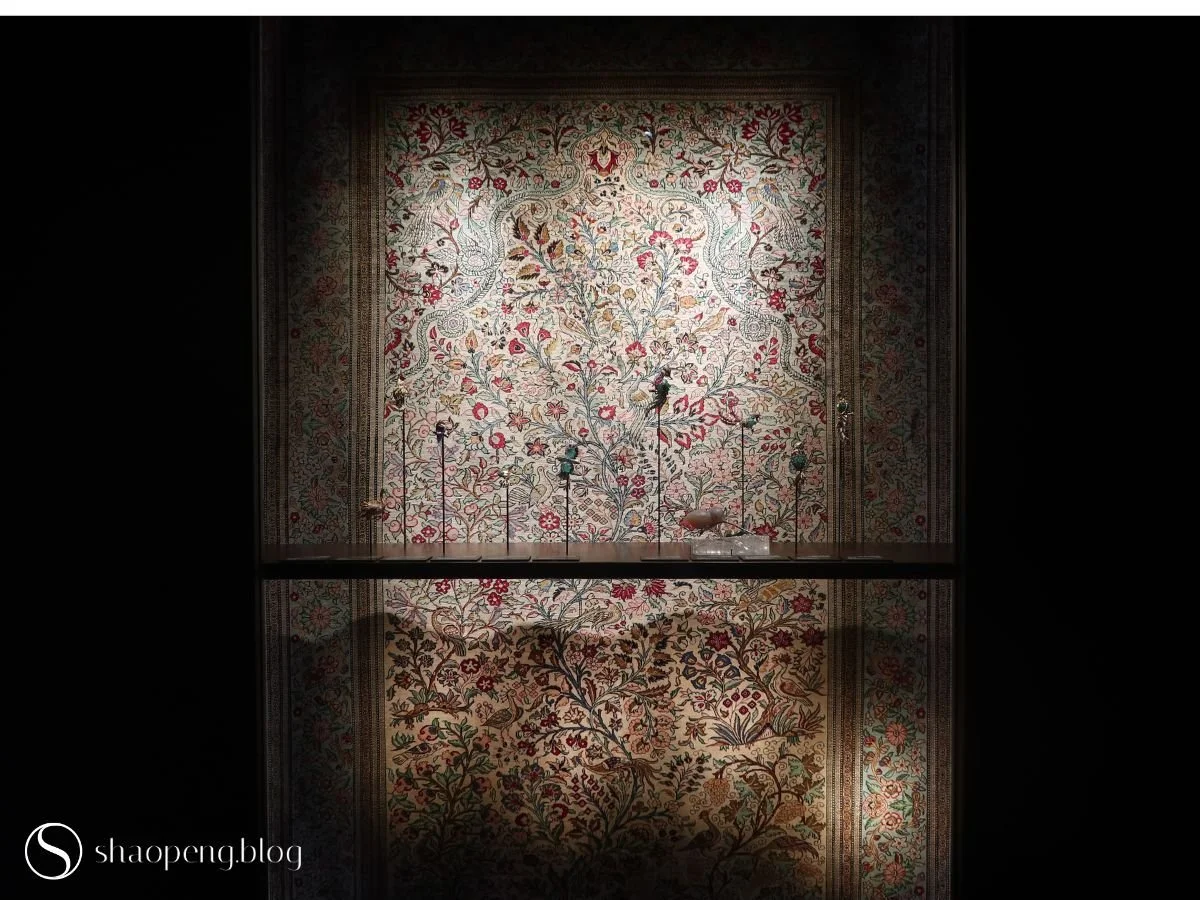
20th-century bird brooches from French jewellery houses poised against an Iranian silk rug.
DUBAI, UAE — Visiting the Birds in Paradise exhibition at L’ÉCOLE School of Jewellery Arts in Paris back in 2019 felt like stepping into an aviary. Poised on branches or caught in mid-flight, these winged creatures rendered in precious metals and gemstones bridged earth and sky, as they have in human imagination for centuries. For generations, birds have been a boundless source of inspiration, allowing creators and designers to let their imagination soar.
During Dubai Design Week, L’ÉCOLE Middle East launched Poetry of Birds, an exhibition also devoted to birds. I walk in expecting the familiar, yet it catches me off guard the moment I enter.
Before me, a canvas depicts birds in flight and at rest. On a closer look, these golden creatures are actually composed of verses from a poem by Palestinian poet Mahmoud Darwish. Centred around the hoopoe, a bird long associated with spirituality in the Middle East, one line reads:
“O hoopoe of mysteries, take us to our endless tomorrow!”
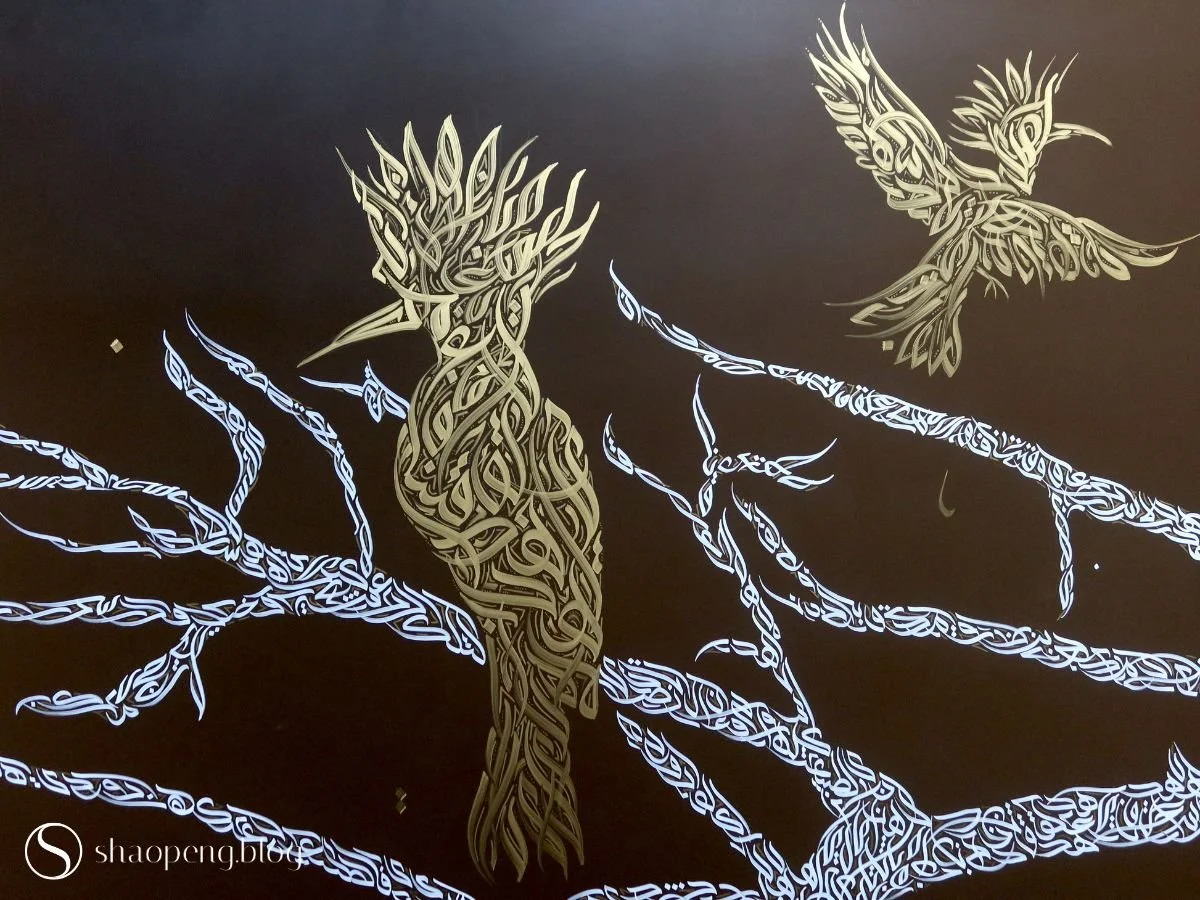
Diaa Allam’s calligraphy piece at the exhibition entrance enchants visitors with the lyrical flow of its strokes and the poetry of Mahmoud Darwish.
The hoopoe, or hudhud in Arabic, stands out for its patterned and coloured plumage, as well as its cultural significance. In the Quran, it serves as a messenger sent by Prophet Suleiman to the kingdom of Sheba. In literature, most notably The Conference of the Birds by Persian poet Farid al-Din Attar (1145–1221), the hoopoe guides a thousand birds on a spiritual quest to find the Simorgh, teaching them to overcome trials with wisdom. Inspired by this Sufi parable, Poetry of Birds invites visitors on a soulful journey — not to find the Simorgh, but to discover beauty and spiritual fulfillment through the art of past and present.
The exhibition thoughtfully bridges European jewellery with Middle Eastern art through collaborations with museums and contemporary artists. Among its more than 150 exhibits are artefacts from the Sharjah Museum of Islamic Civilisation (SMIC).
The first object to greet visitors is a palm-sized pottery figurine from Herat, Afghanistan, possibly depicting a hoopoe. This 11th-century piece reflects the region’s fascination with birds more than a millennium ago. Besides sculpture, the gallery also includes historical objects such as ceramic tiles, vessels, rugs, and metalwork.
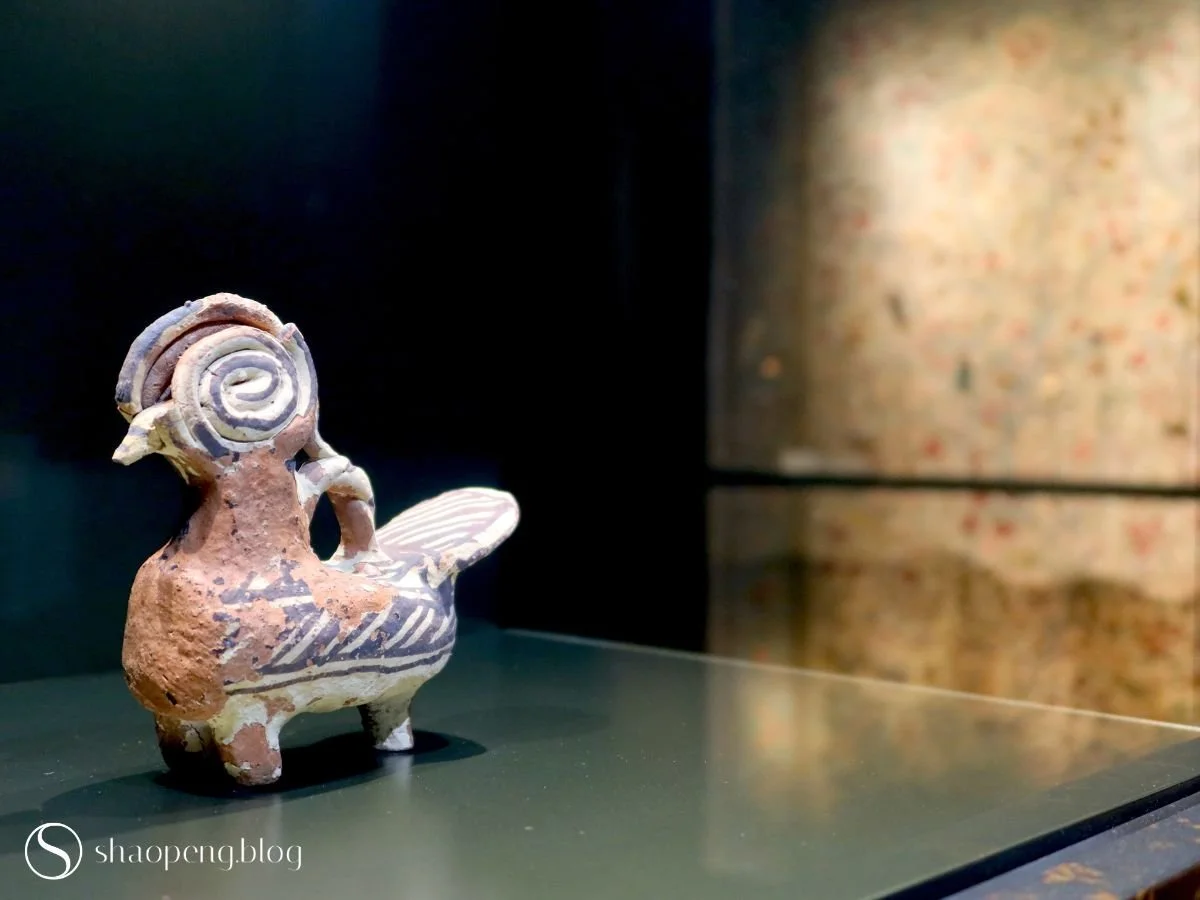
A 11th-century pottery figurine from Herat, Afghanistan.
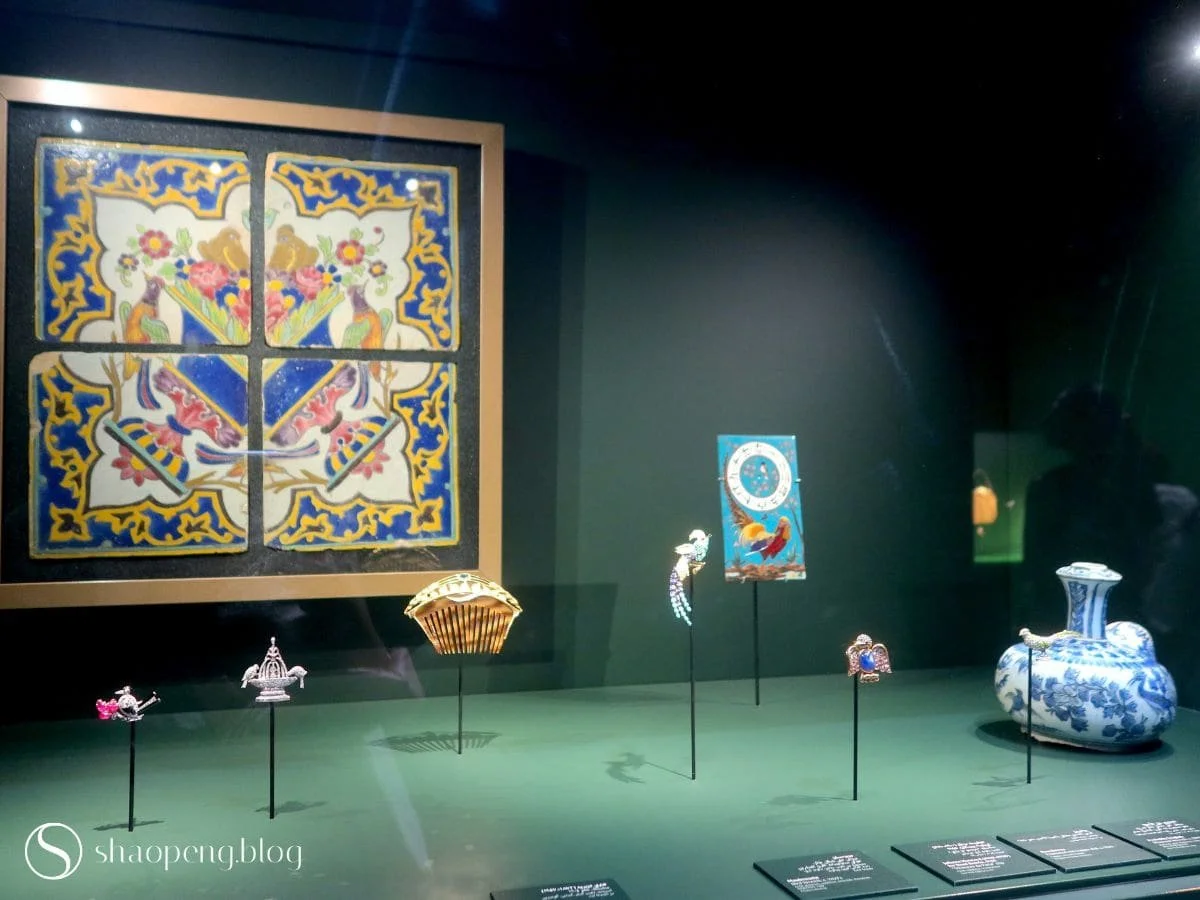
Jewelled birds from the West sit among artefacts from the Sharjah Museum of Islamic Civilisation, opening a dialogue on the two regions’ shared fascination with feathered creatures.
European jewellery inspired by Middle Eastern art is also on display. A suite by French jeweller Lucien Falize (1839-1897), including a brooch, belt buckle, and bracelet, draws directly from Persian miniatures. Using intricate cloisonné enamel, Falize renders birds with meticulous precision; the interplay of translucent and opaque colours heightens their lifelike presence. Like his contemporaries Louis Cartier and Henri Vever, Falize collected Islamic art, fusing inspiration with art of jewellery.
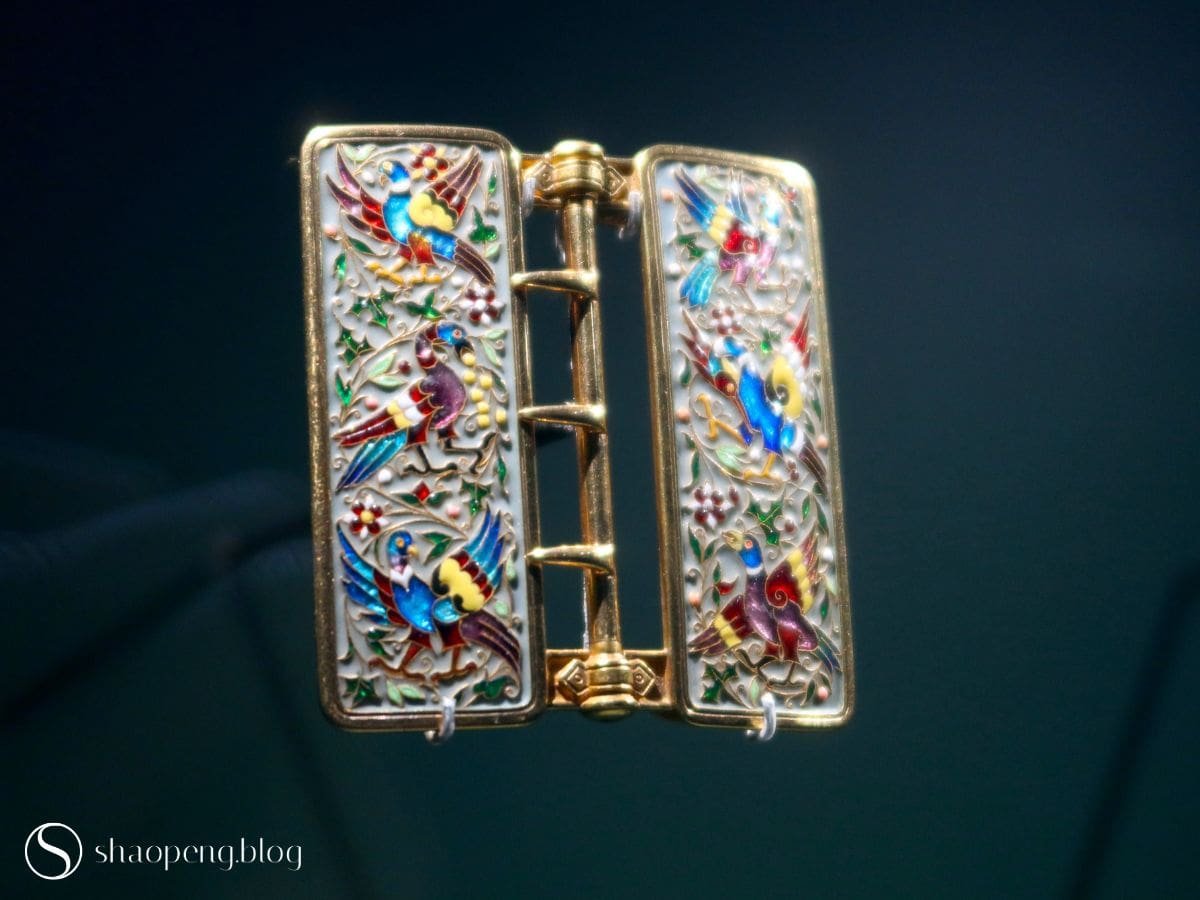
A belt buckle by Falize is enamelled with birds inspired by Persian miniatures.
Birds hold a special place in Arab culture. Falconry, historically associated with royalty, symbolises power, protection, and loyalty. In Conference of the Birds, the falcon reflects both nobility and spiritual limitation, reminding readers that true progress requires humility.
In the exhibition, a Buccellati falcon — rendered in hair-thin silver wire to mimic feathers — perches on amazonite. Nearby, a Cartier falcon from the 1970s stands atop hand-carved verdite, its body a rough citrine block, with silver shaping head, wings, and feet. The feathered hood covering its eyes evokes blind obedience.
While falcons often signify male prestige, they also appear in women’s adornments, as highlighted in Anne-Lise Tropato’s essay Delight of Birds, featured in the exhibition catalogue.
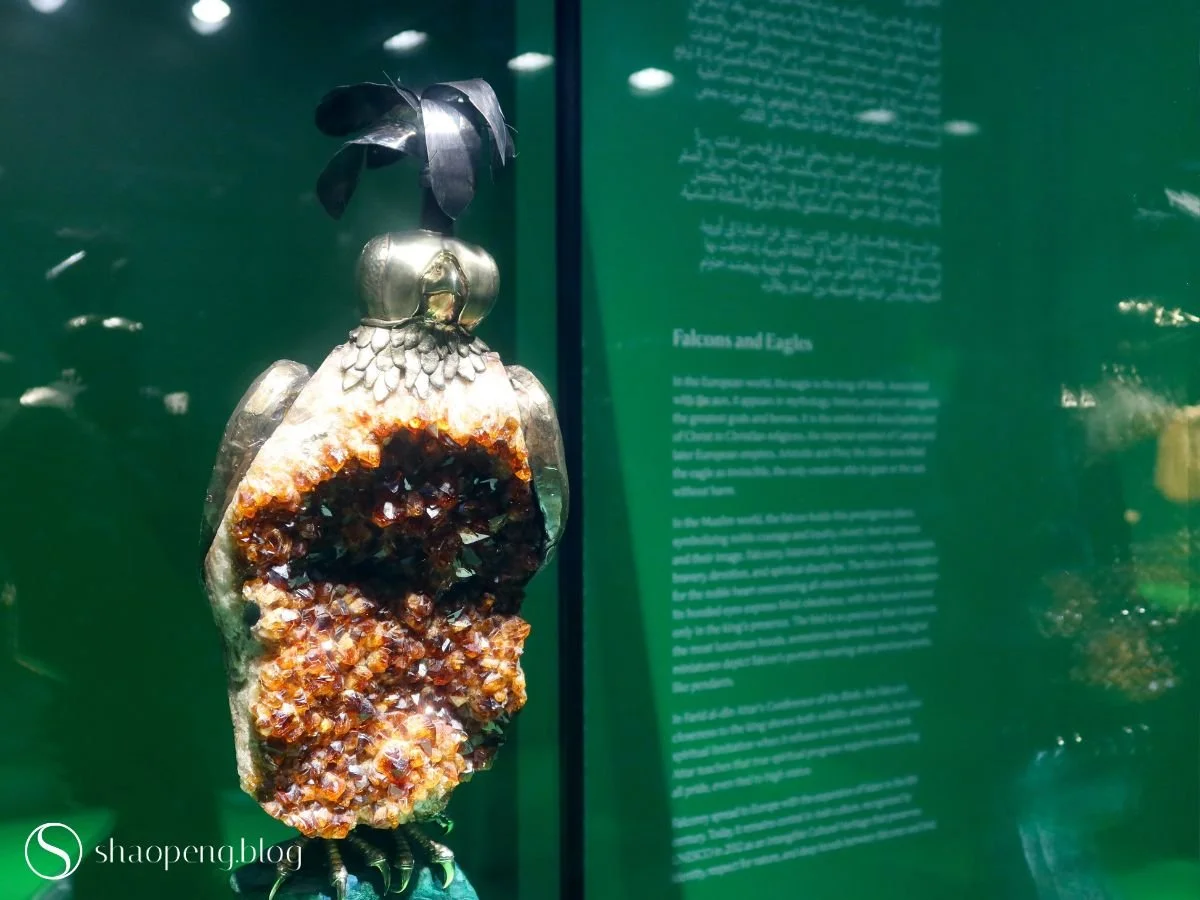
With a natural citrine geode forming its body, Cartier’s falcon captures the bird’s imposing elegance.
Bird motifs flourished in jewellery from the mid-19th century onward. Doves, swallows, parrots, eagles, swans, and peacocks captured both aesthetic and scientific curiosity, fueled by global travel and a passion for natural objects.
Wandering through the exhibition feels like walking through the evolution of bird jewellery from the mid-19th century onward. Naturalistic design gave way to intricate, lifelike representations. The peacock, with its multicoloured “eyes” on its feathers, was particularly admired, inspiring jewellers to experiment with gemstones and enamel.
At the Universal Exposition of 1867 in Paris, Mellerio presented a peacock brooch set with diamonds and coloured gemstones around a central sapphire — so admired that Empress Eugénie commissioned a second piece. In Western culture, peacock evokes vanity and luxury; in the East, it embodies beauty and majesty.
In the corner dedicated to peacocks, a 19th-century iron peacock from Iran spreads its feathers, adorned with gold arabesque motifs reminiscent of damascene work.
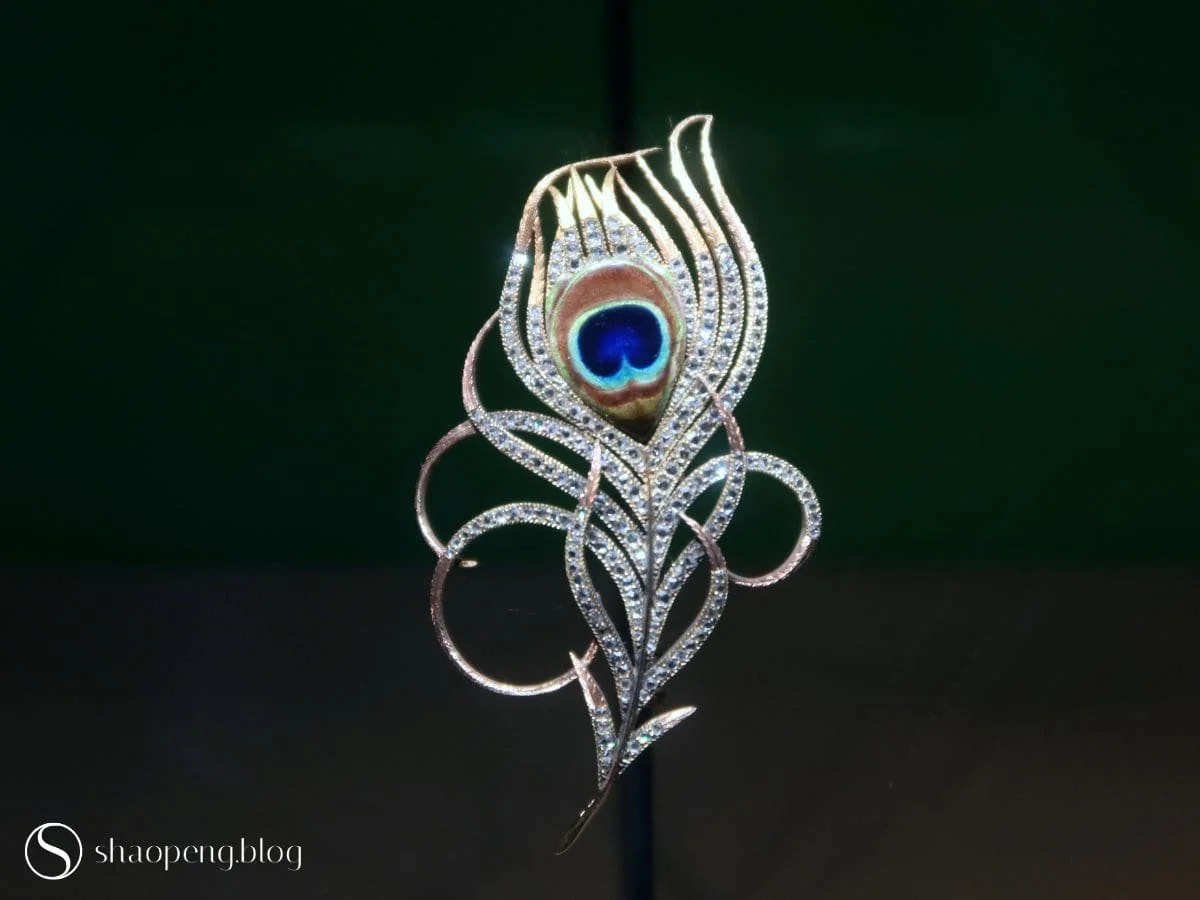
Crafted around 1900, this brooch showcases Mellerio’s mastery in depicting peacock feather using enamel.
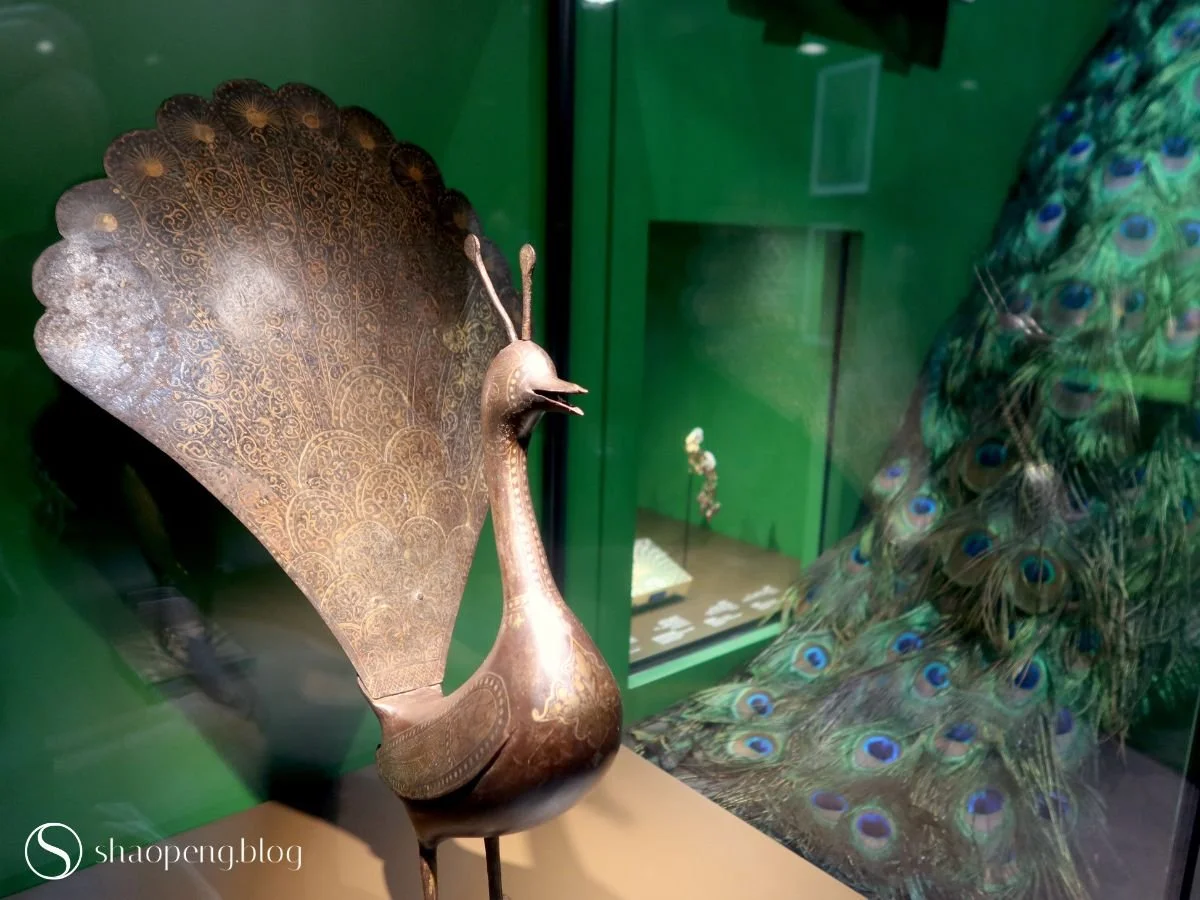
This 19th-century iron peacock from Iran reflects the region’s longstanding fascination with bird imagery.
Art Nouveau introduced sinuous, flowing birds; Japonism brought cranes into European jewellery. Art Deco followed, stylising birds into bold, geometric forms. Later, three-dimensional techniques captured the dynamism and movement of birds. From stylised forms to anatomically precise designs, each piece rivals nature’s perfection.
Feathers, too, occupy their own gallery. In The Conference of the Birds, a single Simorgh feather falling to earth is said to colour the world and awaken the soul.
Once a symbol of spiritual and political power, feathers became a popular motif in 19th- and 20th-century European jewellery, appearing in tiaras, necklaces, and brooches. In some cases, real plumage adds a naturalistic beauty that cannot be replicated with man-made materials.
In the same gallery, Faisal Alrais’s photography series, Spirit of the Desert: Reflections on the Extinction of the Houbara Bustard, captures the near-extinct bird in intimate detail. Set against dark backgrounds, the monochromatic presentation draws attention to the patterns on the plumage, offering viewers a rare chance to reflect on the fragility and beauty of life.

A showcase of ultra-luxurious tiaras, necklaces, and brooches inspired by feathers.
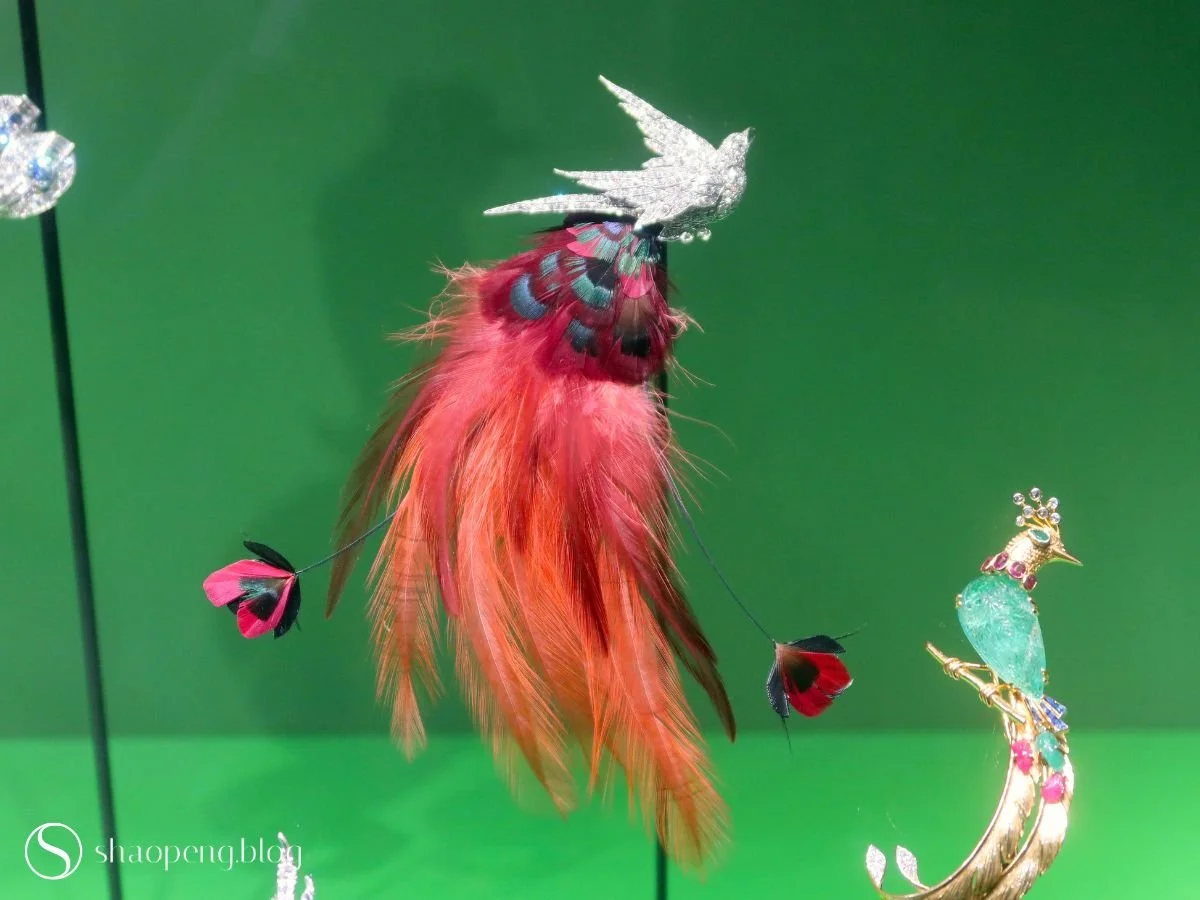
Nothing compares to the beauty that real feathers bring to a jewellery piece.
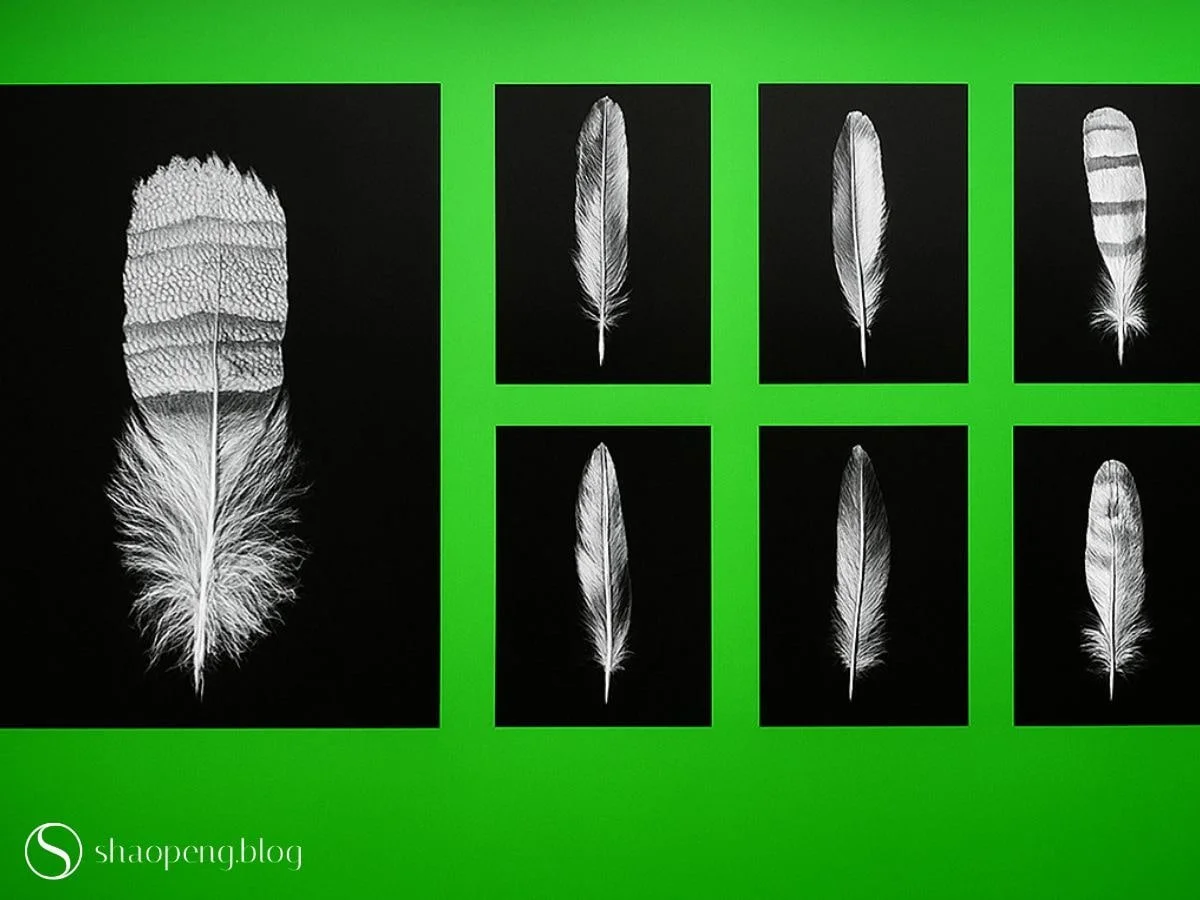
Faisal Alrais’s photography series captures a certain timeless beauty, inviting viewers to see birds with new eye.
The exhibition closes with imaginary birds by Pierre Sterlé (1905-1978). Each case houses a flock in flight, each bird revealing its own personality through bold, modern designs that contrast with those seen earlier.
Beyond their role as subjects of beauty, birds served as a medium for creativity and even became a vehicle for political expression. During the Second World War, Jeanne Toussaint and Peter Lemarchand designed caged birds for Cartier as a subtle protest against the German occupation.
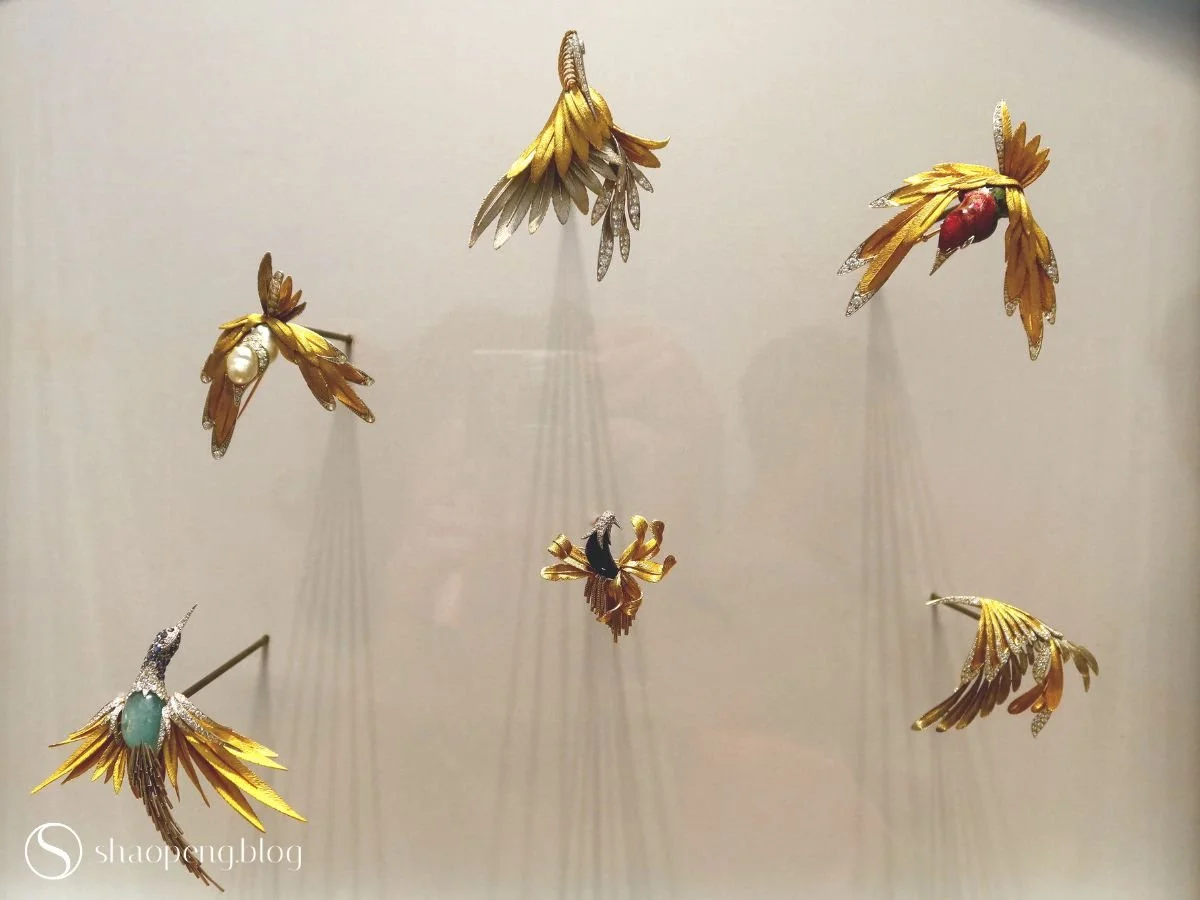
French jeweller Pierre Sterlé’s expressive bird brooches showcase his innovative approach to jewellery design.
Visitors wandering through the Poetry of Birds exhibition are like the birds in The Conference of the Birds, who traverse seven valleys in search of the Simorgh — yet only thirty reach their goal.
What’s clear, though, is that visitors are not in search of the Simorgh itself (“Si Morgh” actually means “thirty birds” in Persian, and the valleys represent different aspects of the inner journey). By the journey’s end, you leave with a deeper understanding — of birds, of artistry, and of the beauty that connects them both.
You may also be interested in:
Reference:
L’ÉCOLE, School of Jewelry Arts. (2025). Poetry of Birds [Exhibition catalogue]. L’ÉCOLE, School of Jewelry Arts.
Poetry of Birds is on view at L'ÉCOLE Middle East, School of Jewelry Arts in Dubai Design District until April 25, 2026.