
A carriage driver spent decades waiting to marry the woman he loved, yet the film telling this story vanished for 50 years before returning to the screen.
Sense of Wander: ★★★★☆
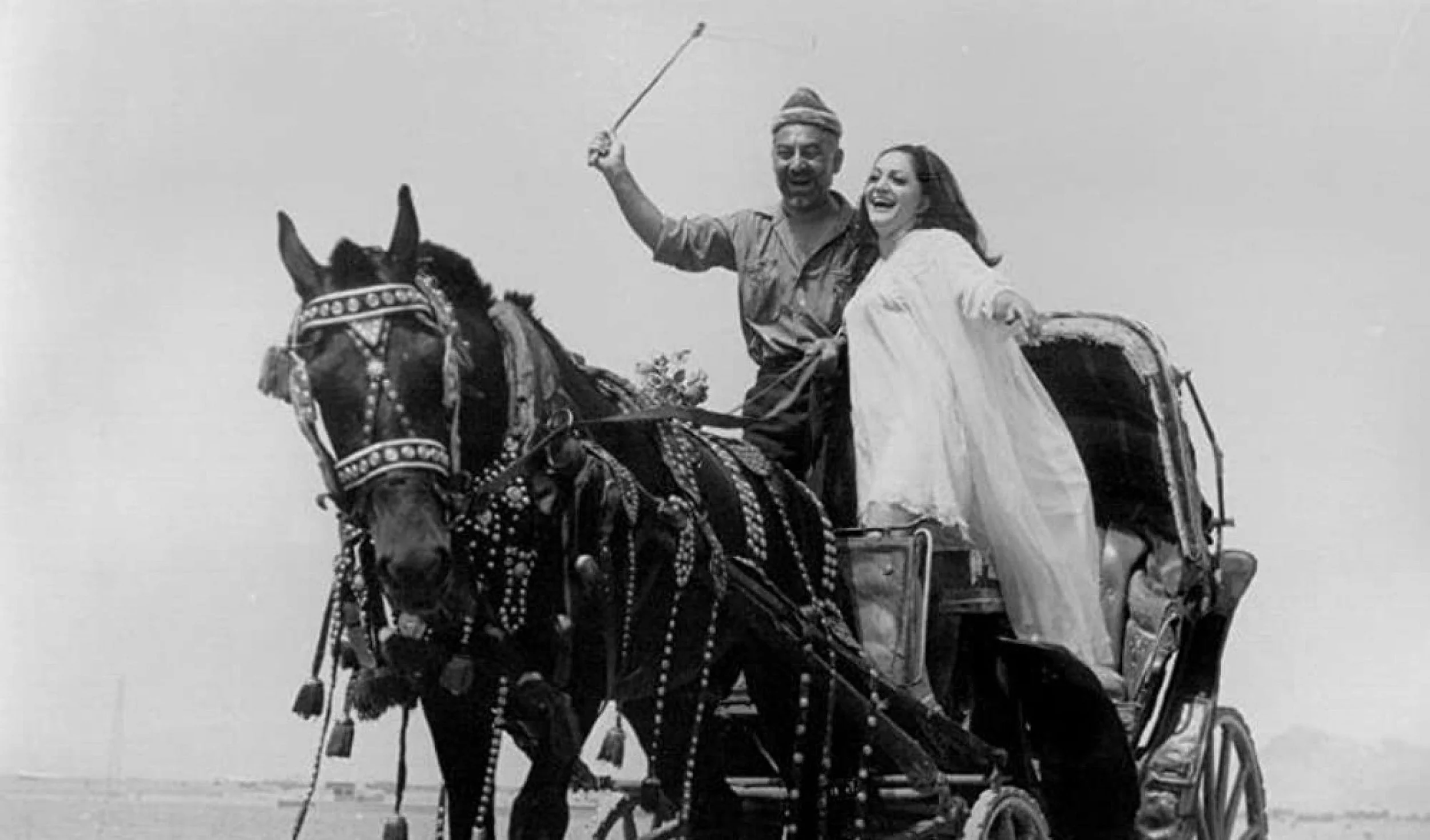
Gholamali (left) and Zinat (right) in a scene from Doroshkechi (The Carriage Driver).
Spoilers ahead.
TAIPEI, Taiwan — I hadn’t planned on spending my afternoon with a black-and-white Iranian film from 1971. But Tehran was this year’s "city in focus" at the 28th Taipei Film Festival, and the festival had built an entire section, Tehran: Classics Collection, around 21 films tracing the evolution of Iranian cinema from the 1960s to the present.
I’ve only recently started learning Persia, and something about watching a film in a language I’m still struggling to grasp — in a country where almost nobody else in the cinema would understand a word of it either — felt like the kind of wander worth undertaking.
The film was Doroshkechi (The Carriage Driver), and I wasn’t sure it would hold my attention for two hours. But somewhere between the funeral in the opening scene and the fire at the end, I found myself wanting to write it down, if only to keep a record of what I’d seen and how it made me feel.
The story opens with Zinat burying her husband and ends with a house nearly burning to the ground. In between is Gholamali, the carriage driver of the title, who has loved Zinat since they were young and finally sees his chance now that she is a widow — except her elder son, Morteza, refuses to hear of it until the mourning period is over. What begins as a simple delay gradually turns into an escalating negotiation involving nearly the entire family.
Gholamali works every angle he can find. He persuades his own daughter to soften toward the match. He lets Zinat’s younger son call him baba — “father” in Persian — in exchange for sweets. Meanwhile, he uses his daughter’s marriage to Morteza as leverage, hoping that Morteza will consent his marriage to Zinat in return.
Even after Gholamali sells his carriage and “upgrades” to driving a taxi in an attempt to earn more respect, the family’s disdain for his profession barely budges. It is only after an accidental fire — when Gholamali risks his own life to pull Zinat out of it — that Morteza finally gives in.
None of this is subtle, nor is it meant to be.
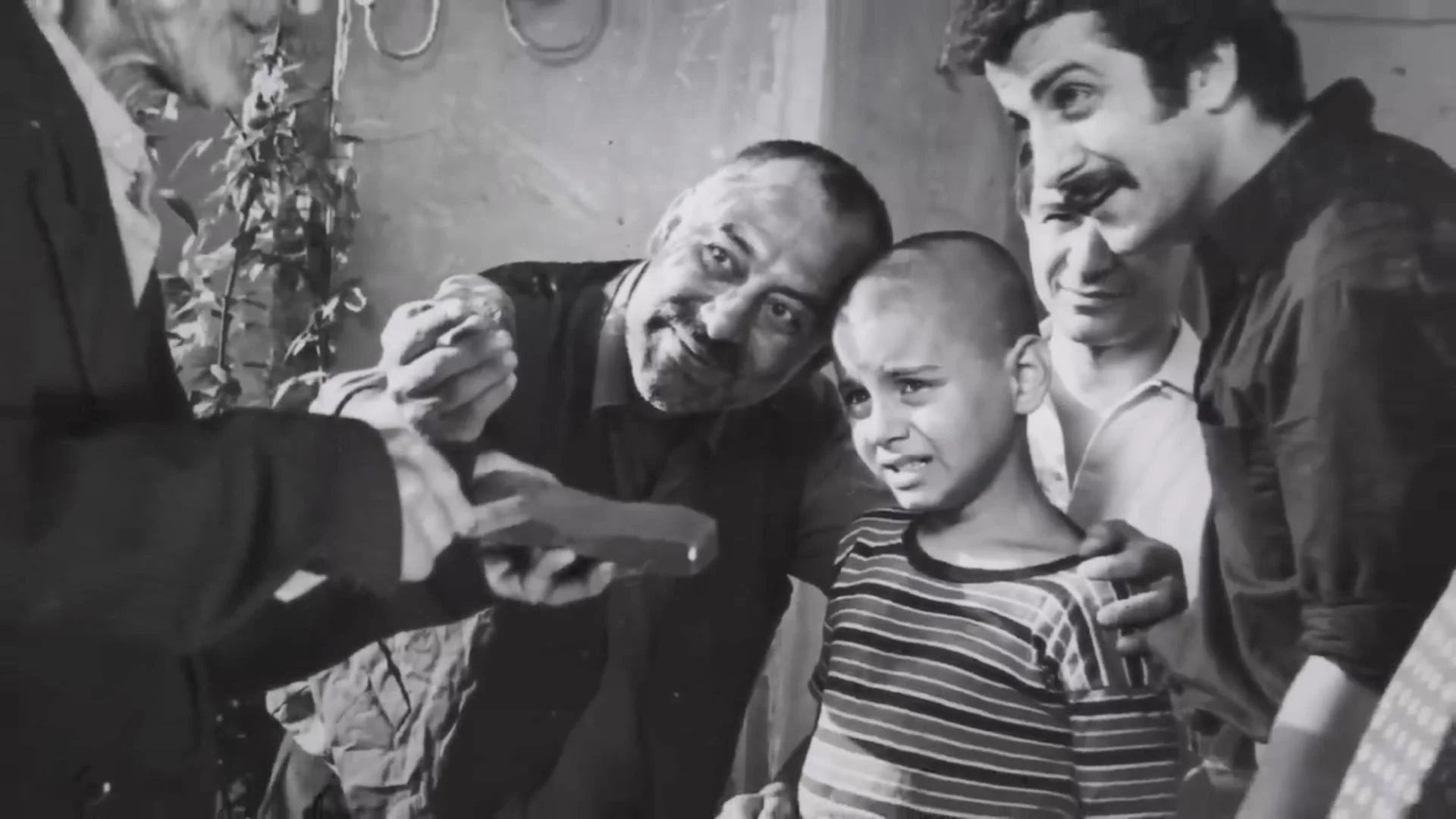
Gholamali tries to bond with Zinat’s younger son (centre) and Morteza (right).
Anchoring the plot is namus — the code of honor bound up with women’s virtue and modesty — and it is namus, rather than love or money, that drives every obstacle in the film. The mourning period is not really about grief; it is about what the neighbors would say. The family’s class prejudice against a carriage driver doesn’t disappear simply because he changes vehicles; it was never about the vehicle in the first place.
Nosrat Karimi, who wrote, directed, and starred as Gholamali, mines all of this for comedy, but he’s also prodding his audience. Funerals, weddings, family honour, even a child’s coming-of-age circumcision ceremony — all became part of the joke.
Watching it as an outsider — geographically, generationally, and in the 21st century — I find it difficult simply to accept how decisions were made for Zinat rather than by her. She is the one whose future is being negotiated by her sons and her suitor, largely without her voice in the room. It’s worth noting that the actress who plays her, Shahla Riahi, had already broken ground herself as the first woman to direct a film in Iran back in 1956. Watching her anchor the emotional centre of a film about a woman with no say in her own remarriage carries an added poignancy when you know who is behind the performance.
By the time the fire breaks out, it almost feels inevitable, as though all the unspoken tension surrounding honour and propriety has to ignite into something literal before anyone can let go of it. Gholamali running into a burning house is the one gesture in the film too direct to argue with. Everything else can be negotiated. That cannot.
The part that stayed with me longest, however, was the fate of the film itself. Doroshkechi was erased after the 1979 Revolution, swept into a category of pre-revolutionary popular cinema that simply stopped being screened, stopped being distributed, and came close to disappearing altogether. It resurfaced only in 2022, after a full restoration, premiering in Bologna before travelling to places like the Barbican, MoMA, UCLA — and now, a small theater in Taipei, four years later.
It’s strange to spend two hours with a film and only afterwards realise you have been watching a survivor. Not survivor in the dramatic sense, but one that narrowly escaped slipping for a culture’s collective memory.
There is a version of Iranian film history that runs through Kiarostami and Farhadi and the festival circuit most of us already know. Doroshkechi reminds us that there is another layer beneath it — funnier, scrappier, more populist — that nearly never reached us at all.
I walked into the cinema expecting a curiosity and left with a small ache: for the version of Iranian film culture I will never get to know because so much of it never had the chance to receive a restoration like this one. And a small gratitude, too, for the part that did — for the carriage driver who took 50 years to reach us.