
Wander in AlUla: At the Heart of the Incense Road
Step into AlUla’s Old Town, where its winding alleys and sunbaked walls still hum with the footsteps of caravan traders, pilgrims, and settlers who once crossed path at this desert oasis.
Sense of Wander: ★★★★☆
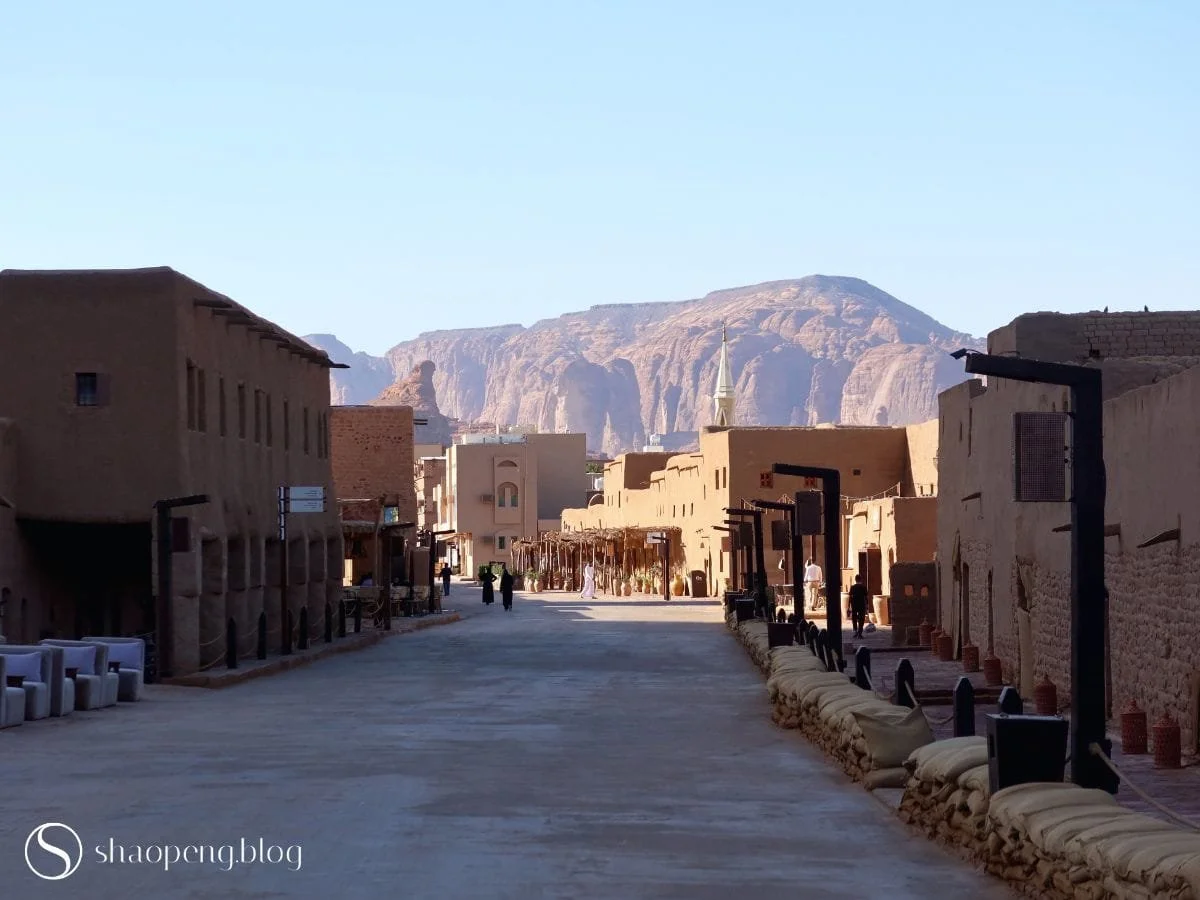
Walking down the main street of AlUla Old Town.
ALULA, Saudi Arabia — The heat. The dry air. The barrenness. The muted, sun-bleached palette of the land. These are my first impressions of AlUla as our car pulls away from the airport and heads toward the city centre. In some places, the ride turns bumpy, and where road signs and mobile signal disappear into the remoteness, GPS becomes our only compass.
As we draw closer to AlUla’s historic heart, sandstone formations begin to rise in the distance. Geological wonders sculpted by time, like the shifting shapes of clouds, invite your imagination to wander and guess at what they might resemble.
They call this an oasis in the middle of the desert, and at first I wonder why. Then we pass through a sea of palm groves, their lush green a startling contrast to the cappuccino-toned landscape. I imagine the caravans that once travelled the ancient Incense Road arriving here, relieved to find a haven unlike any mirage they could have dreamed of.
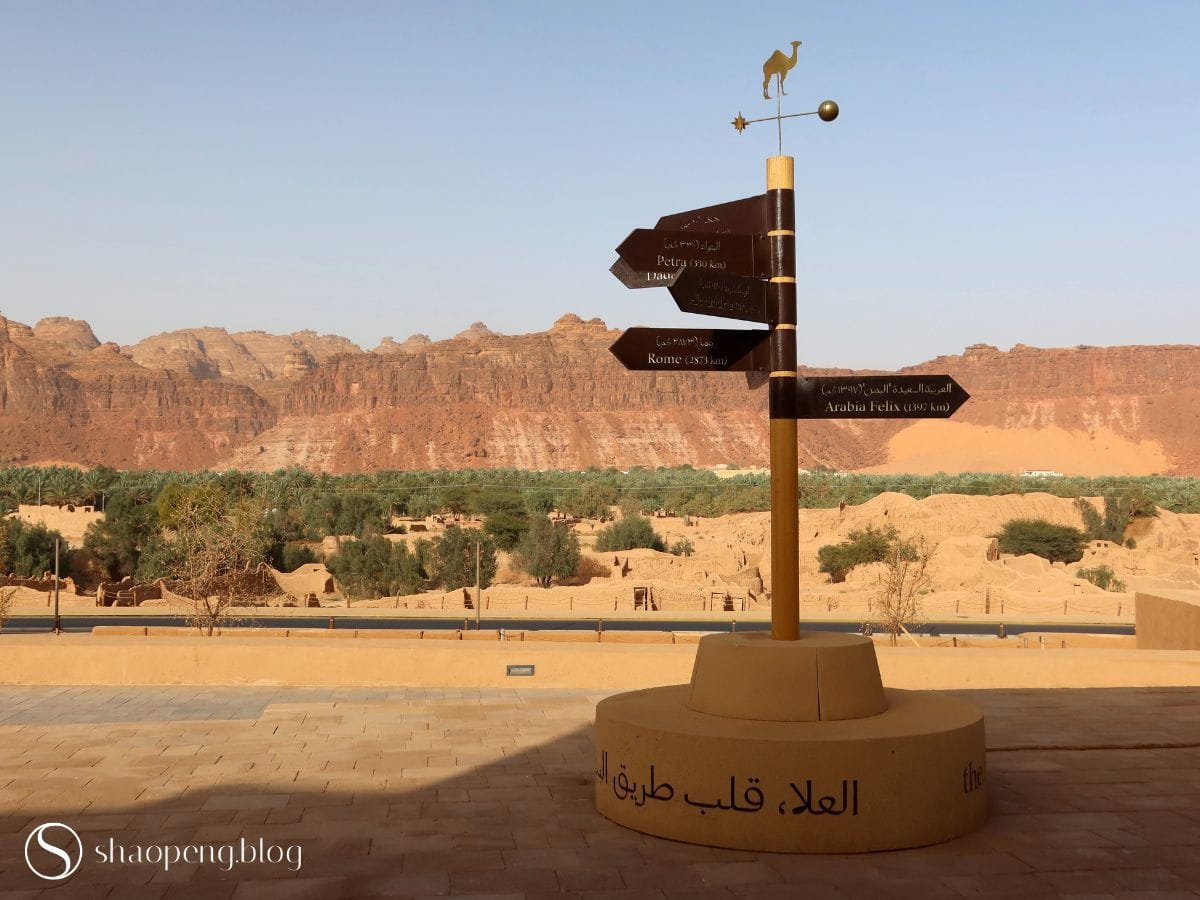
This signpost marks AlUla as the “Heart of the Incense Road,” a historic crossroads once passed through by caravans.
AlUla lies in a fertile desert valley in northwestern Arabia, a place that has sustained human settlement for thousands of years. Its abundant water sources and arable land made it a natural resting point for those crossing the desert.
From at least the first millennium BCE, the wider AlUla region — home to the ancient kingdoms of Dadan and Lihyan — formed a vital link in the long-distance trade networks that connected southern Arabia with the Mediterranean world. Caravans laden with frankincense, myrrh, spices, and other luxury goods passed through these routes, broadly known today as the Incense Road.
Yet AlUla was never defined by a single road. It functioned more as a crossroads, where trade routes, merchant paths, and later pilgrimage trails linking Damascus to Mecca converged and overlapped through the centuries.
Even long after the golden age of the incense trade had faded, AlUla continued to thrive as a centre of commerce and travel. Its Old Town remained inhabited until the 1980s, when its last residents relocated to a newly built town nearby. Today, the mudbrick settlement still seems to hum with the memory of merchants, pilgrims, and travellers, beautifully preserved and open to wander.
To experience it fully, start from its southern edge, where the Ancient Incense Trail begins, and let your feet carry you north through centuries of history:
Ancient Incense Trail
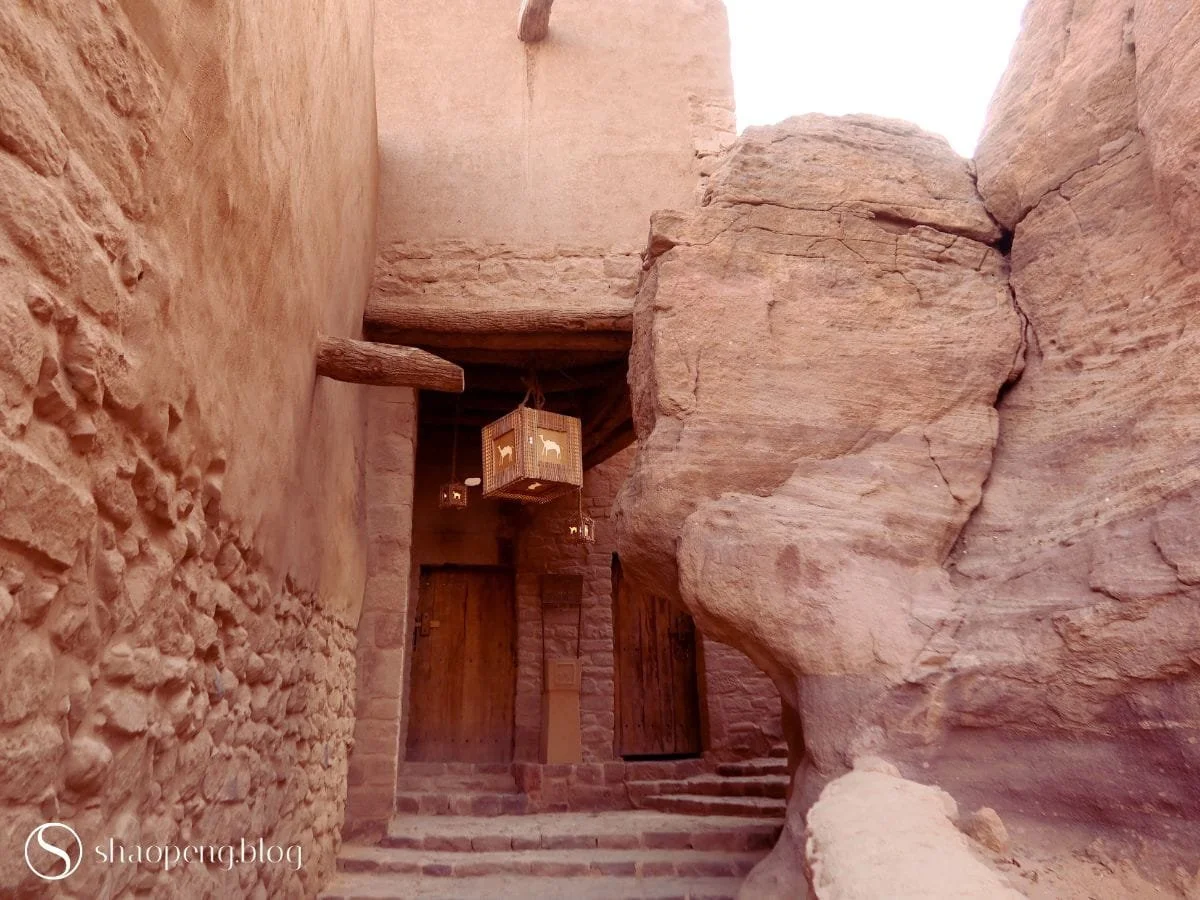
Entering the Ancient Incense Trail in AlUla.
The Ancient Incense Trail is unlike any other. Here, a dense mudbrick maze of homes, markets, and mosques has been carefully preserved, inviting you to wander through its narrow, winding alleys.
The houses here followed a simple, practical design: a majlis, or living room, on the ground floor for receiving guests; above it, the kitchen and bedrooms; and beneath the staircase, space once used to shelter livestock. Many homes are linked by a tayara — an aerial passageway connecting two buildings that shades the street below while channeling air for natural ventilation. Wander these alleys long enough, and you’ll inevitably pass beneath one; the word fittingly translates as “airplane.”
For centuries, the Old Town has held functions that feel surprisingly modern. Ar-Rahabat, open squares scattered throughout the layout, once served as gathering spaces for commerce and community, where neighbours exchanged news and goods. A more recent addition to this living fabric is the Well of AlHajjaj, named after Saleh AlHajjaj. Dug in 1951, it provided residents of the southern district with a closer water source than the older well to the north.
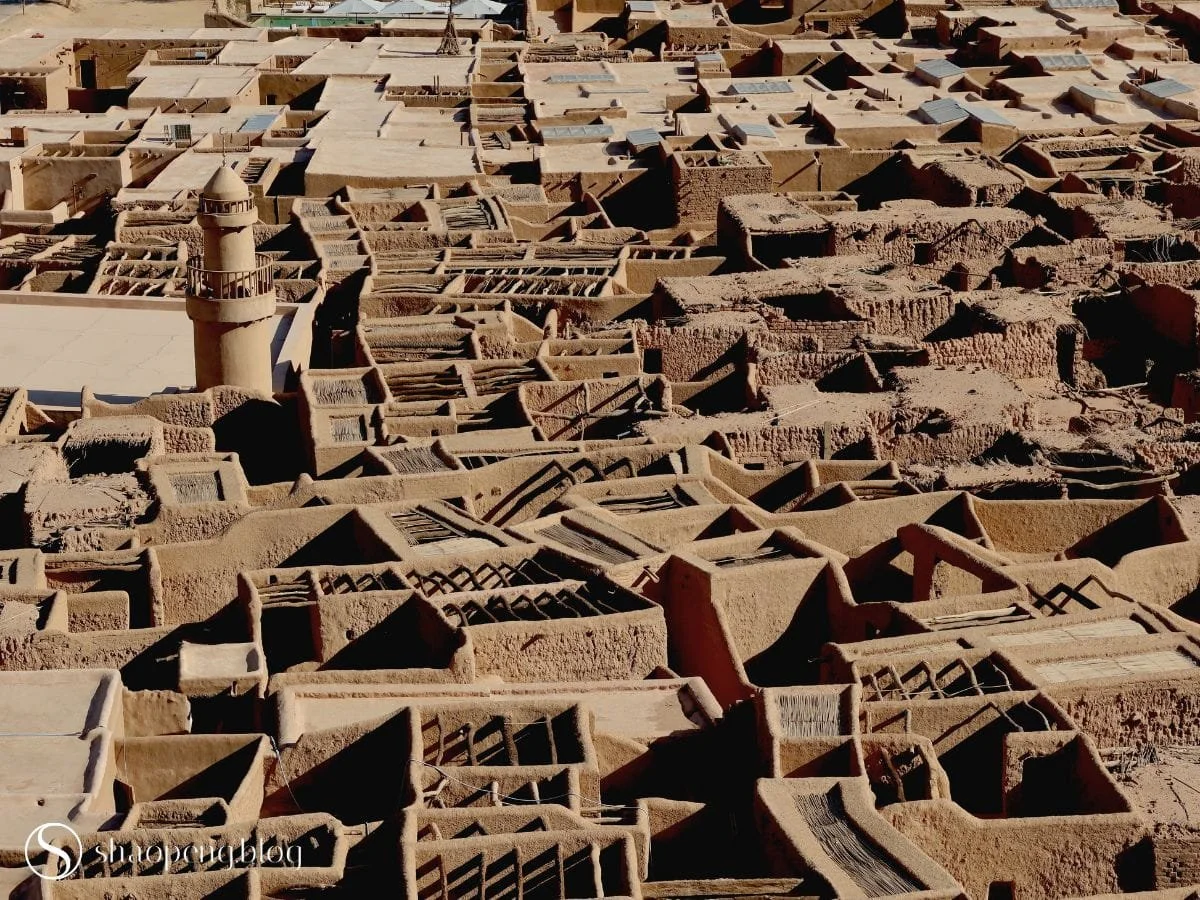
Overlooking the dense fabric of ancient settlement from AlUla Fort.
Walk on, and you can almost hear whispers between merchants trading frankincense, myrrh, spices, and textiles bound for the Levant, Egypt, and the wider Mediterranean. The high walls and looping alleyways recall the old medina of Fez, and the walled casbah in the historic Arab quarter of Mazara del Vallo, Sicily.
Continuing north, you’re led to the main street, now lined with restaurants, cafes, and shops selling souvenirs, handicrafts, jewellery, and contemporary design. With distant mountains in the backdrop and mesmerising ambient music drifting through the air, you can easily imagine yourself as a travelling merchant on the Incense Road.
Wanderer’s tip — Explore the Old Town both by day and night, as it transforms entirely with the light.
Masjid Al-Itham
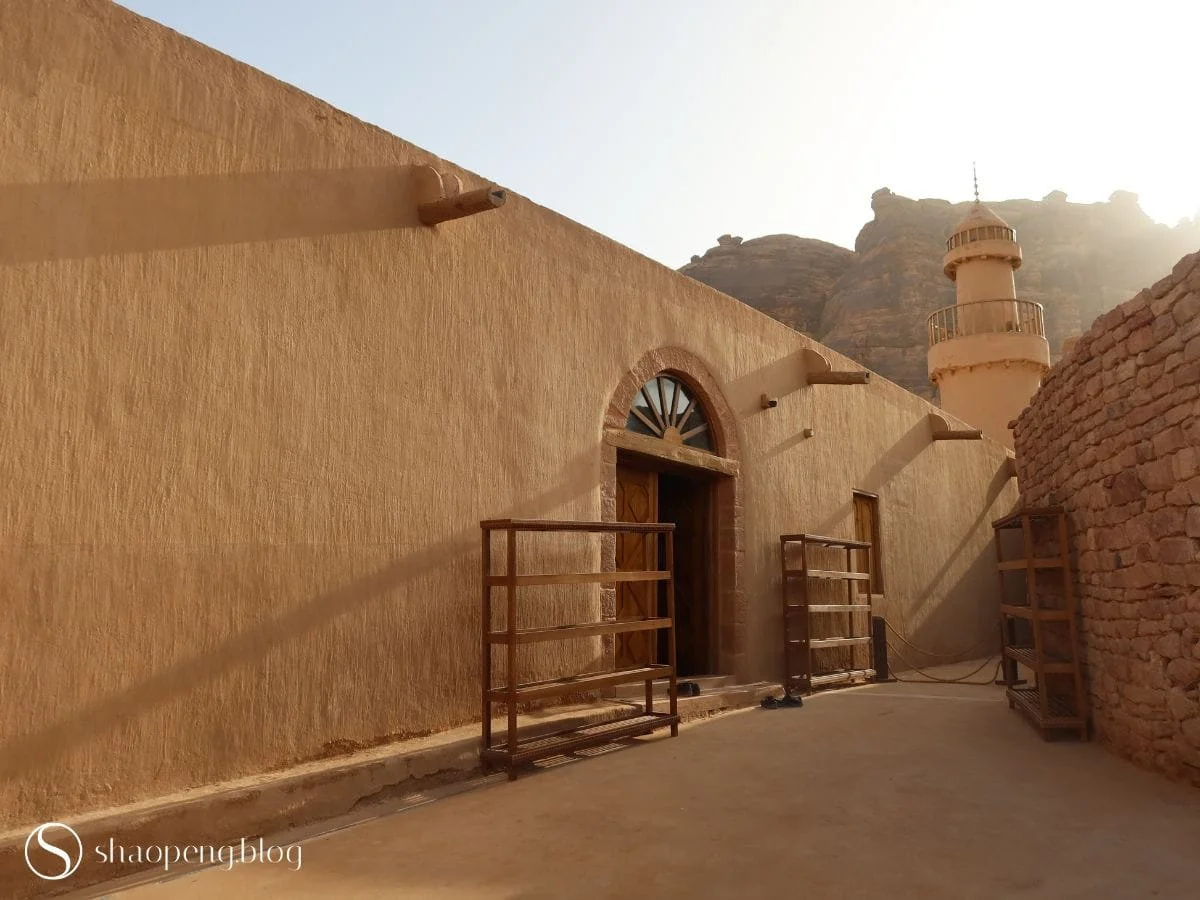
Masjid Al-Itham in AlUla
Beyond commerce, AlUla also drew pilgrims travelling toward Mecca and Medina, and the Old Town holds a singular religious landmark for many Muslims: the Masjid Al-Itham, or Mosque of Bones.
Legend holds that in the 6th century, Prophet Muhammad passed here on his way to battle. Stopping to pray, he found no stones nearby to mark the qibla — the direction toward the Holy Kaaba in Mecca — and used bones instead. The mosque, later built on that spot to commemorate this event, still stands in the southeastern corner of the Old Town.
Wanderer’s tip — Visit during prayer times.
AlUla Fort
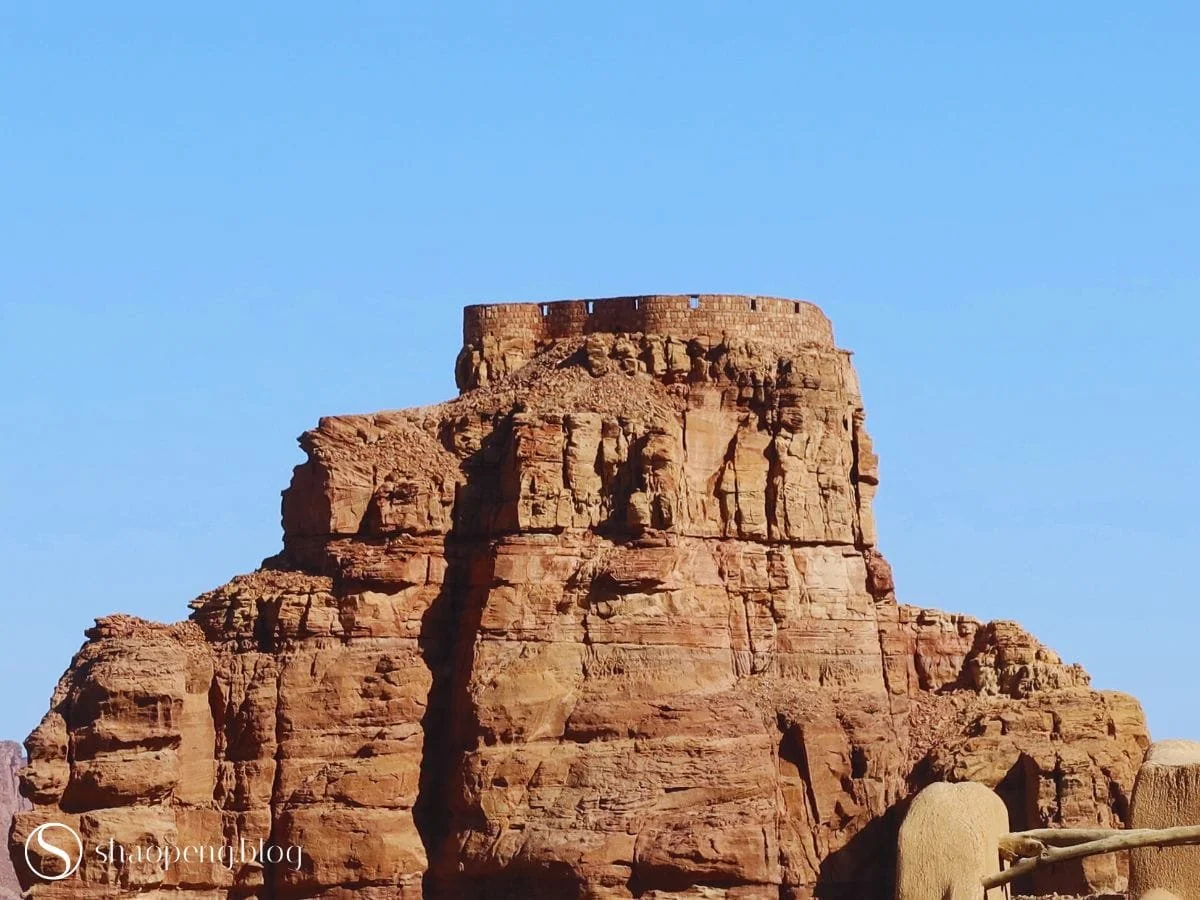
AlUla Fort rests atop Jabal Umm Nasser.
AlUla Fort is located on Jabal Umm Nasser, which separates the Old Town into two parts: Ash-Shqaiq to the north and AlHilf to the south. Built in the 10th century, it rises 45 metres high and served as a watchtower and stronghold for defense.
It requires some determination and will to climb up the stairs to the top of AlUla Fort, especially on a heated afternoon. But the journey is rewarding: you get to stand at the highest point of the Old Town and look at it from a bird’s eye perspective.
Along your climb, you’ll arrive at a place where AlMundai, or the crier, used to stand here to call out lost and found items. A small amount of money would be rewarded to the person who handed the item in.
The stairs, as you would soon realise, is older than the place itself: part of the original stairway near the highest viewpoint was carved in rock that dated more than 2600 years ago.
When reaching the viewpoint, you would come to see the close-knit community from above: 900 tightly-packed mudbrick buildings including 400 shop and five town squares form an organic grid. Looking out to the other side, you would see why this place is called the desert oasis: the lush and large field of palm groves fill the horizon like an ocean.
Wanderer’s tip — Access to ALUla Fort is found at the southeastern part of the Old Town, next to the resturant Tofareya.
Oasis Heritage Trail
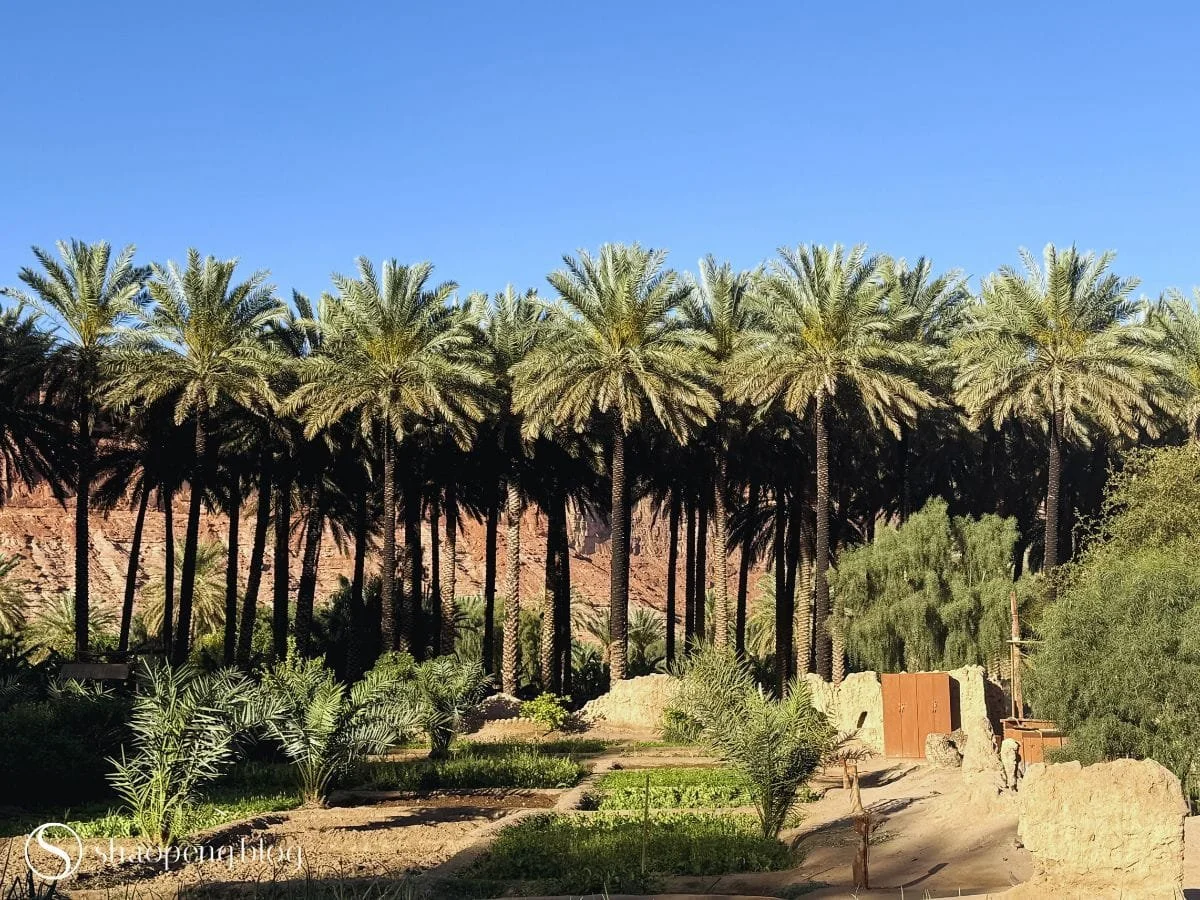
The oasis has long served as a lifeline for those crossing the desert.
When the Moroccan traveller Ibn Battuta (circa 1304-1368) passed through AlUla on his first pilgrimage to Mecca, he described it as a large and pleasant village with palm gardens and freshwater springs, where pilgrims would pause for several days to restock supplies and wash their clothes.
That same lushness still defines AlUla today. Beneath the surface lies an aquifer, a layer of rock that traps groundwater and brings the water table close enough to sustain a rare desert wetland. It was this same water source that the Nabataean Kingdom mastered thousands of years earlier, digging wells to sustain Hegra and refresh weary traders along the Incense Road.
Residents of the Old Town built summer homes in the shade of the oasis’s palms, relying on its bounty of barley, wheat, citrus, figs, pomegranates, and grapes. The oasis was a genuine lifeline, and it still gives generously to travellers today.
The best way to experience it is via the Oasis Heritage Trail, a gentle three-kilometre walk through palm groves, mudbrick houses, and small farms. Even at midday, the shade of overhead fronds keeps the air surprisingly cool. Dates litter the ground in loose clusters, a small detail I had never witnessed before and somehow found unforgettable.
Wanderer’s tip — For a moment of contemplation over the greenery, stop at Pink Camel Pastry Boutique, a cafe on the edge of the oasis.
AlUla Public Library
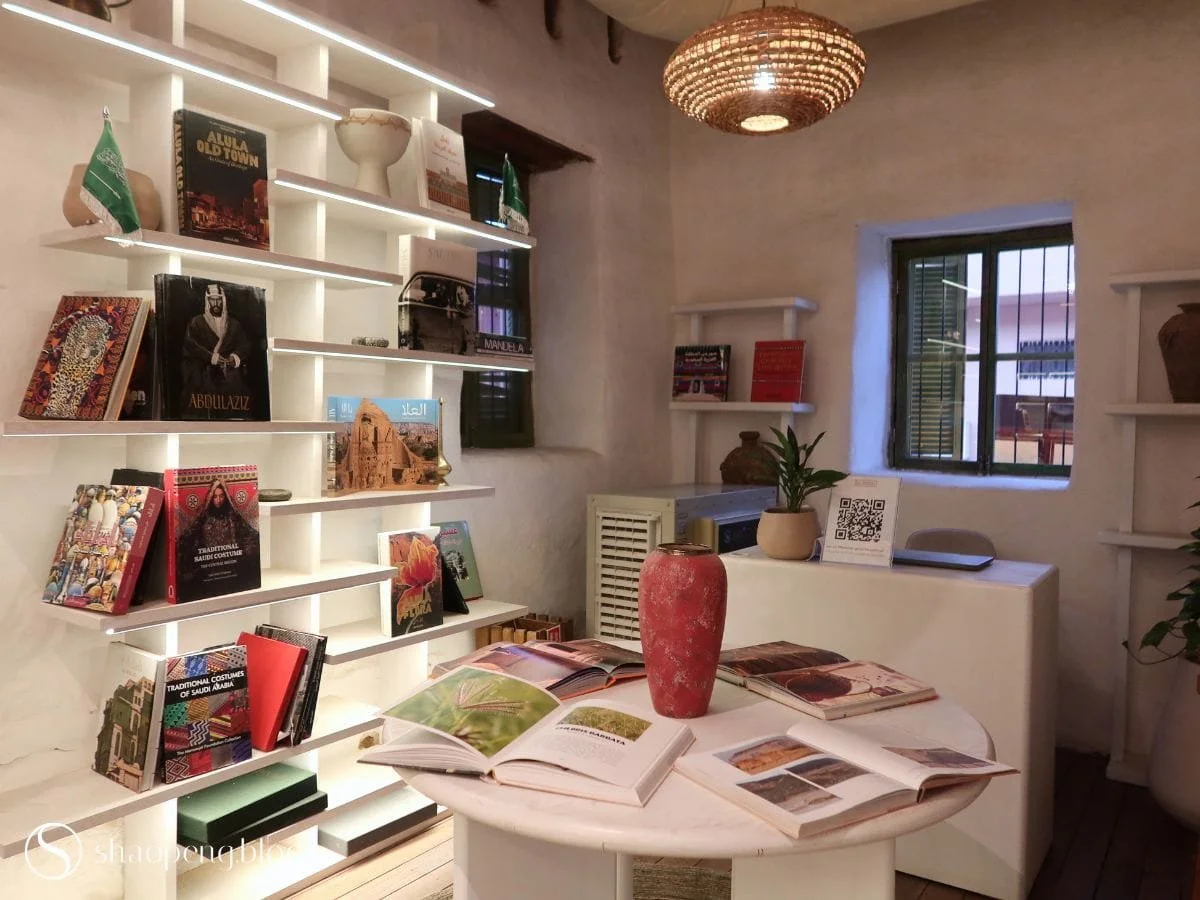
Inside AlUla Public Library.
Of all the places I expected to find in AlUla, a public library wasn’t one of them. Yet here it is, housed in a beautifully renovated traditional house, filled with books in multiple languages and inviting nooks of soft seating that make it difficult to leave.
It’s a space for everyone — families, children, and book lovers alike — with a small zen garden and an in-house coffee shop rounding out the experience. There are also colouring bookmarks, alongside a stamping station where you can create your own postcard to take a piece of AlUla with you.
My favourite spot is the rooftop, where you can read with a view of the towering minaret of Masjid Omar Bin Abdulaziz across the street, especially magical when the adhan, or call to prayer, drifts through the air.
Wanderer’s tip — The library staff are remarkably warm, often offering visitors complimentary water and sweets.
AlJadidah Arts District
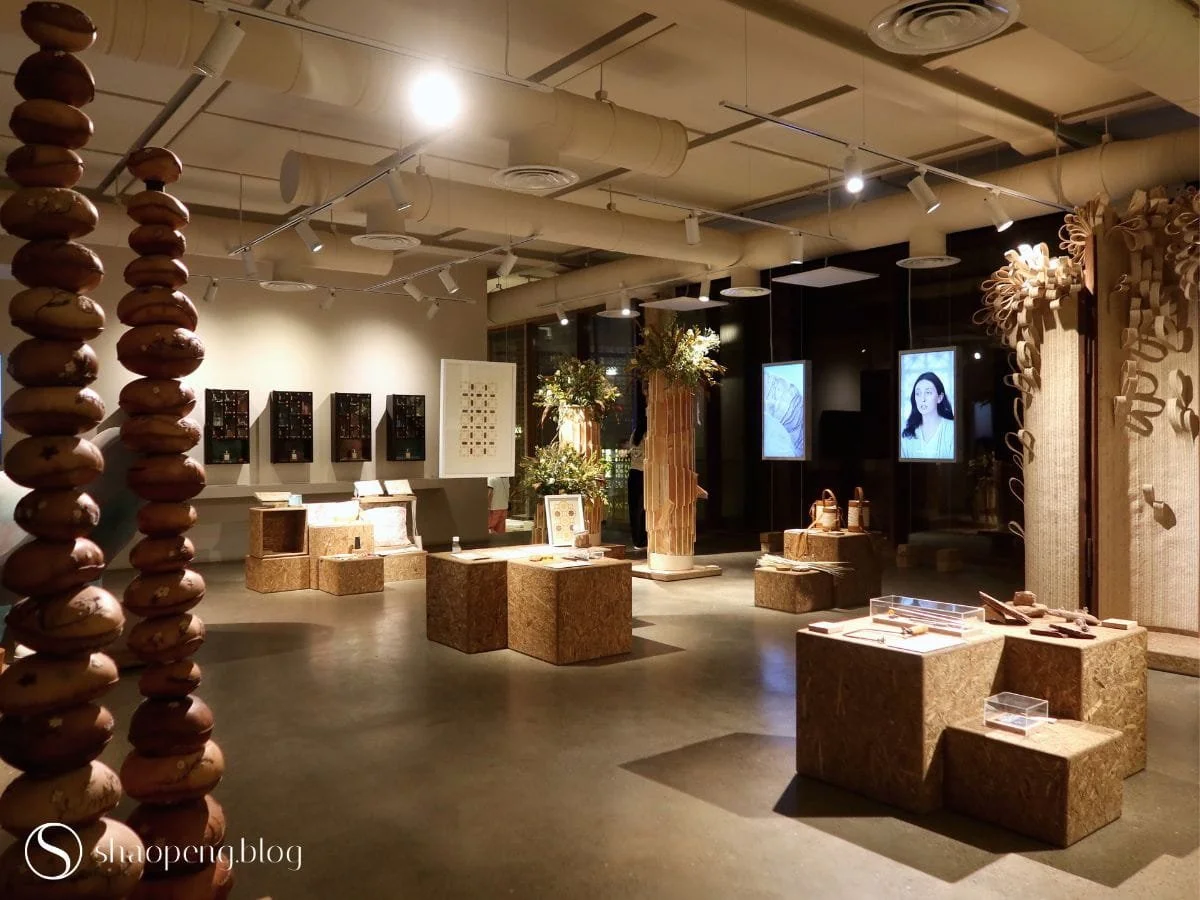
Works of art on display inside Design Space AlUla.
For artists and creatives, AlJadidah Arts District is where AlUla’s heritage meets the contemporary. Murals, art installations, and galleries showcasing both local and international talent are found throughout this district.
At its heart is Madrasat Addeera, the region’s first girls’ school, now reimagined as a centre for craftsmanship and a creative incubator for the local arts community. Nearby, Design Space AlUla hosts exhibitions and residencies dedicated to design innovation, while ATHR Gallery stands among the area’s leading spaces for contemporary Arab art.
At its heart is Madrasat Addeera, the region’s first girls’ school, now reimagined as a centre for craftsmanship and a creative incubator for the local arts community. Nearby, Design Space AlUla hosts exhibitions and residencies dedicated to design innovation, while ATHR Gallery stands among the area’s leading spaces for contemporary Arab art.
During my visit, a special exhibition by Wadi AlFann leaves an impression on me. “Valley of the Arts” is a vast 65-square-kilometre open-air art destination set within AlUla’s desert canyons, where the sandstone landscape itself becomes both canvas and backdrop for site-specific installations by artists like James Turrell. Among the exhibits are renderings of Turrell’s giant telescope, soon to be installed in the valley.
Wanderer’s tip — The district’s streets are also dotted with restaurants, artisanal coffee shops, and food trucks, perfect for a casual bite between gallery visits.
You may also be interested in: