
Wander in AlUla: An Arts & Culture Guide
Somewhere in the desert of northwestern Saudi Arabia lies AlUla, a place where two thousand years of secrets are kept, and the stones do the storytelling.
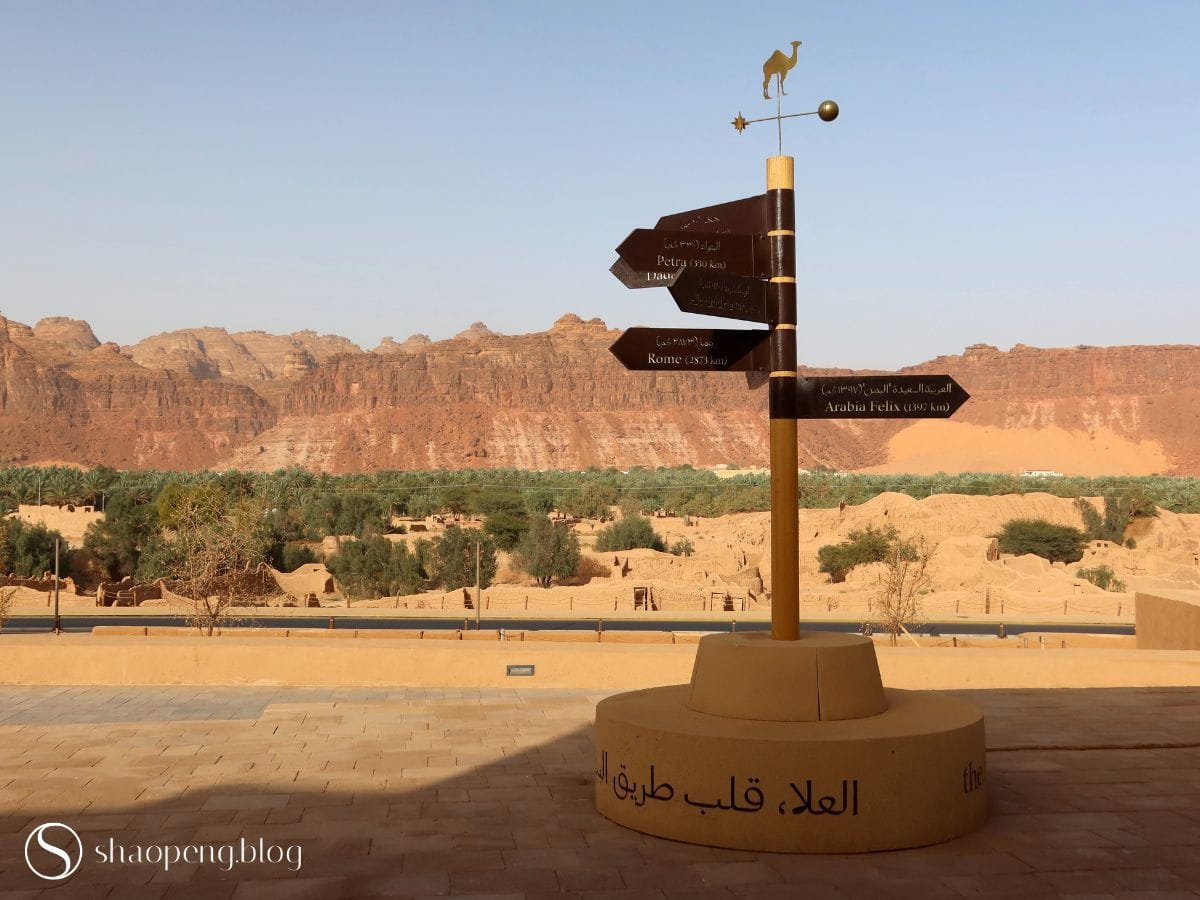
AlUla is a timeless crossroads along the ancient Incense Road.
ALULA, Saudi Arabia — There are places in the world where history is preserved in books and museums. Then there is AlUla, where history remains part of the landscape itself.
Hidden among sandstone valleys, volcanic plateaus, and oases in northwestern Saudi Arabia, this extraordinary region is a living archive of human creativity, where civilisations have risen, traded, worshipped, and left their stories carved into stone.
For thousands of years, AlUla has been a crossroads between cultures. Along the ancient Incense Road, merchants carried frankincense, myrrh, and spices across the Arabian Peninsula, leaving behind traces of the kingdoms that flourished here. At Dadan, one of the most sophisticated cities of the 1st millennium BCE, inscriptions and temples reveal the ambitions of ancient rulers. Nearby, Jabal Ikmah preserves a mountain of words, where scripts carved into rock offer modern visitors a window into the daily lives, beliefs, and journeys of those who passed through this desert valley.
At Hegra, the monumental tombs of the Nabataeans stand beneath open skies, connecting this southern capital of the kingdom to its more famous counterpart, Petra. Yet AlUla’s story is not confined to the distant past. In the narrow alleyways of AlUla Old Town, generations of residents once lived among mud-brick homes before the settlement was abandoned in the 1980s. Meanwhile, contemporary landmarks such as Maraya demonstrate how architecture can enter into dialogue with the landscape rather than compete with it.
In addition to its archaeological treasures, AlUla is also a place of wonder for wanderers. Watch the desert transform from the heights of Harrat Viewpoint, where volcanic landscapes reveal stories older than memory itself, or sit beneath the moonlight beside Elephant Rock, where nature has spent millions of years sculpting stone into art. In AlUla, every valley, inscription, and rock formation invites you to pause, look closer, and listen to the stories written across this remarkable land.
Now, let us wander through these remarkable places, where every valley, inscription, and monument reveals a different facet of AlUla:
AlUla Old Town
Sense of Wander: ★★★★★
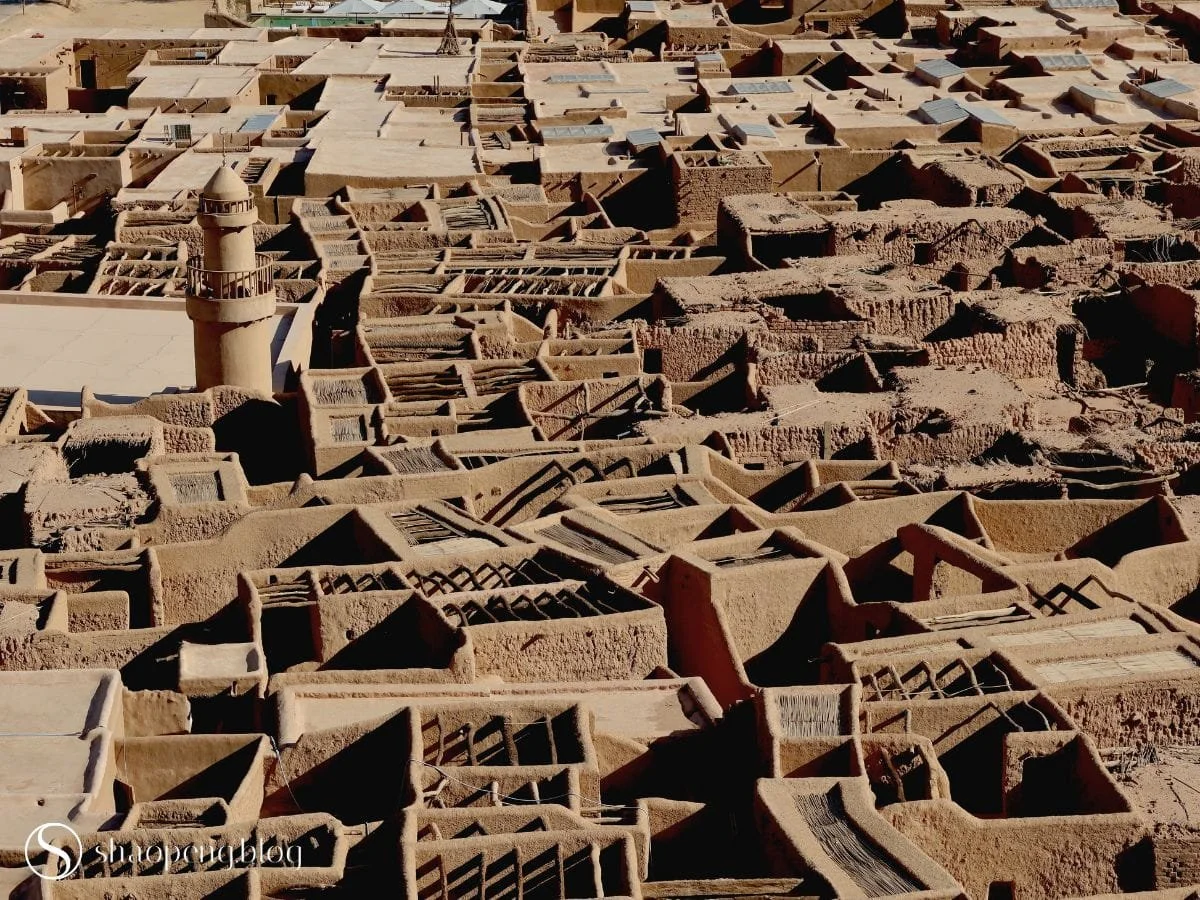
The labyrinth of mudbrick homes once formed the heart of the oasis.
For a taste of what it was like for caravans to rest in this desert valley, head to AlUla Old Town, which remained inhabited until the 1980s.
The Old Town is best explored without a fixed itinerary. If possible, begin at the southern end and make your way north, following a heart-led route that feels like a journey through time.
Start frm the Ancient Incense Trail, where it leads you into a spellbinding labyrinth of traditional mud-brick houses, public squares, and winding alleyways. Along the way, you may come across Masjid Al-Itham, also known as the Mosque of Bones, where the locals links the site to Prophet Muhammad.
Nearby, an entrance invites you to climb Jabal Umm Nasser to AlUla Fort. From the top, you’ll be rewarded with a sweeping panorama of more than 900 tightly clustered mud-brick buildings and the lush palm groves that have long defined AlUla as a desert oasis.
That oasis is no mere metaphor. The Oasis Heritage Trail winds for three kilometres through date palms, small farms, and summer houses. Shaded and surprisingly cool even at midday, it offers an intimate experience as to how the aquifer has come to sustain life in this valley for millennia.
Continue onward to the AlJadidah Arts District, where the Old Town meets the present. Murals brighten its streets, galleries showcase contemporary Arab art, and the AlUla Public Library offers a surprising retreat.
Wanderer’s tip — Visit during the day to appreciate the rich textures of the mud-brick architecture and the changing desert light, then return after sunset, when the stone alleyways take on an atmospheric charm. AlUla Old Town is a place that rewards those willing to slow down and let themselves wander.
Dadan
Sense of Wander: ★★★☆☆
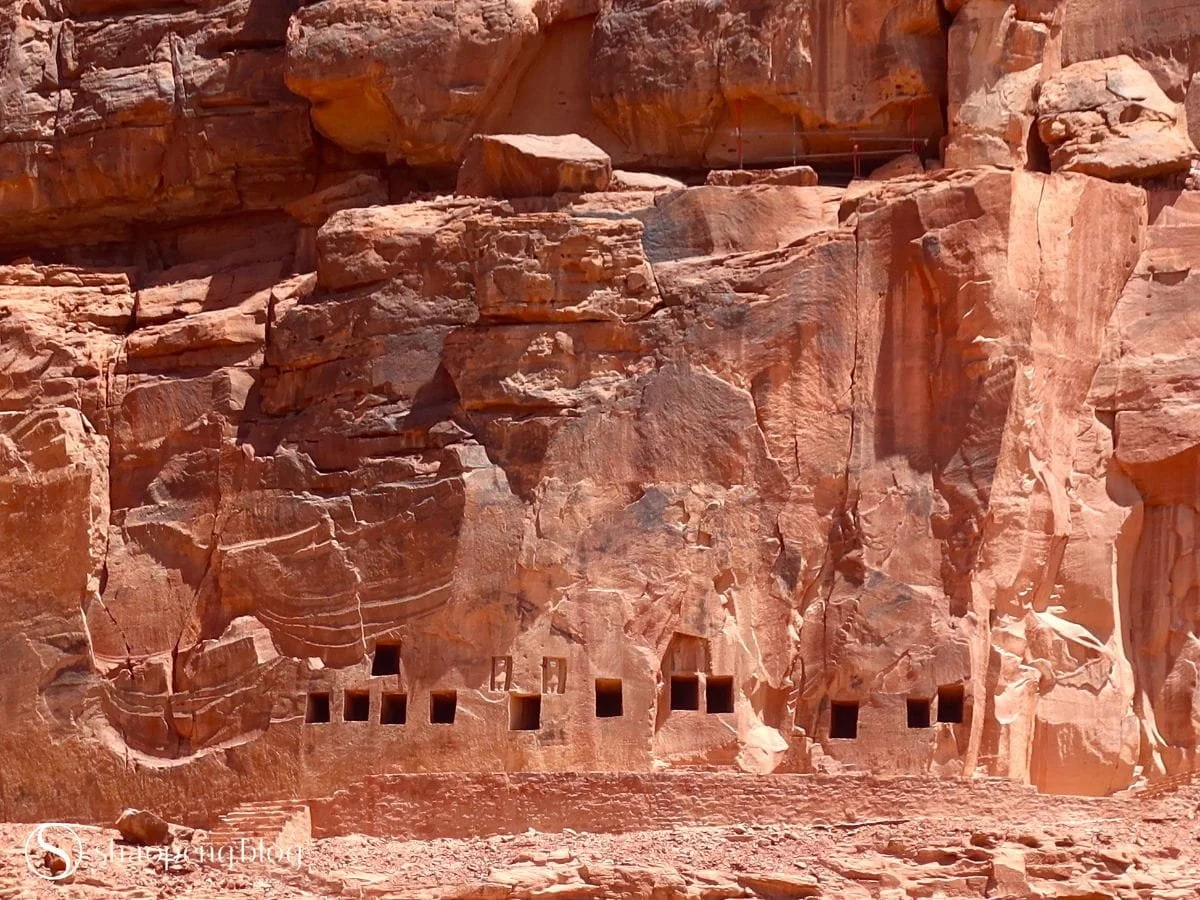
The tombs carved into the cliffs are among the most remarkable remains of Dadan.
Long before AlUla’s sandstone valleys sheltered merchants and pilgrims, there was Dadan — one of the most powerful and sophisticated cities on the Arabian Peninsula during the 1st millennium BCE.
As the successive capital of both the Dadanite and Lihyanite Kingdoms, it occupied a strategic position along the ancient Incense Road, channelling the trade of frankincense, myrrh, and spices between southern Arabia, Egypt, and Levant.
Archaeological evidence indicates that the city flourished between at least the 8th and 1st centuries BCE. Wandering through the archaeological site today, you’ll find yourself at what was once the city’s sacred heart: a grand temple dedicated to Dhu Ghaybah, the chief deity of the Dadanite and Lihyanite Kingdom.
The site’s most fascinating remains, however, lie above the excavated ruins. Hundreds of tombs are carved into the surrounding sandstone cliffs, their positions thought to reflect the social status of those buried within. Among the most remarkable are the Lion Tombs, where highly stylised lions were carved directly into the rock. They are believed to symbolise power and prestige, or perhaps to serve as guardians protecting the tombs’ occupants.
Archaeologists estimate that less than five percent of Dadan has been excavated, meaning each new excavation season has the potential to reshape our understanding of this ancient city. Standing here, you’ll find yourself at the edge of a story that is still being told and, perhaps, one that may yet be rewritten with every new discovery.
Wanderer’s tip — Access is by pre-booked guided tour only. Reserve your visit through AlUla Experience or at one of AlUla's visitor centres.
Jabal Ikmah
Sense of Wander: ★★★★☆
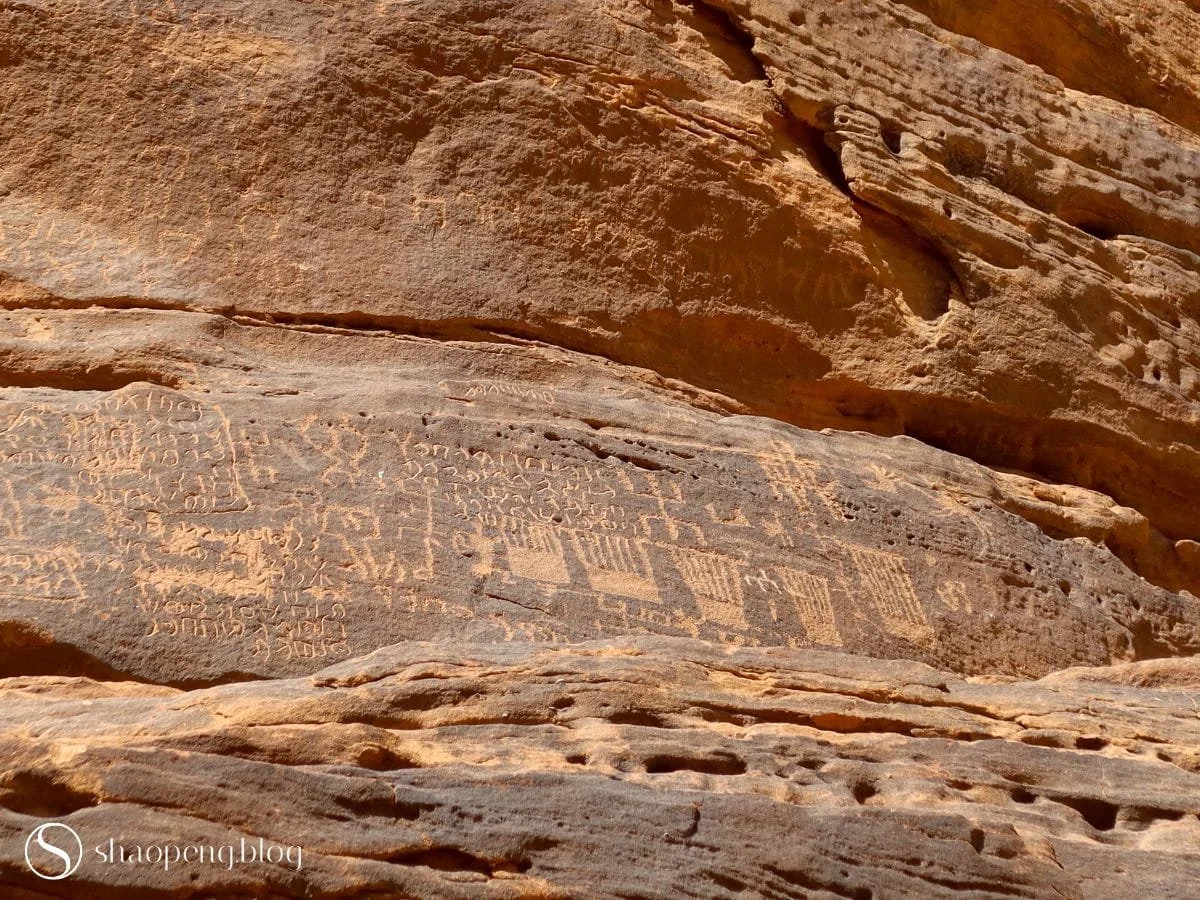
Ancient inscriptions carved into the rock formations of Jabal Ikmah
In most places, history is written in books. But at Jabal Ikmah, it is carved into stone. Known by locals as an “open-air library,” this mountain of inscriptions invites you to do more than see; it asks you to read.
Comprising approximately 300 inscriptions engraved into the mountain’s facade during the Dadanite and Lihyanite eras, the collection represents the world’s most extensive concentration of well-preserved Dadanitic and Lihyanite inscriptions.
The words carved here reveal a wide range of subjects: prayer, religion, agriculture, seasons, and memorials. They are records of daily life etched into nature by both professional scribes and ordinary travellers pausing along the caravan route.
The inscriptions were written in multiple languages, including Dadanitic above all, as well as Aramaic, Thamudic, Minaean, Nabataean, Greek, Latin, and early Arabic. Together, they reflect the many peoples and civilisations that passed through and left their marks.
Jabal Ikmah was a crossroads of civilisations, and its rocks became a canvas upon which some of the earliest known forms of Arabic script were inscribed. As someone who practices Arabic calligraphy, standing before this ancient archive of “books” is both overwhelming and deeply intimate. It feels as though I have come one step closer to the origins of the Arabic script itself.
Look closely among the inscriptions and you will also discover images, including caravans of camels carved into the rock. This humble expression of visual storytelling amid the abundance of written words feels as though even the animals that travelled these routes were worthy of remembrance.
Wanderer’s tip — Before you leave, don’t miss the opportunity to try your hand at carving Dadanitic script at the workshop station.
Hegra
Sense of Wander: ★★★★★
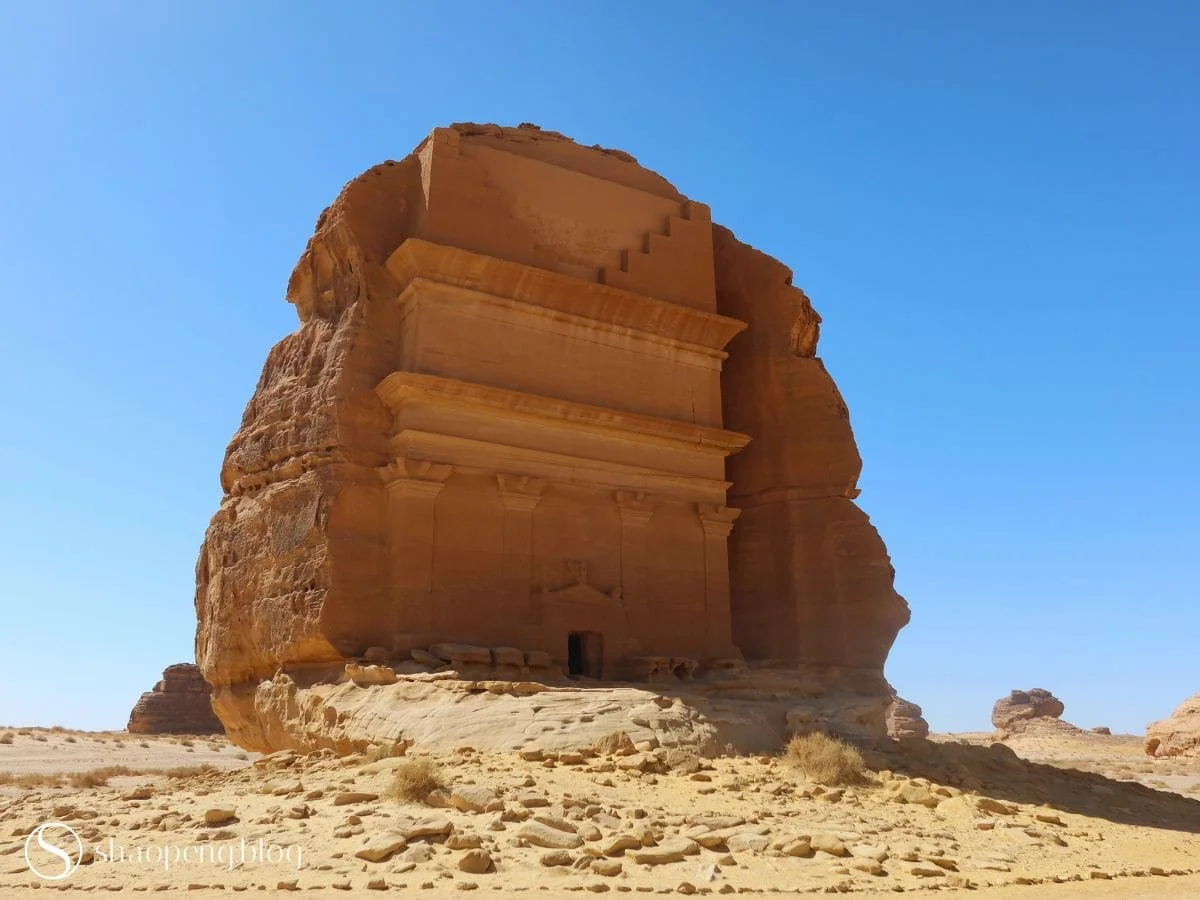
Qasr al-Farid, also known as the Tomb of Lihyan Son of Kuza, is Hegra’s largest and most iconic rock-cut tomb, standing alone amid the desert landscape.
By the 1st century BCE, Hegra had eclipsed nearby Dadan as the key stopping point on the trade routes linking southern Arabia with Egypt and the Mediterranean. It became the Nabataean Kingdom’s principal southern city and its second capital after Petra.
For centuries, caravans carrying incense, myrrh, and spices passed through this desert crossroads. The Nabataeans, those extraordinary desert traders turned architects, left their most enduring mark in champagne-coloured stone. In 2008, UNESCO inscribed Hegra as Saudi Arabia’s first World Heritage Site.
Wandering among the sandstone outcrops, you may find yourself reaching for comparisons, and Petra will almost certainly come to mind. The dramatic natural setting here must have reminded the Nabataeans of their northern capital, carved into the rose-coloured sandstone cliffs of modern-day Jordan. Yet Hegra has something Petra does not: space. While Petra’s monuments are embraced by the walls of a narrow gorge, Hegra’s tombs are scattered across a vast open desert landscape.
Of the site’s 111 monumental tombs, 94 feature decorated facades. Their designs combine indigenous Arabian elements with Hellenistic influences, including carved columns, elaborate architectural details, and inscriptions in Nabataean Aramaic. The remarkable state of preservation also means that what you see today closely resembles what a traveller or merchant might have encountered two thousand years ago.
And then there is Hinat. In 2023, archaeologists completed the first digital and physical reconstruction of a Nabataean woman discovered at Hegra, believed to have been a prominent figure who lived during the 1st century BCE. Her reconstruction is now on display at the Hegra Welcome Centre, bringing you closer to the people who were laid to rest within these monumental tombs.
Give Hegra a morning, and it will give you back centuries.
Wanderer’s tip — Access is by pre-booked guided tour only. Reserve through AlUla Experience or visit one of the local visitor centres.
Maraya
Sense of Wander: ★★★★☆
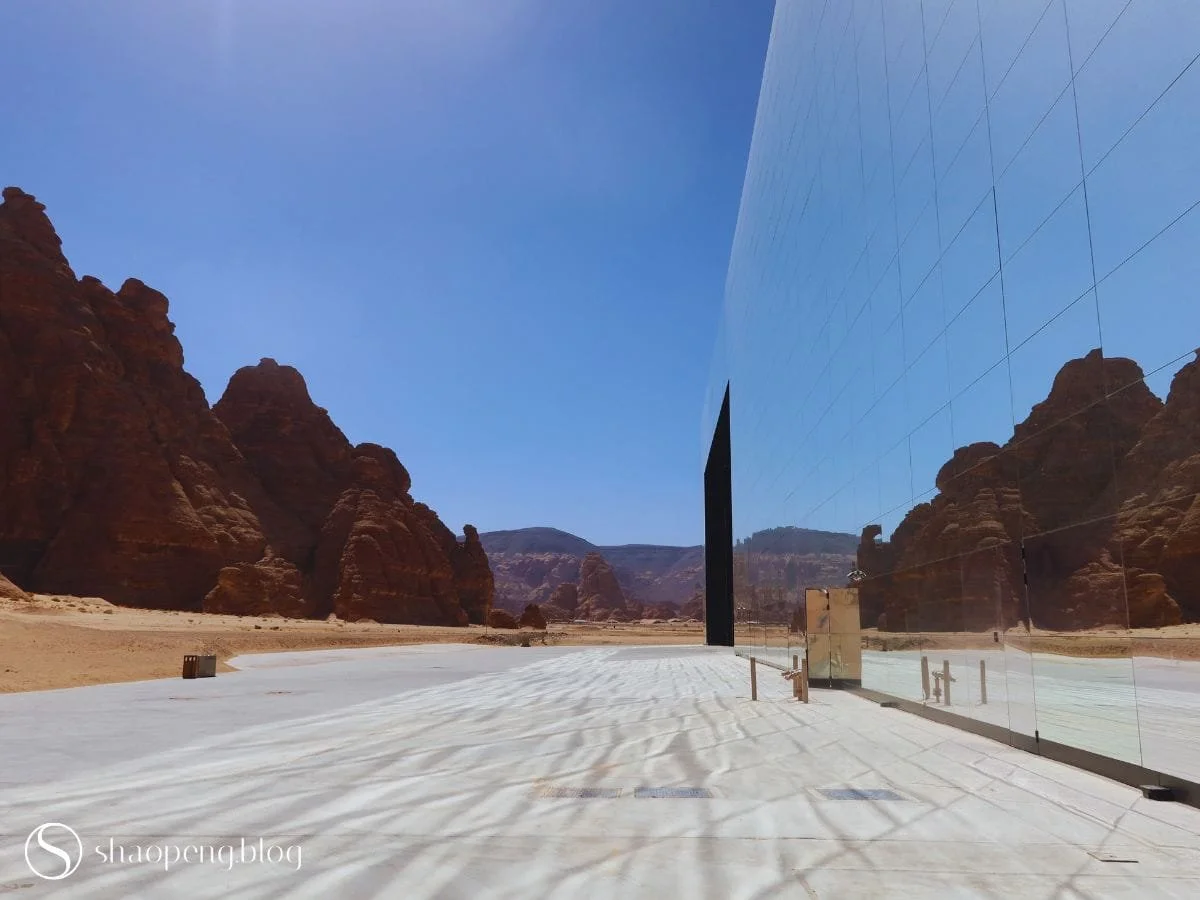
Maraya’s mirrored facade blurs the boundary between architecture and the natural landscape of Ashar Valley.
It’s not only mirages that the desert plays tricks on you. Somewhere in Ashar Valley, you may stumble upon a flash of sky and sandstone where there should be none, leaving you to wonder for a moment if the heat is getting to you. Look closer, however, and the illusion resolves into a building. More precisely, into a mirror.
This is Maraya. The guiding philosophy of its architects, Milan-based Giò Forma Studio, says it best: “If a building cannot compete with the landscape, it should enhance it.” So instead of building with stone or concrete, they built with reflection.
Recognised by Guinness World Records as the largest mirrored building ever constructed, Maraya’s facade spans 9,740 square metres of mirrored glass. The perfect cube, measuring 100 by 100 by 26 metres, rises from the ground with an almost surreal stillness. Its name, in Arabic, means “mirrors.” Inside, the main auditorium seats 500 guests, complemented by VIP boxes, a conference centre, exhibition spaces, and a restaurant.
Maraya poses a question to the landscape: what happens when a structure refuses to impose itself and instead holds up a mirror to everything around it? In AlUla, the answer lies somewhere between architecture and illusion, a monument that earns its place by appearing as though it does not exist.
Wanderer’s tip — Access to Maraya is available with a restaurant reservation. Book ahead, especially during the cooler winter months when AlUla’s event calendar comes alive.
Elephant Rock
Sense of Wander: ★★★☆☆
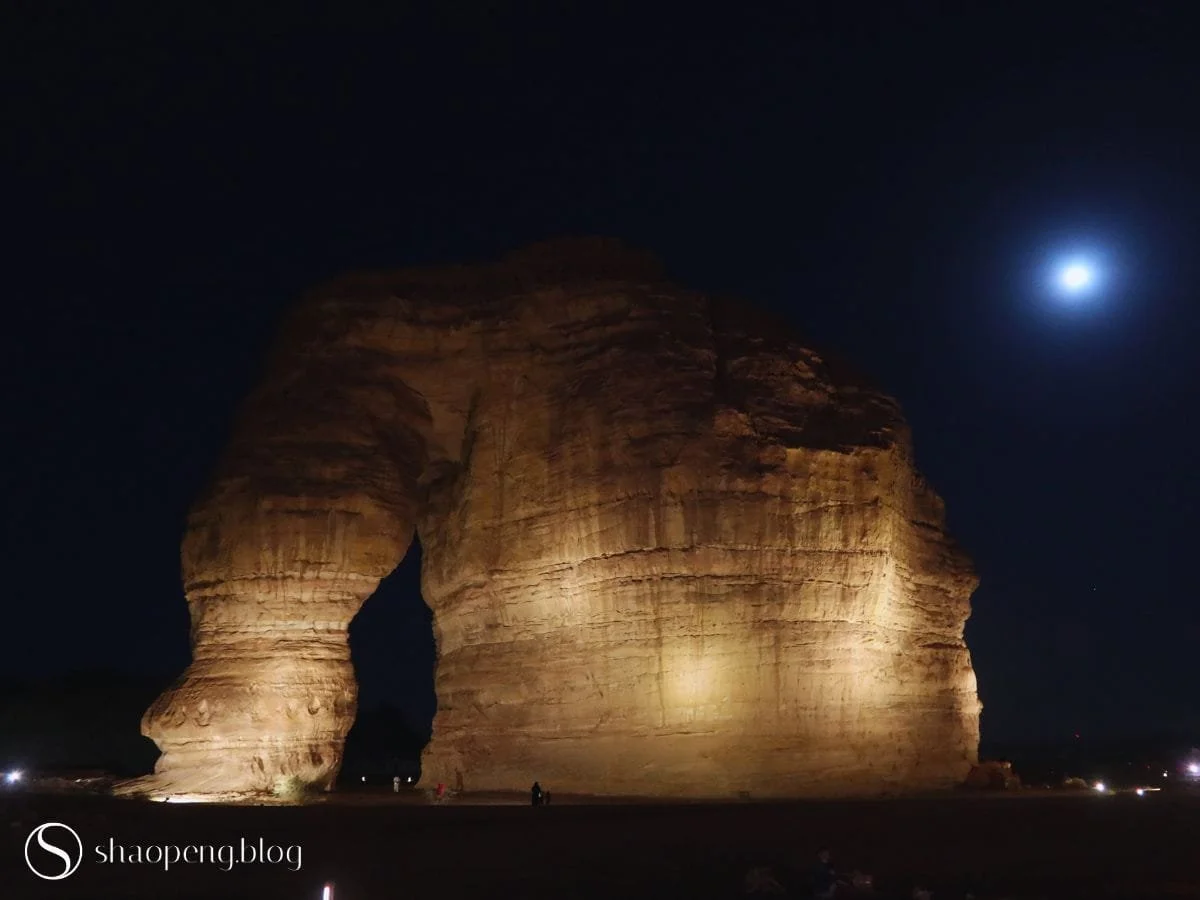
Elephant Rock stands in stillness beneath the moonlight.
The drive out to Elephant Rock is an experience of its own, one that feels rare for someone who lives far from the desert. The road northeast of the Old Town grows dark, with no streetlights to guide you, as if the desert is slowly swallowing the surrounding landscape into darkness. The little light that remains comes from the moon and, eventually, from the illumination of the site.
Among AlUla’s many sandstone formations, Jabal AlFil, known as Elephant Rock, is one of the region’s most iconic landmarks. The surrounding sandstone was formed between 540 and 485 million years ago and uplifted approximately 30 million years ago as the Red Sea began to open. Since then, the elements have sculpted the rock into the silhouette of an elephant, with a massive body and a trunk reaching towards the ground. Rising 52 metres tall, its sheer scale inspires a sense of humility when experienced up close.
As dusk descends, the rock is illuminated with warm glow, and the surrounding space transforms into something resembling a piazza. Fire pits are scattered throughout the precinct, drawing visitors into conversation. SALT’s food truck serves burgers and fries, while a coffee stand sends the aroma of espresso through the night air. I opt instead for sahlab, a warm drink traditionally enjoyed during the winter months.
Wanderer’s tip — Arrive before sunset to watch the rock shift through shades of amber as the light fades, then stay as darkness falls and the illuminations take over.
Harrat Viewpoint
Sense of Wander: ★★★★☆
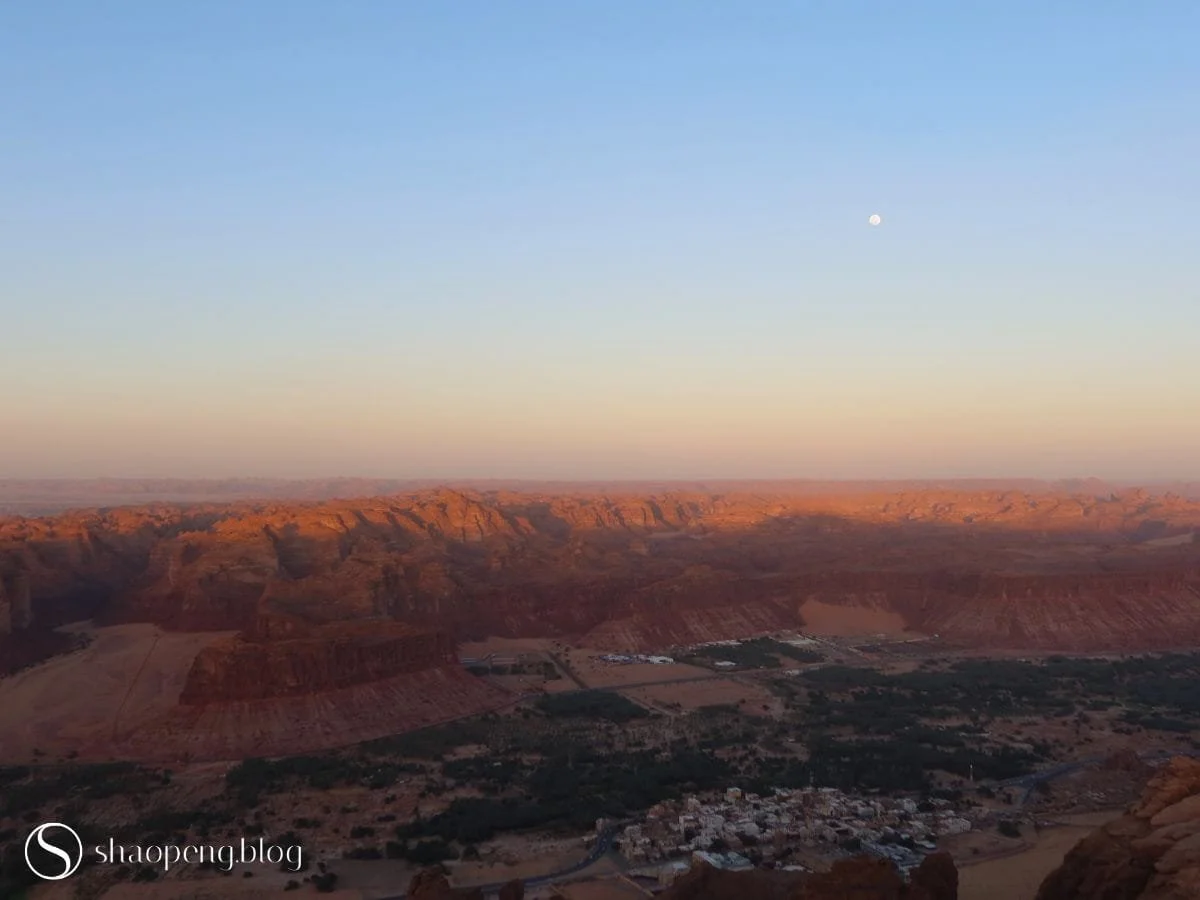
Overlooking AlUla as the desert glows in the light of sunset.
The road to Harrat viewpoint is not far from the Old Town, winding past the Winter Park station where we had stopped earlier in the day. The climb is steep, with the road switchbacking sharply as it rises, but it is well paved. The effort of the ascent is softened considerably by the camels grazing along the roadside, utterly unbothered by passing cars, as if the desert belongs to them, which, of course, it does.
What you do not immediately realise until you step out at the top is that you are standing on an entirely different geological world from the one you left behind in the valley below. The Harrat viewpoint sits atop Harrat Uwayrid, a volcanic plateau formed by ancient lava flows. The ground you stand on is solidified magma. Hidden within this volcanic landscape are 431 standing stone circles dating back approximately 7,000 years — structures older than Stonehenge.
Standing before this expansive panorama, I find myself reaching for comparisons: the early morning light on the Nile at Luxor in Egypt, and the all-encompassing vastness of Kenting National Park in southern Taiwan. As the sun sets, the colours of the valley slowly fade, transforming once again with the changing light. Nature, in its generosity, offers the same sense of awe in countless forms. SubhanAllah.
Wanderer’s tip — Plan to arrive an hour before sunset to witness the full transformation of the valley as the light fades. Bring a light jacket, as the elevation brings a chill that the valley floor does not.
You may also be interested in: