
Artisans braid silk by hand, hammer gold into iron, and let me paint a daruma to take home, all inside the Kyoto State Guest House at the invitation-only JAPAN SUI COLLECTION.
Sense of Wander: ★★★★☆

Kouki Matsushima braids a traditional kumihimo cord.
KYOTO, Japan — The invitation arrived with a happy coincidence: JAPAN SUI COLLECTION would take place on my birthday. I couldn’t think of a better way to spend it than among the traditional crafts I’ve always loved seeking out across Japan.
The moment I step into the grounds of Kyoto Gyoen, the city’s noise falls away. Gravel crunches underfoot, and trees stand tall and still around the Kyoto State Guest House. After checking in at reception, I’m greeted by our host, Masaya Kitao, Councillor of the Cabinet Secretariat, before being left free to wander.
A little context before I do. JAPAN SUI COLLECTION is a Cabinet Office project launched in 2025 to bring Japan’s traditional crafts, regional artistry and food culture to a wider international audience. The word sui refers to a particular kind of refined beauty, distilled through careful discernment from among many possibilities.
This year’s Kyoto edition, held on 7–8 November, takes the title Mastery of Touch, Mystery of Time. What draws me most is the live demonstrations. Rather than simply looking at the finished work, you get to watch the artisans at work, see their techniques up close and ask them questions along the way.
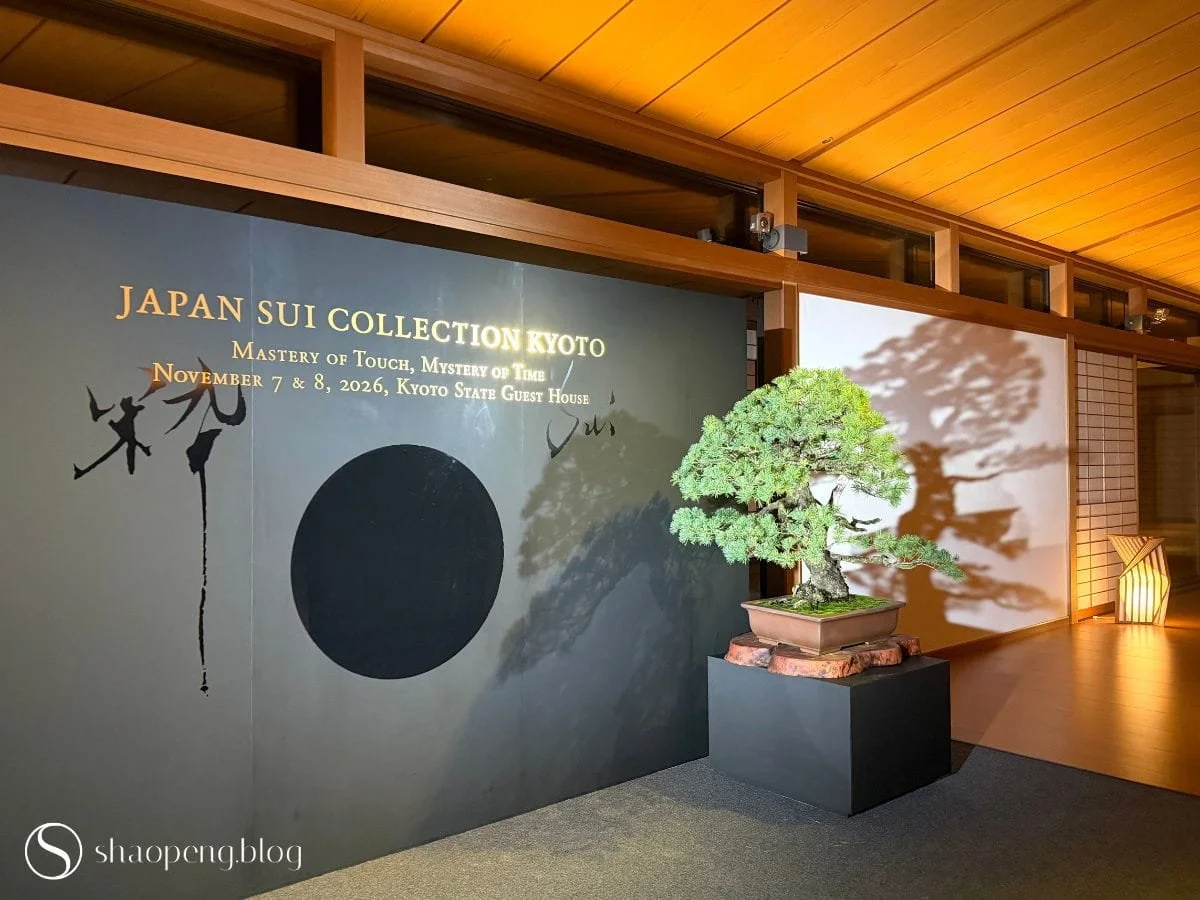
Entrance to JAPAN SUI COLLECTION KYOTO.
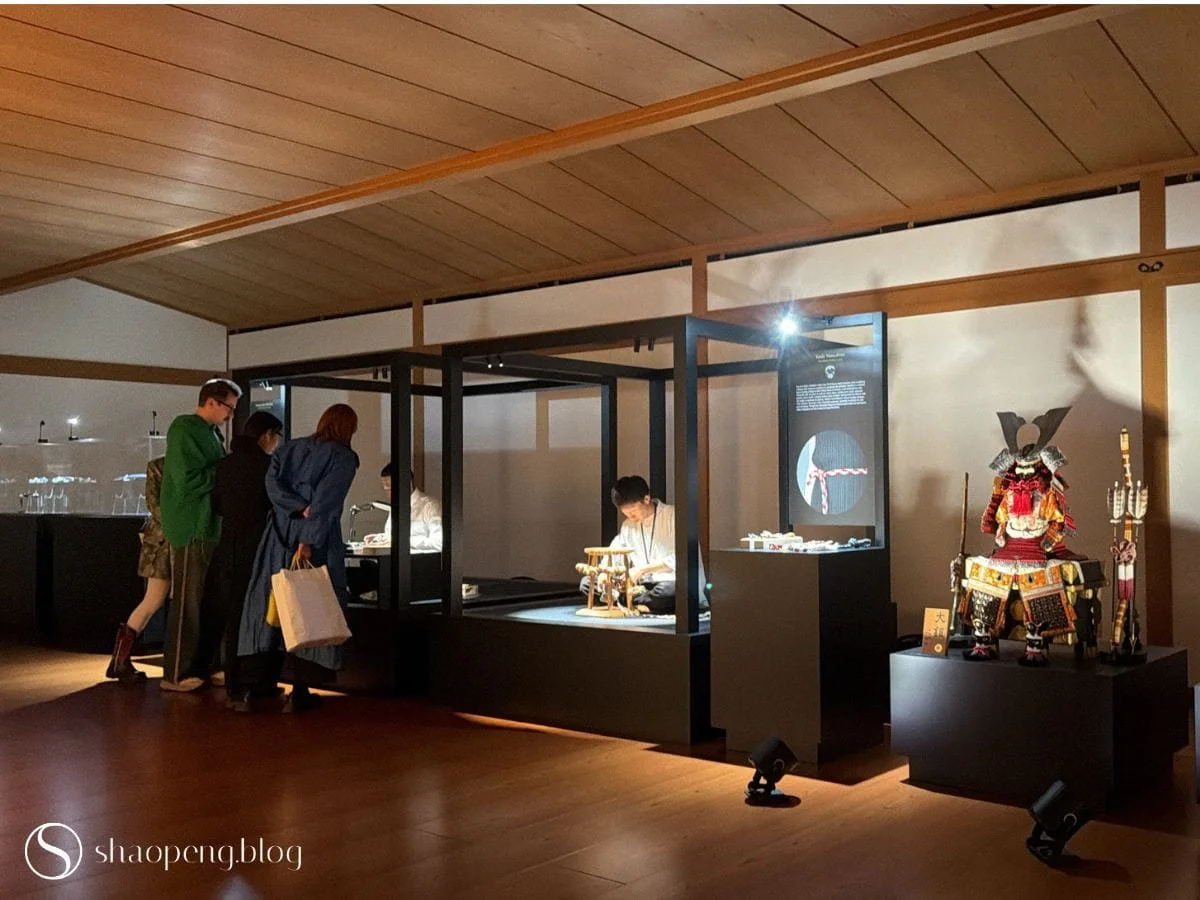
Artisans’ live demonstrations draw curious visitors.
My first stop is a workstation where Kouki Matsushima sits cross-legged before a marudai, the round wooden stand used in kumihimo, the Japanese art of cord braiding. Threads in a multitude of colours hang from it, and his hands move among them like a magician’s: lifting, crossing, passing. It feels like watching a small stage performance, and I can’t look away. When I ask how he knows which strand goes where, he tells me he’s been trained to memorise the sequence.
Iga kumihimo originates in Mie Prefecture, where braided cords were once used to fasten samurai armour and sword fittings. Today, they are just as likely to adorn a kimono or a contemporary dress. I’ve come across braided cords in Japan before, but never seen them made with such intricacy.
Beside him sits Kentaro Inada, a master of higo zogan, the metal-inlay craft of Kumamoto, formerly known as Higo. Gold and silver threads are hammered into iron, its surface first cross-hatched with countless fine grooves. The craft dates back to the 17th century, when it was practised on sword guards and firearms.
Among the pieces on display are sword guards inspired by Miyamoto Musashi, who spent several years in Higo towards the end of his life. Made of iron, they feature bold, sea-cucumber-shaped openings known as namako-sukashi tsuba. Only later does it dawn on me that Inada is the very same artisan who taught me the art of inlay at a workshop in Kumamoto more than five years ago. (Read: Exploring the Art of Inlay in Kumamoto, Japan) I’m so happy to see him again.
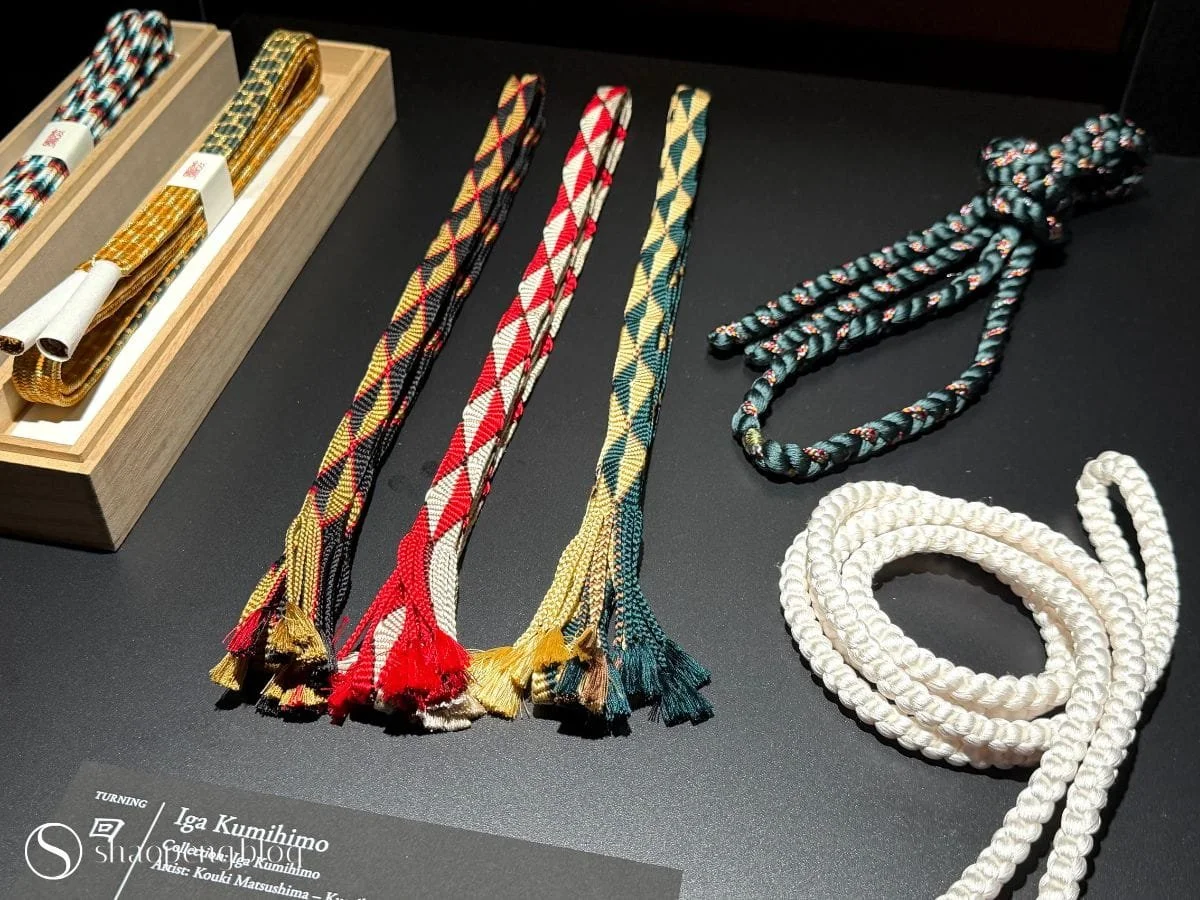
Iga kumihimo by Kouki Matsushima.
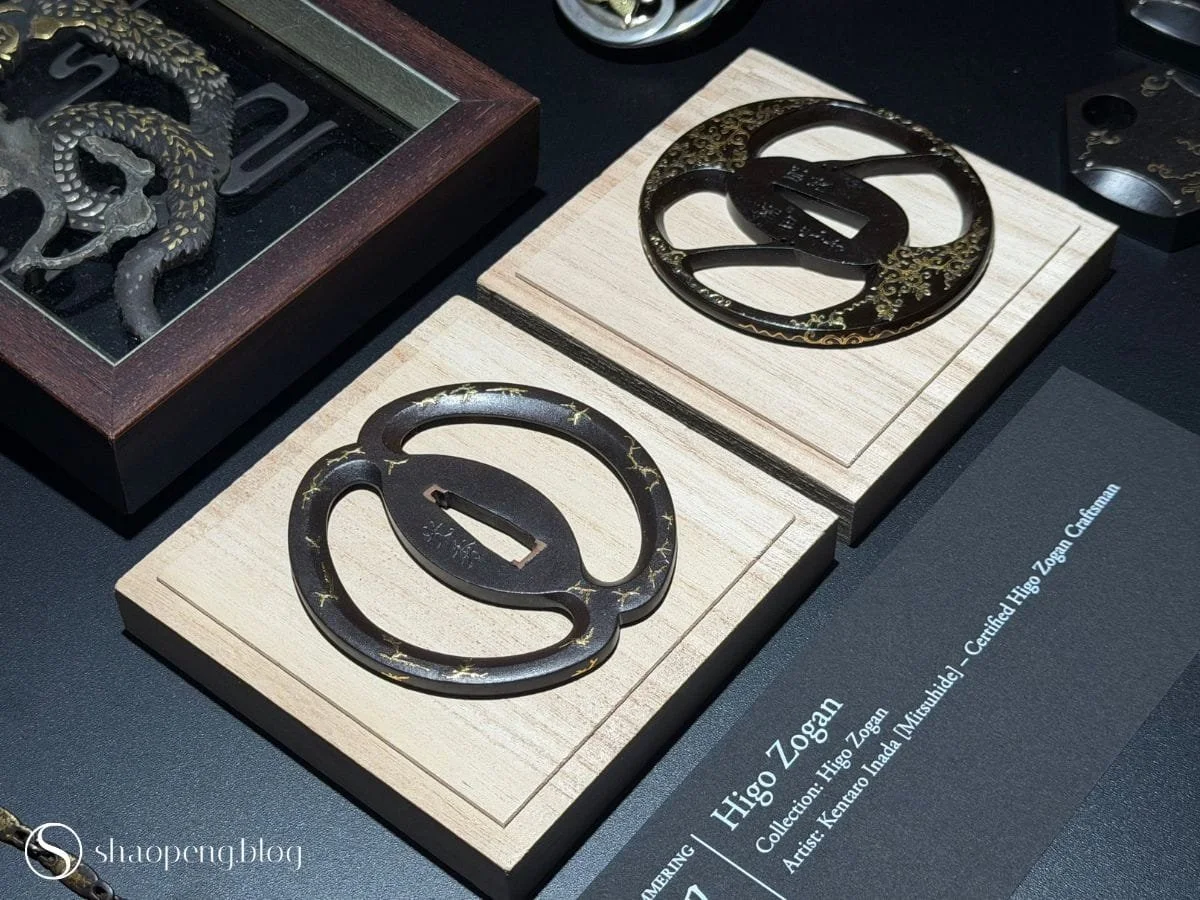
Higo zogan by Kentaro Inada.
Further along, I find Takuya Niwa, the fifth-generation craftsman of Niwa Futon, a family workshop in Nagoya with a history spanning more than 150 years. His demonstration takes us through the making of a cushion, from teasing apart cotton fibres by hand to evening out their thickness and density. I arrive just in time for the final step in making a zabuton, a square floor cushion that, he tells me, can also be used for meditation. He draws a few threads through the centre to hold the cotton in place.
Next to him is Yohei Kato, who practises fusaizome, or “wind-coloured dyeing”, a technique in which gradations of colour seem to capture the movement of wind. It has its roots in a gradation-dyeing tradition dating back more than 1,200 years. Watching the colours shift and blend feels almost meditative.
Nearby, a kimono by Junko Yoshino catches my eye. Its suminagashi, or “floating ink”, forms flowing patterns in shades of black, like smoke slowly settling. It is marbling at its most hypnotic. The oldest surviving example in Japan dates to the early 12th century and appears in Sanjurokuninshu, a Heian-period anthology of poetry. It is also considered the earliest example of marbling anywhere in the world. A distant cousin is Turkish ebru, which developed along a separate artistic tradition with roots in Iran and Central Asia.
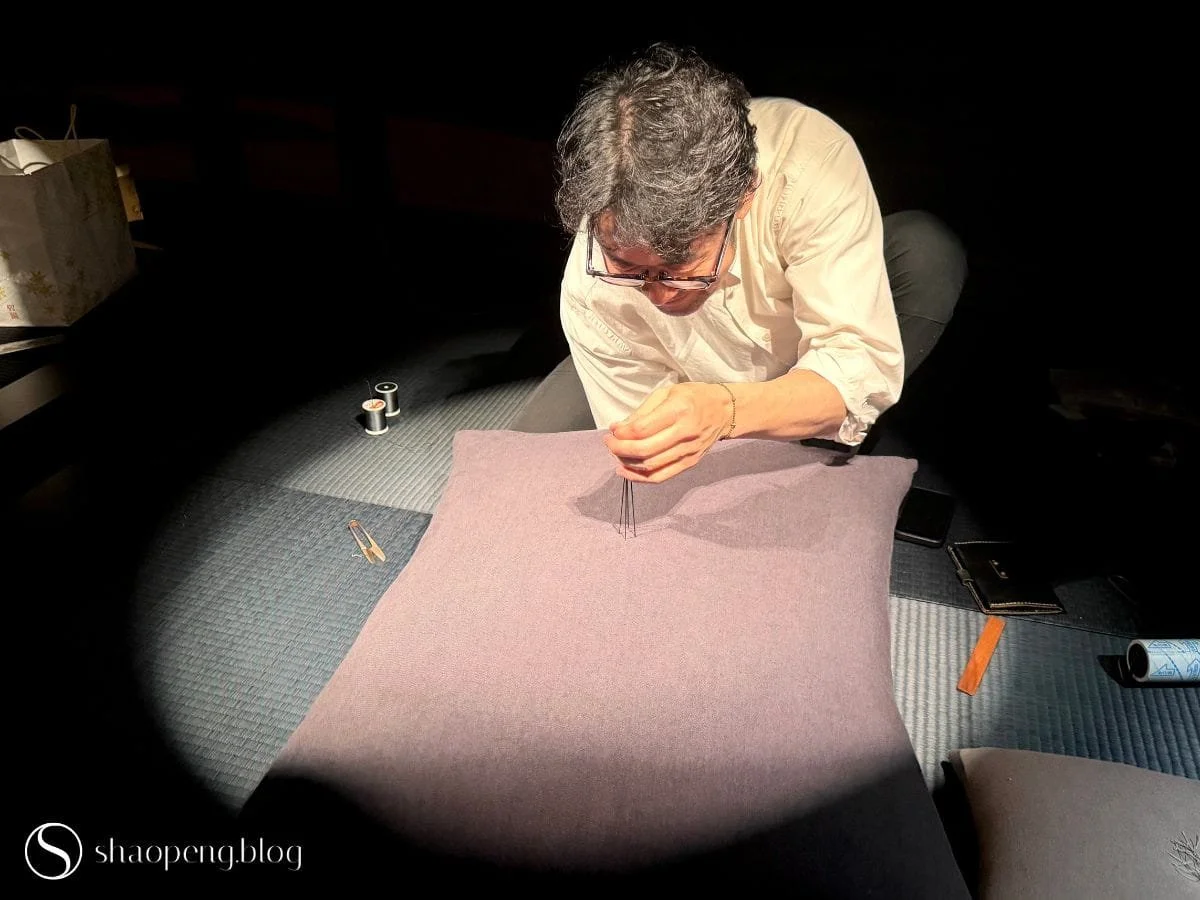
Takuya Niwa shapes and stitches a Zen zabuton.
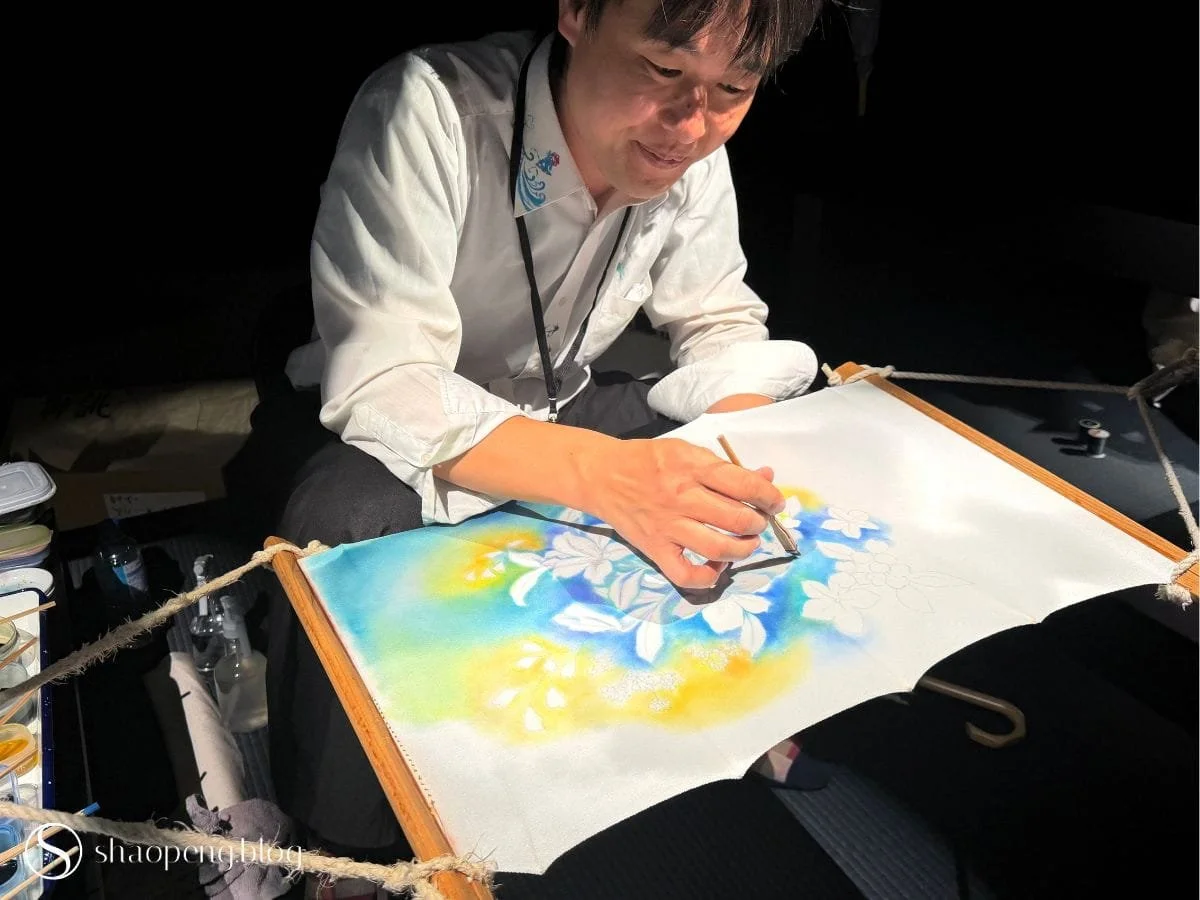
Yohei Kato applies colour to the lightly dampened fabric.
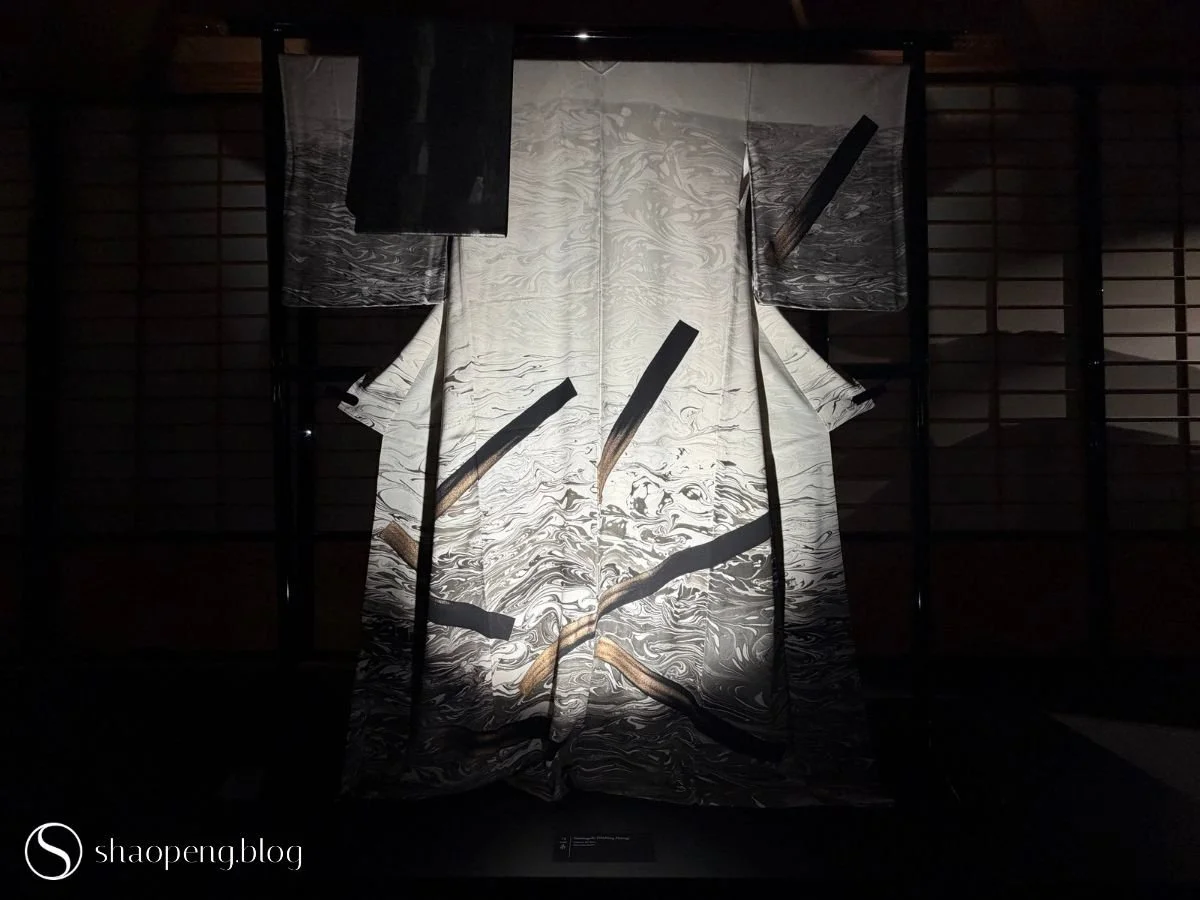
Suminagashi kimono by Junko Yoshino.
Across the room, the mood turns playful. Shoichi Hashimoto is the 21st-generation head of Honke Daikokuya in Fukushima Prefecture, a family workshop making Miharu hariko, traditional folk toys made from washi paper using papier-mâché techniques and wooden moulds. The tradition dates back to the Edo period (1603–1868).
I stop to watch him paint a daruma’s face, as though breathing life into it. When he asks if I’d like to try painting one myself, I say yes before he can finish the question. The process is quick but calls for a steady hand and precise brushwork. My art-school years finally come in handy. Hashimoto is one of the few artisans who still makes these toys entirely by himself, from carving the moulds to applying the final brushstroke. He then lets me take my little daruma home, making it the best birthday souvenir I could have asked for.
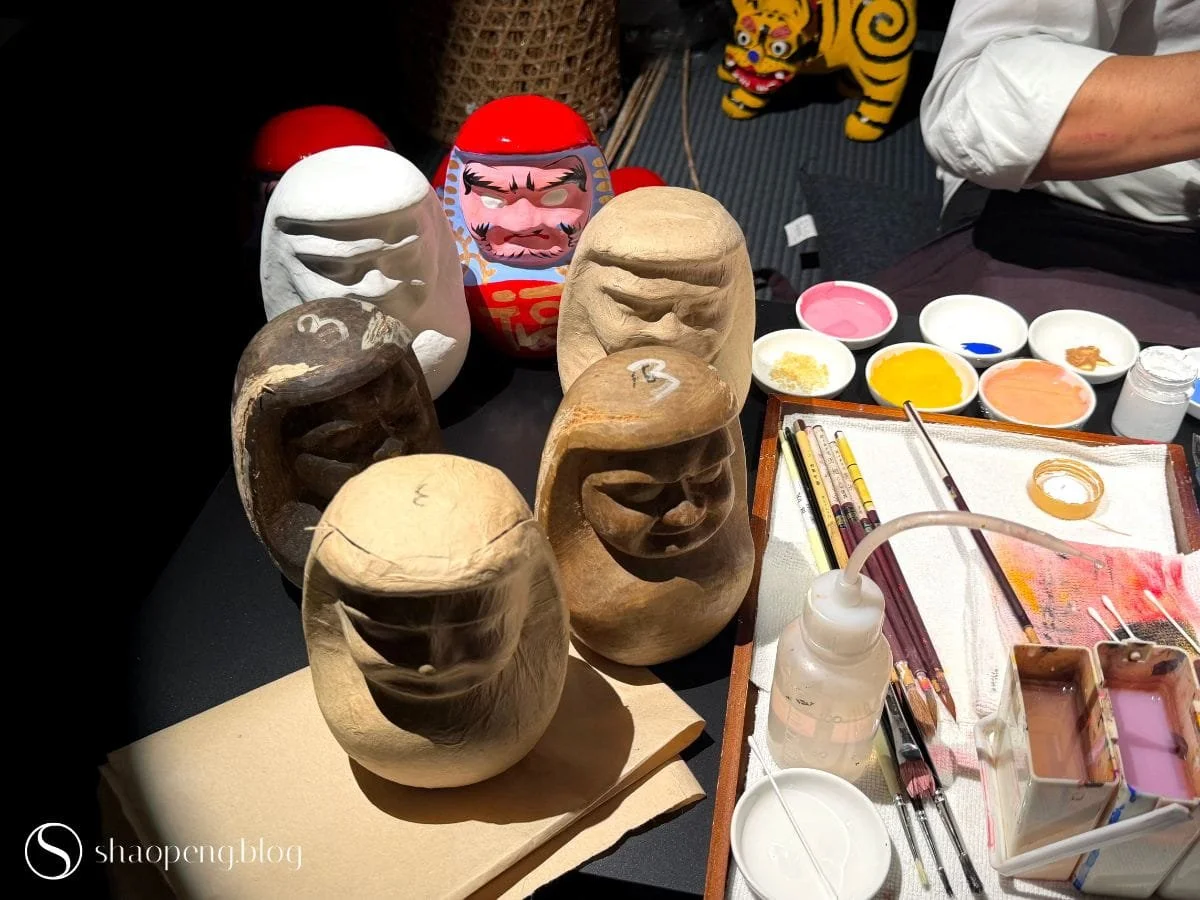
Wooden and papier-mâché moulds illustrate the process of shaping daruma dolls.
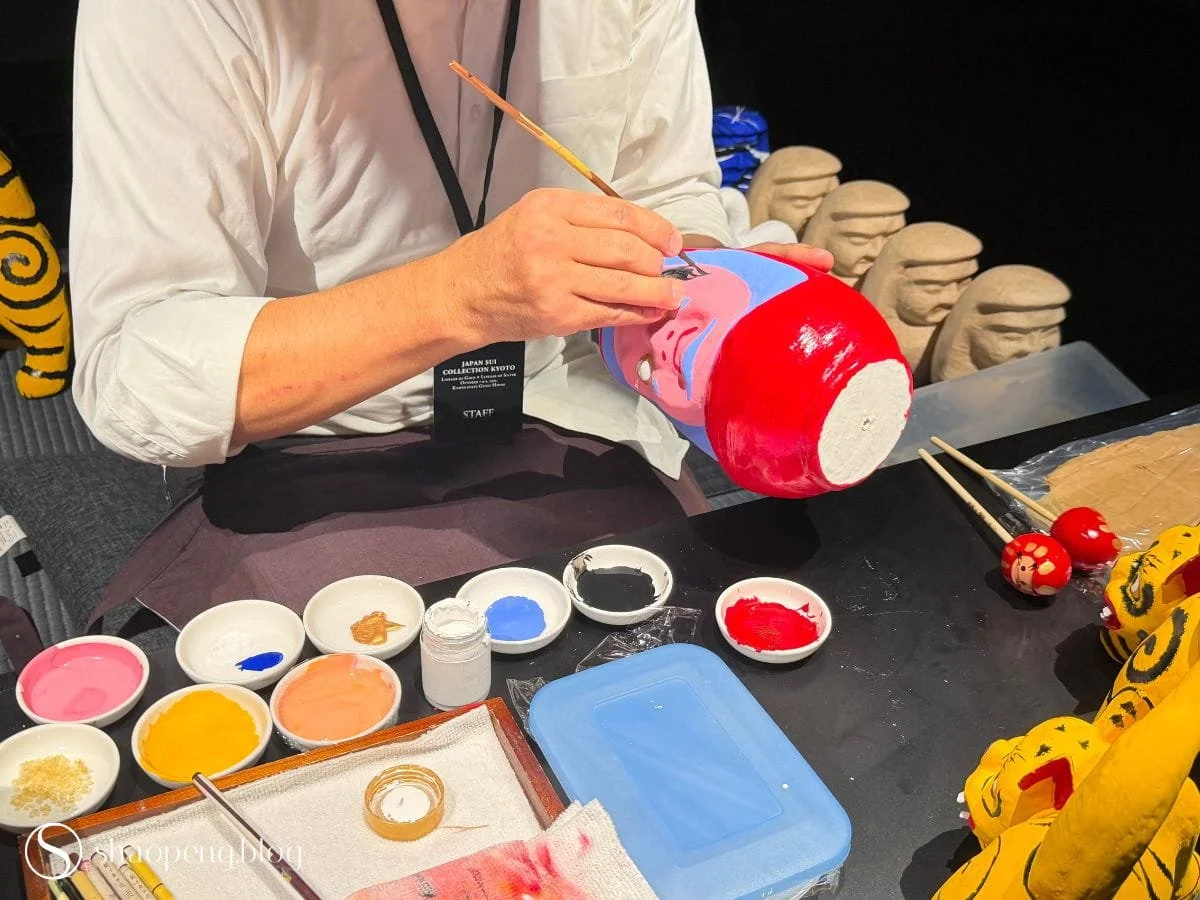
Shoichi Hashimoto paints a papier-mâché daruma doll.
A little further on, I find myself holding my breath as I approach Yuzo Eto, a lacquer artist specialising in the restoration and colouring of important cultural objects. He is demonstrating kintsugi, the art of repairing ceramics with urushi lacquer and metallic powder. Rather than concealing the damage, the technique celebrates it, allowing an object’s history to remain visible in trails of gold or silver.
What impresses me most is an Edo-period vessel that has lost much of its original body. Eto has studied its original form and painstakingly reconstructed the missing contours using kintsugi. Usually, gold traces the lines of a break; here, it defines almost the entire silhouette of the vessel.
The exhibition also gathers lacquerware from Yamanaka, Danjiri carving, Gifu paper lanterns, Tokyo silverware and Kutani ware, each showing how traditional craft reaches into contemporary expression. And there are bonsai, miniature trees raised with patience in small pots. (Read: Omiya: A Village Born for Bonsai)
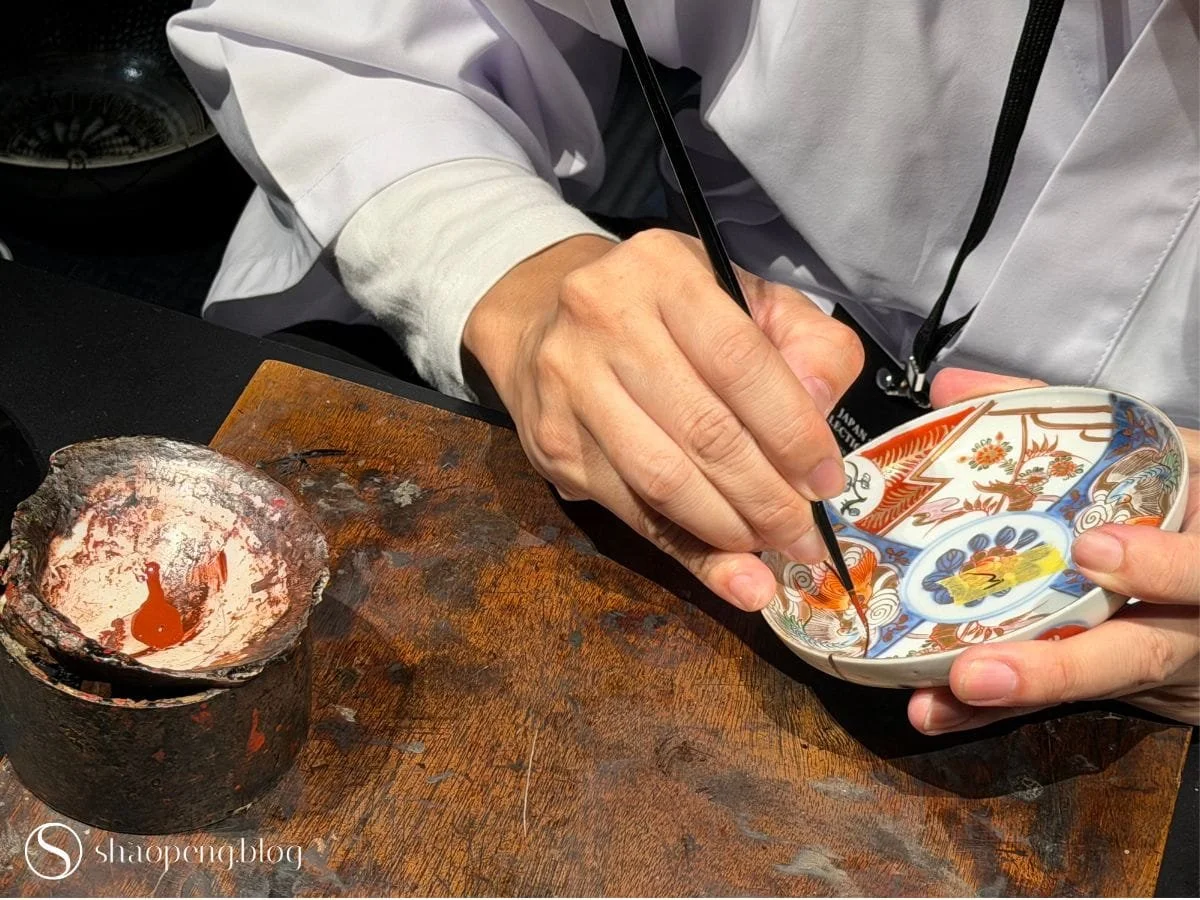
Yuzo Eto applies urushi lacquer to repair a damaged ceramic dish.
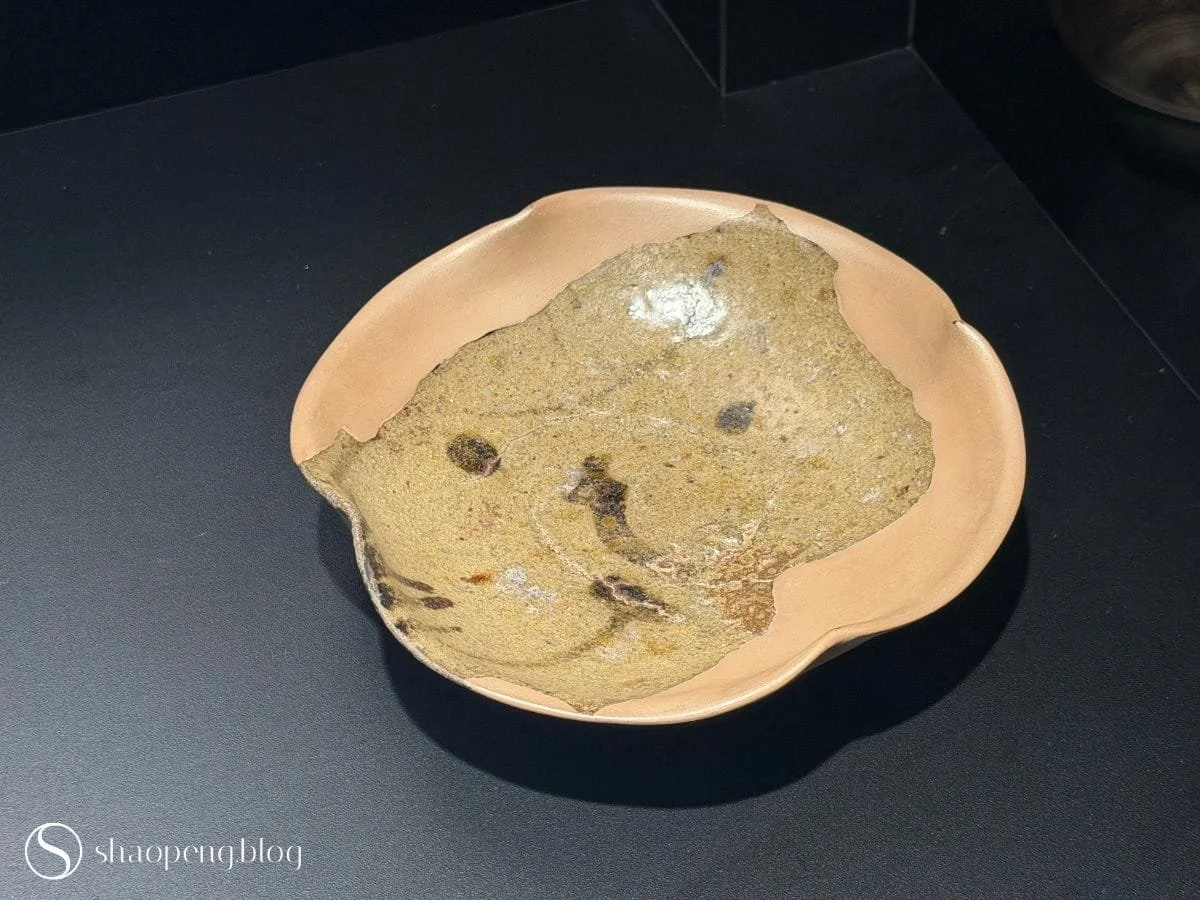
Kintsugi by Yuzo Eto.
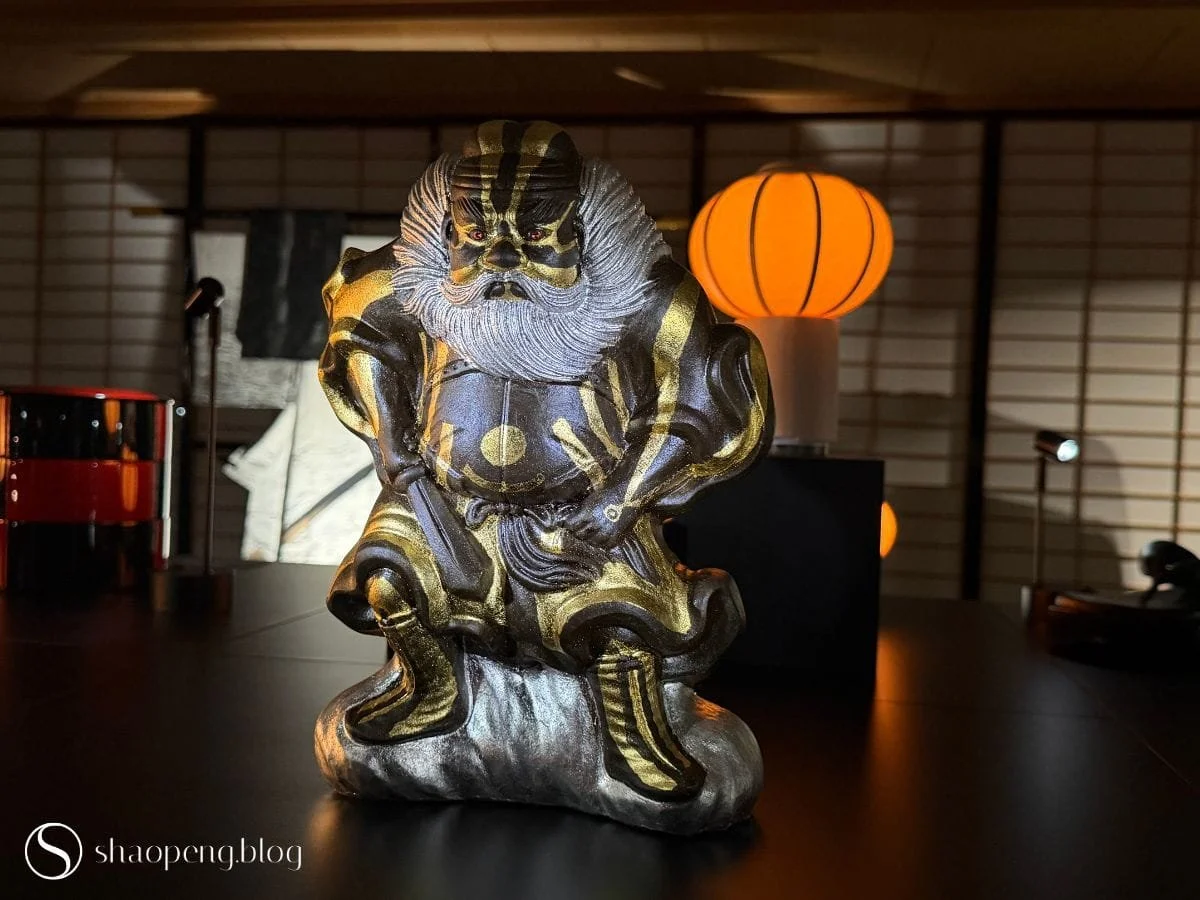
Kyo-Butsugu by Hakutonbo.
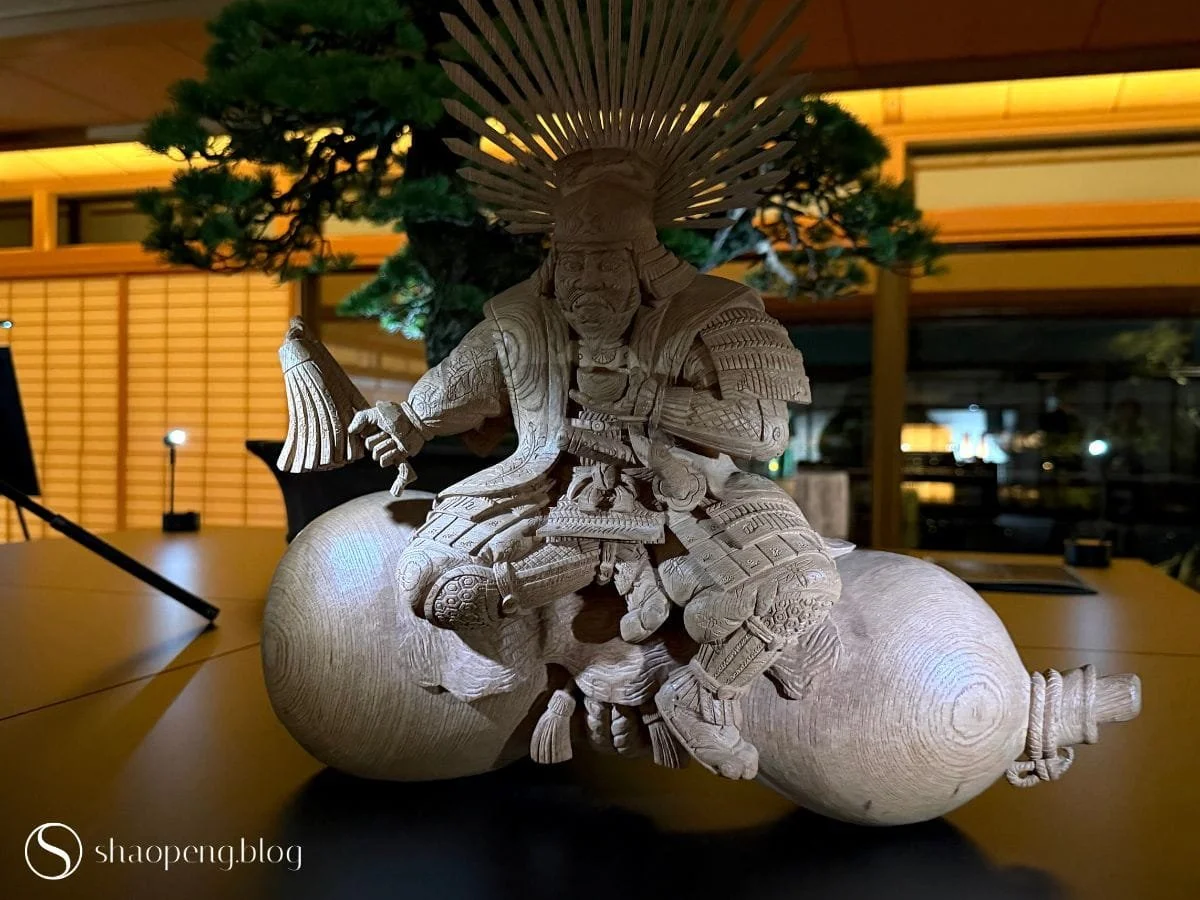
Hideyoshi Taiko by Maeda Woodcarving Studio Co., Ltd.
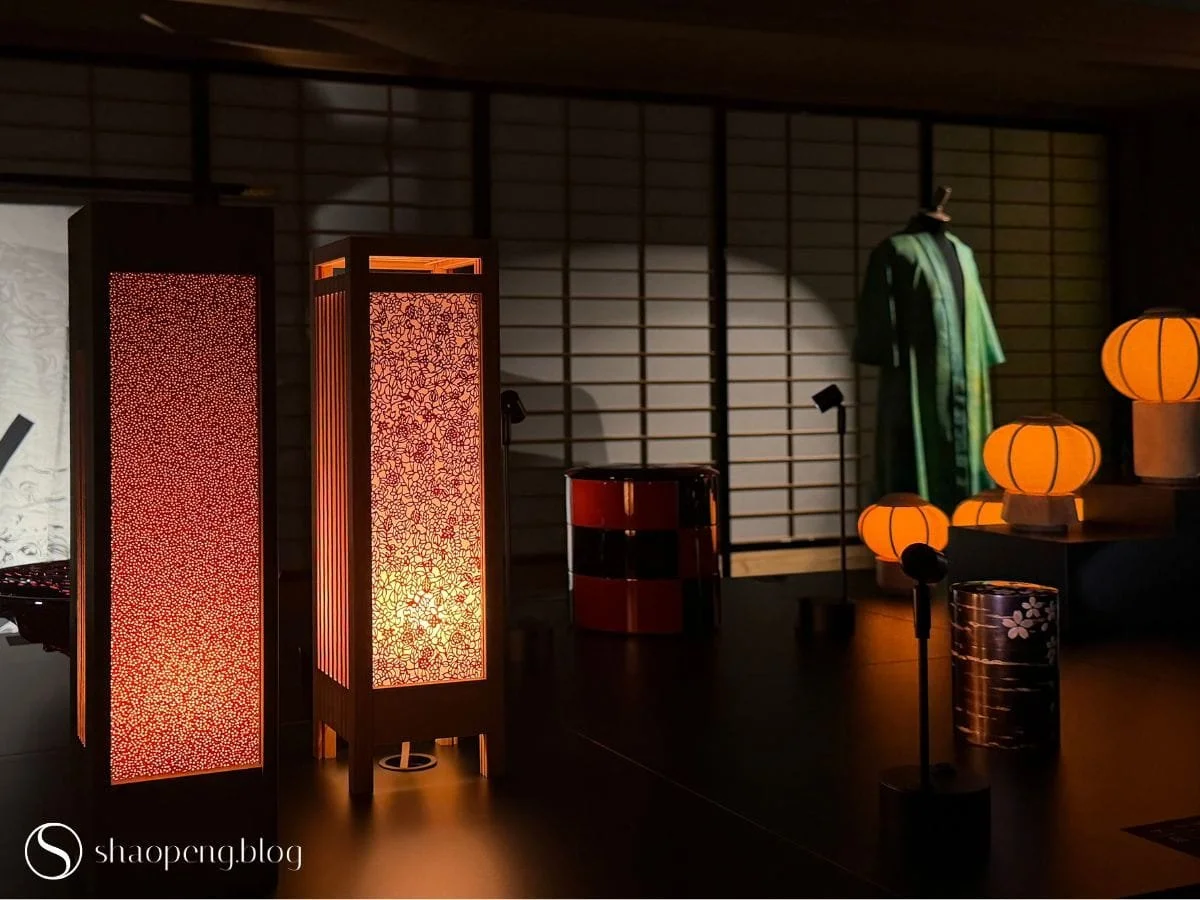
A curated selection of crafts from across Japan.
As evening falls, DRUM TAO takes over with wadaiko drumming. The shinobue flute opens the performance with a mesmerising melody, soon joined by the rhythmic thunder of the drums. Nearby, a fashion show by Junko Koshino, producer of JAPAN SUI COLLECTION, brings craft and couture together, with the drumming as its soundtrack. Watching models walk the corridors of a state guest house is a rare sight.
And for anyone feeling peckish, NOBU Tokyo serves Japanese-inspired finger food infused with f Peruvian influence, making sure no one leaves hungry.
Perhaps it was coincidence that all this fell on my birthday, but I couldn’t have asked for a more fitting way to spend it. November is Kyoto’s art month, and what I take home from this evening is something more personal: the memory of watching skilled hands at work, hearing the stories behind their crafts, and meeting the people who carry these traditions forward. For a day, I was able to step a little closer to the world I’ve spent so much time seeking out across Japan. And that — more than anything — feels like a gift.
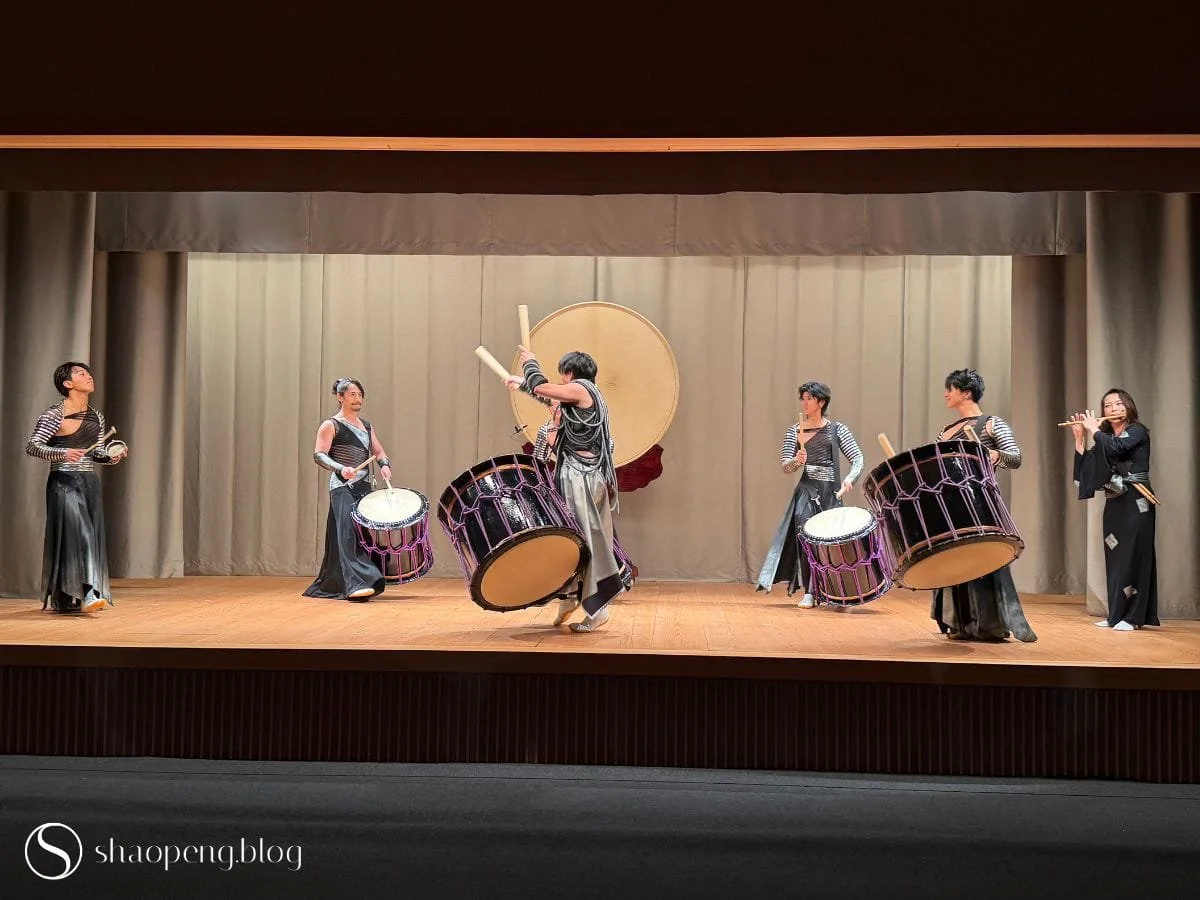
DRUM TAO invigorates the crowd with a live taiko performance.
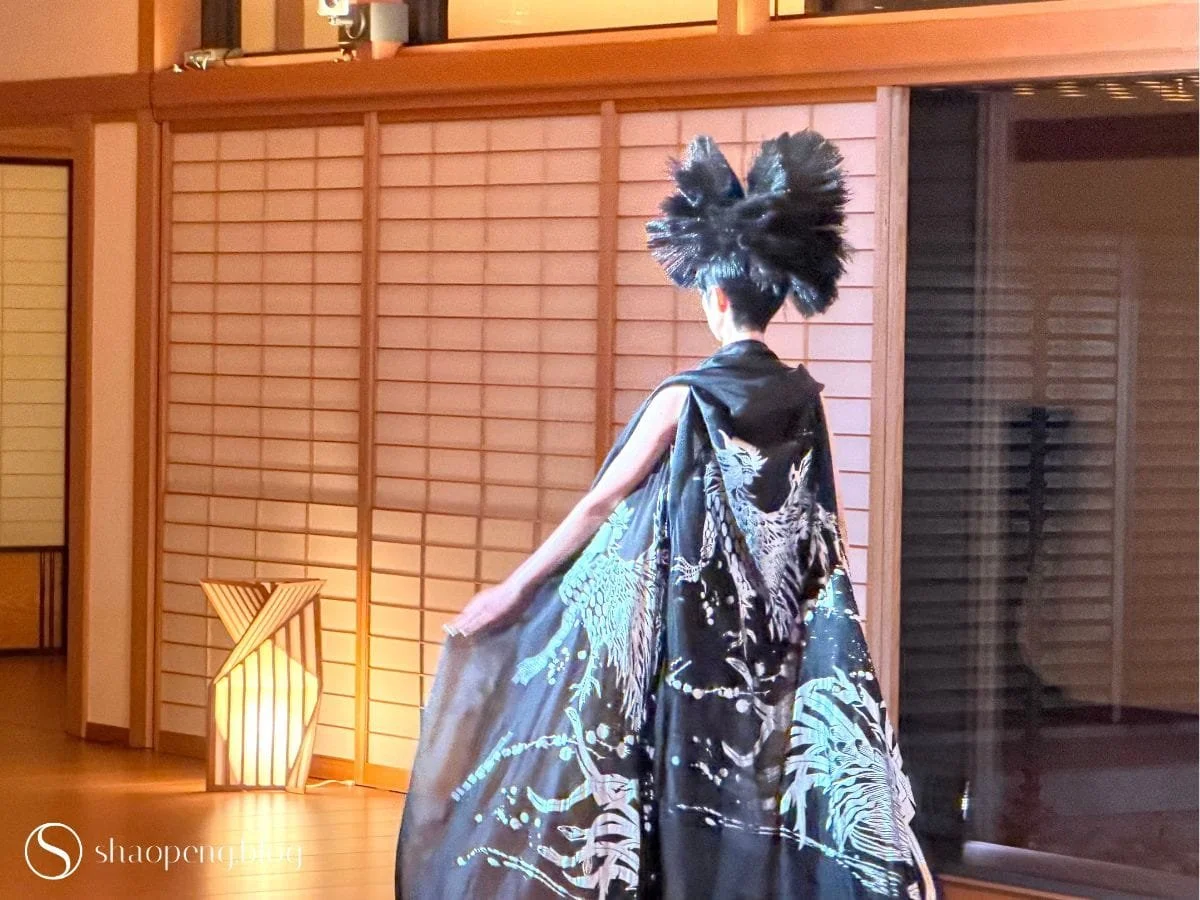
The Kyoto State Guest House becomes a fashion runway.
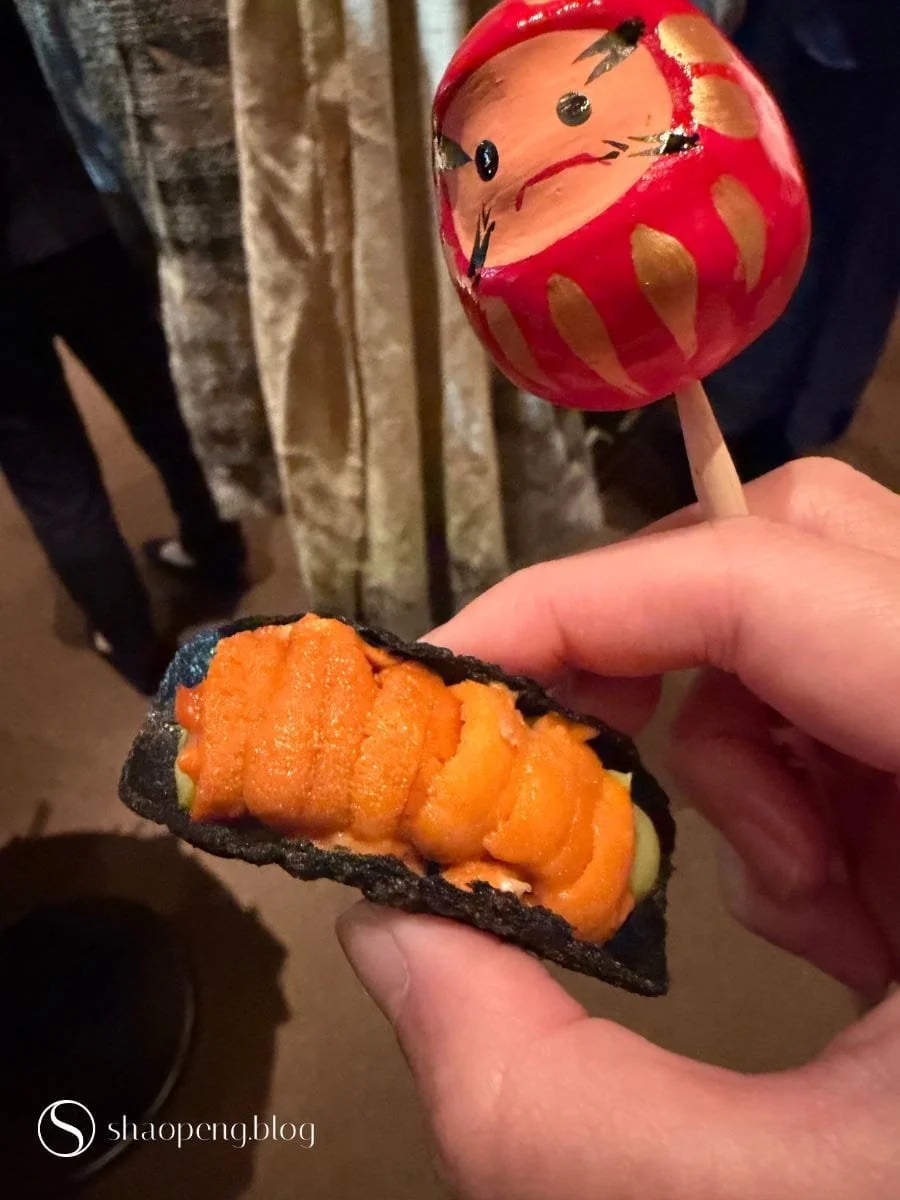
Savouring NOBU Tokyo’s sea urchin and avocado nori taco, with my little daruma for company.