
I came to a Kyoto art fair and ended up wandering three Buddhist temples, where contemporary art awaits among tatami, tearooms and Zen gardens.
Sense of Wander: ★★★★★
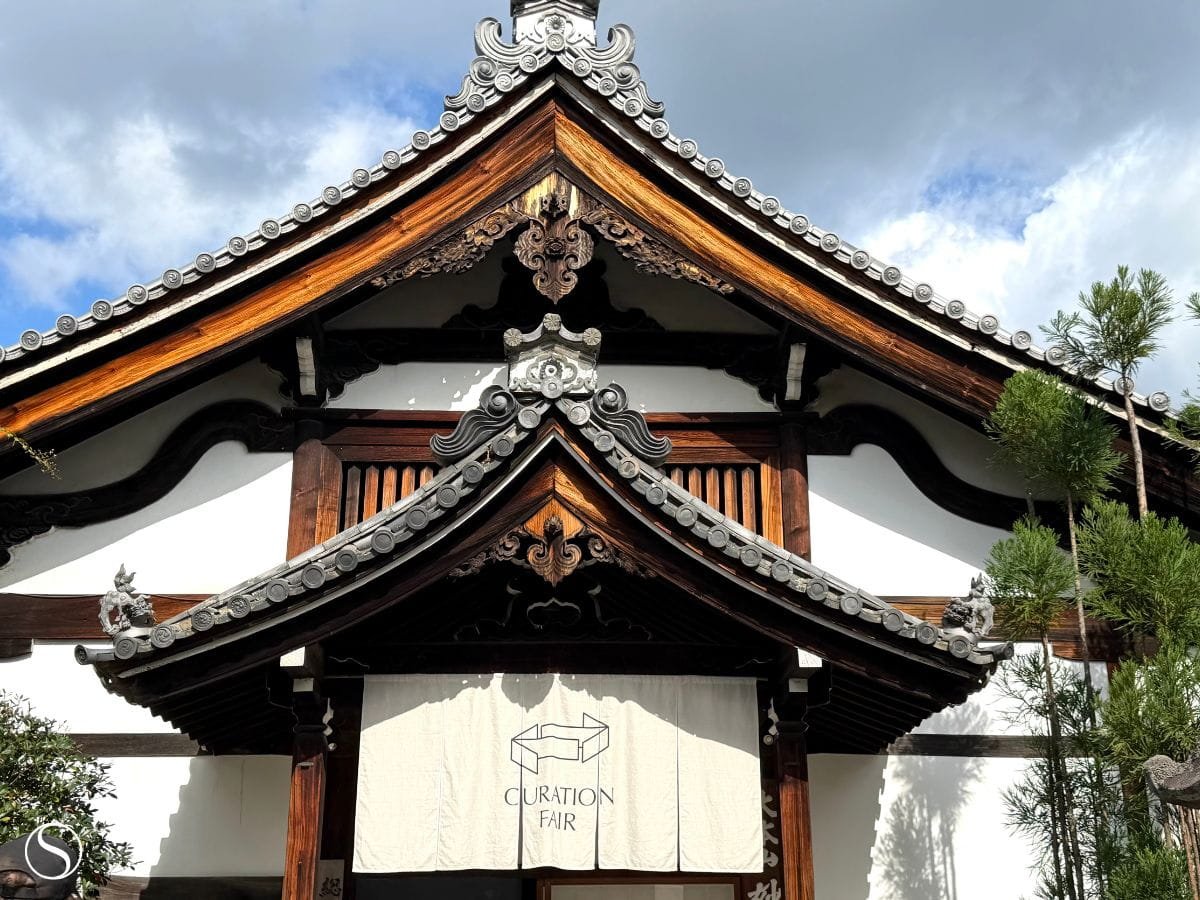
For three days in November, the grounds of Myokenji Temple are transformed into an exhibition space for CURATION⇄FAIR Kyoto.
KYOTO, Japan — I never expected to find contemporary art tucked into a Buddhist temple’s tatami rooms, or to lose a whole day to it. Then I wandered into CURATION⇄FAIR Kyoto.
The fair made its debut in Tokyo in spring 2024, in a traditional kudan house. Its name features a two-way arrow (⇄), reflecting the exchange between institutional-style curation and the art market. Kyoto followed in autumn 2025, with the fair held at Myokenji. This November, it returned for three days, expanding across three temples in the Nishijin district: Myokenji, Honpoji and Myokakuji. The number of exhibitors grew from 19 to 33, with two artist-run spaces from Melbourne joining as the fair’s first overseas exhibitors.
There are no white-cube booths here. Instead, artworks occupy the temples’ own rooms, blending so seamlessly into their surroundings that it’s sometimes hard to tell where one ends and the other begins.
With three venues and no particular plan, I decided to start at Myokenji.
Myokenji
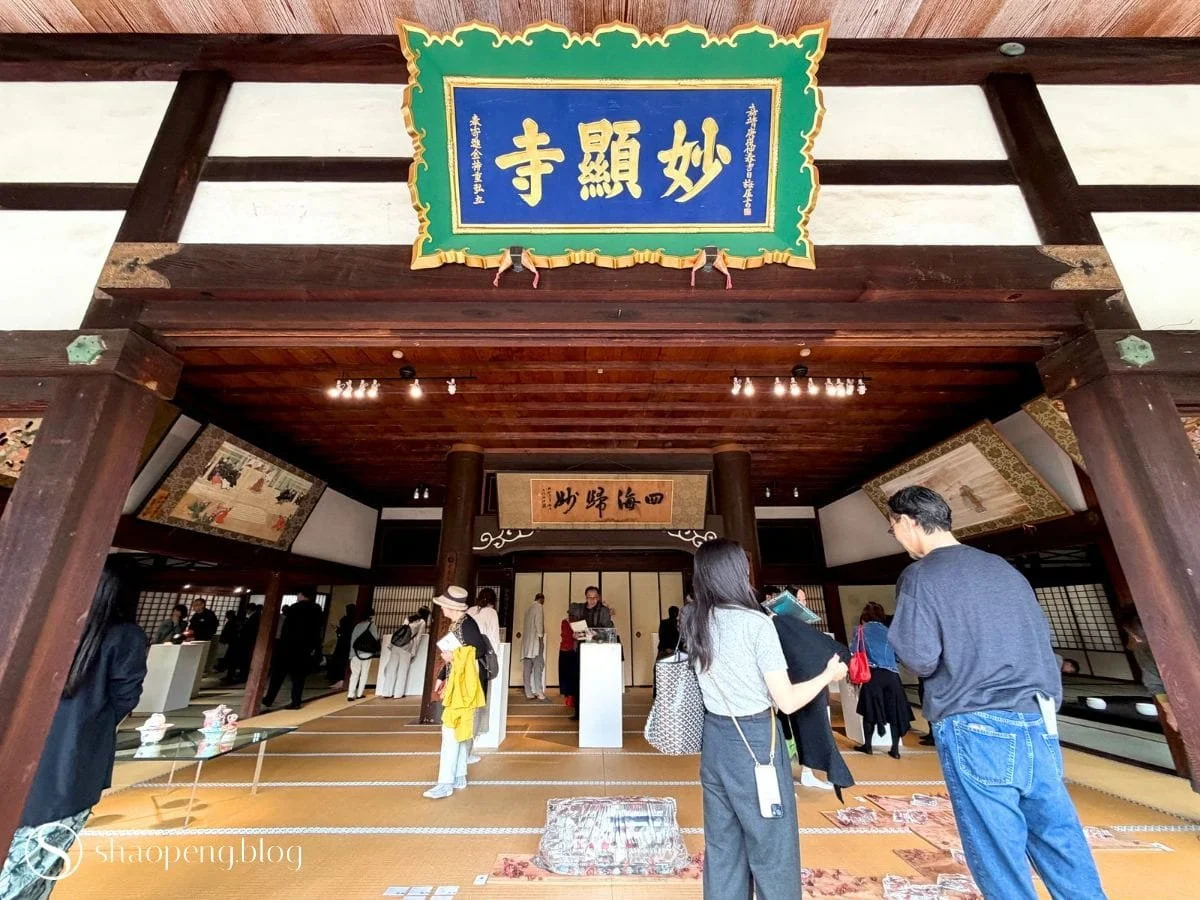
Myokenji’s Main Hall is home to the concurrent special exhibition, KO+GEI Kyoto 2026.
Myokenji is a daihonzan (grand head temple), and I feel its presence even before properly crossing the threshold. Visitors come and go, while low whispers and occasional bursts of excitement fill the halls.
The first thing I notice is a scattering of sculpted body fragments, seemingly made of stone, lying on a carpet over the tatami. They look a little out of place for a moment. Then, somehow, they begin to feel right. They are part of What Our Bodies Bring to Us, a series by Noriko Nakamura that tells the story of a woman conceiving a child through her relationship with a slime mould.
Ceramic bowls and vases occupy the built-in shelves, while paintings and installations lean against sliding doors. Outside, the Zen garden and surrounding greenery offer a moment of calm. Around every corner, there is something new to catch your eye. You never quite know what will make you stop next.
Somewhere along the way, I find myself drawn to the temple’s suikinkutsu, or water harp. The ritual is simple: slowly pour water in a circular motion from a bamboo ladle (hishaku) onto a bamboo grate (take-sunoko), then wait for the echo. I hear nothing. No one in our little huddle seems to realise that we are supposed to pause and step back to listen. Perhaps the sound is simply feeling shy today.
You might expect an art fair to disturb the sanctity of a temple, but somehow, it doesn’t. AISHO and Marco Gallery have turned the chaya into a little room of wonder, bringing together works by several artists in one intimate space. Even with gallerists and potential buyers chatting nearby, the chaya and shoin retain their stillness.
Between the halls, the garden slows me down. Eventually, I find myself sitting by a circular window that frames the greenery outside. It’s an artwork in its own right, changing with the shifting sunlight, clouds and breeze.
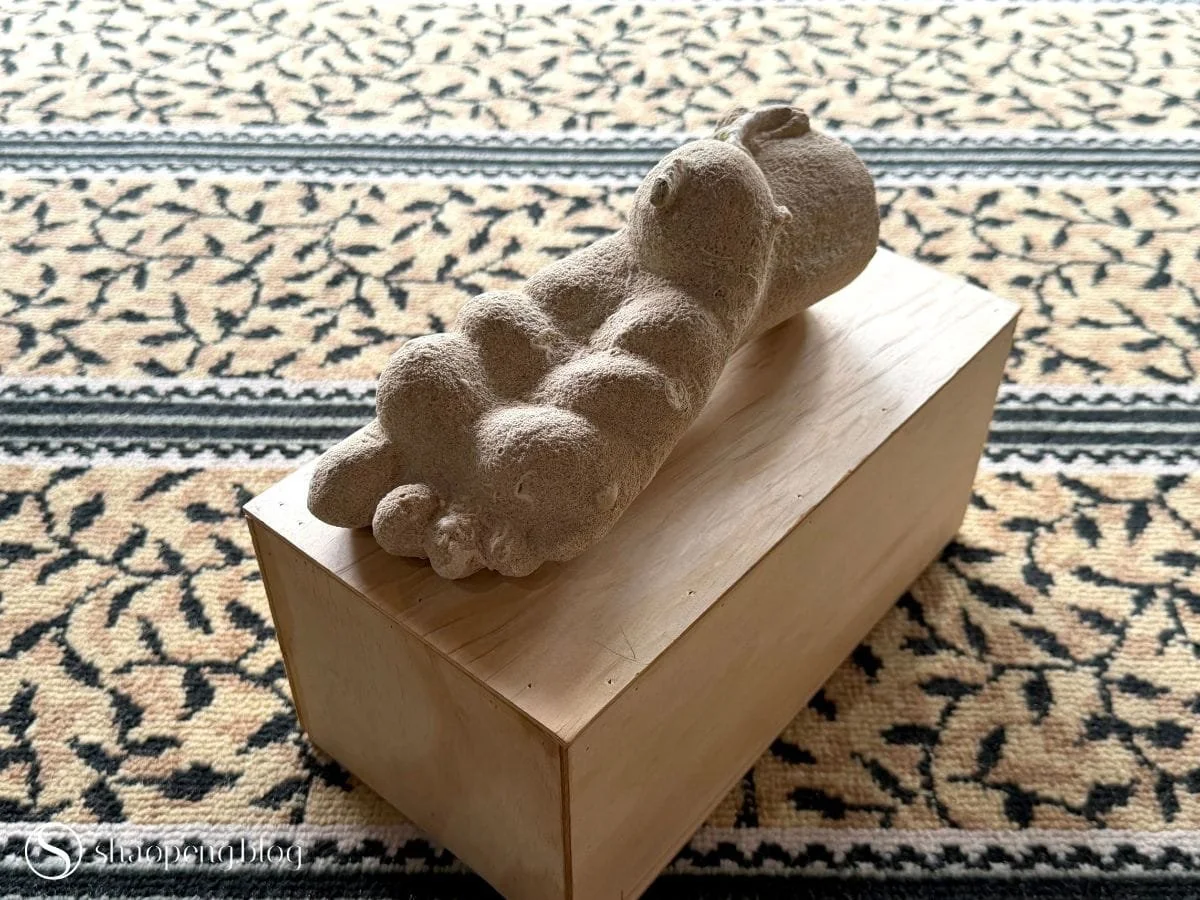
Foot by Noriko Nakamura
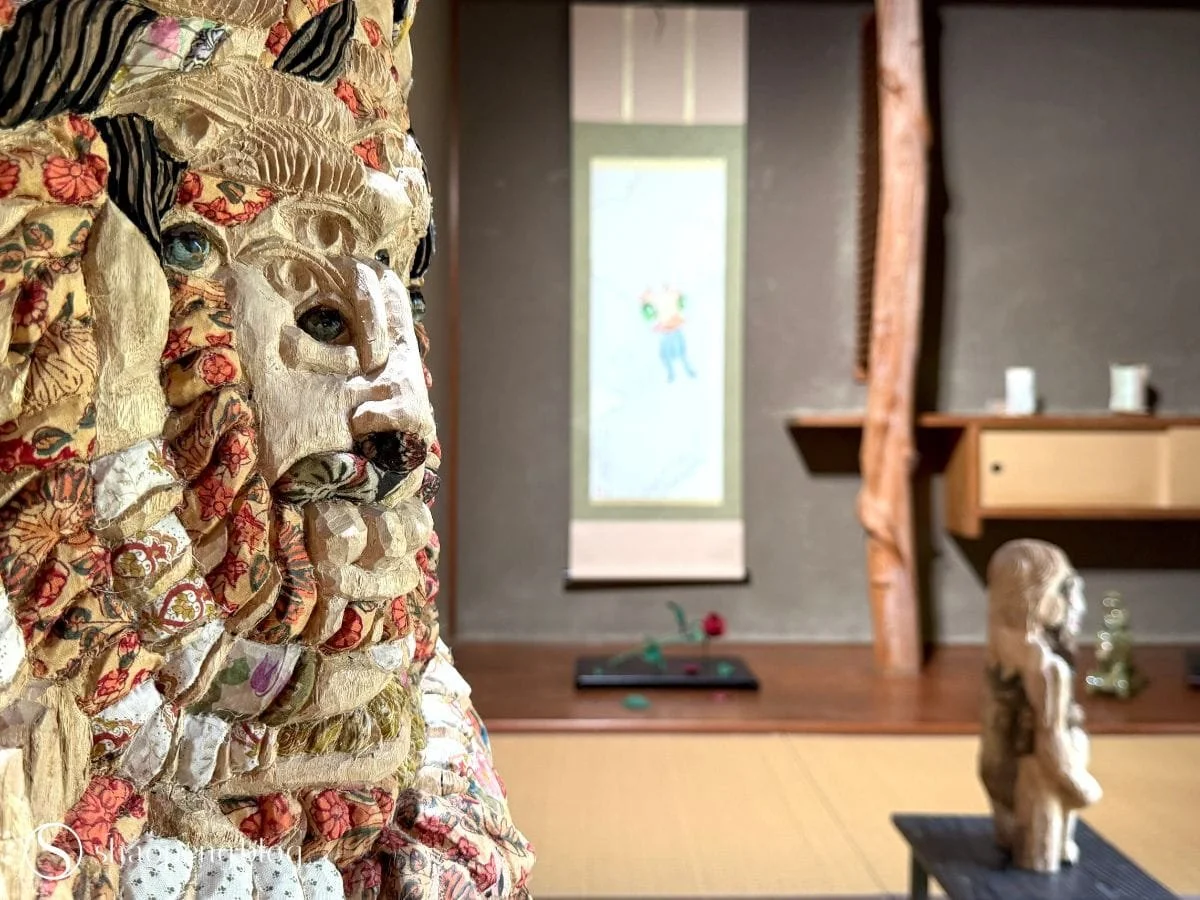
Myokenji’s chaya has become a room of wonder.
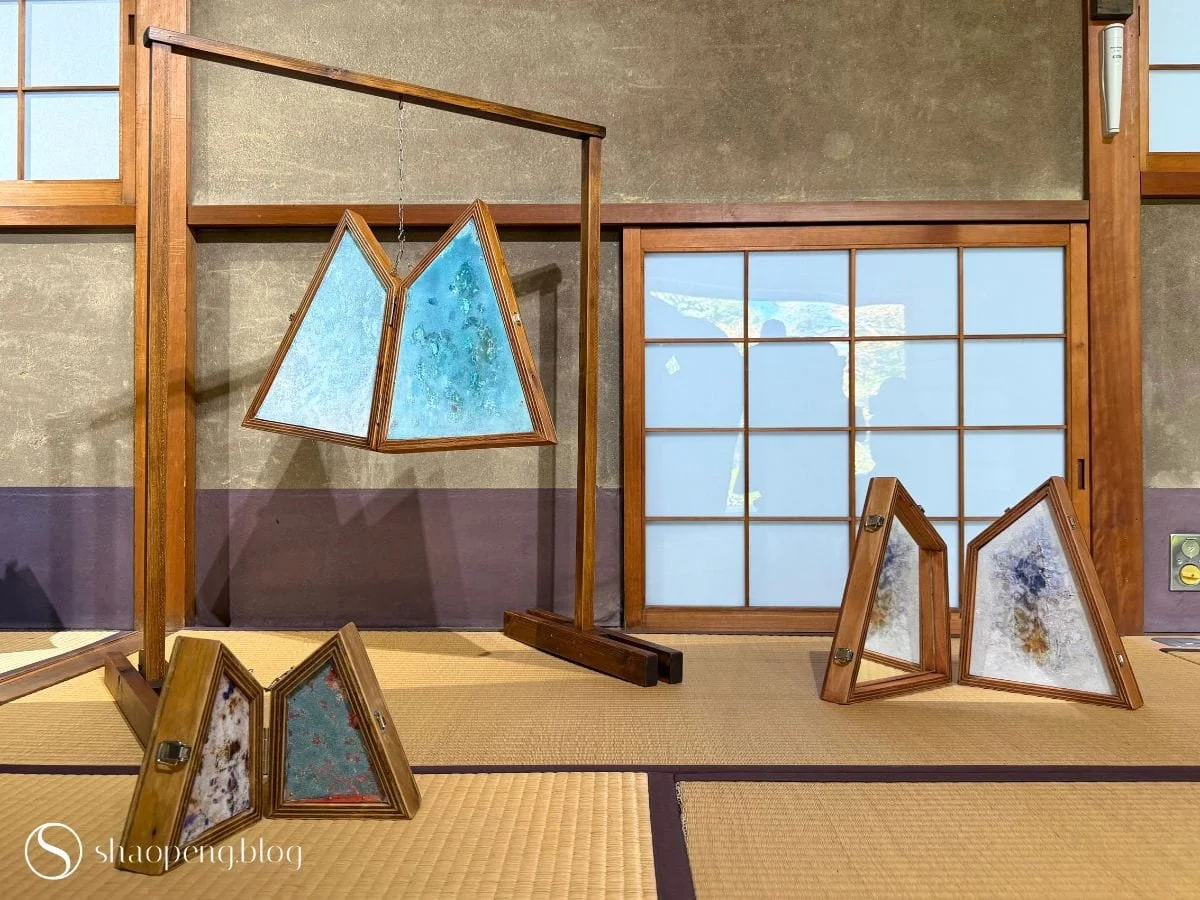
An installation of works by Masaki Sato, presented by AISHO.
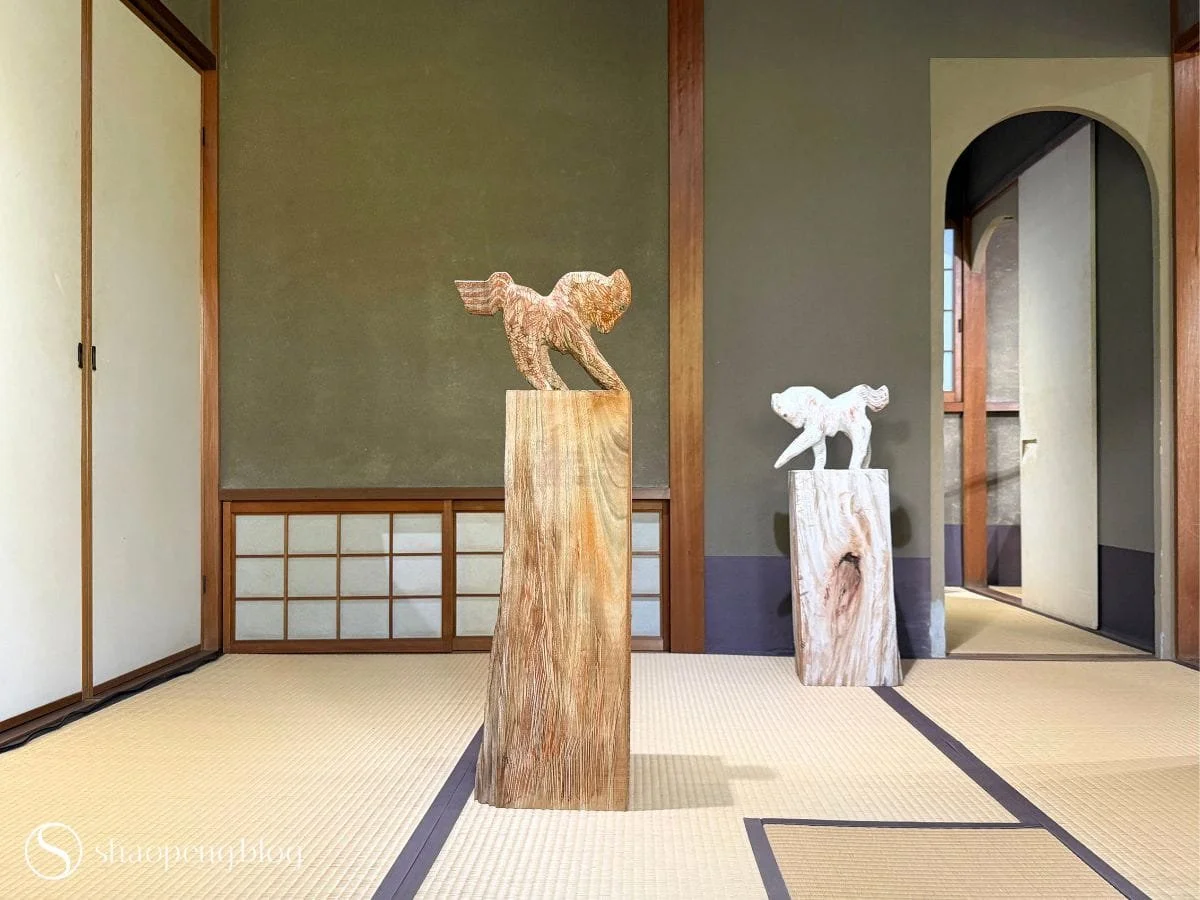
Works from Sarachudu Yiru’s installation series, Echoes of Life.
My wandering eventually leads me to the Main Hall, where the concurrent Ko+Gei exhibition, organised by Tokyo Bijutsu Club, brings together Ko (craft skill) and Gei (artistry). It’s my favourite space in Myokenji. Here, I feel the spirit of the present speaking through traditional craft.
Hashimoto Masaya’s delicate, nature-inspired sculptures, carved from deer bone, take the form of narcissus, ginkgo leaves and takasago lilies. I’ve seen deer antler carving before in Hokkaido, among the Indigenous Ainu, but never anything quite so finely executed. His works are displayed alongside paintings by old masters such as Kano Motonobu, while other contemporary crafts engage in a similar dialogue with masterpieces by Hasegawa Tohaku and Yosa Buson. Across the hall, old and new seem to speak to one another.
There is something almost surreal about seeing contemporary craft exhibited in the sanctified space of a temple’s Main Hall. It reminds me that the setting in which a work is presented can shape how we see it, and what it has to say.
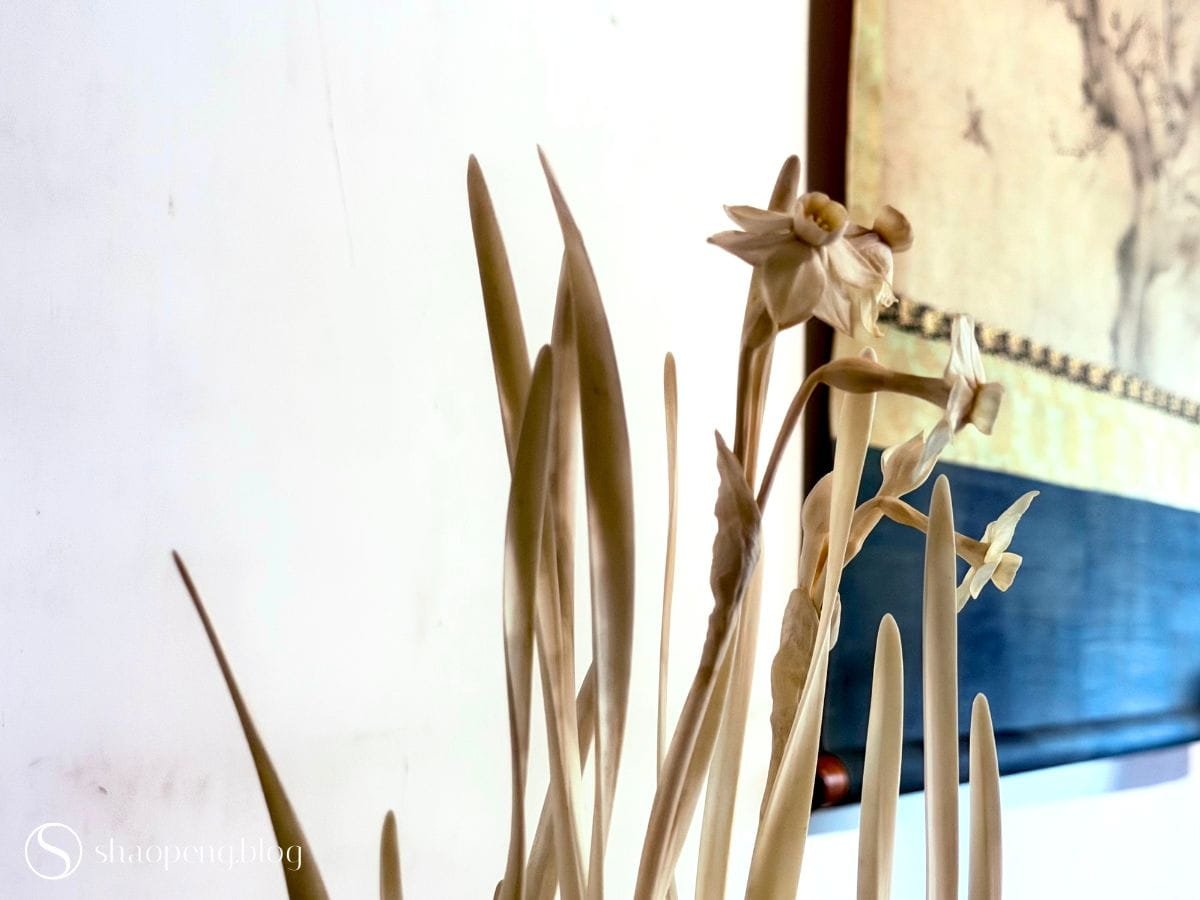
Narcissus tazetta var. chinensis by Hashimoto Masaya
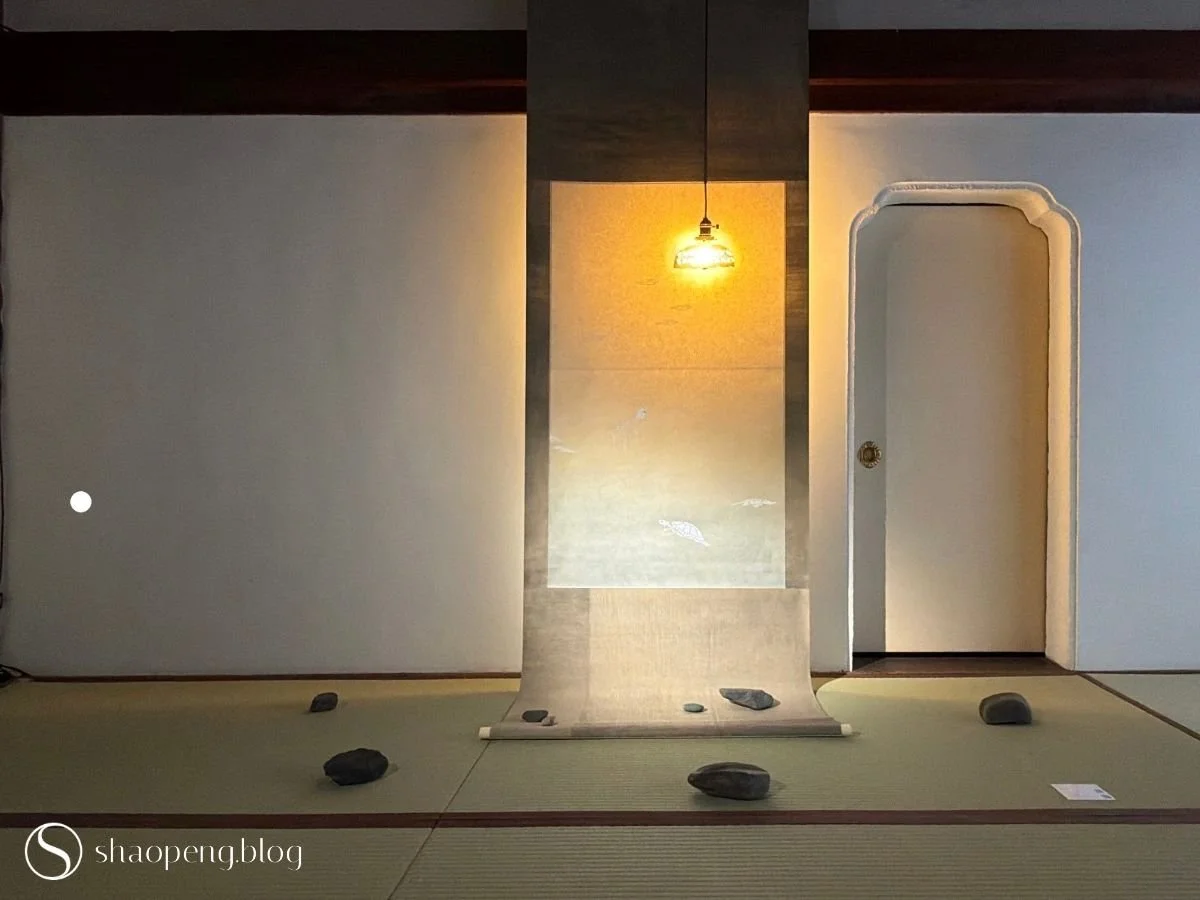
Still Water Runs Deep by Miyake Mai
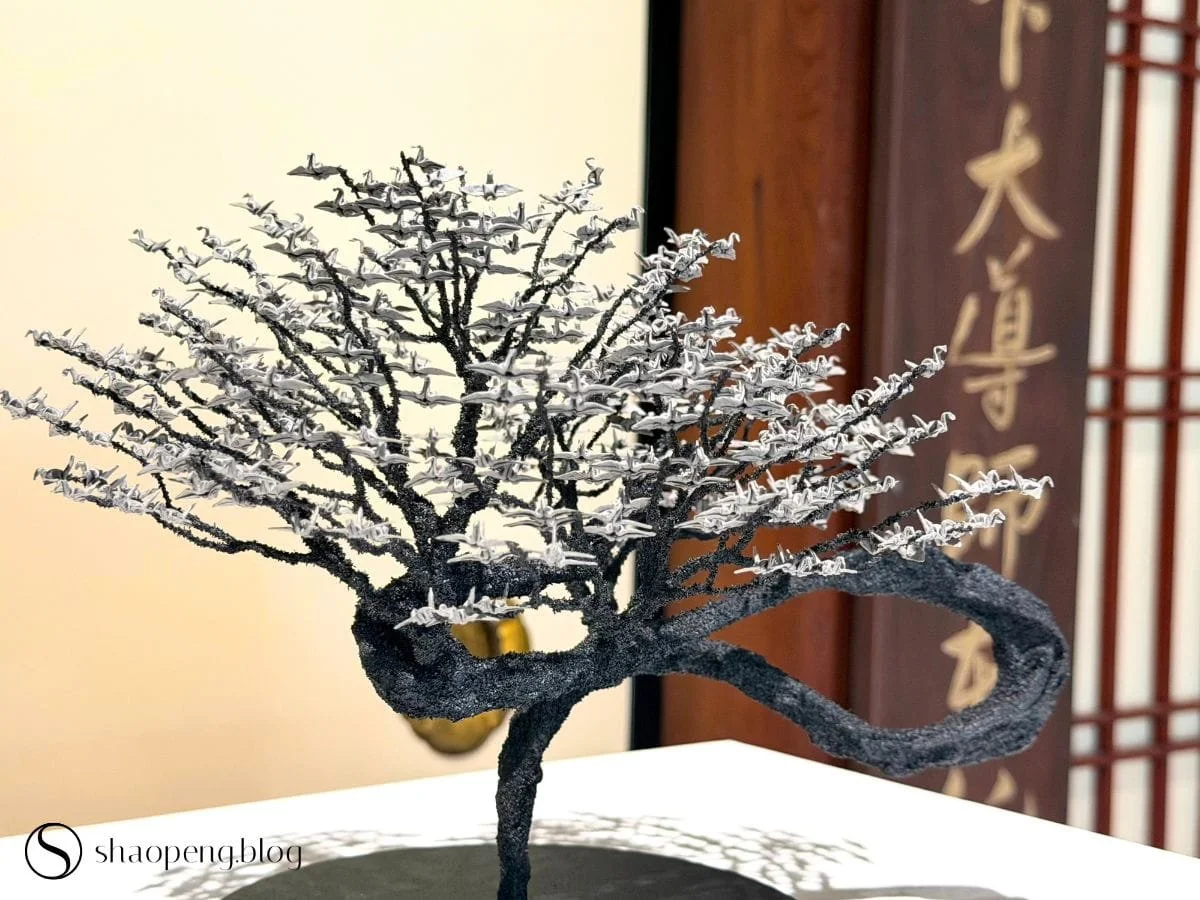
Moonlit by Onogawa Naoki
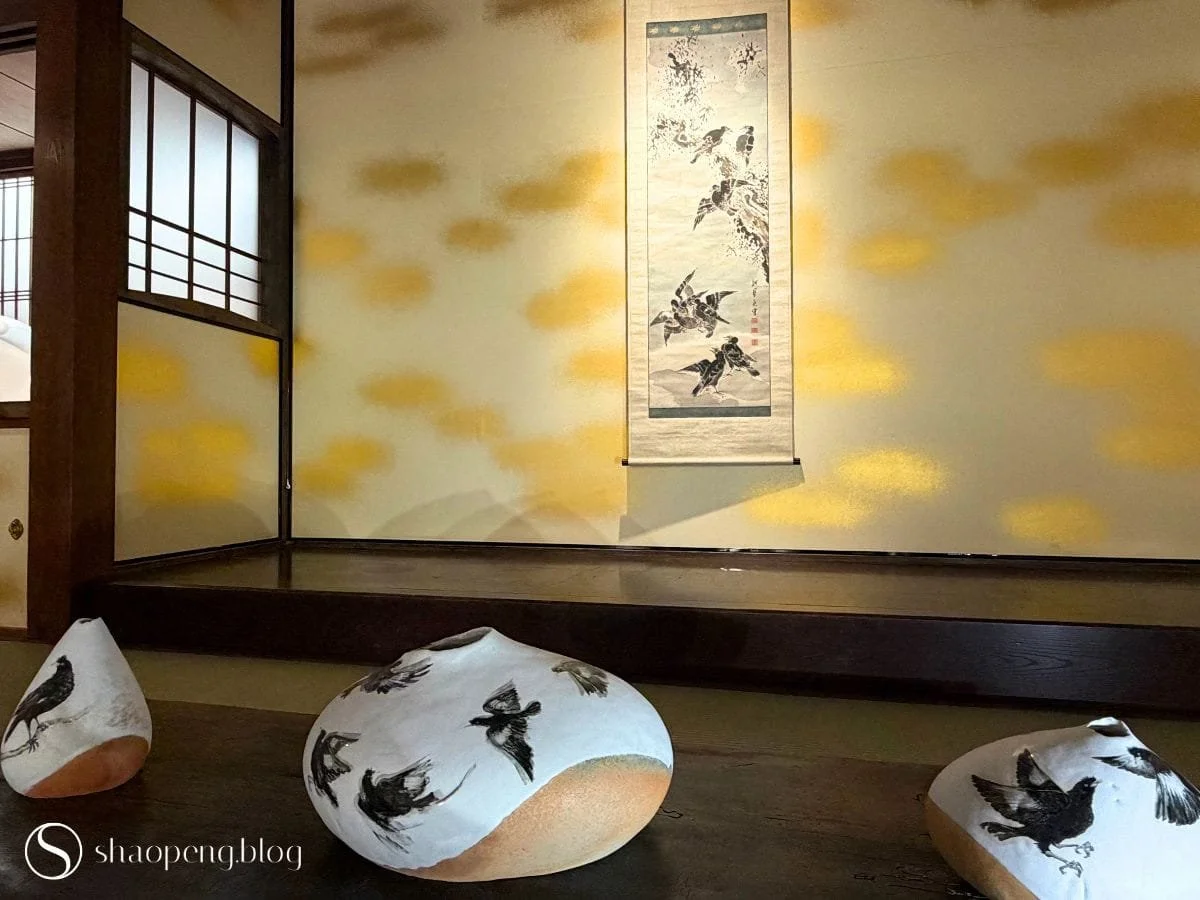
Yosa Buson’s Mynah Birds in Winter provides a fitting backdrop for Muta Yoca’s pottery.
Myokakuji
Myokakuji is just a short walk away, practically next door. Much like Myokenji, it hosts exhibitions throughout its temple rooms, though the spaces feel more tightly packed, with 24 gallery presentations this year.
Before I know it, I’m standing in front of Rui Mizuki’s work for much longer than I intend, trying to figure out how it’s made. I eventually discover that it starts with a single sheet of newspaper. Laser engraving at varying depths creates the illusion of multiple layers of paper stacked on top of one another.
Elsewhere, Naoko Serino’s unusual sculptures, presented by Osaka’s wa.gallery, draw a small crowd. In a dimly lit room, these sculptures made from jute glow with an orange-gold light. They look surprisingly weighty, yet weigh almost nothing when the gallerists attempt to lift up the installation with his fingers.
Koji Takuma’s quartz cups come from a family of gem carvers in Yamanashi, at the heart of Japan’s gemstone-cutting trade — something new I learn on this visit. Each cup retains its natural quartz inclusions, bringing a little piece of nature to the breakfast table.
Nearby, Tokyo’s gallery deux poissons presents contemporary jewellery by artists from Japan and abroad. A few spaces also feature antiques. I’m particularly drawn to Taketo Masui’s sculptures, made from fragments of ancient Jomon pottery. There's something bittersweet about seeing remnants of everyday life from thousands of years ago take on a new form.
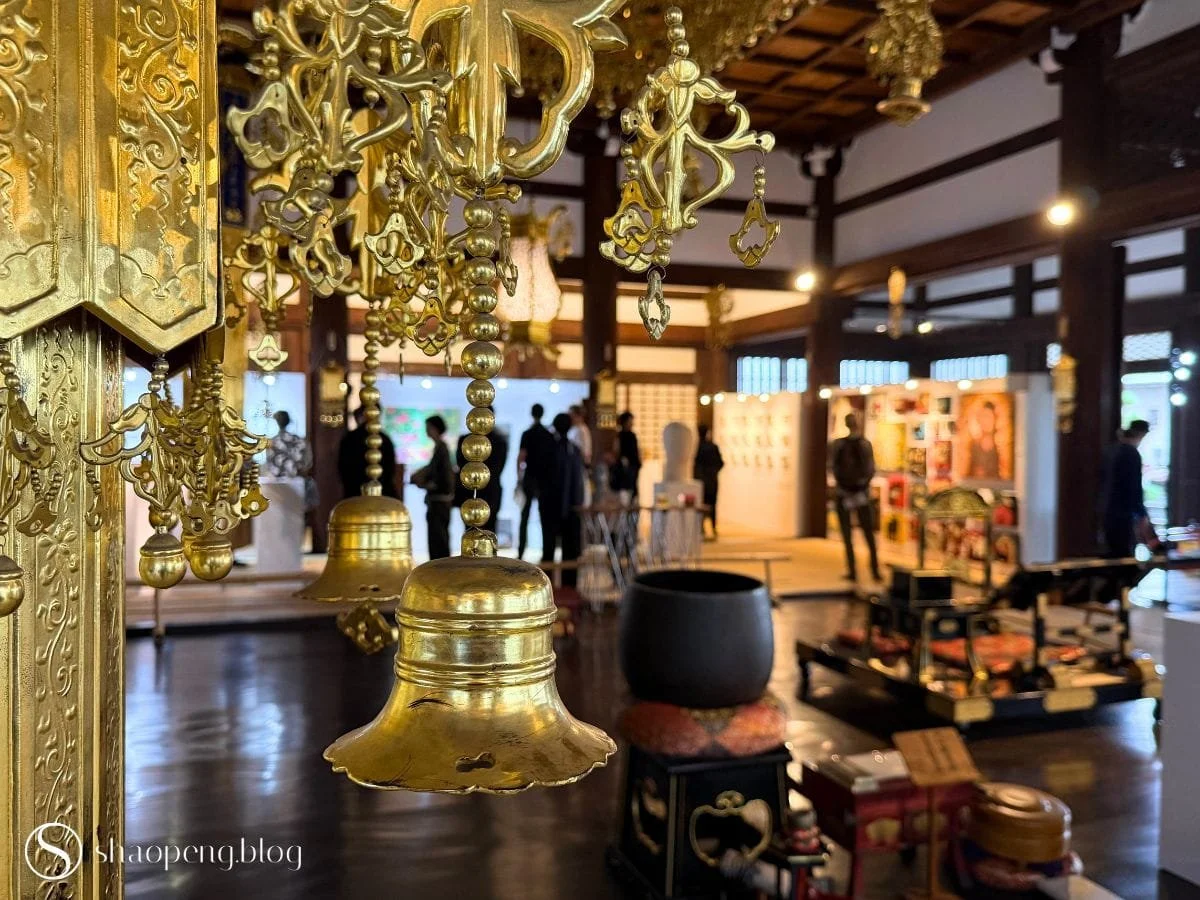
Booths fill the main hall of Myokakuji Temple.
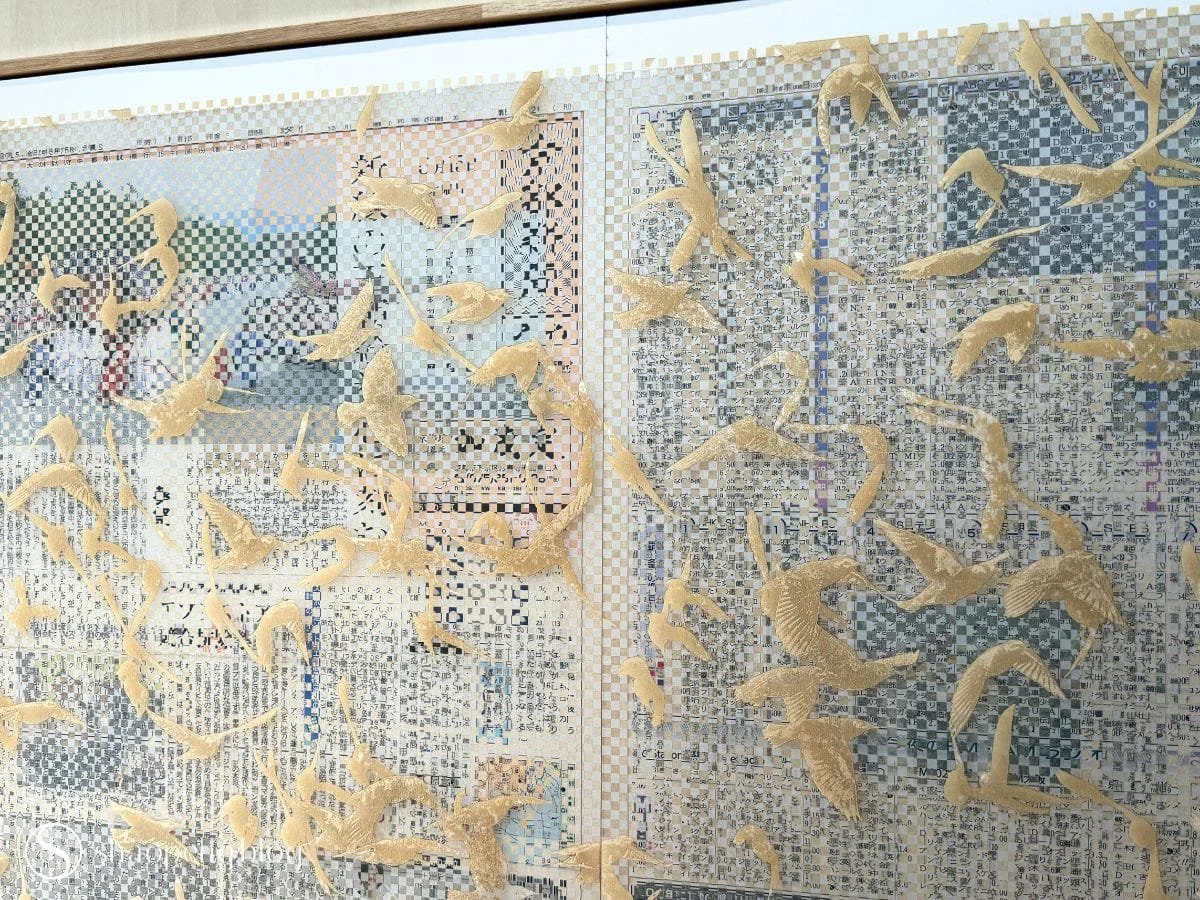
Tidal by Rui Mizuki.
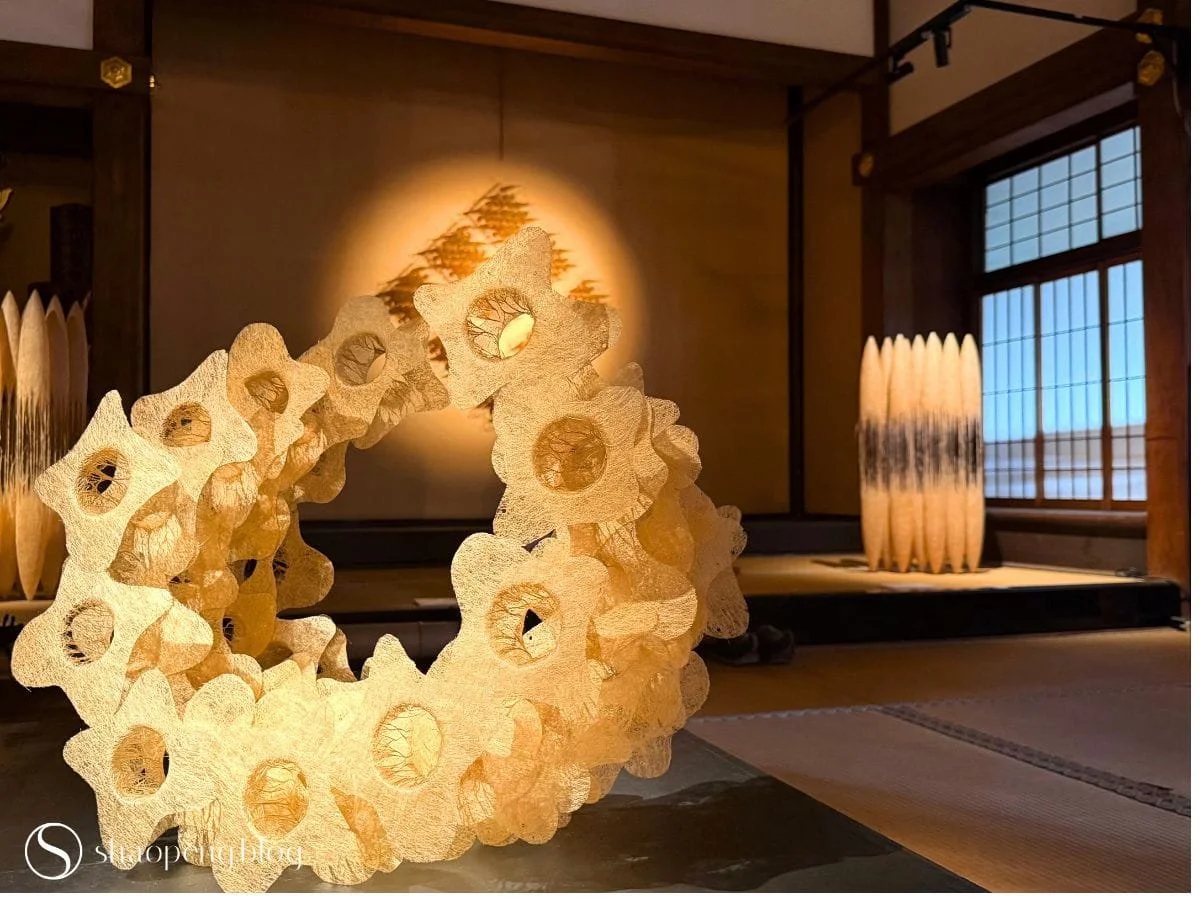
hemp fiber sculpture Naoko Serino
Honpoji
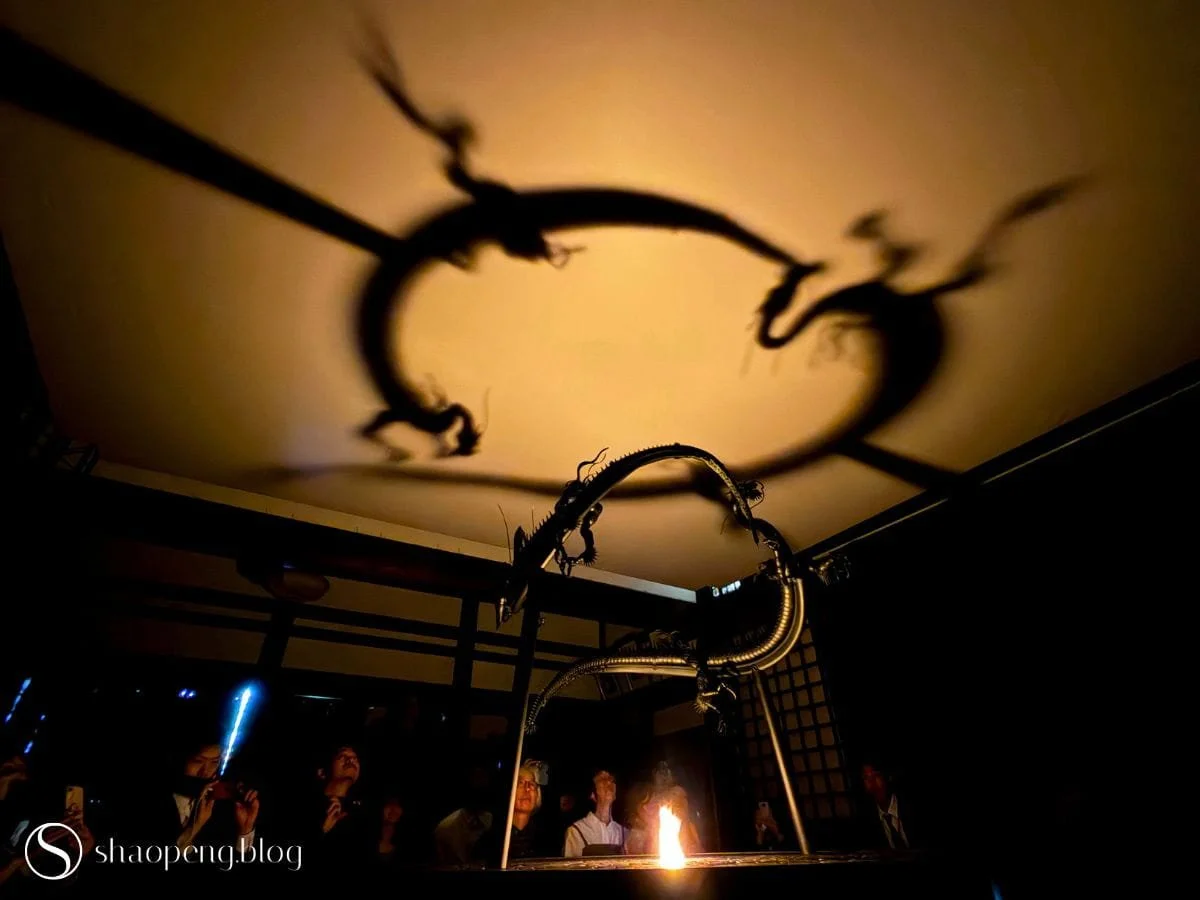
A three-day pass also gives you access to the tea ceremony at Honpoji, hosted by Urasenke in collaboration with contemporary craft artists, overlooking the Tomoe garden. With little time to linger, I move on to what the temple is showcasing: Enso, a new installation by metal-forging artist Shinya Hongo.
Twice a day, a performance brings the sculpture to life. Candle flames set warm air in motion, causing the two dragons to turn slowly, almost like a carousel. I happen to arrive just in time for one. It’s hard to believe the gentle heat from a few candles can set such a substantial sculpture in motion. But the real magic lies elsewhere: in the shifting shadows cast onto the ceiling, which bring the room to a hush.
This experience reminds me of yugen — a mysterious beauty that moves you precisely because it remains beyond full sight or explanation. For a few minutes, candlelight and deep shadows give that elusive feeling a tangible form.
Looking Back
The temple setting is what drew me to the fair in the first place. Unlike conventional art fair venues, temples offer somewhere to sit and take a break when your feet get tired. You can pause, gaze out at a Zen garden or courtyard, and then continue at your own pace. I spend a little over five hours making my way through all three venues, with special goshuin (temple stamps) available at the temples to mark the occasion.
I arrive expecting to see traditional crafts reinterpreted through a contemporary lens. What I find goes further than I had imagined. The works venture into unexpected territory, yet remain grounded in tradition. They leave me with plenty to think about, and I can already see how some of these encounters will find their way into my own creative practice.
Wanderer’s tips — If you're planning a trip to Japan, keep an eye out for CURATION⇄FAIR Tokyo 2027, scheduled for late January to early February next year.
CURATION⇄FAIR Kyoto 2026 took place from 6 to 8 November 2026.