
Naseer Shamma: 5,000 Years in a Note
At Dubai Opera, oud maestro Naseer Shamma fills the auditorium with a sound that has more than 5,000 years of history.
Sense of Wander: ★★★★★
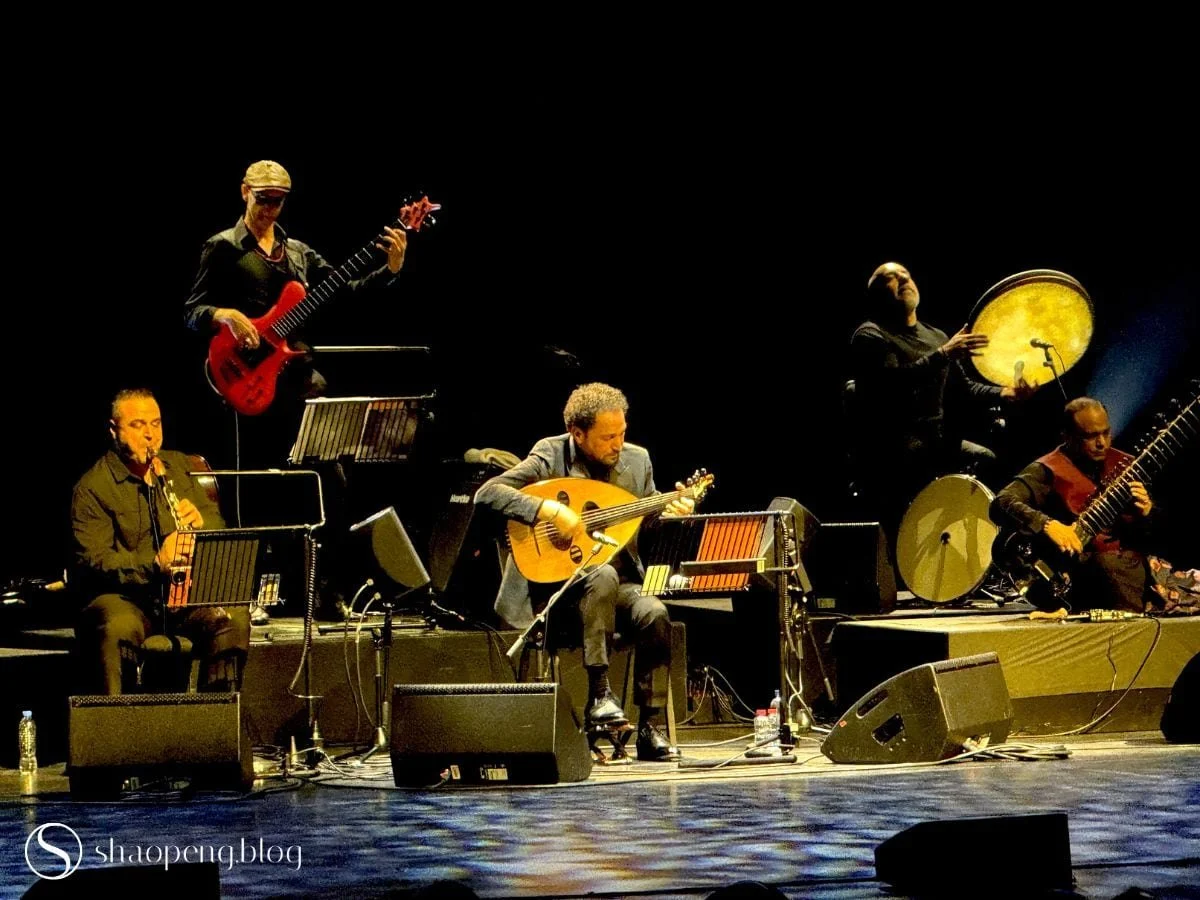
An evening with Naseer Shamma at Dubai Opera.
DUBAI, UAE — The sound of the oud has always intrigued me. Its deep, velvety tone stirs memories that don’t quite belong to me, as if passed down from distant deserts and ancient cities. Often considered the ancestor of modern guitar, the oud carries a sound that is far more timeless and spiritual.
Carved in an elegant, almond-like shape, the oud is believed to be one of the world’s oldest stringed instruments, dating back to the Akkadian Empire (around 2350–2150 BCE). For centuries, it has sat at the heart of Arabic, Turkish, and Persian musical traditions.
That insistent yet unknowing, pull toward the oud eventually led me to a concert by world-renowned Iraqi virtuoso Naseer Shamma. This isn’t just my first oud concert; it’s a celebration of culture through an instrument whose sound has been played for more than 5,000 years.
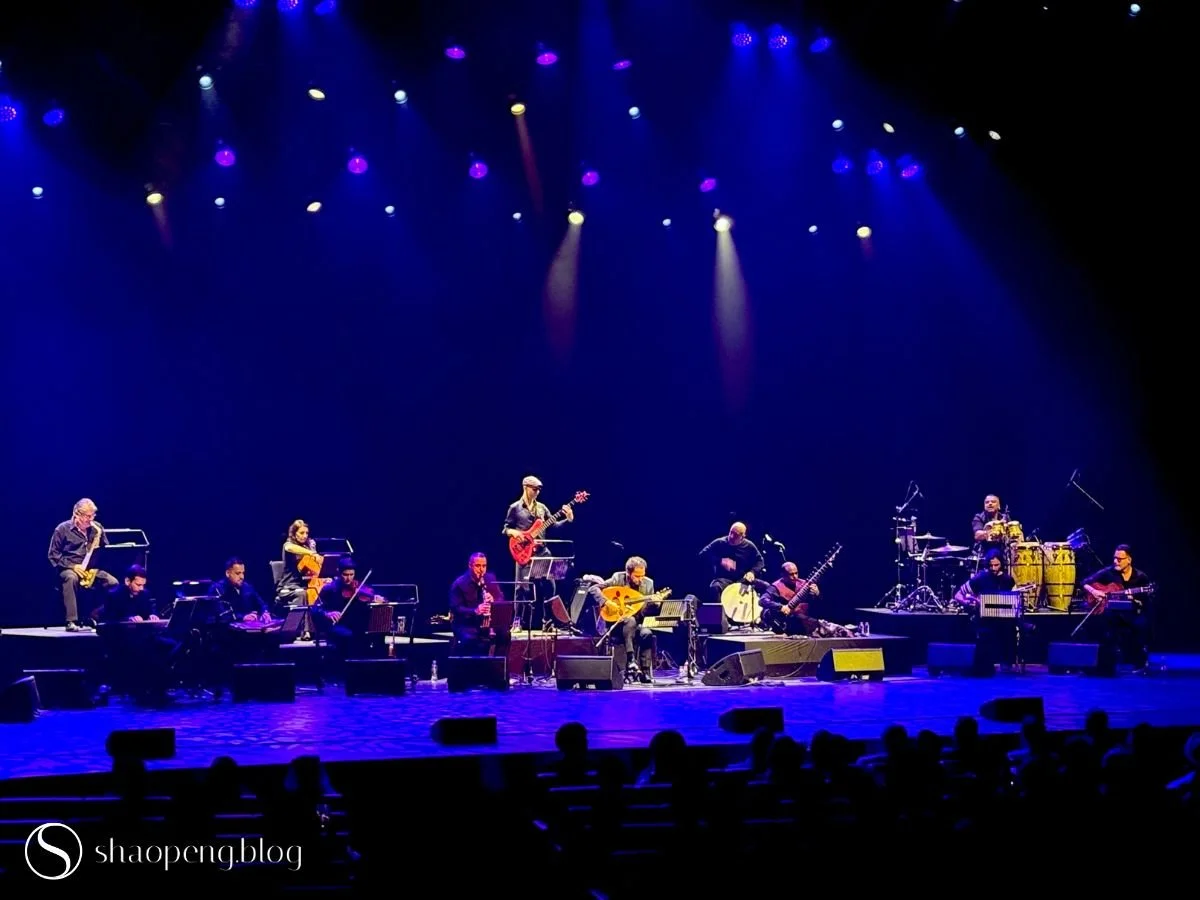
Oud virtuoso Naseer Shamma is accompanied by master musicians from around the world.
The evening opens with a lively, uplifting piece that warms the cool air of the auditorium, followed by Ishraq, one of Shamma’s most beloved compositions. Ishraq, meaning “sunrise” in Arabic, exudes light and energy, as if setting the stage for the night ahead.
Shamma is not alone onstage. He leads The Peace Builders, an ensemble he founded to bring together musicians from around the world and champion a culture of peace through music. On this night, more than a dozen artists from across continents join him at Dubai Opera, testifying to the power of harmony and unity in an age of chaos and division.
Beside Shamma sits Ashraf Sharif Khan from Pakistan, son of the legendary sitar master Ustad Muhammad Sharif Khan Poonchwala. Having tried my hand on the sitar more than ten years ago, his solo performance opens my eyes to the instrument’s versatility.
Then there is Hussein Zahawy, a Kurdish percussionist whose daf rhythms blend Persian, Kurdish, Turkish, and Mediterranean traditions into beats that are richly layered and hypnotic.
Among the soloists, I find myself drawn to Iranian musician Ali Ghamsari on the tar — a long-necked lute I’m seeing in person for the first time. Ghamsari seems completely transported by the music, dissolving into a state of pure artistic flow. Watching him — and feeling the music pulse through the auditorium — is a soul-stirring experience. Only later do I realise that I’ve been following him on social media for some time now.
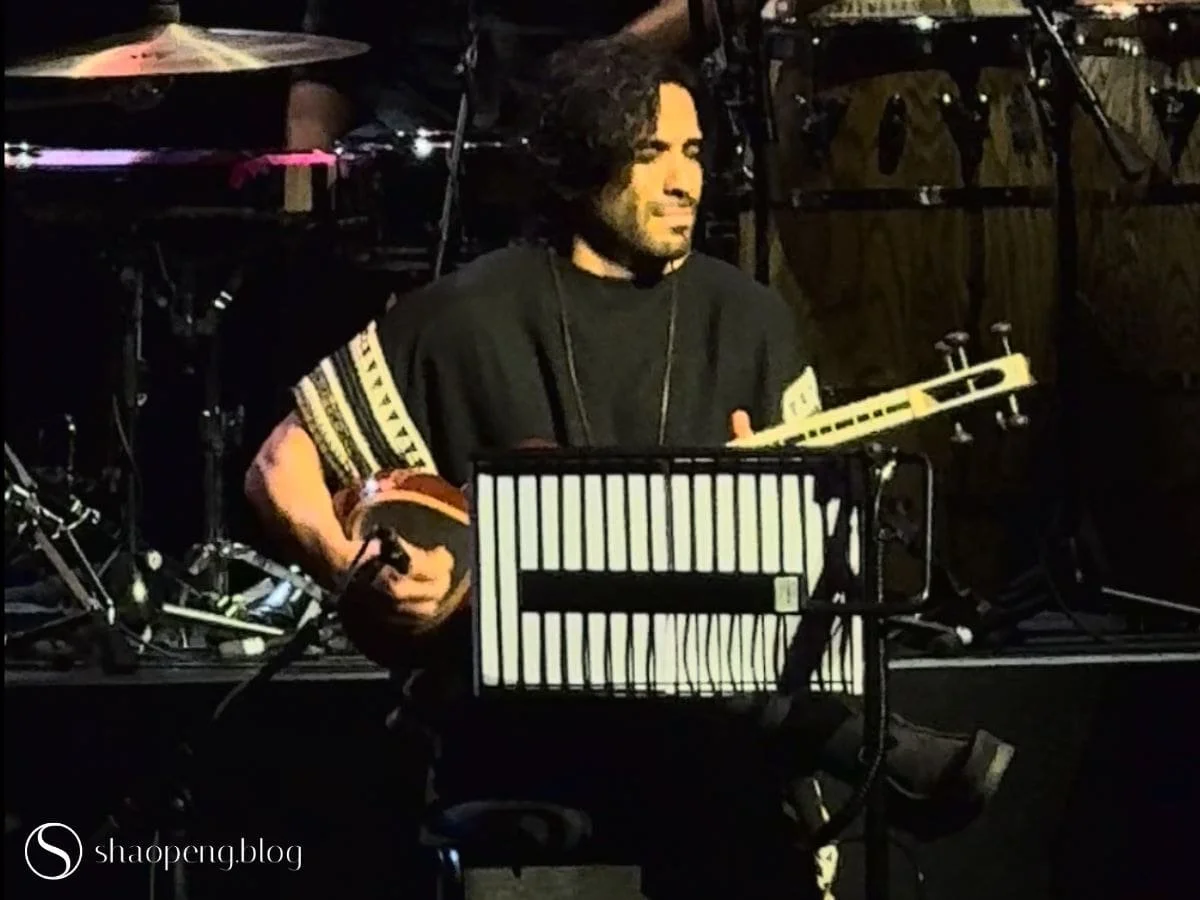
Ali Ghamsari on the tar.
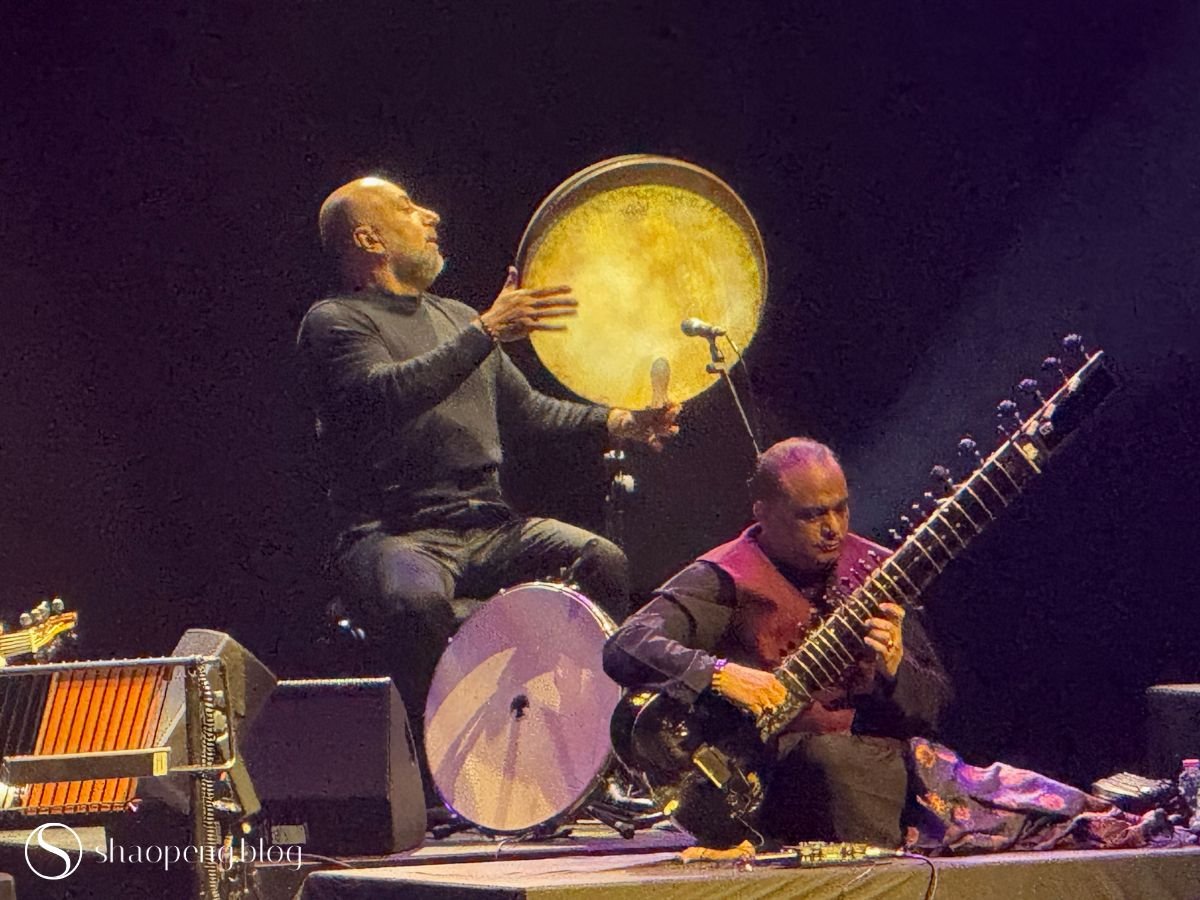
Daf player Hussein Zahawy (left) alongside sitar master Ashraf Sharif Khan (right).
The night continues with The Road to Shaqlawa, transporting the audience to the scenic town in the Erbil Governorate of Iraqi Kurdistan. Each note sketches mountains and valleys, painting the landscape’s beauty and charm. Then follows Baghdad Night, a personal reflection of Shamma’s homeland. The melodies carry memory and longing, inviting the listener to feel both distance and intimacy at once.
Then comes Al-Amariya, a poignant piece composed in 1992 in tribute to the civilians killed in the Al-Amariya shelter bombing during the Iraq War. Shamma channels sorrow, fear, and memory into his melodies, yet within the music lingers a faint thread of hope. Knowing that he witnessed the aftermath and composed the piece inside the shelter adds weight to the performance. It’s as if the oud itself bears witness to history.
Between these renowned works, Shamma also introduces new compositions. Though most of their titles escape me, each piece shares a common spirit: expressive, often lighthearted, and carrying a sense of optimism that defies the weight of the world. The music weaves tradition with contemporary expression, showing that the oud is not just an instrument but a storyteller whose voice must be felt to be fully understood.
On this night, Shamma and The Peace Builders demonstrate that music knows no boundaries. Through their performance, the oud — alongside other classical instruments of equal importance — speaks of culture, emotion, and humanity. Experiences like this remind us that even in a world rife with conflict and division, melody can unite, console, and inspire.
You may also be interested in:
Naseer Shamma’s concert was held at Dubai Opera on November 29, 2025.