
Wander in Sharjah: Islamic Arts Festival
During Sharjah’s Islamic Arts Festival, the city becomes an open-air museum, where visitors can immerse themselves in the beauty of Islamic art while wandering through hidden cultural spaces scattered across Sharjah.
Sense of Wander: ★★★★★
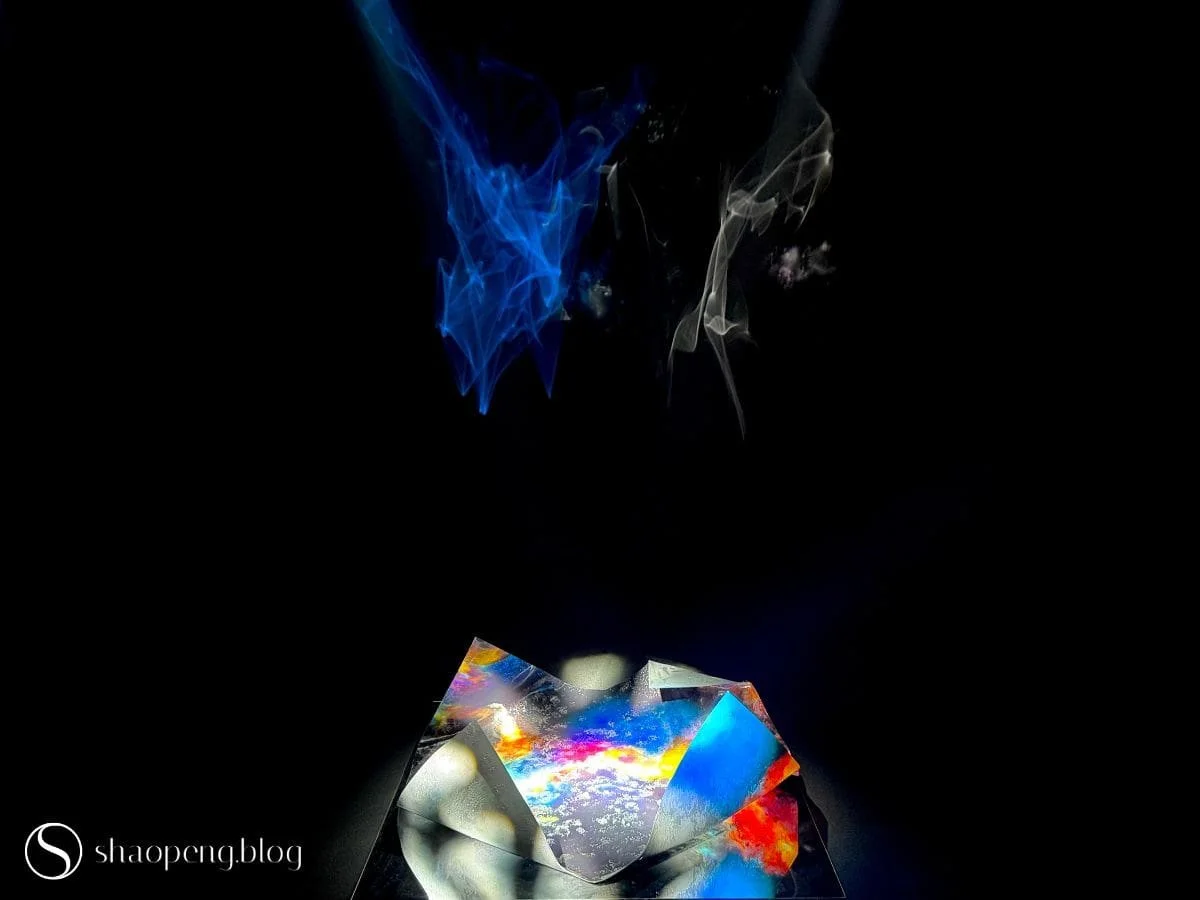
Siraj by Fatma Lootah
SHARJAH, UAE — This winter, Sharjah slips into a different rhythm. The 26th edition of the Islamic Arts Festival sweeps across the city, turning this cultural capital into an open-air museum devoted to Islamic art.
As its name suggests, the festival celebrates the timeless beauty and heritage of Islamic art — expressed through flowing calligraphy, sacred geometry, and the poetry of arabesque design.
For nearly three months, exhibitions bloom across Sharjah’s museums, galleries, and cultural institutions. It becomes the perfect season not only to encounter art, but also to wander the city — especially for those yet to explore its lesser-visited corners.
Alongside works by both emerging and established calligraphers, the festival also features contemporary artists inspired by this year’s theme, Siraj— the Arabic word for lantern. Their works are on view across the city, illuminating the idea of light as guidance and reflection.
But the festival isn’t only about seeing art. Workshops and lectures are held across Sharjah, inviting visitors to look more closely at calligraphy, painting, and other artistic practices guided by masters and professional artists.
As a practitioner of Arabic calligraphy and a postgraduate student of Islamic art, I knew I couldn’t let this opportunity slip away. I spent days wandering from one venue to another: visiting exhibitions, attending workshops, and soaking in the city’s creative vibe.
This article gathers those impressions and takes you along on a virtual journey through some of the festival’s major stops, exploring the breadth and depth of what the Islamic Arts Festival has to offer. Let’s begin the journey:
Calligraphy Square
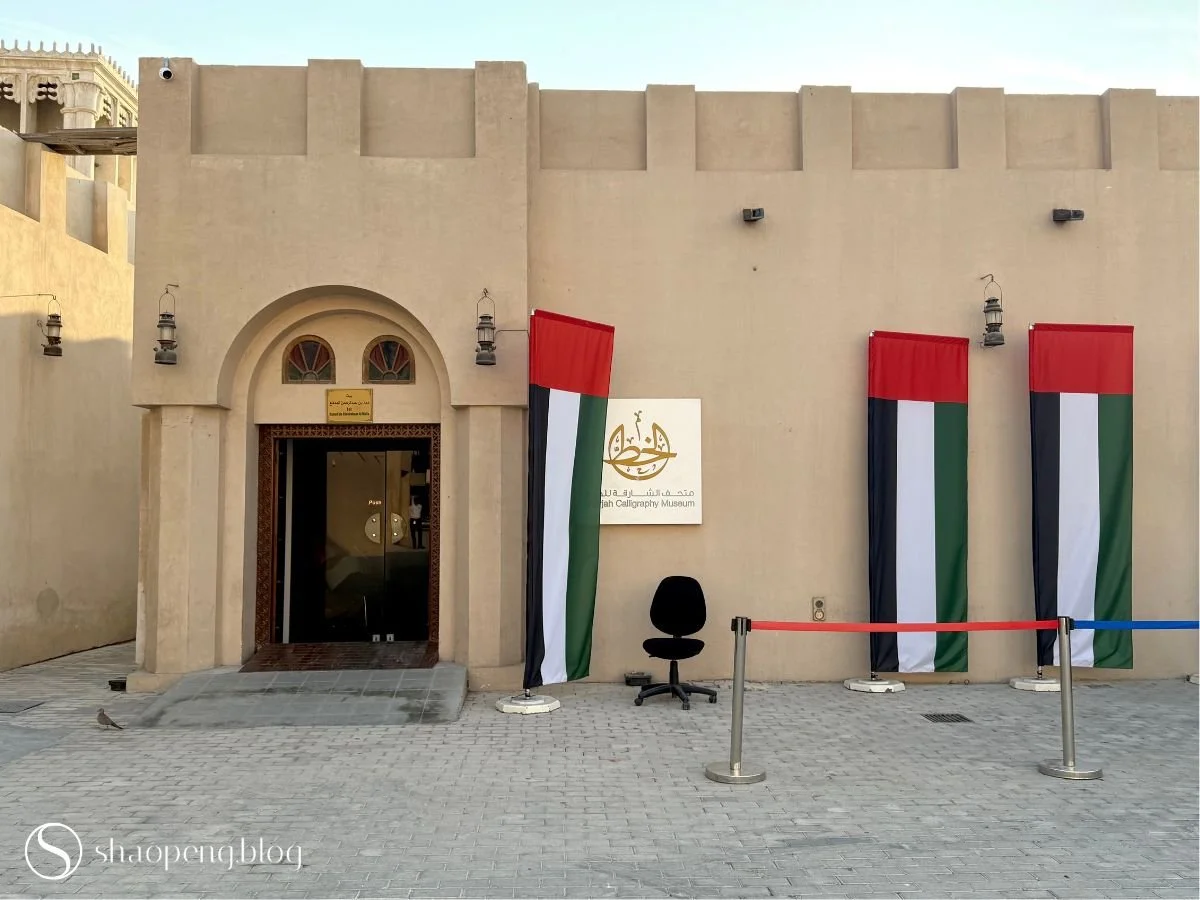
The Sharjah Calligraphy Museum is a key venue during Sharjah’s Islamic Arts Festival.
During the Islamic Arts Festival, Sharjah’s Calligraphy Square comes to life with exhibitions by late masters, established calligraphers, and emerging artists whose creativity is fueled by the rich heritage of Islamic art.
Calligraphy Square, a spacious courtyard surrounded by restored heritage houses, is home to several cultural institutions, including the Sharjah Calligraphy Museum, the Calligrapher Studios, the Ceramics House, Dar Al Nadwa, the Sharjah Centre for the Art of Arabic Calligraphy and Ornamentation, and the Emirates Society for Arabic Calligraphy and Islamic Ornamentation.
The square remains quiet throughout the year, occasionally transforming into a temporary venue for the Sharjah Biennial and Sharjah Art Foundation exhibitions. But during the Islamic Arts Festival, it becomes the beating heart of the city’s cultural canvas, bringing together works by calligraphers from the UAE and beyond.
At its centre stands the Sharjah Calligraphy Museum, which welcomes visitors to explore its permanent collection — for free. The museum showcases works dating back centuries, including pieces by renowned masters such as Hasan Çelebi.
Walk a little further inside and you’ll discover the solo exhibition of Emirati artist Fatma Lootah, where her poetic installation is imbued with a kaleidoscope of colour and movement.
Across the square, the Emirates Society for Arabic Calligraphy & Islamic Ornamentation presents works by Mohammed Mandi, the UAE’s first professional calligrapher. Many people don’t know that they’re carrying Mandi’s calligraphy in their wallets, featured on every banknote in the UAE.
The exhibition begins with Mandi’s ijazah certificate in Thuluth and Naskh scripts endorsed by the late Hasan Çelebi. Much of his works explores Kufic script and its dialogue with Turkish illumination. Titled Succession of Generations, the exhibition also features pieces by Mandi’s female students — a beautiful reminder of the apprenticeship tradition that sustains the art of calligraphy.
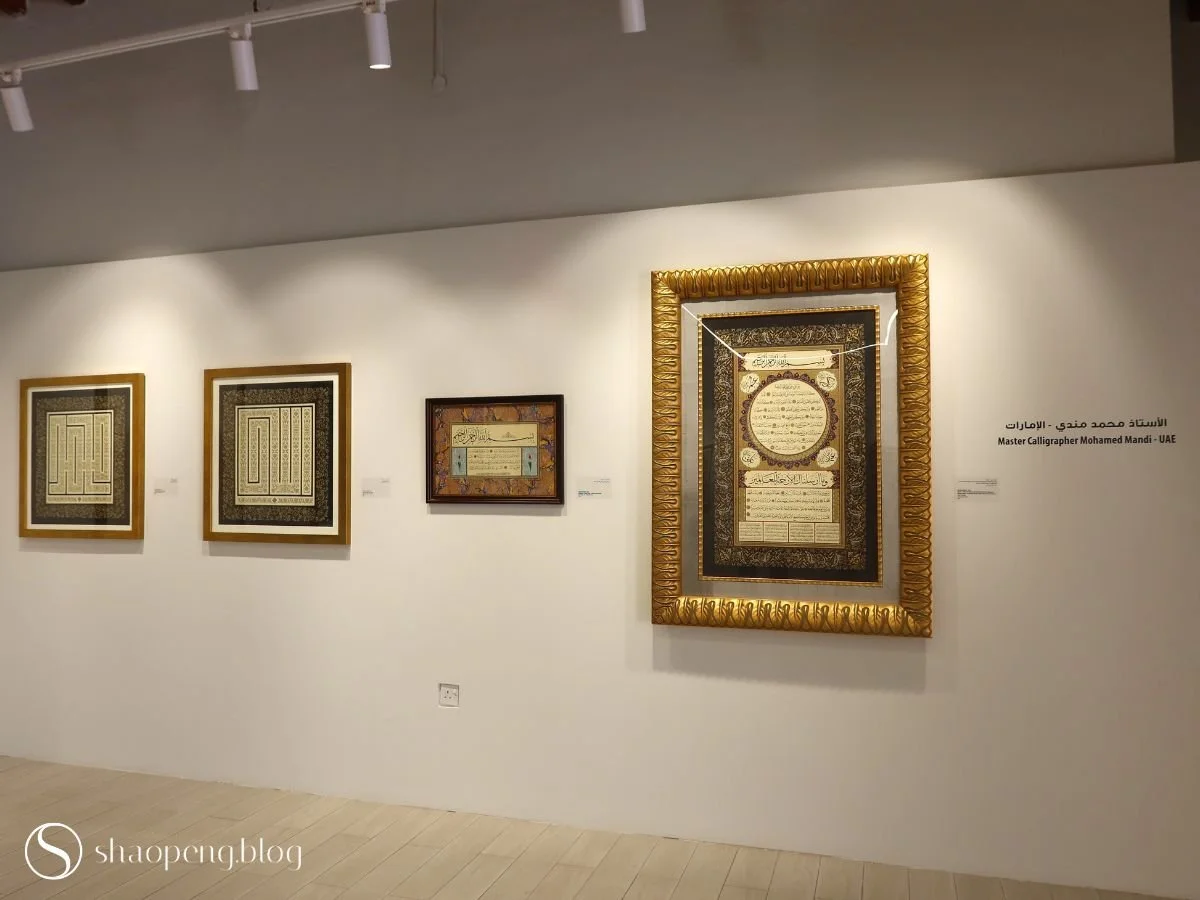
Works by Emirati calligrapher Mohammed Mandi and his students are on view at the Emirates Society for Arabic Calligraphy and Islamic Ornamentation.
Inside the Sharjah Centre for the Art of Arabic Calligraphy and Ornamentation — the city’s main training ground for the art — you’ll find works by Egyptian calligrapher Essam Abdel Fattah. His Kufic compositions reveal both structural discipline and chromatic harmonies.
Displayed alongside them are works by his student, Ashraf Hassan. Their joint exhibition, Communication, again highlights the ongoing dialogue between teacher and student, while presenting a contemporary vision for the future of the Kufic script.
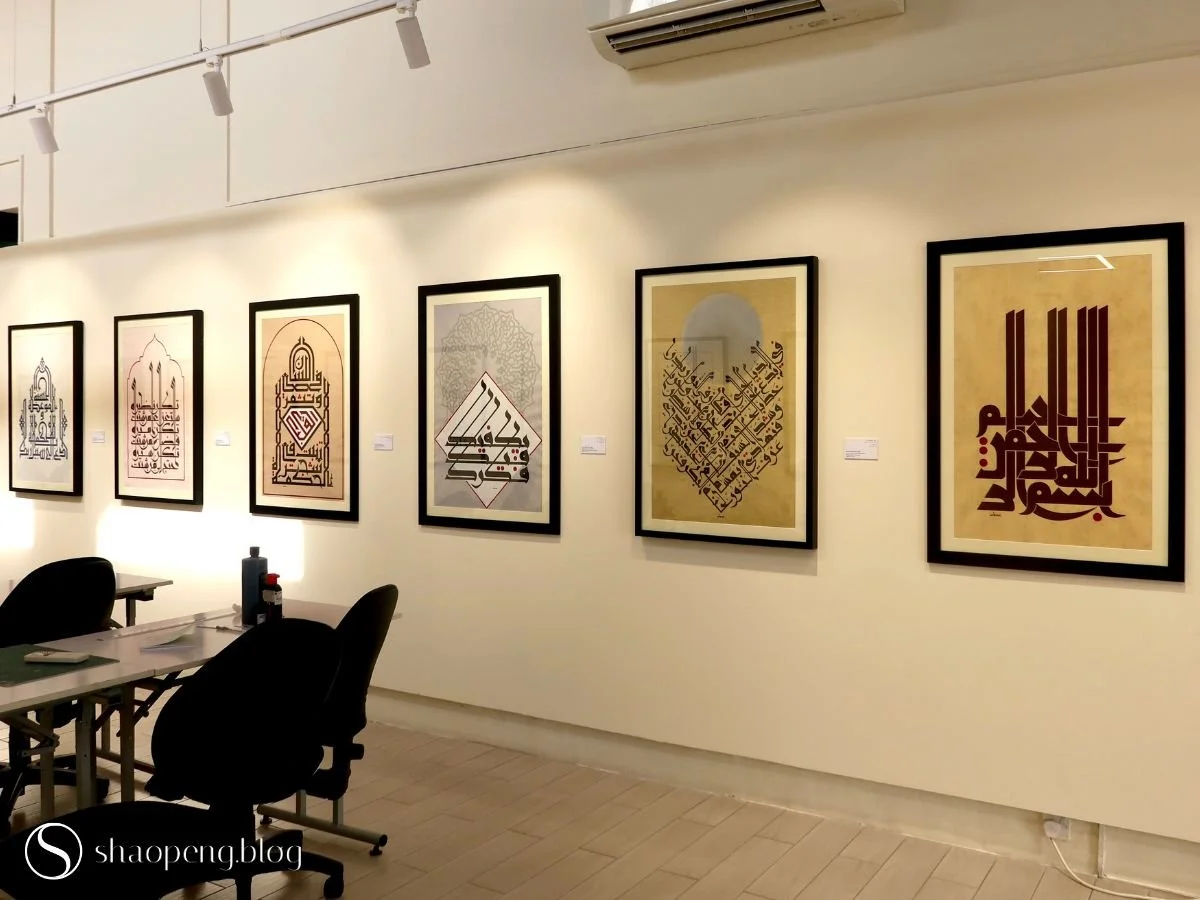
Kufic calligraphy by Essam Abdel Fattah and his student Ashraf Hassan, on view at the Sharjah Centre for the Art of Arabic Calligraphy and Ornamentation.
Two of my favourite exhibitions of the festival are found inside Dar Al Nadwa. Here, Iranian calligrapher Habib Ramezanpour presents Arts of the Pen. Although I’ve always been drawn to the fluid sensuality of the Nastaliq script, this is my first time experiencing it at such scale and intensity. I’m also fortunate to attend Ramezanpour’s workshop, gaining a first-hand glimpse into his practice and a deeper appreciation for the script.
In the adjoining room, the exhibition Ornamentation of Letters brings together Moroccan ornamentation artist Fouad Blili and calligrapher Badr Al Saihi. Blili’s work reflects the distinct spirit of Moroccan decorative design, whereas Al Saihi celebrates the elegance of the Maghribi script.
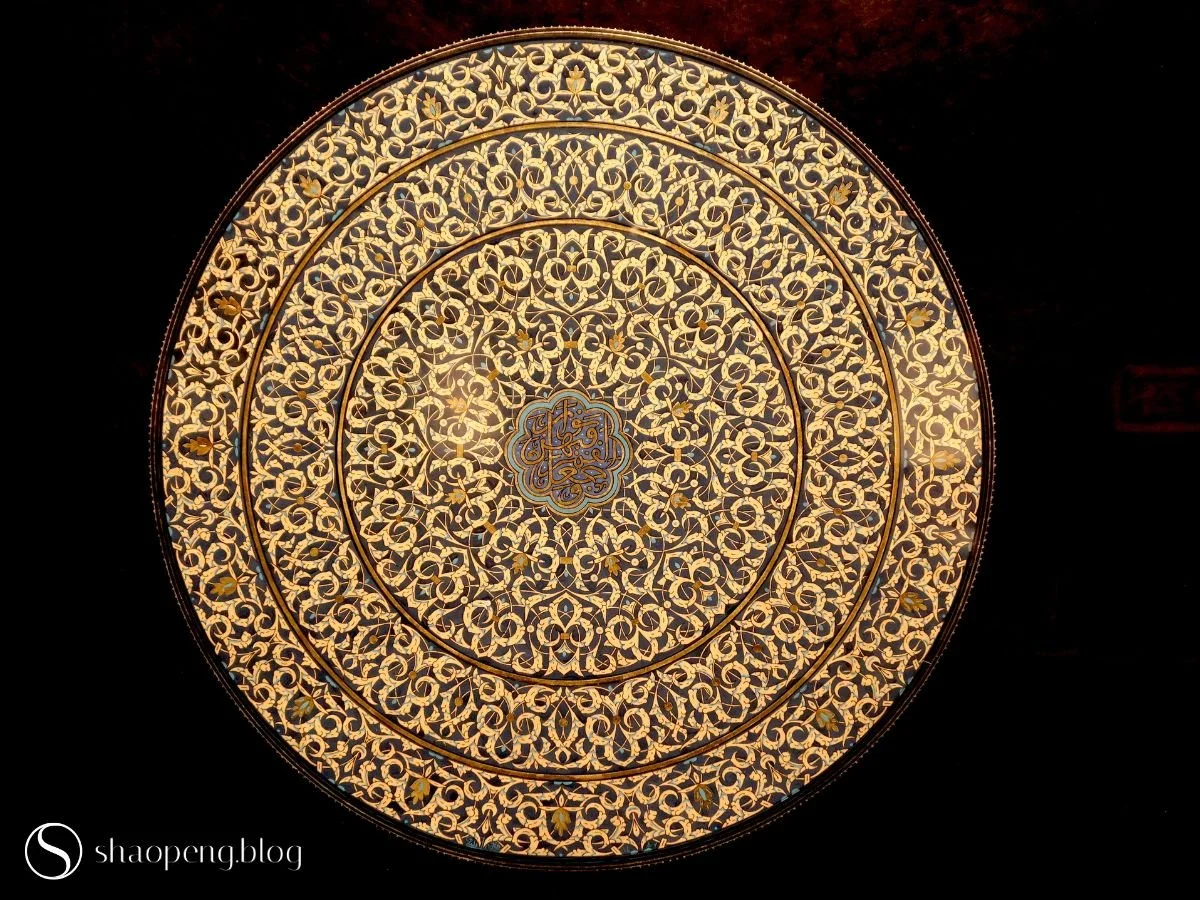
Moon (2025) by Fouad Blili
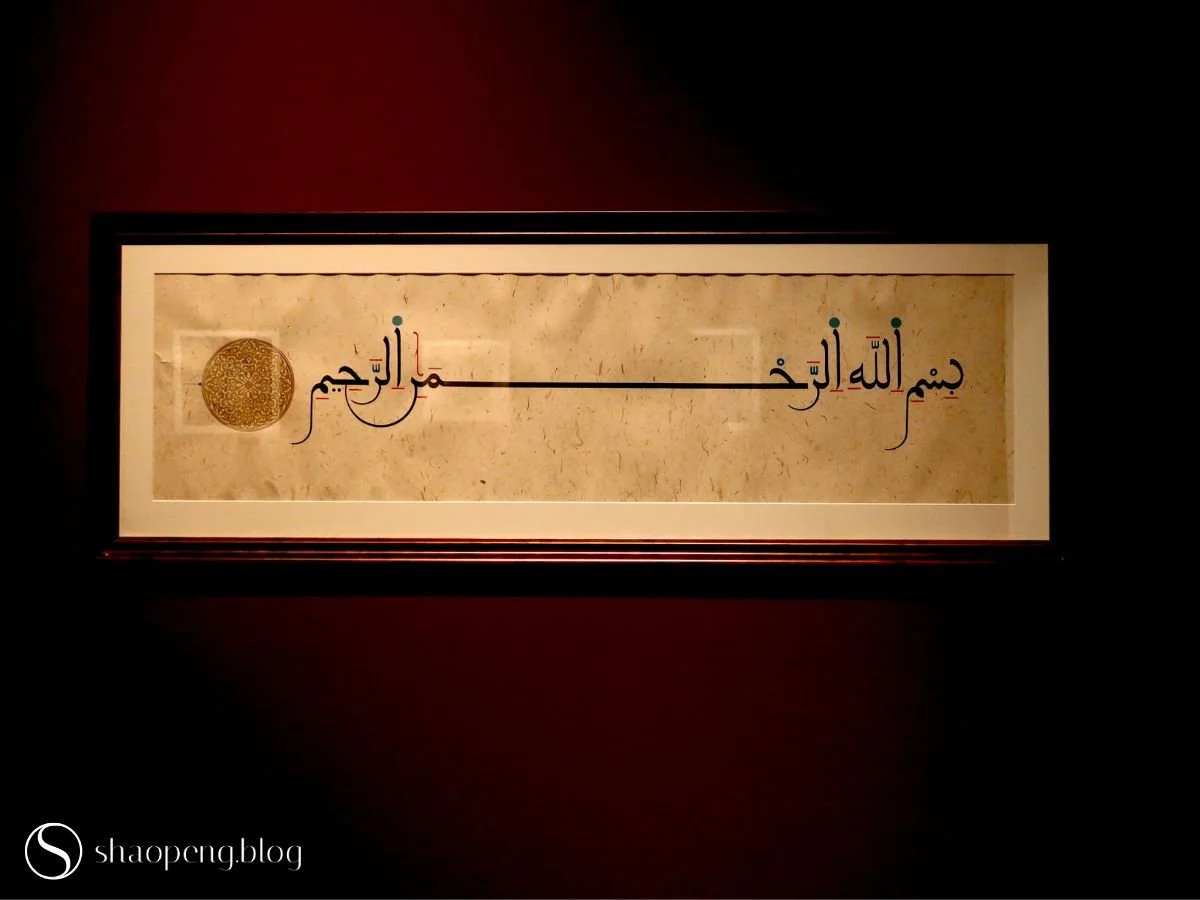
Basmala (2025) by Badr Al Saihi
The Ceramics House is dedicated to the late Abbas Al Baghdadi, one of the foremost figures in Islamic calligraphy. Siraj Al Midad, curated by Syrian artist Ayman Ghazal in honour of his teacher, reflects Al Baghdadi’s devotion to art expressed through balance and clarity.
Meanwhile, the Calligrapher Studios focus on the art of tezhip — illuminated ornamentation — where gold leaf and lapis blue bloom into floral motifs arranged in lyrical symmetry. The exhibition Reflections showcases works by Professor Omar Faruk Taşkale and his students from the Faculty of Fine Arts at Mimar Sinan University. Their creativity soars with imagination and a contemporary spirit, breathing new life into this timeless tradition.
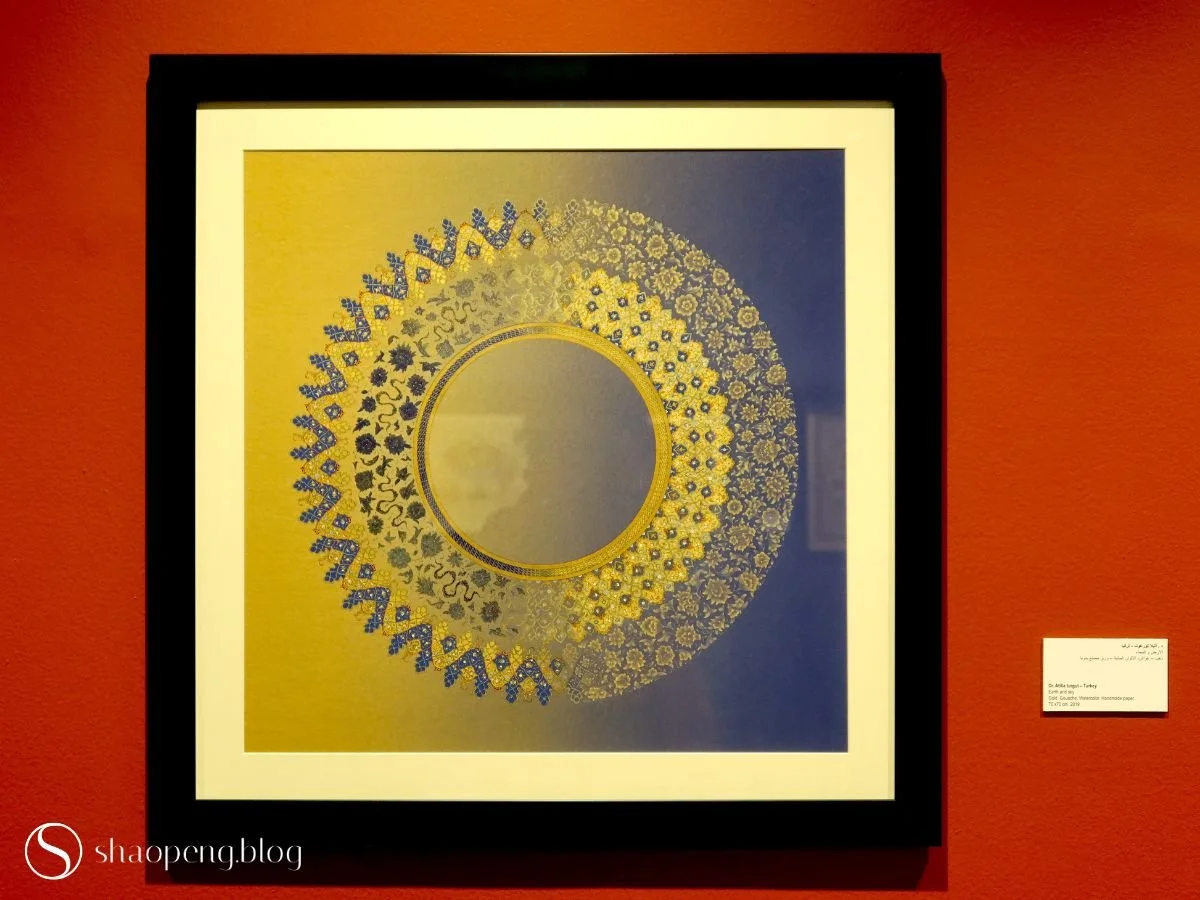
Earth and Sky (2019) by Dr. Atilla Turgut
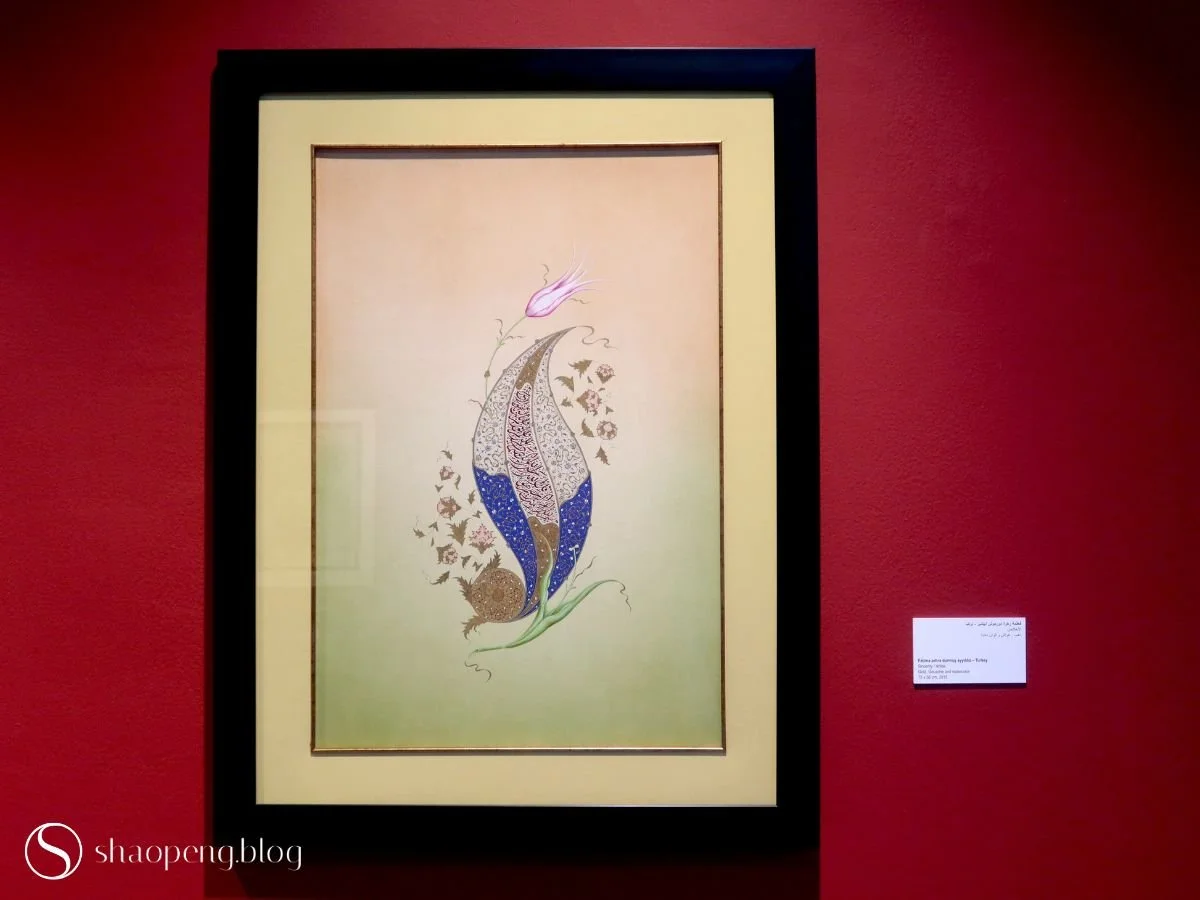
Sincerity / ikhlas (2015) by Fatma Zehra Durmuş Ayyıldız
Sharjah Art Museum
Established in 1997 under the patronage of Sheikh Sultan bin Muhammad Al-Qasimi, Sharjah Art Museum stands as one of the region’s leading art institutions. Its collection spans modern and contemporary works by artists from the UAE and across the Middle East, and over the years it has hosted numerous exhibitions that celebrate the region’s artistic diversity.
During the Islamic Arts Festival, two gallery spaces on the museum’s ground floor host a constellation of solo exhibitions, revolving around around the theme of Siraj.
Here, works in a variety of media compete for attention. Among them, Iranian artist Aref Montazeri’s Reflections of Pattern captures me most: his mirrored geometric sculptures cast intricate shadows across the gallery space. As I move around the sculpture, the reflections shift, transforming a seemingly static object into an interactive dialogue with light and space.
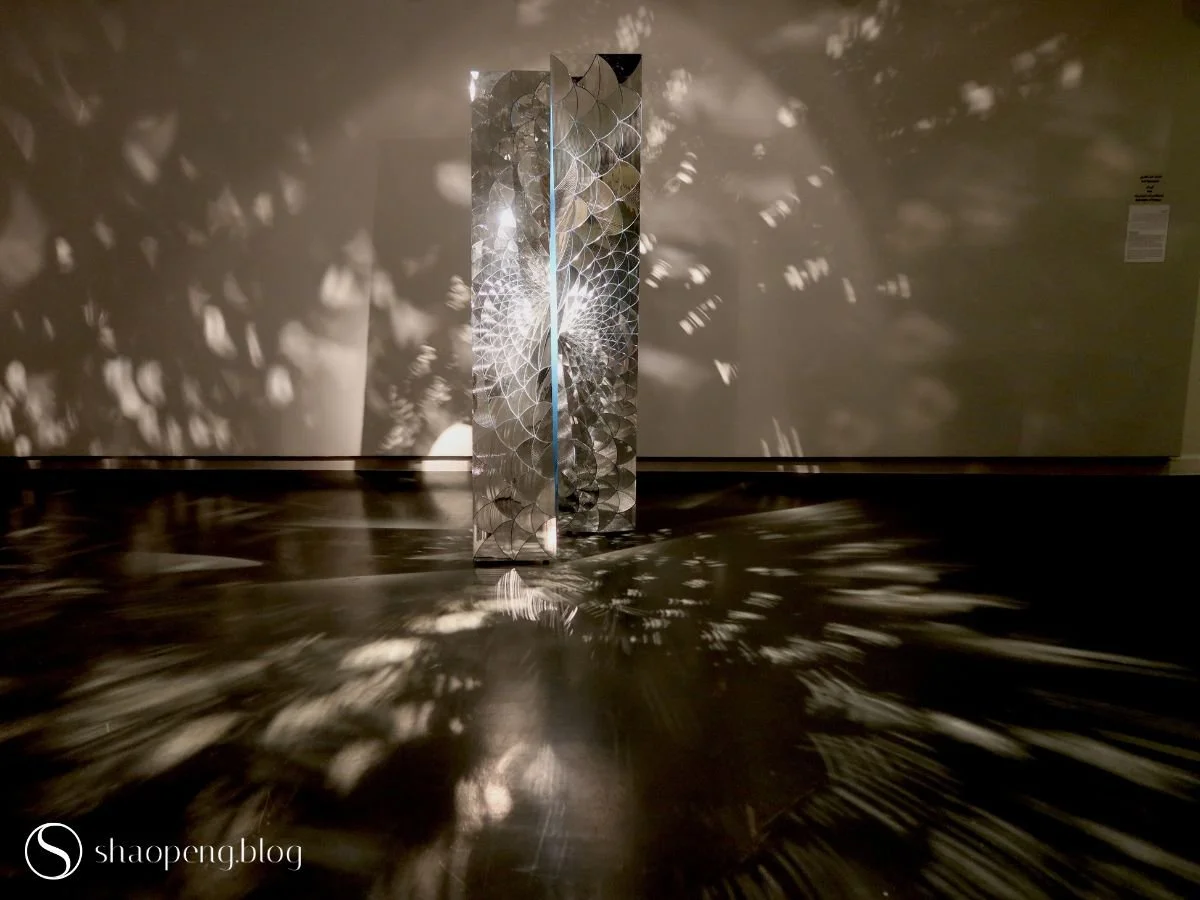
Reflections of Pattern by Aref Montazeri
A similar sense of wonder is evoked by Rashid Al Khalifa’s The Principles of Peace. The Bahraini artist’s architectural mobile floats effortlessly, revealing its design only in the shadow it casts: an eight-pointed star, a recurring motif in Islamic art.
Geometry continues to mesmerize in Matthew Shlian’s paper reliefs, where curves, colours, and layers of folded paper play with light and shadow, forming sculptural designs that feel delicate and strong at the same time.
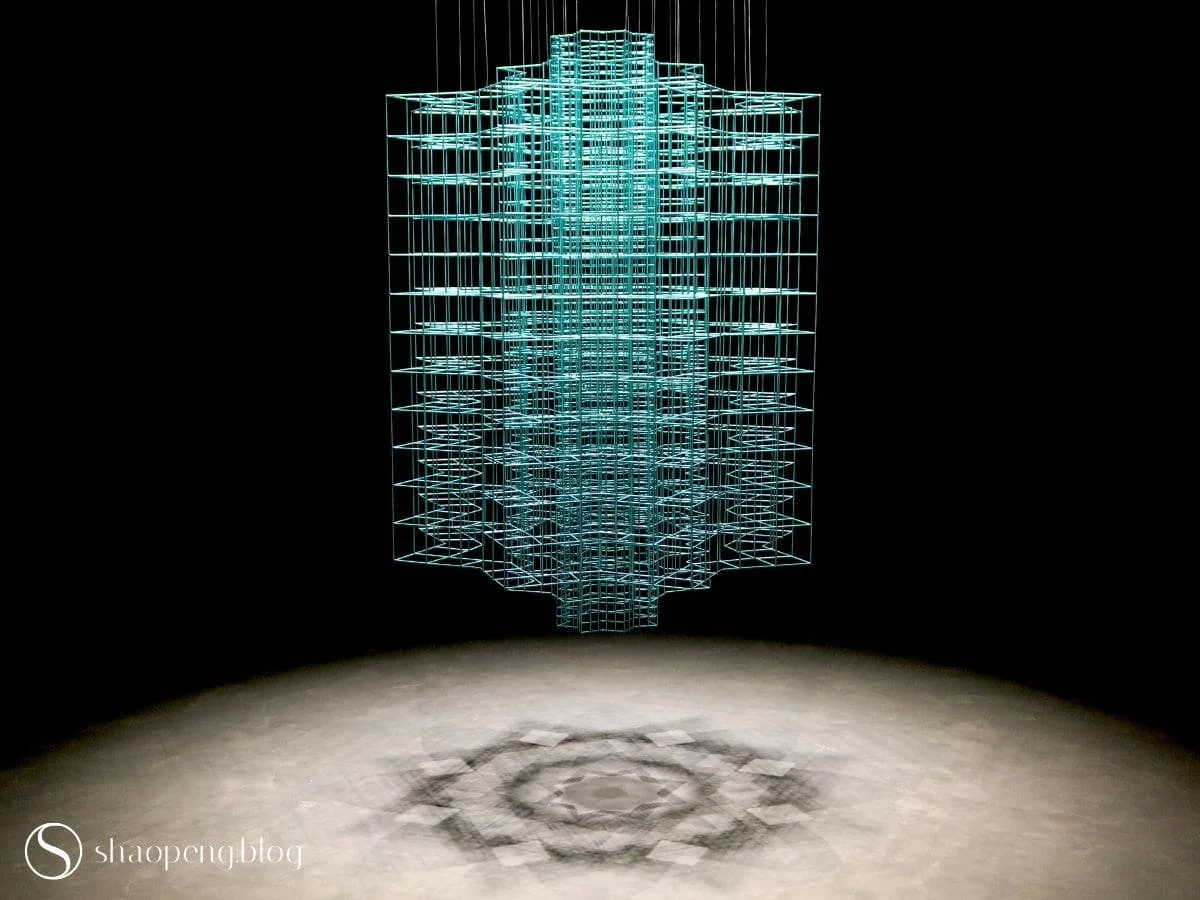
The Principles of Peace by Rashid Al Khalifa
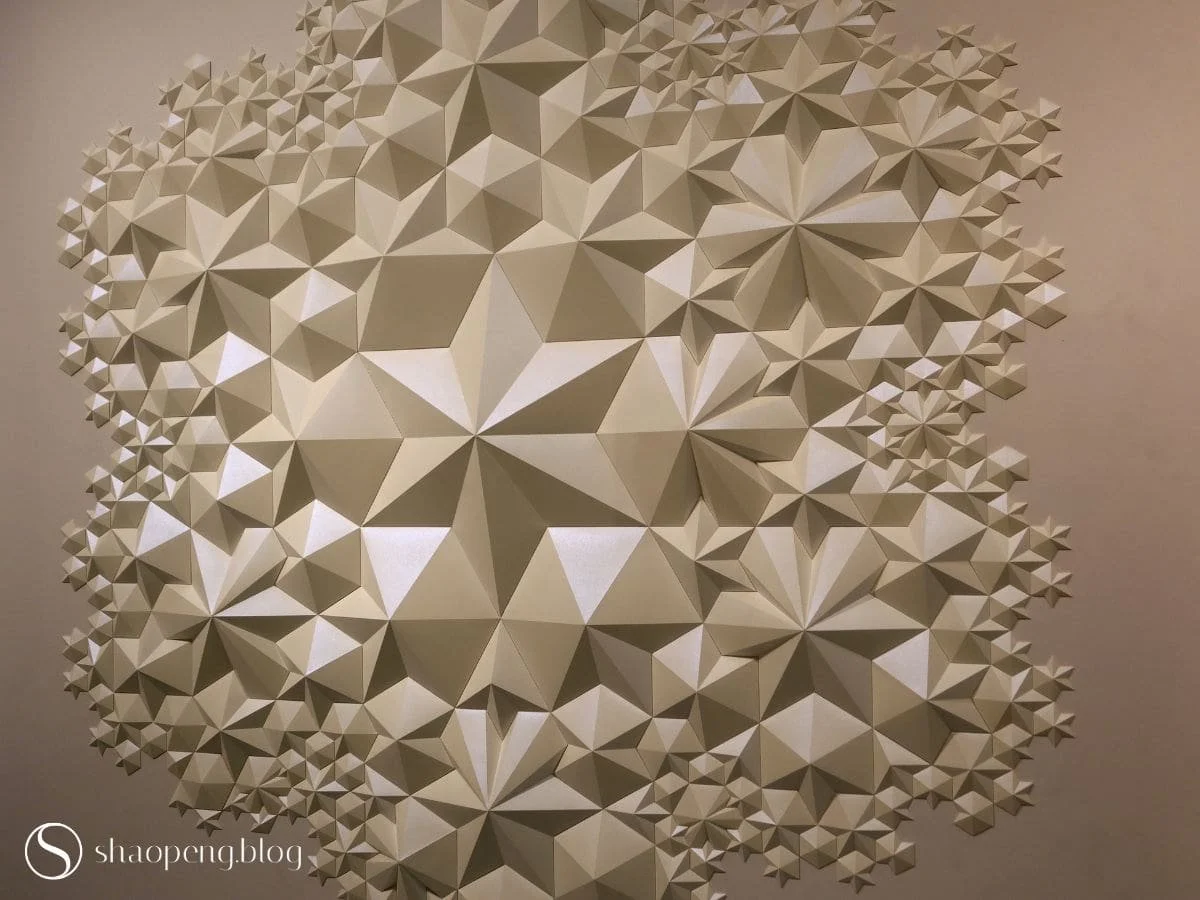
Not Dark but Absent of Light by Matthew Shlian
In addition to sculpture, traditional craftsmanship thrives here as a vehicle for artistic expression. Embroidery, painting, ceramics, and pottery share the stage through experimentation. You’d come across familiar names such as Antonio Santin, a Spanish artist whose ultra-tactile carpet painting will leave any onlookers in awe. The digital choreography of geometric abstraction by Iranian artist Nima Nabavi — whose solo exhibition I recently visited at The Third Line — draws you into a trance.
Among lesser-known names, Saif Mhaisen’s work commands attention. What appears at first glance to be black-and-white photography is, in fact, charcoal drawing on paper. Titled Oil, the series explores the presence of light — inspired by its references in the Quran — through a poetic, meditative process that results in a curiously intimate visual language.
It is works like Mhaisen’s that invite reflection: what truly defines a work as “Islamic art,” especially when traditional markers such as calligraphy, geometry, or arabesque are absent? Wandering through these galleries, one begins to realise that perhaps it is the spirit of enquiry, the play of light and form, and the ongoing dialogue with roots and heritage that continue to carry the tradition forward.
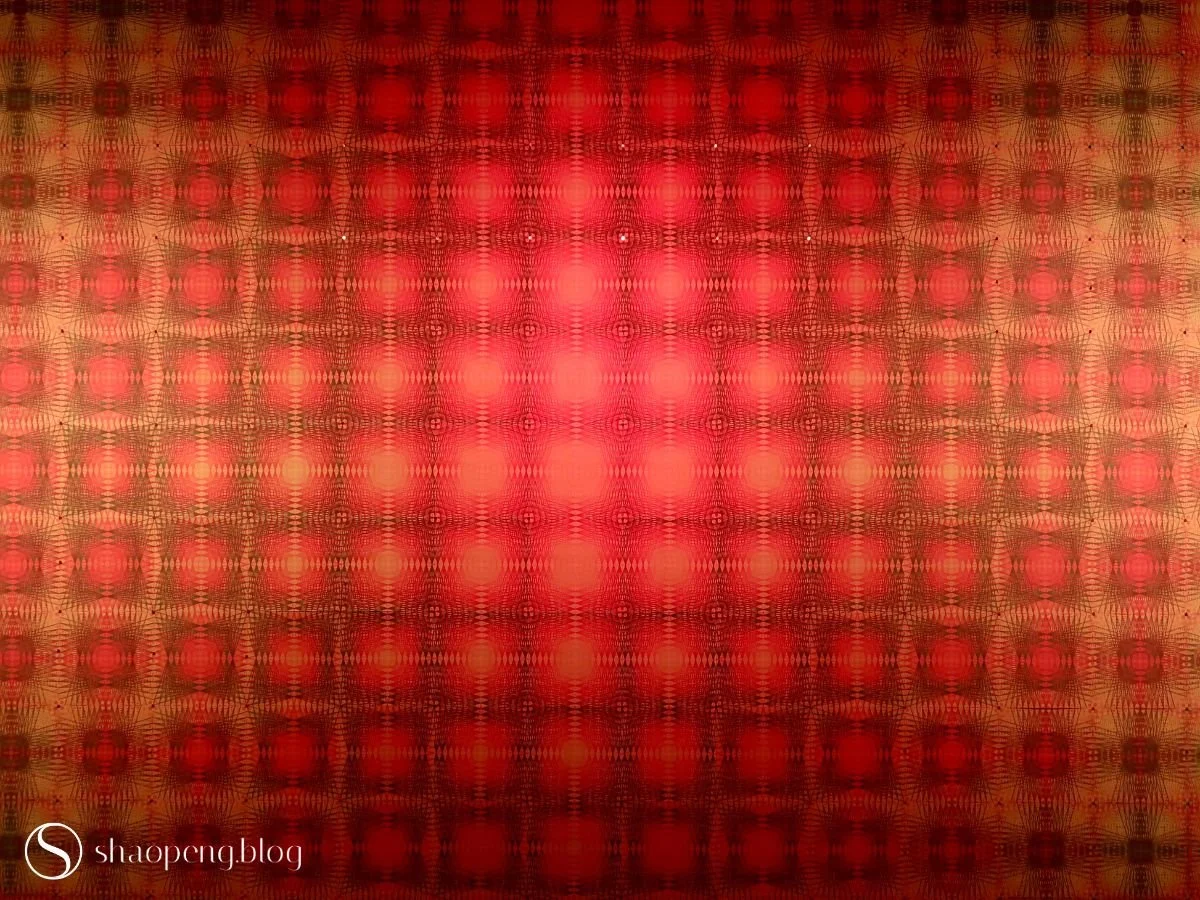
Inner Space by Nima Nabavi
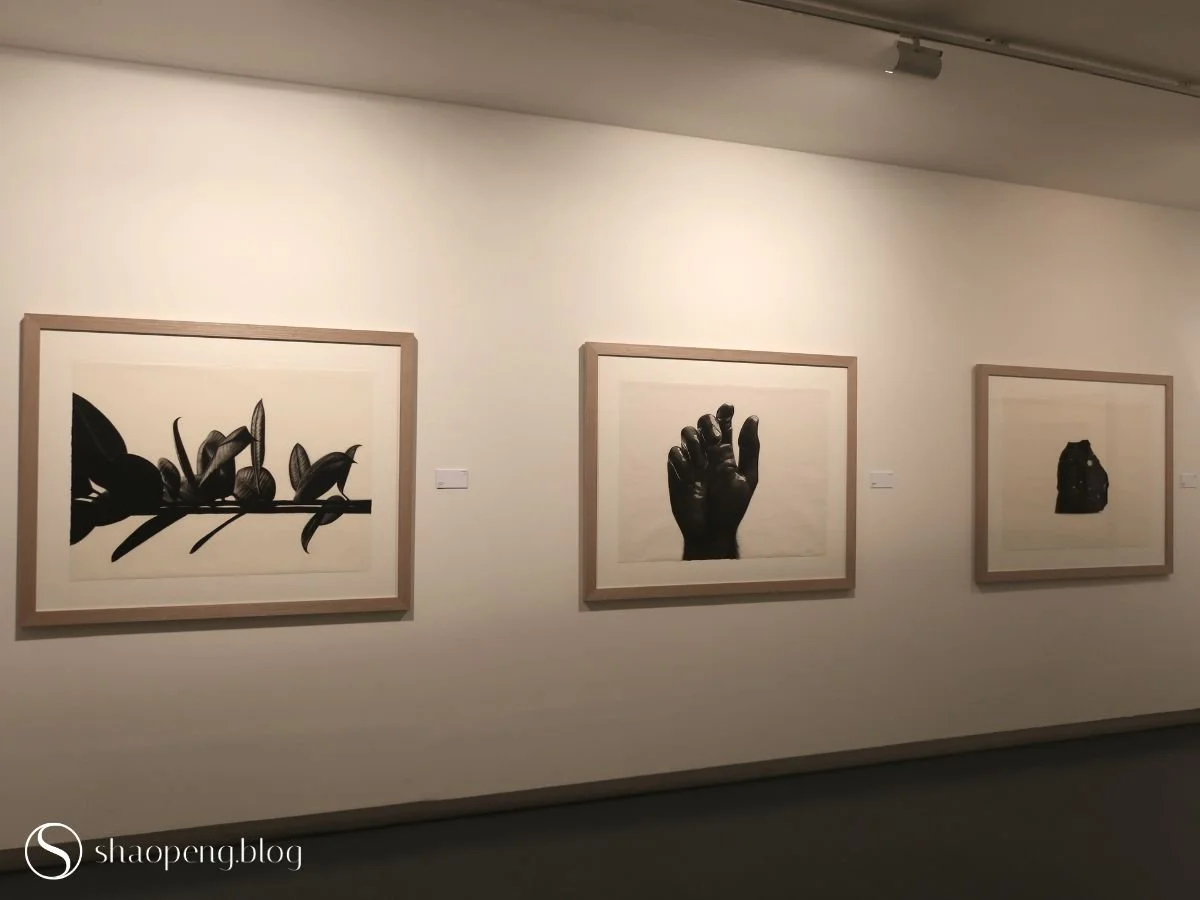
Oil by Saif Mhaisen
Wanderer’s tips — Don’t miss Parallel Histories on the first floor. Drawn from the Barjeel Art Foundation collection, the exhibition offers a rare view into the various artistic movements and leading figures from across the Arab world in the 20th and 21st centuries.
House of Wisdom
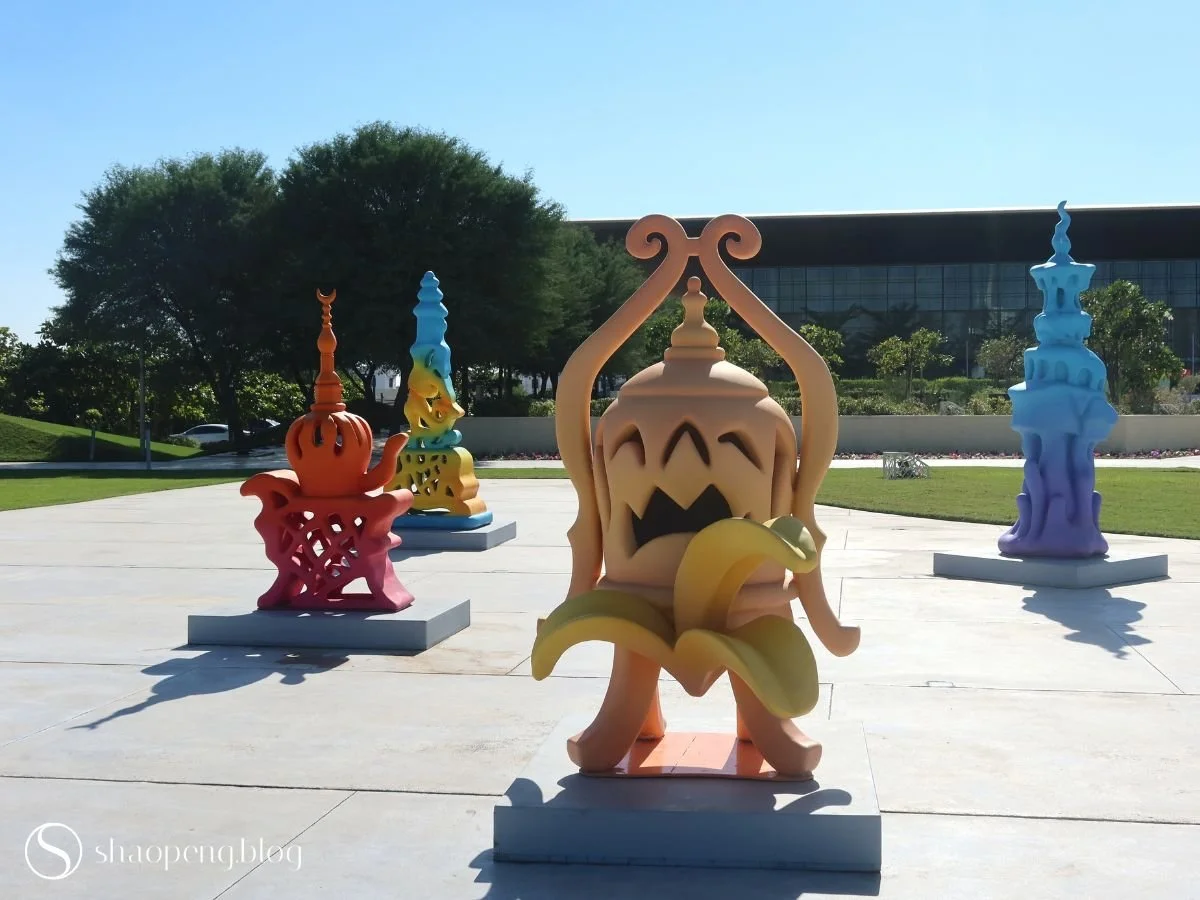
Manara by Salmah Almansoori
A cultural gem tucked about 10 kilometres outside of Sharjah’s city centre, the House of Wisdom feels like a pilgrimage site for lovers of books, ideas, and architecture. Commissioned in celebration of Sharjah’s designation as UNESCO World Book Capital in 2019, it now anchors the city’s new cultural quarter.
Named after Baghdad’s legendary House of Wisdom — once among the greatest centres of knowledge during the Abbasid era — Sharjah’s House of Wisdom is far more than a library; it’s a hub for learning and exchange, where exhibitions, talks, and community programmes take place around an open-air garden.
During the Islamic Arts Festival, you’ll find two installations at the House of WIsdom. Manara, by Emirati artist Salmah Almansoori, reimagines fading ornamental motifs from Islamic architecture in Ghayathi, Abu Dhabi. Designed in the shape of minarets and traditional lanterns, they speak of guidance, memory, and light.
Another installation, by a Hong Kong–based architectural design studio, is of a sculptural gathering space inspired by the flowing silhouette of the abaya. Its white fabrics sways gently in the wind, against the backdrop of The Scroll by British sculptor Gerry Judah — the landmark now synonymous with the House of Wisdom.
Wanderer’s tips— The House of Wisdom can be easily reached by buses 88 and 99 from Rolla Terminal.
1971 Design Space
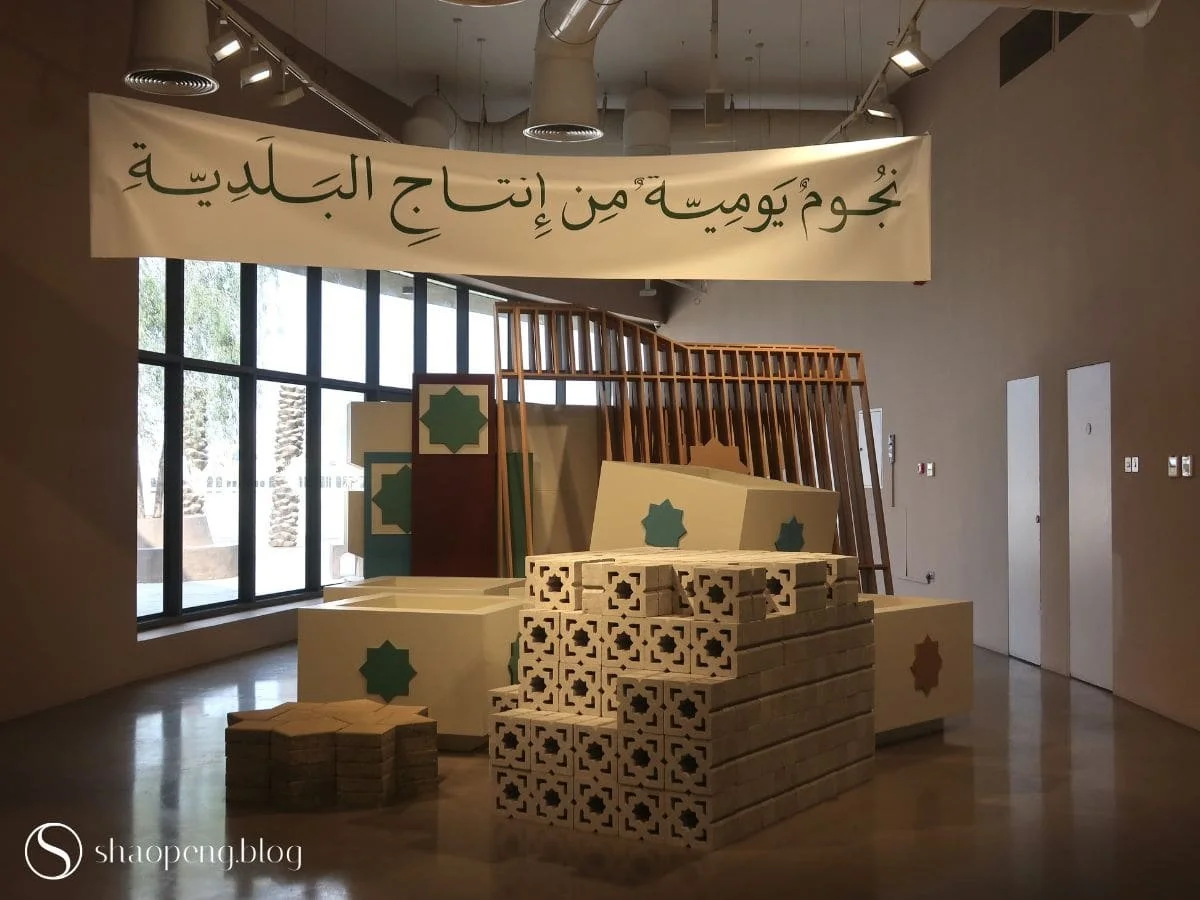
Star in Storage by Omar Darwish
Situated on Sharjah’s Flag Island, 1971 Design Space is dedicated to contemporary art and design. As one of the city’s creative hubs, it hosts curated exhibitions and public programmes that invite dialogue between art, design, and the community.
During the Islamic Arts Festival, 1971 presents the exhibition light… encountered, featuring installations inspired by this year’s festival theme. Curated by Noor Souhail, the exhibition explores light as something that “does not dazzle but reveals.” Each installation interprets the lantern in a different way — as memory, transition, and stillness.
Omar Darwish’s Star in Storage focuses on sacred geometry, revealing how the eight-pointed star — formed by two overlapping squares — is embedded across the city’s urban design.
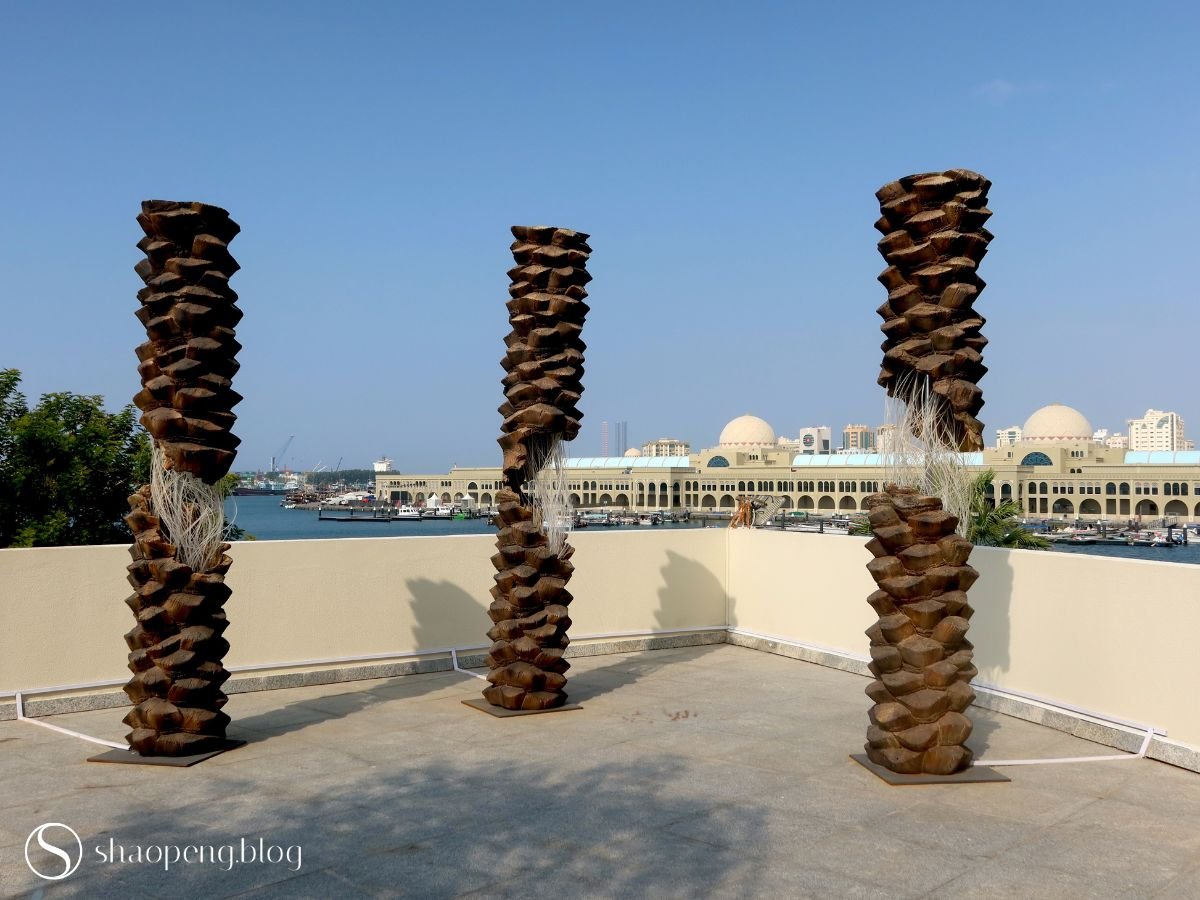
The Space Between by Ruqaya Alhashmi
I’m particularly drawn to Ruqaya Alhashmi’s The Space Between, displayed outdoors on the patio. Three palm tree trunks stands proudly against the backdrop of Sharjah’s Souq Al Jubail. The upper sections seem suspended in time, linked to the lower trunks by loose figments of memory, as if capturing fleeting moments in a frozen, almost poetic pause.
Wanderer’s tips — 1971 Design Space can be easily reached on foot from Al Jubail Bus Station or via the Khalid Lake Trail (Corniche Street) in the Al Khalidiya District.
In and Around Sharjah
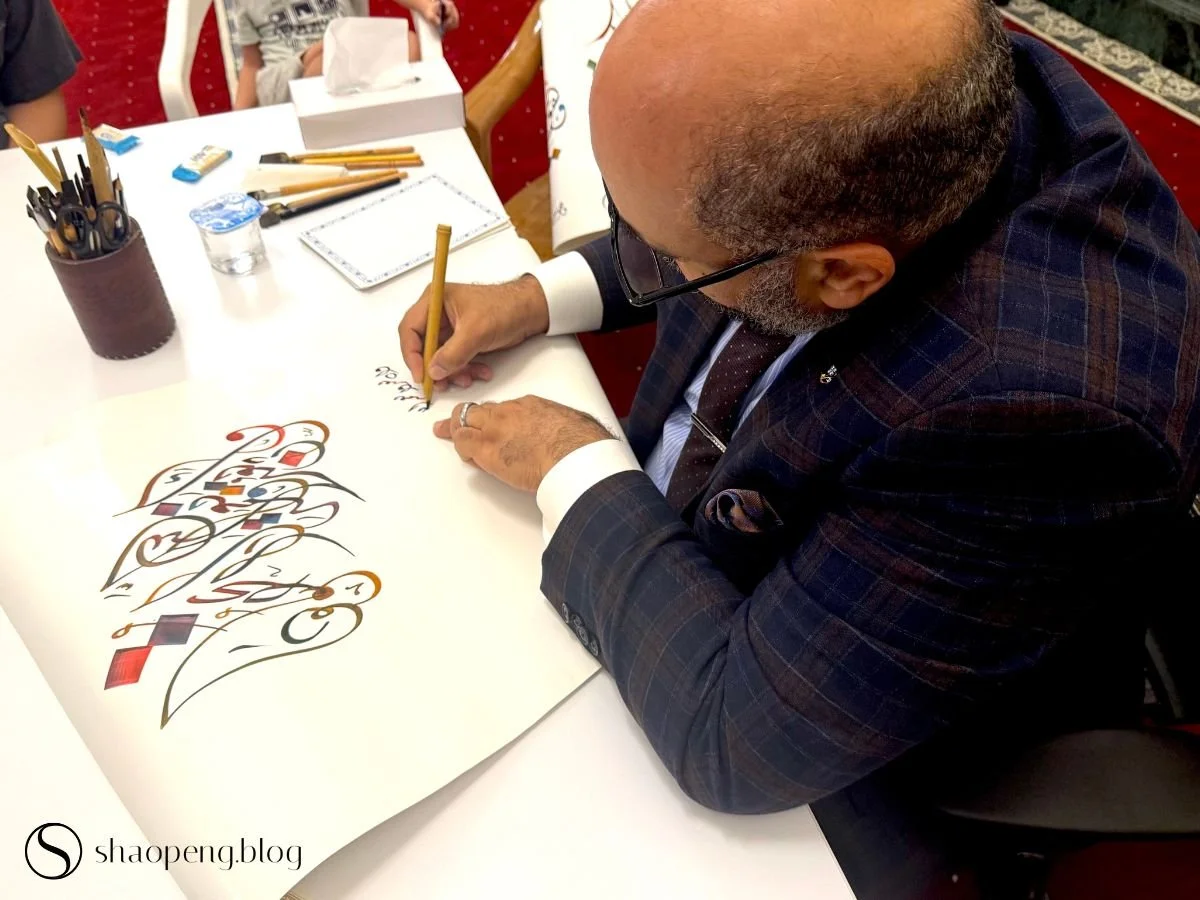
Diwani Script Aesthetics workshop led by Egyptian calligrapher Reda Jumaa.
Throughout the festival, a handful of workshops invite visitors to dive deeper into the arts of calligraphy, ornamentation, painting, and other creative practices — all through face-to-face encounters with the masters themselves.
I’ve had the privilege of attending several, and among them, the most memorable is the workshop on Algerian miniature painting led by artist Ahmed Khalili, where each step of the process was carefully guided.
Most workshops take place at the Sharjah Centre for the Art of Arabic Calligraphy and Ornamentation, while others are hosted across the city at venues such as the Emirates Fine Arts Society, the Women’s Union Association, and the University of Sharjah.
What’s even more fascinating are the calligraphy workshops held inside mosques across the city, where participants engage with the art in the very spaces it’s meant meant to serve. I attend one such session with Egyptian calligrapher Reda Jumaa at Al Huda Mosque.
Wanderer’s tips — For the latest workshop schedules, consult the General Programme or follow the official Instagram account of Sharjah’s Department of Culture.
The 26th edition of Sharjah’s Islamic Arts Festival runs until January 31st, 2026.