
Sound of Culture: The Yemenis Orchestra
Led by maestro Mohamed Alghoom, the Yemenis Orchestra takes audiences on a musical journey across Yemen, where centuries-old melodies meet the traditions of the Emirates.
Sense of Wander: ★★★★★
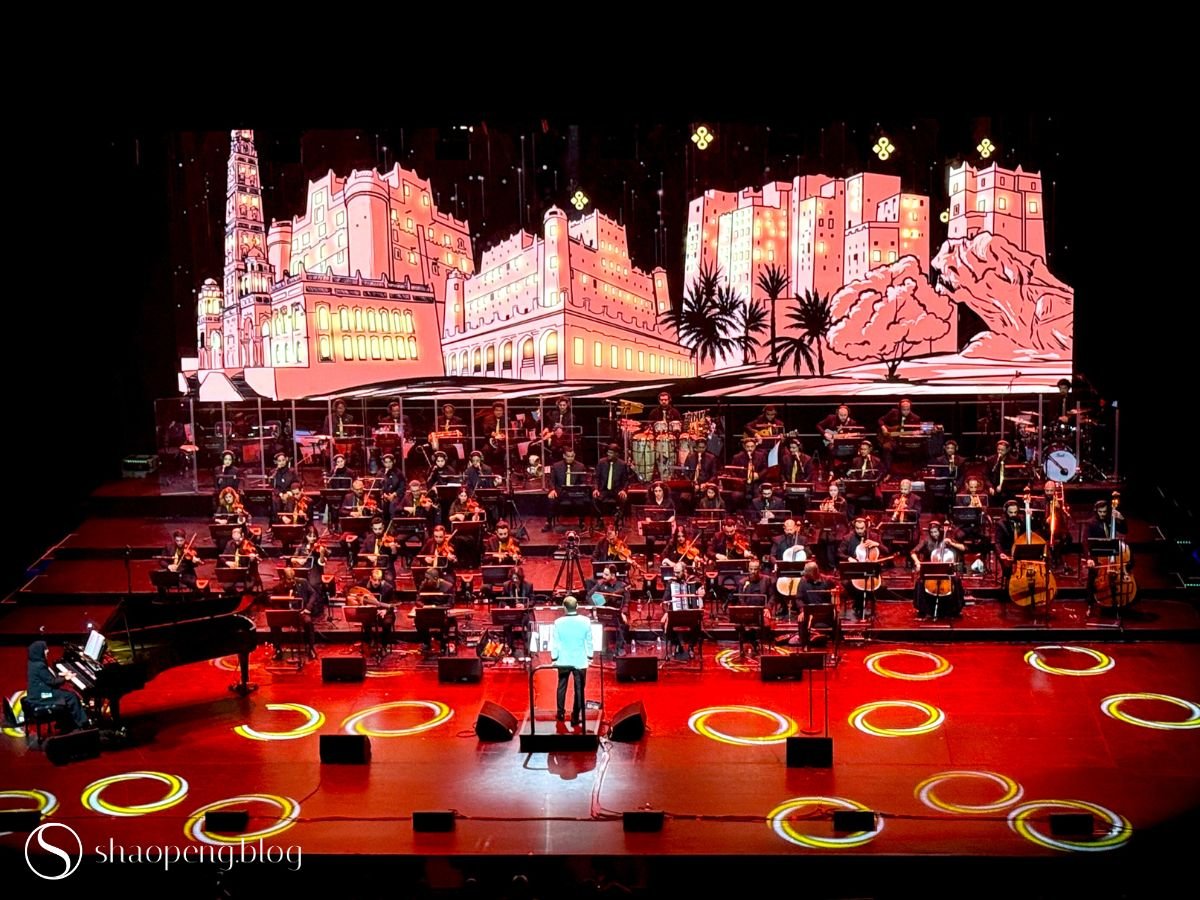
The Yemenis Orchestra at Dubai Opera.
DUBAI, UAE — I have never been to Yemen. But for more than a decade, Yemen has occupied a corner of my imagination.
I first encountered images of Sana’a in an Islamic art history class, where its earth-and-brick tower houses rise in a geometric rhythm unlike anywhere else. During the pandemic, that fascination deepened through books. One of them was Yemen: The Unknown Arabia, where British Arabist Tim Mackintosh-Smith recounts his qat-chewing afternoons with such intimacy that the ritual seems to dissolve the distance between text and reader.
My curiosity soon carried me into real-life encounters: I visited a Yemeni restaurant during my first trip to the Middle East, where tasting tender mutton mandi — a leap outside my comfort zone during my pescatarian years — inside a majlis left a lasting impression; and later, at Expo 2025 Osaka, a visit to the Yemen Pavilion, where name was inscribed in Musnad, an ancient South Arabian script that once carried the voices of early civilisations.
It was this long-held curiosity that drew me to The Yemenis Orchestra, which recently took the stage at Dubai Opera. Led by Yemeni maestro and composer Mohamed Alghoom, the orchestra has been championing Yemen’s musical heritage across the world.
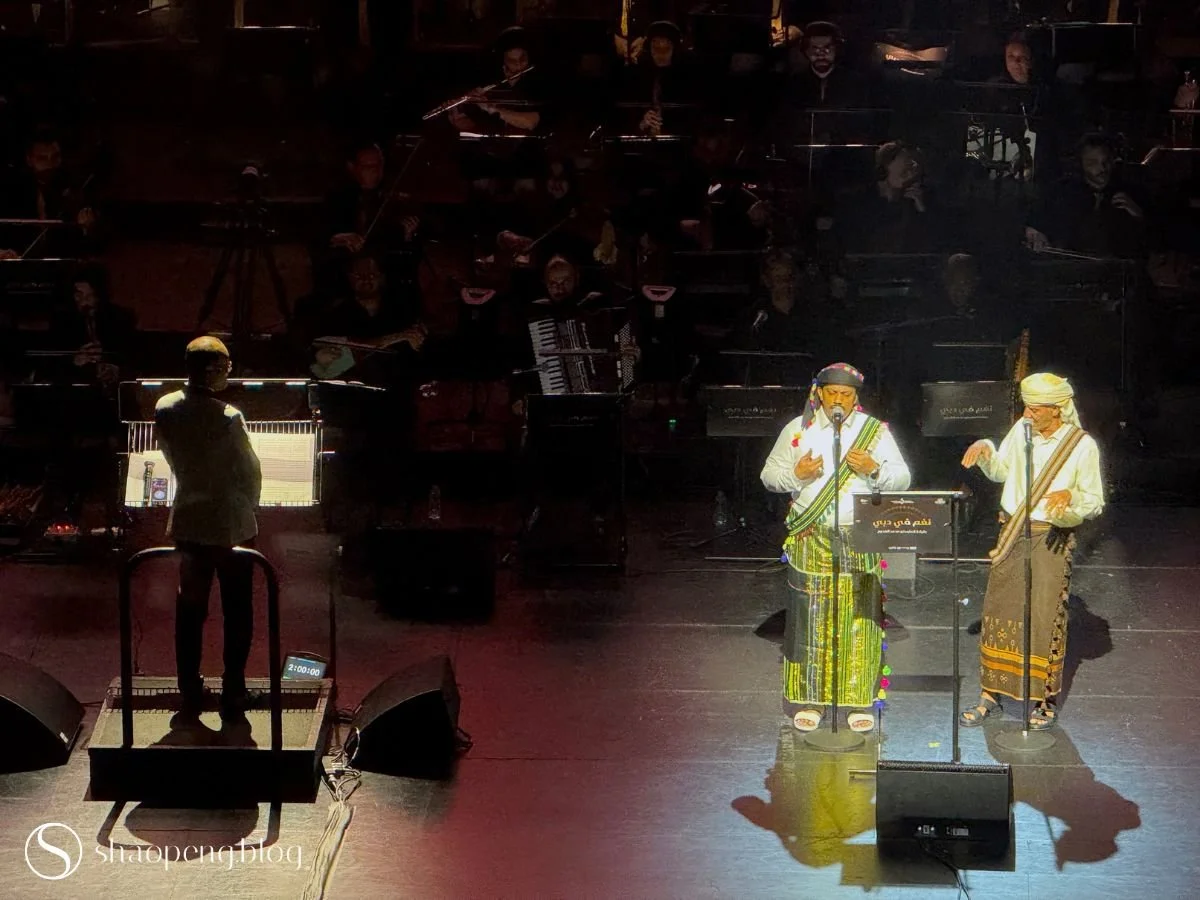
The UNESCO-listed Hadrami Dan Gathering tradition travels all the way from Yemen to Dubai.
Stepping inside Dubai Opera on the night of the concert is like crossing a cultural threshold: the audience itself becomes part of the scene, as a majority of men and women are donned in traditional costumes, some in Yemeni attire.
The concert opens with Ouwud Allah (عوّد الله), ushering audiences into the world of the Hadrami Dan Gathering tradition. Against a backdrop of Yemen’s sweeping landscapes, the oud carries the melody, while a singer repeatedly intones the word dan and its variations. Beside him stands a dan poet who improvises verses on the spot, repeated by the singer in the melody.
Hadrami Dan is a living performance art where music, poetry, and dance intertwine. Practised by both men and women in local dialects across Hadhramaut, it is recognised by UNESCO as Intangible Cultural Heritage.
From land, audiences are transported to sea. Bahr Al Ghareeb, or “Sea of the Stranger,” recalls the melodies once sung by fishermen and sailors to steady themselves against fear and uncertainty. From this maritime tradition emerged forms such as Al Kasr (الكاسر) and Al Nahma (النهمة), shared across Yemen’s coastal cities and neighbouring shores.
Composed by Alghoom, the piece carries both longing and hope. At its heart is the simsimiya, a stringed instrument central to Al Kasr, joined by the seafarer’s chant.
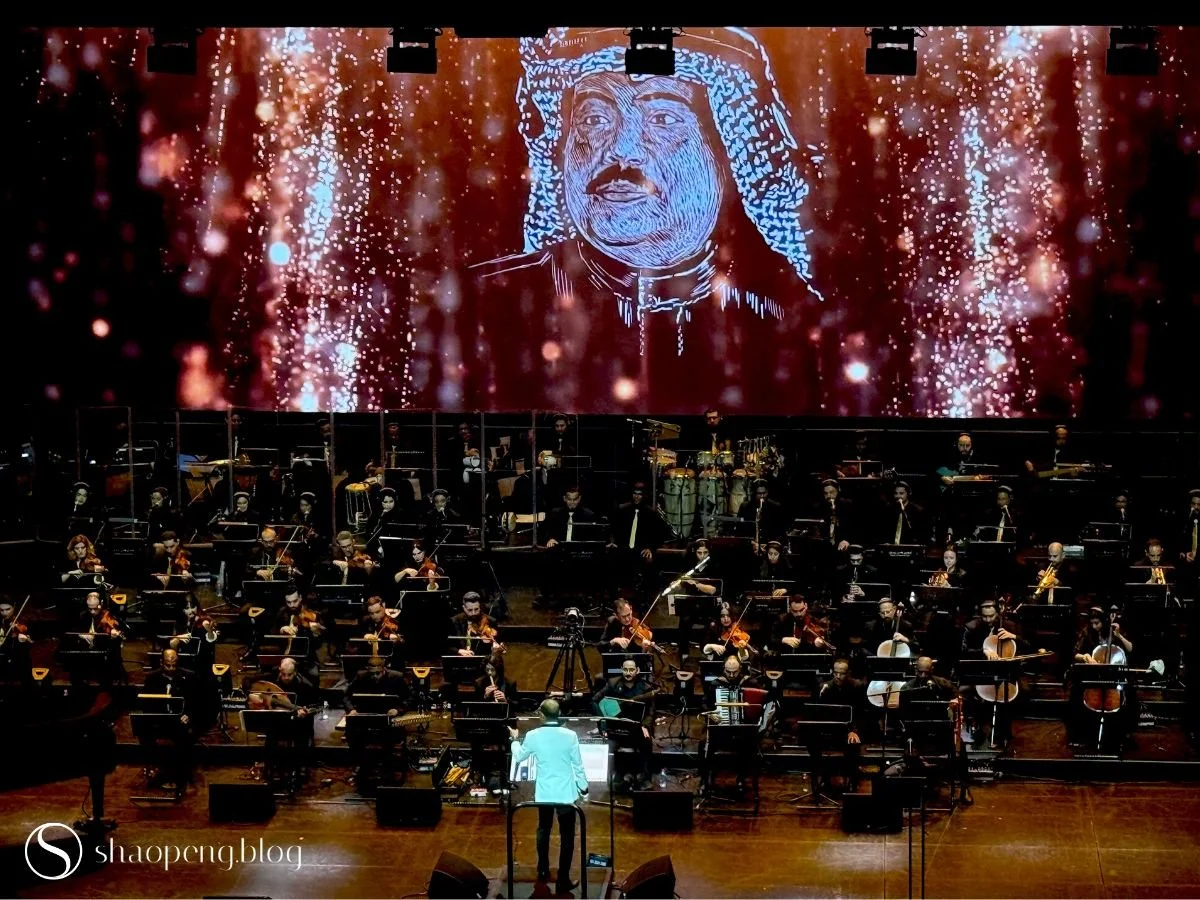
Audiences are treated to a good selection of Abu Bakr Salem’s beloved songs throughout the concert.
Sehr Al Sharq, or “Magic of the East,” turns inland, drawing inspiration from Al Mahra, a region of sprawling deserts and valleys. Here, the mizmar emerges — its bright, rhythmic melody once offering solace to caravans crossing the perils of the Arabian desert.
From desert to vineyard, Enab Al Yemen (عنب اليمن) draws from a traditional heritage song written by Ahmed Ashraf Al Matrey. The lyrics celebrate the beauty of rural life: tending grapevines and listening to birds chirping among the leaves. Arranged by Alghoom and delivered through the piercing voice of Yemeni singer Hani Shaibani, it turns out to be one of the evening’s most evocative moments. A flute solo narrows the soundscape, like a camera zooming in on birds fluttering between branches.
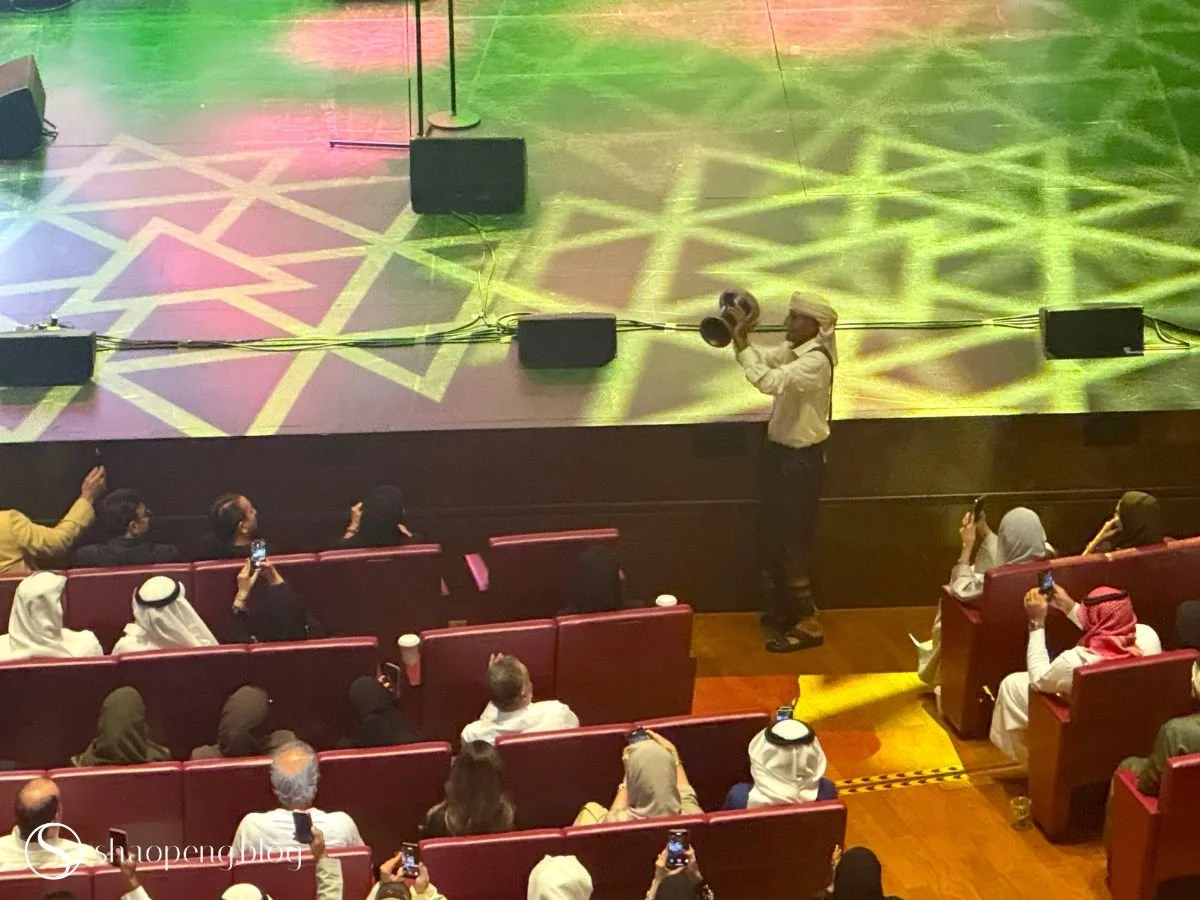
The evening becomes even more engaging when a percussionist comes off the stage to play the drum among the audience.
Besides Yemeni repertoire, the orchestra also draws inspiration from Gulf traditions. Among these is Yalkous Ya Al Hattali (يالكوس يا المطلي), a romantic piece rich in metaphor. Al Kous refers to a favourable wind once relied upon by sailors, later becoming a poetic symbol for messages carried across distance. Ya Al Matli, meaning “the one who has just arrived,” is an affectionate term addressed to the beloved. The piece spotlights Emirati qanun player Khalid Bin Khadim, whose performance anchors the Gulf connection.
Another favourite among Emirati audiences is the song Safeni Ya Sakheef Al Khadi (صافني يا صخيف الخدي), based on a poem by Sheikh Zayed bin Sultan Al Nahyan, the Founding Father of the UAE. The song speaks of devotion and emotional fulfilment, where a single glance from the beloved fills life with meaning. Popularised by artists like Jaber Jasim, it remains a favourite among Emiratis. On stage, Alghoom’s arrangement and the vocals of Abdulla Al Mestrih bring renewed depth to the classic.
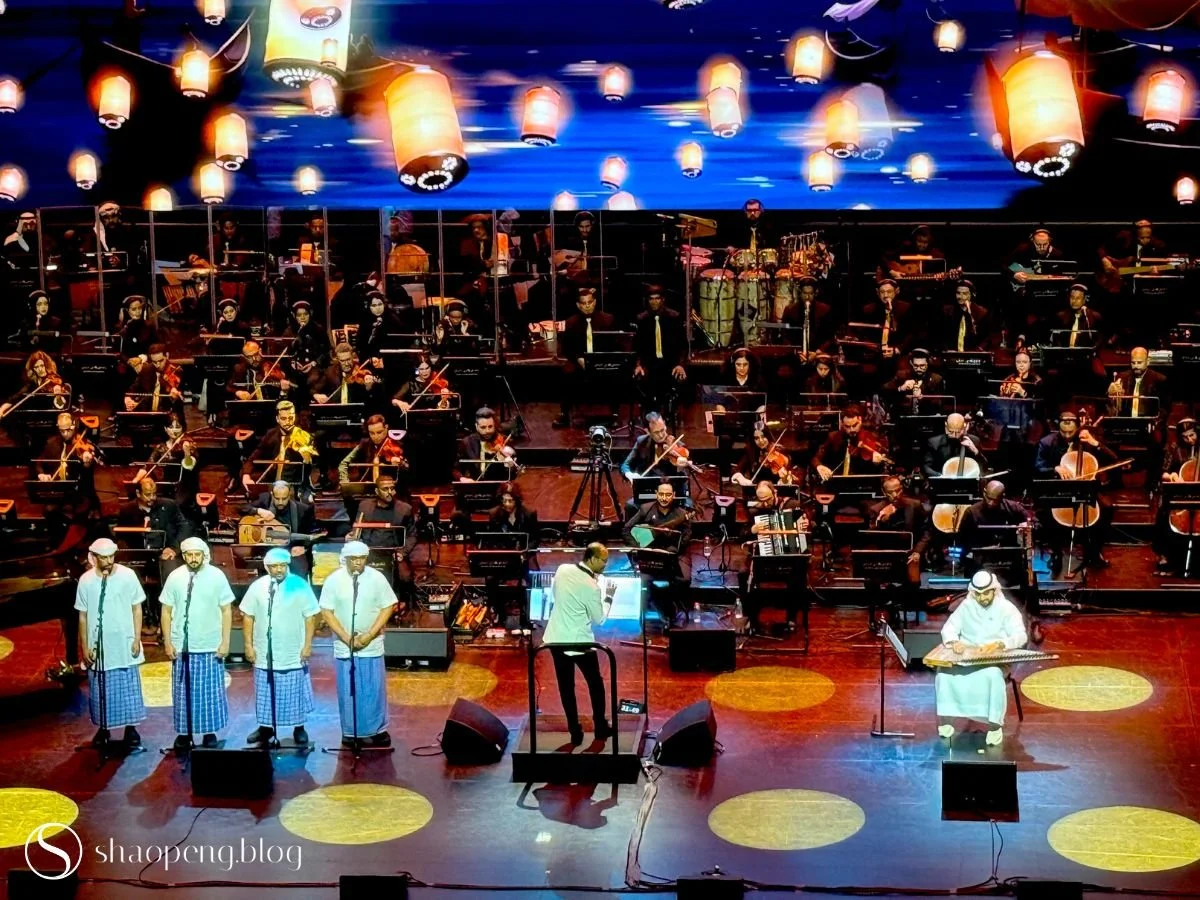
Emirati qanun player Khalid Bin Khadim performs with the Yemenis Orchestra.
Nostalgia surfaces again through songs by Abu Bakr Salem (1939–2017) — often revered as the Father of Khaliji Music — whose repertoire spans folk traditions and romantic ballads. Pieces such as Ya Sahran (يا سهران), Heya Heya Al Seneen (هي هي السنين), and Khalli Asr Qalbi (خلي أسر قلبي) stir distant memories among the audience.
A tribute is also paid to Karama Mursal (1946–2014), the celebrated singer-songwriter from Al Mukalla, whose influence continues to ripple through Yemeni music.
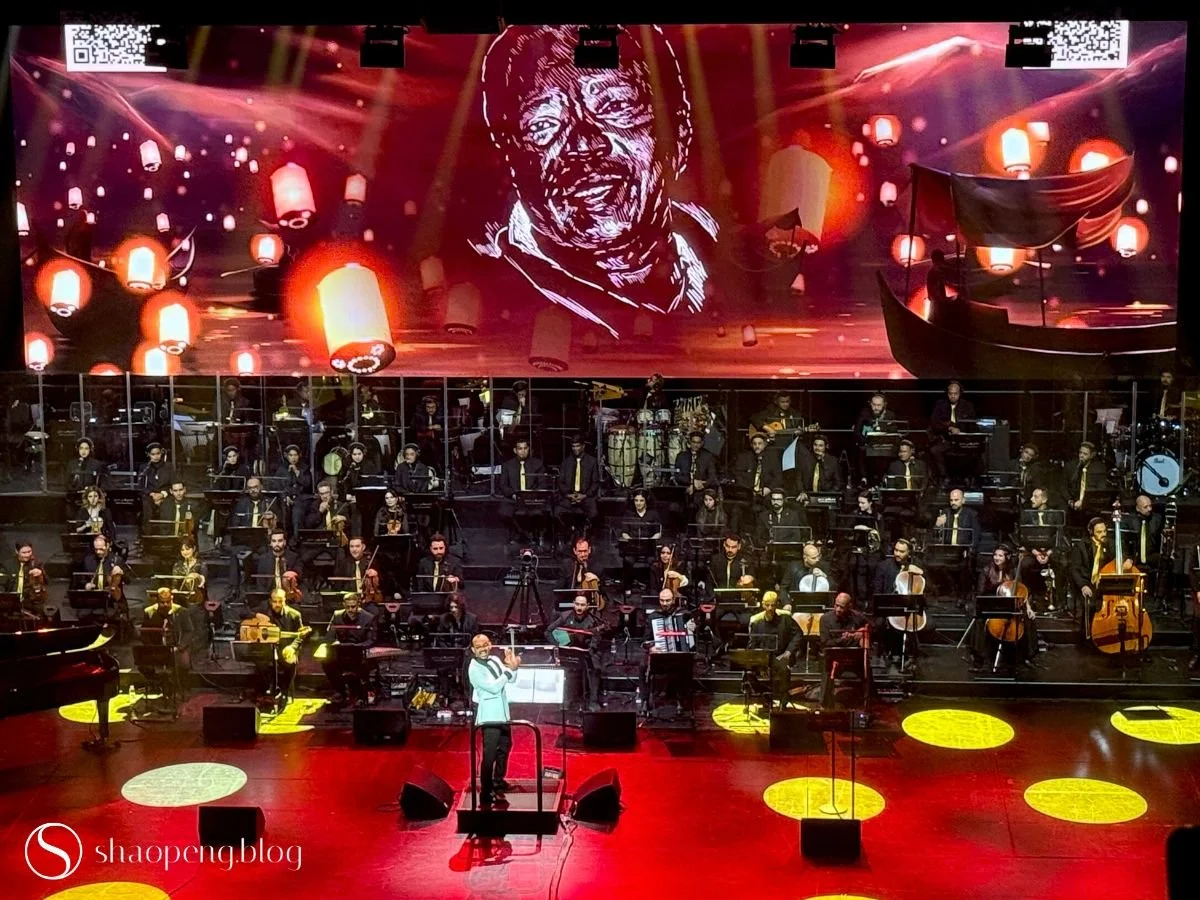
The evening also features song by Yemeni singer-songwriter Karama Mursal.
Many of the pieces performed are part of The Heritage Symphonies Project, founded by Mohamed Alghoom himself. This initiative reimagines traditional Yemeni music by blending indigenous instruments and motifs with Western orchestration. Rearranged yet faithful to their origins, these compositions set an example of how musical heritage continues to thrive: by travelling, mingling with new sounds, and finding renewed life beyond its birthplace.
By the end of the evening, Yemen feels much closer, not through photographs, but through the living sound of its melodies.
The Yemenis Orchestra took the stage at Dubai Opera on December 14, 2025.