
Wander in Ras Al Khaimah: Contemporary Art in Al Jazeera Al Hamra
For a limited time, art takes over Al Jazeera Al Hamra, a historic pearling village poised on the edge of Emirati memory.
Sense of Wander: ★★★☆☆
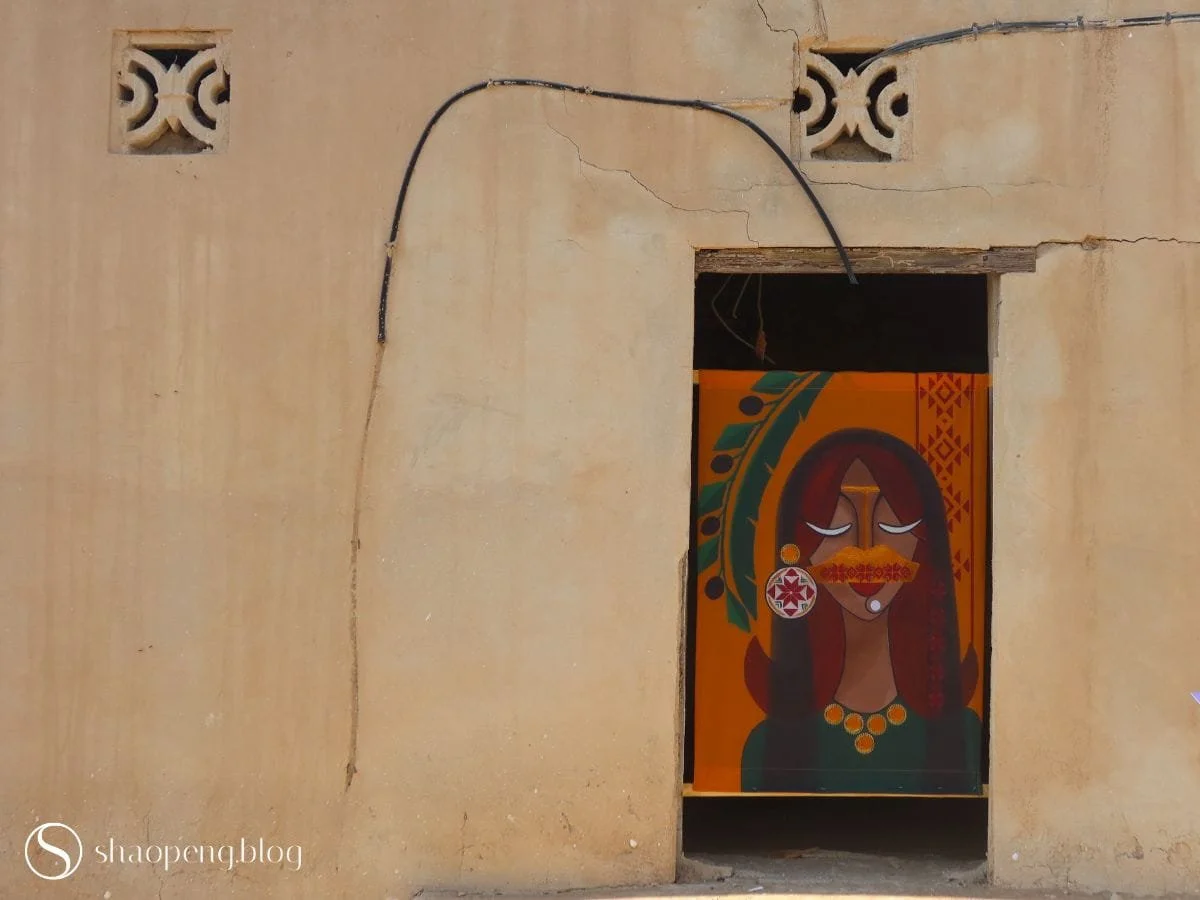
A Burqa of Embroidery by Asma Thabet
RAS AL KHAIMAH, UAE — Wandering through the Ras Al Khaimah Art Festival held at Al Jazeera Al Hamra, it’s easy to forget that this village was once a prosperous centre for pearling. The abandoned houses and ruined walls, their courtyards emptied and weather-worn, offer little hint of a coast that anchors Ras Al Khaimah (RAK) within international trade networks spanning more than 4,000 years.
Located at the meeting point of desert, mountains, and sea, the area has attracted human settlement since Neolithic times. Al Jazeera Al Hamra, in particular, played a vital role in the pearling economy. At its height, the village was home to some 500 houses, with nearly 3,000 people earning their living from the sea. The name, meaning “the red island,” comes from the colour of the sands on which this tidal settlement sits.
Pearling was the backbone of life here, but it was far from the only livelihood. Fishing, boat-building, and the herding of cattle and sheep supplemented household incomes during the off-season. At the heart of the village stood the souk, where caravans of camels and donkeys once carried goods from the port inland.
Prosperity, however, did not last. The invention of cultured pearls in the 1920s triggered a global decline in wild pearl harvesting, and the discovery of oil in the 1950s drew residents away in search of new opportunities. The Al Zaab tribe, who had long called Al Jazeera Al Hamra home, gradually abandoned the village.
For decades, its coral stone and beach rock walls crumbled, its empty houses wrapped in rumours — locals speak of jinn, spirits from folklore, to roam the abandoned village.
Like many historic sites, fragments of its past have since been brought back through preservation and restoration efforts. Today, Al Jazeera Al Hamra is known as the last standing pearling village in the United Arab Emirates — and, for a limited time each year, it becomes a hub for contemporary art.
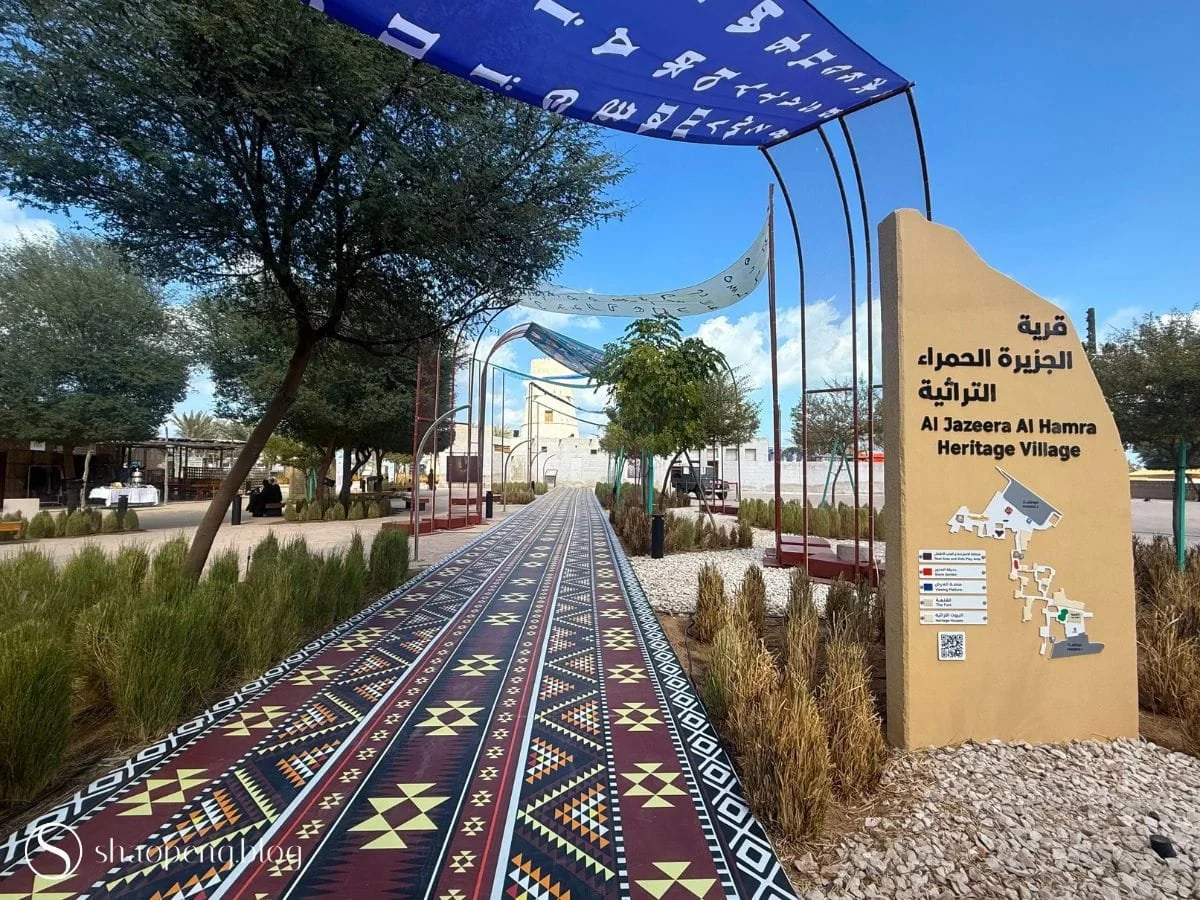
During the festival, Al Jazeera Al Hamra Heritage Village is transformed into a hub for contemporary art.
The 14th edition of the Ras Al Khaimah Art Festival breathes new life into the village’s restored houses, gathering works by 106 artists from around the world.
Our journey begins at the Fort, a fortified complex once built to secure access to what was then an island. Its cylindrical watchtower — the oldest part of the structure — rises above the village skyline, acting almost like a lighthouse for those who lose their way while wandering among the ruins.
During the festival, the tower is transformed into an exhibition space housing the private collection of H.H. Sheikha Hana bint Juma Al Majid, where glittering jewellery and gemstones are set against its austere stone interior.
The fort’s facades, both inside and out, exhibits works by various artists. Among them is The Gathering by Shireen Mufti, which depicts Emirati Bedouin men seated in a circle, engaged in communal exchange. Its courtyard — now filled with chairs and a temporary stage — once served a very different purpose. Formerly a sur, it was a place for collective refuge; today, it gathers people again, this time through art.
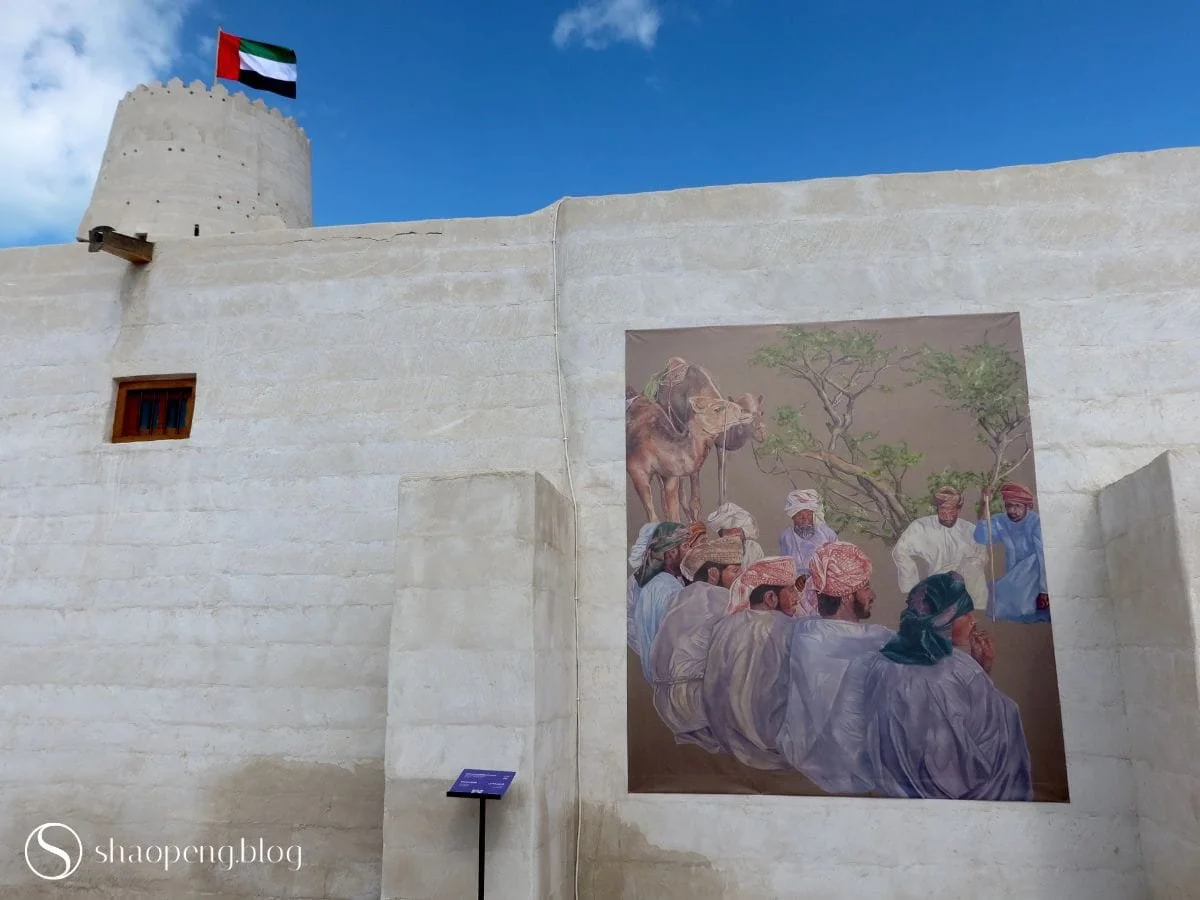
Shireen Mufti’s The Gathering is exhibited on the fort’s outer facade.
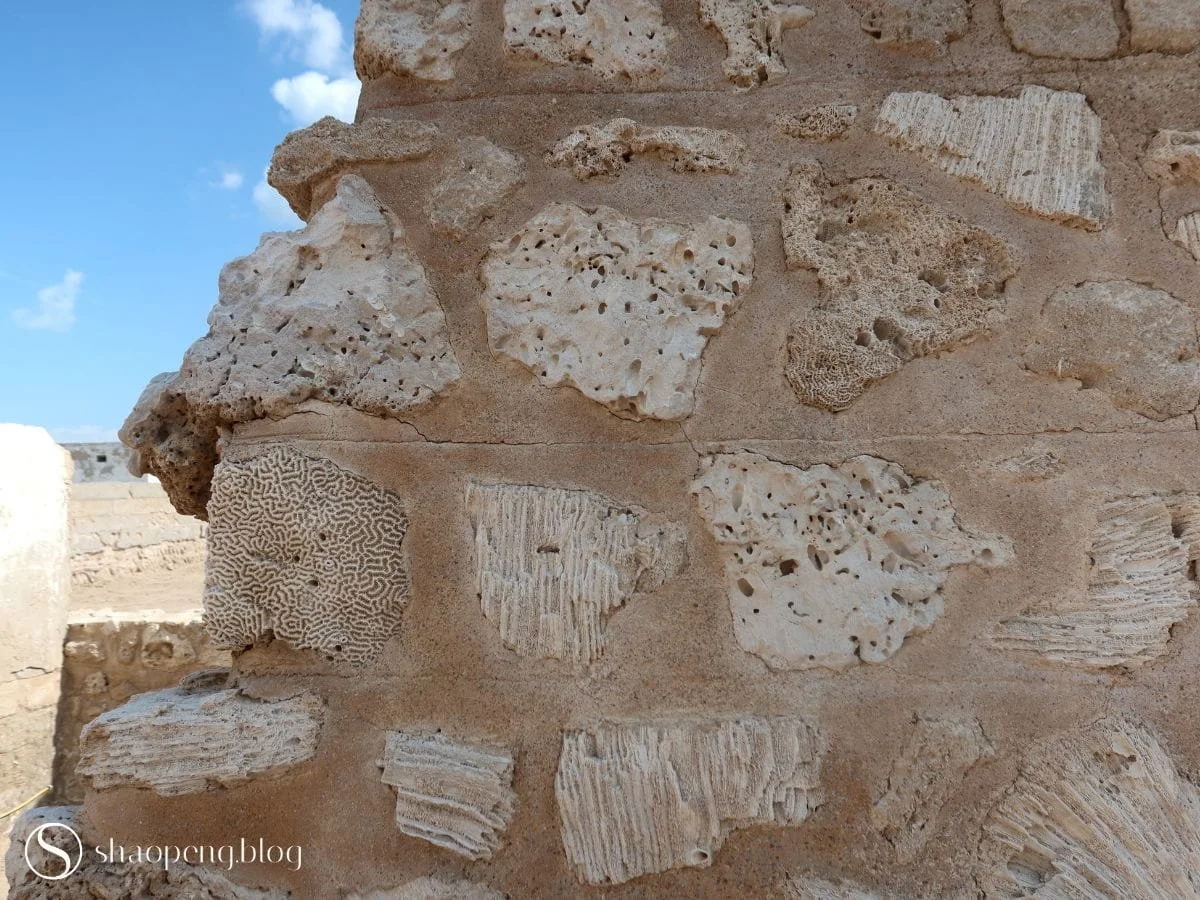
The historic walls in Al Jazeera Al Hamra were constructed from coral stone and beach rock.
At first glance, the artworks seem scattered across the village. In practice, navigating the festival may be easier than you think. Exhibitions are mainly housed within restored bayt — traditional homes — linked by curated pathways. Moving from house to house, one encounters not only artworks, but also stories of former residents who once lived within these walls.
Bayt 1, formerly the residence of Ibrahim Mohamed Bu Ataba Al Zaabi, is hosted by the Embassy of Peru in the United Arab Emirates. Here, Peruvian artists reinterpret ancestral knowledge through ceramics, textiles, painting, and digital media. Among the works, Adolf Finseth’s Andean Suit stands out for weaving ancient motifs into everyday fashion. The exhibition’s highlight, WAKOS: Ceramic Ties | Peru & The Emirates, brings together Peruvian and Emirati artists in reinterpreting the ancient huaco pottery tradition.
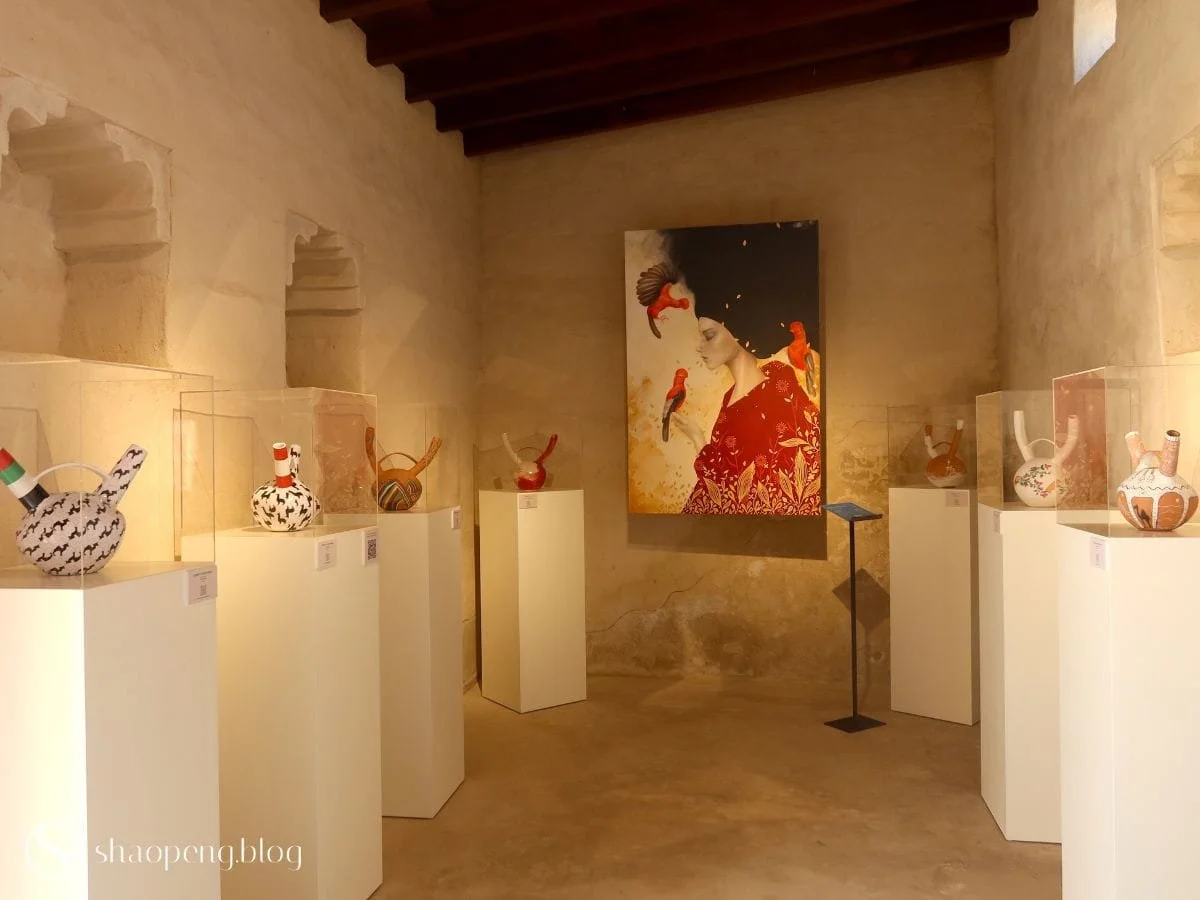
WAKOS Ceramic Ties | Peru & The Emirates exhibition at Bayt 1.
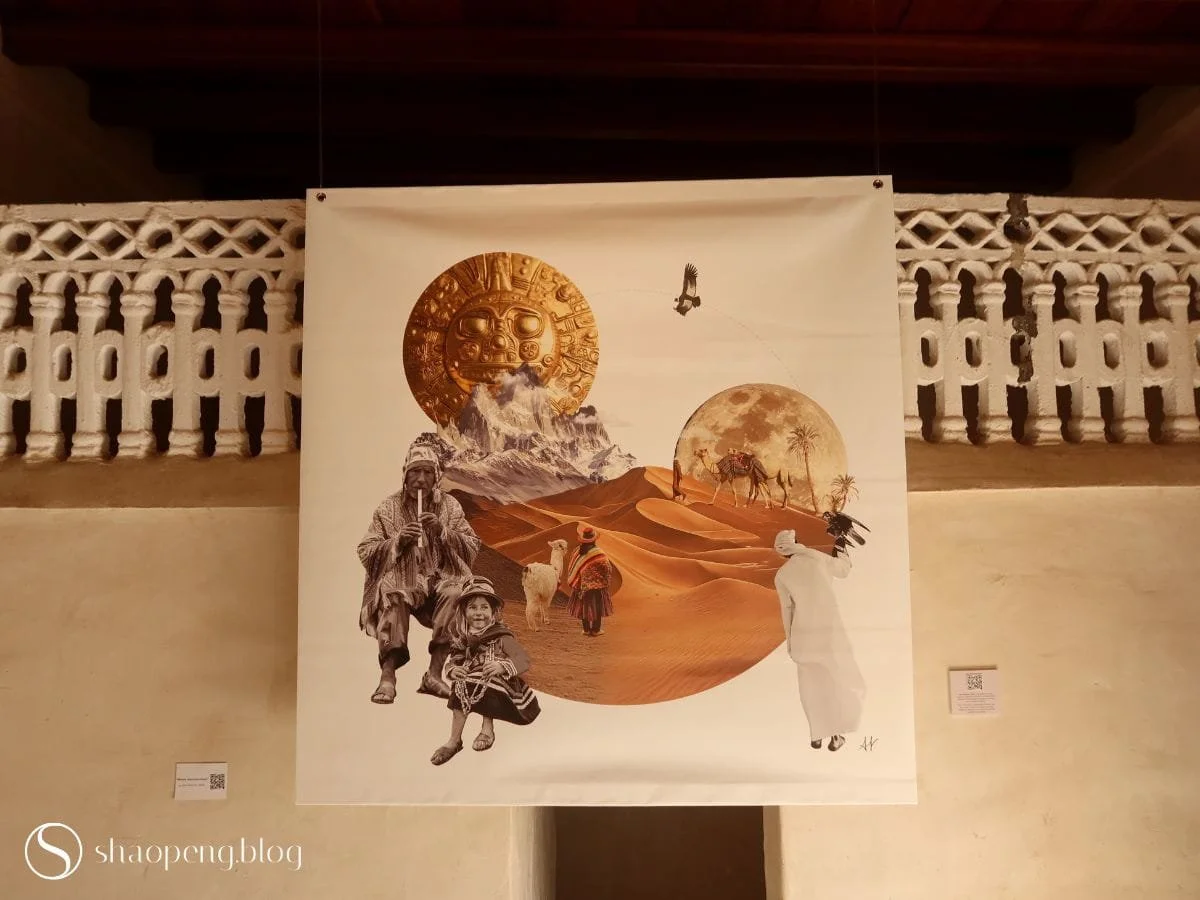
Where Horizons Meet by Ana Nuñez
Bayt 1 is far from the only house hosted by an international institution. The British Council, Marinko Sudac Foundation, the Consulate General of the Federal Republic of Germany in Dubai, and the Embassy of Brazil in Abu Dhabi each occupy different houses across the village, presenting solo or collective exhibitions.
My personal favourite is Bayt 4, hosted by the Embassy of the Kingdom of the Netherlands. Curated by Margriet Vollenberg, the exhibition explores how civilisations evolve through creative dialogue. Here, Sina Dyks uses recycled PET yarns to create large woven compositions that translate emotional landscapes into colour and texture. The works feel unexpectedly close to shan-shui — traditional Chinese ink landscapes — where atmosphere matters more than form.
Nearby, textile canvas by Ilja Visser combines richly textured embroidery with painterly gestures, evoking a sensibility that feels at once contemporary and futuristic — pristine and free from the noise of the outside world.
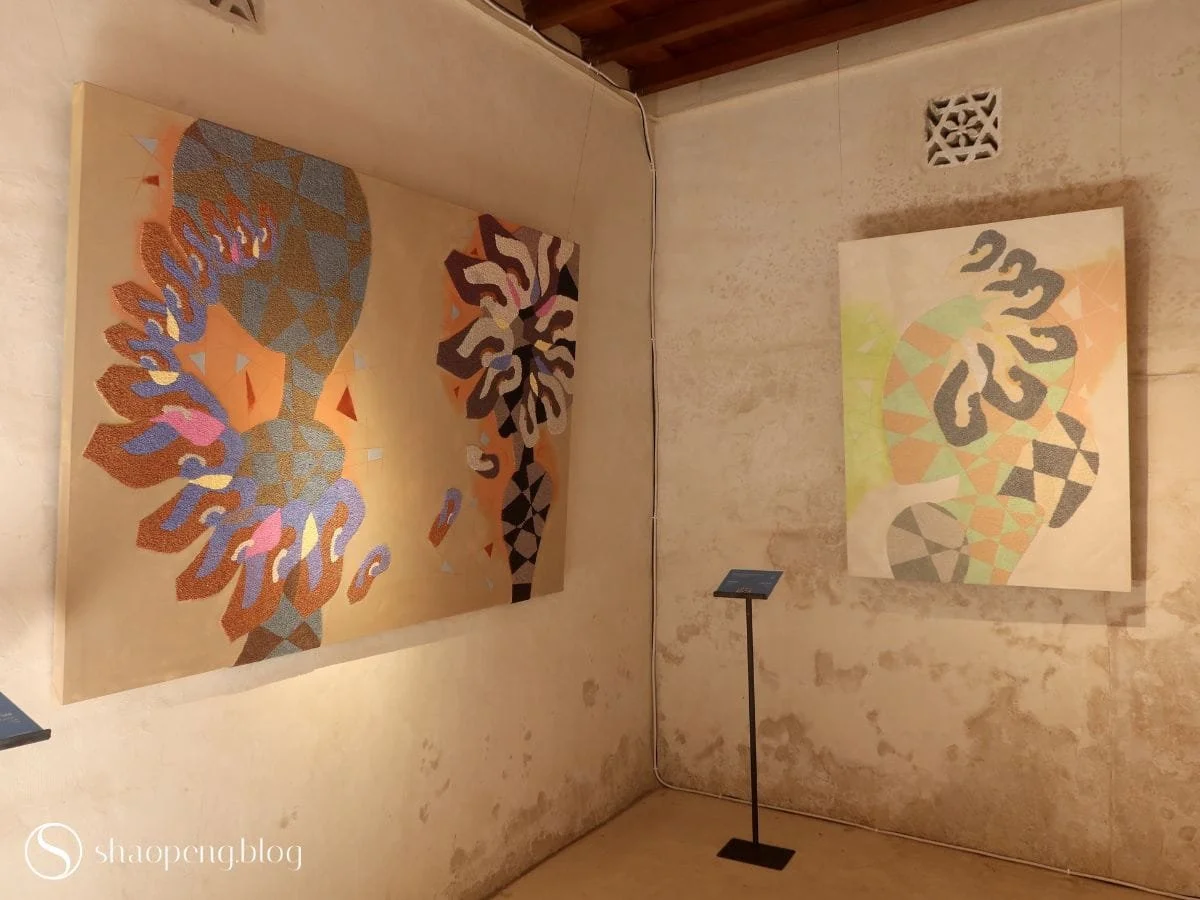
Works by Ilja Visser on display at Civilisations: Weaving Connections Through Dutch Art and Design.
Some works are less immediately visible, tucked inside spaces that still bear the marks of abandonment. Mahdieh Ezzati’s Woman in the Mirror of Civilisations, though contemporary in form, recalls ancient fertility idols. The primal cuts and chisel marks of the wood only heighten the sense of life force embedded in the sculpture.
At one crossroads, my attention is drawn to a photograph by Ayanava Sil. Taken during Ramadan, the image captures a moment after prayer: men in traditional dress held in a warm embrace, revealing the fragile intimacy of human connection amid the conflicts and power struggles of the present world.
I’m also drawn to the photographic works of Zeinab Alblooshi. In Female Gaze and Words, her perspectives invite curiosity, allowing poetry to emerge from everyday scenes.
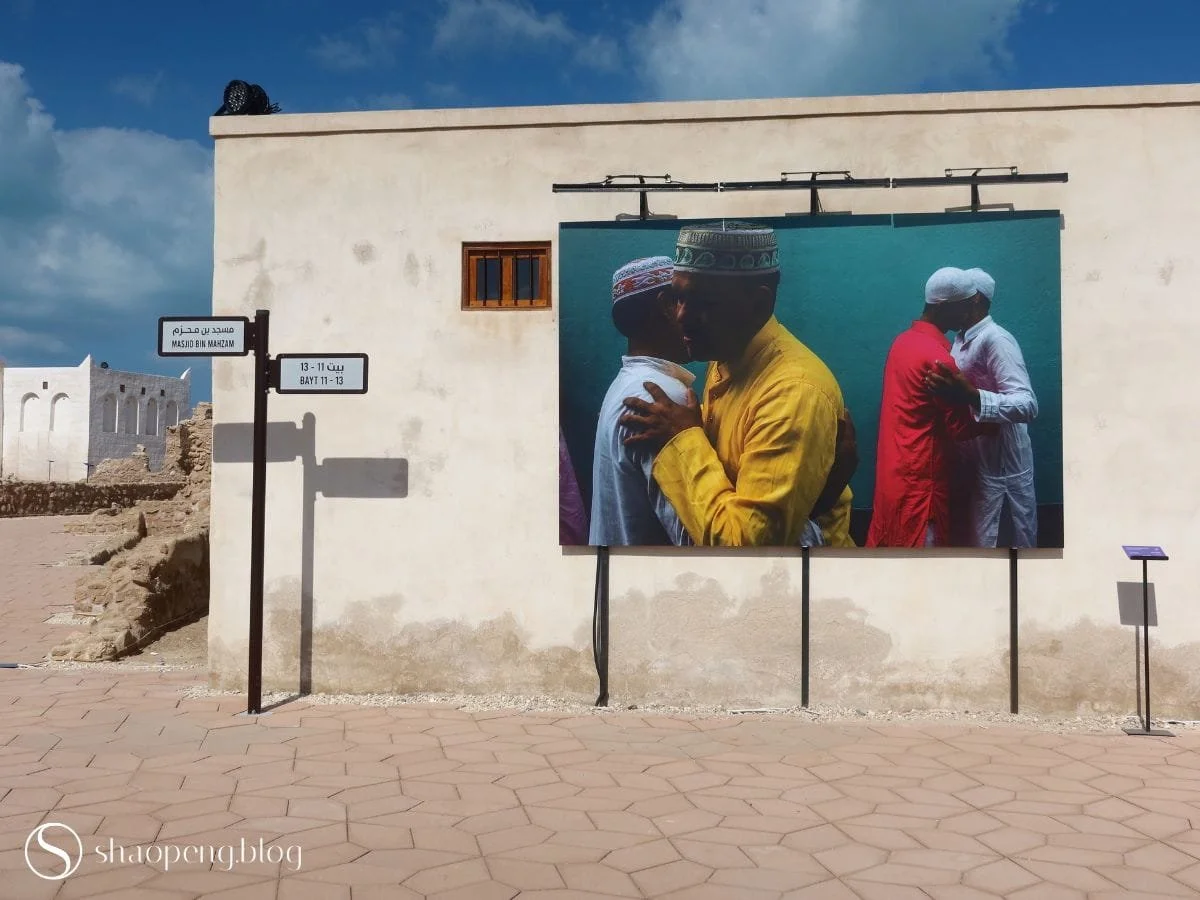
Threads of Civilisation by Ayanava Sil
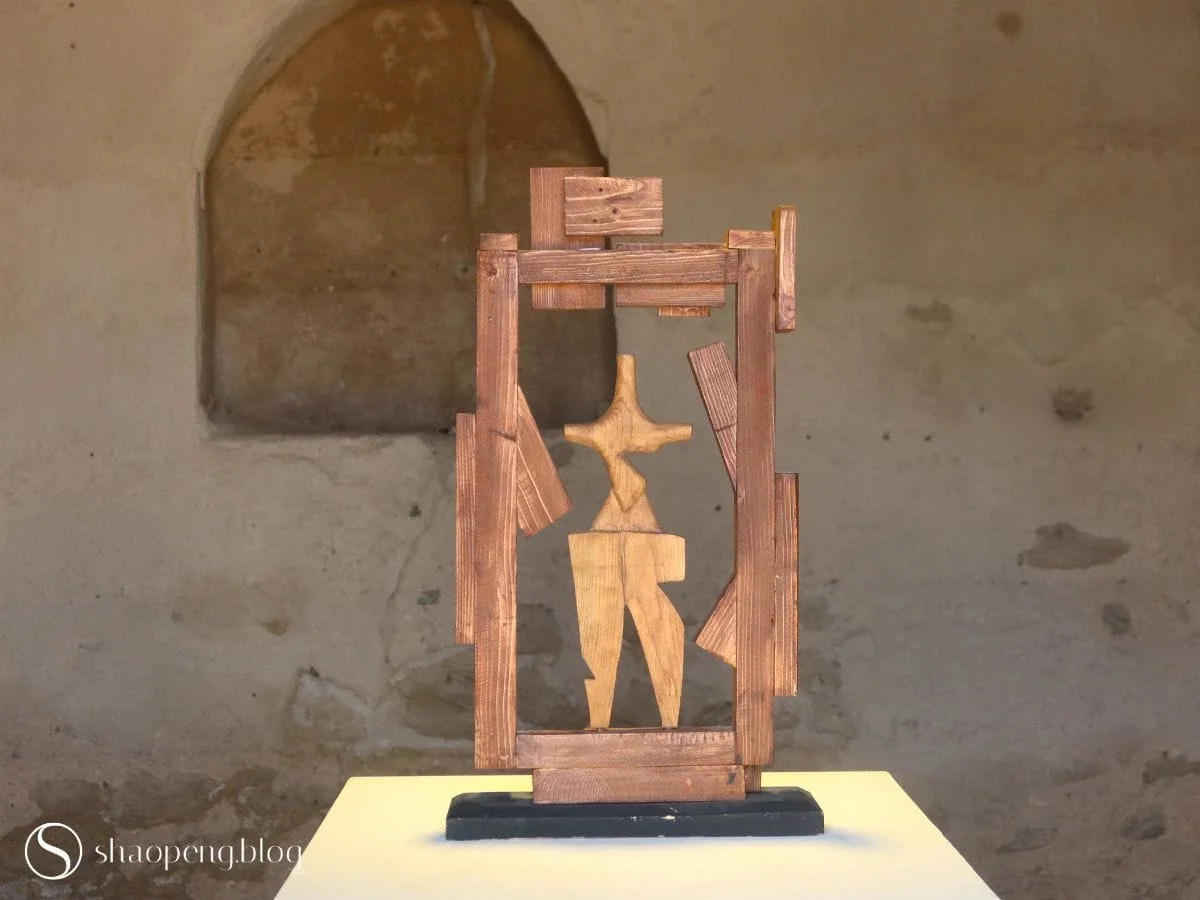
Woman in the Mirror of Civilisations by Mahdieh Ezzati
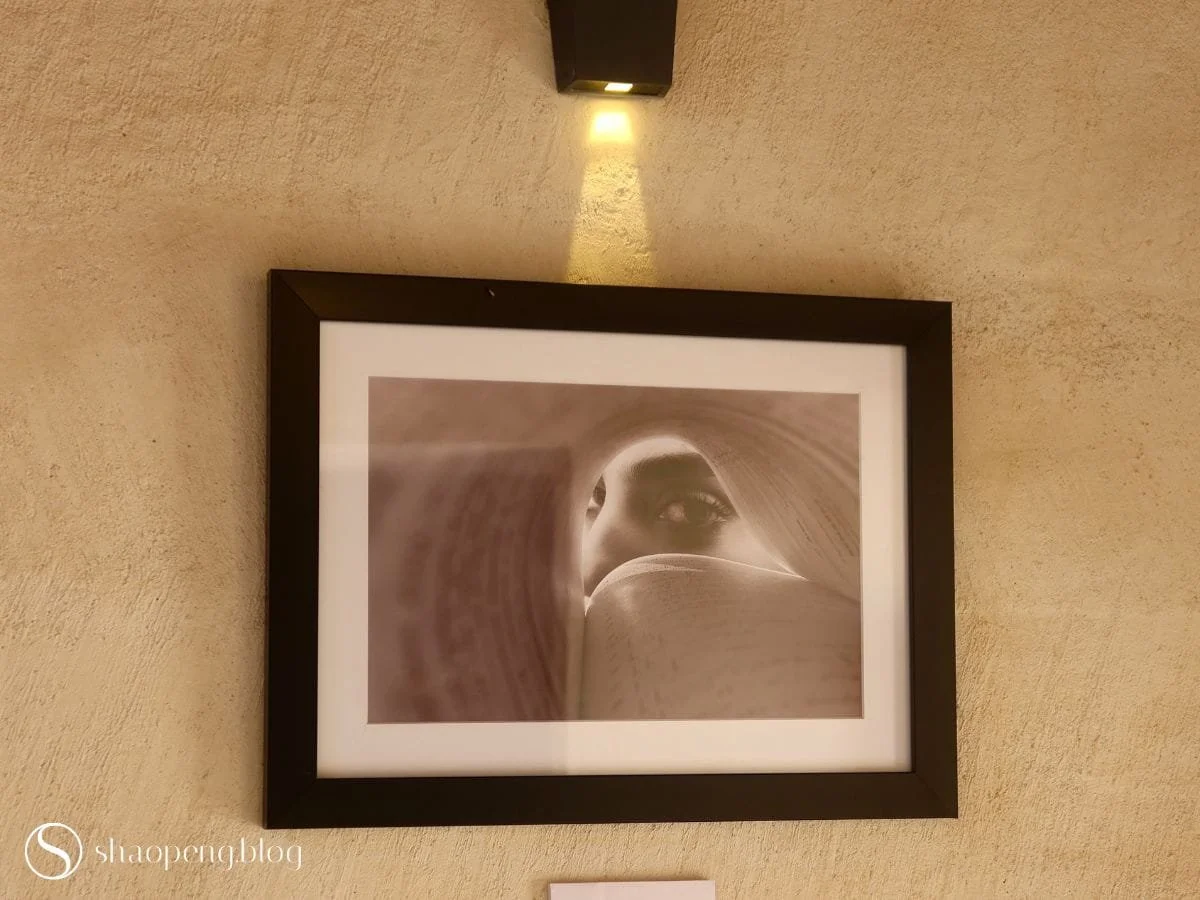
Female Gaze by Zeinab Alblooshi
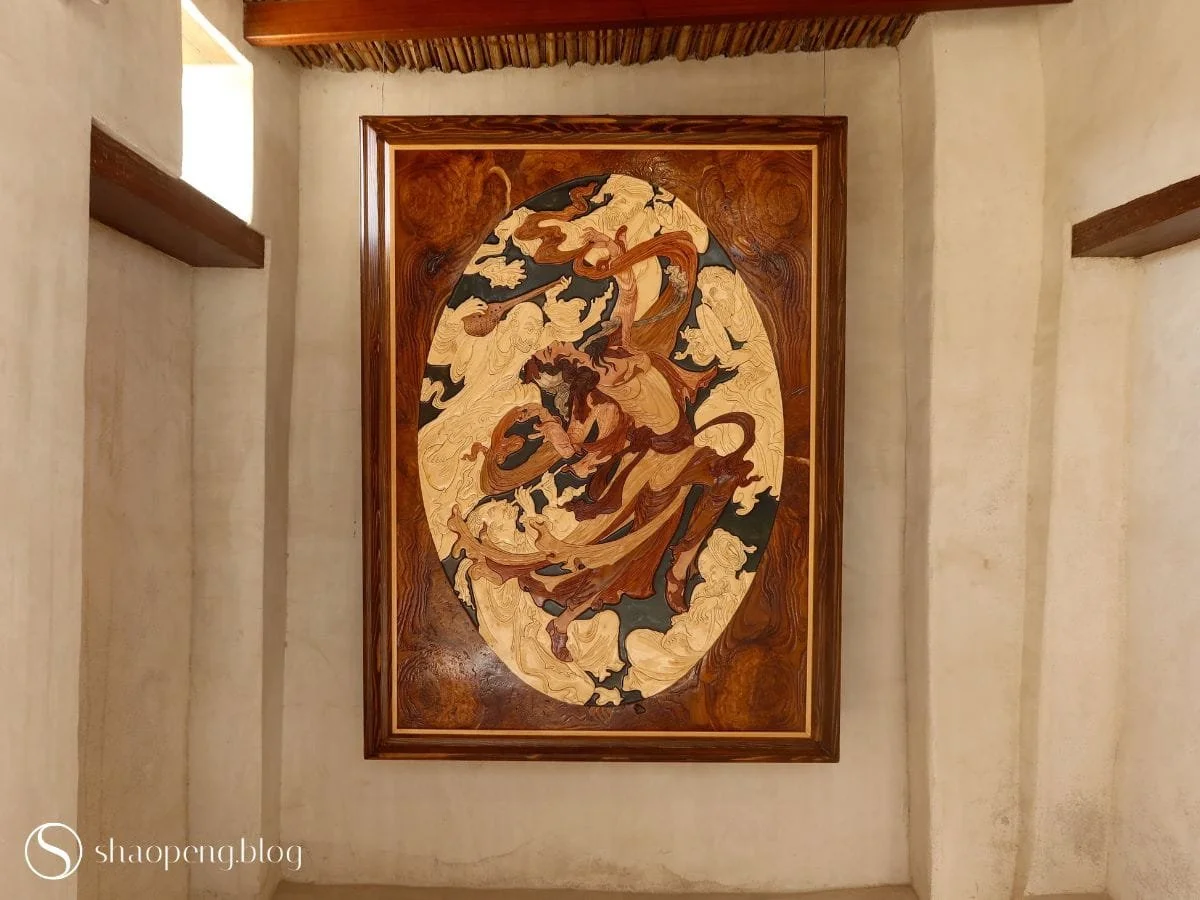
Desire of Love by Rouhollah Safavi
While wandering from house to house, I find myself seeking works that speak more directly to the land itself. That search brings me to Bayt 22, where Ras Al Khaimah: The Gate of the Civilisations awaits.
Curated by the Department of Antiquities and Museums, the exhibition traces the emirate’s role as a historical crossroads between East and West. Archaeological finds from as early as the Umm an-Nar period (2600–2000 BCE) reveal extensive trade links connecting Shimal — present-day Ras Al Khaimah — with Mesopotamia and the Indus Valley. Artefacts from Julfar testify to its importance as a trading hub from the 5th century onward, flourishing between the 14th and 16th centuries. Julfar ware, made locally from red and green clay, travelled across the Gulf and even reached the western Indian Ocean.
Though some visitors may find this exhibition out of place amid a festival celebrating contemporary art, I find it essential, anchoring the event to the very land that hosts it.
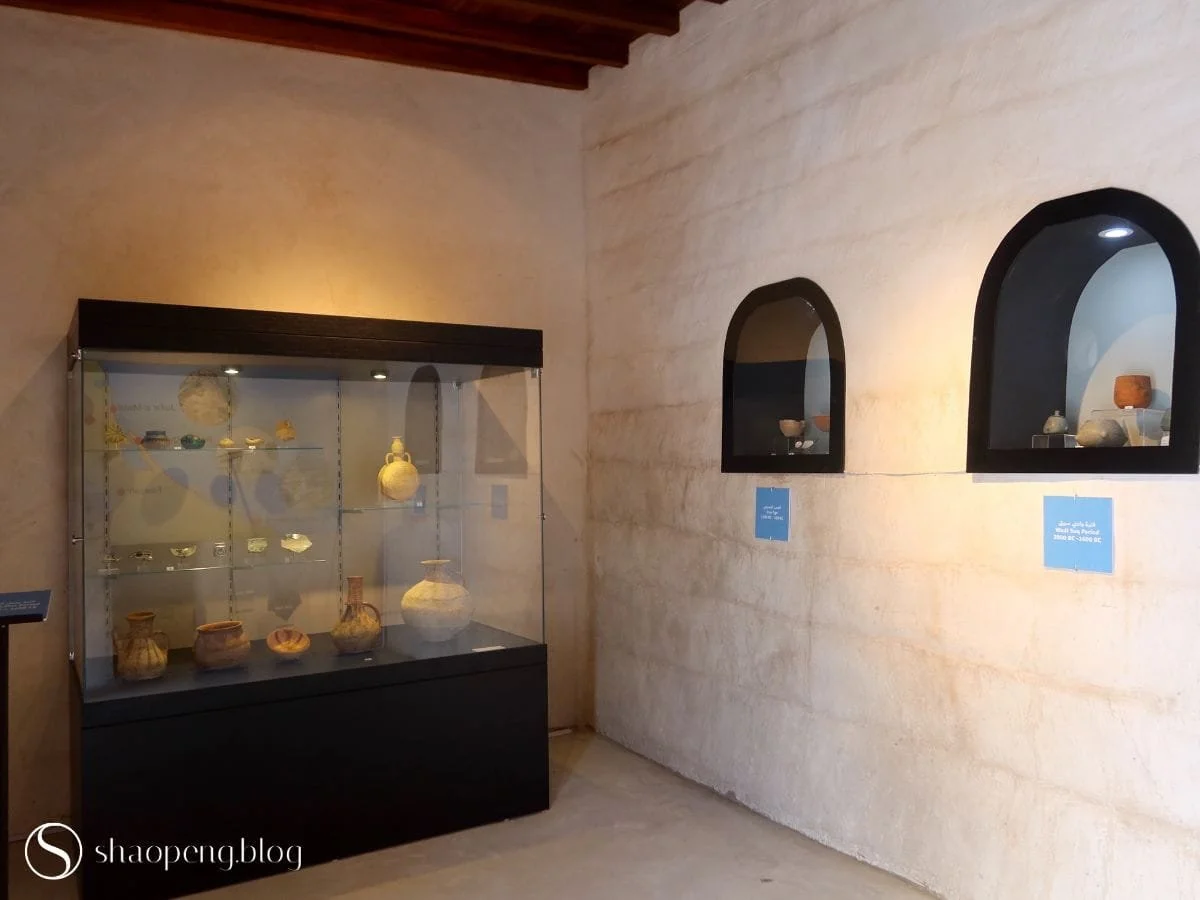
Ras Al Khaimah: The Gate of the Civilisations exhibition explores the history of the emirate.
For those curious about Ras Al Khaimah’s maritime heritage, Bayt 8 is a must-visit. Here, an exhibition commissioned by RAK Ports highlights five major hubs that have long served as vital gateways for global commerce and local prosperity, handling over 75 million tonnes of cargo each year.
The story is told through the lens of Scottish photographer Gillian M. Robertson, who has been documenting Ras Al Khaimah since 2015. In her photographs, enormous, whale-like cargo ships, expansive docks, and towering cranes transform into bold, geometric compositions, revealing the industrial beauty of maritime trade.
Amid these monumental forms, the people — specifically the workers — anchor the scene, reminding us of the human effort behind the emirate’s ever-growing, round-the-clock maritime tradescape.
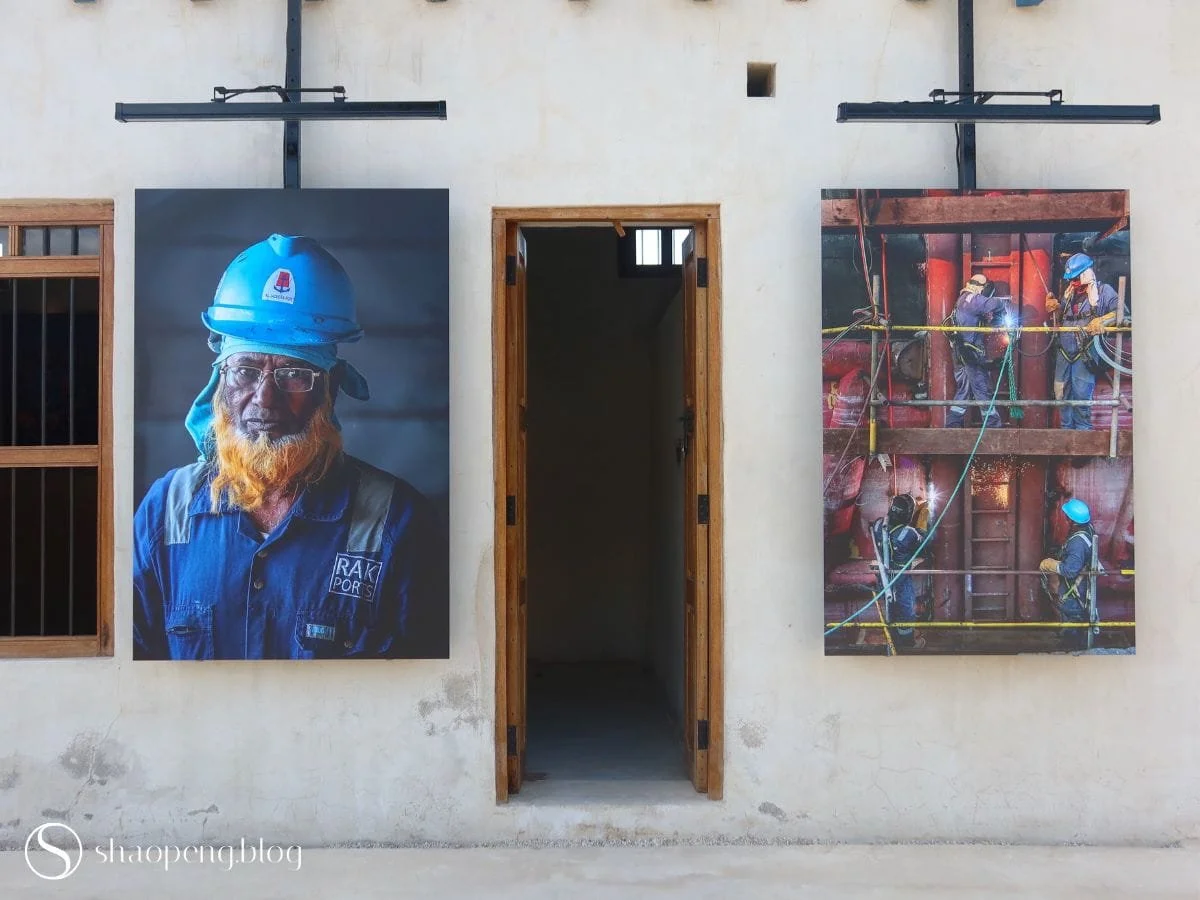
Ports as Crossroads of Civilisation by Gillian M. Robertson takes over Bayt 8 during the Ras Al Khaimah Art Festival
This year’s festival also introduces the first edition of the Ras Al Khaimah Contemporary Art Biennale, titled Civilisations: Under the Same Sky. Curated by Sharon Toval, the exhibition takes place across several pavilions, exploring human plurality through photography, sculptures, and reimagined traditions.
Marie Hudelot’s Heritage series transforms everyday objects into totemic forms, while Yifat Bezalel’s One Day — one of the few original drawings on display — depicts a divine presence emerging from the ruins of history with meticulous pencil strokes. A longtime admirer of the Renaissance, Bezalel repeatedly sketched Michelangelo's Pietà, which to her embodies partial divinity, as she seeks to tell the story of her contradictory homeland.
Rotem Tamir’s installation draws on Jewish and Islamic patterns, developed from her mother’s hand gestures while preparing the traditional Iraqi dish, kubbeh, transforming memory and ritual into tangible art.
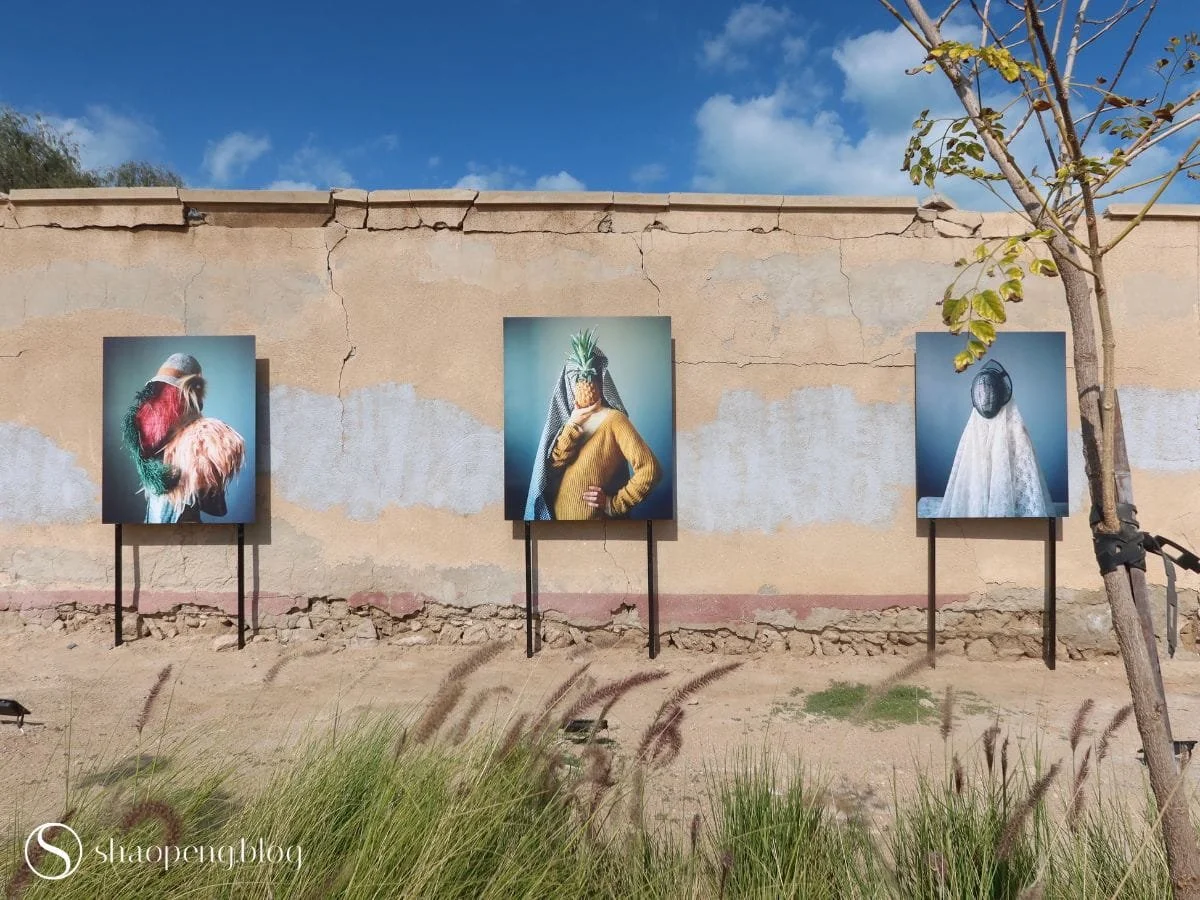
Heritage series by Marie Hudelot
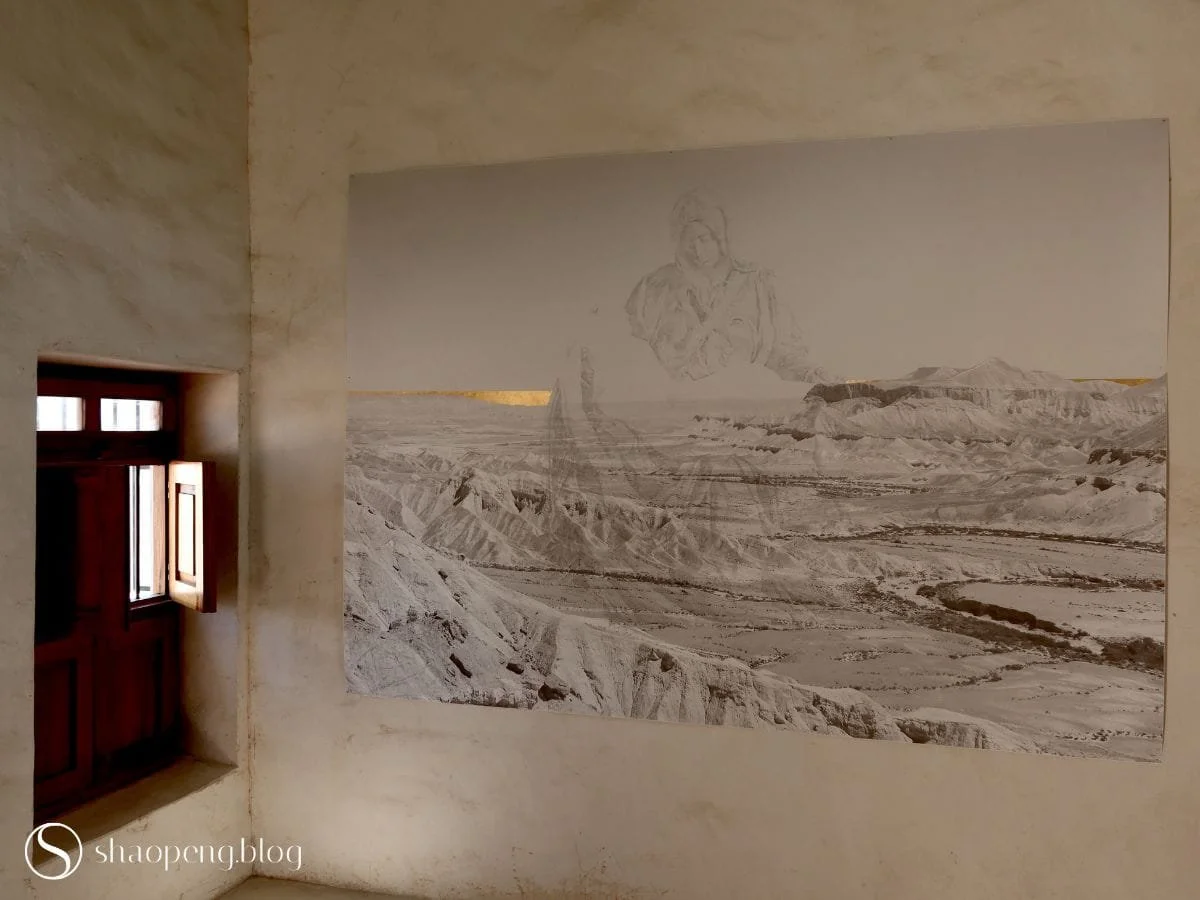
One Day by Yifat Bezalel
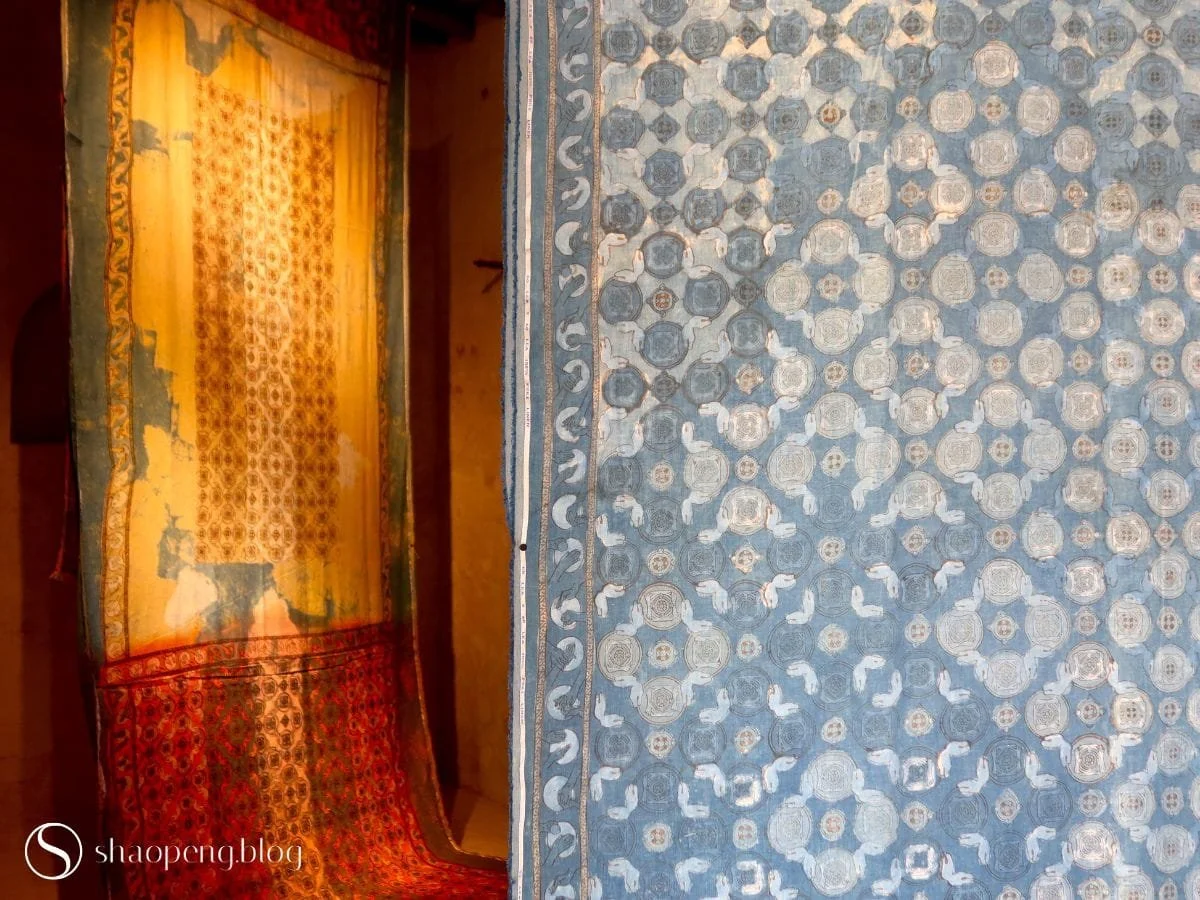
Long Live Your Hands (Ta’eesh Eedak) by Rotem Tamir
The biennale also features a handful of video installations, most of which weren’t functioning during my visit on opening weekend. Yet even in their absence, these works provoke deeper reflection. They highlight the importance of craft, materiality, and the presence of human touch and voice throughout the creative process — qualities often missing in the digitally reproduced works that dominate much of the festival’s outdoor spaces, and even some of its indoor ones.
By comparison, the Sikka Art & Design Festival, running concurrently in Dubai where even outdoor mural paintings are original, only underscores how much Ras Al Khaimah Art relies on digital reproductions.
That said, there is still much to celebrate: performances, film screenings, workshops, food programs, and guided tours transform the historic pearling village into a space where locals and visitors alike gather, create, and immerse themselves in its creative energy.
But let us not forget that art can do more than simply enliven a heritage site like Al Jazeera Al Hamra. At its best, it becomes a lens through which we engage with the land, its stories, and its traditions — sparking conversation, connection, and reflection, rather than dressing the ruined walls and empty houses or serving as a backdrop for social media posts and reels.
Leaving Al Jazeera Al Hamra behind me, I can’t help but think back to the inaugural Bukhara Biennale, where I learned to appreciate the power of an artwork to resonate with the place where it is exhibited — whether through its making, its story, or its dialogue with the site itself. That connection is largely missing at Ras Al Khaimah Art, with the exception of Gillian M. Robertson’s photography. The festival could reach a new level if, alongside museum artefacts, contemporary artists reimagined the land’s rich heritage and traditions within a tighter curatorial vision.
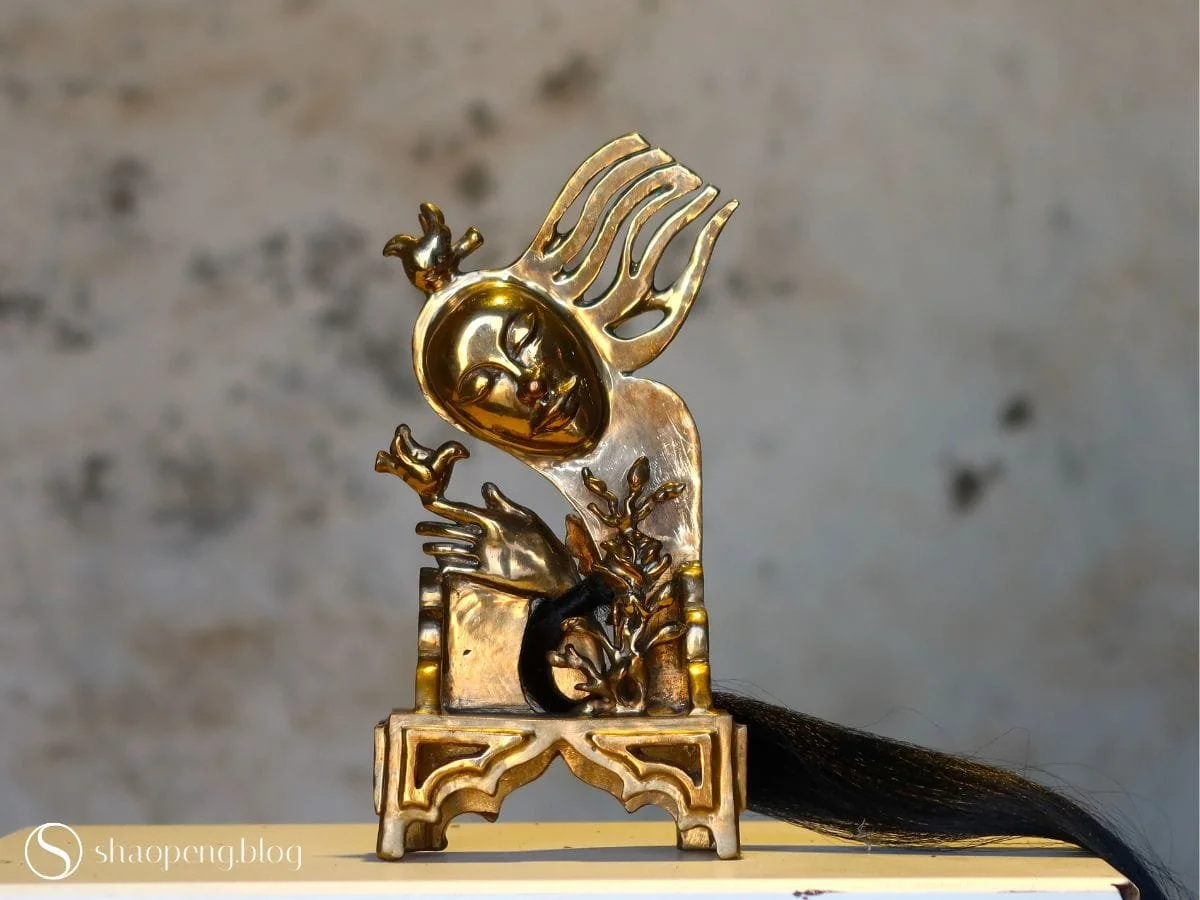
The Freedom Emblem by Mahsa Kheirkhah
Reference:
Al Jazeera Al Hamra Heritage Village. (n.d.). UAE’s Last Remaining Heritage Pearling Village. Al Jazeera Al Hamra Heritage Village. https://www.ajah.ae/
Ras Al Khaimah Art Festival. (2026). RAK Art 2026: Art Guide [PDF]. Ras Al Khaimah Art Festival. https://www.rakart.ae/RAK%20Art%202026%20-%20Art%20Guide.pdf
Ras Al Khaimah Art Festival. (2026). Ras Al Khaimah Contemporary Art Biennale Catalogue 2026 [PDF]. Ras Al Khaimah Art Festival. https://www.rakart.ae/img/2026-festival/biennale/biennale_catalogue.pdf
The Ras Al Khaimah Art 2026 Festival runs until February 8, 2026.