
Founded in 1969, Al Ain Museum remains the oldest museum in the United Arab Emirates, predating the nation itself.
Sense of Wander: ★★★★☆
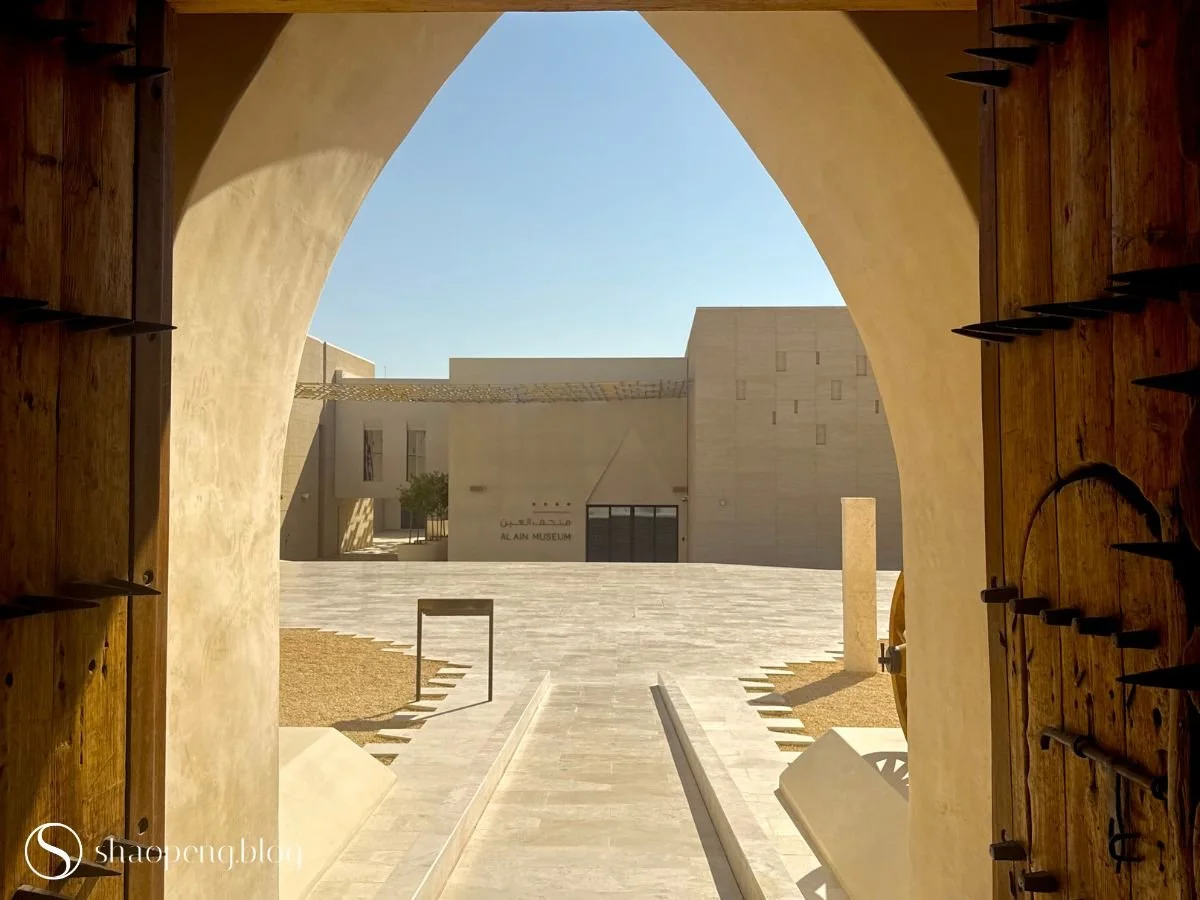
Looking out toward the entrance of Al Ain Museum from Sultan Fort.
AL AIN, UAE — Known as the “Garden City” of the United Arab Emirates, Al Ain is celebrated for its lush oases. Recognised as a UNESCO World Heritage Site, it is home to one of the world’s oldest continuously inhabited settlements. It comes as little surprise that this city also shelters the UAE’s oldest museum — one that predates the nation itself.
Following a major renovation since 2024, Al Ain Museum has recently reopened to the public. Though I never visited the museum before its restoration, experiencing it during Al Ain’s Traditional Handicrafts Festival left a lasting impression. The renewed spaces are thoughtfully curated and immersive, inviting visitors to slow down and wander through time.
For fellow wanderers, let’s explore the museum together and embark on a journey spanning more than 300,000 years of history:
The History of Al Ain Museum
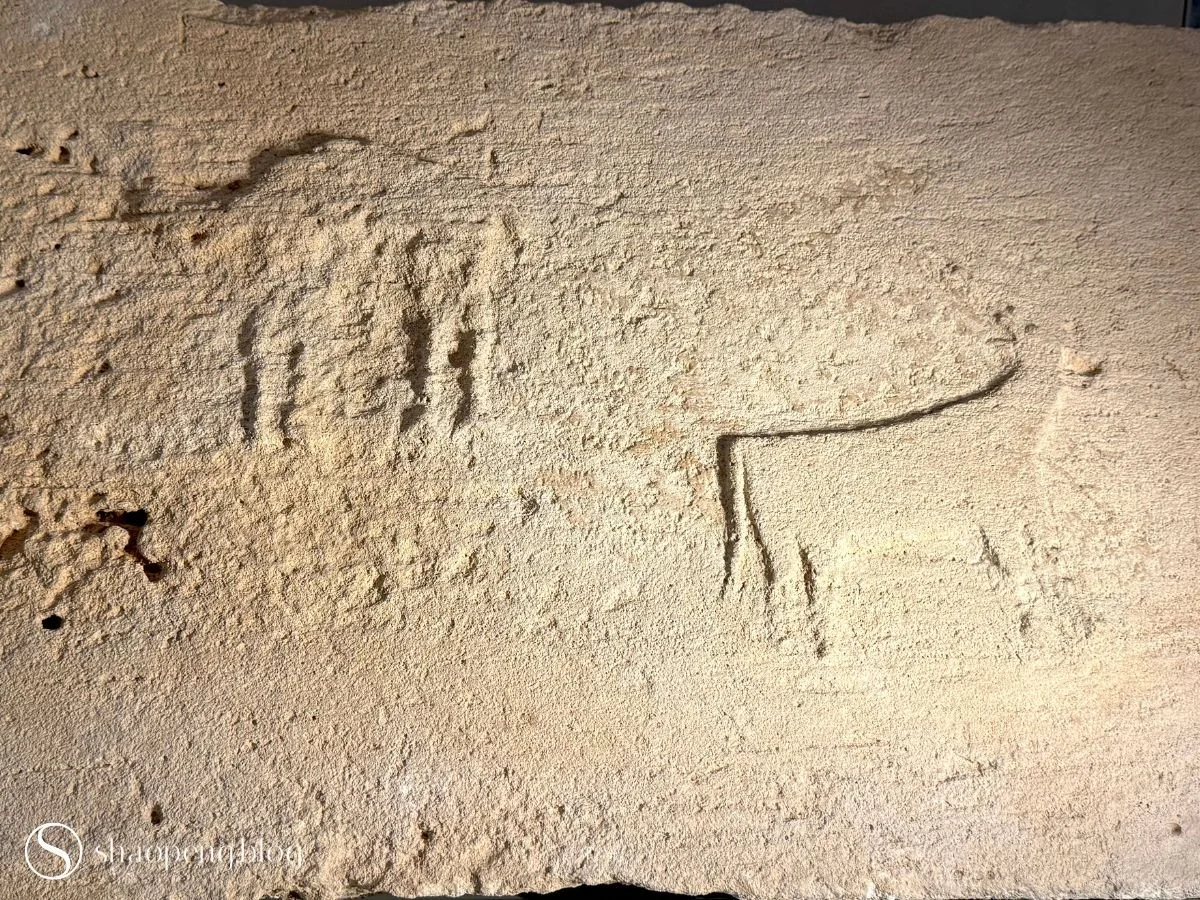
Stone carving of a camel and an oryx from Umm an-Nar Island, dated to 2500–2000 BCE.
The story of Al Ain Museum is inseparable from the history of archaeology in the United Arab Emirates. In 1959, Sheikh Shakhbut bin Sultan Al Nahyan, then Ruler of Abu Dhabi, invited Danish archaeologists to begin the first formal excavations on Umm an-Nar Island, near Abu Dhabi. What they uncovered dated back to the Bronze Age, around 2600–2000 BCE, laying the foundation for archaeological research in the region.
By the time Sheikh Zayed bin Sultan Al Nahyan, the Founding Father of the UAE, issued a decree in 1969 to establish a museum dedicated to archaeology and cultural heritage, several sites in Al Ain had already been excavated. The earliest collections were displayed within Sultan Fort, which still stands opposite the museum’s entrance today.
In the years that followed, international collaborations expanded archaeological research across the emirates. In 1971, a cultural agreement with the Republic of Iraq brought Iraqi archaeologists to survey the region. By 1974, over 70 archaeological sites had been identified across the UAE. French archaeologists later joined the work in Al Ain in 1977, further enriching the understanding of the area’s past.
The museum building, which dates back to 1938, was once the residence of the ruling family and the region’s administrative centre.
The museum stands on land once known as Harat Al Hosn, a neighbourhood along the eastern edge of Al Ain Oasis. Here, daily life unfolded within mud-brick homes and shaded courtyards, accompanied by rituals, celebrations, and the rustle of palm fronds.
To help visitors reimagine this way of life, the exhibition Harat Al Hosn: A Landscape of Memory brings together artefacts, archival photographs, and oral histories. Many of these objects were donated by local residents themselves, and since its official opening in 1971, the museum has remained closely tied to the community it represents.
The recent renovation restored the museum’s exterior to its 1971 appearance while updating the galleries inside. Two new buildings were added to the complex: one housing administrative offices and artefacts gifted by the local community, and another dedicated to the Al Nahyan family tree, tracing the lineage of the UAE’s rulers.
From Archaeological Sites to Galleries
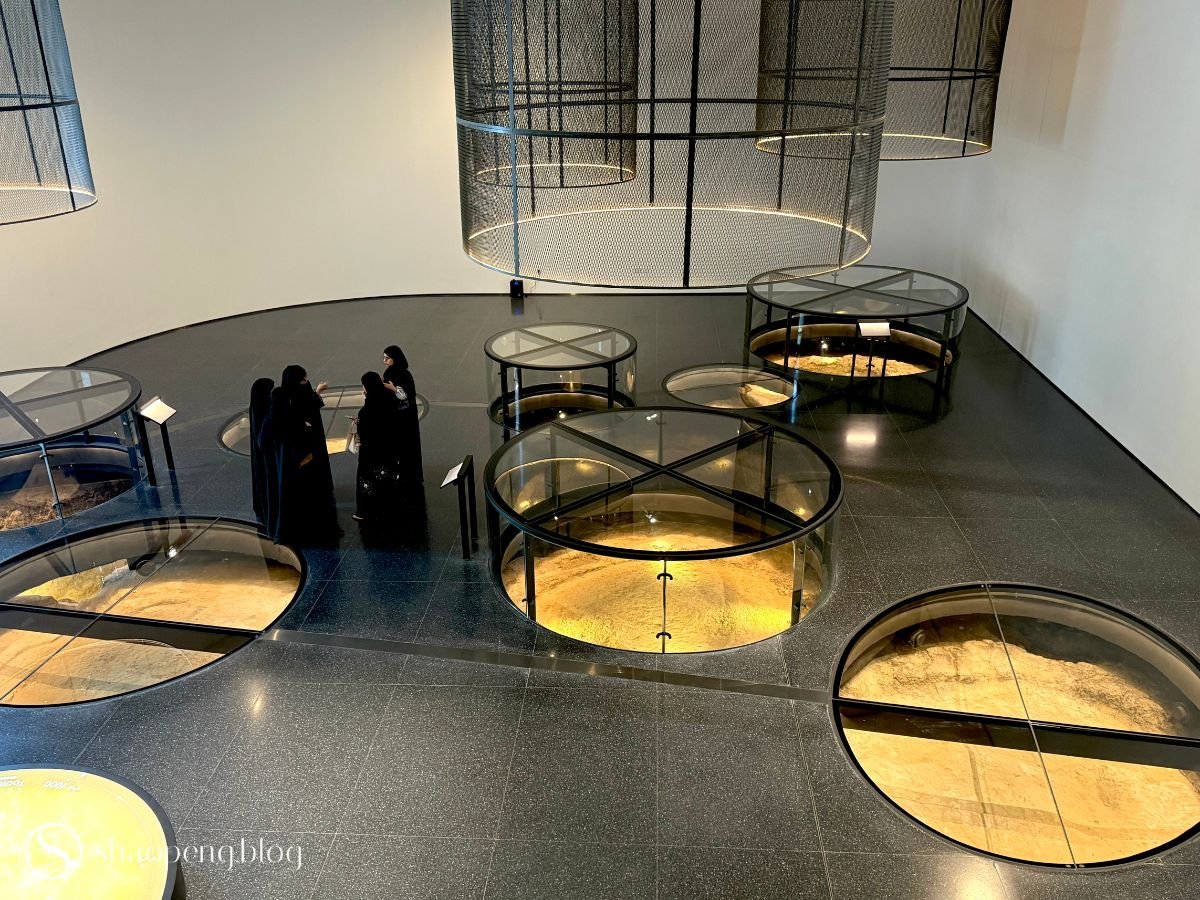
The museum’s first gallery presents in-situ archaeological remains of water wells that once served as lifelines for the people of Al Ain.
Al Ain’s survival in a desert landscape owes much to the falaj irrigation system — an ingenious network of underground channels that carried water from distant sources to the land. This engineering feat not only addressed water scarcity but also transformed the surrounding desert into fertile ground. In fact, the name Al Ain itself means “the spring.”
Upon entering the museum, visitors are welcomed into an archaeological site preserved within the gallery. Beneath your feet lie underground water tunnels and vertical shafts, known as thuqab, dug between roughly 1000 BCE and 300 BCE. These channels once carried mountain water to farms and settlements, allowing agriculture to flourish.
Al Ain is widely regarded as the birthplace of this irrigation system, which later spread to other parts of the world.
What makes the experience unique is the sense of proximity. You are not just observing history from behind glass, but standing on top of it, walking across archaeological remains within the comfort of an air-conditioned museum.
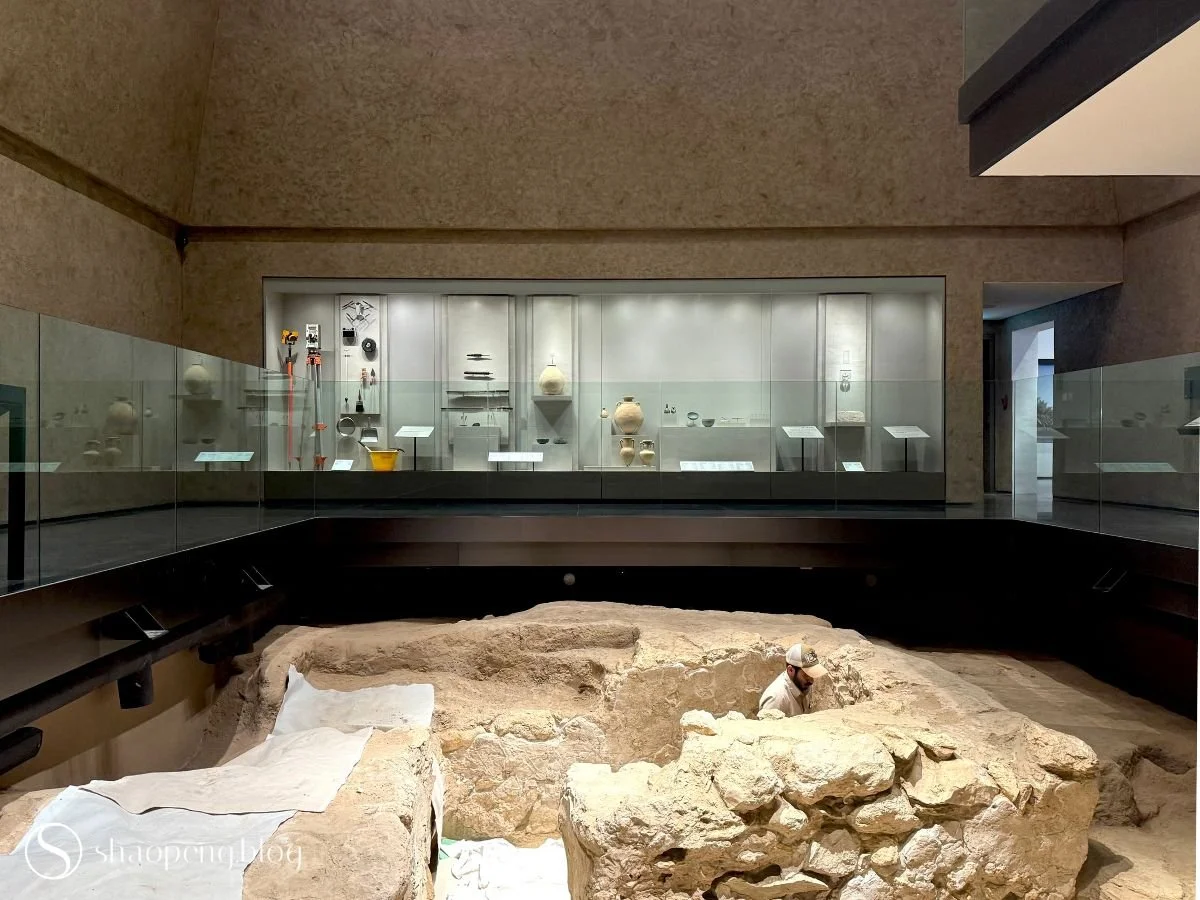
A late pre-Islamic tomb, dated to 300 BCE–300 CE, preserved as an archaeological site within the gallery and still under study.
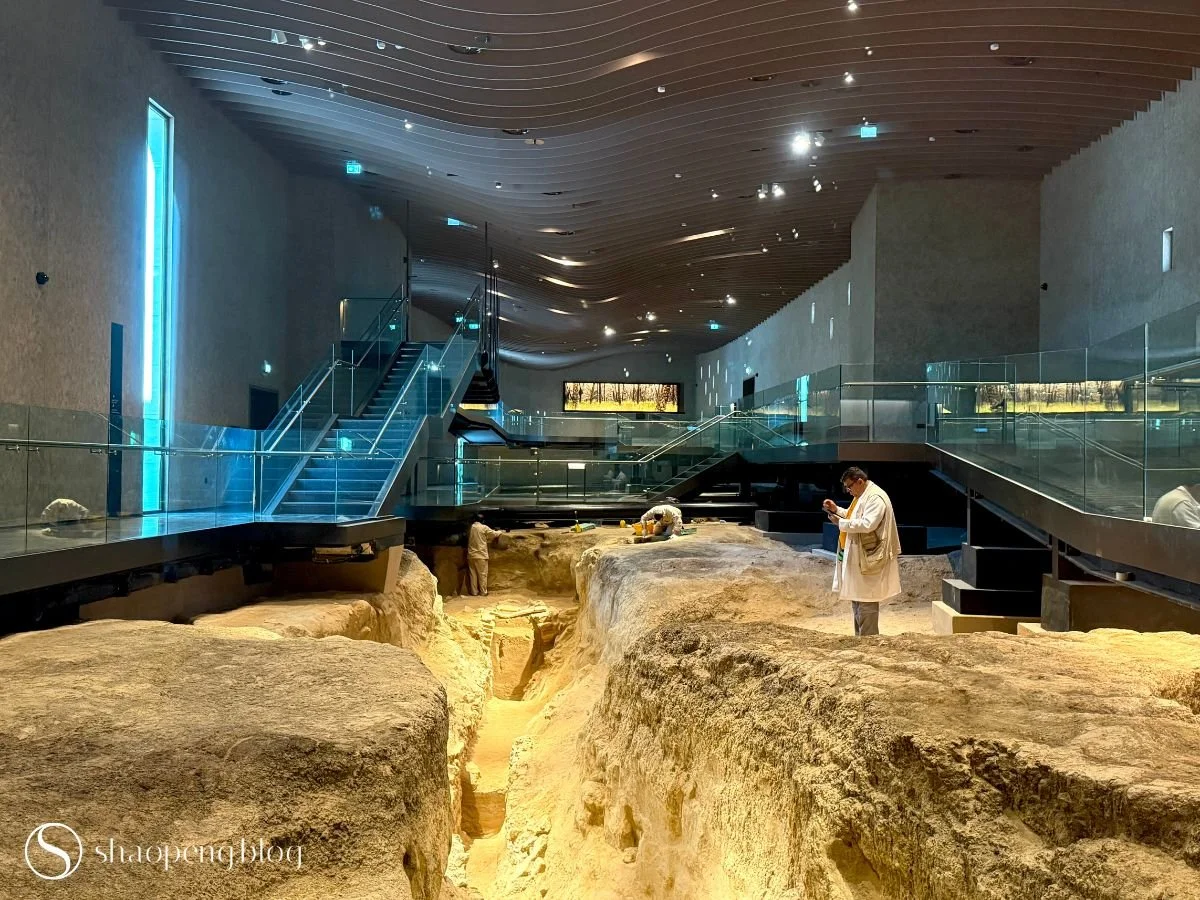
This gallery houses underground water channels and wells spanning nearly 3,000 years of history.
Further along, another gallery houses an ongoing excavation of an underground tower tomb, dated between 300 BCE and 300 CE. Believed to belong to a person of high status, the tomb yielded gold jewellery among its burial goods.
During your visit, you may even encounter archaeologists at work, continuing research on-site. Nearby, display cases present burial objects from this tomb and others discovered in a pre-Islamic cemetery at Kuwaitat, just east of the museum.
One of the most impressive spaces inside the museum is a large gallery dedicated to underground water systems and wells spanning nearly 3,000 years. From the Iron Age to recent times, these systems were continuously repaired and adapted.
Significant restorations took place between the 8th and 9th centuries, during the expansion of Indian Ocean trade and the Arab Agricultural Revolution, when new crops and farming techniques reshaped the region’s landscape.
Tracing Identity Through Artefacts and Traditional Crafts
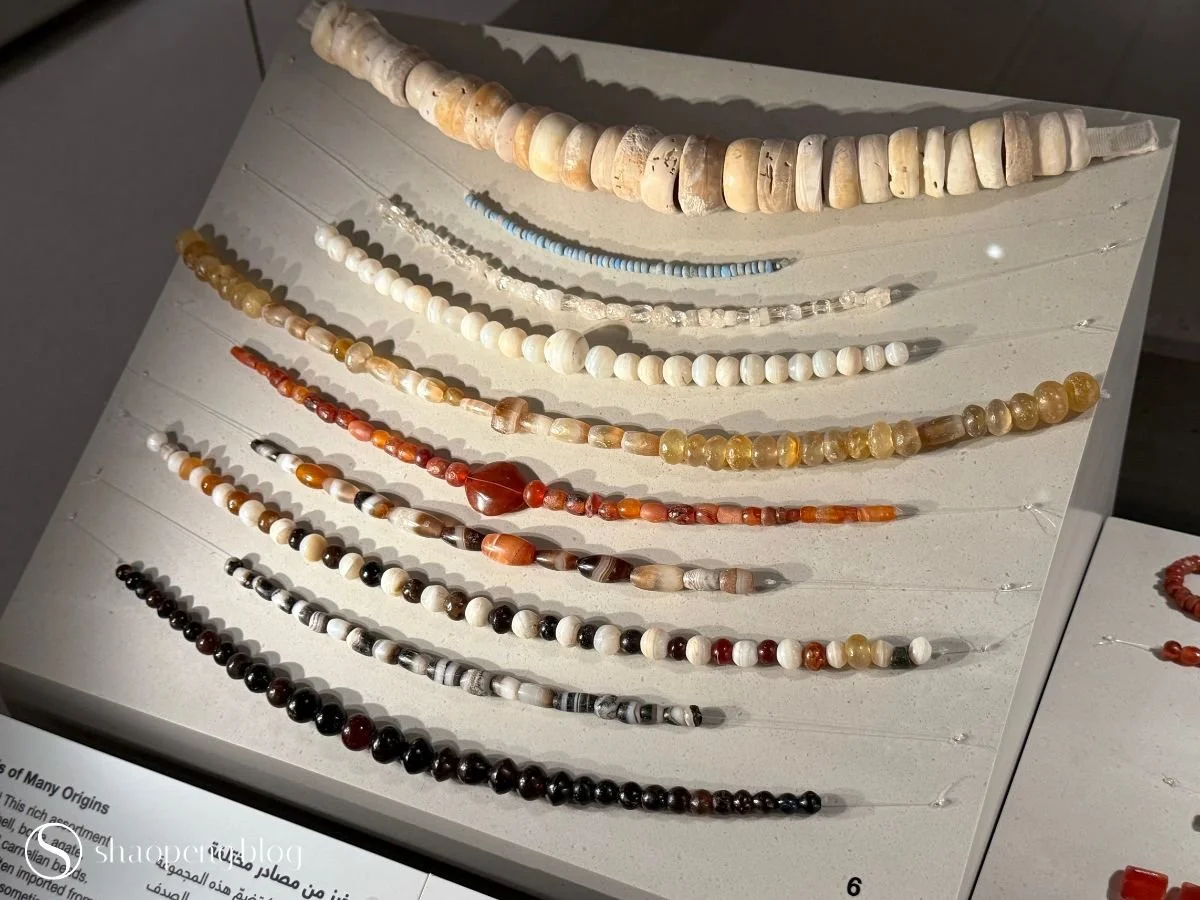
A rich assortment of beads fashioned from shell, bone, agate, blue frit, and carnelian.
The Al Ain Museum building is the earliest purpose-built museum in the UAE and among the few remaining examples of 1970s architecture in Abu Dhabi. Today, it houses the Al Ain History Galleries, where artefacts trace human presence in the region across millennia.
The journey begins in the Paleolithic period. Stone tools discovered east of Jebel Hafit may appear organic in form at first glance, but closer inspection reveals traces of human touch, bearing witness to early early settlement.
One of my favourite sections focuses on personal adornment, with objects recovered from tombs and houses dating between 3000 and 300 BCE. Beads fashioned from shell, bone, agate, and carnelian speak of far-reaching trade networks that extended as far as Afghanistan. Necklaces, finger rings, anklets, and zoomorphic pendants remind us that the pursuit of beauty is hardly a modern impulse.
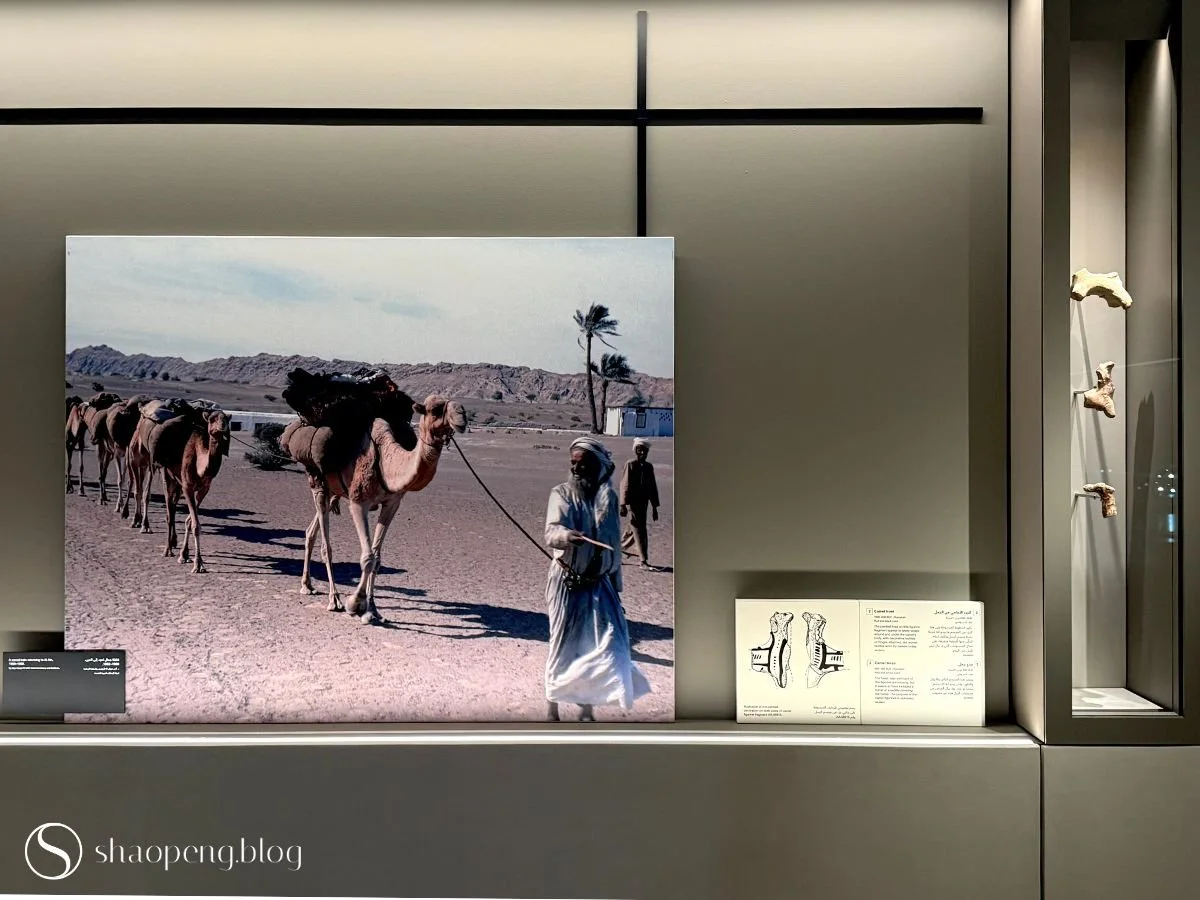
Camel treks returning to Al Ain in the early 20th century.
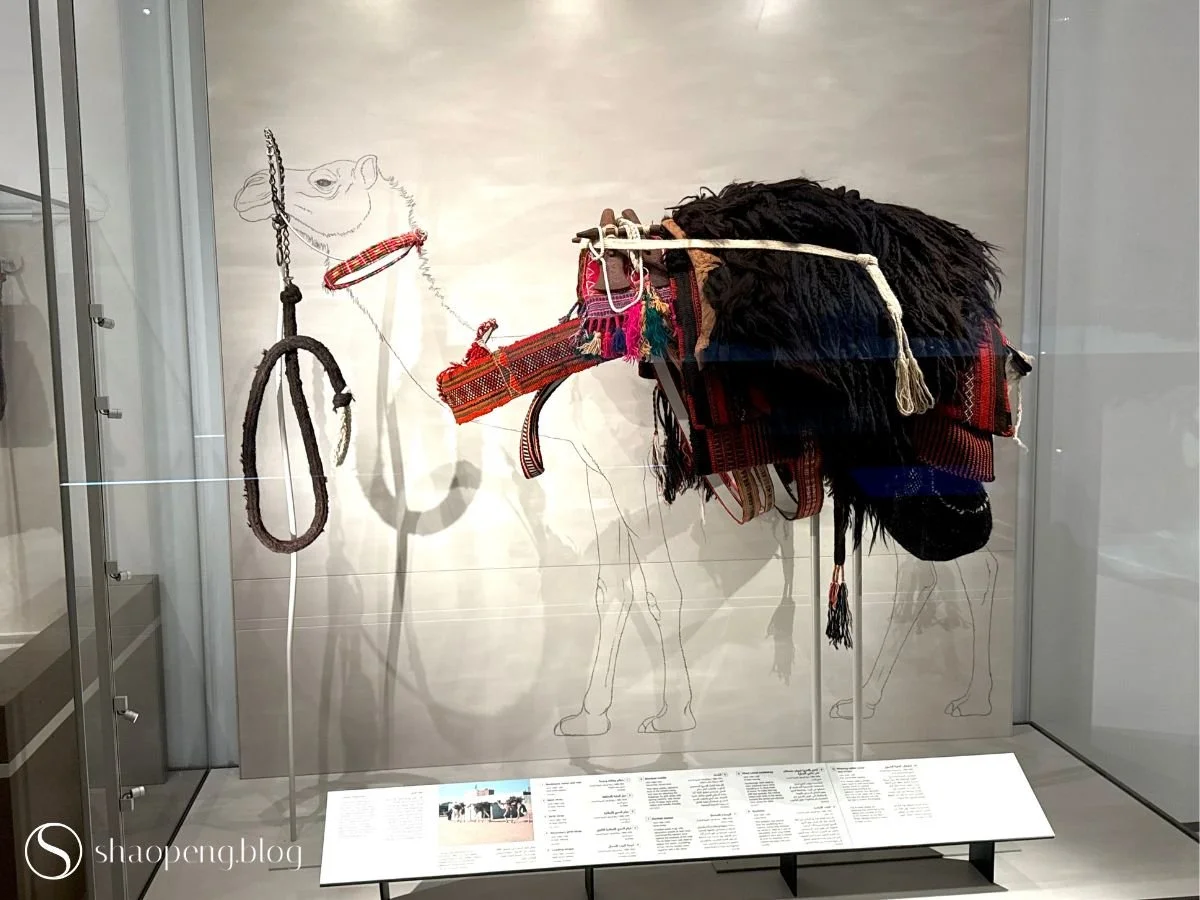
Traditional crafts also appear in decorative trappings for camels, made by Bedouin women.
Moving into the 20th century, several galleries highlight traditional craftsmanship — once the backbone of the local economy before the formation of the United Arab Emirates in 1971. These crafts were not created as art objects, but as practical goods produced to sustain livelihoods, often using local materials or repurposed imports.
Ethnographic displays reveal various aspects of Emirati daily life, from cooking and housing to education, archery, and weaving. Among them are palm weaving crafts known as Al Nakheel. The date palm was central to life in Al Ain, providing food and building materials, while its fibres are used for baskets, household items, and even fuel for pottery kilns.
Textiles also take centre stage. In the weaving section, visitors encounter a traditional pit loom set into the ground, where skilled weavers once worked with finely spun wool or cotton imported from India. On such looms, they produced garments such as the wizaar, worn beneath the kandura.
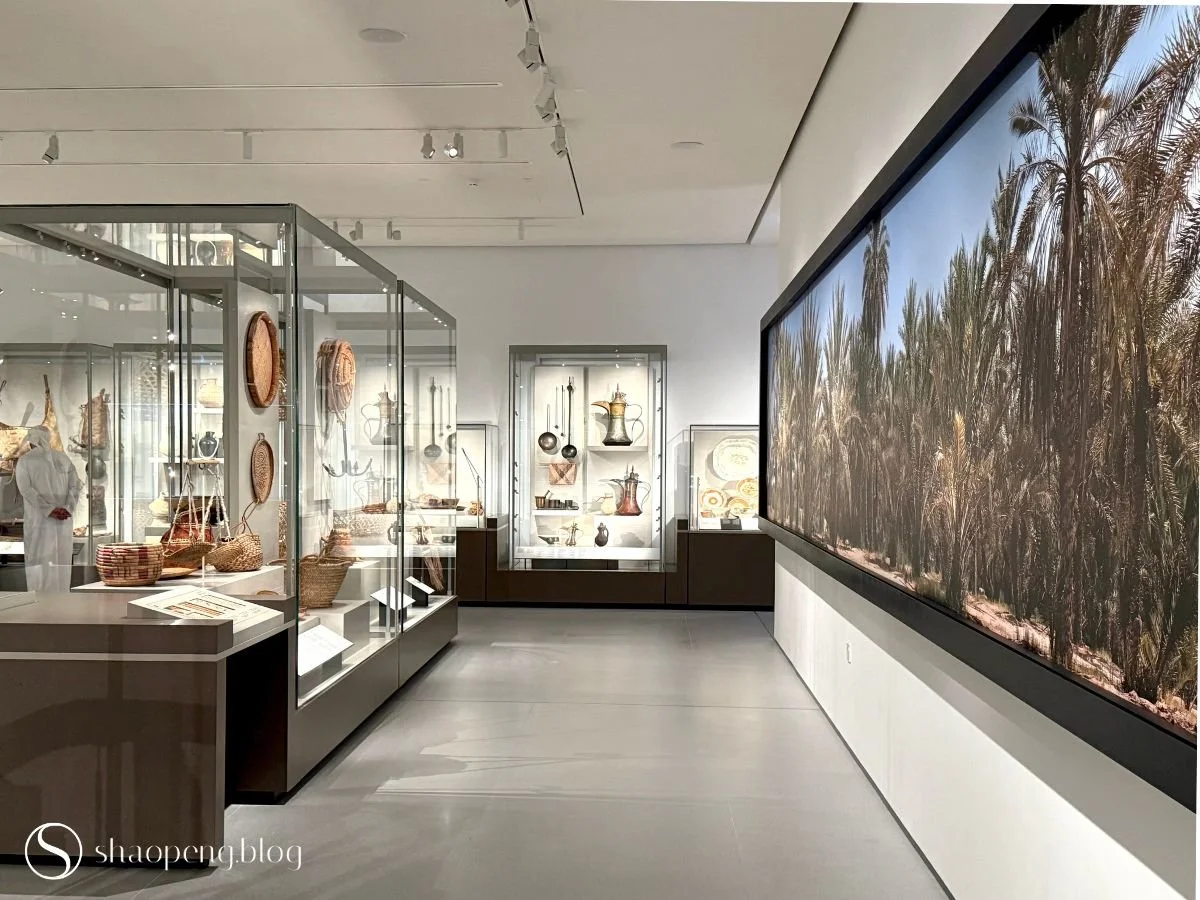
Before the United Arab Emirates was formed, traditional crafts formed the backbone of the economy.
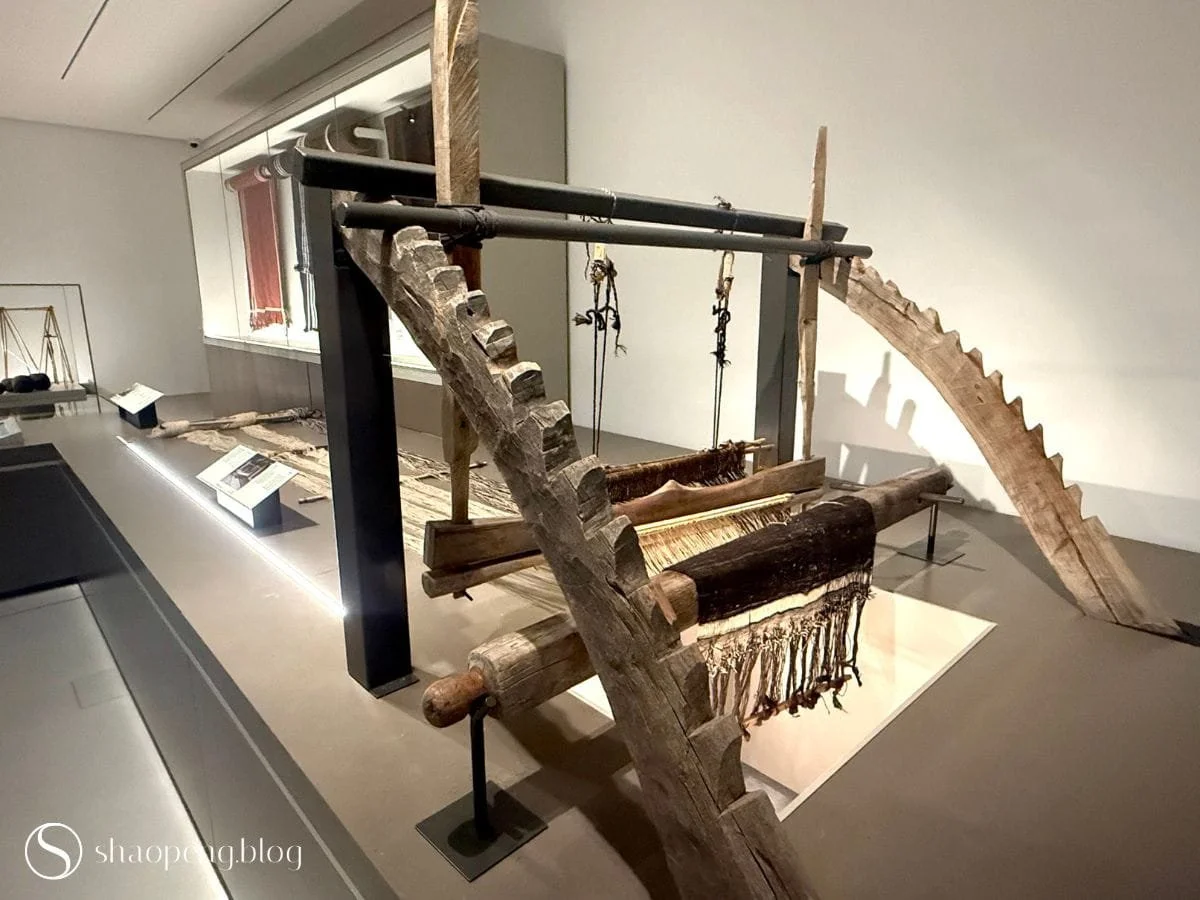
This pit loom invites visitors to imagine how weaving was done locally.
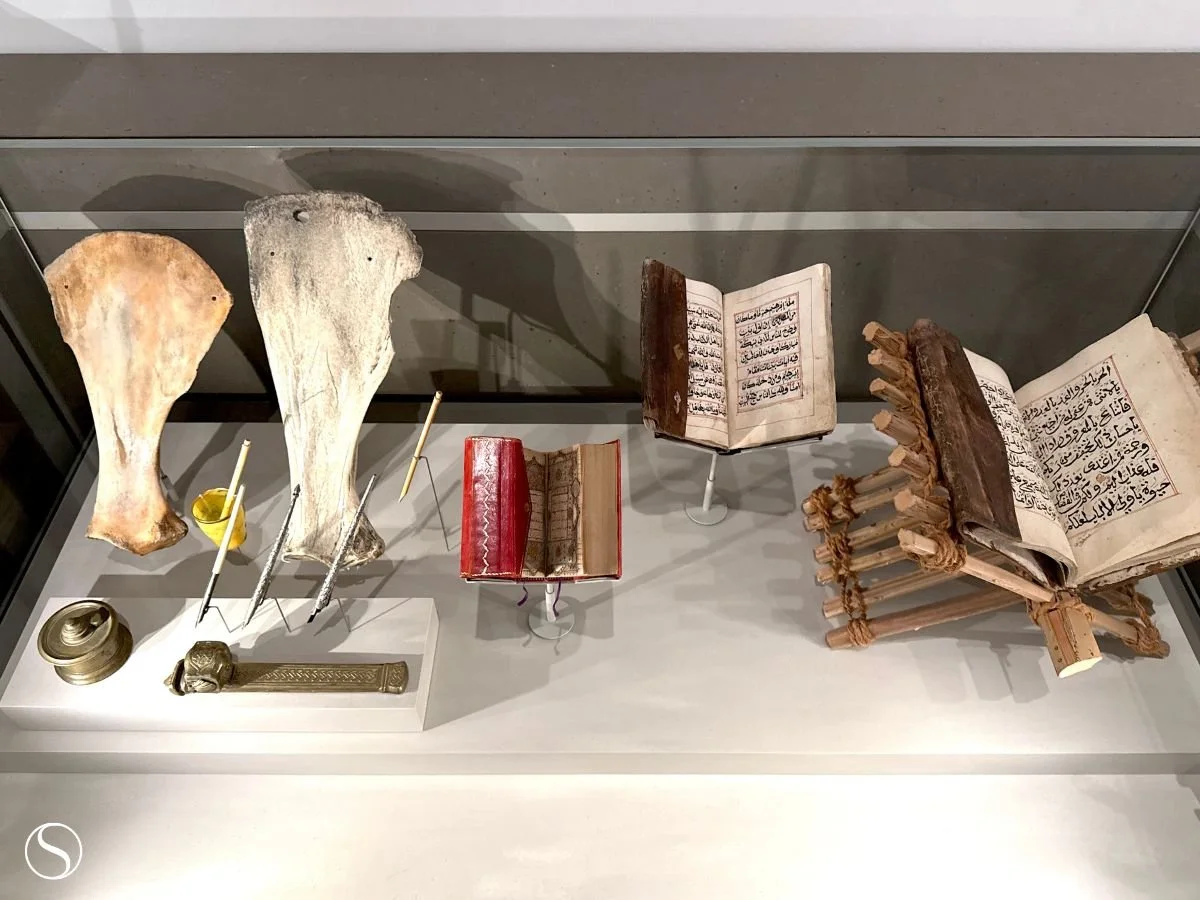
Before paper, writing was done on animal shoulder bones (left), usually from camels or oxen.
The final galleries focus on elements integral to Emirati women’s lives. Dressmaking showcases hand-stitched garments, where personal taste is expressed through colours and decorative details. For special occasions, dresses and sirwal trousers are adorned with talli or zari embroidery, using metallic threads that embellish sleeves, necklines, and ankles. Zari is also applied to men’s cloaks, known as bisht.
Adornment extends beyond clothing. Silver jewellery, traditionally valued for its protective and healing qualities, is widely worn. In the early 1970s, a drop in gold prices led craftsmen to produce more gold jewellery using traditional designs. Highlights include an Emirati bride’s dowry, featuring the burqa bu njoom face mask, alongside gold jewellery such as fatoor, shanaf, kawashi, and manthoura — pieces that reflect both aesthetic sensibilities and the artistry of the region’s jewellery-making traditions.
Fragrance also plays an essential role. Displays of perfume bottles, incense burners, spray perfumes, and mihbarah for storing pure musk and saffron threads reveal how scent expresses personal taste and identity.
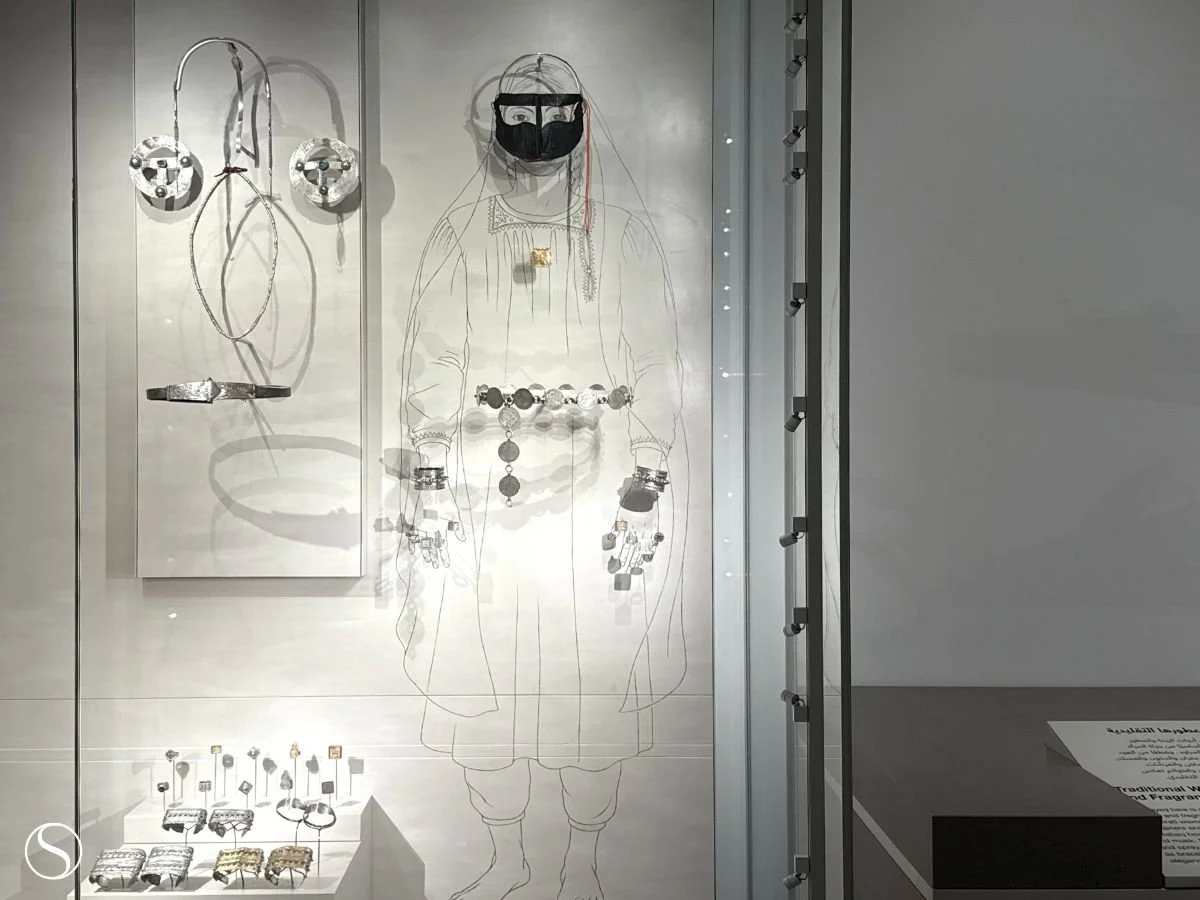
An elegant display of traditional Emirati jewellery.
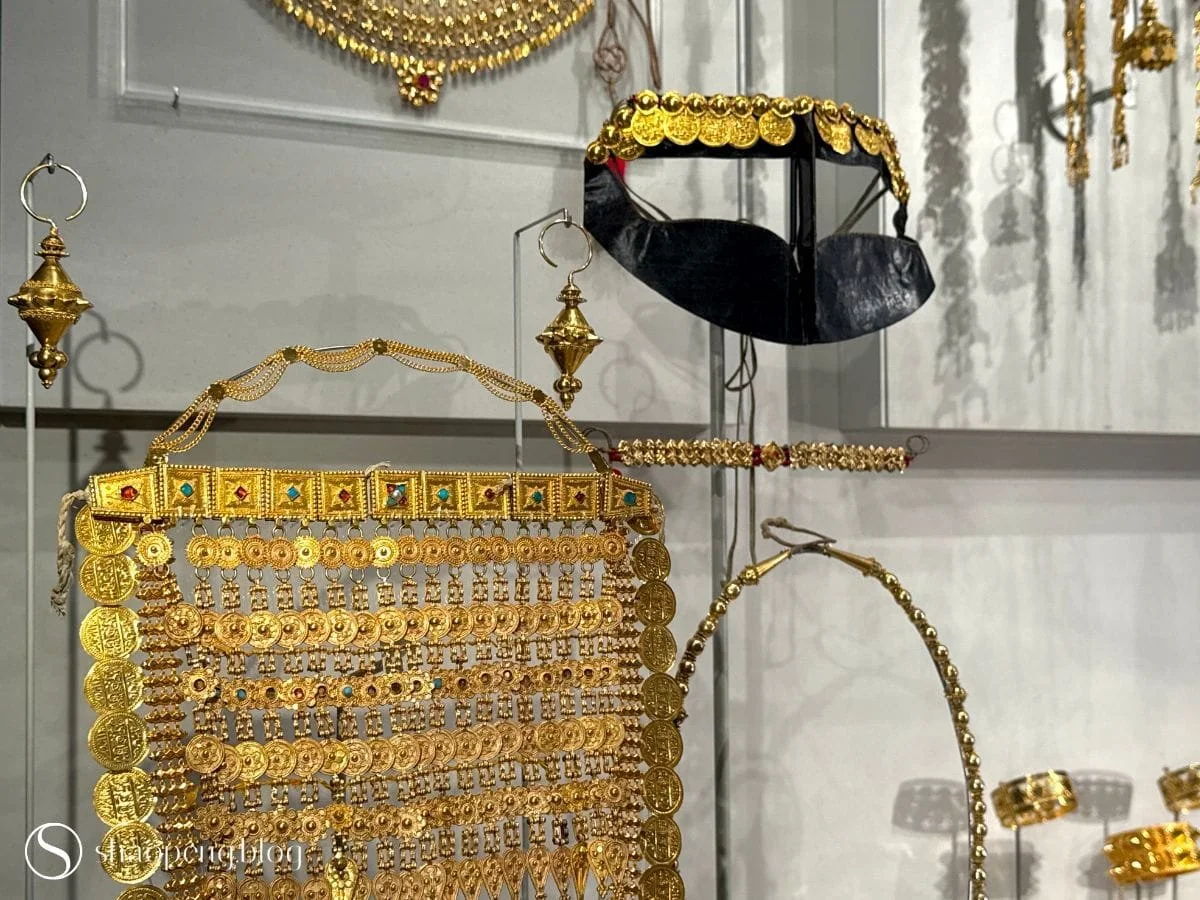
Traditional gold jewellery worn by women in the region.
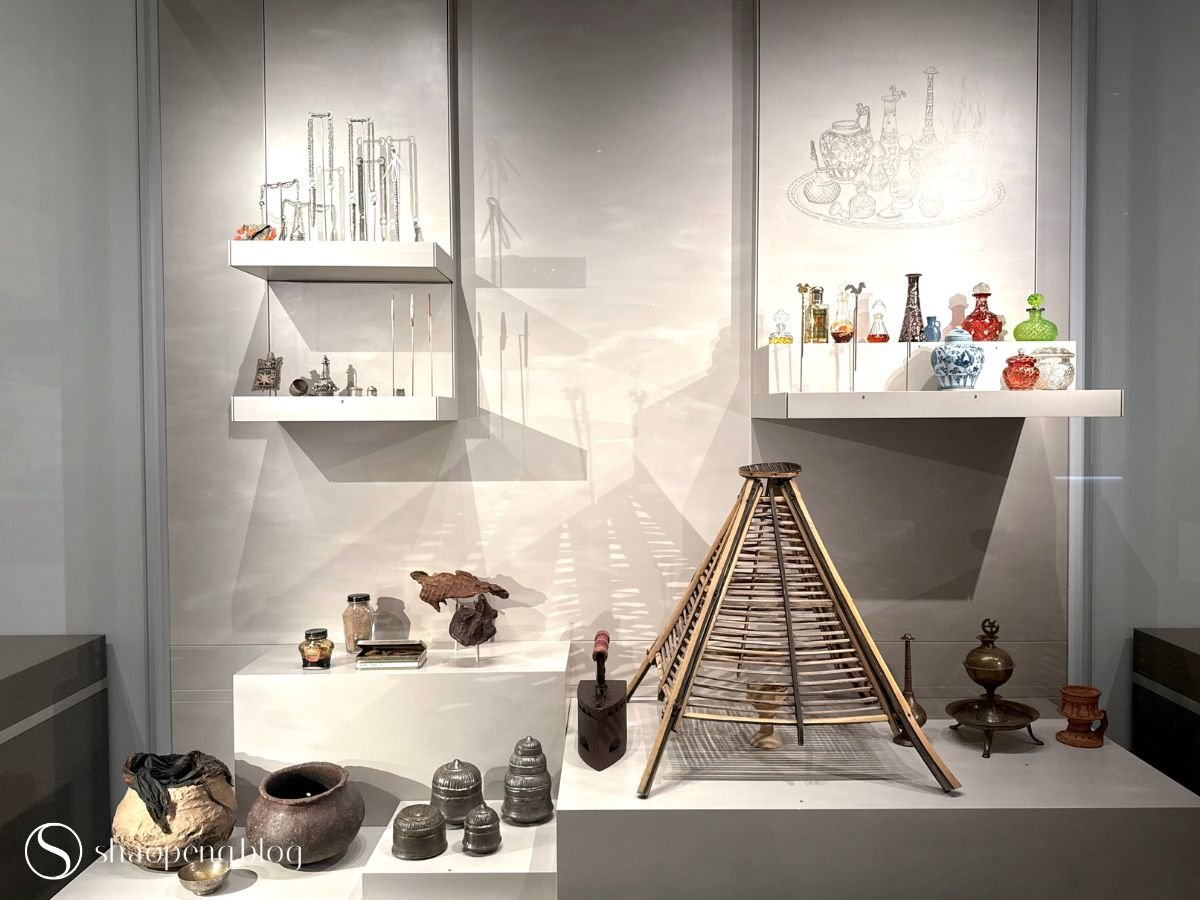
Fragrance and items of beauty play a central role in the lives of Emirati women.
While the Al Ain museum houses an extensive collection, only a portion is on view. The Visible Storage, located at the end of the visit, offers a peek at well-preserved artefacts usually kept behind the scenes.
Before leaving, take a stroll to the Sultan Fort just around the corner. Once defending the eastern edge of Al Ain Oasis and the village of Harat Al Hosn, the fort also served as an early exhibition space before the museum opened in the 1970s. Though largely restored and mostly empty today, its role in preserving Al Ain’s heritage makes it the perfect place to end your journey and reflect on the museum’s history and treasures.
Wanderer’s tips — Before leaving the museum, stop by Fount Concept Store, where you’ll find a curated selection of souvenirs, stationery, and home goods. Thoughtful design, carefully chosen materials, and subtle tones give each piece a distinctive character. If you miss it here, you can also visit their branch at the Abrahamic Family House in Abu Dhabi.