
Wander in Abu Dhabi: Al Hosn Festival
Wandering through the Al Hosn Festival, you move between music and dance, handicrafts and camels, traditional food stalls and a lively souk, as the fort’s ancient walls trace the city’s stories after nightfall.
Sense of Wander: ★★★★★
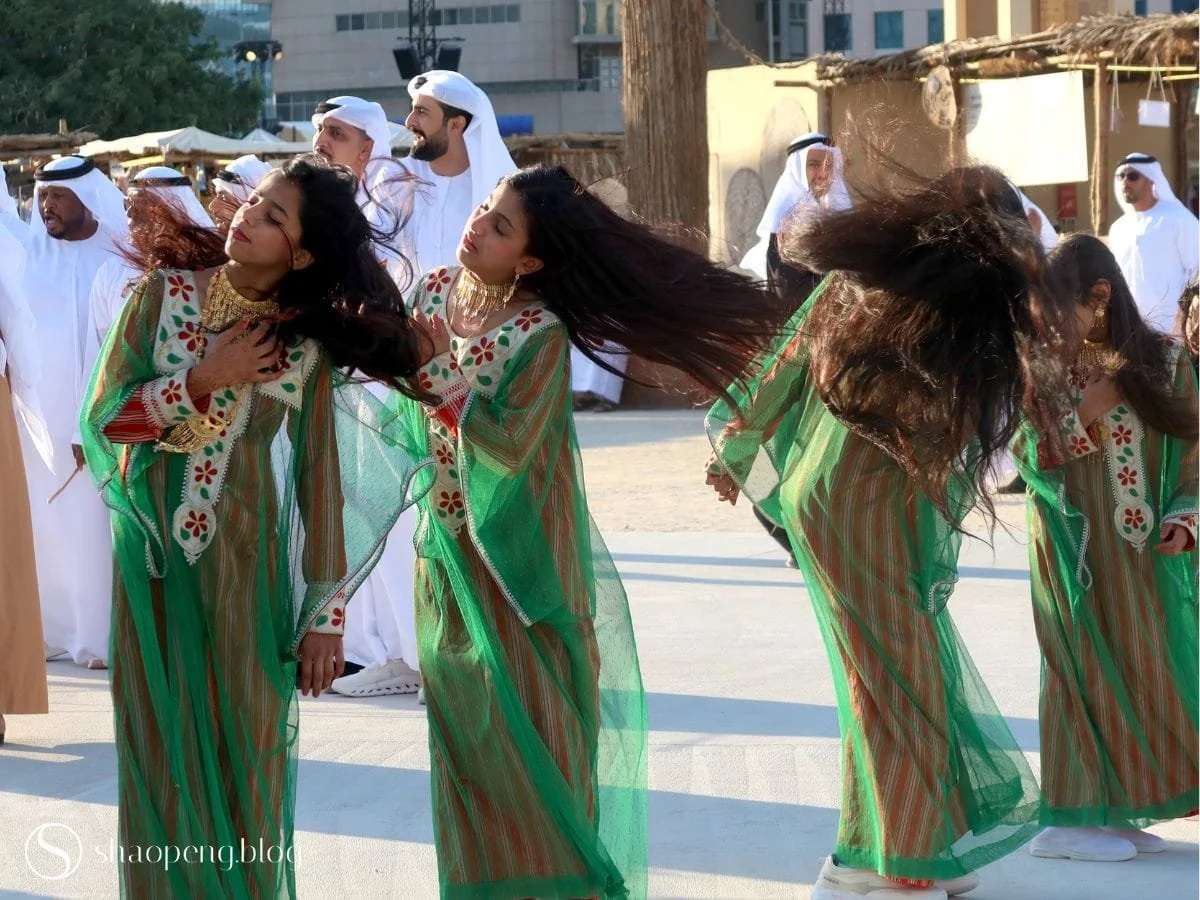
Al nasha’at, or the Emirati “hair-flipping dance,” welcomes visitors to the Al Hosn Festival.
ABU DHABI, UAE — It’s ten minutes to four in the afternoon, the official opening time of the Al Hosn Festival. The gates are still closed, but a small crowd has already gathered, waiting to enter.
For culture enthusiasts, the Al Hosn Festival offers one of Abu Dhabi’s richest encounters with Emirati traditions. Heritage here is not simply observed but experienced through the senses — sound, sight, touch, taste, and scent. Among the many festivals I’ve attended in the UAE, this one feels the most immersive, perhaps even more so than Al Ain’s Traditional Handicrafts Festival.
Held next to Qasr Al Hosn, one of the city’s beloved historic landmarks, the festival returns each year as a living extension of the fort itself, bringing Emirati heritage to life through performances, music, craft demonstrations, workshops, and a traditional souk.
As soon as you enter, you’re greeted by music and dance. In al ayyala, bamboo sticks rise and fall in unison; in al nasha’at, young girls dressed in green thawb sway their long hair to the steady beat of drums. A little further on, al harbiya slows the tempo. This dignified war dance, performed with rifles and sticks, brings together different generations, with fathers and sons moving side by side.
Often seen at celebrations to welcome guests, these performances set the tone for the festival. They feel less like spectacle than part of a cultural rhythm — one that continues to be practiced today.
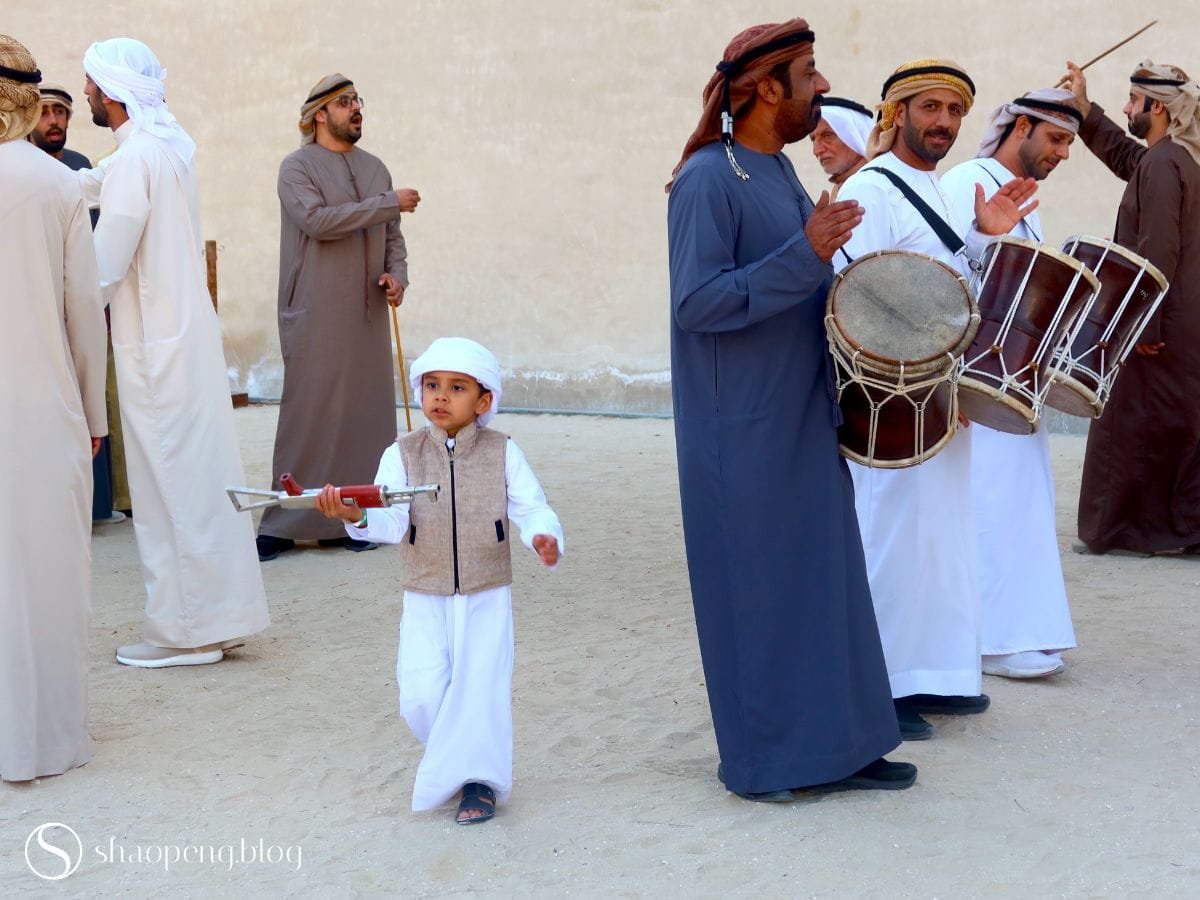
Al harbiya remains a shared tradition among Emiratis, with young boys performing alongside their fathers.
The festival grounds stretch across several blocks and are organised into different zones. At Artisans Lewan, live demonstrations introduce traditional crafts such as al talli and zari embroidery, al khoos weaving, incense-making, henna, and al sadu. Here, you also meet al mu’aggisah (المعقصة), the traditional hairdresser and stylist in Emirati society.
What makes this space special is its openness. Visitors can sit beside the artisans, ask questions, and watch their hands at work. During my visit, I spoke with a perfumer about dukhoon. She applied mehleb (المحلب) — a saffron-coloured paste — along my jawline.
Made from ground cherry seeds and saffron, mehleb is a traditional form of facial adornment associated with femininity and beauty. Applying mehleb to another woman is an intimate gesture of hospitality and care, offered only within trusted female spaces. When other Emirati artisans noticed it on my face, conversation flowed more easily, as if I were one of them.
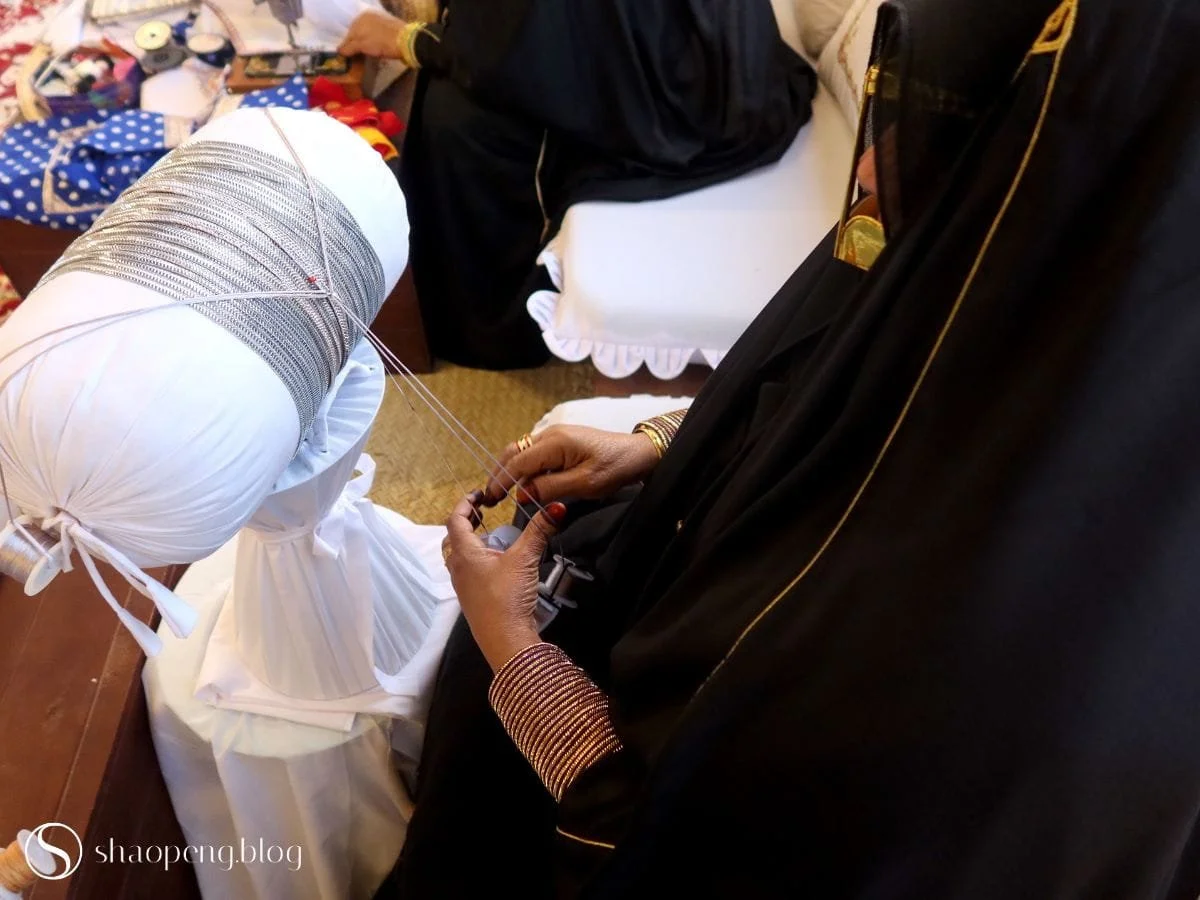
Al talli is a traditional embroidery technique where cotton threads are braided with silver, embellishing sleeves, trouser hems, and dress necklines.
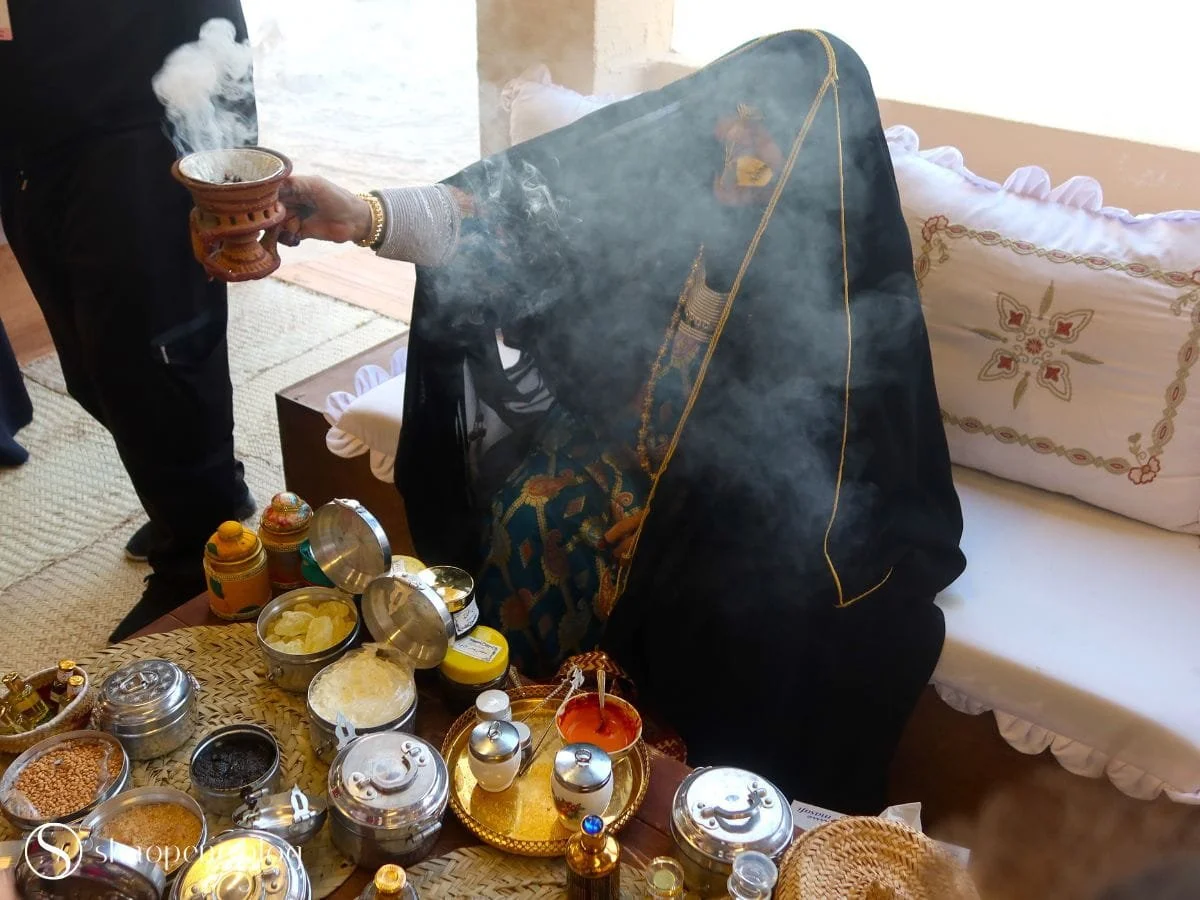
Incense and perfumery play a vital role in Emirati daily life.
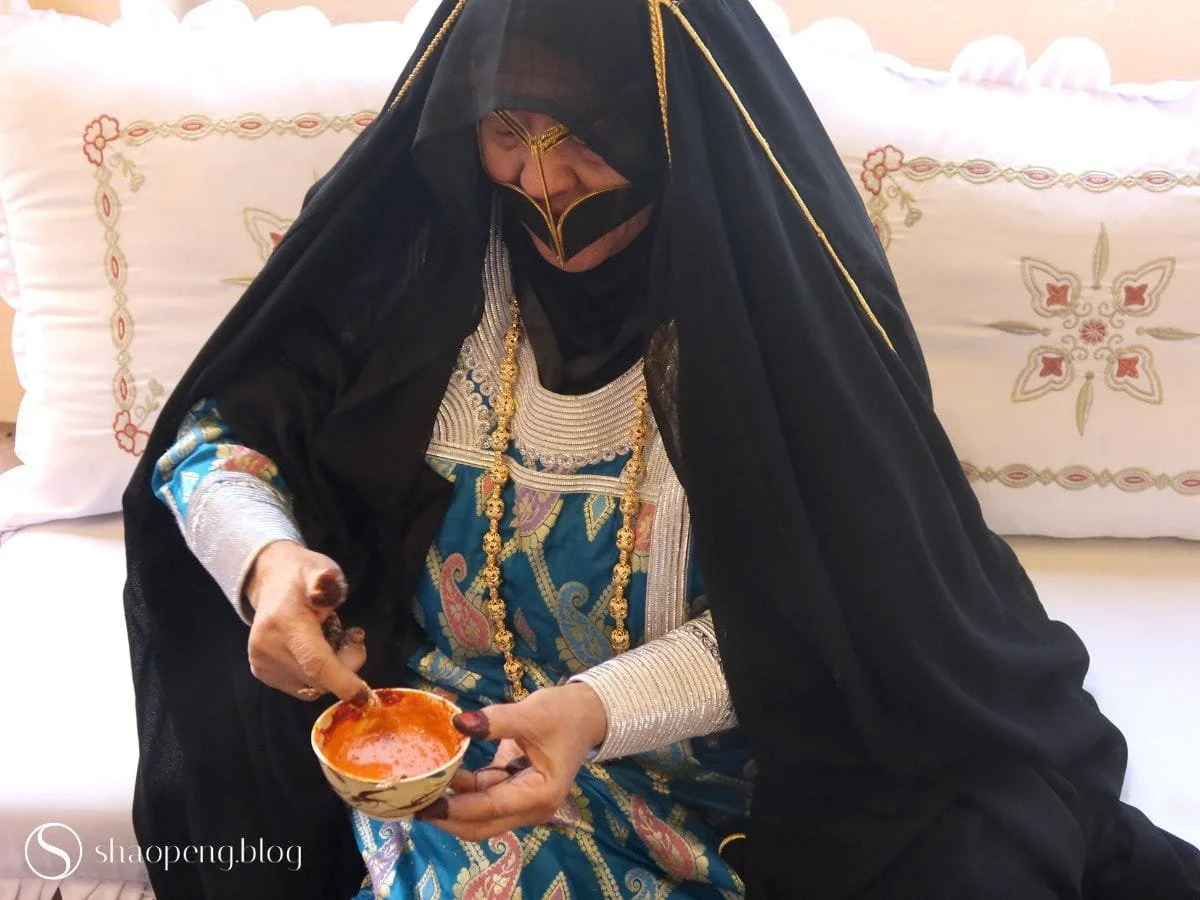
In Emirati society, applying mehleb to another woman is an intimate gesture of hospitality and care.
Besides adornments for women, crafts associated with men are also showcased. One of the most understated is al ‘aqmah (العقمة) — the small cotton buttons fixed onto a man’s kandura. In their simplicity, they reveal both the elegance and care of handmaking. Nearby, al khizam (الخزام) — the black cord used to secure the ghutra — is traditionally made from sheep’s wool, sometimes threaded with silver. Interestingly, this integral element of men’s dress has its origins in a practical object tied to camel handling.
Throughout the festival, the exhibition Threads of Gold, presented by the House of Artisans, explores bisht and burga’a — two of the most iconic expressions of Emirati craftsmanship.
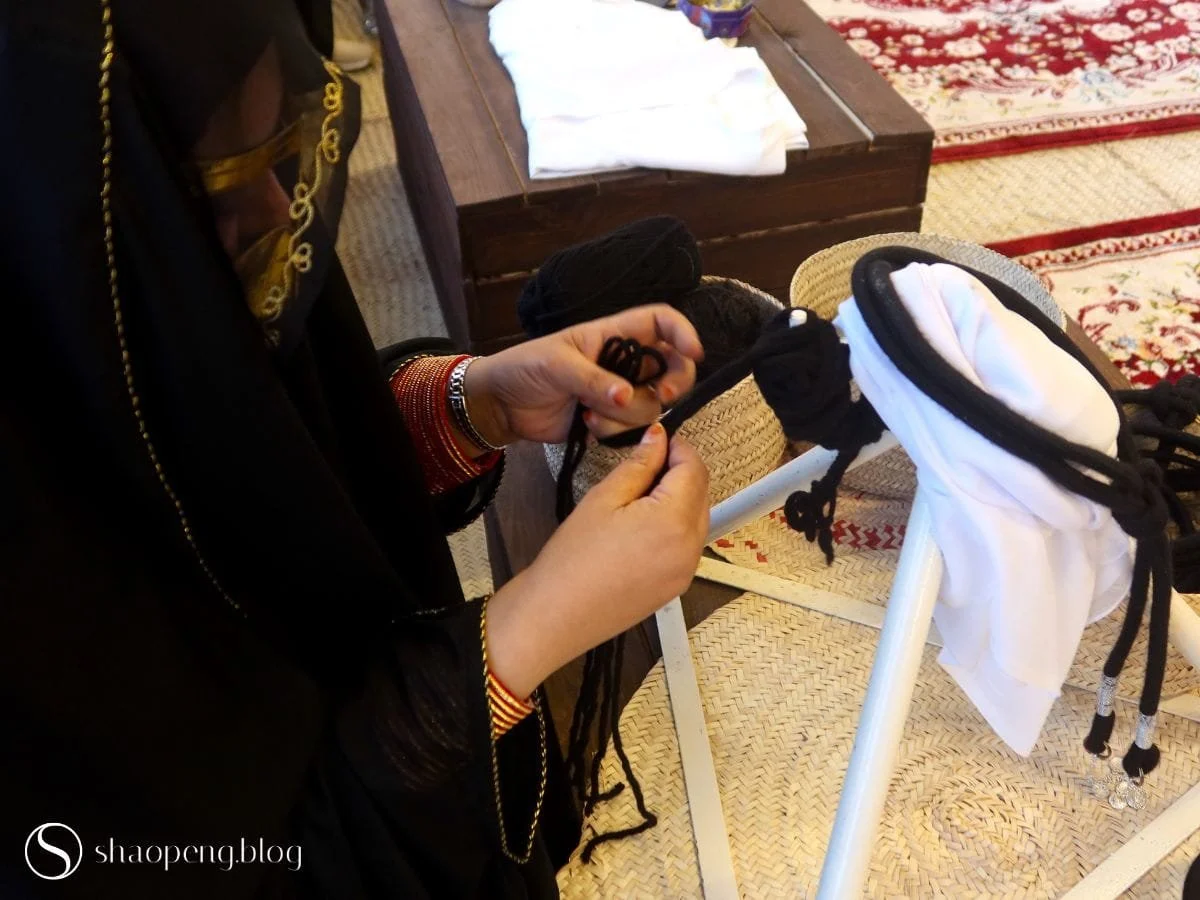
Patience is required to make al khizam, a cord used to secure the ghutra in place.
What sets these demonstrations apart from other festivals I’ve attended in the UAE is the attention given to crafts once tied directly to livelihood. You watch al jallaf, the traditional boatbuilder, shaping an oar, while nearby artisans weave al diyyin (الدّيين) — the basket used by pearl divers to collect oyster shells — and construct gargoor (قرقور), the fish traps essential to everyday life in old Abu Dhabi.
Given the festival’s location, a building workshop invites visitors to explore traditional construction techniques. It offers insight into how craftsmanship shaped the fort’s architecture — something best understood by watching, rather than being told.
For those who want to engage more directly, the Al Hosn Festival offers seven hands-on workshops, including wool spinning, traditional bracelet-making, pottery, al khoos bookmarks, and dukhoon. Some require tickets; others are freely accessible. I tried my hand at al khitam (الخطام), the rope made from sheep and camel wool and used for guiding camels. The braiding looks deceptively simple, until a few attempts reveal how much skill and patience it demands.
Alongside al khitam, the making of al shammal (الشمال) — used to protect a camel’s udder during milking — and al khannaqa (الخانقة), a decorative camel neck strap, is also on display. These live demonstrations take place near the camels themselves, where visitors can feed, milk, and even ride them.
Animal lovers will also encounter purebred Arabian saluki dogs — cherished companions in Bedouin memory — as well as falcons, whose presence anchors the festival in a way of life shaped by desert, movement, and survival.
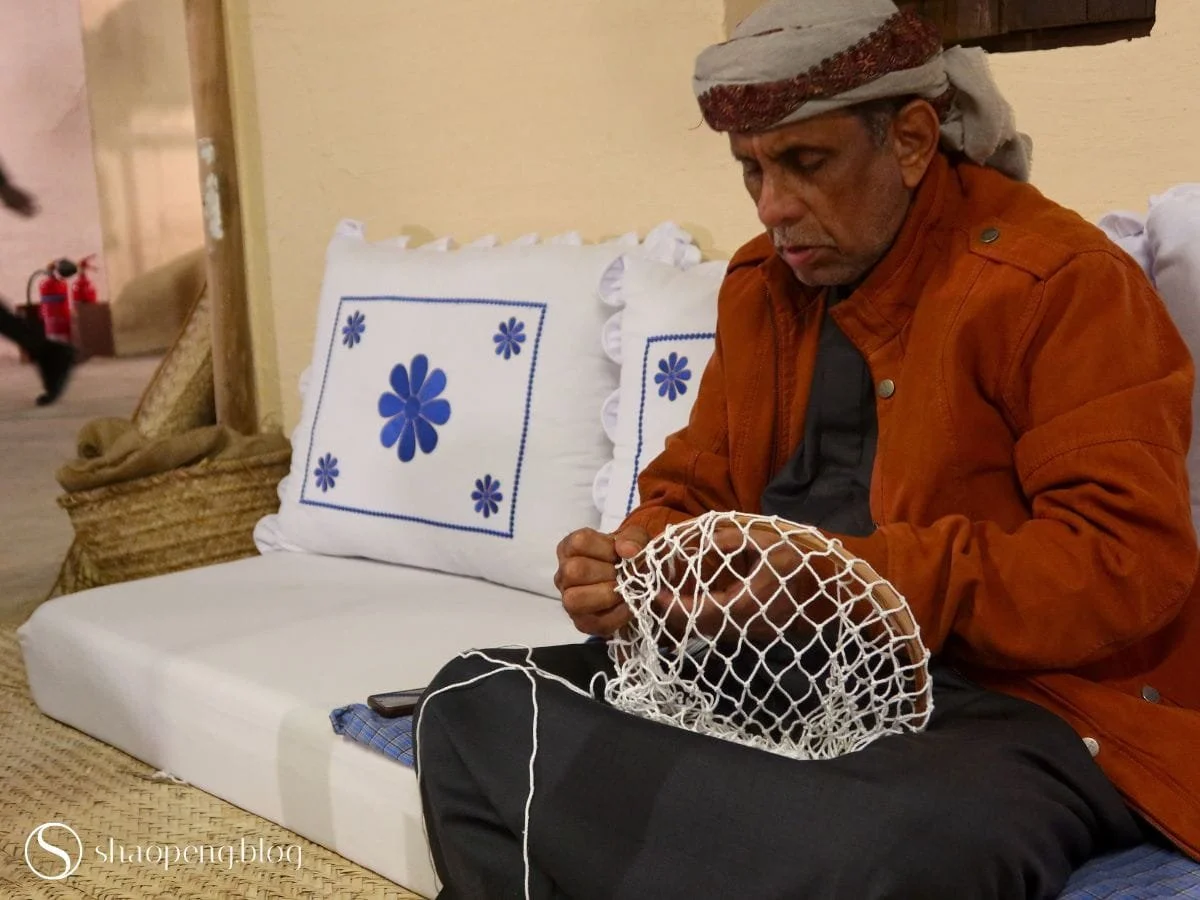
The making of al diyyin, the woven basket once worn by pearl divers to hold their oyster shells.
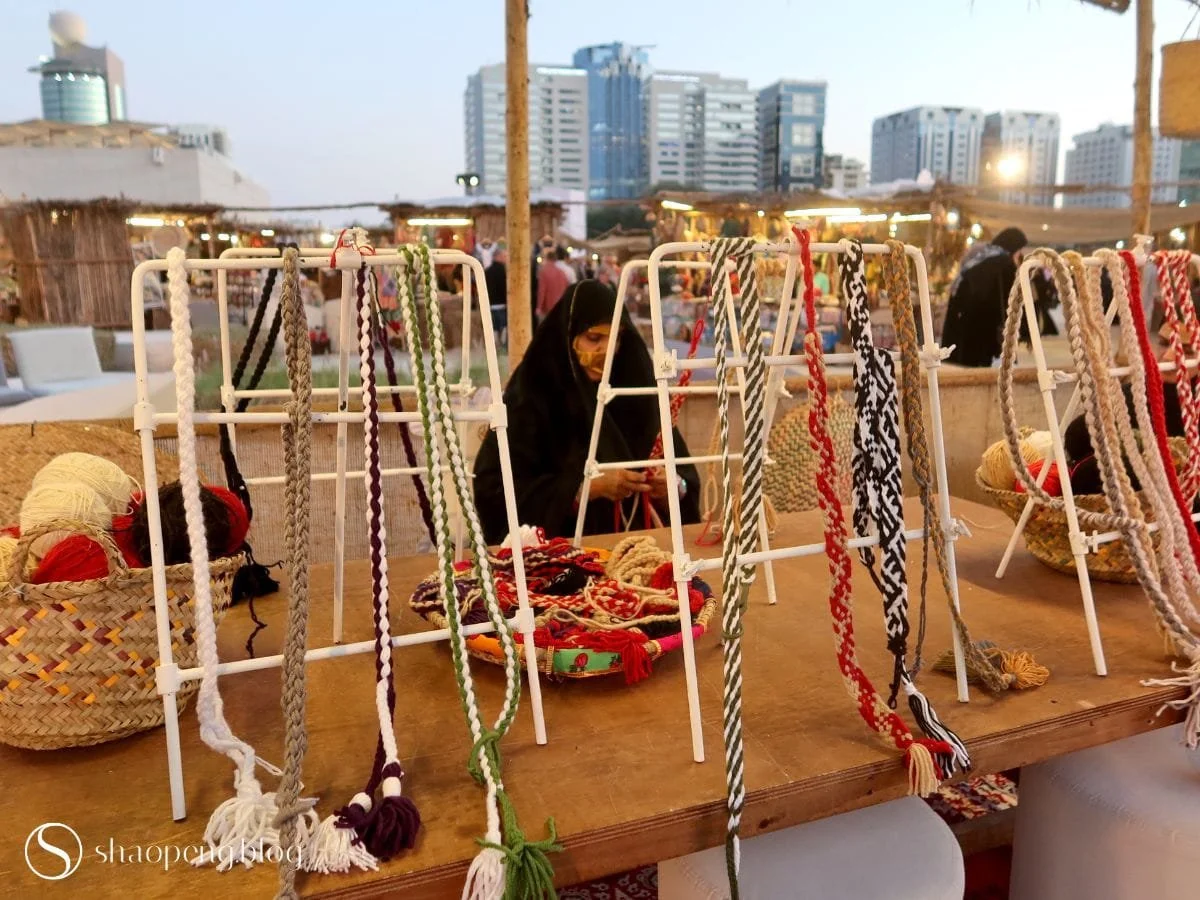
Al khitam comes in different patterns — some for regular camels, others for the racetrack.
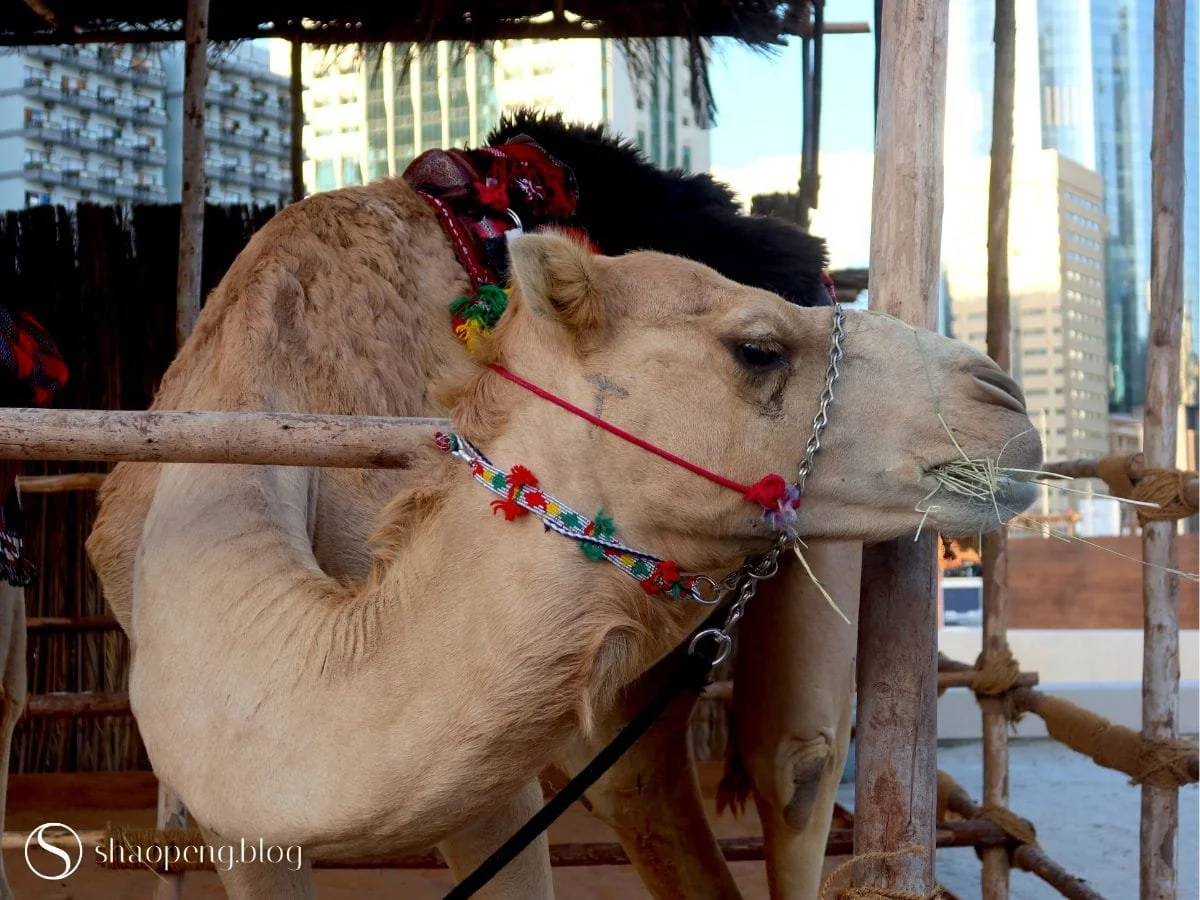
Visitors are invited to feed the camels — a joy that lights up the faces of both children and adults.
One of the most unexpected encounters at Al Hosn Festival comes with a visit to the old police station. Inside, Abu Dhabi police officers dressed in traditional uniforms welcome visitors in. At designated times throughout the day, a limited number of military ID cards are issued: complete with photographs taken on the spot, with visitors dressed in traditional attire. I leave with one of my own.
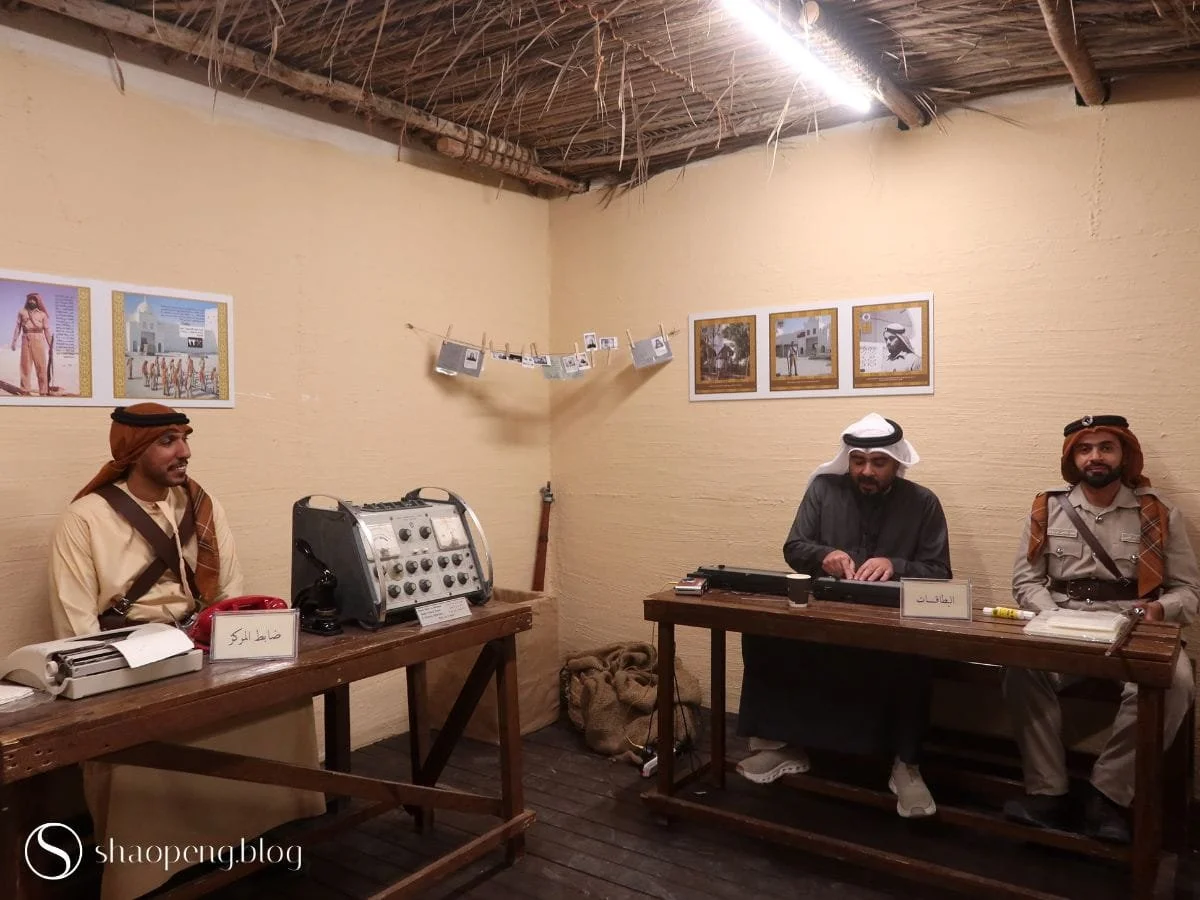
Abu Dhabi police also take part in the Al Hosn Festival.
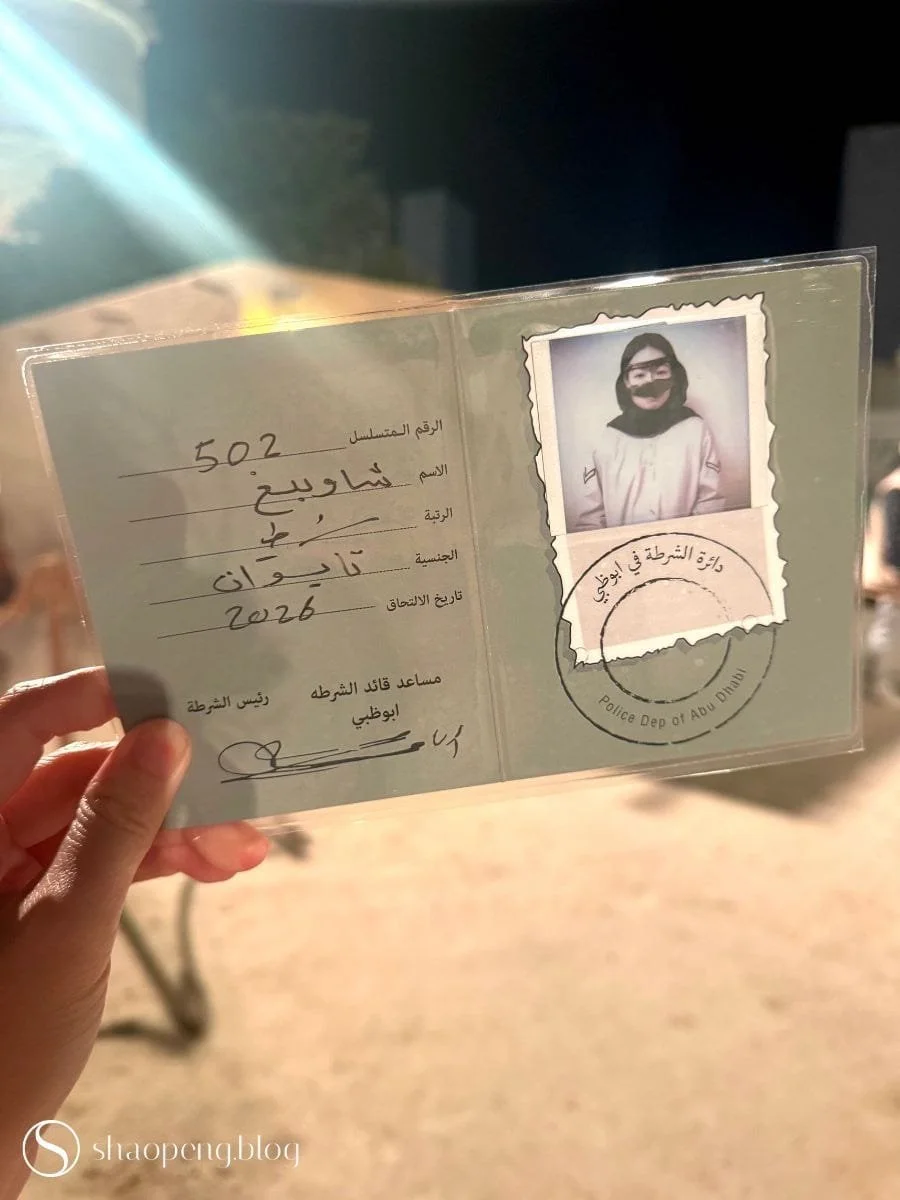
Each day, a limited number of vintage military IDs are issued at the old police station.
After dark, the traditional souk comes alive. Small dukkans line the walkways, selling garments, jewellery, oud, and ghutra. Food stalls offer a rare chance to sample many Emirati dishes in one place: raqaq crepes, balaleet (بلاليط), batheeth (بثيث), aseeda (عصيدة), luqaimat (لقيمات), and harees (هريس), among others.
For those seeking a quieter corner, head over to Qahwa Lewan. Here, you are guided through the story of Emirati qahwa, from its ingredients to its careful preparation. You also learn al sana’a, the etiquette of serving and receiving coffee in the majlis — a lesson that enriches your next qahwa experience.
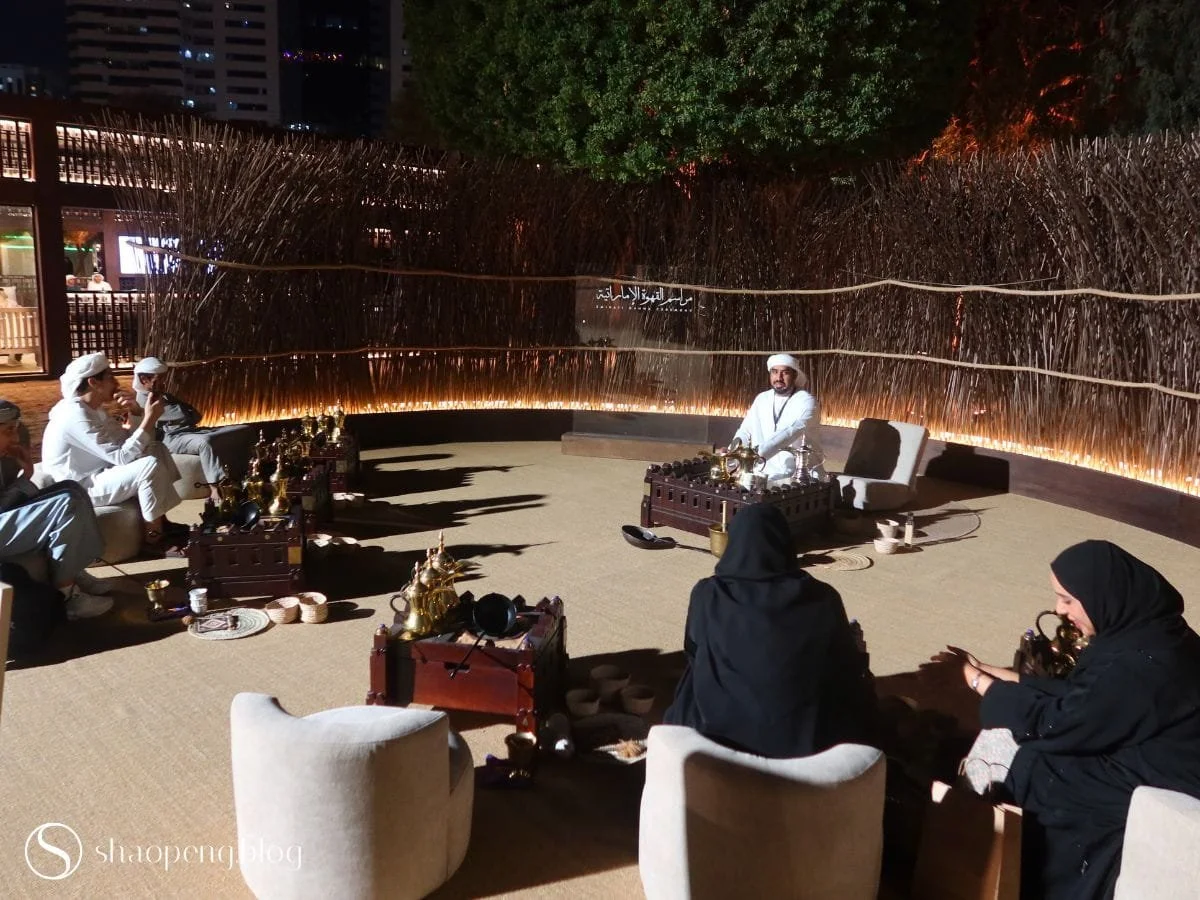
The Emirati Qahwa Ceremony offers the perfect setting for learning about the preparation and etiquette behind this time-honoured tradition.
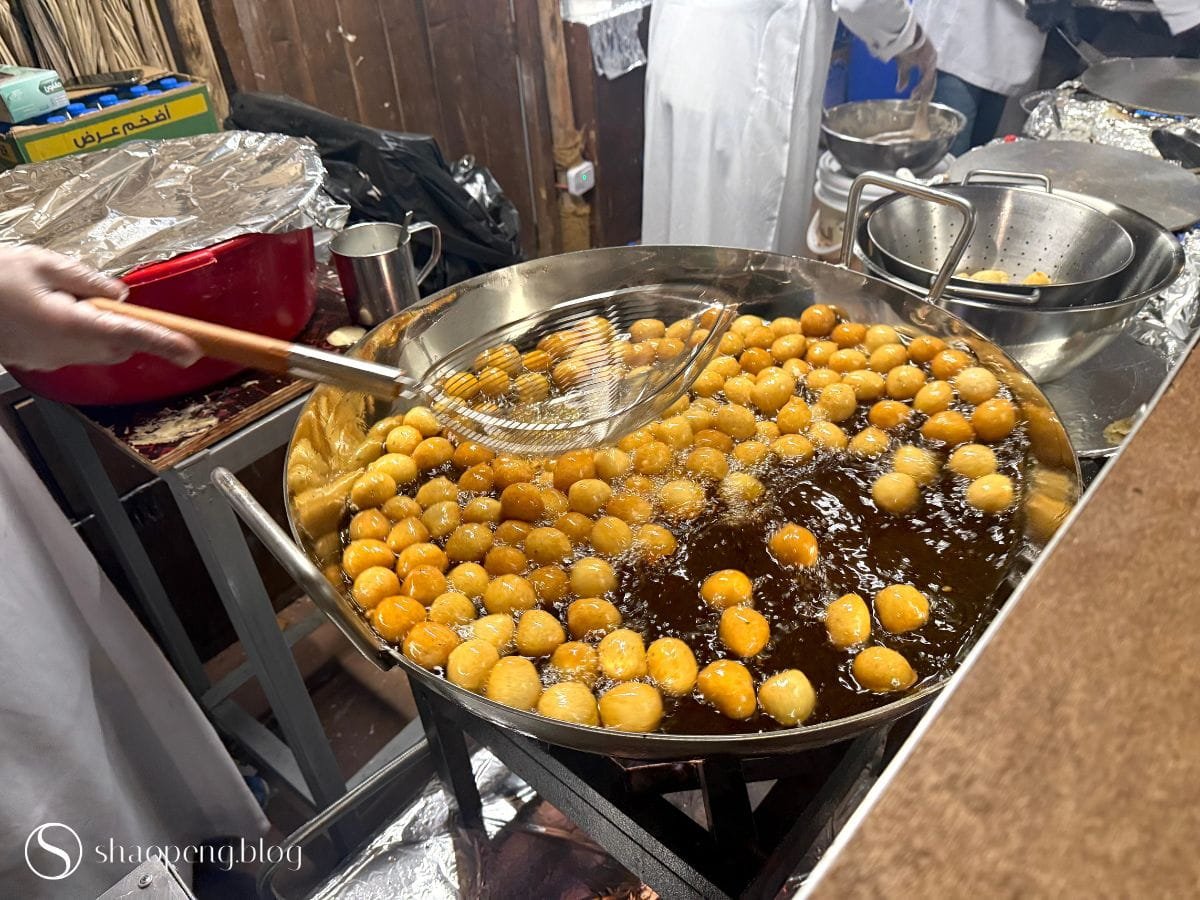
Luqaimat, the much-loved fried dough balls of the Gulf region, are among the traditional treats at the Al Hosn Festival.
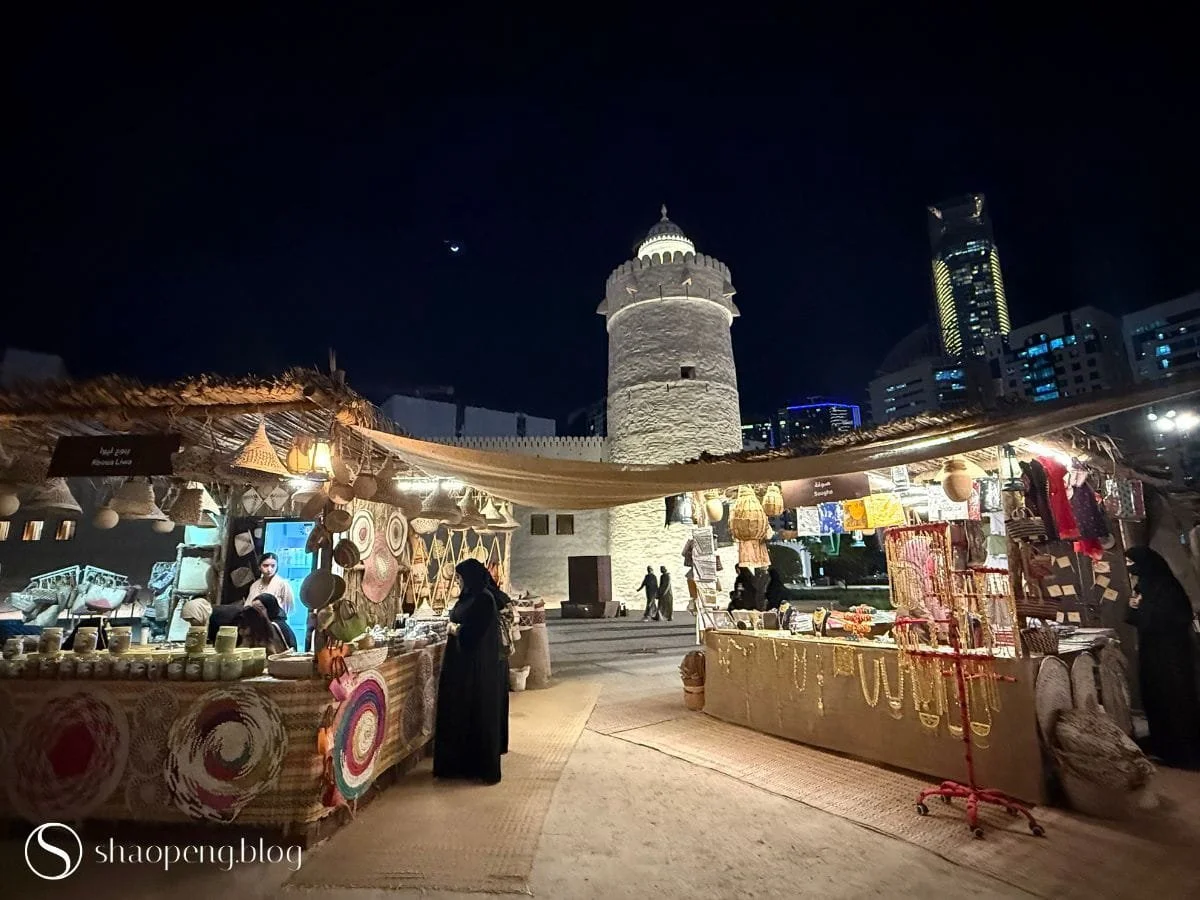
Traditional souk comes alive at night, set against the backdrop of Qasr Al Hosn.
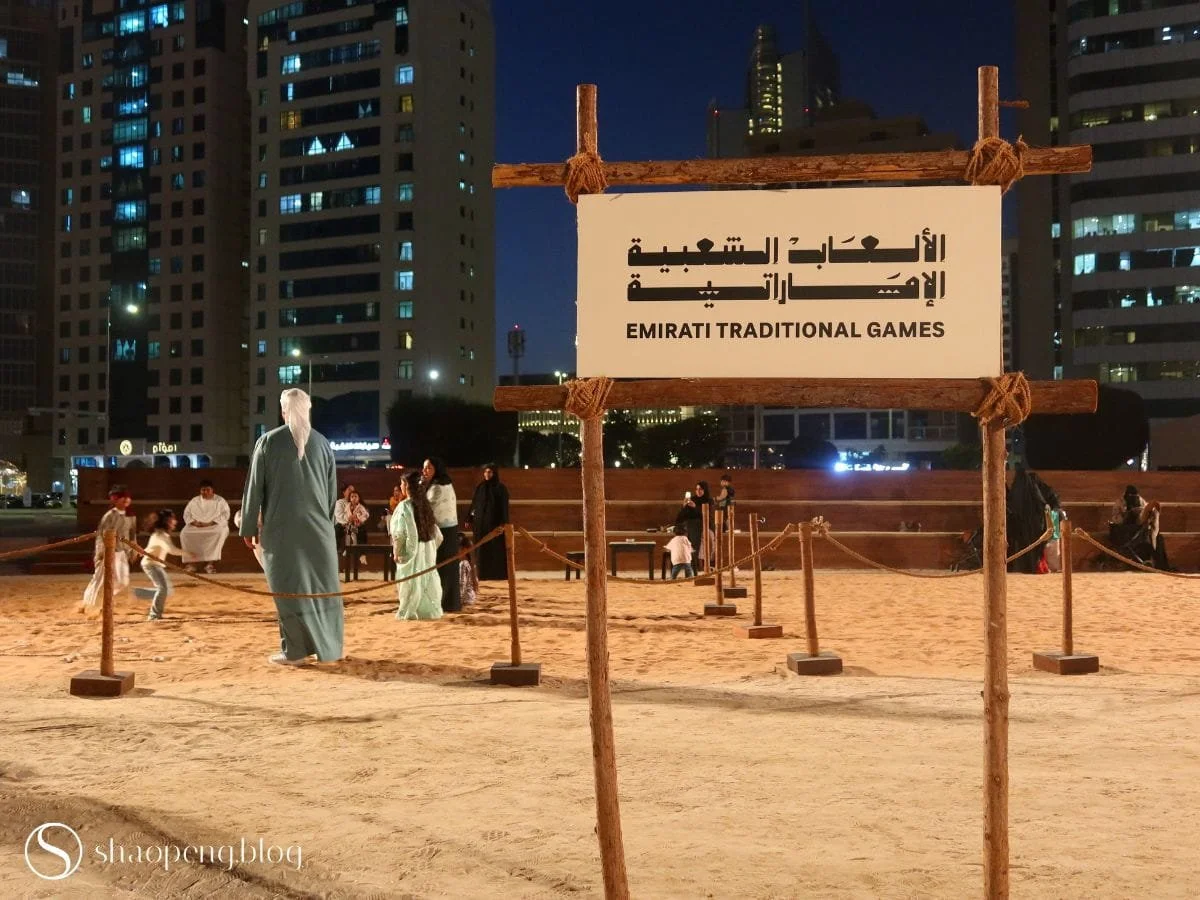
A selection of traditional Emirati games are available for children to join.
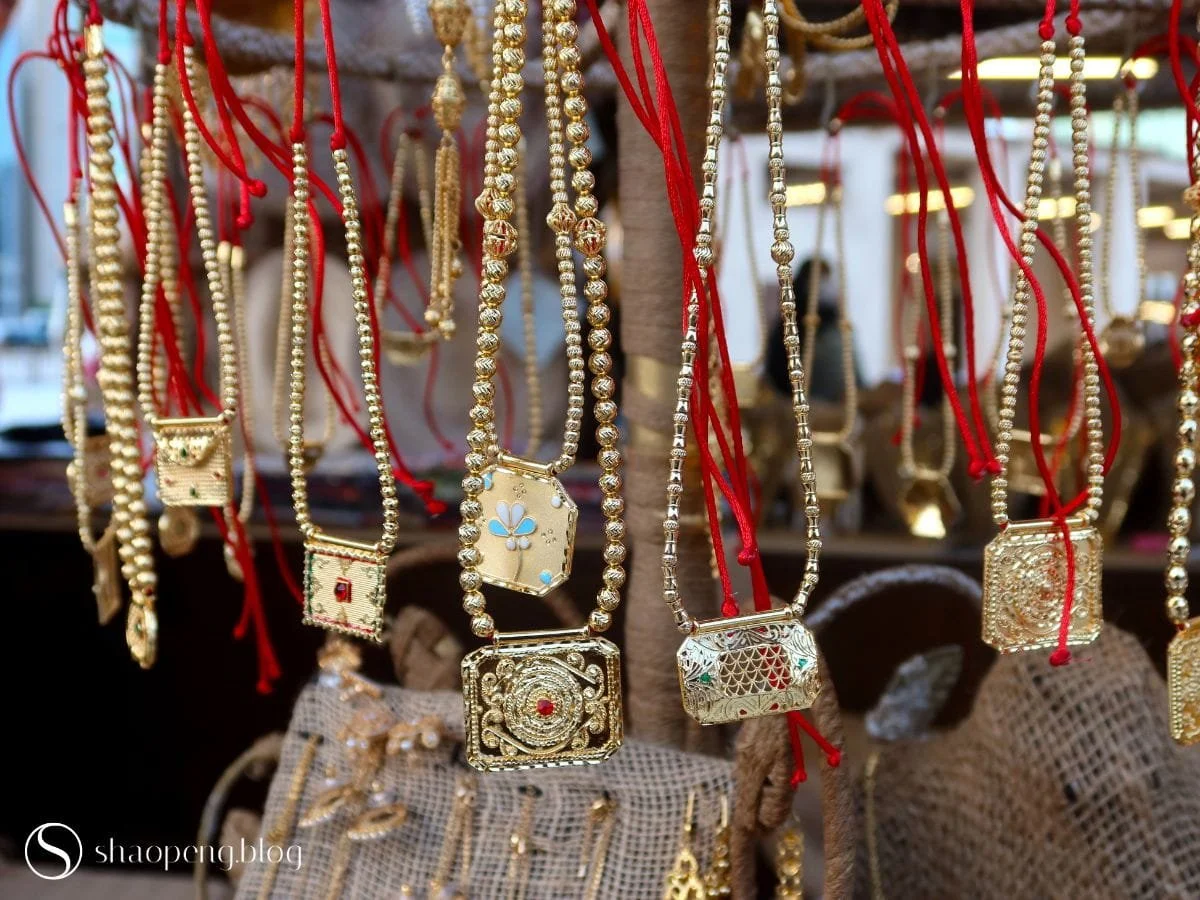
At the souk, traditional jewellery designs find new expression in pieces made for today culture lovers
The sheer number of activities at the Al Hosn Festival carries you from afternoon into nightfall. As evening settles in, attention turns back to the fort.
At 8:30 pm each night, the main show takes over the fortified walls of Qasr Al Hosn, using them as a canvas for Root of the Nation, the fifteen-minute spectacle. I’ve been impressed by the light and sound show at Qasr Al Watn, but this one is much more than that.
Blending moving images with live performance, the story traces Abu Dhabi’s emergence from early desert life and ancient falaj systems to the rise of the 18th-century fortress that now serves as its backdrop. Though brief, the show feels essential — and worth staying late for, even if it means catching the last bus back to Dubai.
The festival also grants free access to Qasr Al Hosn itself. By night, its open courtyard fills with people, retail stalls, and photography booth, breathing energy and life to a place that is usually quiet after dark.
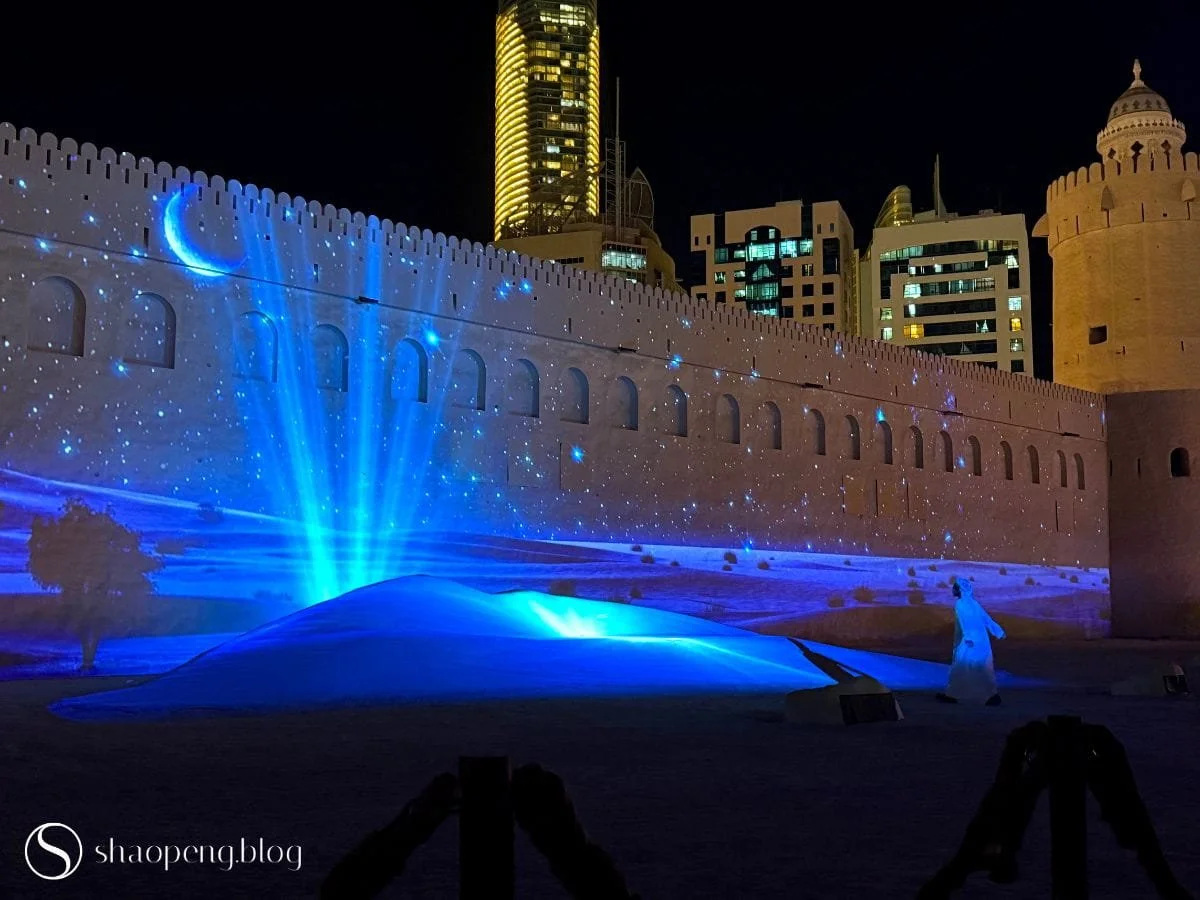
At the heart of the Al Hosn Festival 2026 is “Root of the Nation,” a poignant spectacle that brings Emirati traditions, stories, and spirit to life.
Al Hosn Festival takes place at Qasr Al Hosn, Abu Dhabi, and runs until February 1, 2026