
Discover Emirati heritage at the Traditional Handicrafts Festival in Souq Al Qattara, where centuries-old traditions come to life through your hands, and in the scents and sounds around you.
Sense of Wander: ★★★★★
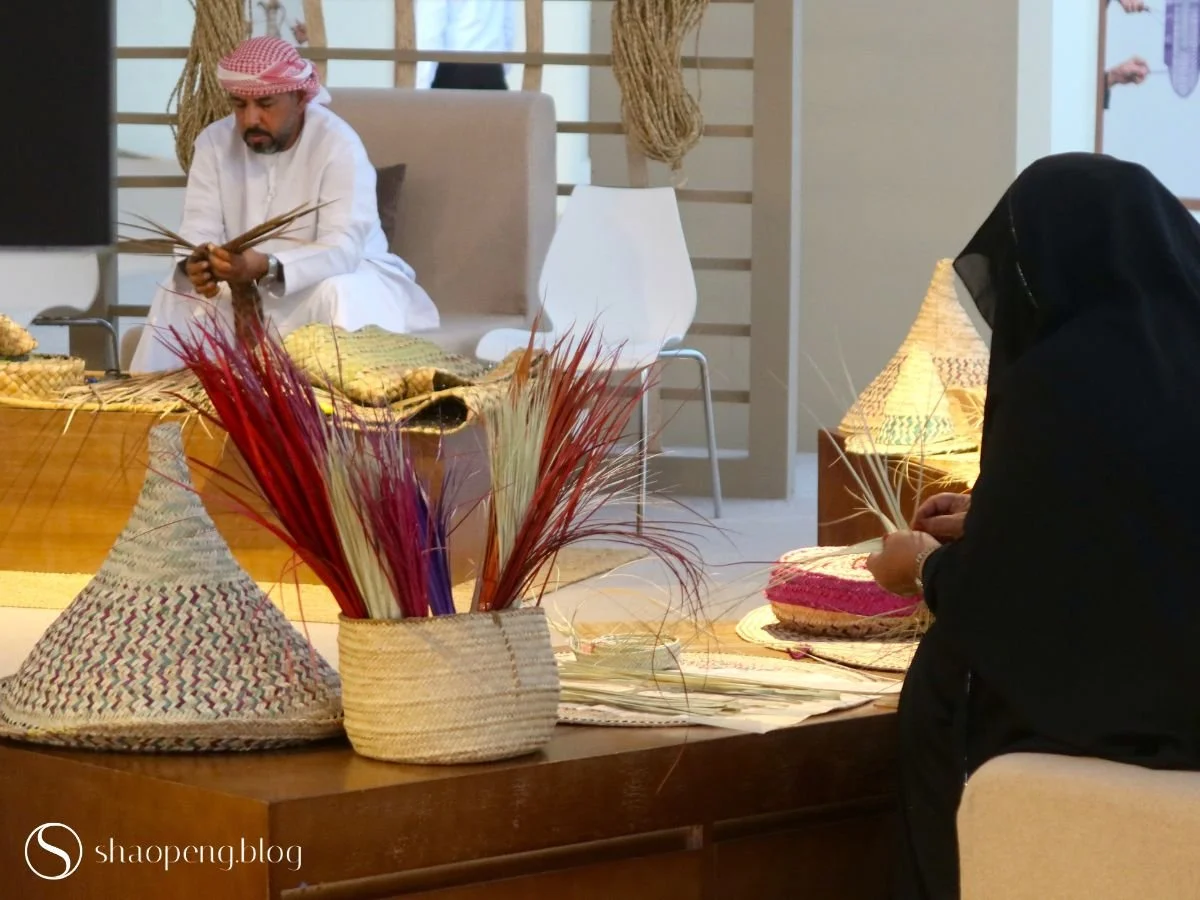
Al Khoos, or palm frond weaving, lies at the heart of the UAE’s centuries-old craft traditions.
AL AIN, UAE — It’s still early in the afternoon when I arrive at Souq Al Qattara. The moment I step through the entrance gate, I am met by a lively performance of al ayyala, where men dressed in crisp white kandura and ghutra move in unison — their bamboo canes raised and lowered to the beat of drums and chants. There’s something stirring in this folk dance — a strength that binds the dancers together, and gently draws onlookers like myself into its orbit.
When the performance ends, the souq falls quiet, reminding me why I’m here: the Traditional Handicrafts Festival. Under the late-afternoon sun, the stalls lining the street have yet to open. With time on my hands, I wander through the area, taking in the calm before the festival fully awakens.
Souq Al Qattara dates back to the mid-20th century. Founded by the late Sheikh Shakhbut bin Sultan Al Nahyan, it once sat along the palm-lined road connecting the Al Qattara and Al Jimi oases. Today, the restored site hosts a traditional handicrafts market from October to May. Each November, it becomes home to the annual Traditional Handicrafts Festival, offering visitors a closer look at Emirati heritage through live demonstrations, hands-on workshops, craft markets, and authentic cuisine prepared by local families.
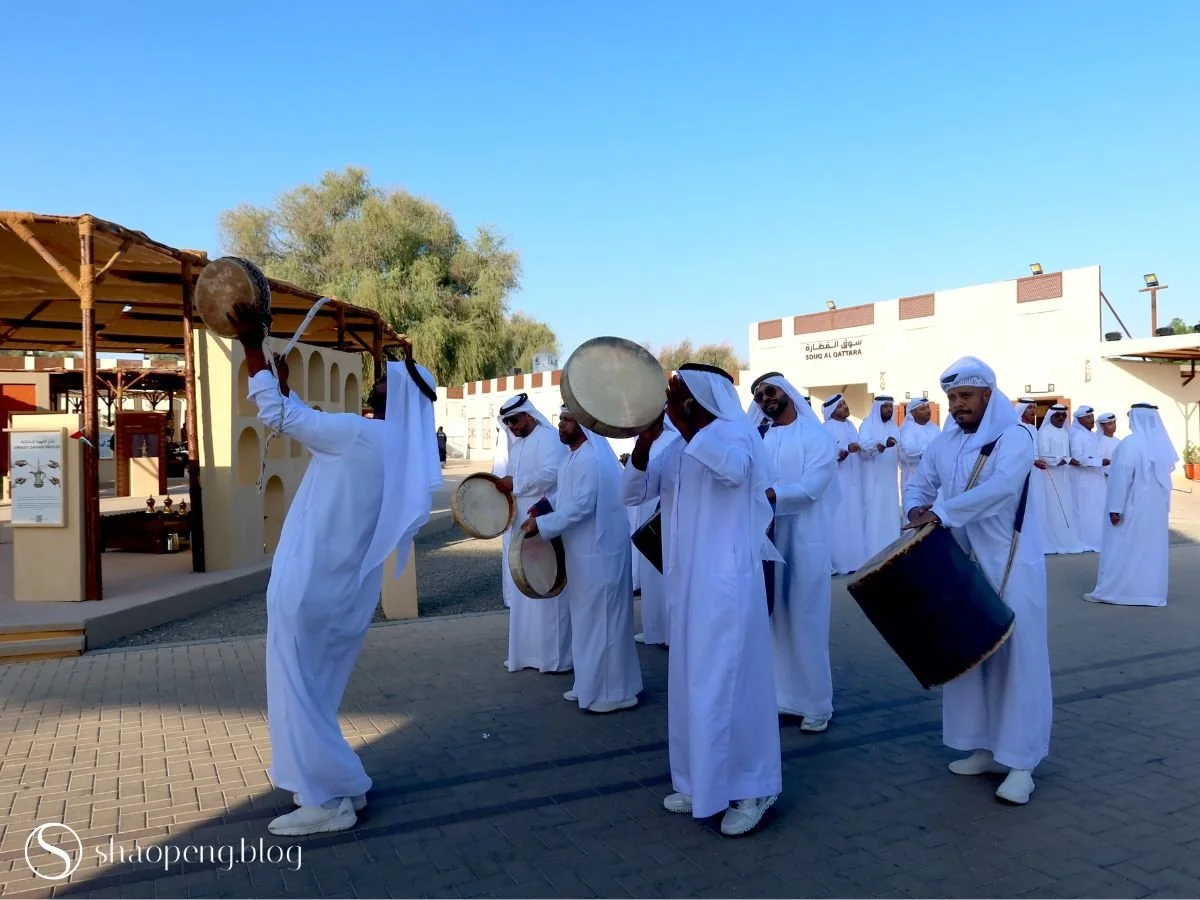
The Traditional Handicrafts Festival welcomes visitors with al ayyala, where drumbeats and collective chanting set the rhythm for living Emirati heritage.
I head straight for the Traditional Handicrafts Pavilions. My first stop is the Emirati Gahwa Pavilion, where I am offered a small cup of Arabic coffee. As I sip, I learn about the rituals surrounding Emirati hospitality — how gahwa is prepared, served, and shared. Here, brass dallah pots used for serving coffee are also displayed.
From there, I move on to the Traditional Fashion Pavilion, where visitors are offered a behind-the-scenes look at how an Emirati woman is presented: the burqa worn across the face, the delicate al talli embroidery adorning the abaya, and the jewellery that completes the ensemble.
At the jewellery station, I’m invited to make a bead bracelet. The process is simple and quick, carried out against a stunning backdrop of traditional Emirati jewellery. Just next to it is the station for henna — an organic adornment that has accompanied the hands and feet of women in the region for more than five thousand years.
I sit down as an Emirati woman begins applying henna to my left palm. Expecting intricate floral patterns like those commonly seen in India, I’m instead given a rather simple design: a circle at the centre of my palm, with each fingertip fully covered in henna paste. The entire process takes barely a minute. It’s only later that I learn this is a traditional Emirati design, symbolising beads (perhaps an intentional echo of the bracelet now resting on my wrist).
Henna’s natural dye comes from the dried, ground leaves of Lawsonia inermis, a small flowering shrub. Traditionally, the leaves are mixed with sugar, tea, and lemon juice, producing stains that range from pale orange to deep brown, depending on quality.
A traditional saying goes “Adorn your eyes with kohl and your fingers with henna, and you will be more pleasing in the eyes of God, and more loved by your husband.” This reflects the role henna plays in women’s pursuit of beauty.
While commonly used to mark celebrations, henna also serves medicinal and ritual purposes, believed to ward off evil and invite good energy.
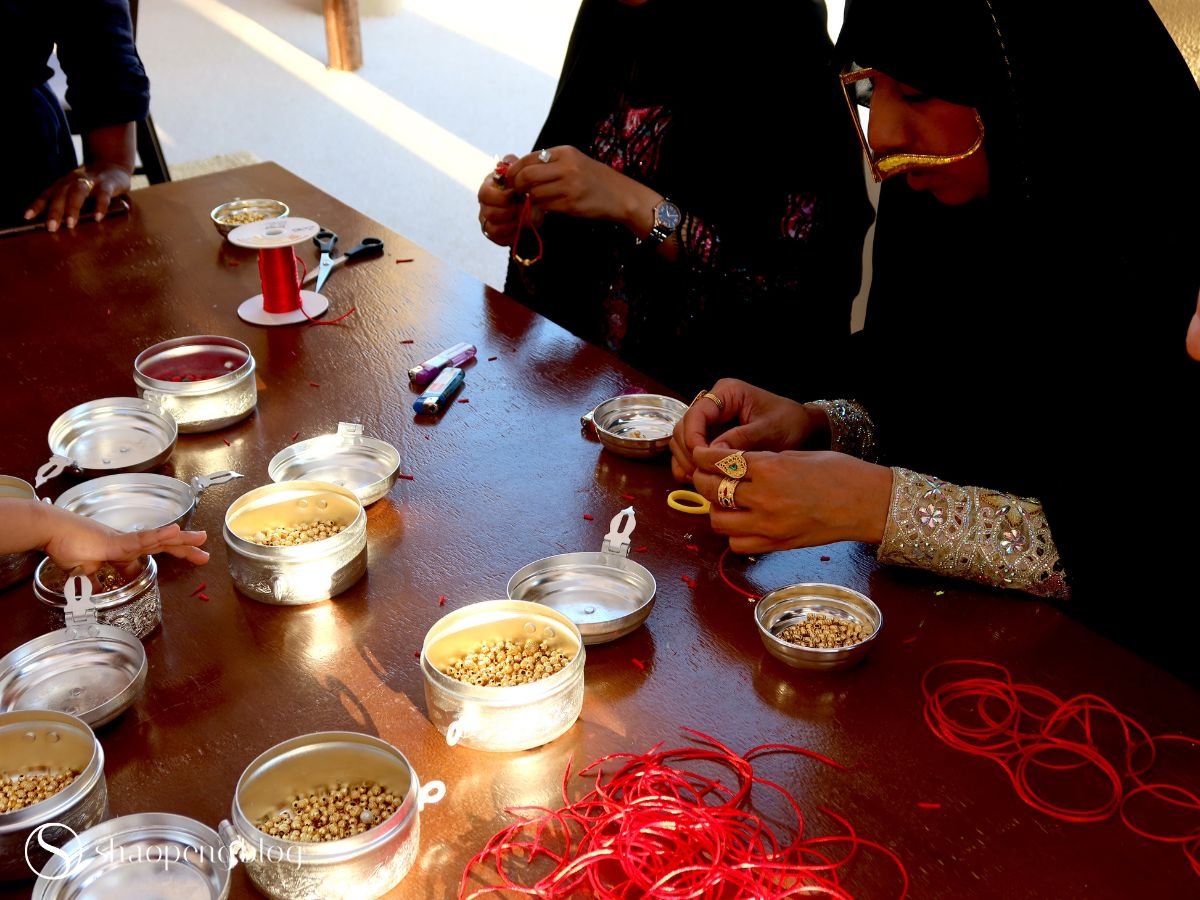
By crafting DIY bead bracelets, participants step into the rich tradition of Emirati jewellery.
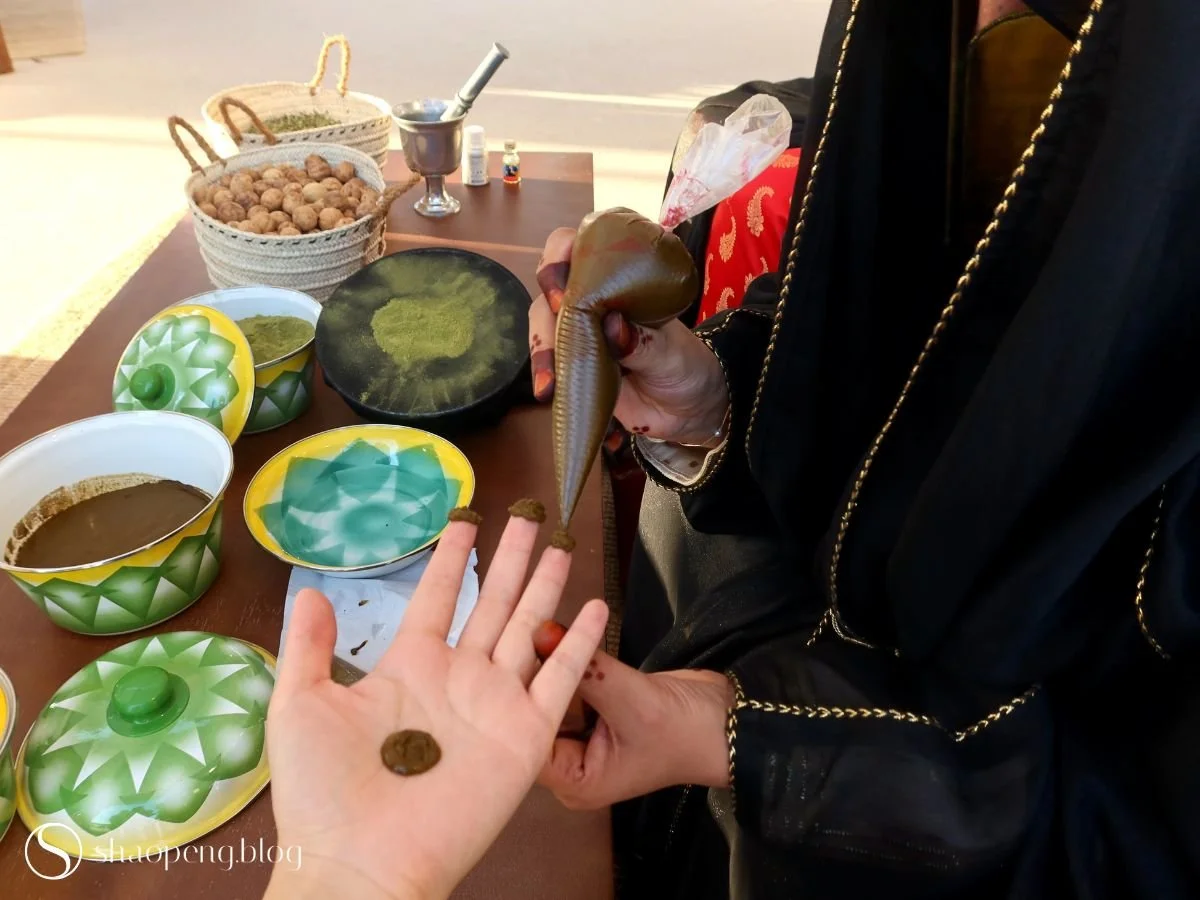
An Emirati woman applies henna to my palm using a plastic cone.
Besides tangible adornment like jewellery and henna, perfumery — intangible yet commanding — plays an equally integral role in Emirati culture. Scents speak of identity and taste. Here, perfume oil and attar take centre stage: oud, amber, musk, rose, saffron. At the perfumery station, a local perfumer explains how these oils, far more concentrated than Western sprays, shape the Emirati scentscape.
Nearby, I find a station dedicated to dukhoon — fragrant wood chips or resin infused with aromatic oils. When burned on charcoal in a medkhan, the smoke perfumes homes, clothing, and hair. Burning dukhoon is also a gesture of Emirati hospitality, welcoming guests into the home.
I have long been curious about how dukhoon is made, and my heart almost skips a beat when I learn that I can experience it here. Guided step by step by an Emirati woman, I mix oud powder, musk powder, and a touch of sugar — which, I’m told, helps bind the ingredients. I then select a fragrance oil to complete the blend. Once shaped into a small ball, it is placed into a metal container, ready to be taken home.
I love the scent of my first dukhoon — infused with a fragrance oil called “Fidji” — so much that I stay on to make a second.
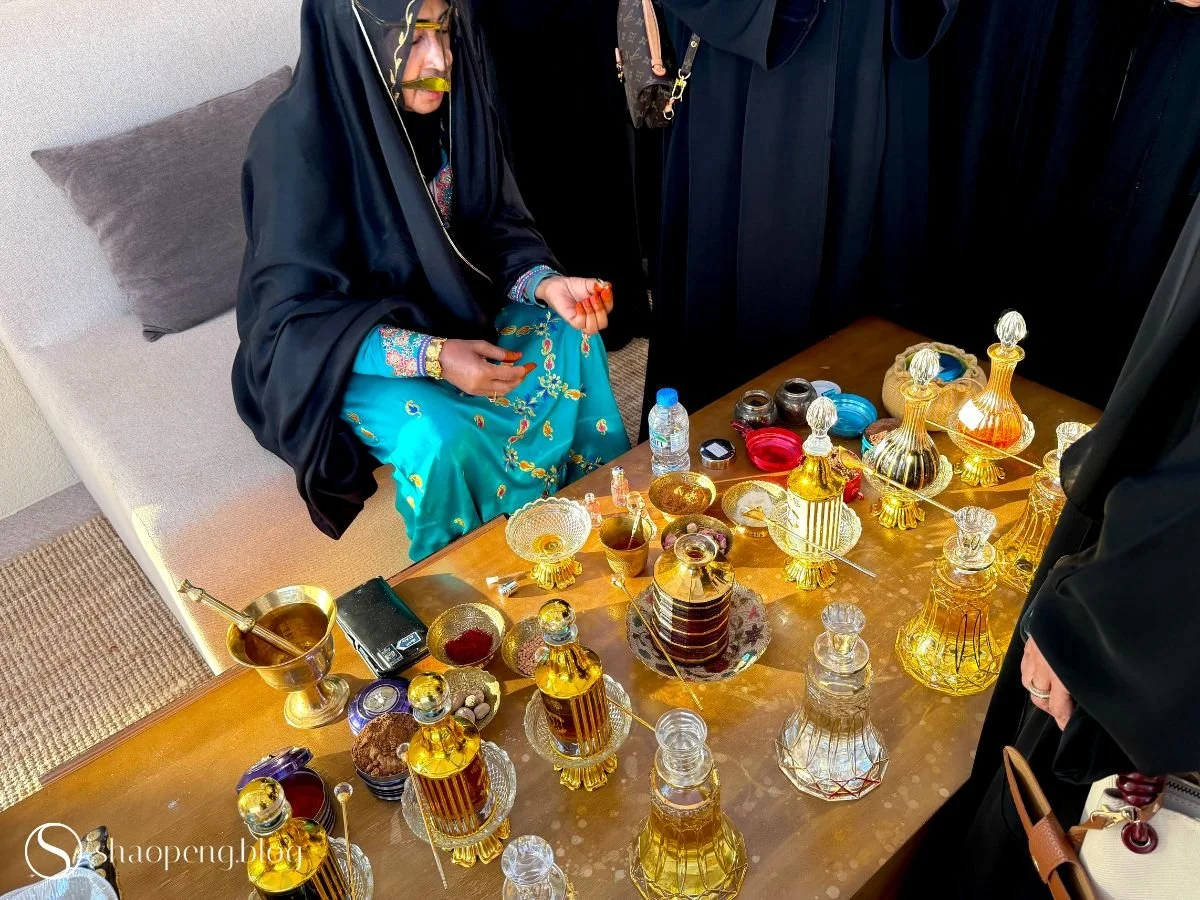
A local perfumer explains the key fragrance oils that shape the Emirati scentscape.
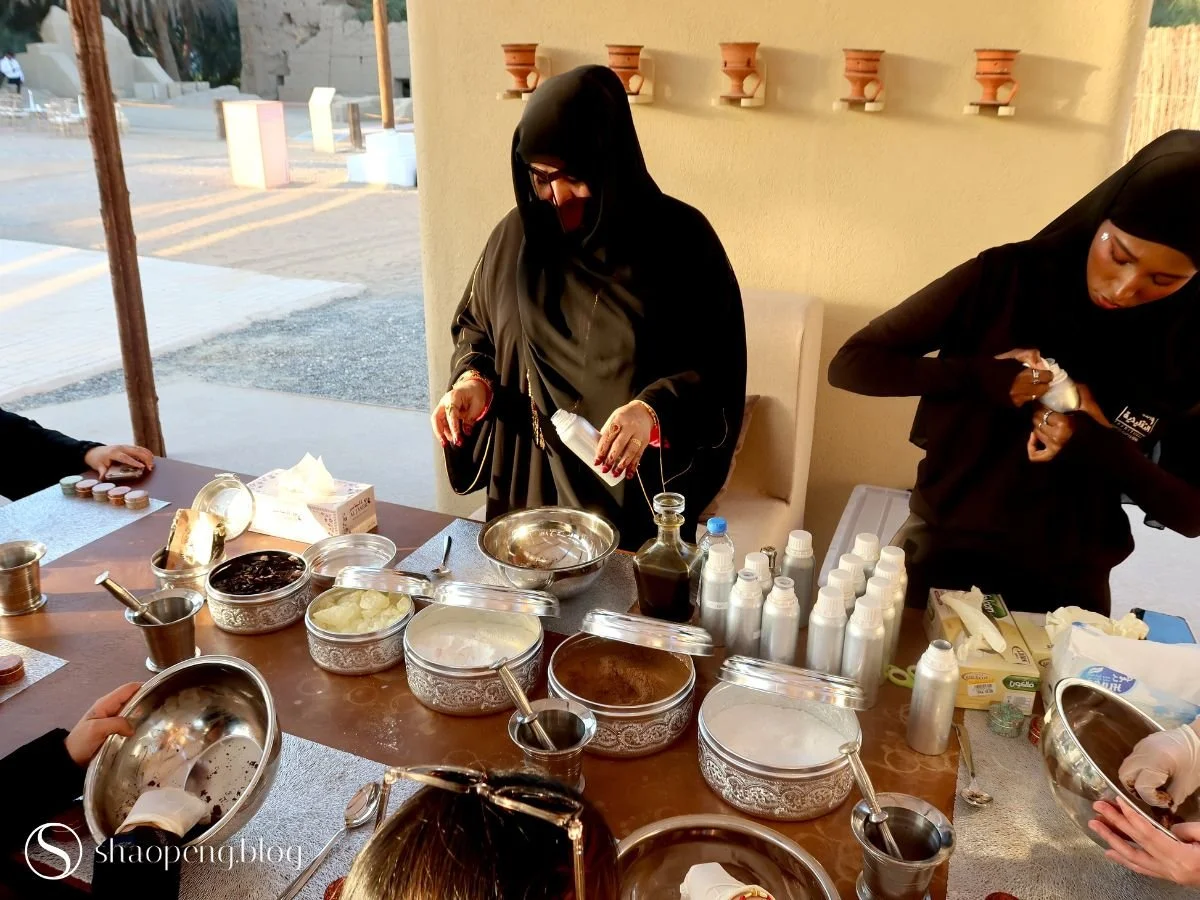
With a fragrance of our choice, we’re guided by a local artisan to craft our own dukhoon and experience the living traditions of Emirati incense.
At the Weaving & Palm Crafts Pavilion, men and women work steadily with their hands. Some are engaged in al khoos, the art of palm-frond weaving. With palm trees abundant in the region, al khoos has long formed the backbone of Emirati craft traditions. Dried palm leaves are transformed into everything from roofs, beds, and chairs to mats, baskets, trays, and containers.
Palm fibres are also traditionally used to make habl, or rope. A live demonstration shows how soaked fibres are extracted, separated, twisted, and braided into strong, durable ropes once used for fishing and shelter-building.
Alongside al khoos, I also watch the demonstrations of karakhana sewing and al sadu weaving — a Bedouin tradition where bold, geometric textiles are woven from sheep, camel, and goat wool.
Among the artisans, a man at the bisht station catches my eye. He looks familiar. It turns out we met earlier this year at the Emirati Heritage Village in Abu Dhabi, where he introduced me to the tradition of the bisht — the elegant outer cloak worn over a kandura on formal occasions.
Traditionally made from wool, camel, or goat hair and edged with gold or silver embroidery, bisht signifies status and prestige. Worn across the Gulf and the Levant, it is among the cultural traditions from the region recently recognised by UNESCO as Intangible Cultural Heritage.
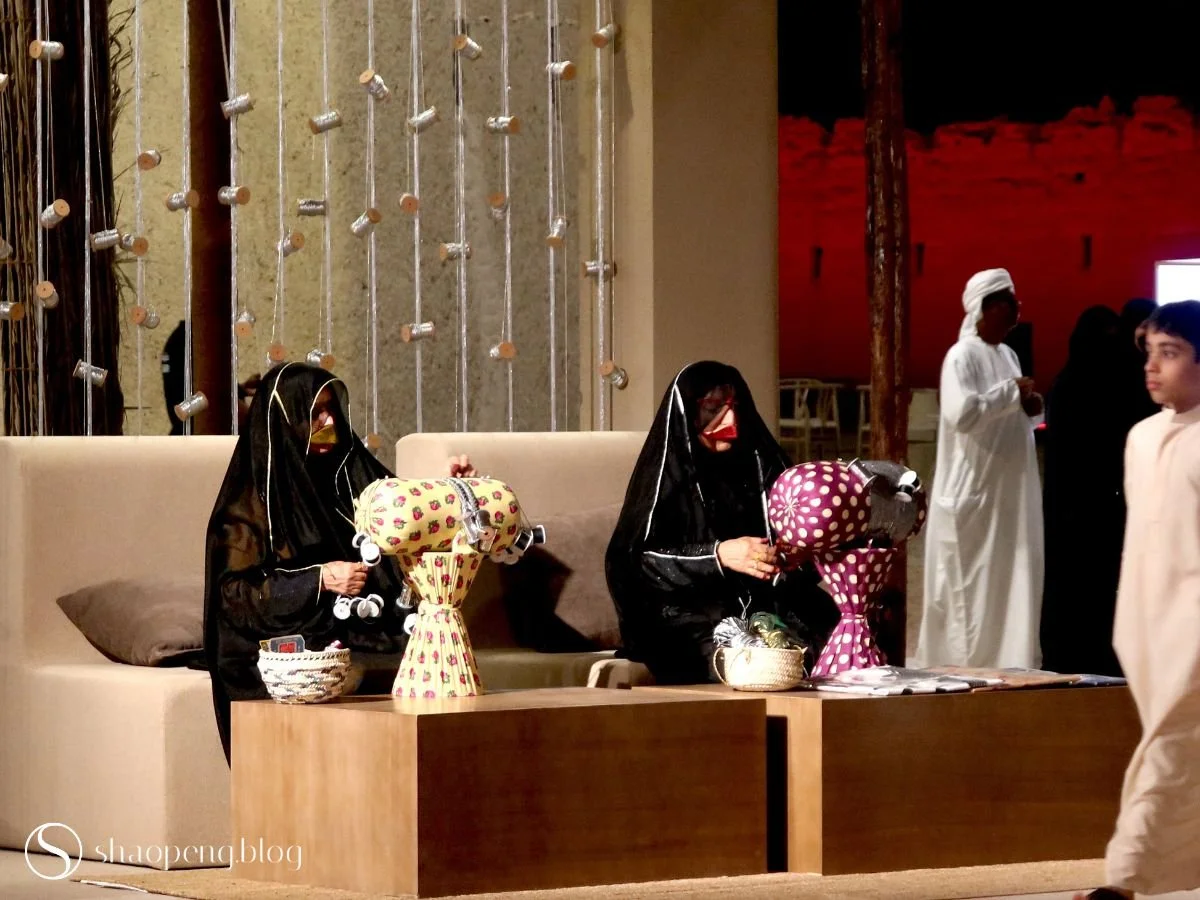
In the pavilion’s quiet corner, two Emirati women are absorbed in the delicate art of al talli.
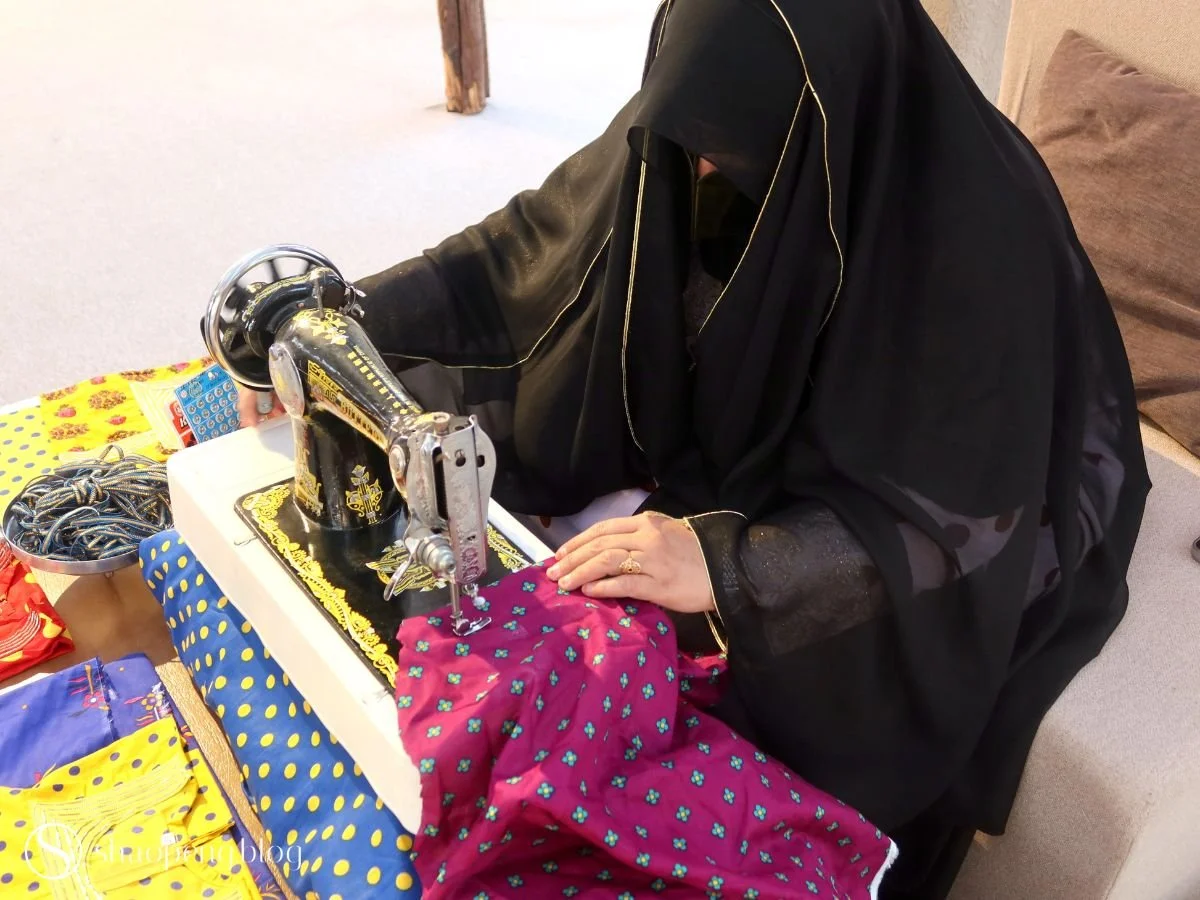
With steady hands and patience, an Emirati woman works at the sewing machine.
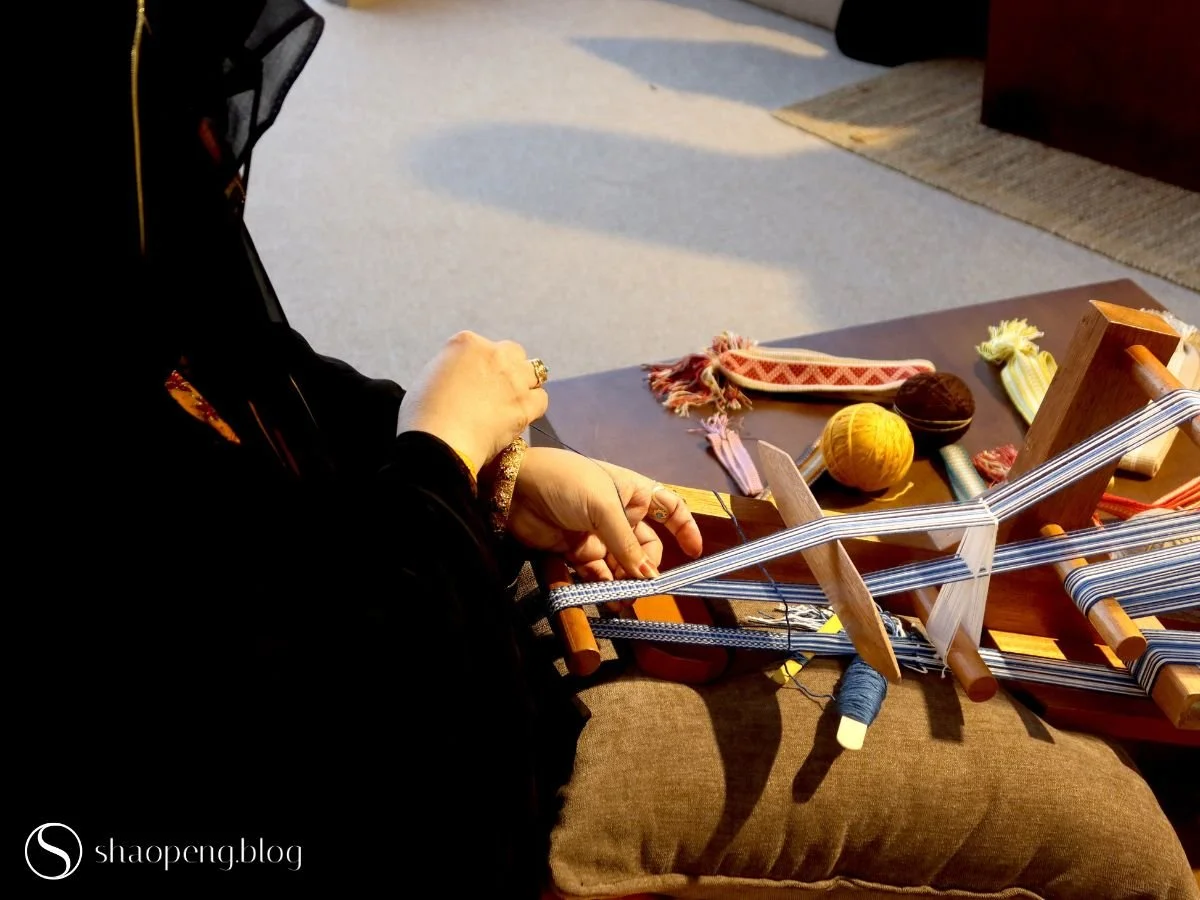
With its simple, geometric motifs, al sadu traces back to Bedouin traditions.
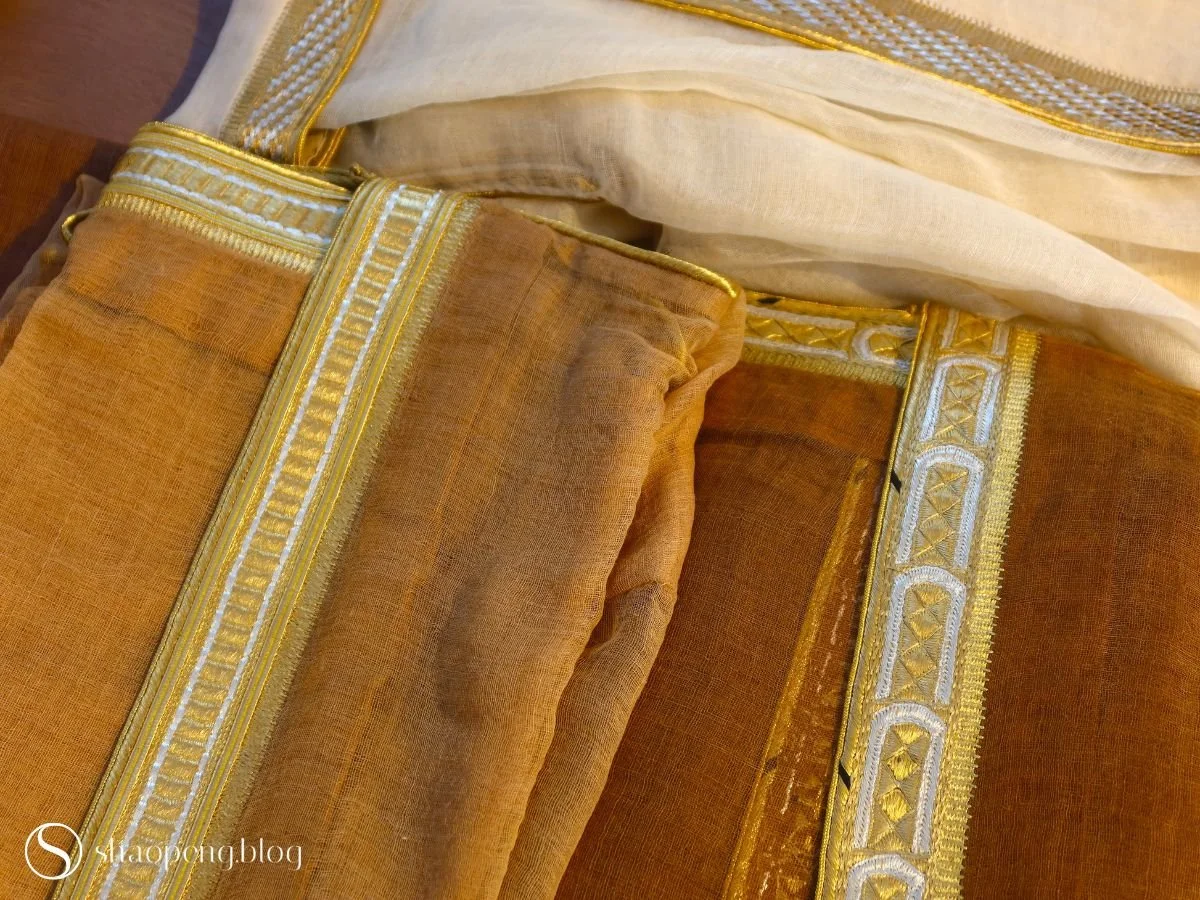
The intricate gold and silver embroidery work hints at the bisht’s opulent elegance
Visitors wishing to support local crafts can stop by the Productive Family Souq, located just beside the Weaving & Palm Crafts Pavilion, where small shops sell handmade goods produced by local artisans.
It’s worth noting that this modern souq mirrors the historic Souq Al Qattara just steps away, recreating the experience of shopping in a traditional marketplace. During the festival, more than a dozen traditional professions are said to come alive in the historic souq, from spice sellers and weavers to blacksmiths and barbers. But today, the souq is quiet.
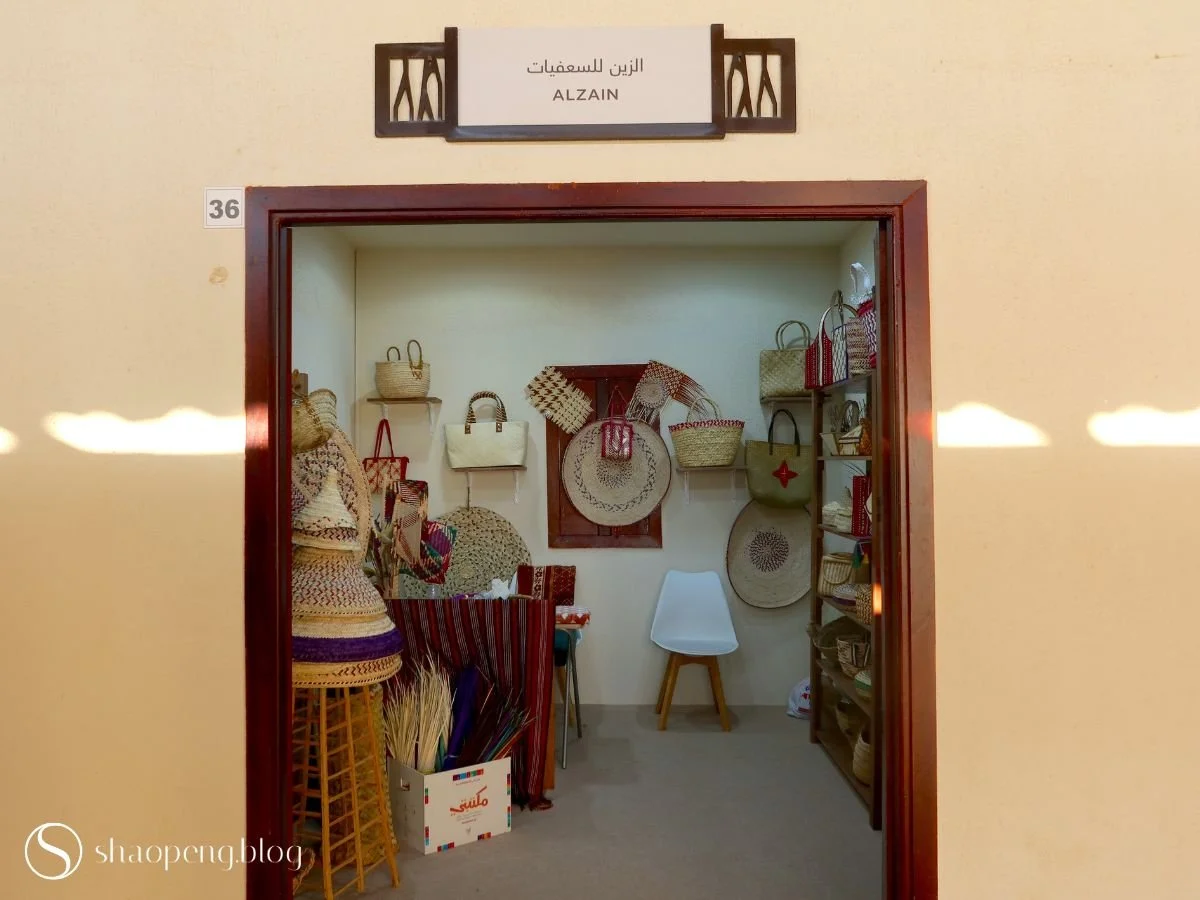
At the Productive Family Souq, a shop invites visitors into the world of al khoos.
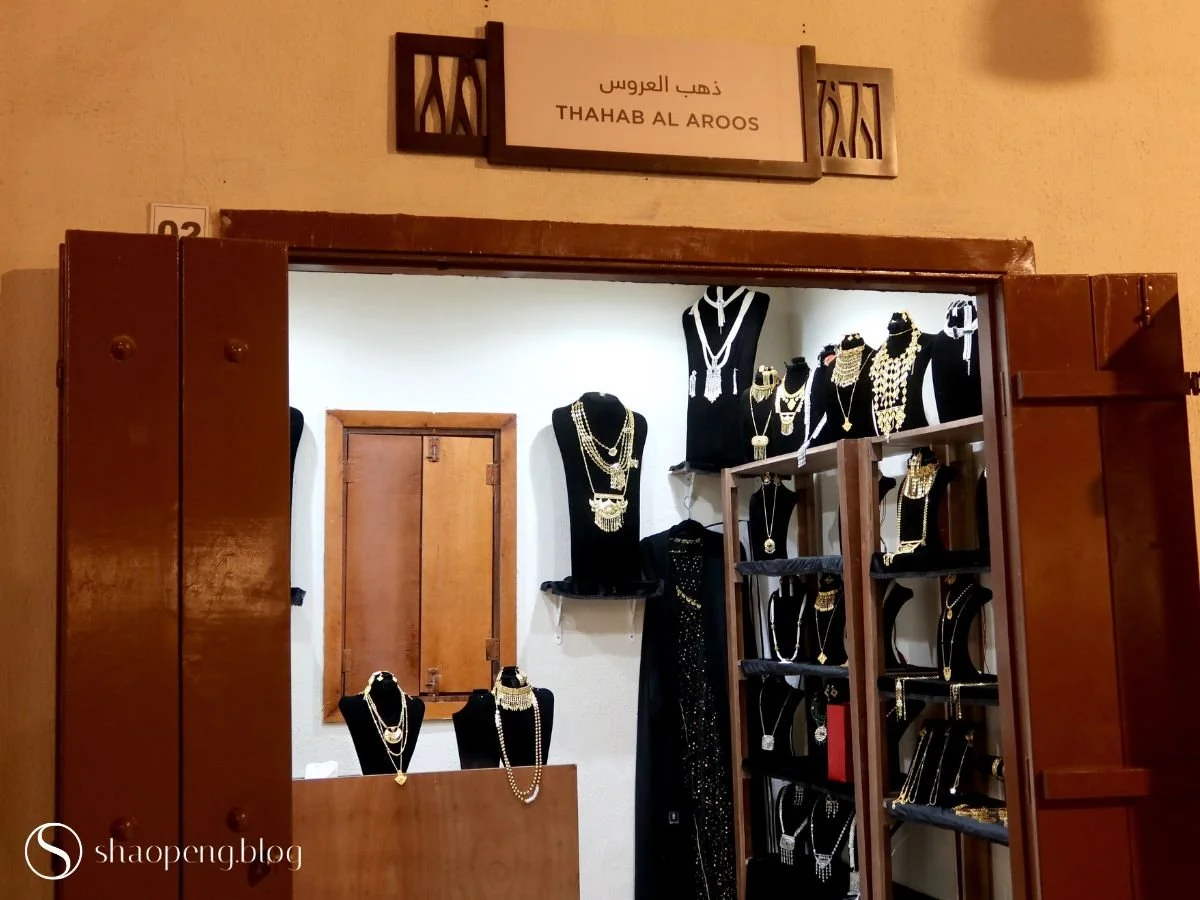
A wide selection of traditional Emirati jewellery awaits discerning buyers.
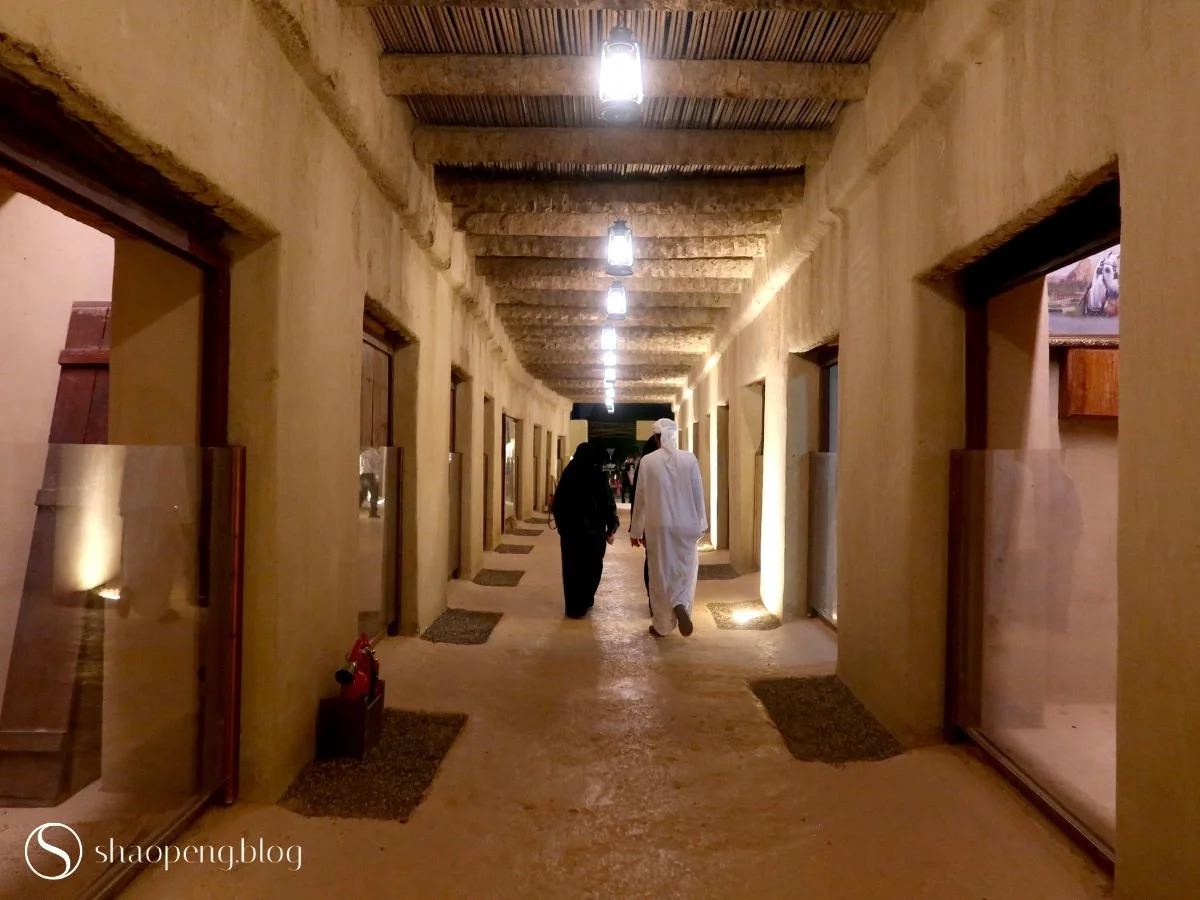
Wandering the historic alleys of Souq Al Qattara is a journey into memory and tradition.
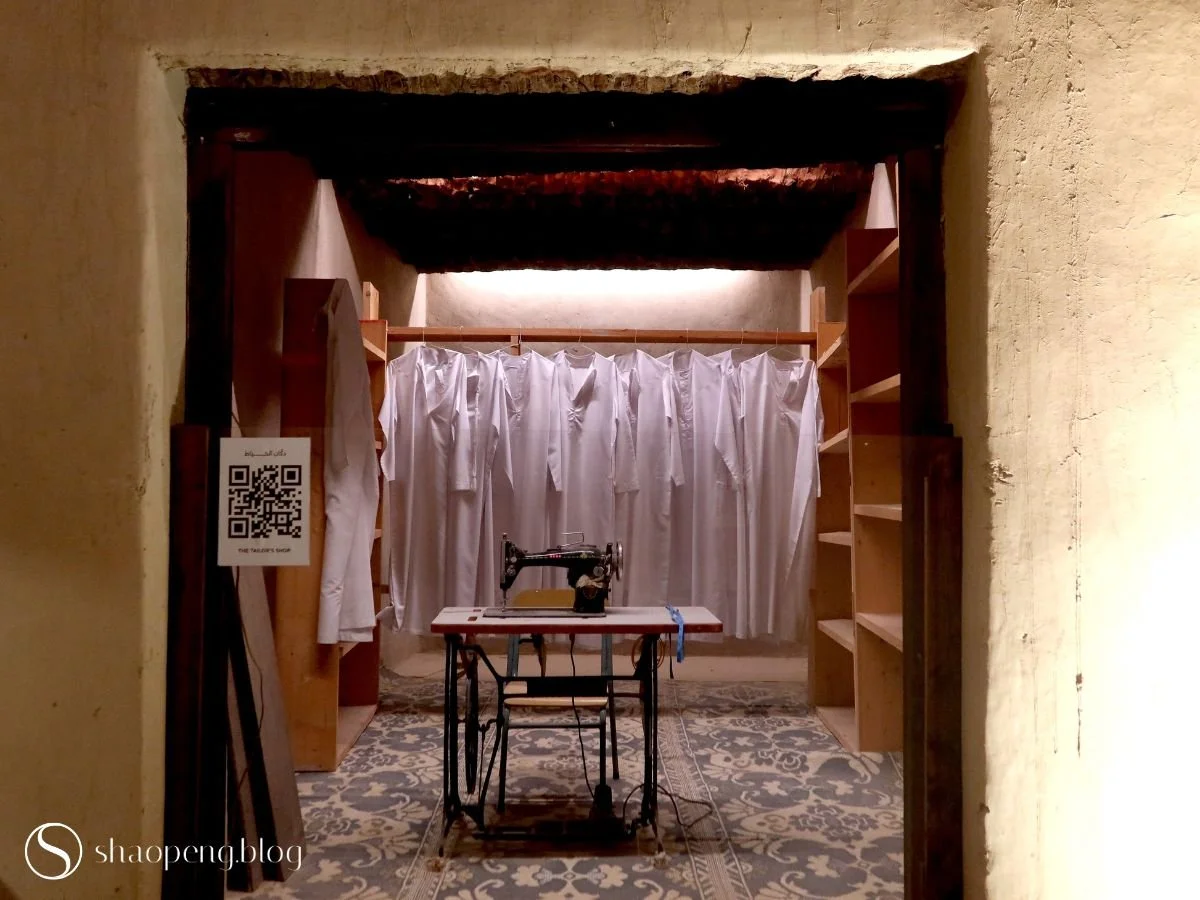
Inside Souq Al Qattara, an exhibit brings the past to life — in this case, a tailor’s shop.
On my way to visiting the Productive Family Souq, I encounter several men holding falcons perched on their left arms, their eyes gently covered. The sight brings back memories of my visit to Doha’s Falcon Souq earlier this year.
I ask one of them if I may try holding the falcon. He agrees, sliding his arm from the thick glove and gesturing for me to take his place. The falcon is far heavier than I imagined. After only a minute, my arm starts to shake, and I reluctantly return the precious creature to its owner.
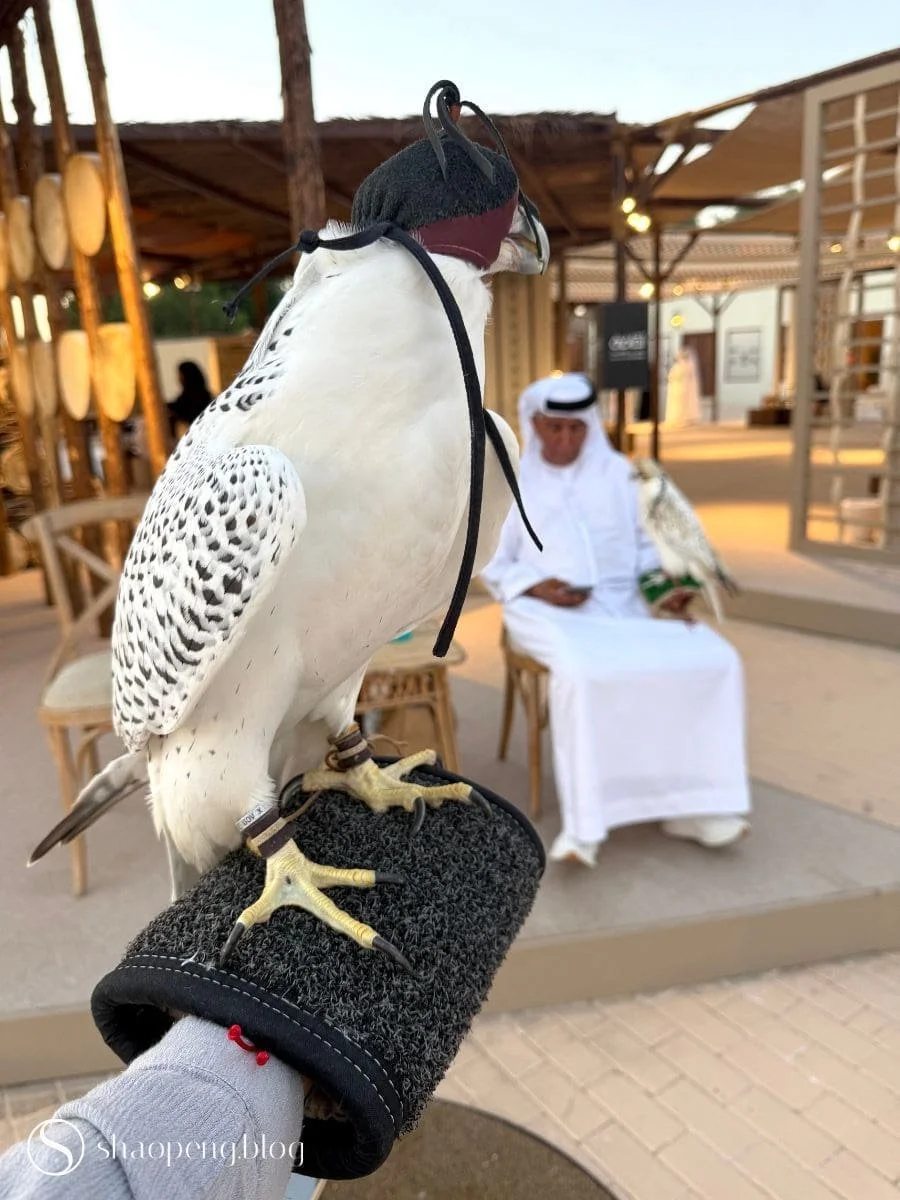
Experiencing falconry firsthand, with this majestic creature perched on my left arm.
One of the festival’s highlights is its rich performing arts program, which brings together al ayyala, al taghrouda, al razfa, and al wanna, along with concerts by Emirati musicians and oud players. In addition, visitors can wander through the exhibition at the Al Qattara Arts Centre, taste traditional dishes made by local families, or take children to the Games Arena, where traditional pastimes bind families and community together.
What surprises me most, though, is how few foreign visitors I encounter — this festival in Al Ain feels ultra-local. Having attended many heritage festivals across the Emirates, I find Al Ain’s Traditional Handicrafts Festival to be the most immersive and the one where I have the most authentic experience of Emirati heritage and traditions. Perhaps this is why I decided to write this article: for the curious wanderers who, insha’Allah, will find their way here too.
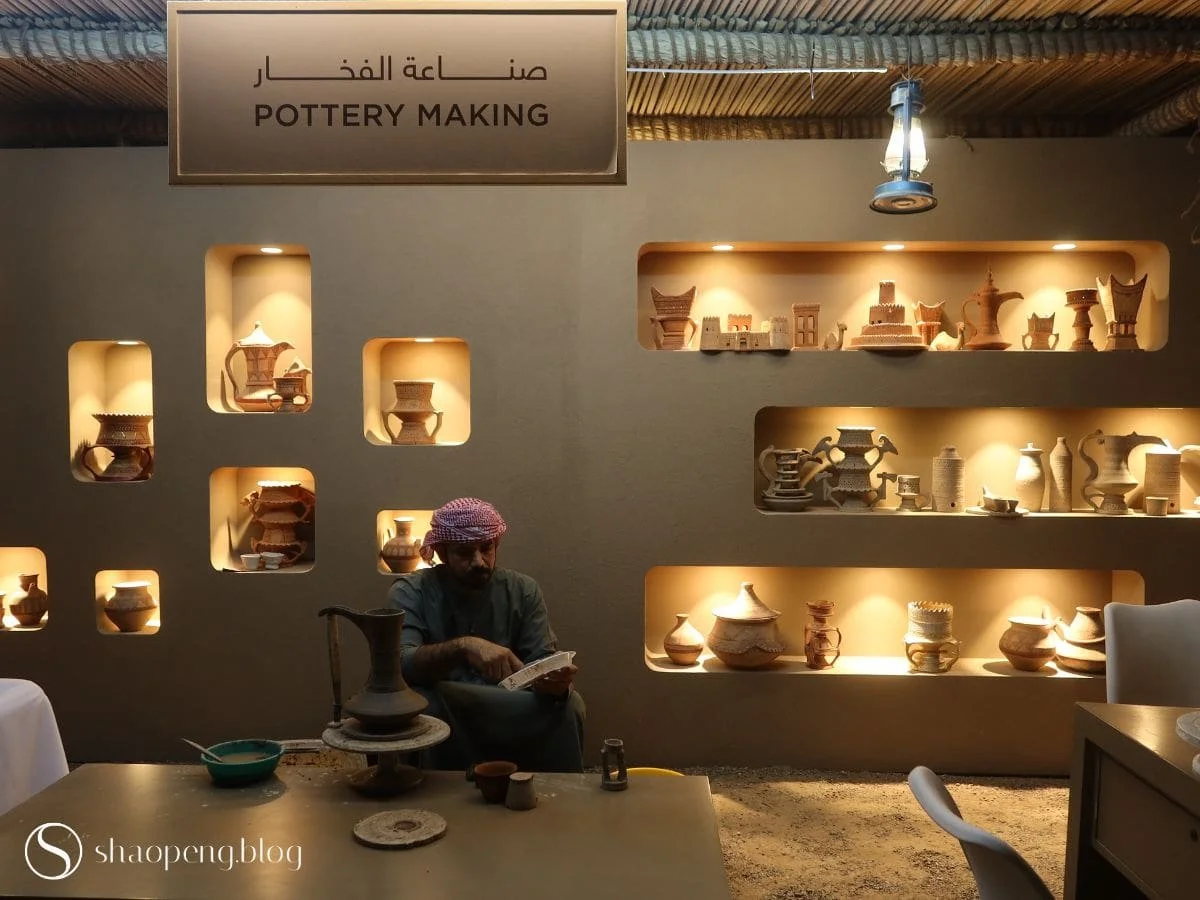
One of the oldest Emirati traditions, pottery making has long been a part of everyday life.
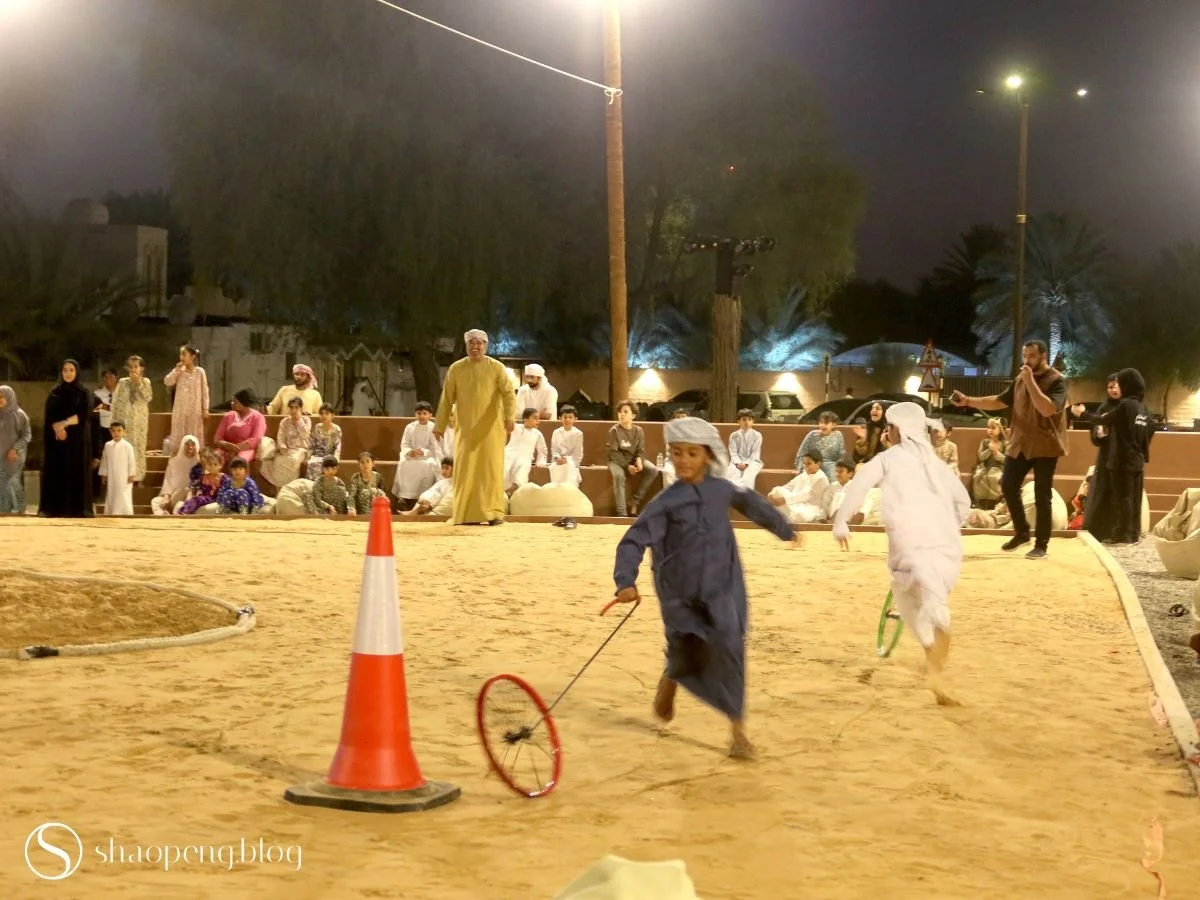
At the Game Arena, children compete in al diyala, the traditional Emirati pastime of wheel-running.
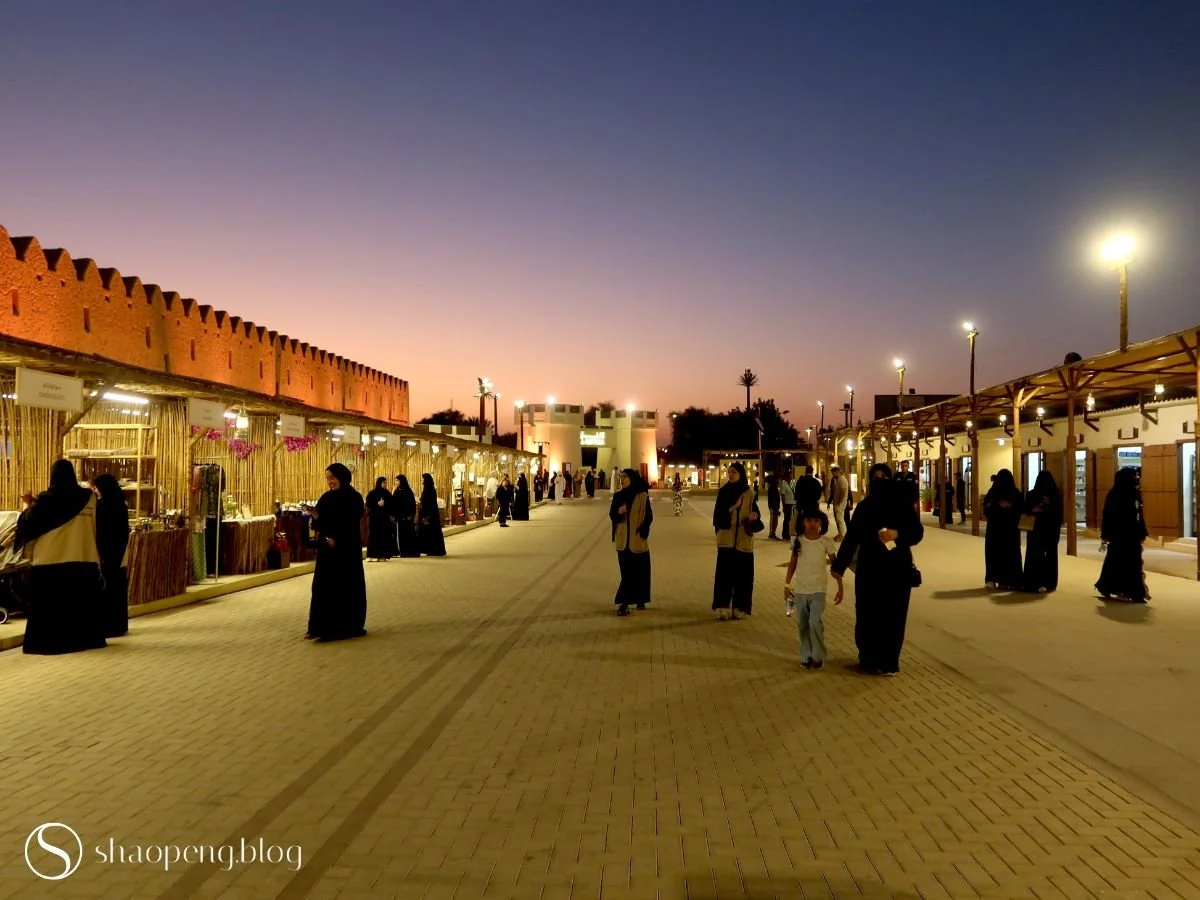
As the sun sets, locals begin to gather at the Traditional Handicrafts Festival in Al Ain.
Reference:
Al Marri, R., & Caielli, I. (2024). UAE 101: Stories and Cultural Learnings. House 101.
The 11th Traditional Handicrafts Festival returns to Souq Al Qattara in Al Ain from November 1 to 20, 2025.