
Wander in AlUla: Jabal Ikmah
In a canyon in AlUla, a library with no roof, no shelves, and no librarian has stood open for over two thousand years.
Sense of Wander: ★★★★☆
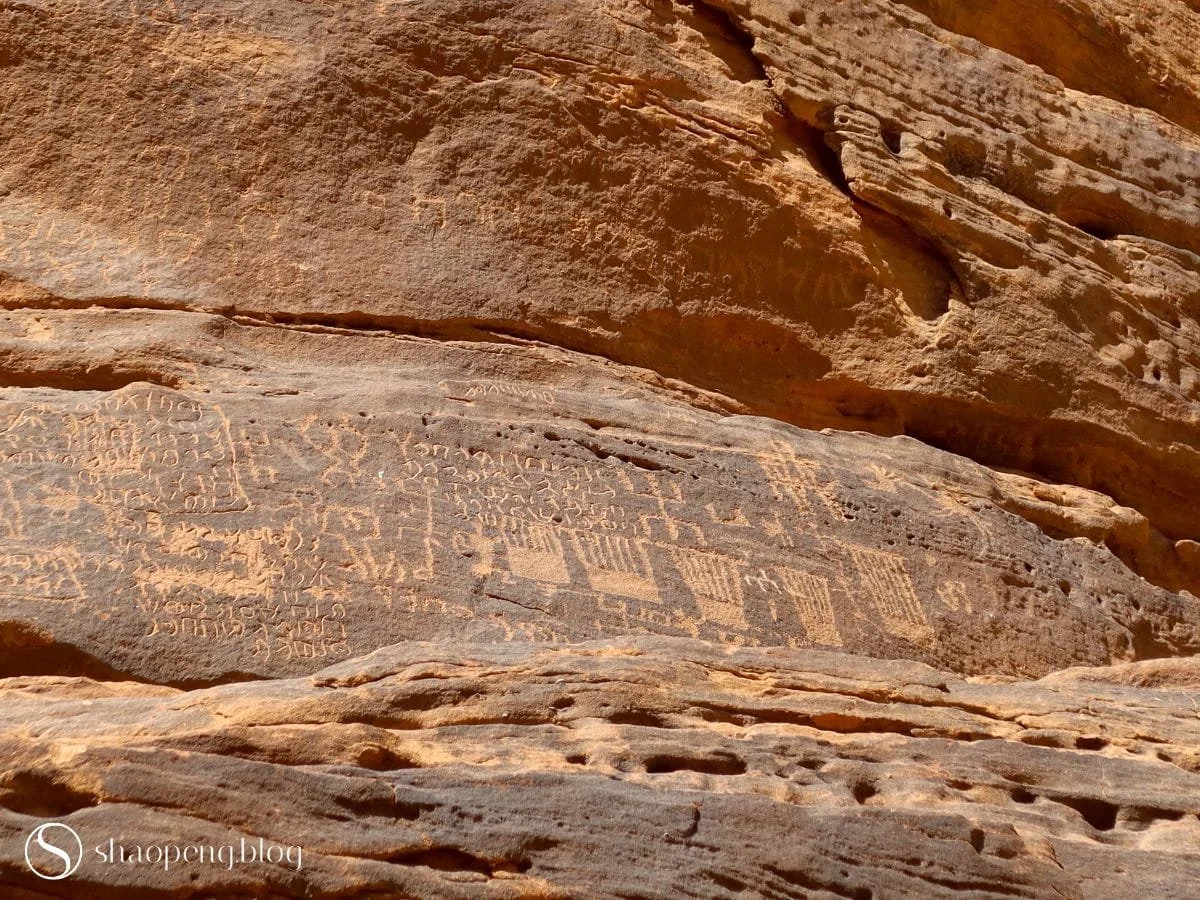
At Jabal Ikmah, these curious upside-down comb-like motifs are believed to represent a type of musical instrument resembling a harp or lyre.
ALULA, Saudi Arabia — Most places keep their history in books, filed neatly in the climate-controlled darkness of state archives. Jabal Ikmah, by contrast, keeps its history out in the open — carved into sandstone and left to weather beneath the same sun that once beat down on the hands that carved it.
Locals call it an “open-air library.” That should have prepared me. It didn’t — not until I find myself standing at the mouth of a canyon, my eyes wandering across its sandstone walls, trying to comprehend that I’m looking at the world’s largest known concentration of Dadanitic and Lihyanite inscriptions: a written record dating back to the second half of the first millennium BCE.
Near the entrance stands a stone bearing the UNESCO emblem, marking the site’s inscription on the Memory of the World Register in 2023 under the name Arabian Chronicles in Stone: Jabal Ikmah.
Yet, standing in the heat, surrounded by a landscape so bare it seems to have shed everything unnecessary, it’s hard to imagine that these rocks could hold so many stories. Geologists will tell you that the jagged canyon walls predate every inscription carved into them; they’re shaped by tectonic movements linked to the opening of the Red Sea some 30 million years ago, long before anyone arrived with a chisel and something to say.
We follow our guide along a sandy path into the canyon, where towering sandstone spires offer moments of precious shade — a welcome relief beneath the relentless desert sun.
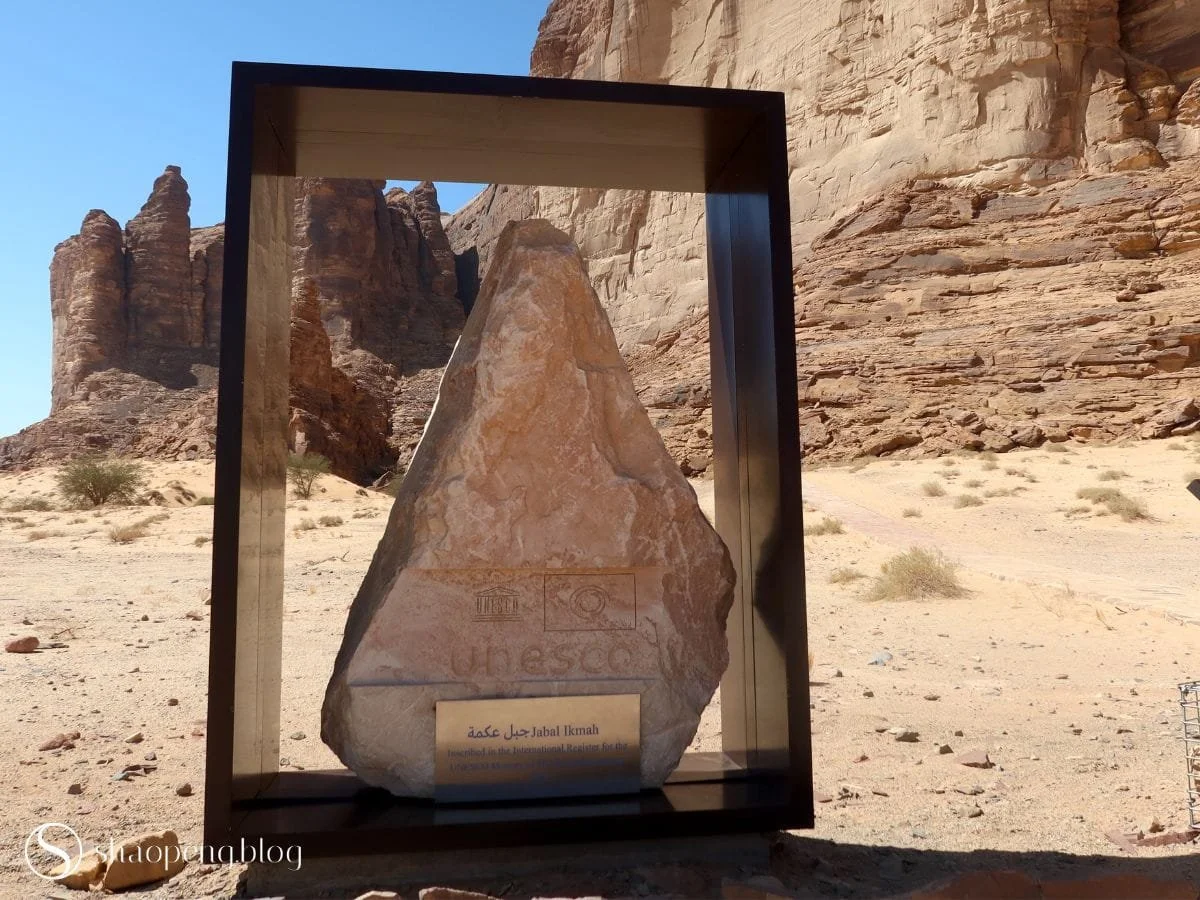
A boulder bearing the UNESCO logo welcomes visitors at the entrance to Jabal Ikmah.
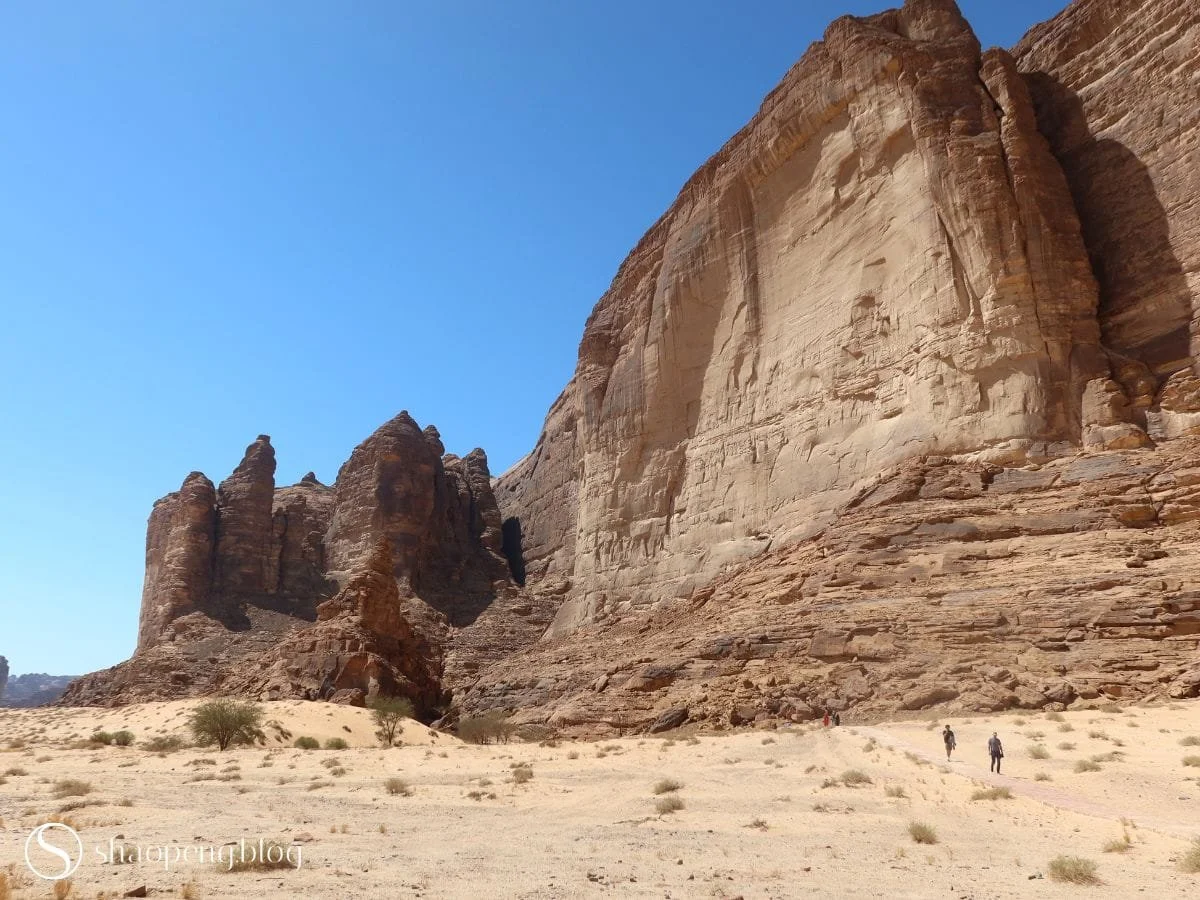
Walking the path to Jabal Ikmah feels like making your way through the aisle of a library.
At first, the writing is hidden in plain sight. The sandstone is rough and pitted, revealing little, and for the first few minutes I wander with unfocused eyes, seeing nothing but rock. Then, with a little guidance, the first inscription begins to emerge. Then another. And another. It’s as if the script has been waiting patiently for permission to reveal itself, holding its secrets for two thousand years.
Nearly 300 inscriptions remain here, most written in Dadanitic, a script that, like its cousins across the ancient Semitic world, leaves its vowels unwritten. Scholars must still supply the missing sounds between the consonants, meaning every reading is, in one way or another, a balance between knowledge and uncertainty.
I expect to find royal proclamations. Instead, I discover something closer to a sacred archive that contains records of farming, faith, ritual, and remembrance. Prayers for good harvests. Prayers for the health of family and loved ones. Among them is a record of tahal, a tax paid by farmers to the temple in dates and grain. These offerings were accompanied by prayers for divine favour and a fruitful harvest, their hopes etched into the mountainside so they might outlast the season.
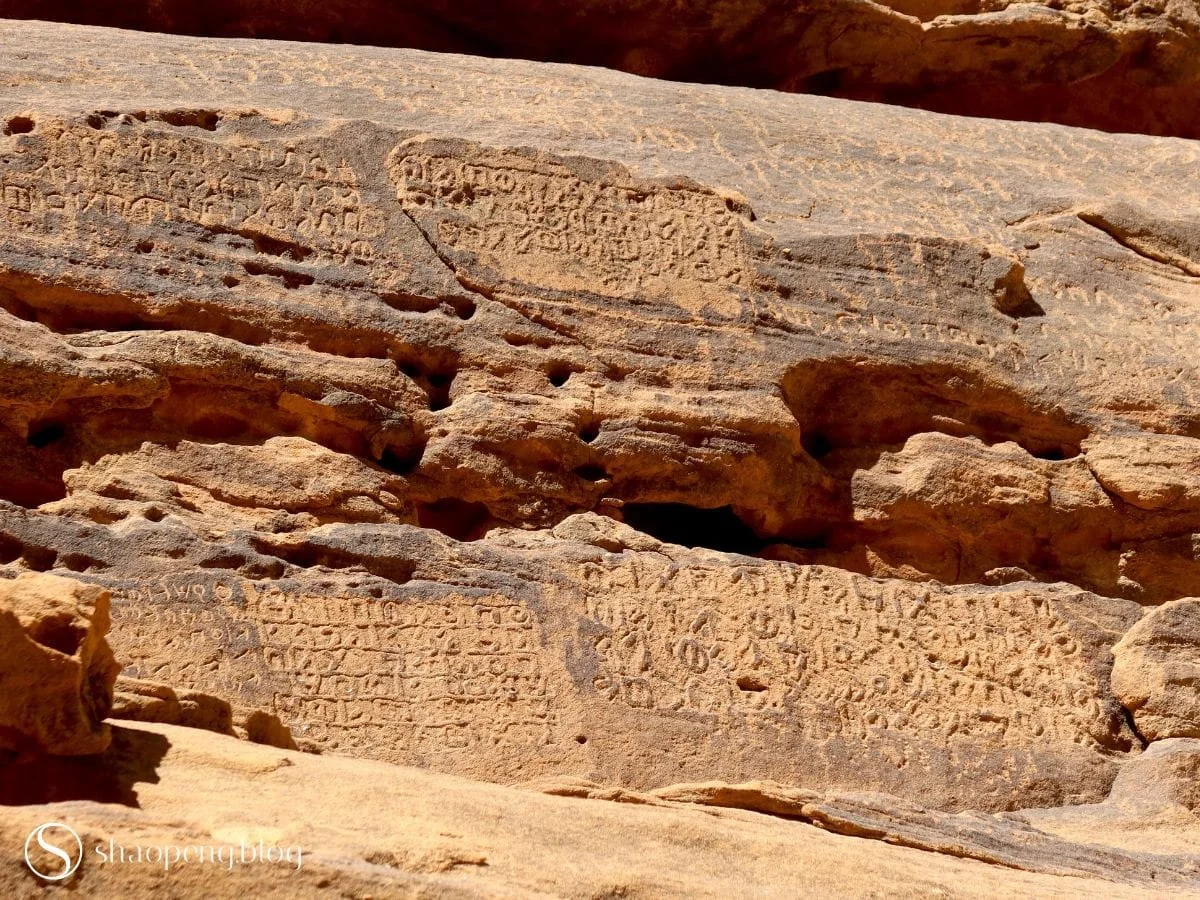
Some of the inscriptions are carved in low relief.
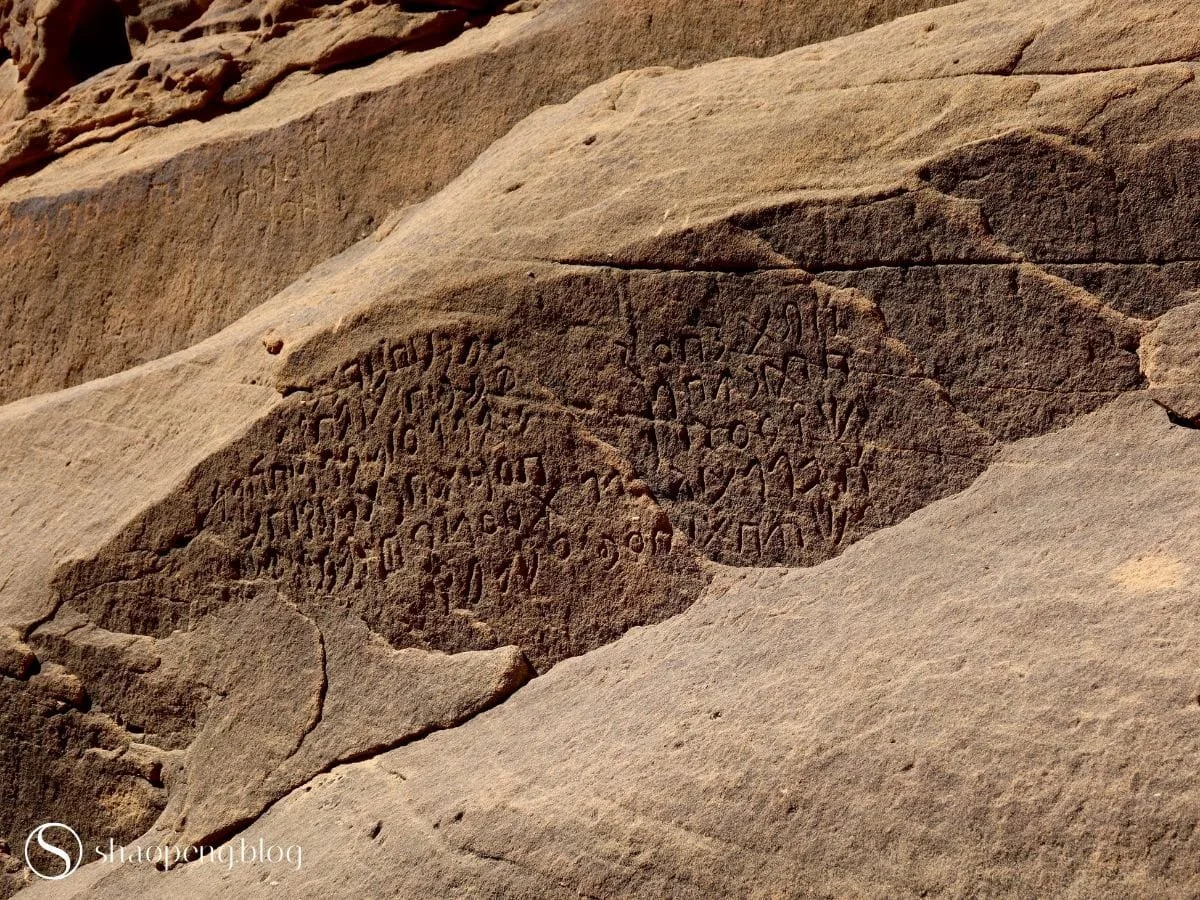
It takes a trained eye to spot the inscriptions carved into the sandstone.
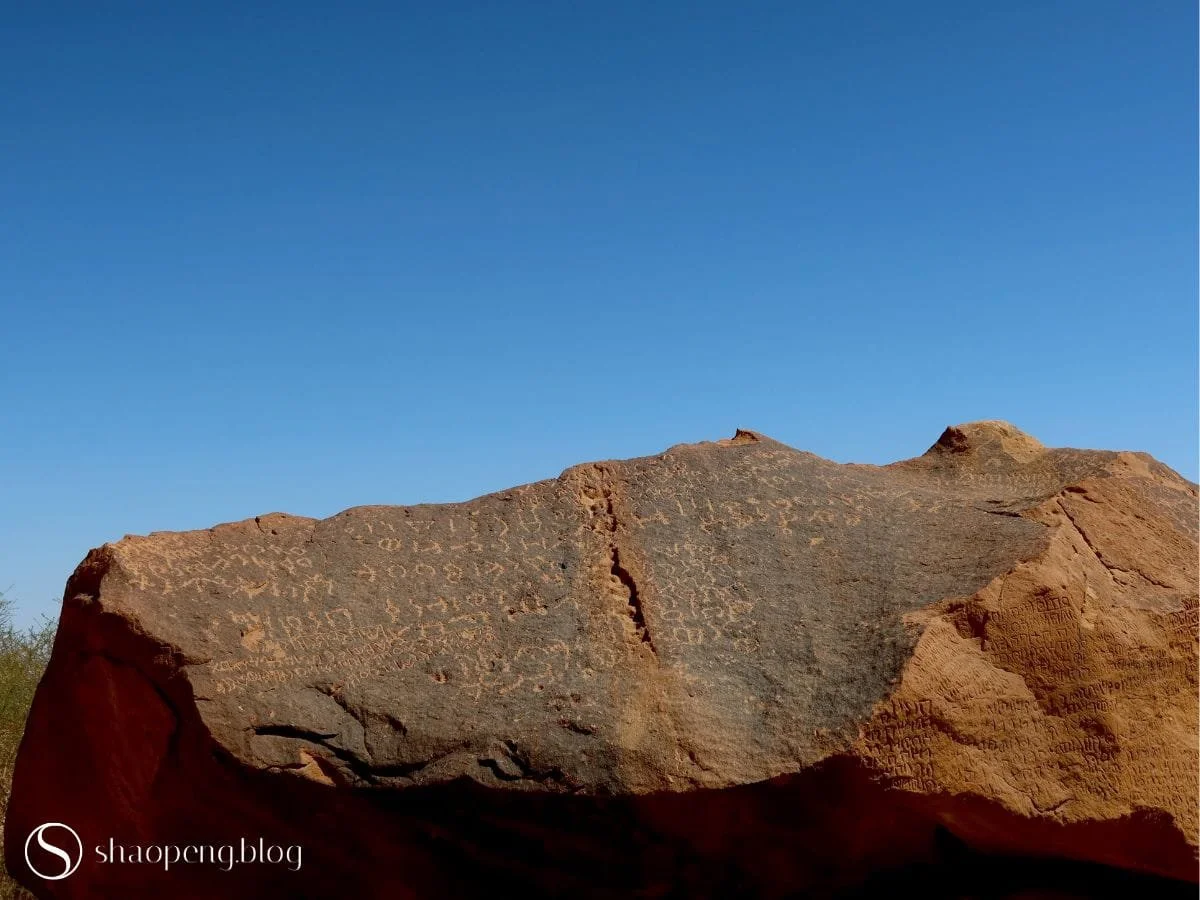
The sandstone bears inscriptions in multiple languages, reflecting Jabal Ikmah’s role as a crossroads of cultures.
Not everyone who left their trace here was a scribe or a priest. Some were travellers — pilgrims and merchants pausing along the caravan routes, leaving offerings to Dhu Ghaybah, the chief deity of the Lihyanite kingdom, and asking for safe passage before continuing into whatever lay ahead. These inscriptions transform the canyon into both a crossroads and a sanctuary.
The languages accumulate the longer you look: mostly Dadanitic, but also Aramaic, Thamudic, Minaean, Nabataean, Greek, Latin, and — this is the part that fascinates me — early Arabic. I have been practicing Arabic calligraphy for some time now, and standing before these scripts evokes an unexpected sense of familiarity. Every letter I have shaped with a reed pen seems to carry a lineage running through these ancient marks.
Writing has always been one of humanity’s most powerful ways of preserving memory. It allows people to leave behind their voices, beliefs, and experiences long after they are gone. Here, that transformation is visible in stone, though you may not be close enough to run your fingers over it.
What makes the site even more remarkable is that recent surveys have revealed rock art and stone tool scatters that predate the inscriptions themselves: evidence that people were leaving traces here long before they had a written language. The “library” is older than its oldest books.
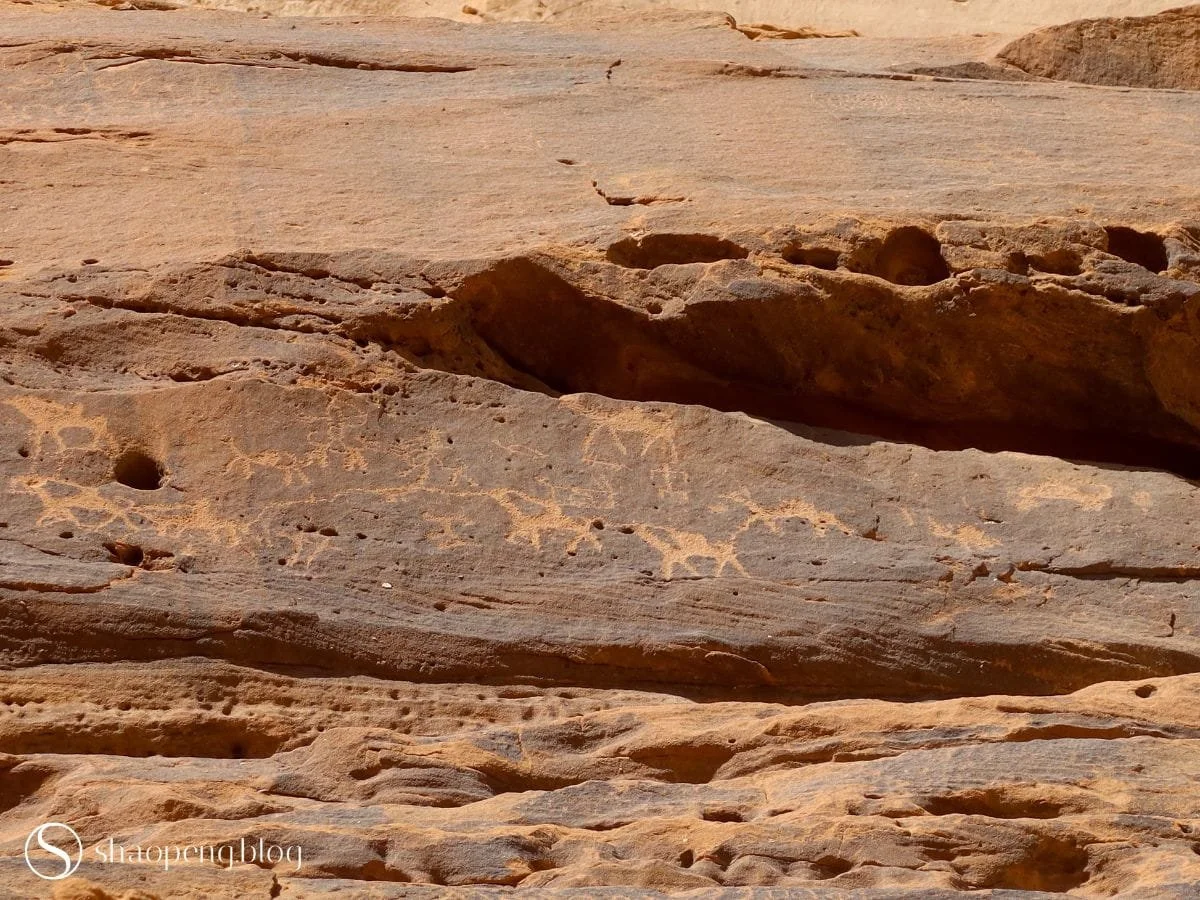
Depictions of camels make Jabal Ikmah’s rock art truly unique.
Pages yellow as insects nibble away at their surfaces, and ink fades. The chronicles of any library begin their battle against time from the moment they are written, and it’s easy to assume that stone would fare better, being harder and more enduring. But stone has its own enemies: winds that never stop scouring its surface, floods that come rarely but relentless when they arrive, and heat that expands and cracks what it touches, year after year. The fact that any of these inscriptions remain legible at all begins to feel like a miracle.
Perhaps sensing that visitors might leave frustrated, having spent time squinting at messages they will never fully decipher, Jabal Ikmah offers one final gift before you go: the chance to carve something of your own. I know I can’t let that opportunity slip away.
I begin searching for my rock — one that is not too heavy, knowing it will travel with me through the rest of my journey across the Arab world, but large enough to give a chisel something to work with.
Once I find my stone, I copy my name onto its surface in pencil, letter by letter, matching each stroke to the Dadanitic alphabet chart provided to us. I am professionally trained in precious-metal engraving and gemstone faceting, and I have spent enough time with tools in hand to assume this would come naturally. Surprisingly, though, those skills do not translate easily to the stone of Jabal Ikmah. The rock resists every hammer strike, surrendering barely a scratch at a time. I can’t tell whether it is the stone’s stubbornness or the desert sun slowly wearing down my patience.
The clock is ticking. Reluctantly, I turn to a staff member for help in finishing what I have started. I leave with my name in Dadanitic carved deeply enough to survive the journey home, and perhaps a few more years beyond it.
I leave Jabal Ikmah with that rough souvenir in my hand and a smile on my face, a little sun-dazed from the desert heat. I may not fully understand the words carved into the stone, but somehow, their meaning feels within reach.
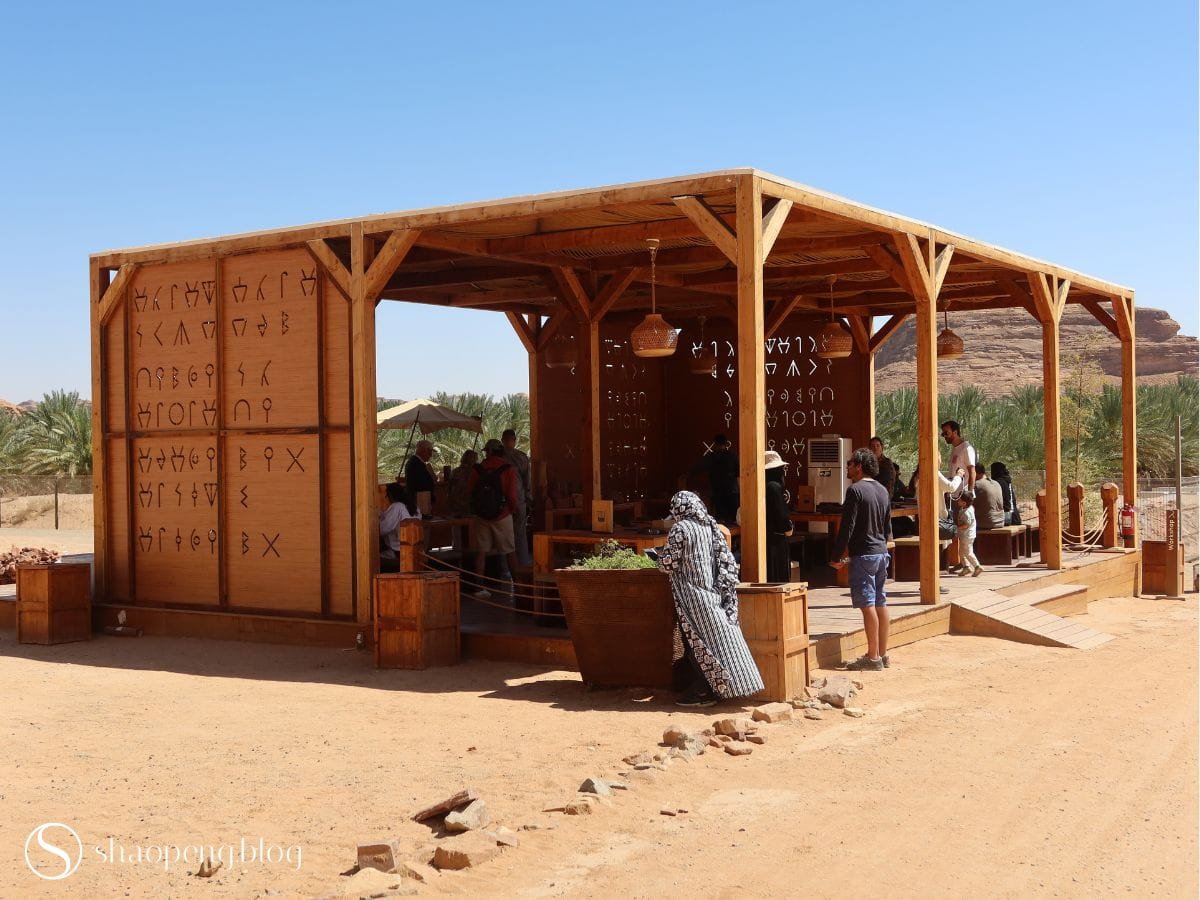
Carving station at Jabal Ikmah.
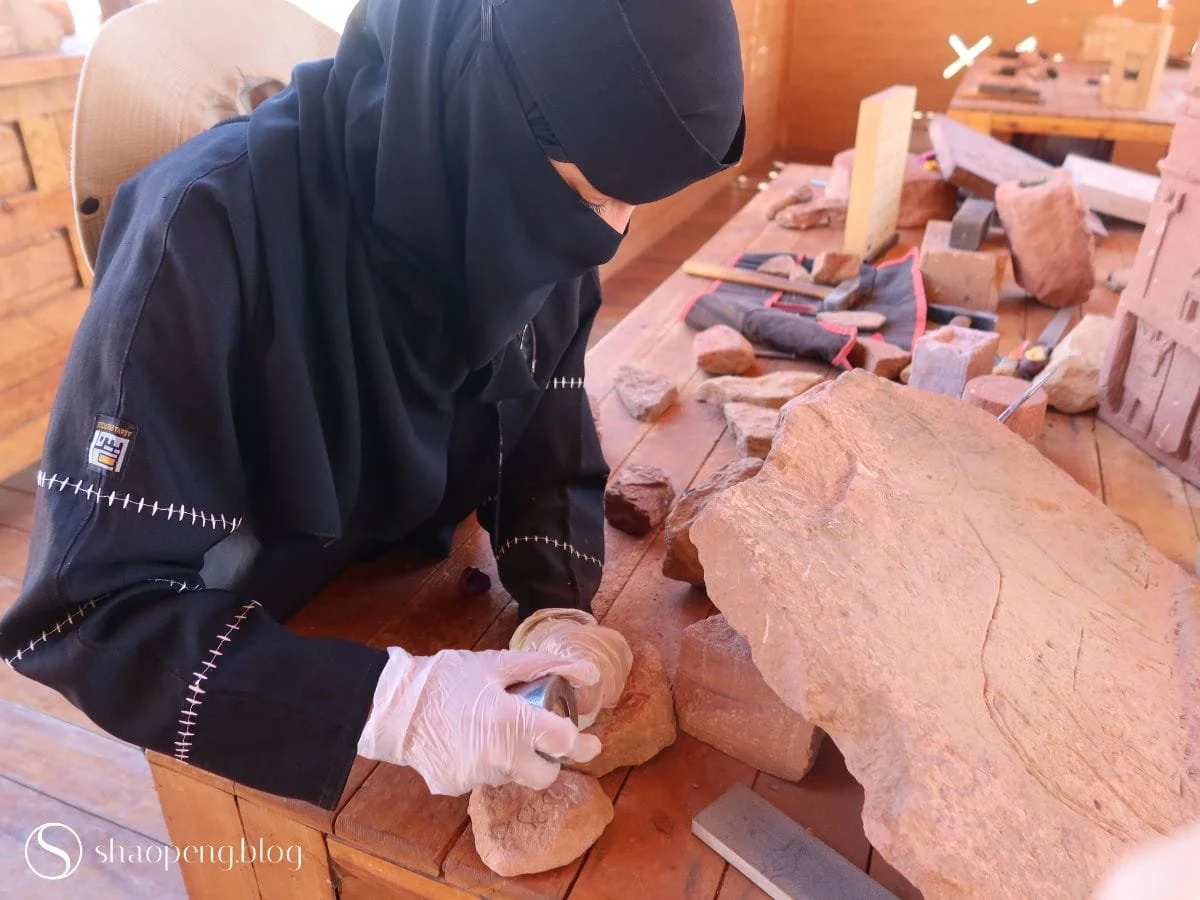
A staff member demonstrates the ancient art of rock carving at Jabal Ikmah.
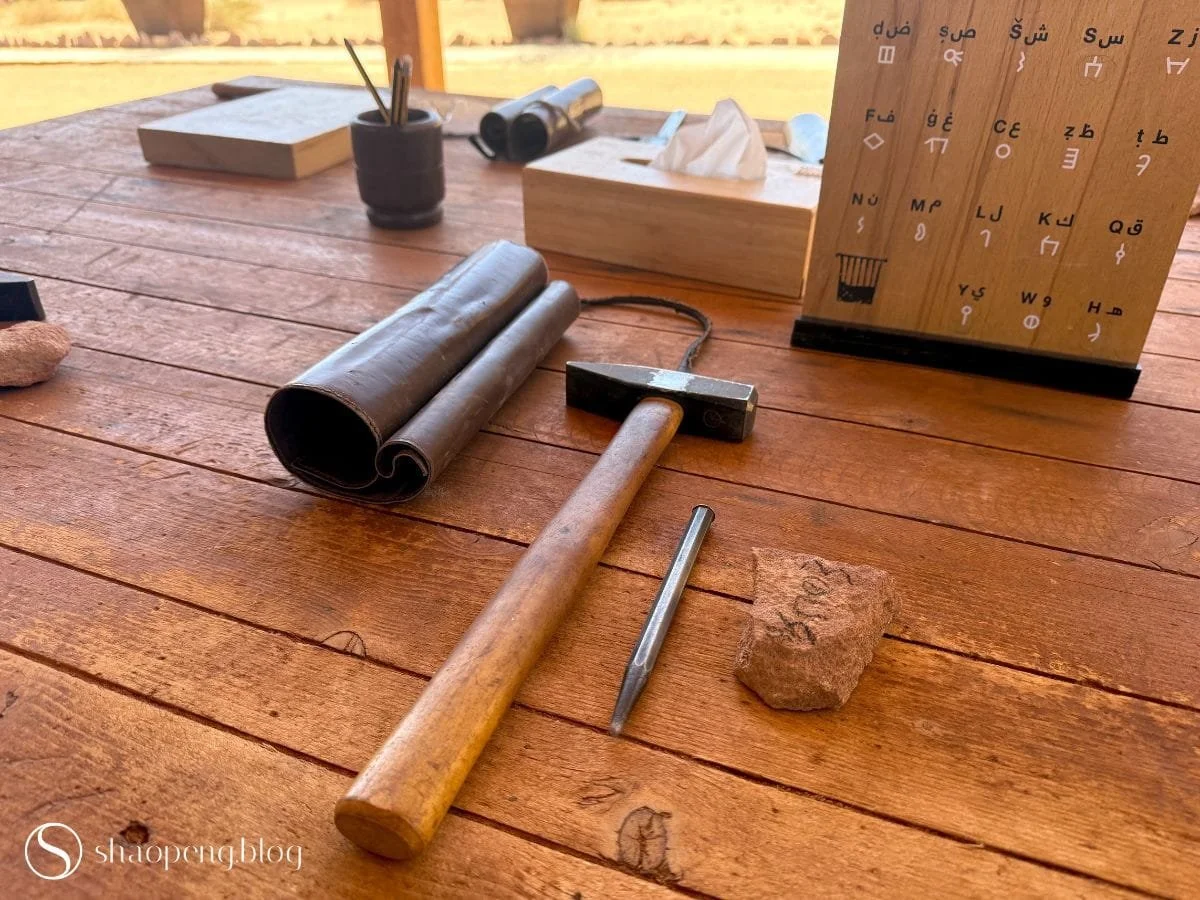
Each visitor is provided with a hammer and chisel to try their hand at carving.
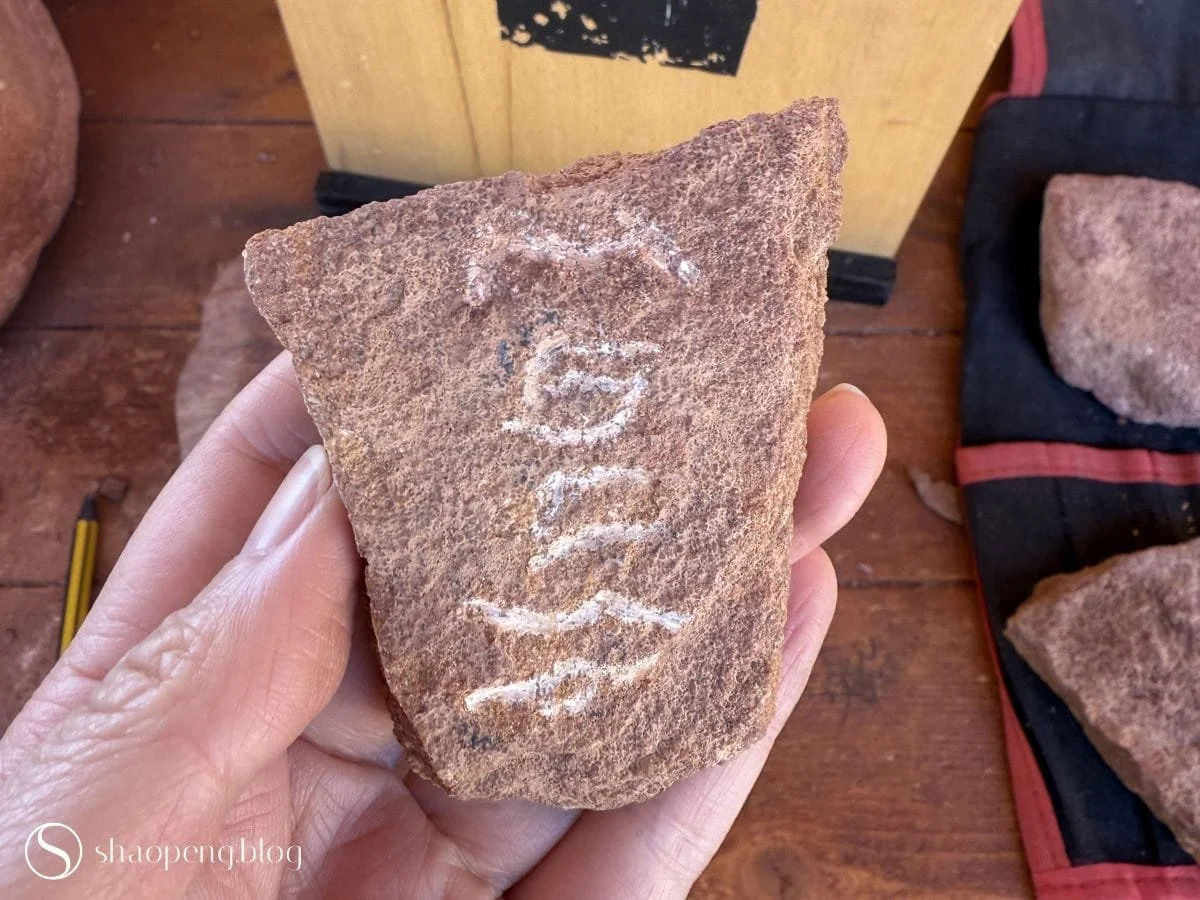
My name “Shaopeng” carved in Dadanitic script.
Wanderer’s tip — Visit to Jabal Ikmah is only possible through a pre-booked “Dadan & Jabal Ikmah Tour,” available via Experience AlUla or at any of its visitor centres.