
Wander in AlUla: Dadan
In a desert valley where camels once carried fortunes in frankincense and myrrh, lion-guarded tombs still watch over an ancient city that time and archaeologists have only begun to uncover.
Sense of Wander: ★★★☆☆
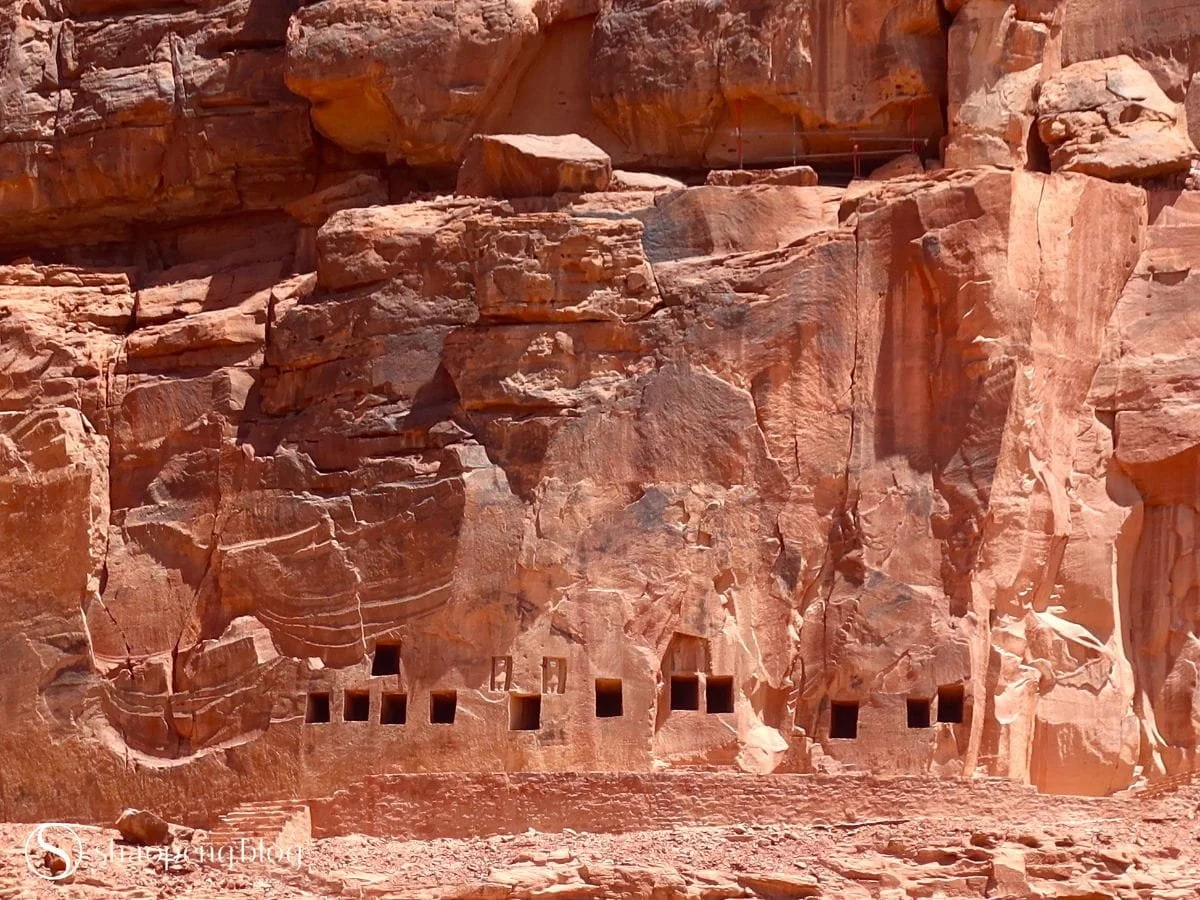
These tombs carved into the surface of the cliffs are among the most remarkable remains of Dadan.
ALULA, Saudi Arabia — The desert can be harsh, but where there’s water, people find a way to stay and, sometimes, to thrive. In AlUla’s case, its oasis gave rise to Dadan, one of the most powerful cities on the Arabian Peninsula in the 1st millennium BCE.
AlUla had it all: fresh water, fertile soil, and easy passage through the mountains. It drew people in for more than trade. Some came to worship, others to make a living, and many perhaps simply to settle and call it home.
But it was the camel that changed everything. Its domestication opened up new overland routes, allowing frankincense and myrrh from southern Arabia to travel north through the peninsula into the Levant, Egypt, and the Mediterranean, all along a network that would come to be known as the Incense Road. A caravan might spend months crossing the sand just to reach Dadan, where its cargo changed hands and moved on. The tolls Dadan charged along the way became the foundation of centuries of prosperity.
New goods brought new ideas, and Dadan absorbed them like the oasis absorbed rain. Writing was one of them. Thousands of inscriptions survive here in a local script and language known as Dadanitic. One historian has even suggested, from the shapes of the letters, that the script may have originally been designed for writing in ink on papyrus or potsherds rather than for carving into stone, meaning most of what Dadan actually wrote down may simply not have survived.
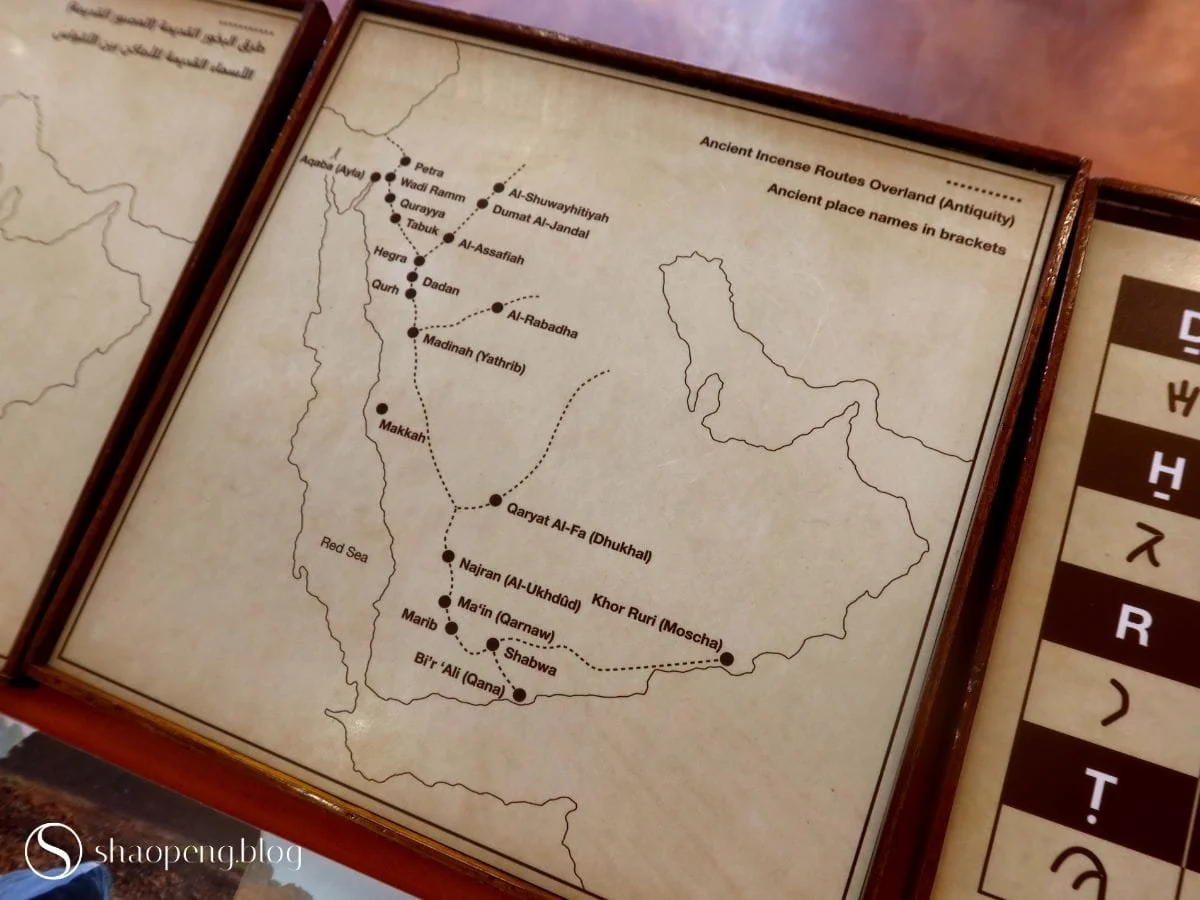
A map showing Dadan’s strategic position along the ancient Incense Road.
Recent excavation seasons have pushed the story back even further than I expected. I’ve come here chasing the sight of lion-guarded tombs, but found out that this oasis wasn’t only home to Dadan’s own high civilisation. A stone axe uncovered nearby suggests human occupation in the AlUla region stretches back more than 200,000 years, long before anyone was carving lions into cliffs.
The archaeological record puts Dadan’s rise earlier than most travellers assume. The site may have been settled as far back as the late 3rd or early 2nd millennium BCE, though it truly flourished during the 1st millennium BCE as the Incense Road trade matured.
Dadan first served as the capital of the Kingdom of Dadan. Then came Babylon. The king Nabonidus invaded in the 6th century BCE and, by his own account, killed Dadan’s king and occupied the land. What followed wasn’t collapse but succession.
Sometime in the 5th century BCE, control passed to the kings of the tribe of Lihyan, who ruled the region for generations afterward. The culture, remarkably, didn’t seem to have been interrupted. Dadanitic kept being written, the same gods kept being worshipped, and the same trade kept flowing. At its height, the Lihyanite kingdom was no minor outpost. It is said to have stretched from Medina in the south to Aqaba, in modern-day Jordan, in the north, making it one of the largest powers in the region at the time.
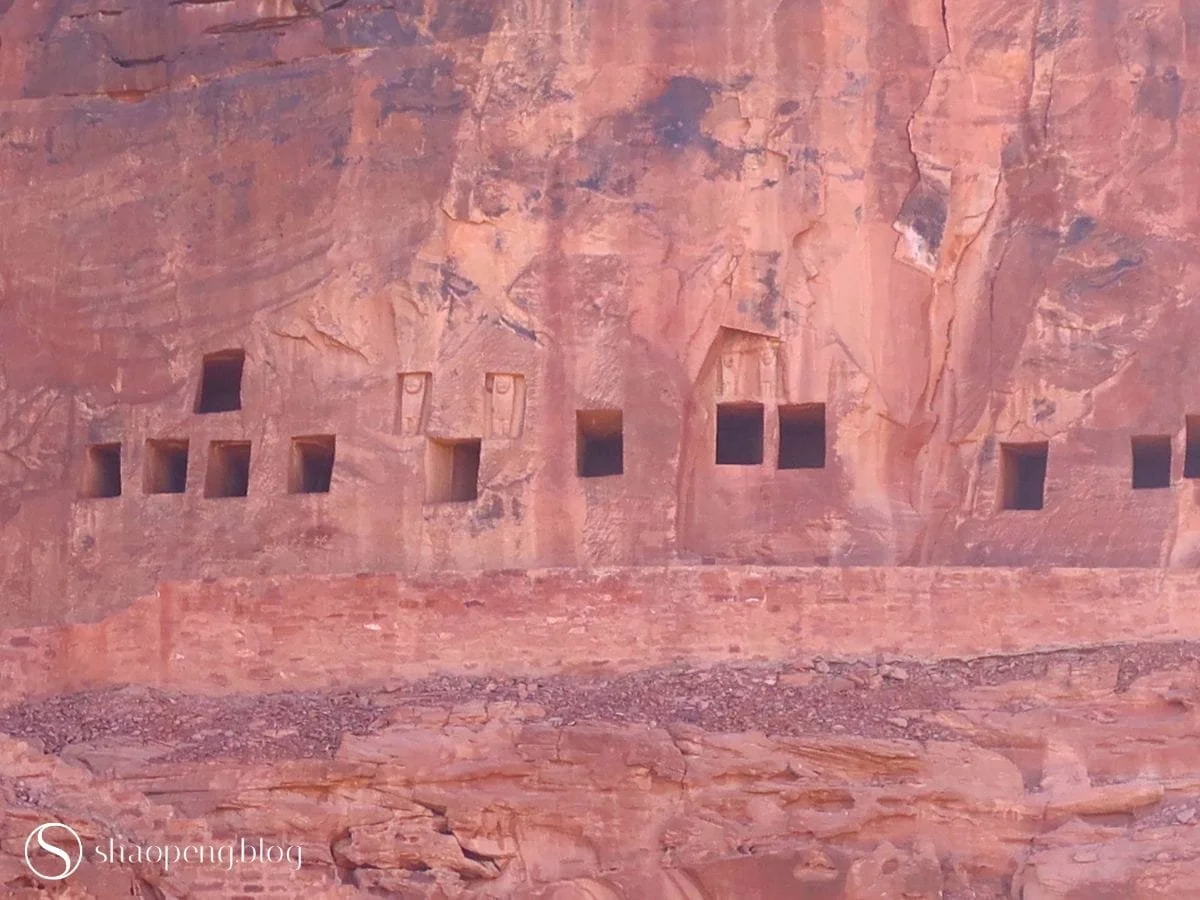
Pairs of lions can be seen guarding the entrances of Dadan’s tombs.
You arrive at Dadan and the first thing you encounter is this: a sandstone cliff face tanned reddish brown, the colour deepening toward masala chai at the hour the sun starts shining across it. Cut into the rock, roughly 50 metres up, are a row of rectangular niches. They are tombs more than 2,000 years old.
The famous ones are the Lion Tombs, named for the pairs of lion sculptures carved in relief on either side of the entrances, stylized almost to the point of abstraction. They’re believed to guard the resting places of Dadan’s elite, possibly royalty. Look further along the cliff face and you’ll notice tombs positioned much closer to the ground. Their humbler position seems to reflect the social rank of whoever was laid to rest inside.
Before you know it, a short bus ride carries you from the tombs to the heart of the ancient city itself. Here is where Dadan’s civic and spiritual life once centred: the remains of a grand temple dedicated to Dhu Ghaybah, the chief god of both the Dadan and Lihyan kingdoms.
In an oasis city, it makes complete sense that the chief deity presided over water, agriculture, and fertility. One of the site’s more startling finds is Mahlab al Naqah, a huge basin hewn from a single stone block, large enough to hold around 26 cubic metres of water, almost certainly used in religious or ceremonial rites.
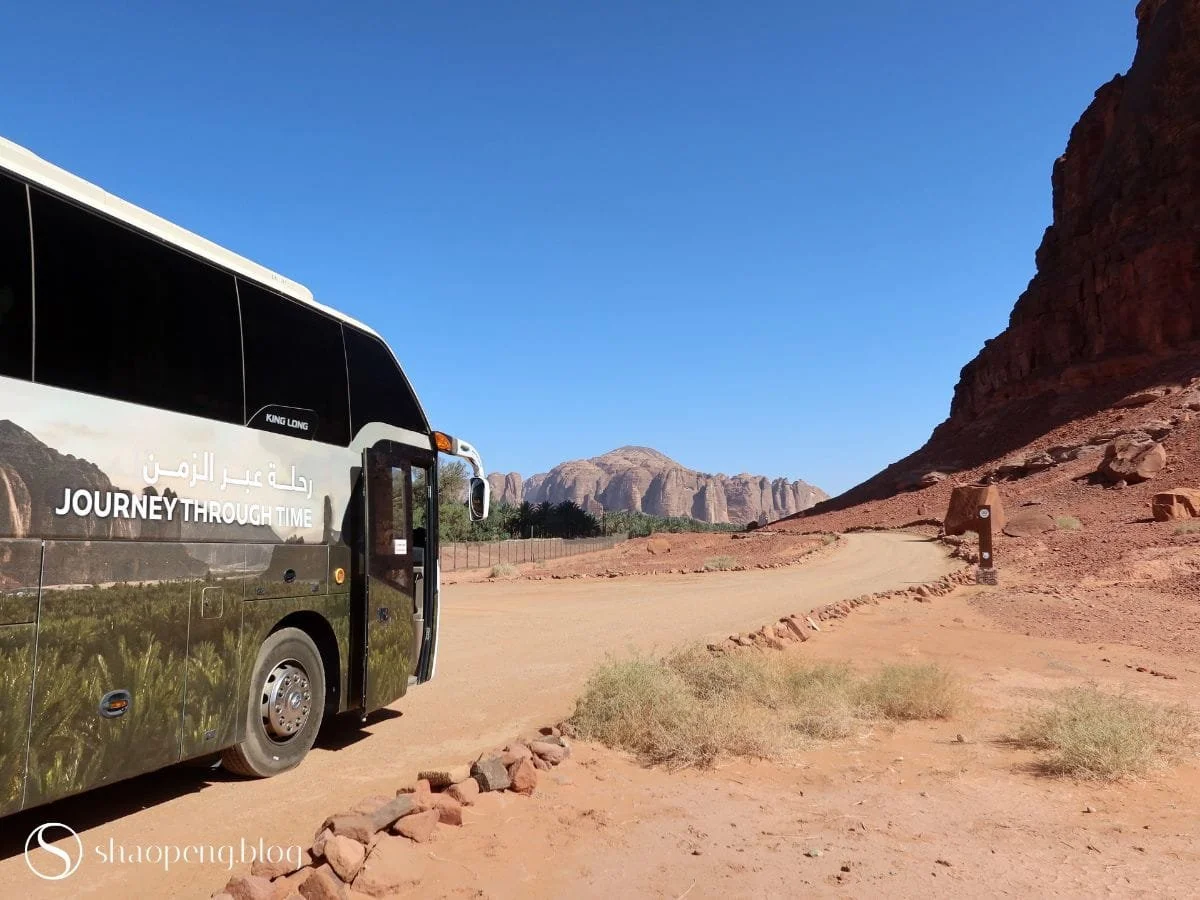
The shuttle bus service to Dadan’s archaeological site.
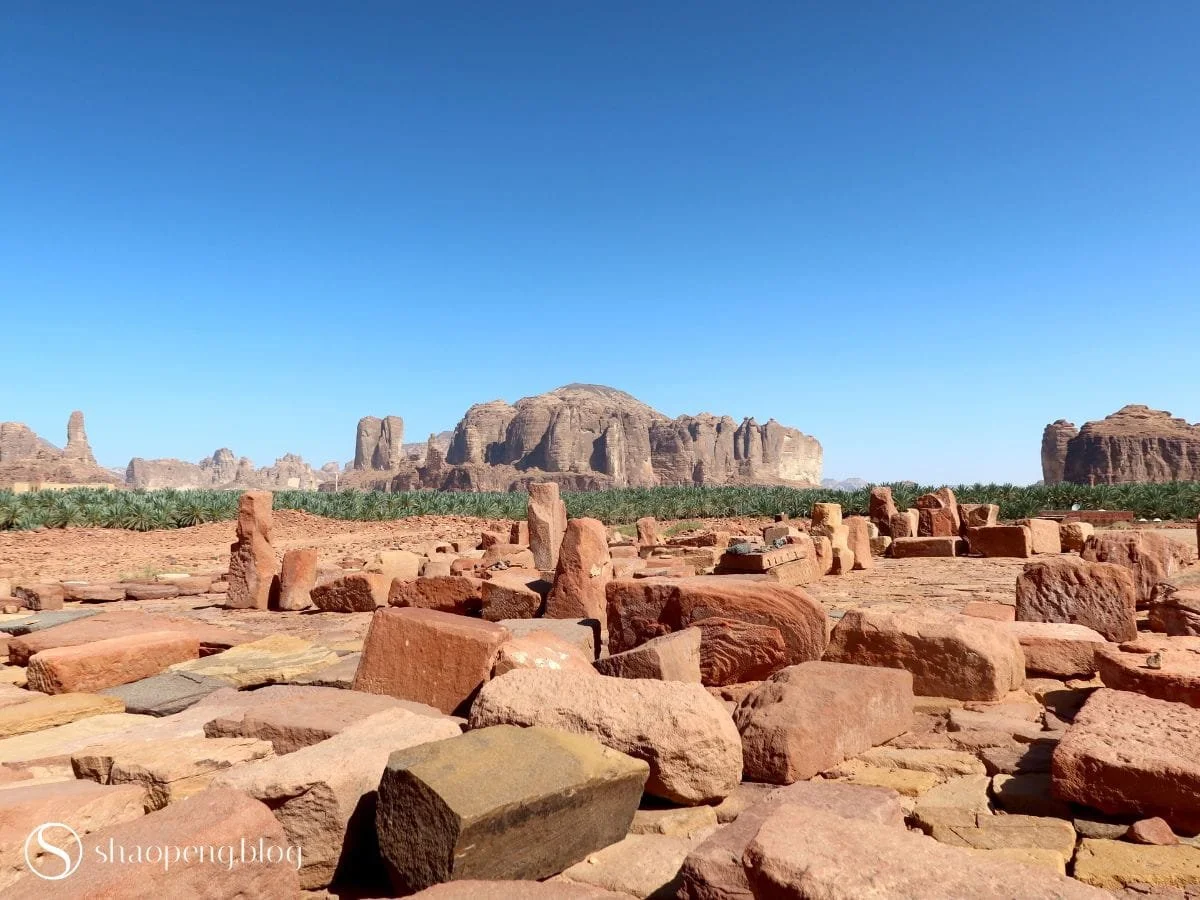
Remains of the temple dedicated to Dhu Ghaybah.
Dhu Ghaybah wasn’t worshipped only on the valley floor. Sanctuaries were also built into the mountains around Dadan, including one on the summit of Mount Umm Daraj, across the valley from the main city.
Elsewhere among the ruins, relief carvings of ibex and snakes turn up on architectural fragments. This devotion to serpent imagery recalls finds from Saruq Al-Hadid, a trading hub from the Umm Al Nar period (2600-2000 BCE) buried in the desert south of Dubai, hinting at symbolic threads running across the wider ancient Arabian world.
Then there’s the statue: a colossal figure standing up to 2.6 metres tall, bare chested and wrapped at the waist in a thin apron-like cloth, thought to depict a king or priest. It shows stylistic similarity with contemporary Egyptian and Mesopotamian statuary, offering a window into just how connected Dadan’s artistic world really was. One Lihyanite royal statue from the site has travelled farther than most of the caravan merchants ever did. It is now on display at the Louvre in Paris.
Since December 2025, a good portion of what has been recovered from the site has finally been put on view in the permanent exhibition, Illuminating Discoveries: Uncovering the Layers of Dadan’s History. I didn’t have that privilege on my visit, leaving me with one more reason to return.
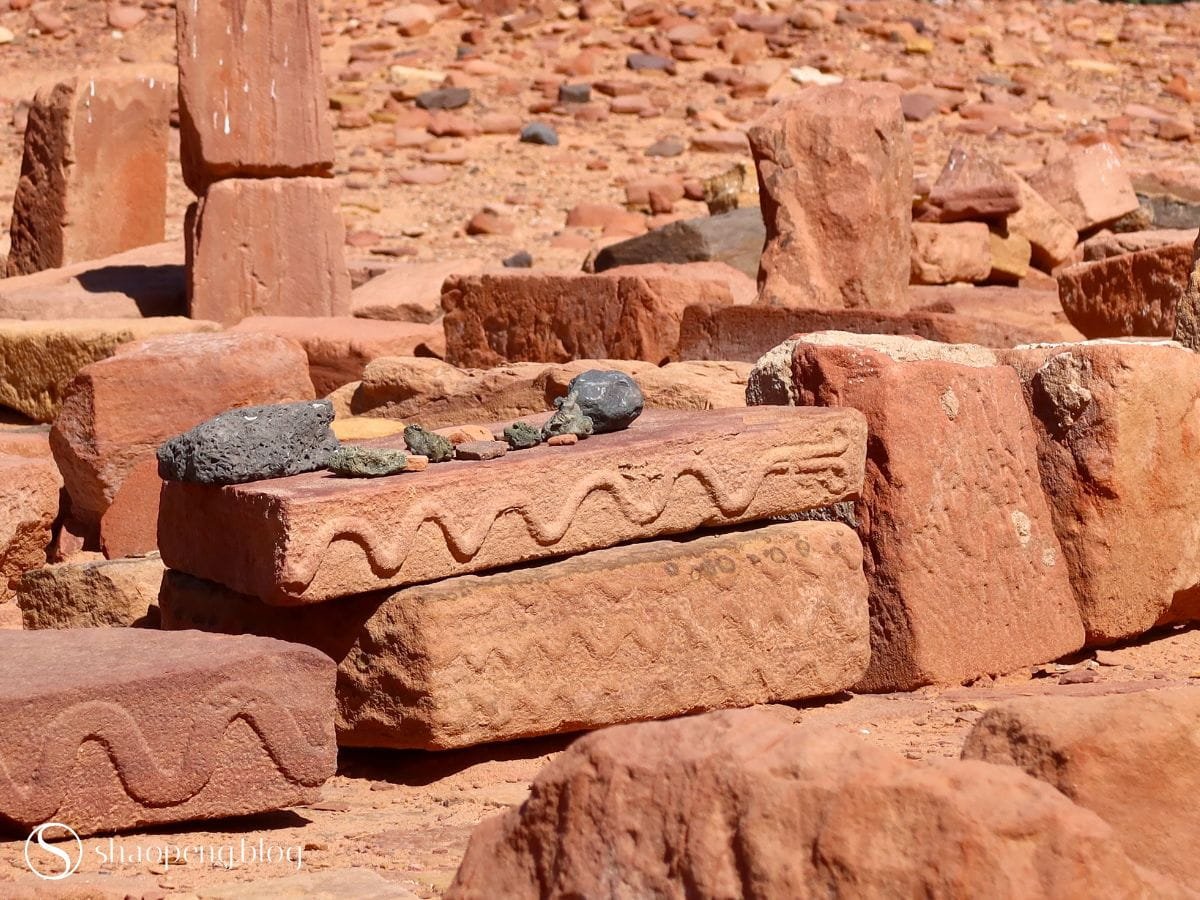
Carved snake motifs decorating sandstone architectural fragments.
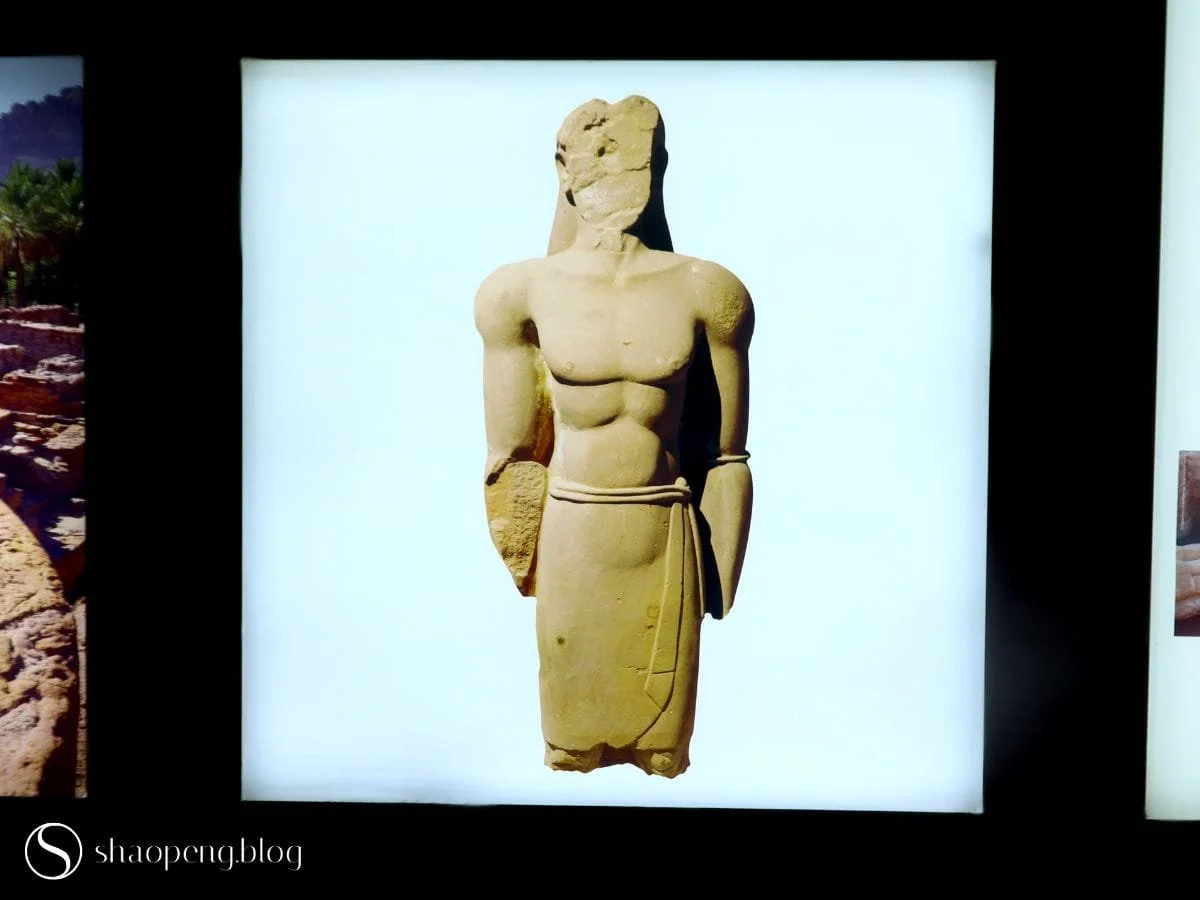
Image of a figurative sculpture unearthed at the archaeological site of Dadan.
Dadan was never isolated. The same routes that carried frankincense and myrrh also carried people, and it’s believed that a Minaean community from South Arabia settled here sometime after the 5th century BCE, joining the caravan trade alongside the locals. Dadanitic inscriptions even record intermarriage between the two communities, showing evidence of a city where outsiders became neighbours.
But like every great city, Dadan didn’t last forever. The archaeological record shows its gradual decline beginning in the 3rd century BCE. Some scholars point to the rise of the Nabataeans in nearby Hegra as the force that eclipsed the region, but the truth is that nobody is fully certain what tipped Dadan into decline.
Today, archaeologists estimate that less than 5% of Dadan has been excavated, which means the story here is still being written, one dig season at a time. Archaeologists continue working the site in phases, and each new inscription or artifact has the potential to reshape our understanding of the city’s economic, social, and political life.
Long before any of us showed up with curiosity and a trowel in hand, the 13th-century geographer Yaqut Al Hamawi captured the place in three words: “a beautiful city in ruins.” Standing at the base of those cliffs, I don’t think anyone has said it better since.
Wanderer’s tip — Access to Dadan is only possible through a pre-booked “Dadan & Jabal Ikmah Tour,” available via Experience AlUla or at any of its visitor centres.
Reference:
National Geographic. (2025). Kingdoms of the Dadanites and Lihyanites. National Geographic. https://www.nationalgeographic.com/travel/article/paid-content-kingdoms-of-dadanites-and-lihyanites
National Geographic. (2026, June 28). Unearthing the Ancient City of Dadan [Video]. YouTube. https://www.youtube.com/watch?v=aQAUM5-Bjfw