
UAE National Orchestra: “The Beginning” of a New Voice
The UAE National Orchestra’s debut concert invites you to travel through sound, where Emirati heritage meets classical and contemporary traditions and begins to shape a voice of its own.
Sense of Wander: ★★★★☆
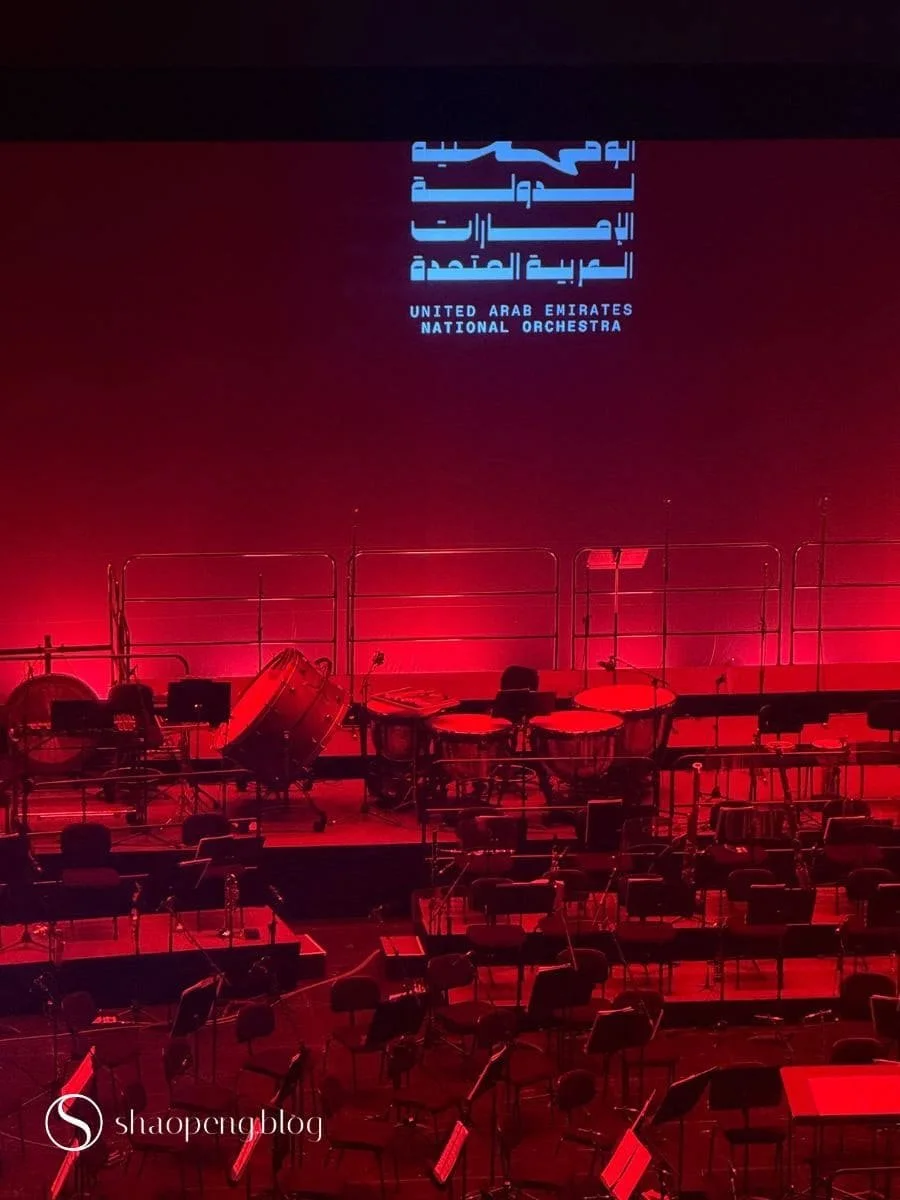
UAE National Orchestra at Dubai Opera, instruments set and ready for The Beginning.
DUBAI, UAE — It’s not every day you get to witness the birth of a national orchestra. This year, the United Arab Emirates launches its own, touring major stages across the country with a debut concert titled The Beginning.
I buy my ticket at the last minute, not quite knowing what I’m walking into. Inside Dubai Opera, what awaits feels like more than a concert: an experience that moves you at a soul level.
To mark this historic moment, the evening opens with the UAE national anthem. Emiratis and expats stand respectfully as one.
Then something unexpected follows. Instead of opening with an orchestral swell, it pauses to listen — tracing the first sounds that emerged from this land. A musician appeared at the side of the stage with a rababah: a one-stringed bowed instrument rooted in Bedouin musical tradition, its deep and slightly eerie sound akin to wind moving through open desert.
Over it, a spoken narrative rises — almost like a voice from ancient times — recounting how melody first came to us from the depths of the human being: from a time when he only had his voice to say, I am here, and here I remain. And yet, people in the distant past did not sing only to be seen, but to belong — to carry memory forward, and to steady the heart.
That sentiment is embodied in al ayyala: men standing shoulder to shoulder, bamboo sticks in hand, moving in unison to drumbeats and chanted verses. Even if you come in knowing little about Emirati musical heritage, this opening makes its point with clarity and awe. As the programme puts it: Before an orchestra can shape its own voice, it must first listen to the sounds that came before.
From there, the journey begins.
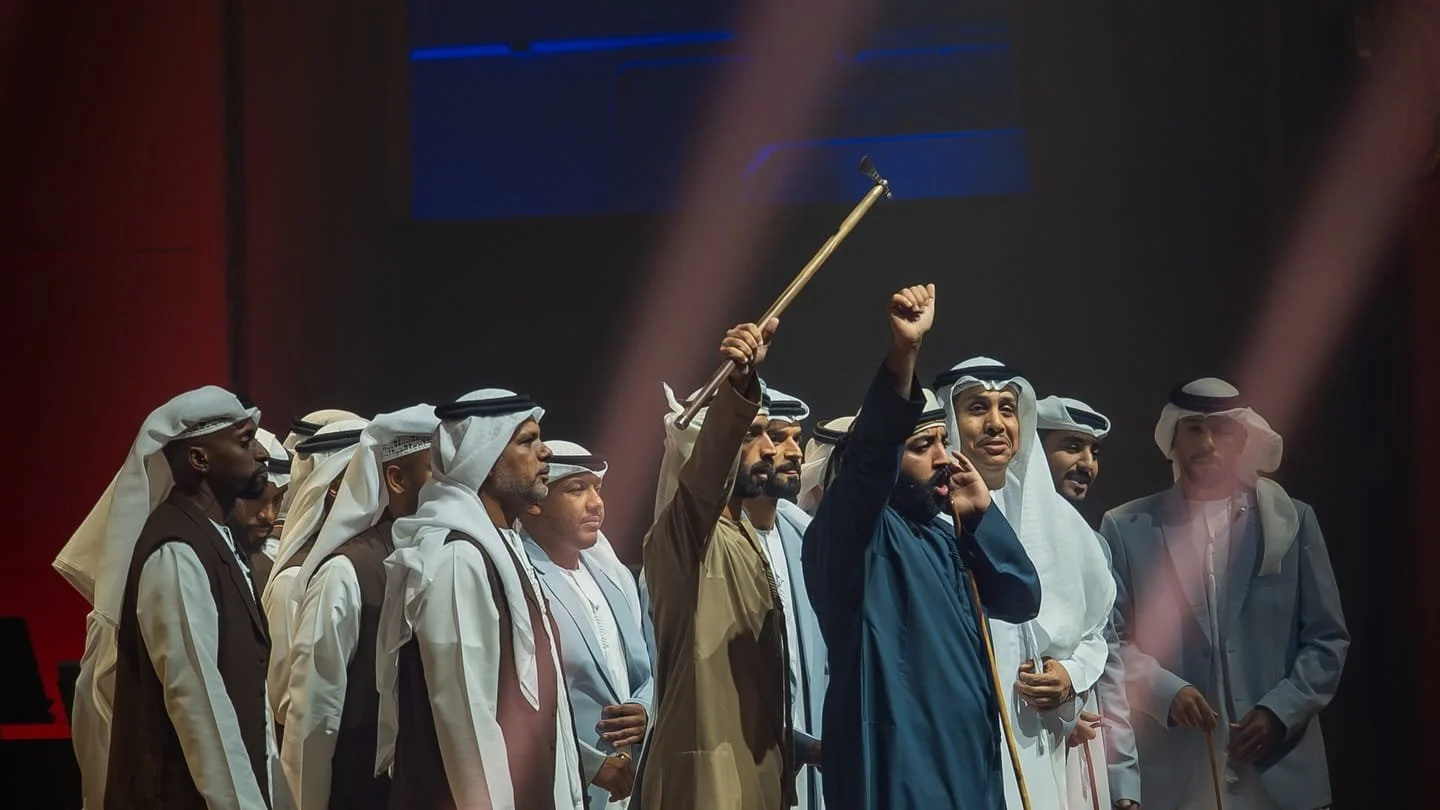
The Beginning opens with a poetic quest for the UAE’s first sound. Image courtesy of UAE National Orchestra.
The programme opens with an oriental take on Borodin’s Polovtsian Dances from Prince Igor, arranged by Shakir Hassan. What you hear is a continuous sway of melodic arches that spill into cascades, bright and flickering like fireworks lighting up the night sky — sometimes close enough to feel in your chest, sometimes distant as if seen from the edge of the desert.
Arabic instruments are incorporated into the orchestra. In the first half, the qanun and oud step into the light. Turkish qanun maestro Aytaç Doğan appears in Alışamadım for Qanun and Orchestra by Ercan Saatçi, and Kaybolan Yıllar by Sezen Aksu, arranged by Abdel Aziz Shabakouh. His crisp, quicksilver movements — almost conversational at times — make it seems as if the strings themselves know how to speak.
Iraqi oud maestro Naseer Shamma follows with Ishraq for Oud and Orchestra. I’ve heard Shamma at Dubai Opera before, and I must that admit I prefer the expressiveness of his ensemble. Here, the orchestral version — though still elegant — feels more contained.
The two maestros come together in Journey of Souls for Oud and Qanun, where their dialogue carries a natural synergy.
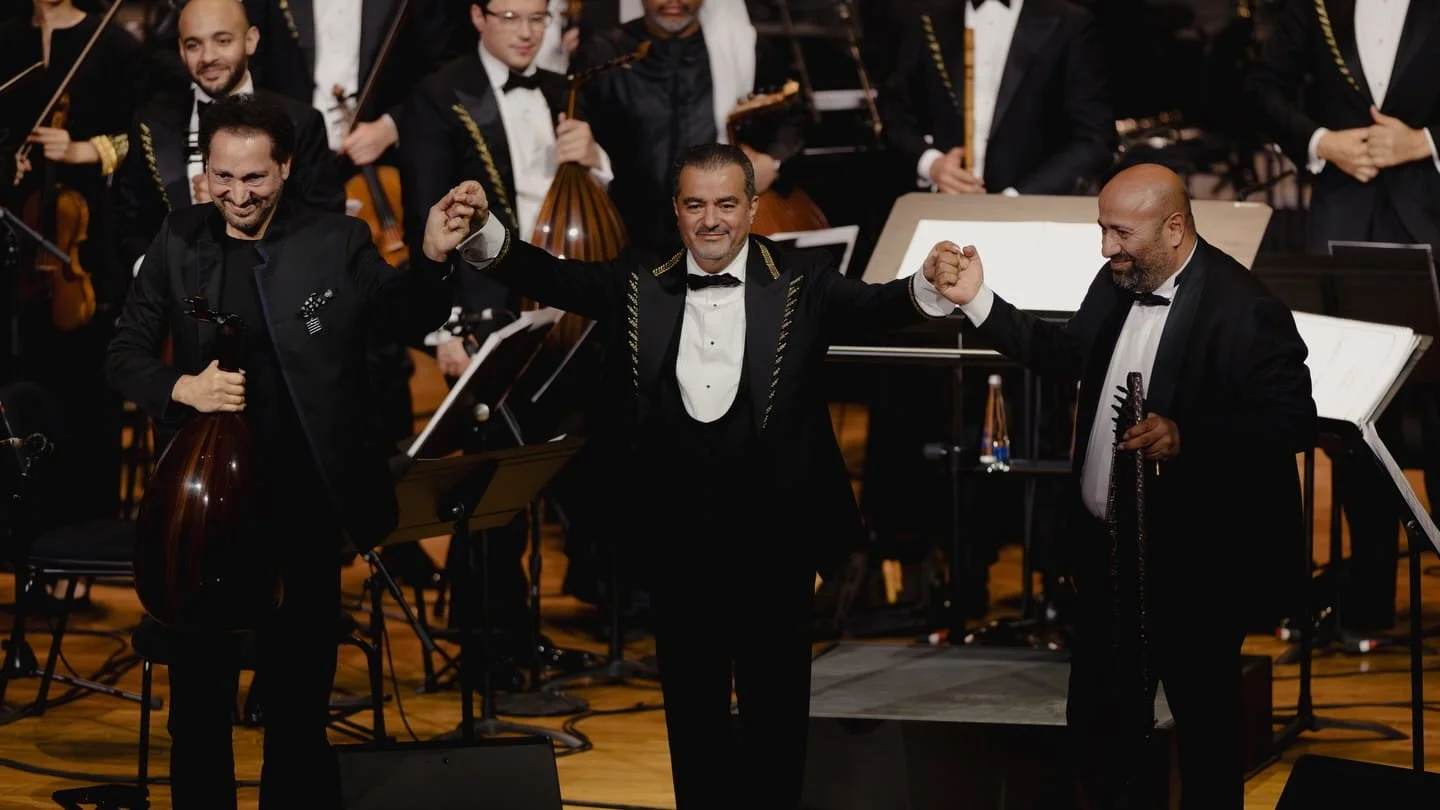
Naseer Shamma (left) and Aytaç Doğan (right) join conductor Amine Kouider (centre). Image courtesy of UAE National Orchestra.
After intermission, the concert turns fully toward its title work: The Beginning, an Emirati symphony by Lebanese composer Nadim Tarabay. This is also where the choir enters.
The first movement arrives mellow and spacious, with repeating choral phrases that drift like half-remembered refrains — beautiful, though sometimes elusive if you don’t speak Arabic. Then the second movement comes in: a male chorister calls out with a raw, soaring voice, like an eagle tracing its path through open sky.
Here, traditional motifs begin to surface. You hear the beat of al ayyala, and even the orchestra members join in by stamping their feet, grounding the rhythm into the floor.
Traces of al ahalla, al taghrooda, and nadba appear too, their communal chants and cries reimagined within a contemporary symphonic framework. It’s the kind of transformative sound that opens your heart and soul, reminding you that heritage is not static. It’s in motion.
The third movement arrives joyful, alive with forward energy like an inexhaustible fountain of inspiration. It doesn’t feel like an ending so much as a continuation, a door opening onto what comes next.
And it’s worth noticing who is on stage. Led by conductor Amine Kouider, the 100-member ensemble was founded in 2025, selected from thousands of applicants from more than 60 countries. The UAE’s story is also a story of plurality: a country shaped by voices from over 200 nationalities, now listening for what those voices can build together.
I’ve attended my share of symphonies, and The Beginning does feel singular: it’s planned with purpose, shaped with artistry, and driven by a clear vision.
Established under the patronage of H.H. Sheikh Abdullah bin Zayed Al Nahyan, the UAE National Orchestra sets out to celebrate Emirati heritage alongside classical and contemporary traditions. The programme writes: There will never be another night like this. And it’s true.
A line attributed to Sheikh Zayed bin Sultan Al Nahyan keeps returning to me throughout the evening: He who does not know his past cannot make the best of his present and future, for it is from the past that we learn.
The orchestra is on its way to shaping a new voice: rooted here, open to the world, and now taking its first step toward what it may become.
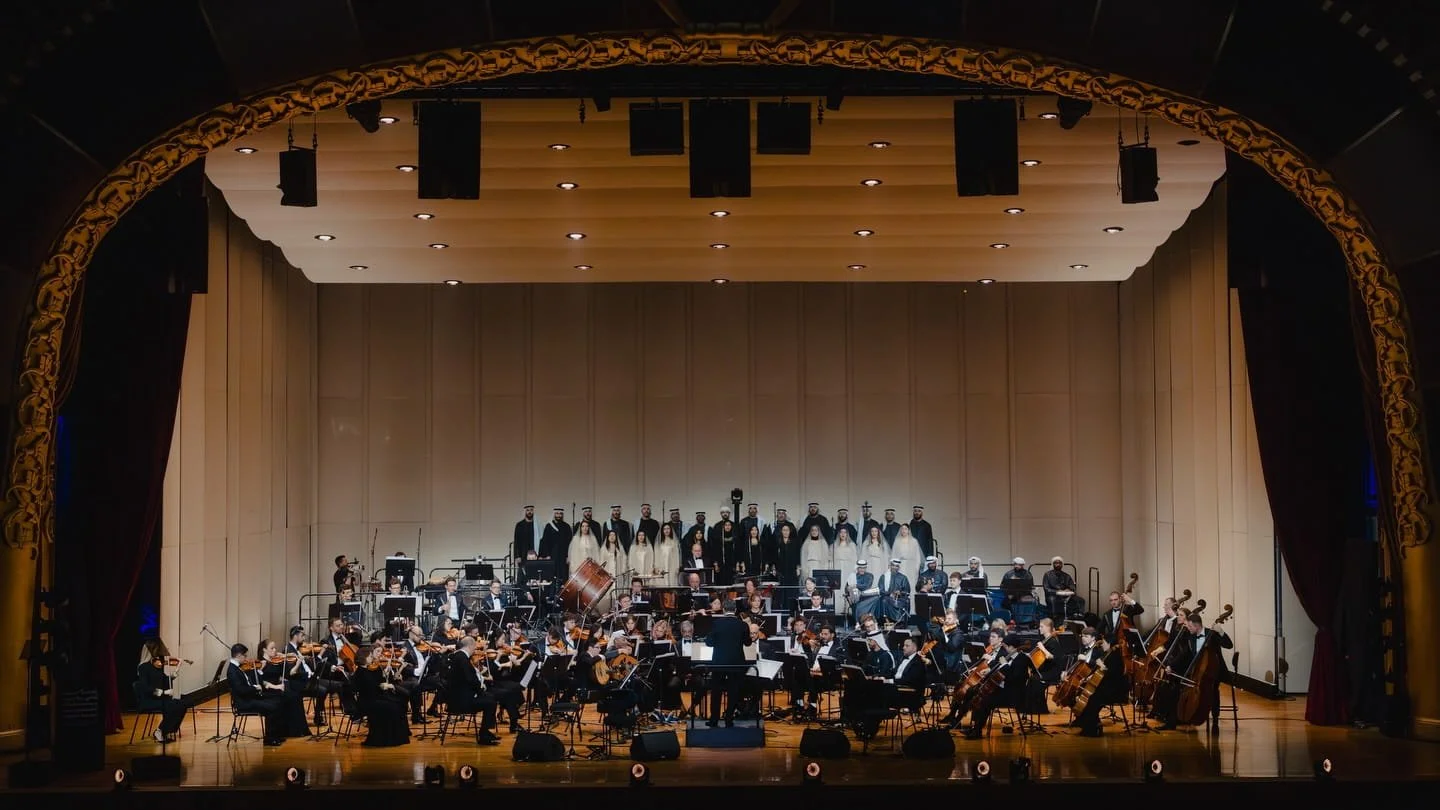
UAE National Orchestra at Dubai Opera. Image courtesy of UAE National Orchestra.
As part of its tour, UAE National Orchestra brought The Beginning to Dubai Opera on January 19, 2026.