
Every city has a version of itself that doesn’t make the highlight reel. In Dubai, that version is shaped by art, culture, and a heritage far older than its highrises.
Sense of Wander: ★★★★★
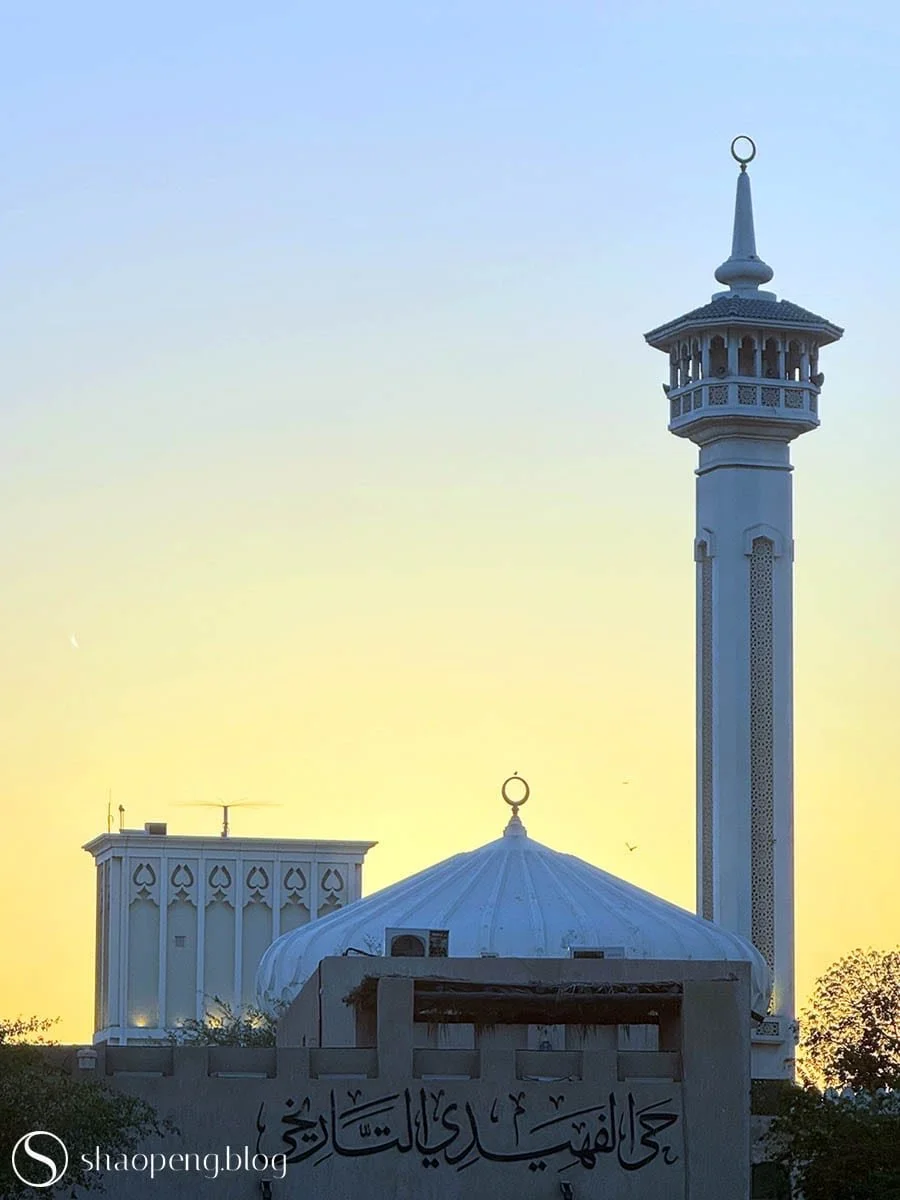
Al Farooq Mosque rises at the heart of Al Fahidi, lending stillness to Old Dubai’s skyline at sunset.
DUBAI, UAE — Most visitors arrive Dubai with a list already written: the Burj Khalifa, the Dubai Frame, the Mall of the Emirates. And the city obliges, delivering spectacle at every turn. Yet, beneath the glittering skyscrapers and engineered ambition, Dubai has so much more to offer.
This is a city with deep roots: archaeological evidence places human settlement here as far back as 300,000 years ago. From that ancient ground has grown not only a hub of business and innovation, but a place shaped by arts, culture, and a genuine hunger for ideas. Nowhere is this more apparent than during Dubai’s Art Season.
Running from January through April, this arc of festivals, performances, and exhibitions draws the city’s galleries, creatives, and collectors into the open, casting the metropolis in a different light. It feels like the perfect moment to share something for the curious wanderer — travellers who want more than a selfie at the top of the world’s tallest building. Consider this the first edition of a curated guide to Dubai’s arts and culture scene:
Where Time Still Lingers
Where Stories Are Told
Where Culture is Made
Al Fahidi Historical Neighbourhood
Sense of Wander: ★★★☆☆
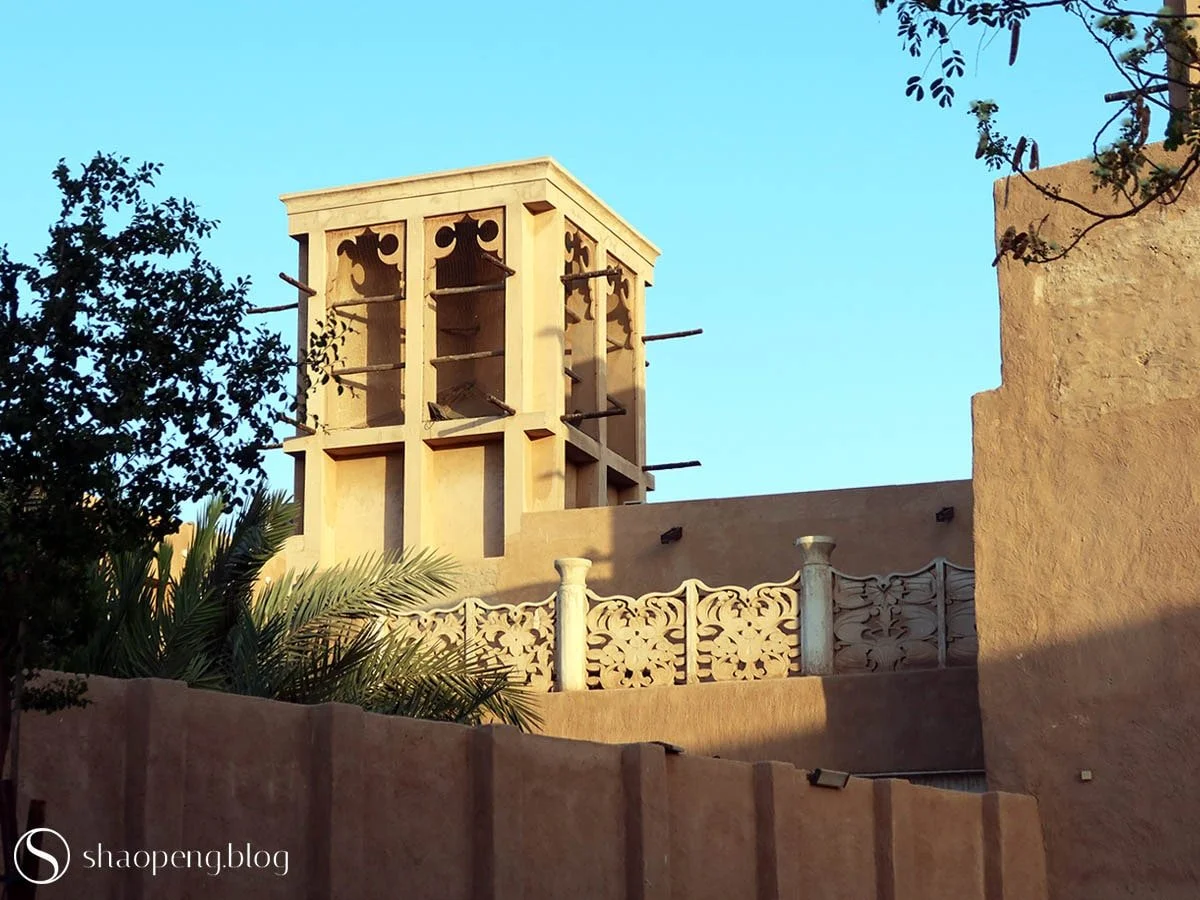
Traditional wind towers and gypsum ornaments dot the skyline of Al Fahidi Historical Neighbourhood, whispering stories of an older Dubai.
Before the city’s record-breaking skyscrapers came to capture the world’s imagination, there was another Dubai. That Dubai still breathes along the banks of Dubai Creek.
The Al Fahidi Historical Neighbourhood, known affectionately as Al Bastakiya, is where that older Dubai lingers. As soon as you set foot in the neighbourhood, the 21st century begins to recede, replaced by the geometry of sand-coloured walls and architectures. Rising above them are the unique silhouettes of barajeel.
These wind towers are Al Fahidi’s most poetic feature. Engineered long before air conditioning was a thought, they were designed to catch the creek’s breeze and funnel it down into the rooms below, resulting in a natural cooling system that is both ingenious as it is elegant. The word barajeel is thought to derive from the Persian baadgir, meaning “wind catcher,” a fitting name for structures that seem almost to listen to the sky. There are accounts, too, of incense being burned within them, so that the air drifting into the homes below arrived perfumed.
Wandering through the sikka — the narrow, winding alleyways that thread between buildings — you begin to read the logic of traditional Emirati architecture. Houses turn inward, their thick, high walls shielding private courtyards from the street. The materials are local: teak, palm wood, and whatever the land and sea could offer.
What intrigues me most are the ornamental gypsum panels lining the upper registers of the buildings: intricate, almost lace-like, and faintly melancholy against the pale sky. They lend Al Fahidi’s roofline a quality that is difficult to name.
Considered one of the UAE’s most significant heritage sites, Al Fahidi preserves something of the life that existed here before the seven emirates unified and before everything changed, very quickly, forever.
Wanderer’s tip — Parts of area are cordoned off for an ongoing rehabilitation project, including the nearby Al Fahidi Fort. It’s a slight disappointment, but the southern entrance remains open, offering access to a stretch of souvenir and art shops that maks the detour worthwhile. For a taste of authentic Emirati cuisine, head to Al Khayma Heritage Restaurant nearby!
Al Shindagha Historic District
Sense of Wander: ★★★★★
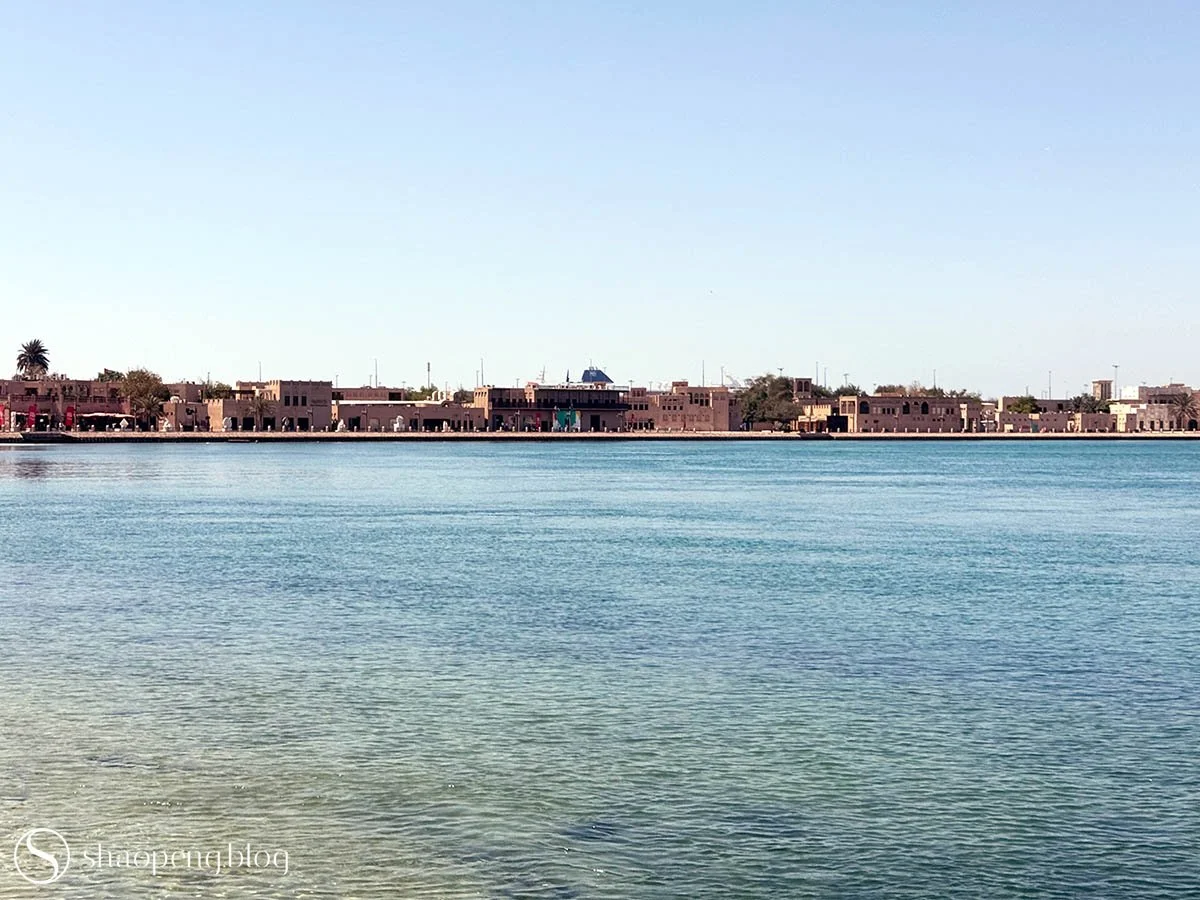
Few places in Dubai reward curiosity like Al Shindagha Historic District, where Emirati heritage runs as deep as the creek.
To call Al Shindagha Historic District simply “a museum” would be an understatement. Yes, it is home to Al Shindagha Museum, but the museum unfolds across a sprawling complex of heritage houses and pavilions, each devoted to a facet of Emirati life, tradition, and memory.
Your journey begins at Dubai Creek: Birth of a City, where a curated chronology and multimedia displays trace the city’s almost implausible transformation, from a modest desert settlement to a metropolis that now commands global attention. It is the kind of storytelling that reshapes everything you thought you knew about this place before you’ve even begun.
From there, the Saruq Al Hadid Archaeological Museum draws you into an even deeper past. Dedicated to the findings unearthed at Saruq Al Hadid — a thriving centre of trade and metallurgy that flourished somewhere between 2600 and 500 BCE — the collection is astonishing. Among the pottery and metalwork are pieces of gold jewellery of remarkable intricacy, including an ornate gold ring so significant that its design inspired Dubai’s Expo 2020 logo. It’s fascinating to see how a millennia-old object can still define the identity of one of the world’s most forward-facing events.
Besides archaeology, the museum hosts pavilions devoted to traditional crafts, jewellery, healthcare, perfumery, and cuisine. The exhibits engage through scent, touch, and sight, drawing you into the rhythms of a way of life that shaped this emirate long before the cranes emerged.
The pavilion that stays with me longest is the Culture of the Sea. Here, the story of pearl diving — told and retold across museums in the Gulf — comes alive in the most vivid way. It is a story of an industry, and the people who sustained it, that once shaped an entire way of life.
Even for those less drawn to the informational side of all this, wandering between the traditional buildings is reward. The district is vast, and soon your legs will beg for a break. Let them. The depth and breadth of Al Shindagha has a way of making hours slip by unnoticed, and in losing track of time, you may find answers to questions about Emirati arts, culture, and tradition that you perhaps didn’t even know you had.
Al Shindagha is also home to the Sikka Art & Design Festival, the city’s annual celebration of arts and creativity. For those wishing to experience the area come alive after dark, this is the perfect occasion to return.
Wanderer’s tip — Don’t arrive on an empty stomach. Food options within the area are limited, so come prepared with water and snacks to keep you going between pavilions. On a hot summer day, you’ll be glad you did.
Etihad Museum
Sense of Wander: ★★★★☆
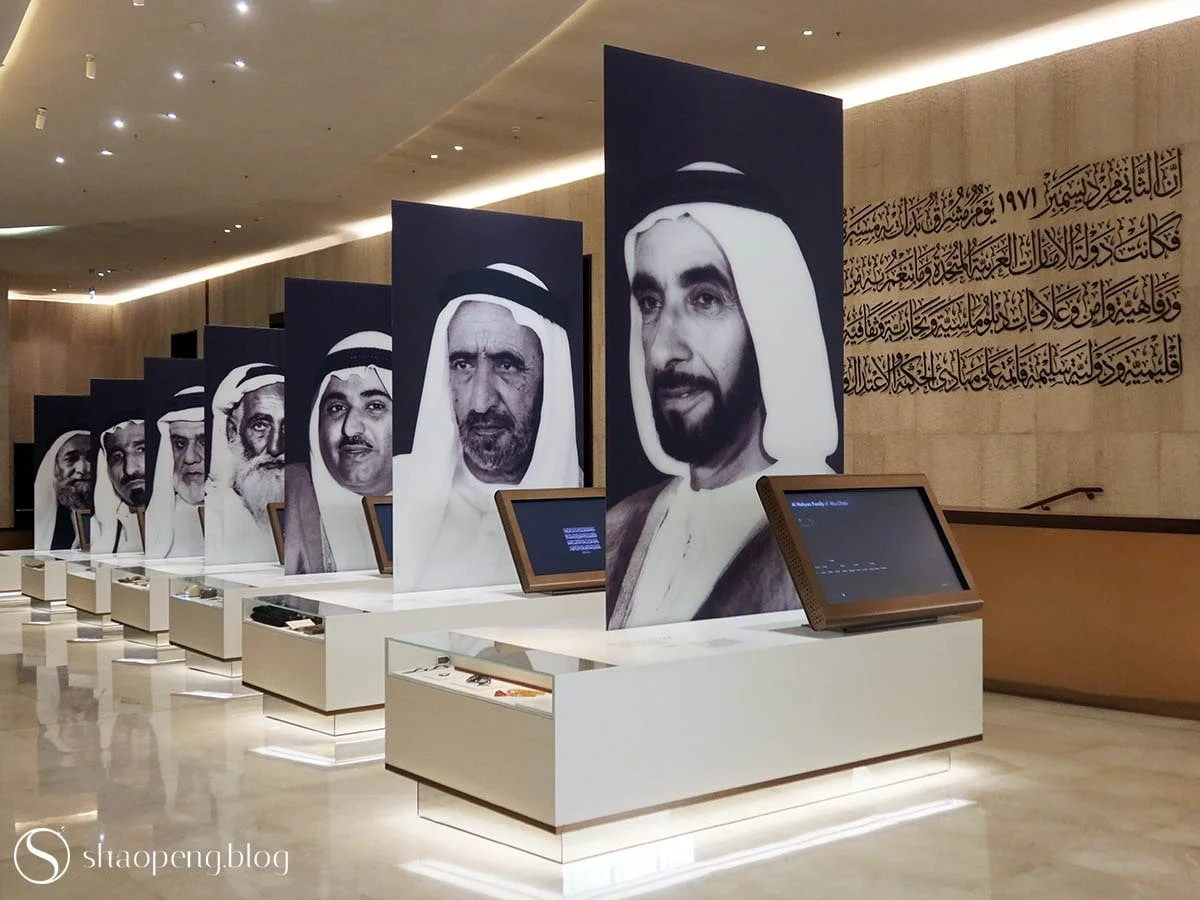
Among the Etihad Museum’s most memorable exhibits are the personal belongings of the rulers who gathered here to sign a nation into being.
The Etihad Museum was not originally on my list. I come to it almost by accident. But one visit is all it takes to realise this is not a museum to be missed.
What makes the Etihad Museum unique is the location on which it stands. It sits directly below Union House — the very place where the rulers of the seven emirates gathered on December 2, 1971, to sign the Declaration of the Union and bring the United Arab Emirates into being. Outside, the first UAE flag ever raised still stands. There is something powerful about that proximity, a sense that history isn’t just written in textbooks, but was made here.
Etihad, in Arabic, means union or unity. Inside, the story of the UAE’s formation unfolds in chronological order through artefacts, photographs, interactive exhibits, and theatre, with each doing its part in bringing the founding moment to life. What impresses me most is the curation: thoughtful, considered exhibit design that makes a linear history feel not like a lecture, but an engaging conversation. In one corner, I find myself before a digital copy of the UAE Constitution, flipping through its pages with both curiosity and reverence.
On the day of my visit, I happen to run into a film crew working inside Union House, a building usually closed to the public. To catch a glimpse of the very room where the union was signed makes the visit worthwhile. There is also the Guest House, where the late Sheikh Rashid Bin Saeed Al Maktoum once received and hosted his guests as Ruler of Dubai.
Wanderer’s tip — The museum tends to be quiet throughout the day, which only adds to the contemplative quality of the experience. Tour guides are available on site, and worth seeking out. Don’t hesitate to ask.
Museum of the Future
Sense of Wander: ★★★★★
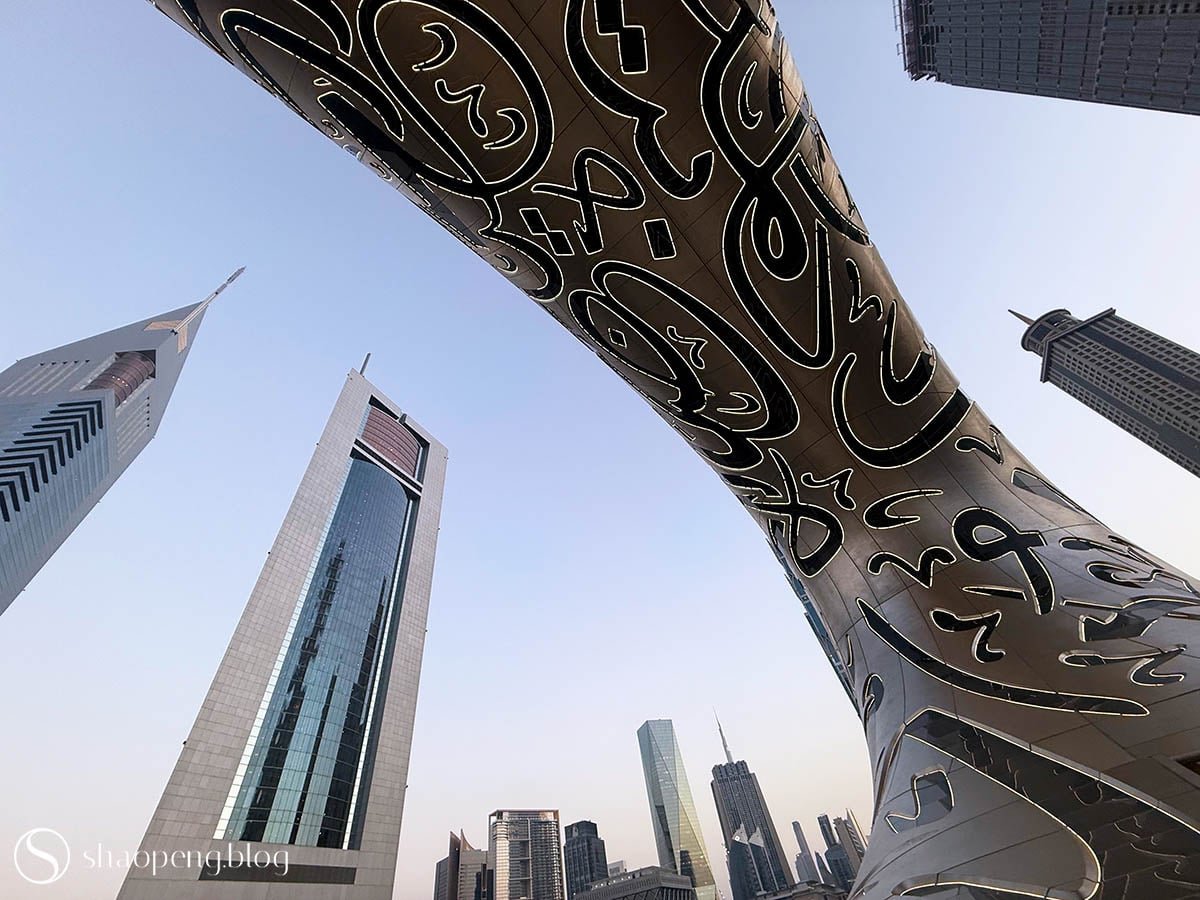
The Void offers a perspective of Dubai that few think to look for, and fewer forget.
There is no building in Dubai — perhaps nowhere in the world — quite like the Museum of the Future. Rising from the heart of the Financial District, its iconic torus form is covered in Arabic calligraphy. These words form a poem about the future, written by Sheikh Mohammed bin Rashid Al Maktoum — a detail that will come to mean more once you’ve stepped inside.
The moment you pass through the ticketed gates, you are in the year 2071 — the centenary of the UAE’s formation. From here, the museum’s seven floors unfold into a fictional yet entirely plausible future.
The journey begins aboard OSS Hope, an orbital space station that imagines life beyond Earth’s atmosphere. From there, the museum opens into a series of galleries, each exploring a different dimension of what is to come, or what could be.
My own pace slows almost to a stop at the HEAL Institute. Here, the outward journey into the future turns inward. Interactive exhibits invite your engagement: a gentle vibration humming beneath your palms, a sound bath that seems to rearrange the dissonances within, and a room devoted entirely to meditation. In a museum about tomorrow, this feels like its most human space.
On the floor titled Tomorrow, Today, the pace shifts again. Cutting-edge innovations from around the world are presented with a clarity that makes the extraordinary feel almost inevitable, including, to my delight, a model of the flying taxi set to take Dubai’s skies.
When you are ready to step out, head towards The Void, the elliptical hollow at the centre of the building’s torus. This open space, framed by the surrounding skyline, briefly takes your breath away. From here, the poem etched onto the building’s exterior comes into view up close, and something about reading those words up close is an experience unlike any other.
Wanderer’s tip — Before you leave, seek out the museum’s unique perfumery experience, where you can create bespoke fragrance generated by an algorithm based on your response to a short survey. At AED 195, it may just be the most memorable souvenir you didn’t know you would take home — from the future.
Crossroads of Civilisations Museum
Sense of Wander: ★★★★☆
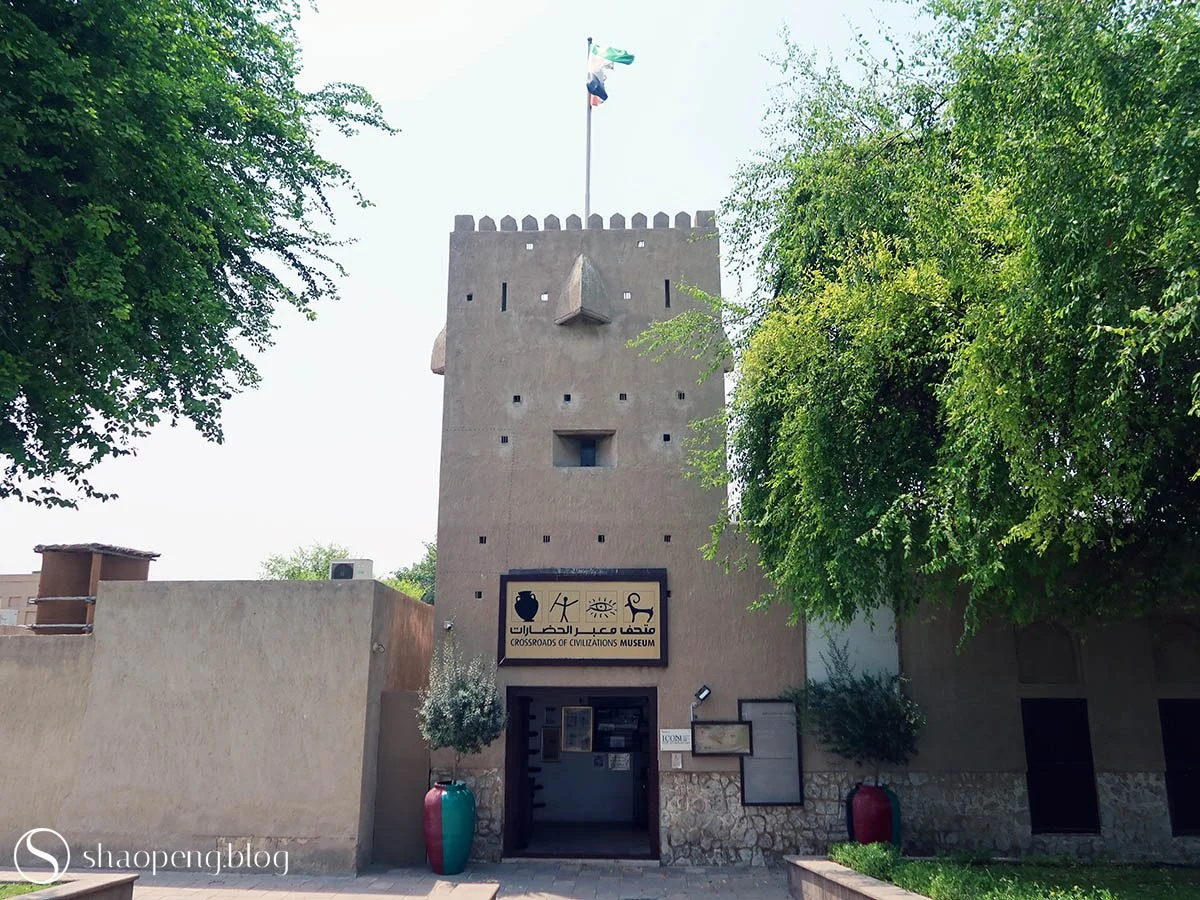
Inside the Crossroads of Civilisations Museum, rare artefacts hold stories that time has not managed to silence.
Some of the best discoveries happen not by plan, but by exploring the map up close and seeing what’s out there. This is how I came to know the Crossroads of Civilisations Museum, spotted almost by accident during my second visit to Dubai.
Tucked near the Al Shindagha Historic Neighbourhood, the Crossroads of Civilisations Museum is a private museum, inaugurated in 2014, housed within the historic residence of Sheikh Hashr Bin Maktoum Al Maktoum, younger brother of Sheikh Saeed Al Maktoum. The 18th-century building holds the personal collection of Ahmed Obaid Al Mansoori and bears all the hallmarks of a life devoted to the rare and significant.
The museum spans six galleries. One traces local history, exploring the pearl-diving industry, with pearls and pearl jewellery that capture the glamour of that bygone trade.
My favourite is the Multi-Faith Gallery. Arranged with curatorial care are some of the most remarkable objects I encounter during my stay in Dubai: an Armenian Bible — the Codex Etchmiadzin, from 10th-century Yerevan, bound in an ivory cover dating to the 6th or 7th century; leaves of the Torah Exodus from as early as the 4th century; a 1639 print of the King James Bible; and Quranic leaves dating between the 10th and 13th centuries. Gathered in a single room, these objects feel like an eloquent case for the cultural and religious plurality the UAE holds up as a founding value.
Next is a gallery dedicated entirely to Islamic art. Manuscripts of the Quran from across the Islamic world line the space. Its centrepiece is a kiswah — an embroidered door cover for the Kaaba — commissioned by Sultan Suleiman the Magnificent and dated AH 950 (1543–1544 AD), when Mecca was under Ottoman rule. It is said to be the earliest known kiswah in existence. Standing before it, that claim feels more than a footnote; it feels as if you are bearing witness to the weight of history itself.
Wanderer’s tip — The museum sits well off the tourist trail and is quiet throughout the day, a gift in a city that rarely slows down. Take your time with each of the six galleries.
Expo City Dubai
Sense of Wander: ★★★★☆
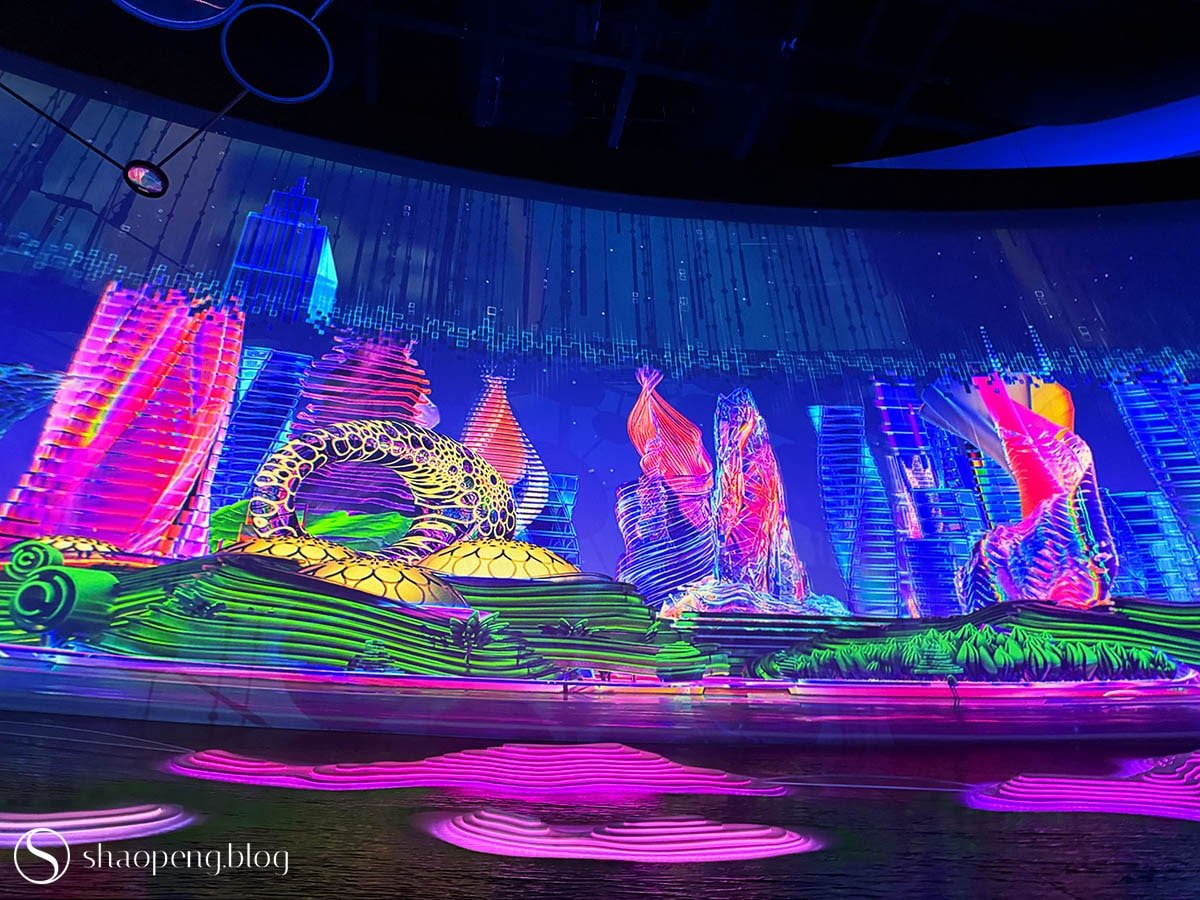
A future city envisioned with sustainability and well-being in mind is the highlight of the Alif Pavilion.
Dubai hosted the World Expo in 2020, and while much of that temporary city has since been dismantled or repurposed, three pavilions remain open to visitors in what is now known as Expo City.
The Vision Pavilion is perhaps the most intimate of the three. Dedicated to Sheikh Mohammed bin Rashid Al Maktoum, Vice President and Prime Minister of the UAE, the exhibition draws its inspiration from My Story, his memoir marking fifty years of public service. What it portrays, without fanfare, is not the statesman at the podium, but the person behind the vision. For anyone curious about how a patch of desert became a metropolis home to more than 200 nationalities within a single lifetime, this is where you will find the answers.
If Vision turns inward, Terra turns the gaze entirely outward. At the Terra Pavilion, one moment you are moving through the deep ocean; the next, you are inside a forest, learning about the extraordinary exchange of information between trees and fungi through the networks beneath the soil. Terra does not lecture, but asks instead; it poses questions without correct answers, prompting reflection on how the small, daily choices of an ordinary life ripple outward into the natural world.
The Alif Pavilion takes mobility as its theme, though the word here stretches far beyond transport. It traces the movement of knowledge through the Golden Age of the Islamic Empire, the mobility of human civilisation through invention and infrastructure, and the restless movement of minds — through books, data, and technology. I’m fascinated by the section dedicated to the City of the Future, where projections of cities built around sustainability and human wellbeing are imagined not by architects or urban planners, but by children from around the world who submitted their ideas in an open contest.
Wanderer’s tip — Get an Attractions Pass for AED 160, which covers all three pavilions. If bought separately, they will cost you considerably more.
Alserkal Avenue
Sense of Wander: ★★★★☆
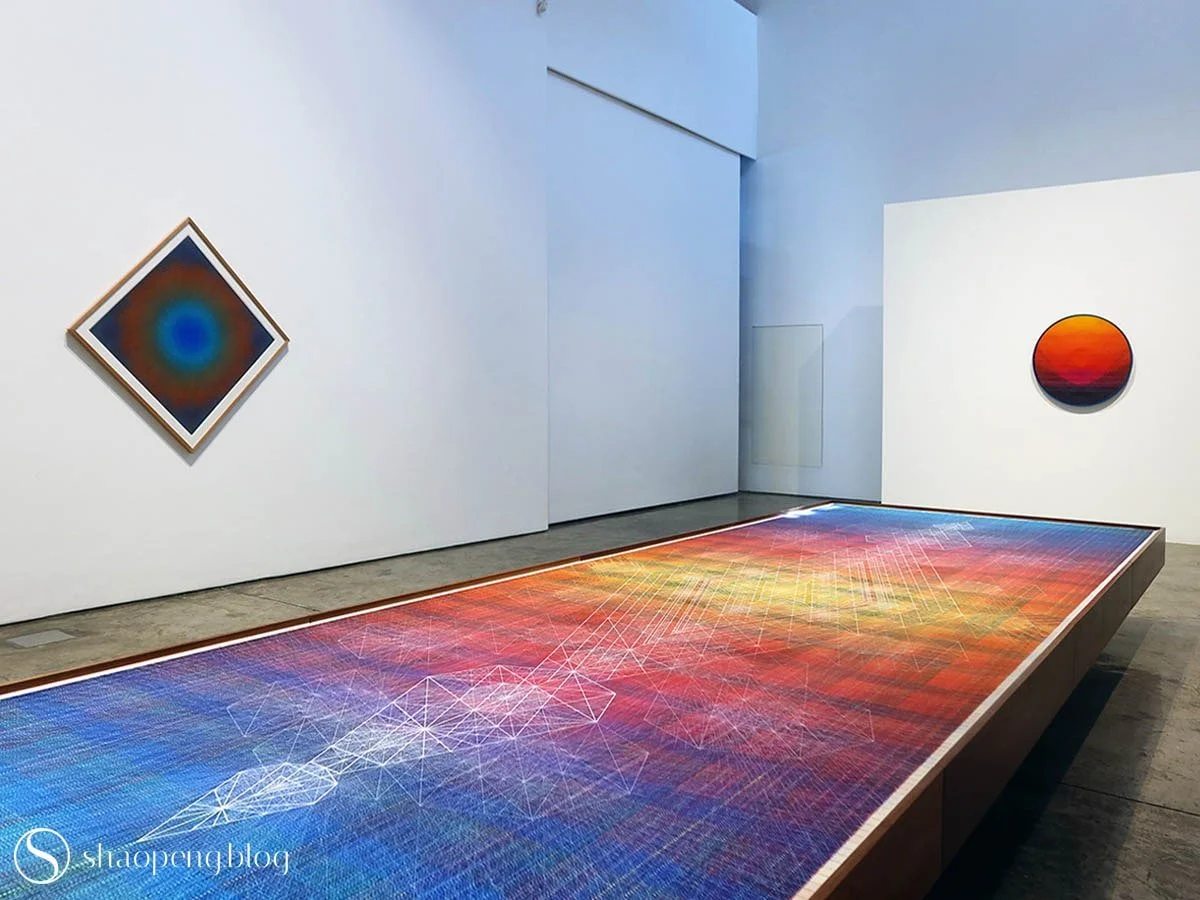
A wander through Alserkal Avenue leads you to contemporary works like those of Nima Nabavi, whose exhibition Sunrise at the Vortex was showcased at The Third Line.
Tucked away in the industrial neighbourhood of Al Quoz, Alserkal Avenue has transformed a cluster of seemingly unremarkable warehouses into one of the city’s most compelling creative communities.
What began as an industrial estate has, since 2017, steadily been claimed by art galleries, design studios, cafes, and independent shops, each carving out a corner of the compound with a distinct identity. This is not a purpose-built arts precinct; it retains traces of its former life, and the art feels all the more alive for it.
The galleries here resist easy generalisation. Each runs its own programme, representing artists at different stages of their careers through exhibitions, talks, panel discussions, and community events. Efie Gallery brings focused attention to artists of African origin and houses Rekord Gallery, a Hi-Fi listening room and exhibition space featuring a collection of vinyl and shellac records; Mestaria Gallery creates unexpected dialogues between works of Arabic, African, and Asian origin; and Zawyeh Gallery showcases artworks by emerging and established artists from Palestine.
A stroll through these galleries reminds you that the best art spaces have a way of making the world feel both larger and more intimate at once.
For those who want to stay longer, the Alserkal Arts Foundation is worth seeking out. Inside, Common Room functions as a co-working space open to the public, where you could use it as a place to read, research, or simply be present in the creative life of the district.
Wanderer’s tip — Make time for KAVE, a creative cafe within the avenue where coffee and snacks are served alongside fair trade shops and handcrafted goods by local artisans.
Jameel Arts Centre
Sense of Wander: ★★★☆☆
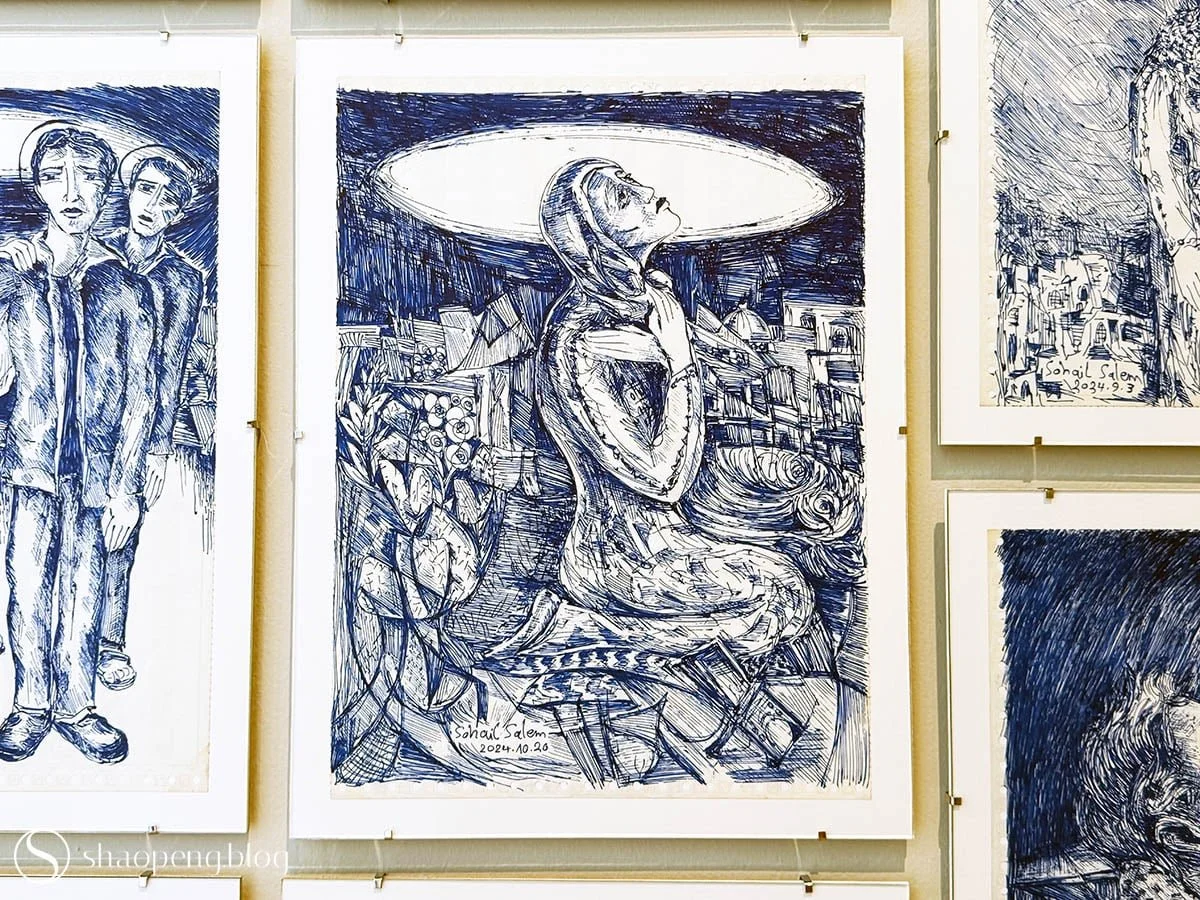
Sohail Salem created these pen drawings over more than a hundred days of war in northern Gaza. Smuggling them out, he says, felt like pounding on the walls of a water tank — a desperate attempt to be heard.
One of the leading contemporary art institutions in the UAE — and arguably across the Arab world — Jameel Arts Centre is not simply a place where art is shown. It is a platform where conversations are started, commissions are made, research is pursued, and communities are built.
The Centre is an initiative of Art Jameel, an organisation with deep roots in both the UAE and Saudi Arabia, founded by Fady Jameel, whose commitment to arts and philanthropy has left a mark across the region.
My own encounter with Jameel began not in Dubai, but in London, at the Victoria and Albert Museum, where the exhibition for the Jameel Prize — an international award for contemporary art and design inspired by Islamic tradition — is still hosted from time to time. I have also visited Hay Jameel in Jeddah, which offered me a window into Saudi Arabia’s arts and creative scene, and now I find myself here, at the waterfront in Jaddaf.
I have seen a handful of exhibitions at Jameel Arts Centre, yet none stays with me more than Eltiqa: How to Work Together? A Collective Artistic Practice from Gaza. Eltiqa — Arabic for “encounter” — is an artist collective from Gaza City, founded in 2000. For more than two decades, its members have built their artistic practices together against considerable odds. What moves me most is learning about the scarcity of basic materials — paint, paper, the ordinary tools of making — in an environment stripped of almost everything. These are resources that most of us who create reach for without a second thought.
Wanderer’s tip — Before you leave, take a moment to sit with the view of the Jaddaf Waterfront. It offers a quieter, less-visited view of Dubai Creek than the one from Al Shindagha.
Mohammed Bin Rashid Library
Sense of Wander: ★★★★☆
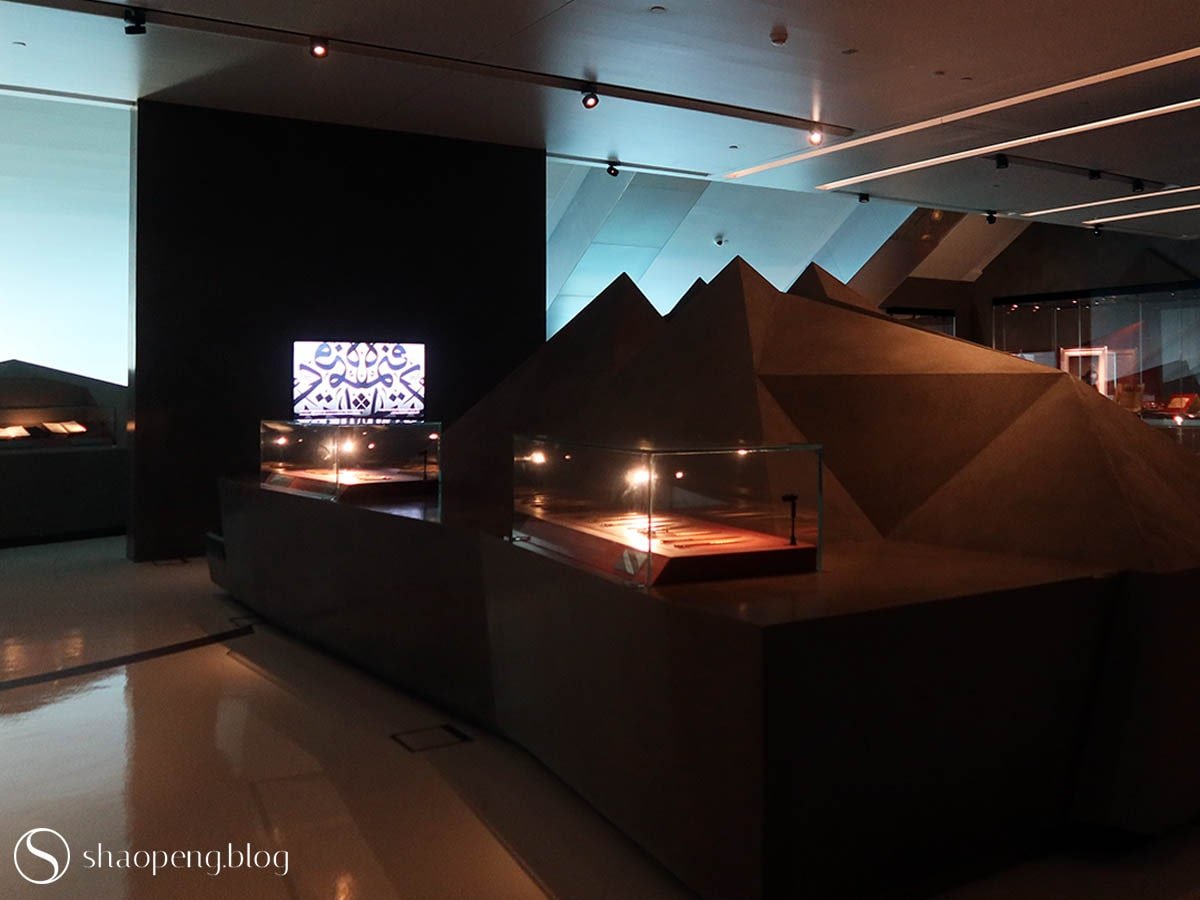
The first section of The Treasure of the Library exhibition is dedicated to the art of calligraphy and rare manuscripts.
There are libraries, and then there are libraries that make you want to cancel the rest of your day. The Mohammed Bin Rashid Library, sitting along the Dubai Creek in Al Jaddaf, is undoubtedly the latter. Opened to the public in 2022, it holds the distinction of being the largest library in the Middle East.
The entrance alone makes every visitor pause. Expansive walls rise on both sides, lined from floor to ceiling with books, evoking the spirit of a modern House of Wisdom.
I head straight for the Arts section on the first floor, losing myself amid collections spanning art history, fine art, contemporary art, architecture, decorative arts, and calligraphy. But it is the exhibitions on the seventh floor that hold me longest.
Two exhibitions are currently on view. The first, The Treasure of the Library, is devoted to rare books and manuscripts. One room is dedicated entirely to the art of calligraphy, tracing lines from Hijazi script — the earliest known form of Arabic calligraphy — to contemporary works by artists such as Wissam Shawkat. Calligrapher’s tools are also laid out: the qalam, inkwells, the other instruments of a practice that has endured for centuries. I spend more than an hour in this single room alone, and it does not feel like enough.
The collection reaches beyond the Islamic world. A copy of The Tale of Genji — widely considered the world’s first novel and a cornerstone of Japanese literature from the early to mid Edo period (1603-1868) — sits alongside an illustrated copy of the Ramayana from 19th-century India. Encountering these objects together, it is easy to feel as if each book carries an entire civilisation’s way of seeing.
Across the hall is another exhibition that surveys the history of Arab journalism, gathering more than 500 periodicals — local, regional, and international — dating as far back as the 19th century. The publications are arranged by category, and what fascinates me most are the calligraphic typefaces used in the mastheads of the earliest newspapers: each a small work of art in its own right.
Wanderer’s tip — Set aside at least three hours for the library’s collection and the two exhibitions on the seventh floor. For those with nowhere else to be, a full day here would not go to waste.
Al Safa Art & Design Library
Sense of Wander: ★★★☆☆
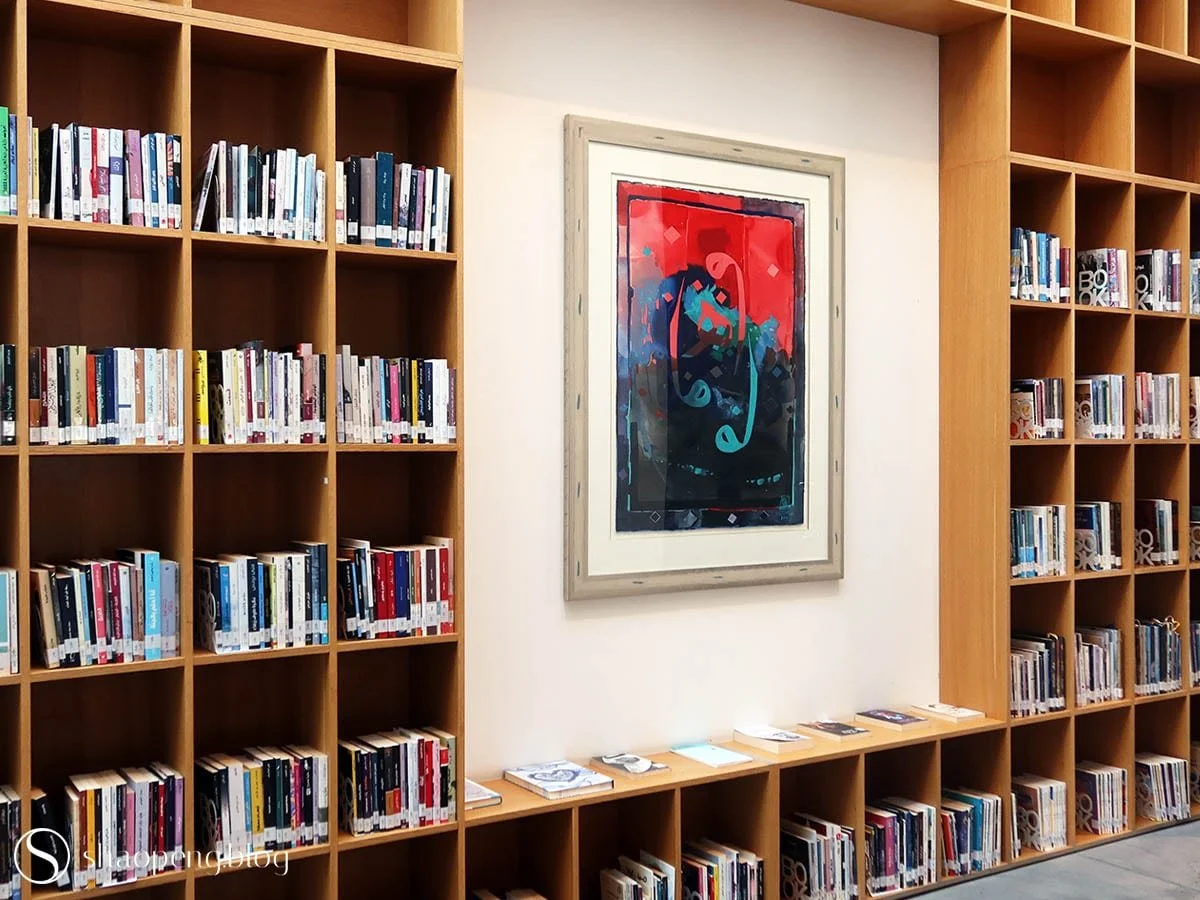
Home to thousands of books, Al Safa Art & Design Library is a haven for art and design enthusiasts.
The Al Safa Art & Design Library, nestled near Al Safa Park, is the kind of place that rewards those who seek it out. It is one of the eight public libraries in Dubai, and perhaps the most characterful of them all.
The collection holds thousands of books spanning fine arts, art history, architecture, calligraphy, performing arts, and music, among other subjects. Contemporary calligraphy pieces are displayed between the bookshelves, lending the space the feeling of a gallery as much as a library — entirely appropriate for a place that has made art and design its raison d’être.
What catches me off guard is a corner devoted to gemmology, jewellery history, and the art of jewellery — supported by a collaboration between Dubai Culture and L'ÉCOLE Middle East, an initiative aimed at broadening the region’s access to jewellery arts education.
In addition to its vast collection of books, a section of the library hosts temporary exhibitions and provides co-working desks, making it a place not just for the pursuit of knowledge, but also for wandering, creating, and simply being.
Wanderer’s tip — The library is not the easiest to reach by public transport, so taking a ride-hailing service will save you time and effort.
Books Kinokuniya
Sense of Wander: ★★★★☆
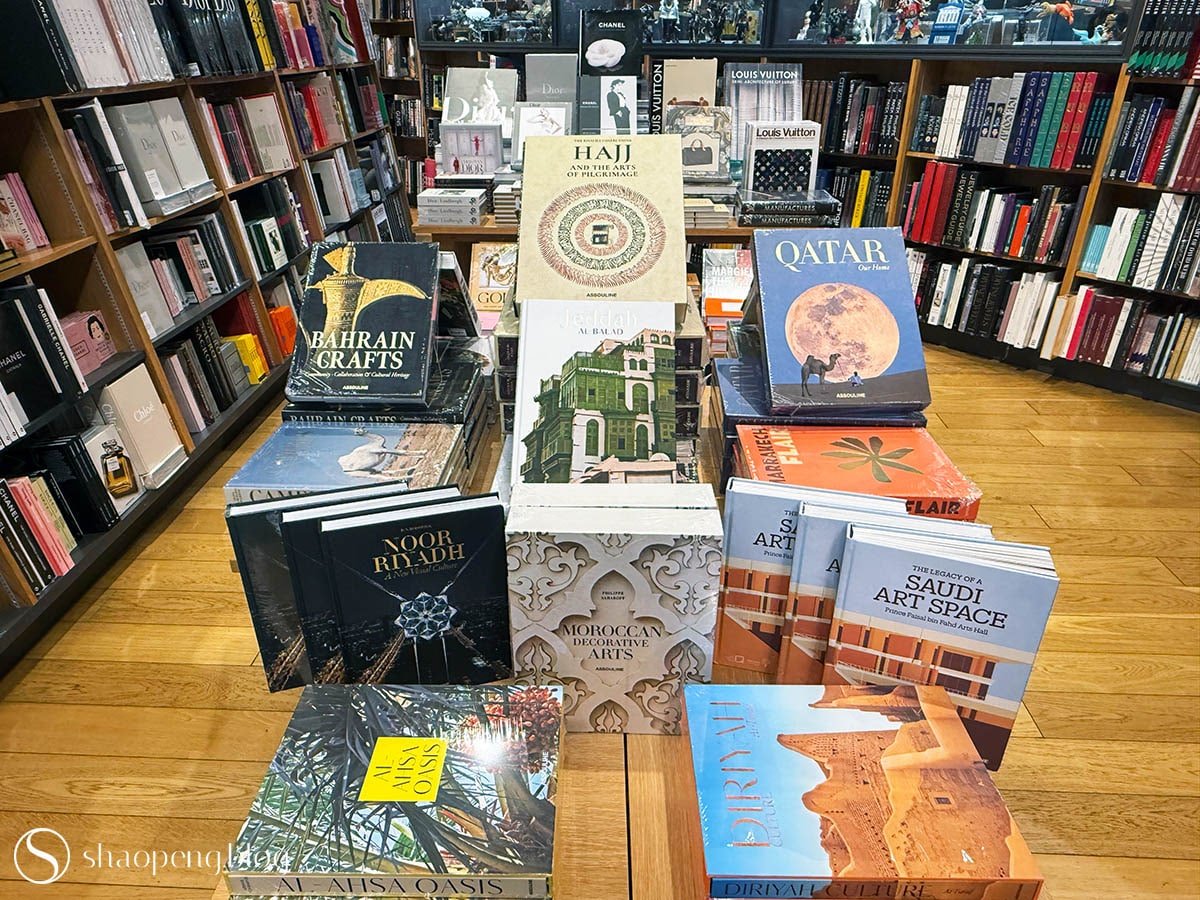
Books Kinokuniya's arts and design section.
Wherever I travel, I make a point of finding the largest bookstore in town. It has become a kind of ritual, perhaps a way of reading a city through what it chooses to put on its shelves. In Riyadh, that search led me to Jarir Bookstore. In Dubai, I expected something similar, and was surprised to find that the largest bookstore is called Books Kinokuniya — a Japanese chain.
Nestled in the heart of Dubai Mall, Books Kinokuniya is, in the best possible way, a place that resists its surroundings. While the mall bustles with visitors and shoppers alike, Kinokuniya draws you into a completely different world: one that is quiet but alive with the presence of books.
Its Arts and Design section is where I tend to lose track of time. The selection on Islamic art is especially strong, reaching beyond familiar titles into lesser-known publications you would be unlikely to stumble across elsewhere.
The collection spans both Arabic and English, though English readers seeking books on local Emirati culture and history will find the options somewhat limited. One title worth seeking out is UAE 101 Stories and Cultural Learnings, published by Qindeel, which fills that gap with practical tips and insights that help you navigate the UAE less like a tourist.
For those drawn to literature, the Middle Eastern Literature section offers a good selection of novels and poetry in English. On my latest visit, I left with a copy of The Prophet by Kahlil Gibran — long overdue, and I am glad to have finally picked it up.
Wanderer’s tip — If you are arriving via the Red Line metro, follow the signs to Dubai Mall and Kinokuniya will be one of the first things you see as you enter.
A quick note: Dubai’s cultural landscape is ever-changing; occasional updates and new sites may be added to reflect new discoveries.