
Wander in Dubai: Sikka Art & Design Festival
Dubai’s Art Season opens with Sikka Art & Design Festival, as art and culture breathe creativity and innovation into the historic quarter of Al Shindagha.
Sense of Wander: ★★★★★
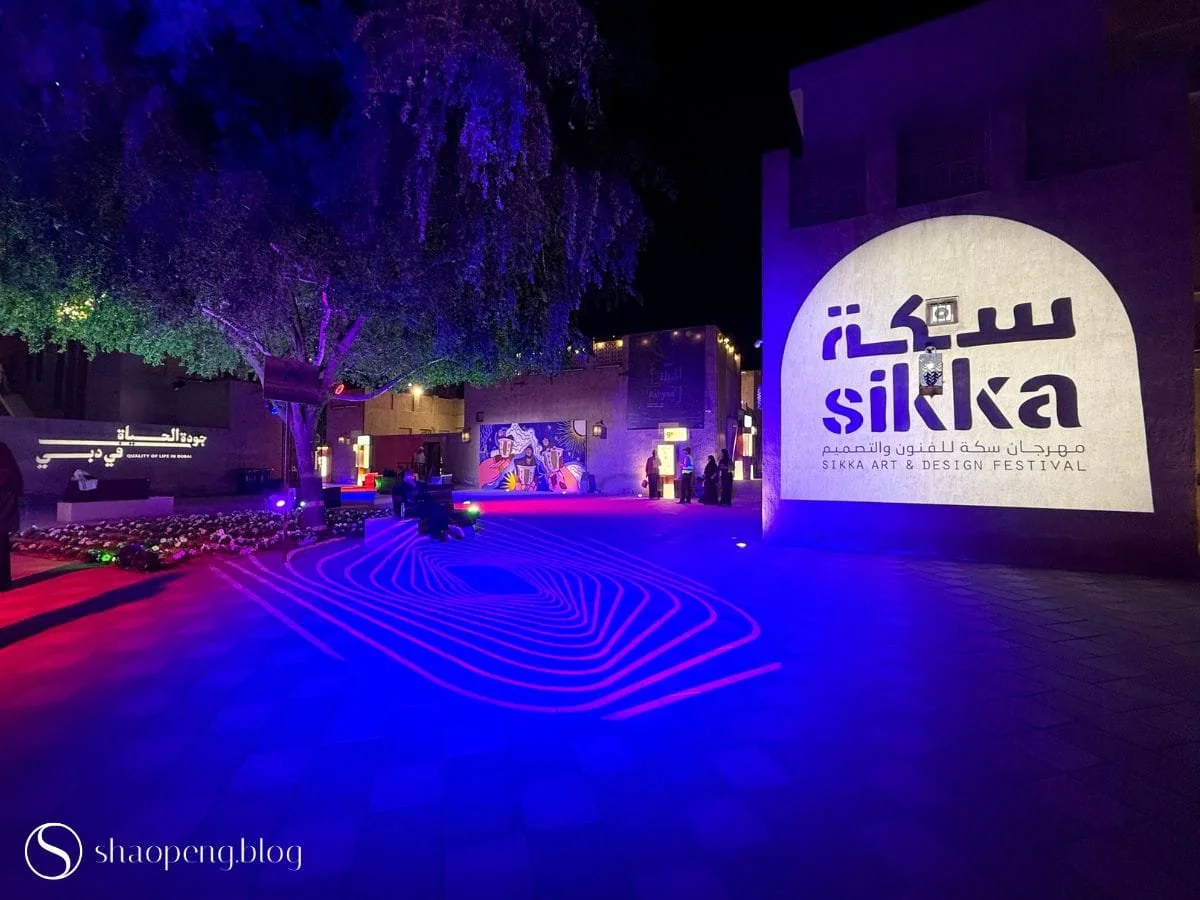
During the Sikka Art & Design Festival, contemporary culture finds its place among the streets and historic houses of Al Shindagha.
DUBAI, UAE — Dubai’s Art Season opens with the Sikka Art & Design Festival, an annual celebration of creativity and culture that brings together voices from across the United Arab Emirates and beyond. First launched in 2011 by the Dubai Culture and Arts Authority, Sikka has grown into a platform for emerging Emirati, UAE, and GCC creatives to showcase their talent.
Revolving around the theme “Imagining Dubai: Identities of the Future,” this year’s edition invites artists, designers, and performers alike to reflect on identity, belonging, and transformation — resonating with Dubai’s journey from a pearl-diving and fishing village to a global hub of innovation.
Throughout this 10-day festival, public art, concerts, performances, workshops, and curated exhibitions spill into the Al Shindagha Historic Neighbourhood, breathing life into the quarter’s narrow lanes and historic houses. Sikka welcomes visitors to wander beyond the museum’s usual paths, exploring houses and spaces once empty, now transformed into venues that offer one-of-a-kind encounter.
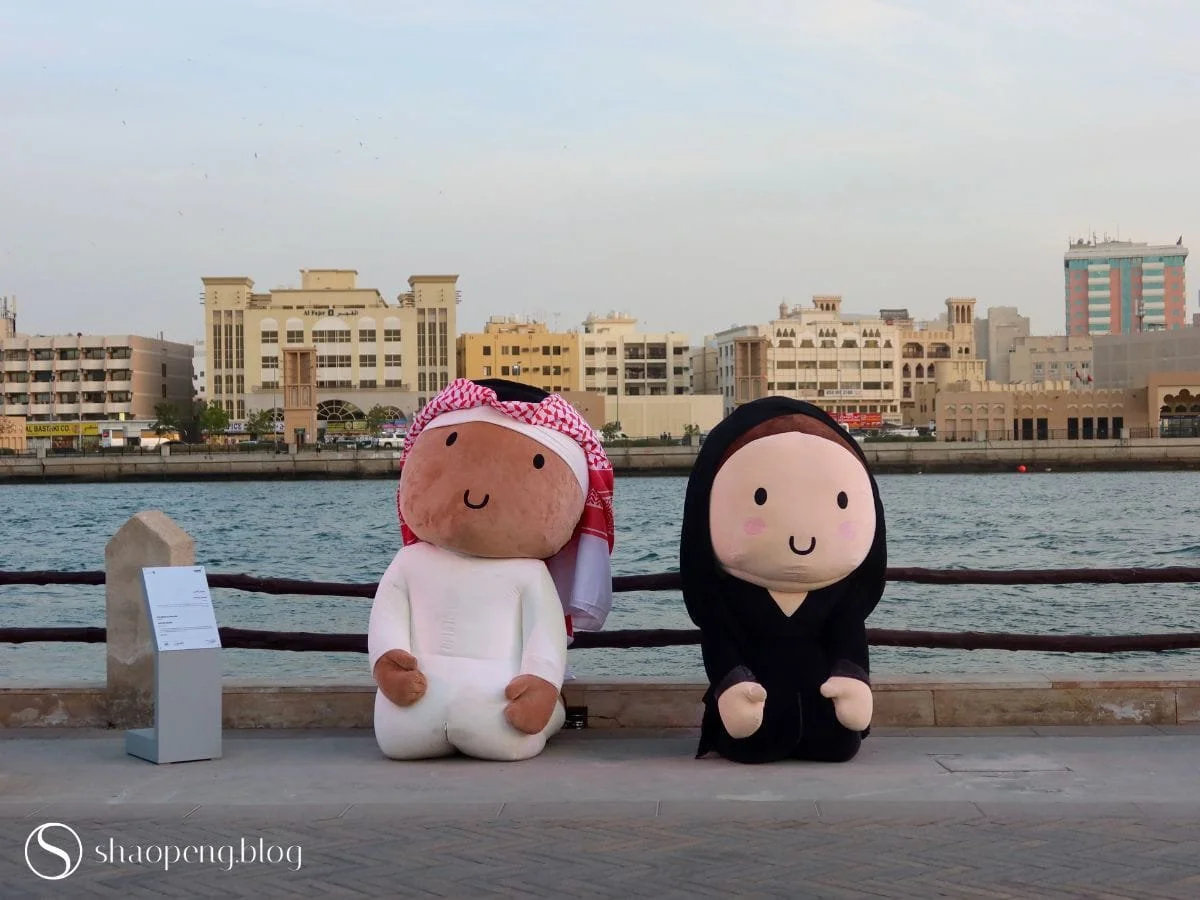
A97AB, a pair of plush dolls inspired by Khaleeji culture, becomes a much-loved presence at the festival.
Stepping into Sikka, visitors run into playful surprises along the creek. A97AB, a pair of oversized plush dolls by Bahrani artist Salman Alnajem — a boy in khutra and kandura and a girl in abaya — puts a smile on your face.
Nearby, obelisk-like City Gate by Egyptian artist Said Badr and the sweeping calligraphic sculpture Create by Syrian artist Sandra Boutros accentuate the promenade’s artistic flair, turning each step into a discovery.
Even authority merges with art: calligraphic works adorn the Dubai Police pavilion, illustrating how creativity can become an expression of power.
In addition to these public installations, the heart of the festival lies within the 16 Sikka Houses, curated by 11 individuals, each offering a different lens on art and culture.
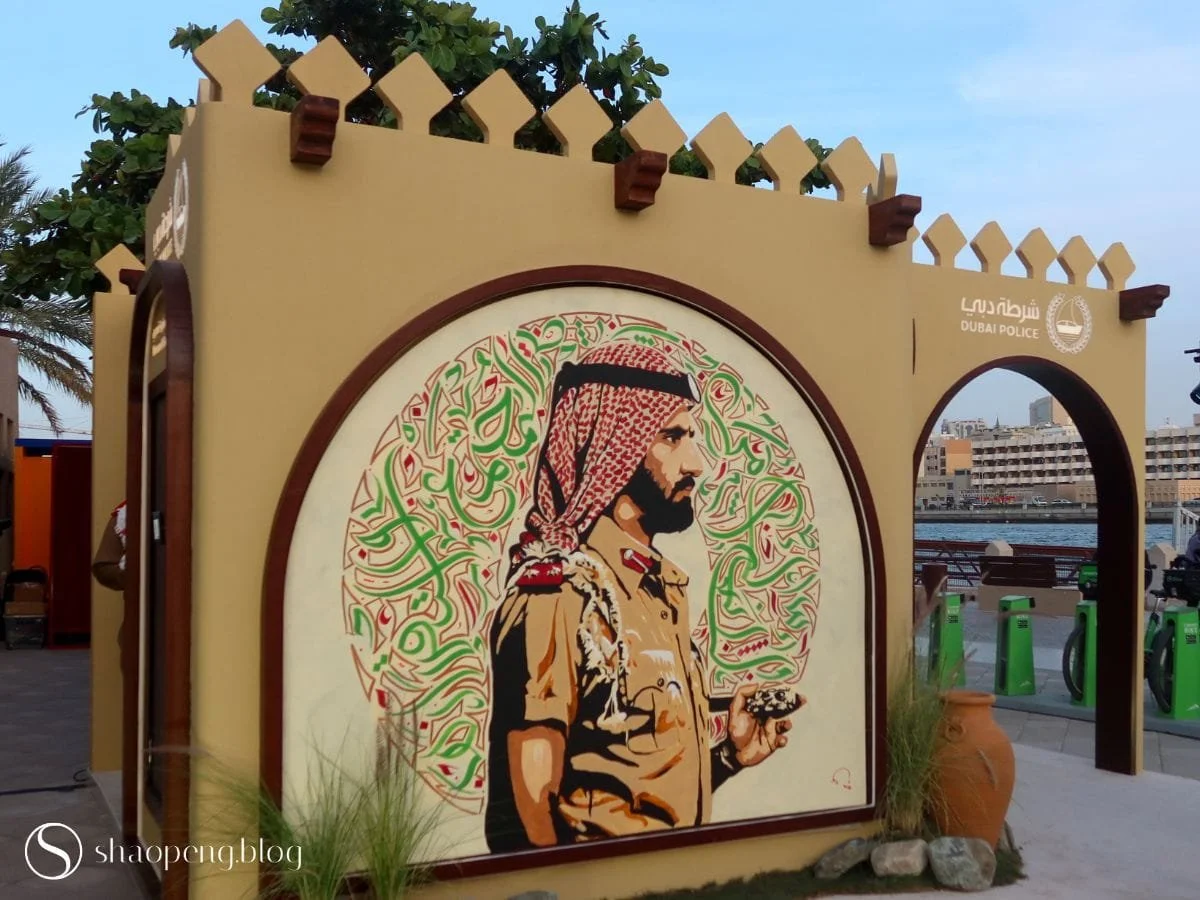
At the Dubai Police pop-up, calligraphy and painting become an expression of authority.
Under curator Mozah Lootah, the Visual Art House (H206) revolves around Barzah Fan, a theme that explores what carries us through time — places, moments, shared states of being. In traditional Emirati culture, the barzah, or majlis, forms the heart of the home: a space for gathering, counsel, and hospitality. This spirit anchors the Visual Art House, inviting visitors to pause, reflect, and explore.
The contemporary barzah welcomes visitors with benches and pillows — an open-air installation that encourages rest, conversation, or contemplation. At its heart is She Wove the Sun into the Heart, an homage to Bakhita Bint Abudulla Alkaabi, grandmother of artists Fatema and Ayesha Alkaabi.
Another installation, Haql Al Qaseed, immerses visitors in poetry, chants, and songs of nomadic tribes across the MENA region. Here, the dimly lit room becomes a “field of verses,” inviting you to wander, while folk chants fill the air.
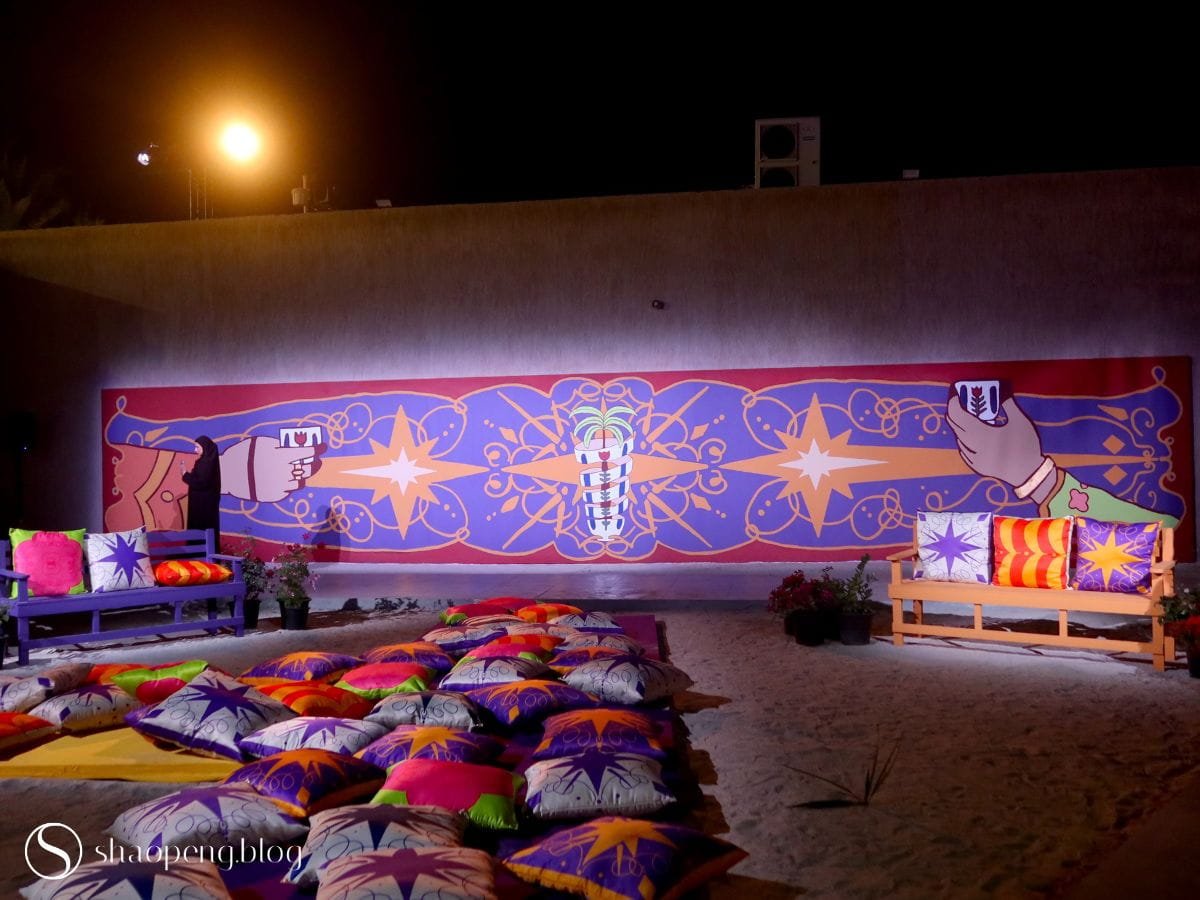
She Wove the Sun into the Heart takes the spotlight at Sikka’s Visual Art House.
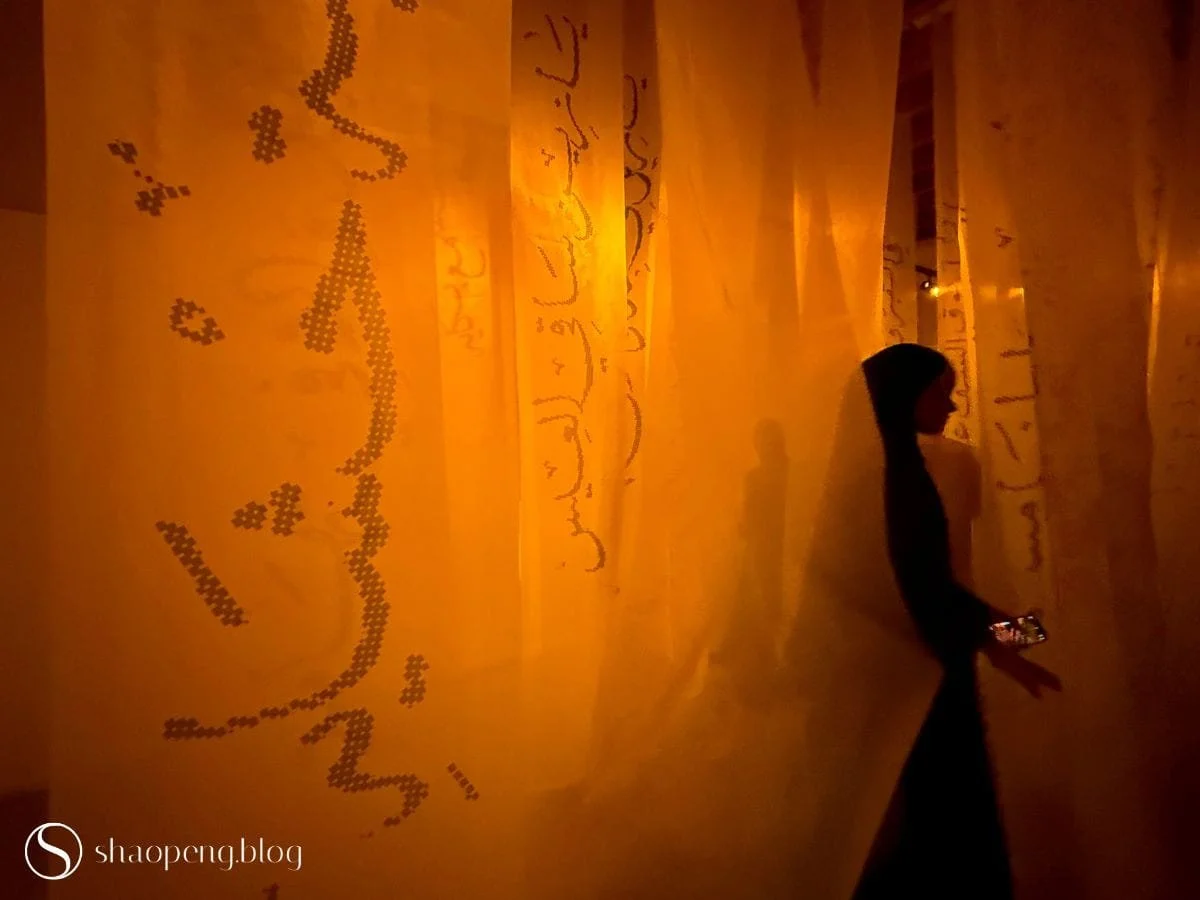
Haql Al Qaseed by Tasneem Al Nabhani and Zaynab Kriouech
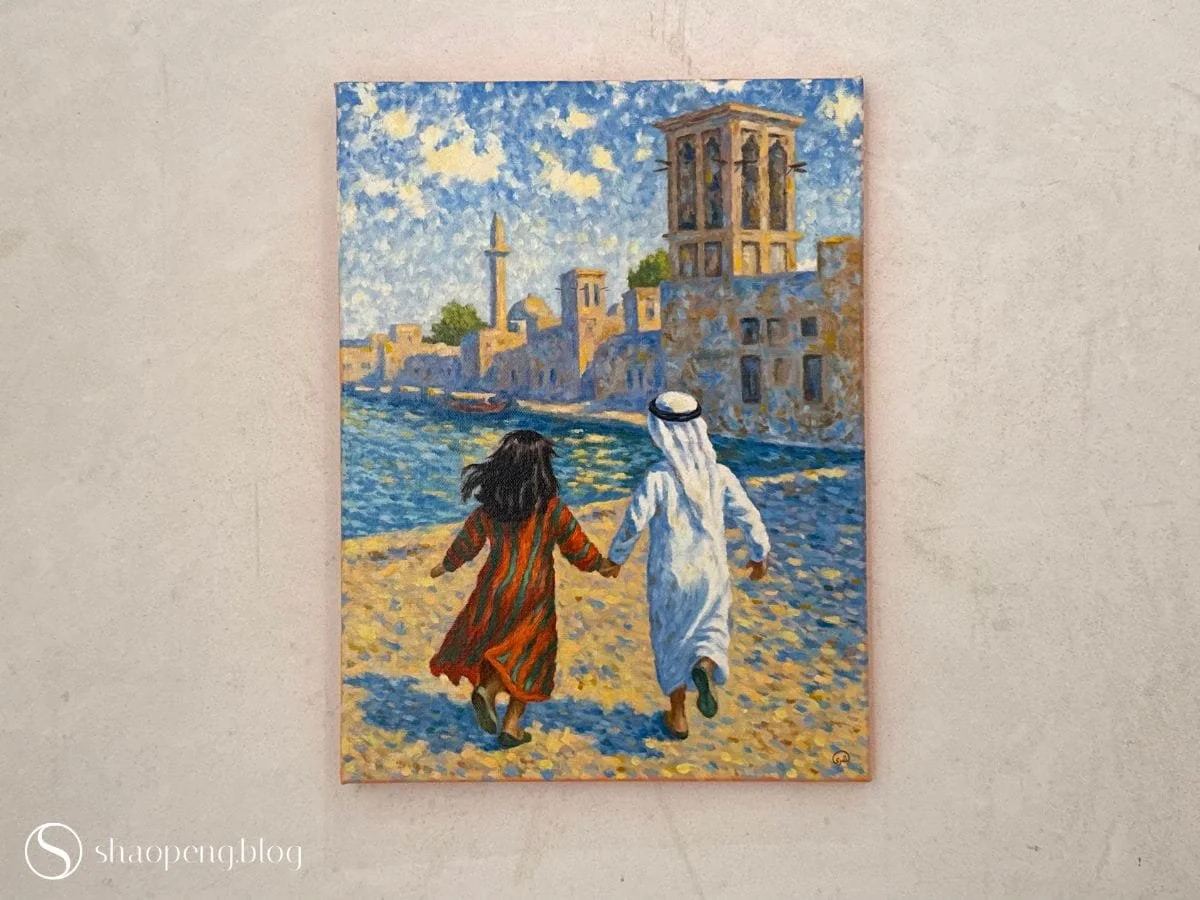
Hold My Hand by Bushra AlBastaki
Public art, too, channels the spirit of the majlis. At the Public Art House (H436), The Pearl Majlis by Duette Studio crowns the space with a glowing, pearl-like dome. Giant cuts of red fabric drape down, forming the body of the installation, accentuating the majlis’ role as a social and cultural anchor in Emirati life.
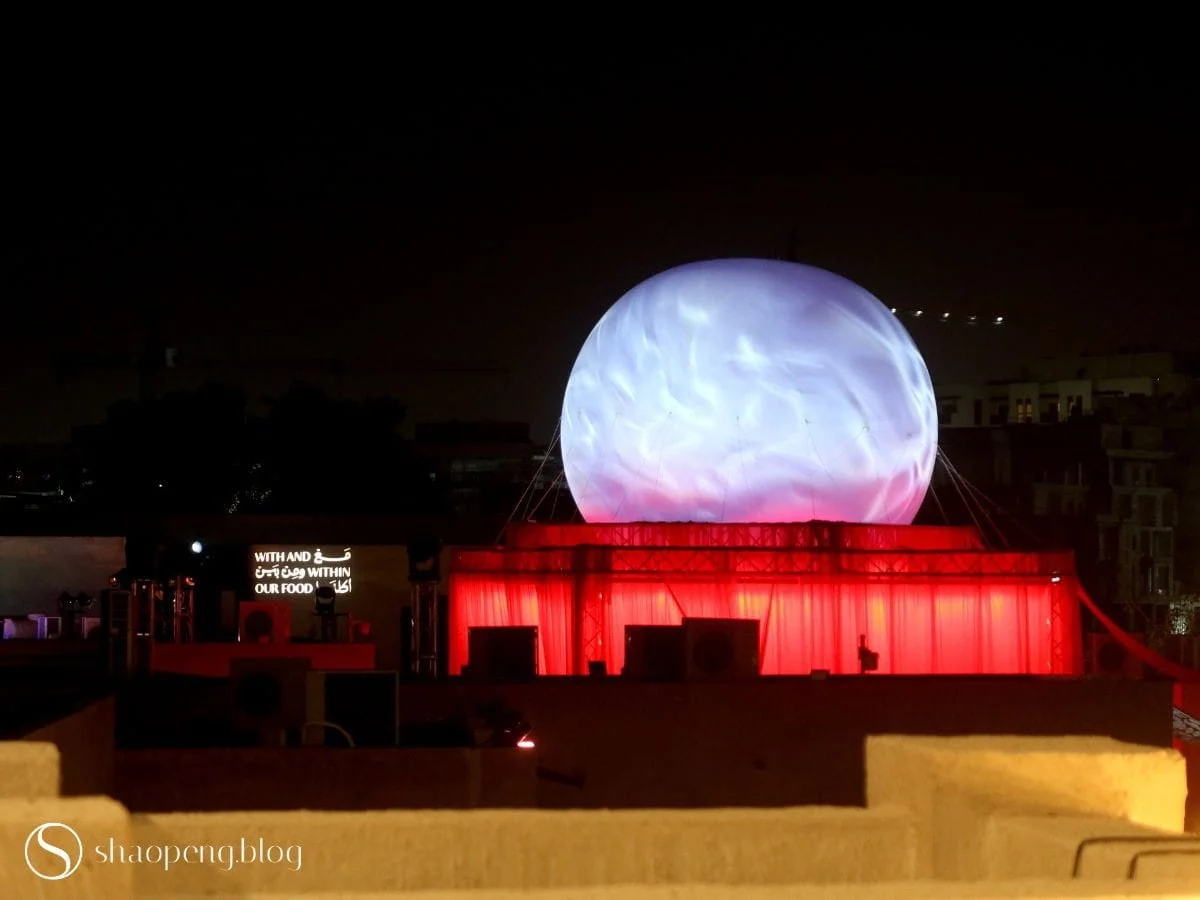
The Pearl Majlis by Duette Studio
Design House (H353) celebrates emerging Emirati creatives, translating cultural narratives into contemporary practice.
Shaikha Waled’s installation transforms oral folk wisdom into a spatial experience. Inspired by the Emirati proverb “لو بغيت الجود انحي دغدنه” (“If you seek real kindness, approach it at its core”), her work features a black bisht hung on a cloak rack that’s carved with geometric patterns often embroidered along the rim of this prestigious garment. According to Waled, the piece references a majlis tradition: when a man seeks help, he gently pulls the edge of another man’s bisht, signaling the need to move to a quieter space to talk.
Through design, Waled — still a university student — brilliantly brings Emirati heritage into the present, making folk wisdom tangible, contemporary, and intimate.
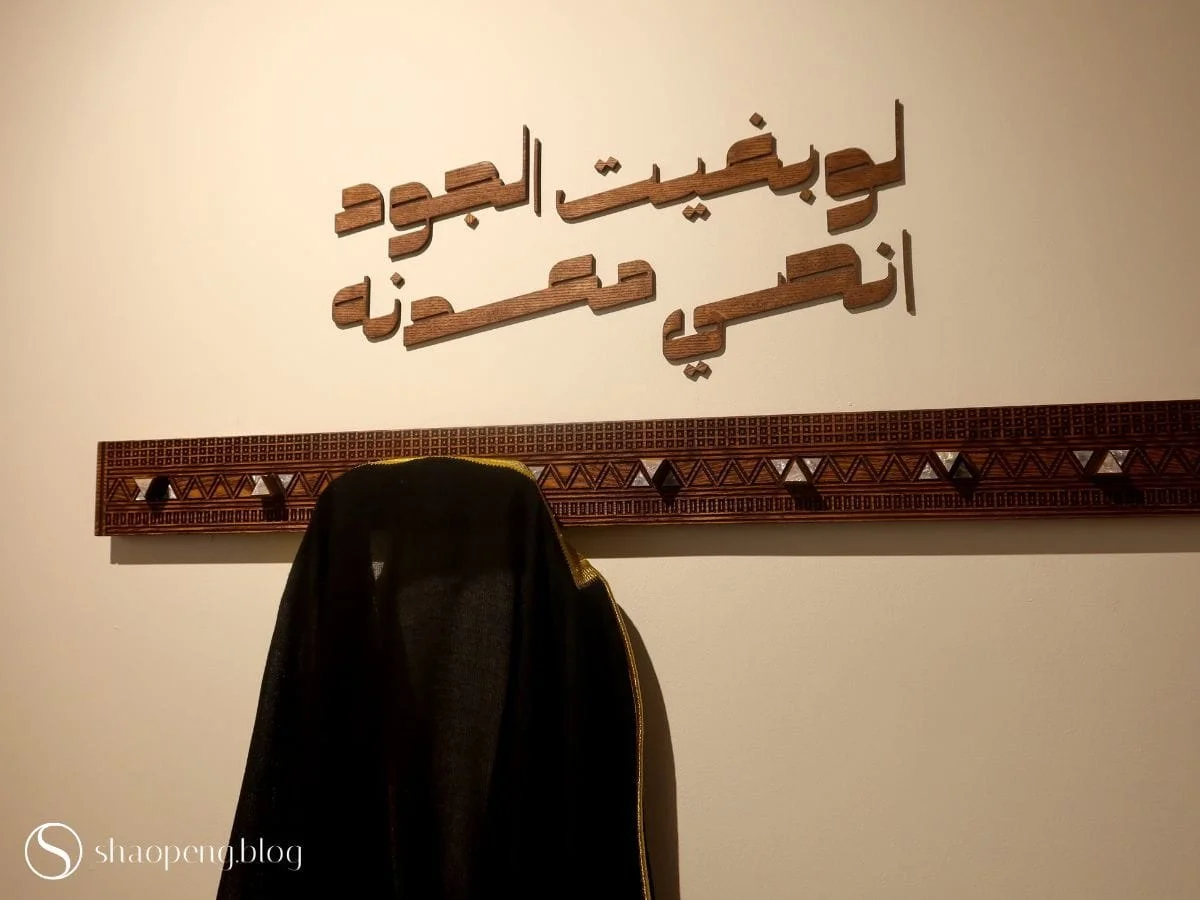
Shadows of Proverbs by Shaikha Waled
My favourite house, Khaleeji House (H164), gathers 21 artists to intrepet 9DA3 — a term meaning “headache” in Arabic but colloquially describing a state of overstimulation.
Before entering the house, you’ll notice that the wall to the right of the door has been transformed into a Game Boy. At night, light projections turn its screen into a playful video installation that is invisible during the day.
Once inside, you may find yourself somewhat disoriented: in the courtyard, a surreal installation features a BlackBerry phone buried in the sand. One room is lined with light boxes displaying advertisements from the early 2000s Khaleeji internet, an installation titled Ad Space 2.0 by Emirati artist Mouza Al Hamrani. Another room is filled with hundreds of textile eyeballs that seem to stare right at you, as if asking: What do you see?
Compared to the exhibitions in other houses, the Khaleeji House is delightfully overwhelming. It evokes nostalgia for Millennial visitors like myself while simultaneously stimulating the senses in ways the other houses cannot. Even calligraphy is energetically charged: in the work of Saudi artist Alif, neon acrylic letters glow in the dark, adding a modern pulse to this sensory spectacle.
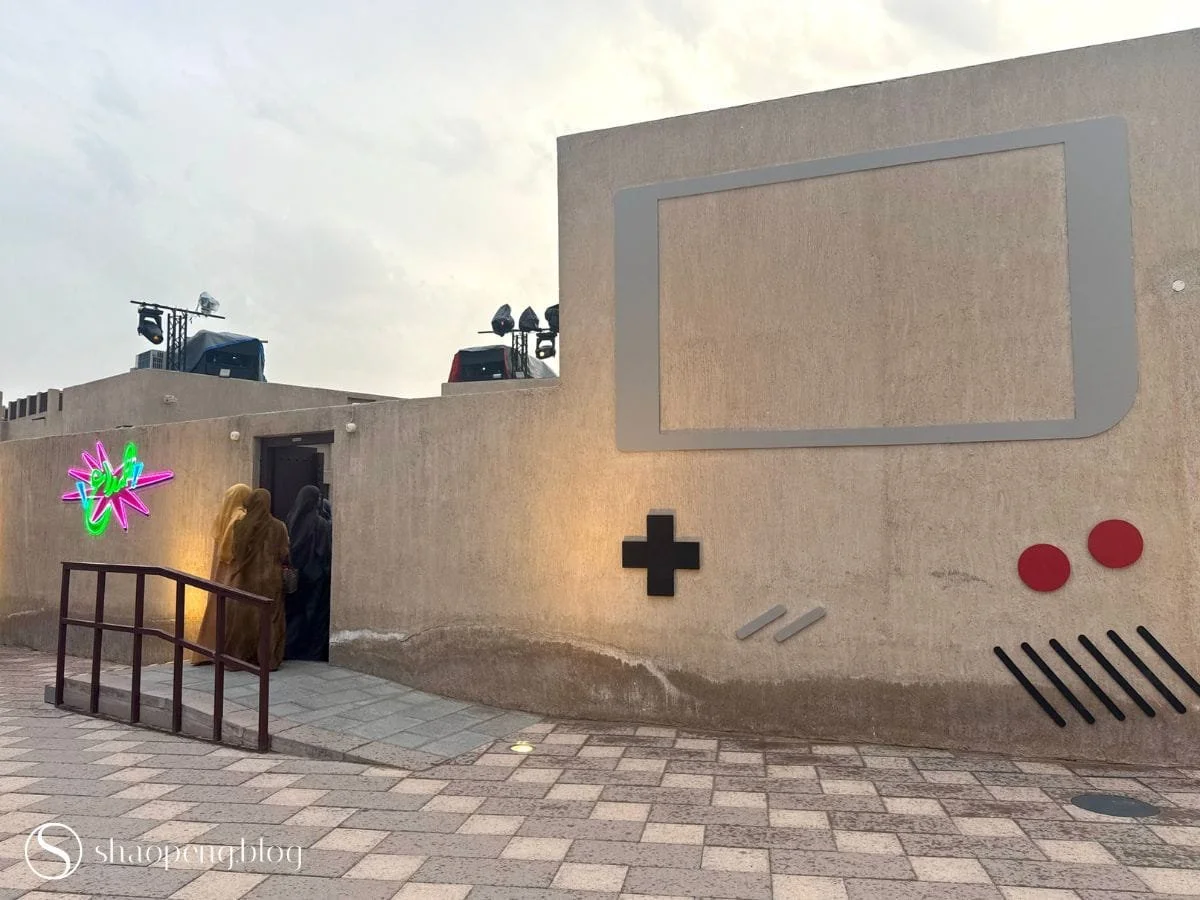
Entrance to Khaleeji House at Sikka Art & Design Festival 2026.
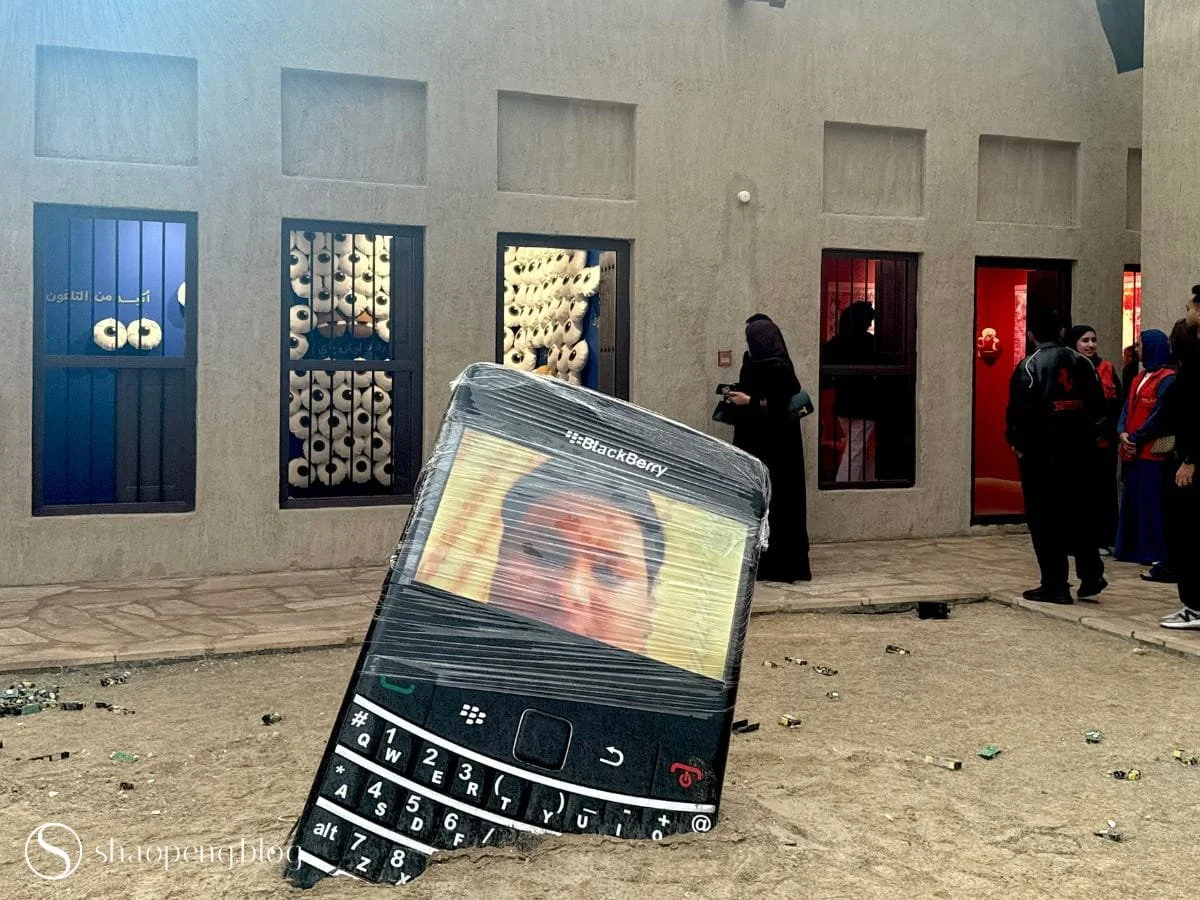
The courtyard of Khaleeji House spotlights a giant Black Berry installation.
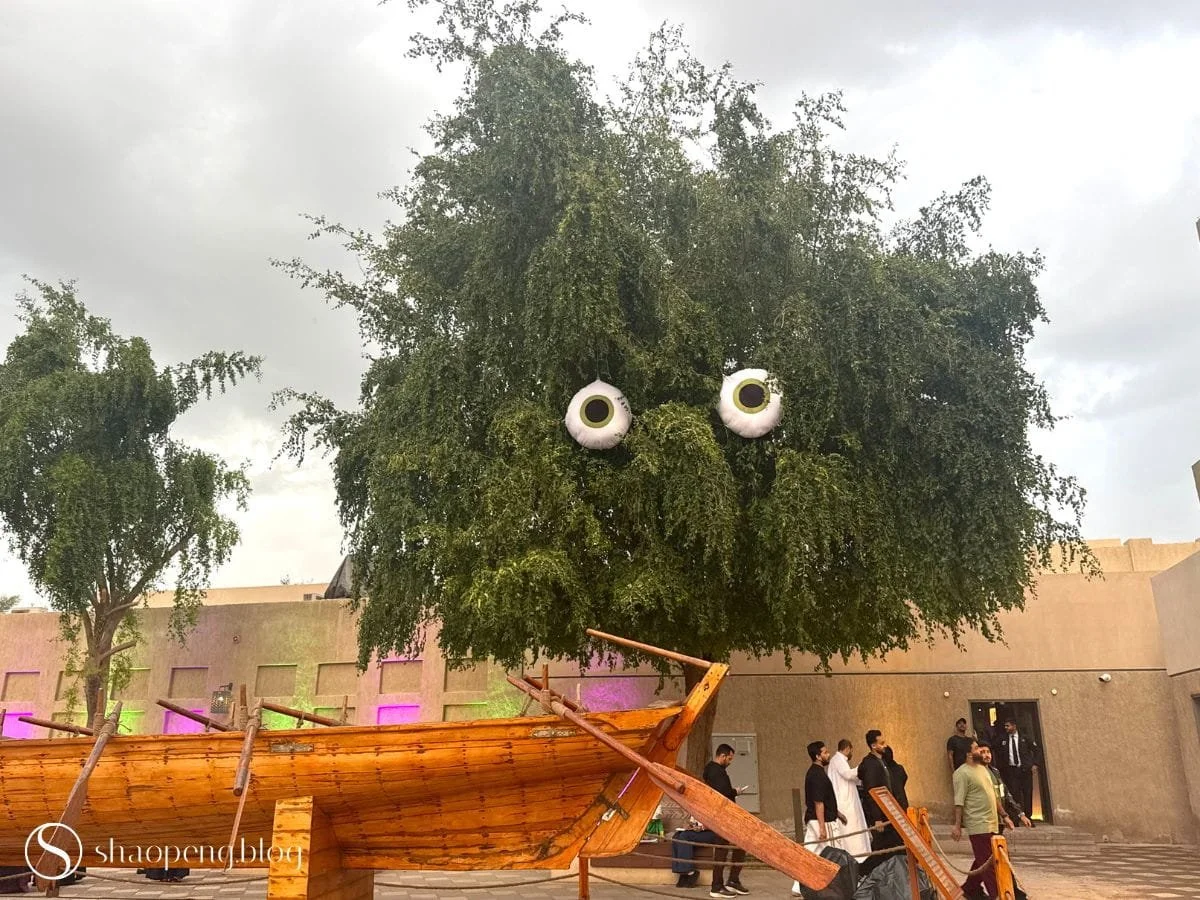
Thalatha’s Shu Tshoof? extends to a tree outside the Khaleeji House.
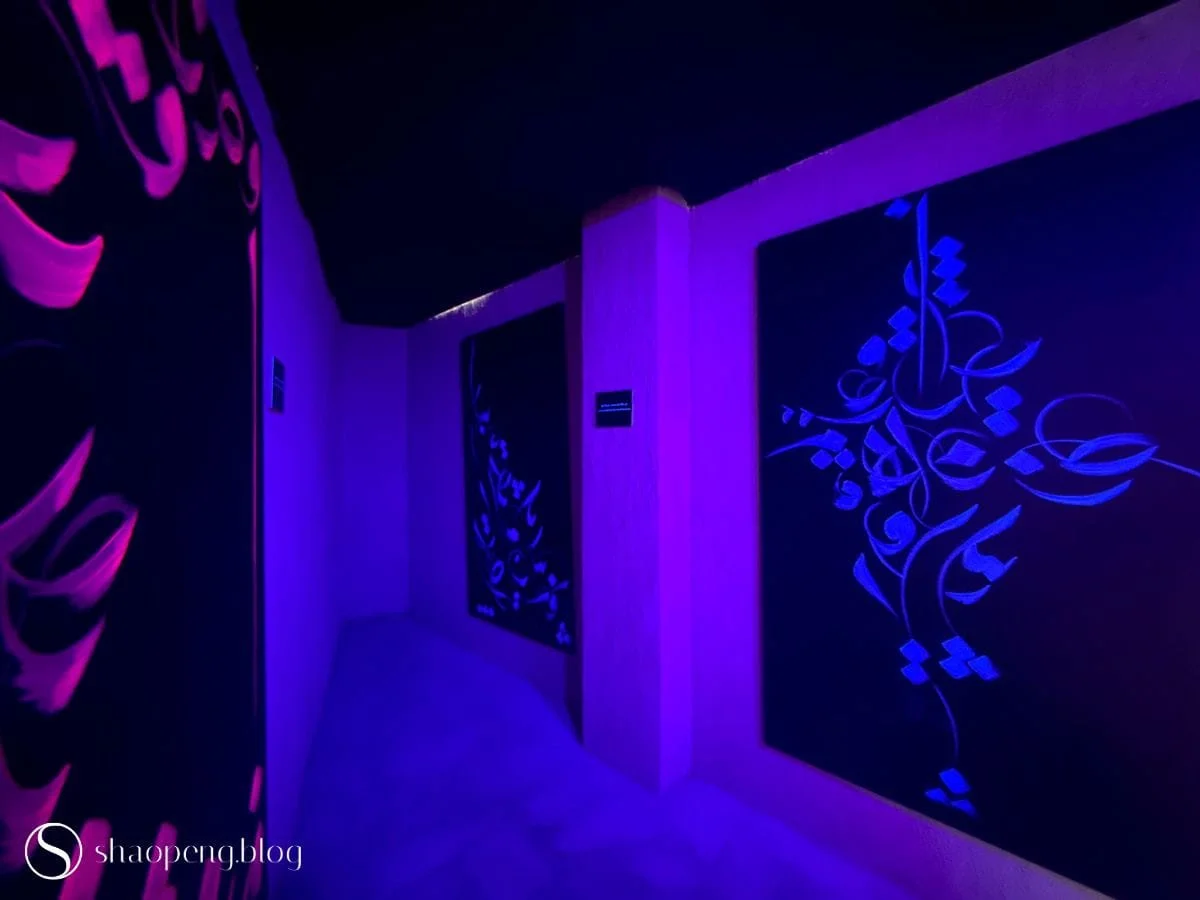
My Mom’s Joke by Alif
For those seeking artworks with a human touch, head to the Ceramic House (H207), where pottery and ceramic pieces by emerging talents, established artists, and even children come together in a lively display of unfettered imagination.
The wide array of objects and sculptures reflects the diversity of contemporary ceramic practices. Among them, my favourite is The Gallop of Letters by Majd Habashneh, a poetic installation inspired by the artist’s love for horses.
Above the pottery horse hangs a delicate silhouette of galloping horses, set amid Arabic letters in Thuluth script; both seem to radiate a shared strength and elegance. Together, they cast shifting shadows across the wall, simulating the motion of a carousel ride. In the background, the recitation of a poem by H.H. Sheikh Mohammed bin Rashid Al Maktoum — celebrating his love for horses — adds a lyrical touch to the experience.
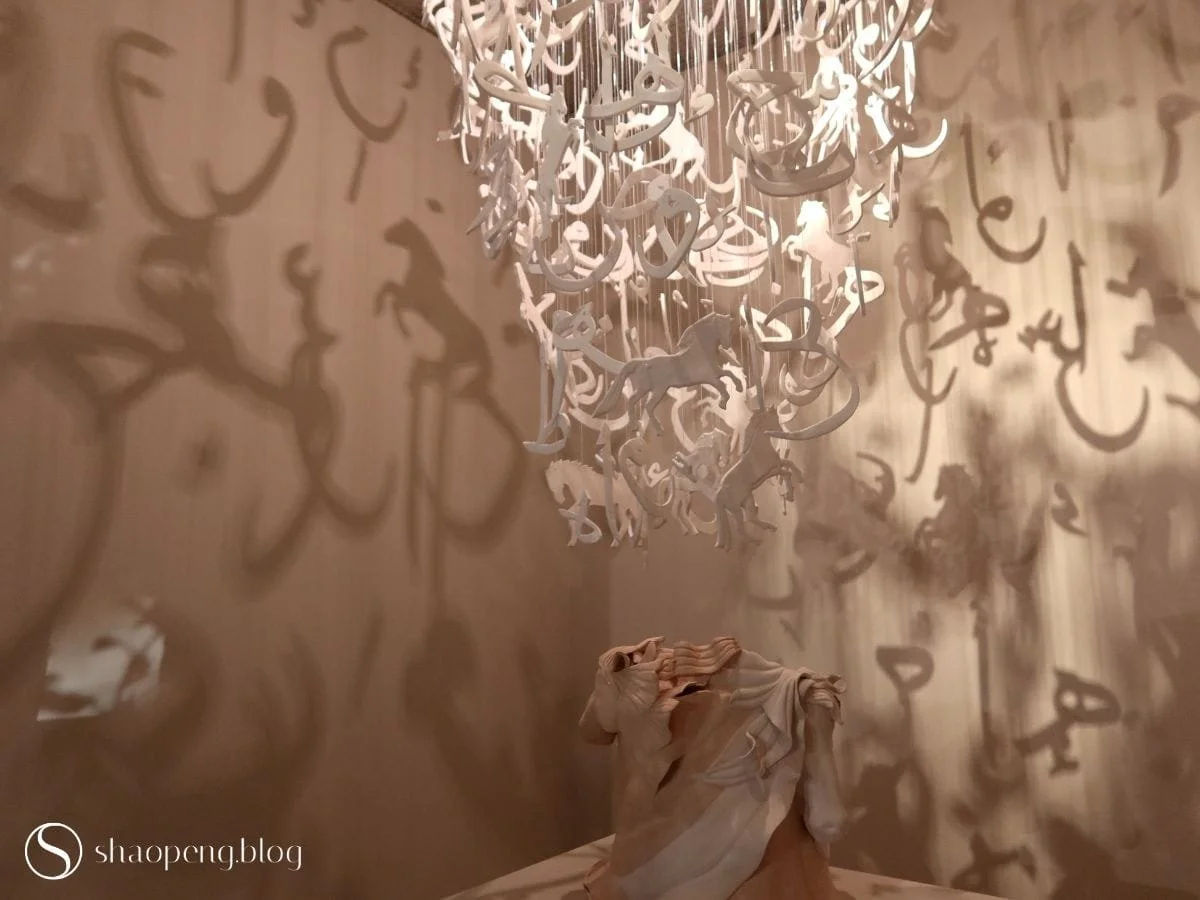
The Gallop of Letters by Majd Habashneh
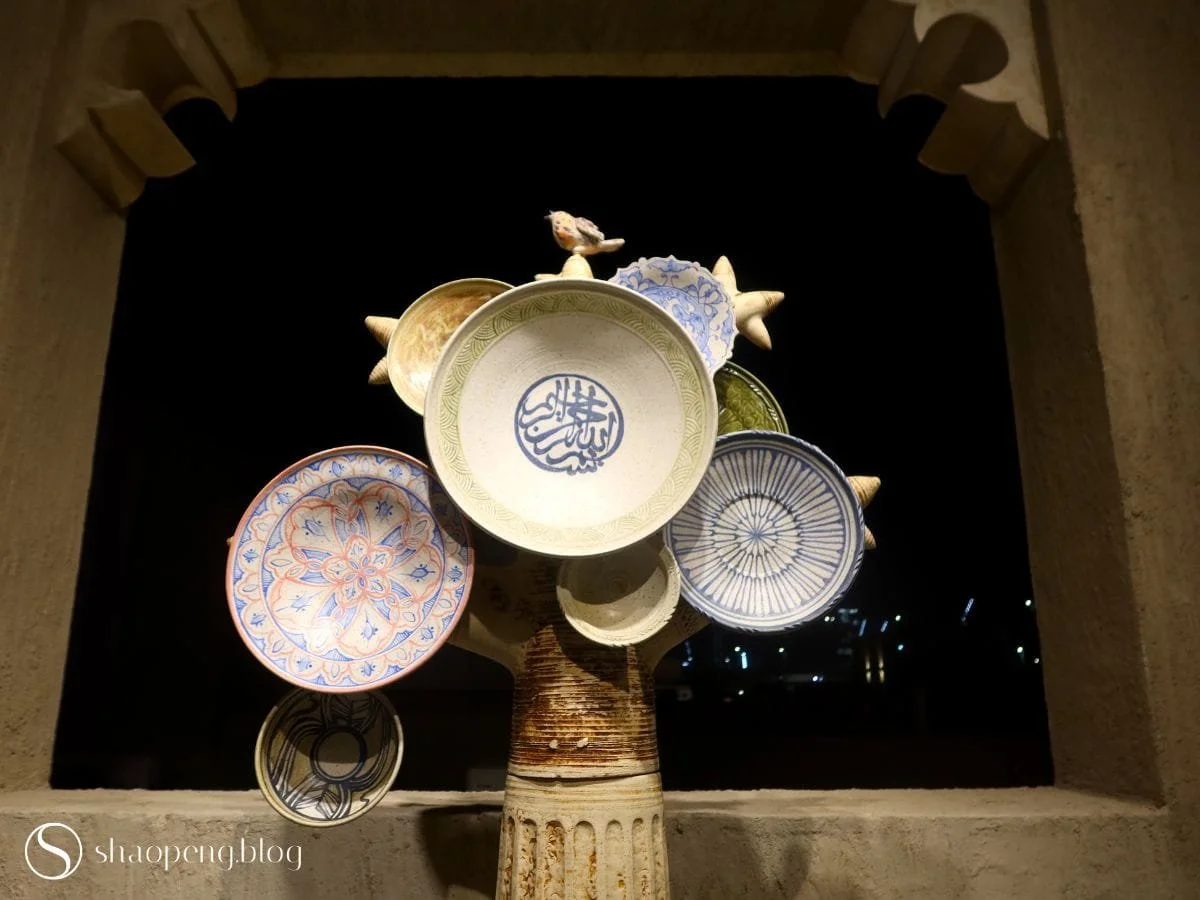
An installation of ceramic plates by Andrii
Besides handicrafts, digital tools — especially artificial intelligence — are opening new ways for artists to channel their creativity. At Art & Tech House (H341), a curated selection of works delves into the complexities of contemporary digital culture, shedding light on the evolving dialogue between art and technology.
As I wander from one piece to another, I pause before an audiovisual installation by Mohammed Altaie. Each screen panel — pairing meditative narration with shifting, mesmerizing visuals — guides viewers to an inward journey. This is one of the rare cases where I experience a digital work of art in its entirety.
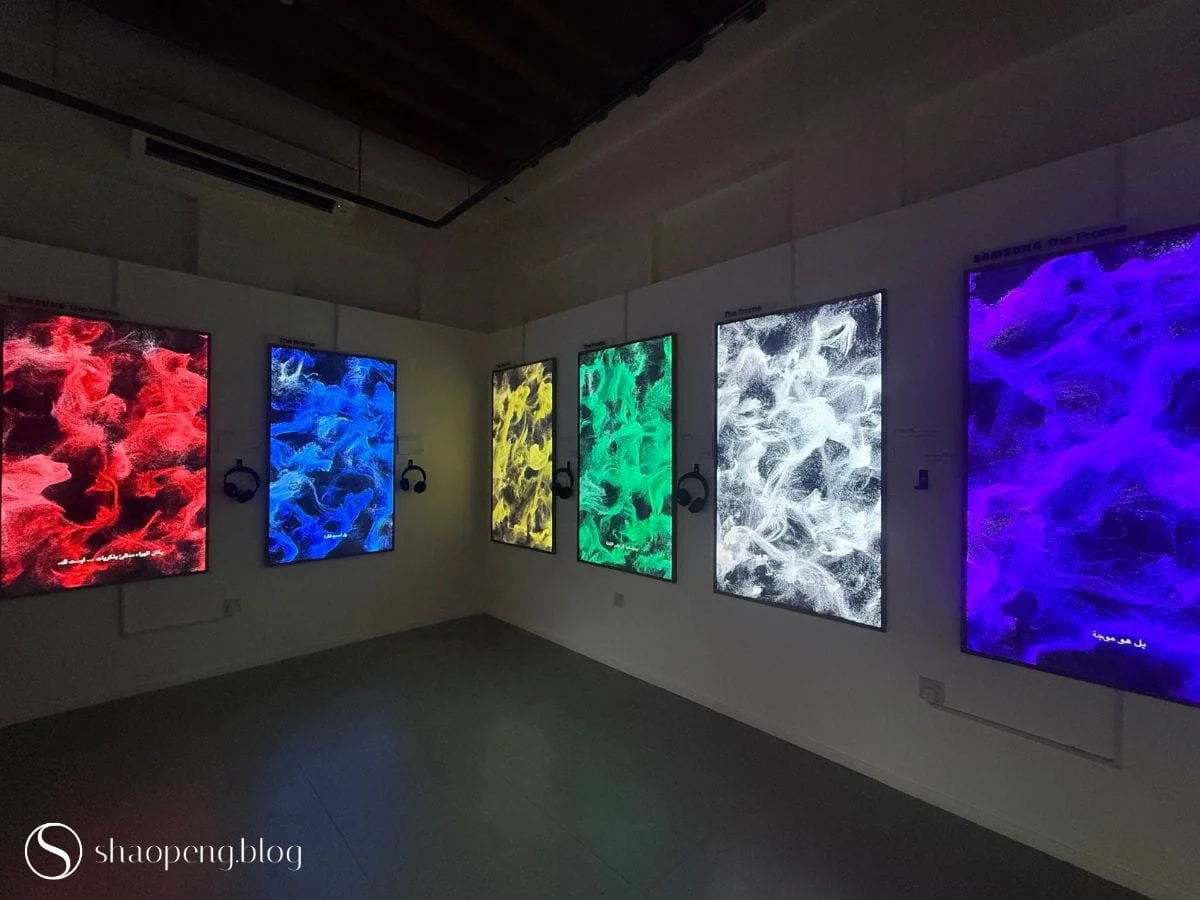
343 System: INNER Installation by Mohammed Altaie
A surprise at Sikka is the International House. Curated by Kotaro Watanabe, the house introduces Japanese aesthetic ideals that may feel unfamiliar to audiences in the Gulf region. Its courtyard has been transformed into a karesansui, or dry landscape garden, planted on Dubai’s soil, creating a minimalist, meditative space that celebrates simplicity and mindfulness.
My favourite piece is Thinking of Yesterday’s Sky, in which Aki Inomata uses 3D printing to capture the clouds that drifted across Dubai’s sky the day before. The effect is achieved by injecting tiny amounts of milk into water through a modified 3D printer, forming delicate, cloud-like structures in a glass of water.
What makes it mesmerising is that the clouds are not static — they slowly dissolve and disperse over time, just like clouds in the sky. The work embodies an ephemeral quality rooted in the concept of mono no aware, a Japanese aesthetic that embraces impermanence. You are invited to consume the artwork — though it should be done at your own discretion.
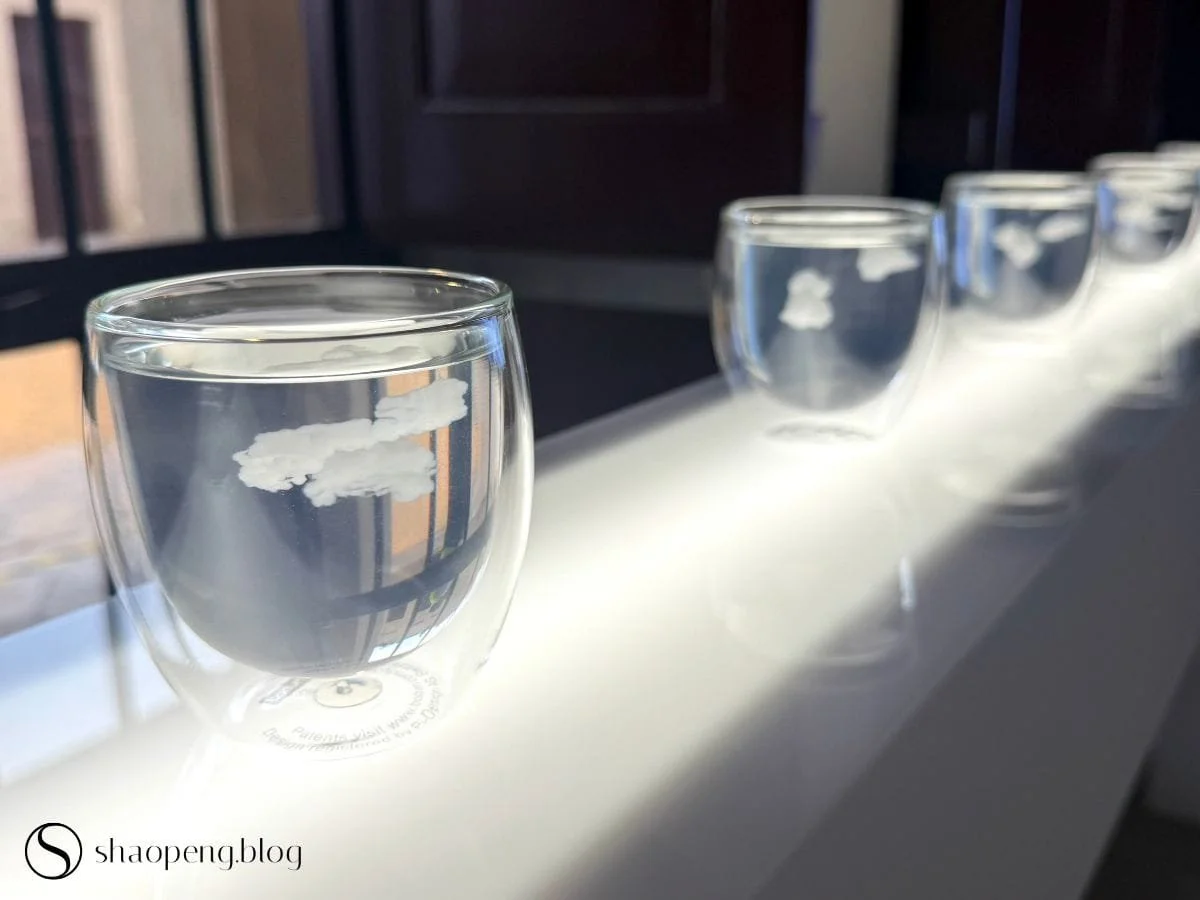
Thinking of Yesterday's Sky by Aki Inomata
Indeed, food is central to any culture, and at the Culinary House (H416), the exhibition With & Within Our Food explores the evolution of Emirati cuisine as a living practice that is shaped over time by its landscape, people, and migration. The exhibition is accompanied by a research publication for those who want to dive deeper into the subject. Throughout the festival, you can also join dining experiences offered by guest chefs, turning learning into a fully sensorial journey.
For those pressed for time, I recommend trying the special karak by chef Faisal Naser, who reimagines this longtime favourite by blending chocolate aseeda as a base layer in the chai — a culinary art that you can sip.
If you’ve had your fill of art for the day, simply wander along the creekside to soak in the festival’s vibrant energy and admire the murals scattered across the neighbourhood.
Throughout the day, music concerts and performances enliven the historic quarter, and for those who love to shop, Sikka offers a curated selection of art and design objects, abayas, and Emirati-inspired souvenirs.
Hands-on experiences are also available for both children and adults. I myself joined a dukhoon-making workshop — again! Since my visit to the Al Ain Traditional Handicrafts Festival, I’ve been studying this art and experimenting with making dukhoon at home. The workshop at Sikka, led by Budoor Alkhoori, has enabled me to refine my own recipe. I feel deeply grateful to Budoor for sharing her family recipe.
All in all, Sikka is not just an art and design festival — it has something in store for everyone. If you ask me, I would recommend visiting before sunset, so you can experience the public artworks in both daylight and after dark, as the lighting and nighttime atmosphere transform them completely.
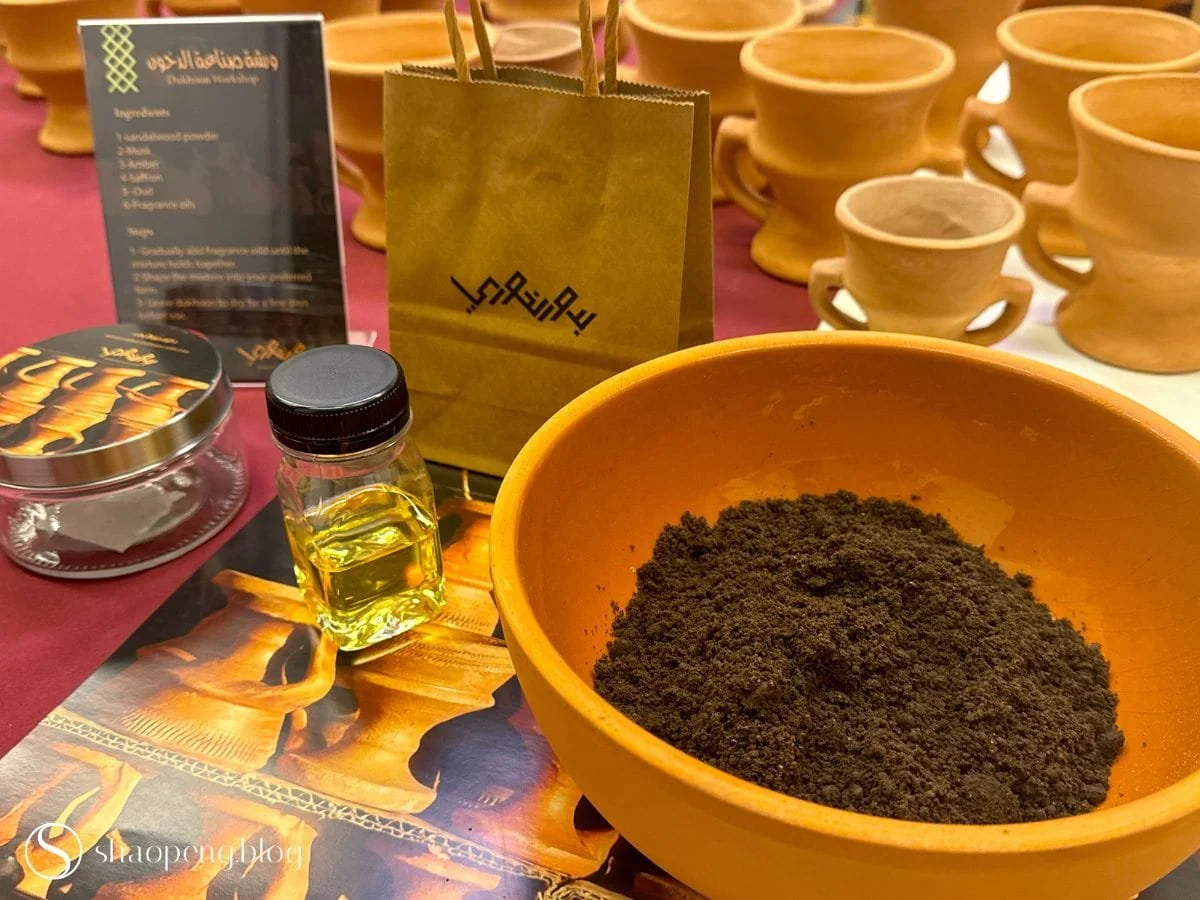
Dukhoon-making is one of many heritage-inspired workshops offered at Sikka.
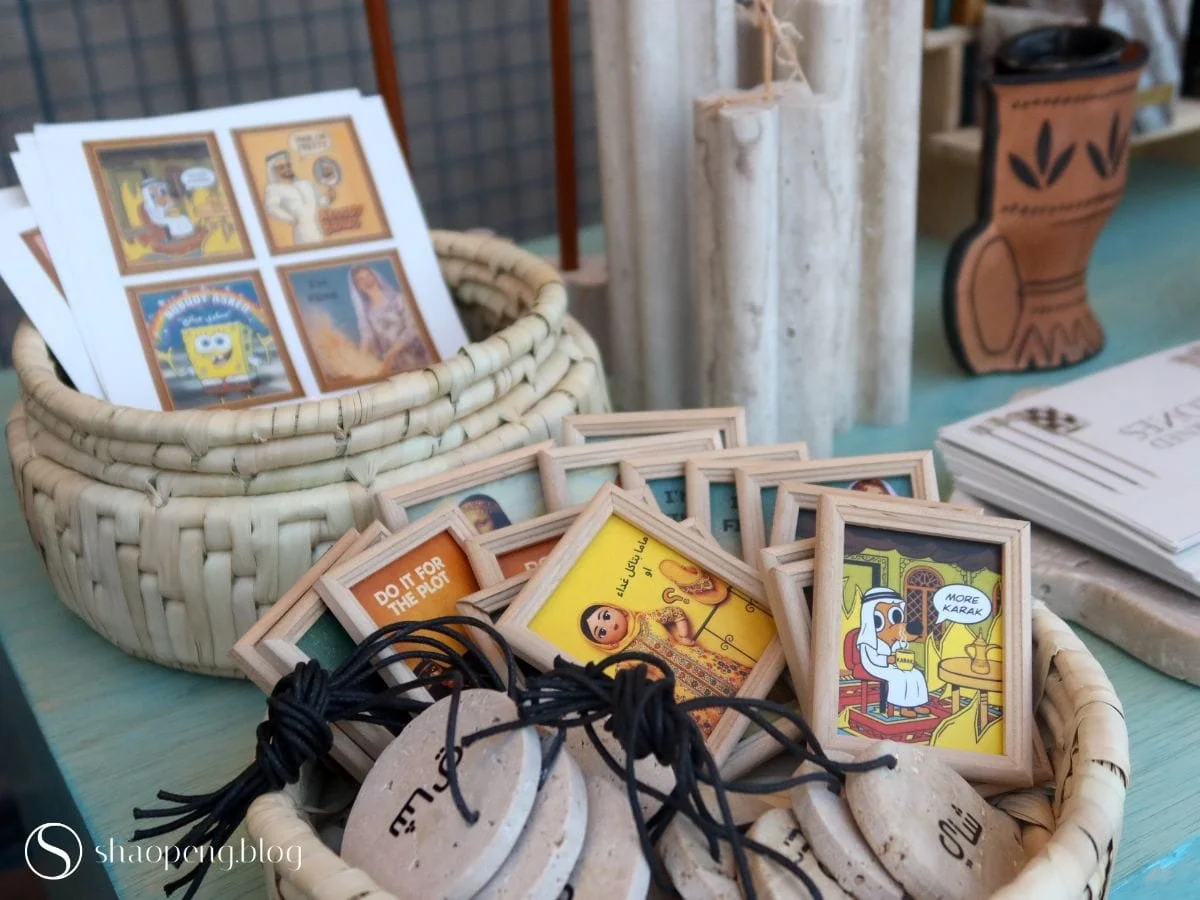
Souvenirs celebrating Emirati heritage are hard to resist.
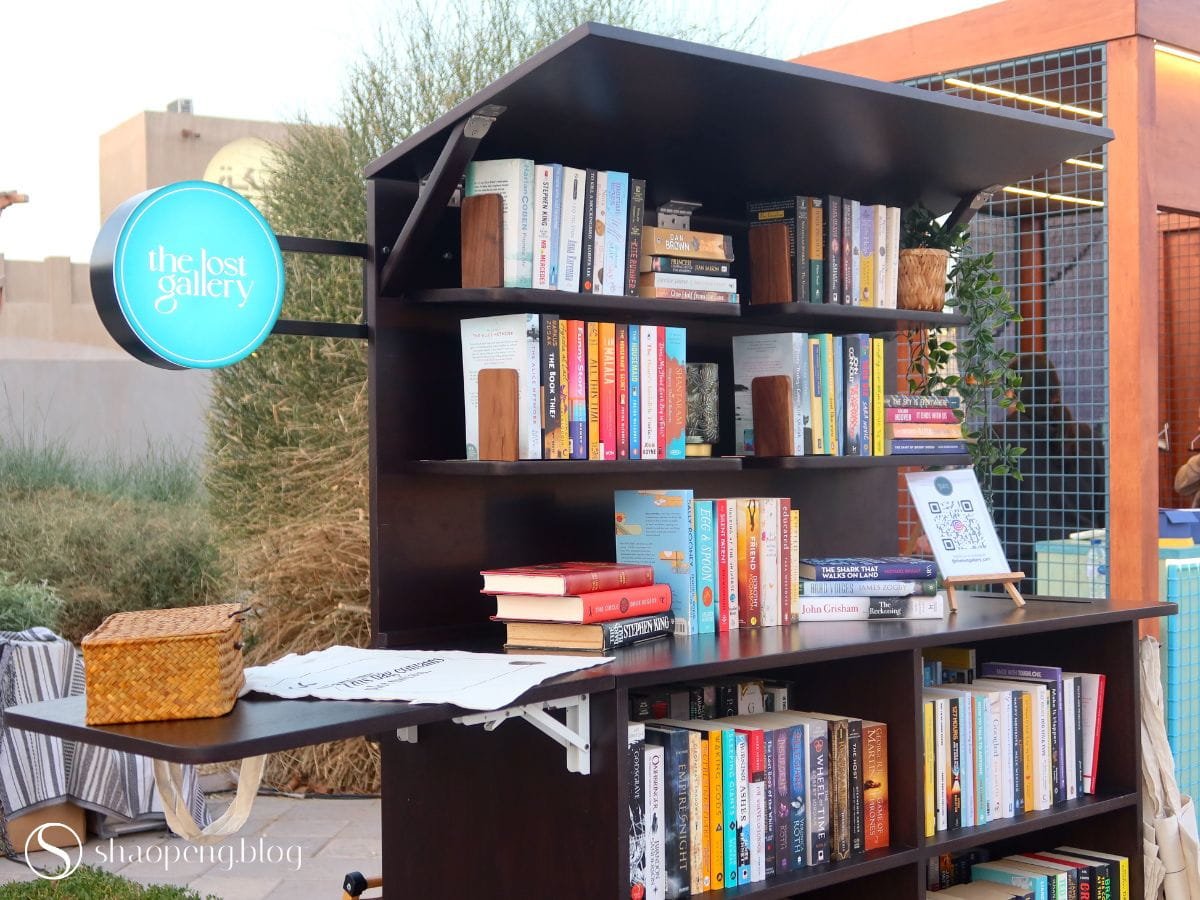
The Lost Gallery offers a selection of books for English readers.
Reference:
Dubai Culture & Arts Authority. (2026). Sikka 2026 Guide [PDF]. Retrieved from https://ugc.production.linktr.ee/a33c12f9-75e8-4ba5-b493-3d2cbb1237f8_Sikka-2026-Guide.pdf
Sikka Art & Design Festival takes place in the Al Shindagha Historic Neighbourhood in Dubai, and runs until Feburary 1, 2026.