
When Himalayan Deities Walk Into the Modern World: The Art of Tsherin Sherpa
What happens when the deities and spirits of the Himalayan peaks come down from the mountains and stumble into the modern world? Tsherin Sherpa’s latest solo exhibition, Endless Flow, has answers.
Sense of Wander: ★★★★☆
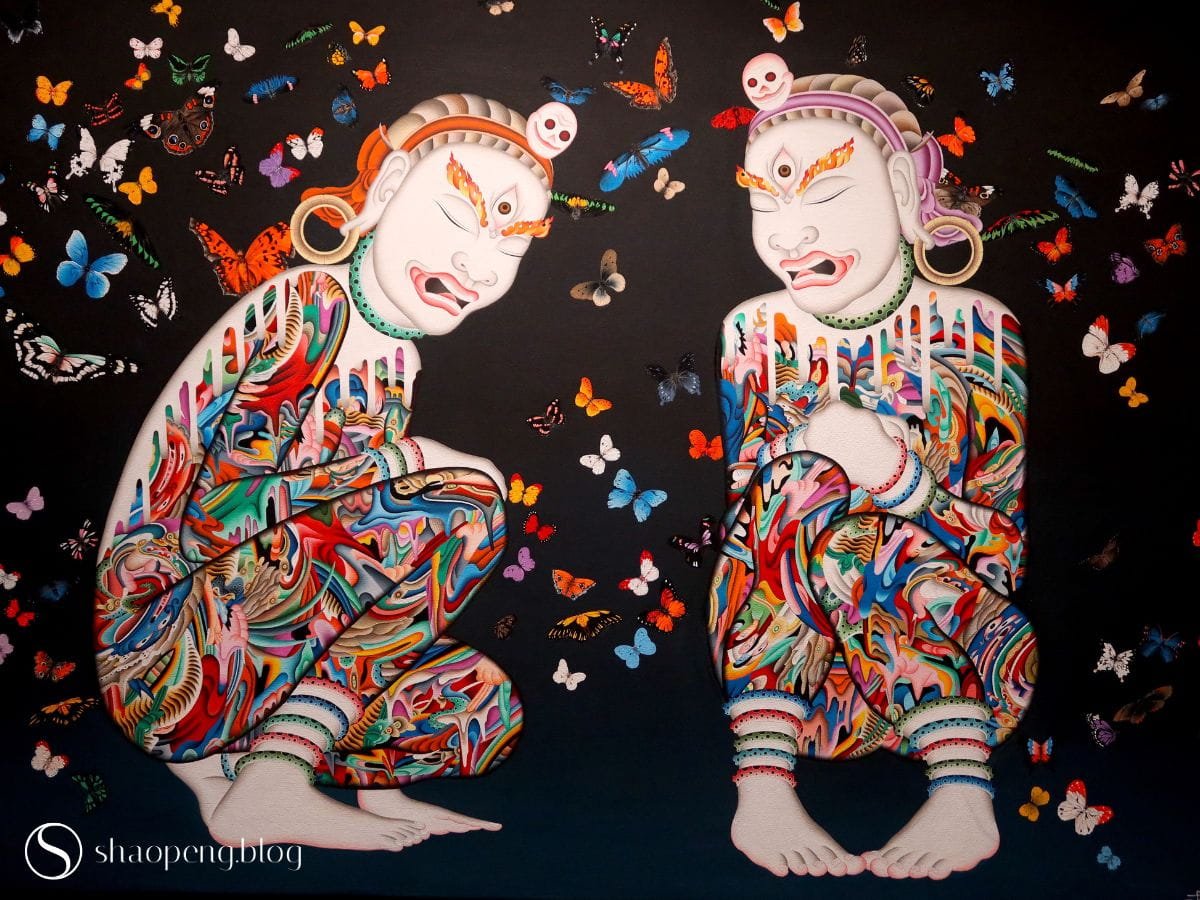
Beauty Lies in Beholder’s Eyes (2025)
TAIPEI, Taiwan — One does not expect to encounter Himalayan deities here, but in Tsherin Sherpa’s world, they arrive without ceremony.
At the Mongolian and Tibetan Cultural Centre in Taipei, Sherpa’s solo exhibition Endless Flow opens to curious scenes: sacred figures flash peace signs as if pausing for a selfie; spirits stand with hands on hips in superhero-like confidence; others idly blow pink bubble gum into the air. You almost expect them to reach for a phone in their pokcet. Here, the sacred does not remain distant, but learns to move lightly, even playfully, through everyday life.
Sherpa’s journey began far from Taipei, in Kathmandu, where he was born into a Tibetan family specialised in the sacred discipline of thangka painting. Under the guidance of his father, Urgen Dorje, an accomplished thangka artist, he grew up surrounded by one of the world’s most conservative artistic traditions. Thangka — the sacred art of Tibetan Buddhism — serves as both a teaching tool and an aid to visual meditation; its efficacy depends on absolute precision. Deviation isn’t just discouraged; it’s almost heretical.
On display, Dorje’s depiction of Yamantaka — the wrathful meditational figure embodying the triumph of wisdom over fear and ego — does more than anchoring Sherpa’s origins. It reveals the tension at the heart of his practice: an inheritance deeply rooted in tradition, and an equally compelling urge to move beyond it. To depart from thangka is not simply a creative decision, but a negotiation with centuries of continuity.
But his transformation didn’t happen overnight. It was shaped by years of exploration — both of the world outside of him, and within himself.
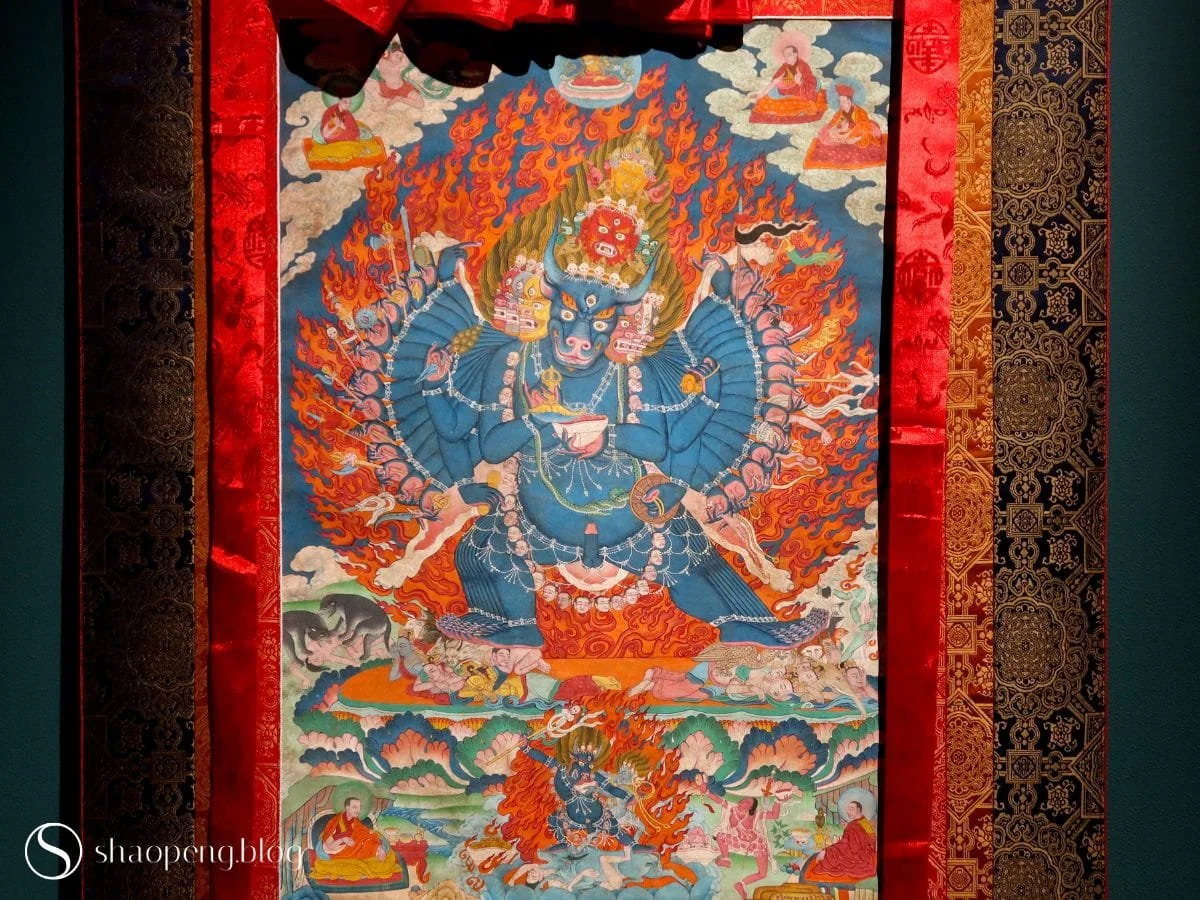
Yamantaka (2008) by Urgen Dorje
In 1988, Sherpa left Nepal for the first time and arrived — out of all places — in Taiwan, where he studied Computer Science and Mandarin. The opportunity came under the auspices of what was then the Mongolian and Tibetan Affairs Commission, the very institution now hosting his exhibition. There’s a sense of return in this, even if the place was never quite his home to begin with.
The journey carried him onward to California, where he taught thangka painting in a monastery while absorbing everything around him: contemporary art, American pop culture, and the subtle friction of carrying an ancient practice through a modern world.
That friction became his medium.
In 2008, a commission from the Asian Art Museum in San Francisco led Sherpa to create The Three Protectors of Tibet in a traditional idiom. Later that same year, in another commissioned work, Mind of Tibet Part 1, something shifted. At first glance, it follows the format of a thangka, but a closer look reveals the use of unorthodox iconography: Mao’s Little Red Book, and a chained Internet Explorer icon. The sacred image no longer remains sealed in time; it begins to converse with the visual language of the present.
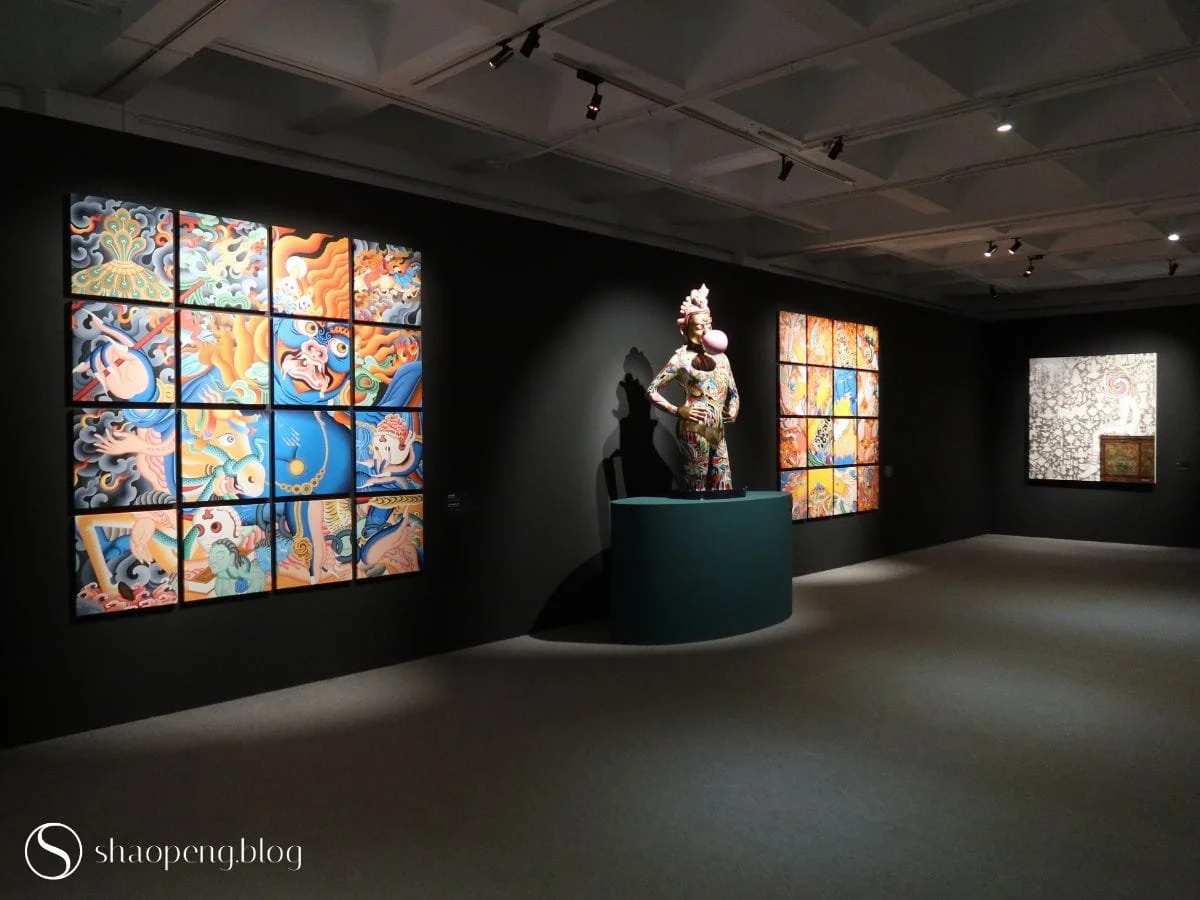
Inside the exhibition Endless Flow: Tsherin Sherpa’s Himalayan Contemporary Art.
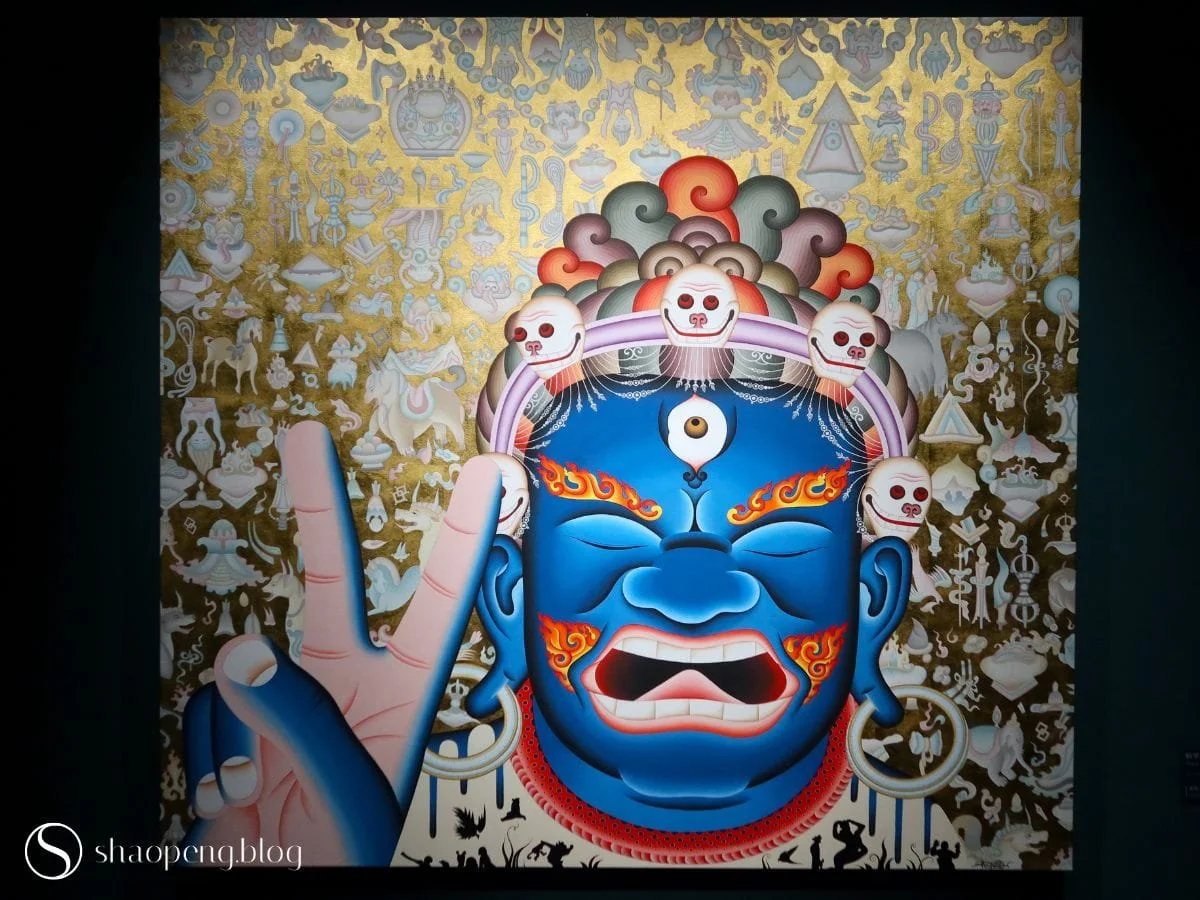
Peace-Blue (2025)
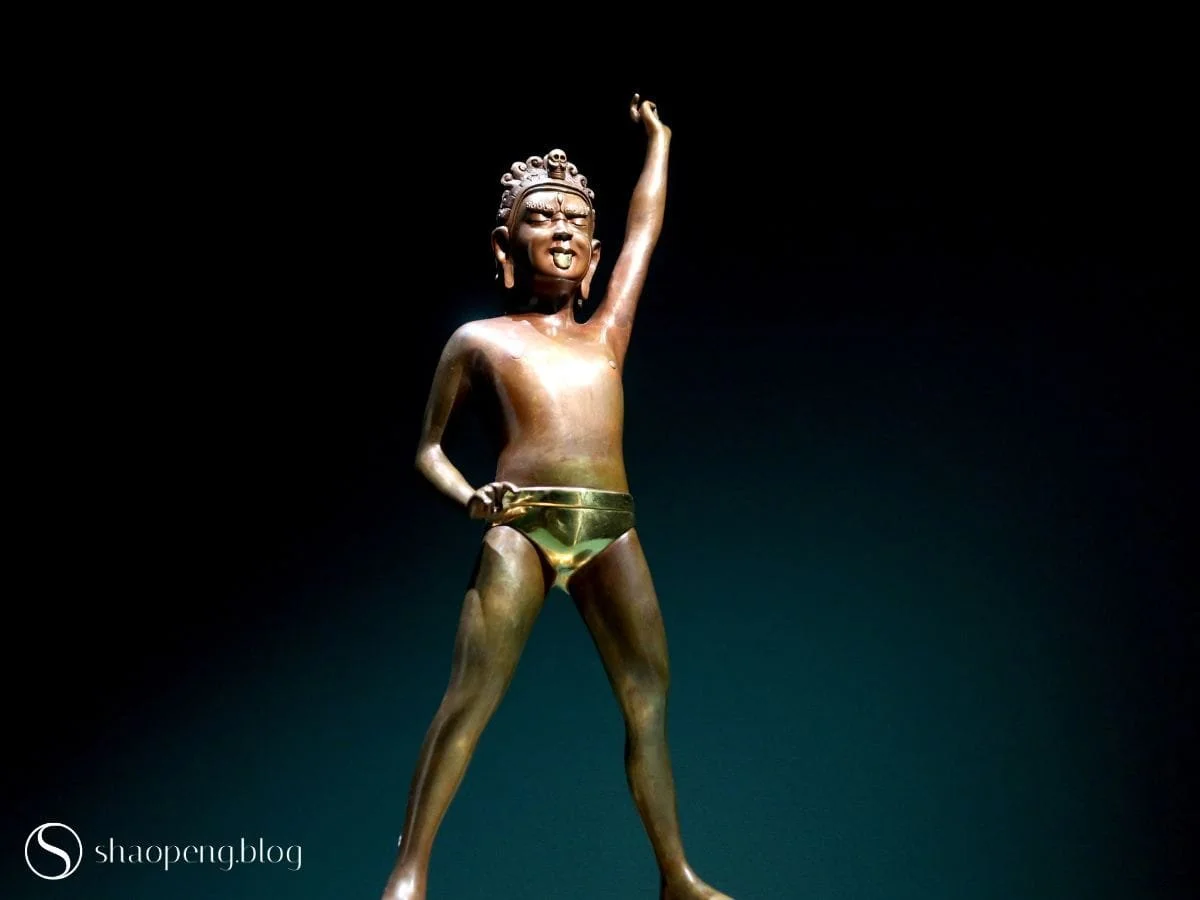
Triumphant Skywalker (No Black Tongue) (2025)
Since then, Sherpa’s world expanded. Wandering through the exhibition, you begin to notice how his works open into spaces where Himalayan cosmology meets the pulse of modern life. Stories told by his grandmother — of beings dwelling in forests, rivers, and mountain passes — resurface, reimagined across his canvas.
The dakini — the free-spirited “sky dancer” of Tibetan Buddhism, the female embodiment of enlightened energy — arrives tattooed with abstracted motifs, looking like she has just stepped off a downtown street. Her male counterpart, the daka, squats with casual ease, as if waiting for a friend outside a bar.
In the Protector series, this shift moves further still. Sacred imagery and iconography dissolve further still into abstraction. Yet, its meditative quality — the very essence of thangka — remains present, and if anything, it deepens.
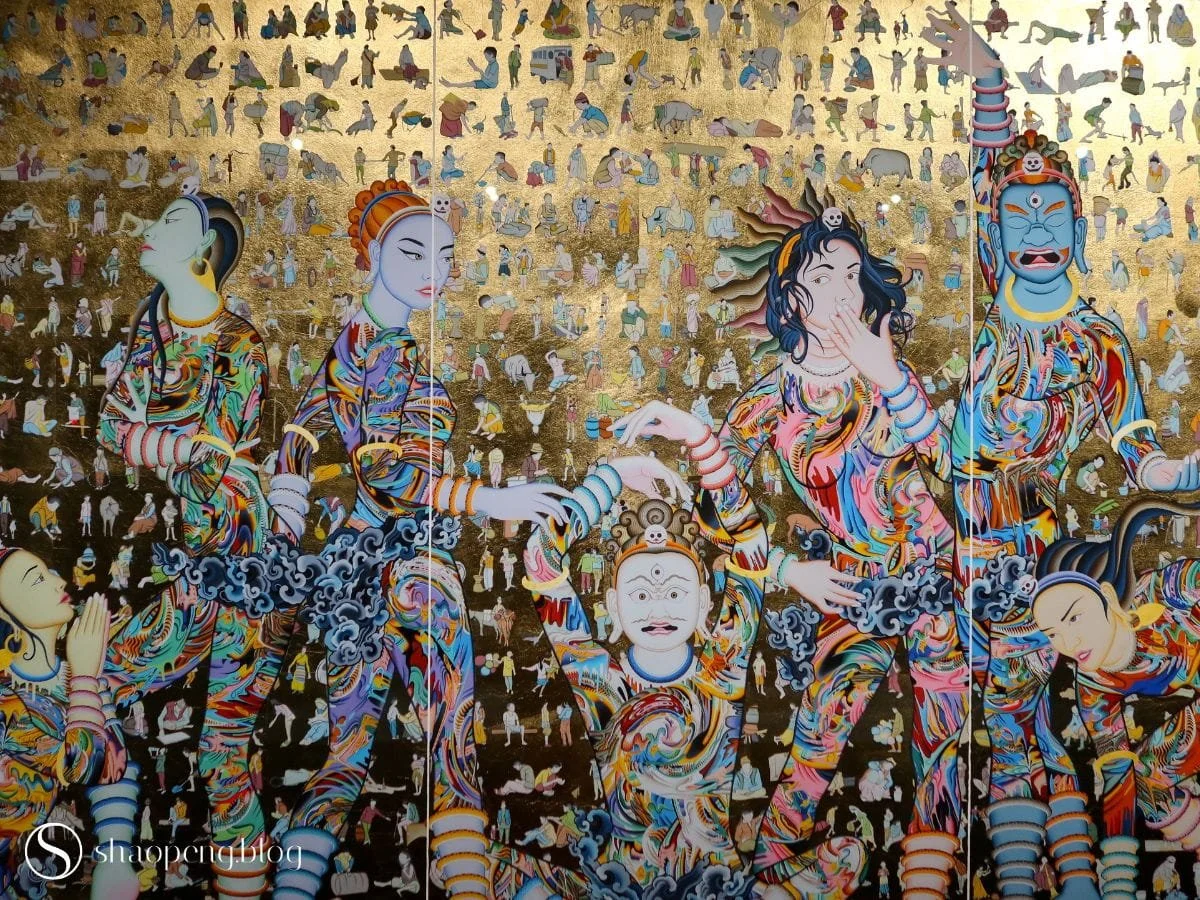
Himalayan Spirit (2022)
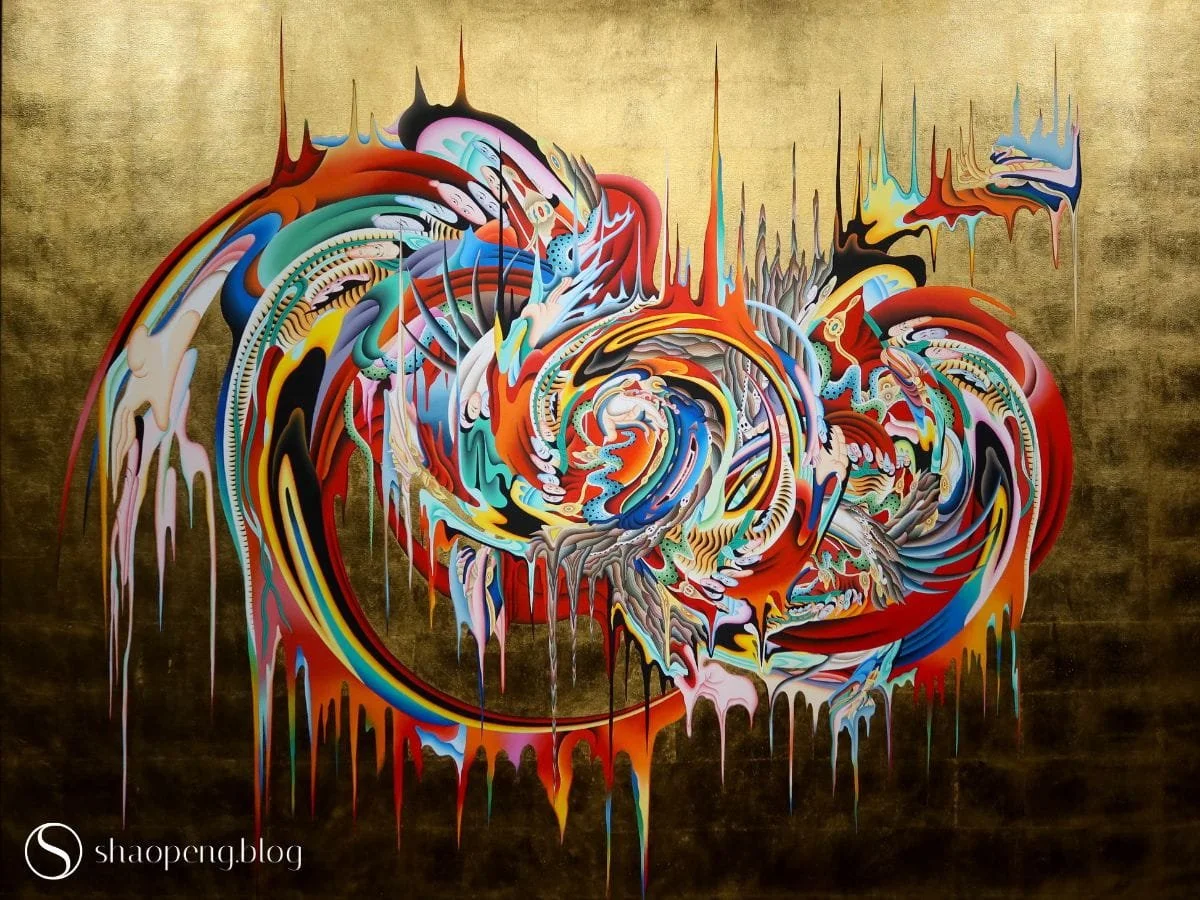
The Face of Impermanence (2024)
Returning to Nepal in the aftermath of the devastating 2015 earthquake, Sherpa’s journey folded back to where it began. He established Takpa Studio and hired traditional thangka painters as his assistants. It was also here that a chance encounter — with a metal artisan on the brink of leaving his craft behind in search of a more sustainable livelihood — led to the creation of The Wish-Fulfilling Tree. Formed in repoussé copper and raised amid earthquake debris, the work carries both fragility and resilience.
A selection of gilt copper sculptures showcased in the exhibition are crafted using the Newari metalworking tradition of the Kathmandu Valley. Among them is the Gestures series, where serpents — adorned with a shimmering layer of gold leaf — writhe through an overwhelming entanglement of arms and legs. It’s important to note that each hand gesture, or mudra, carries symbolic meaning in Buddhist and Hindu traditions.
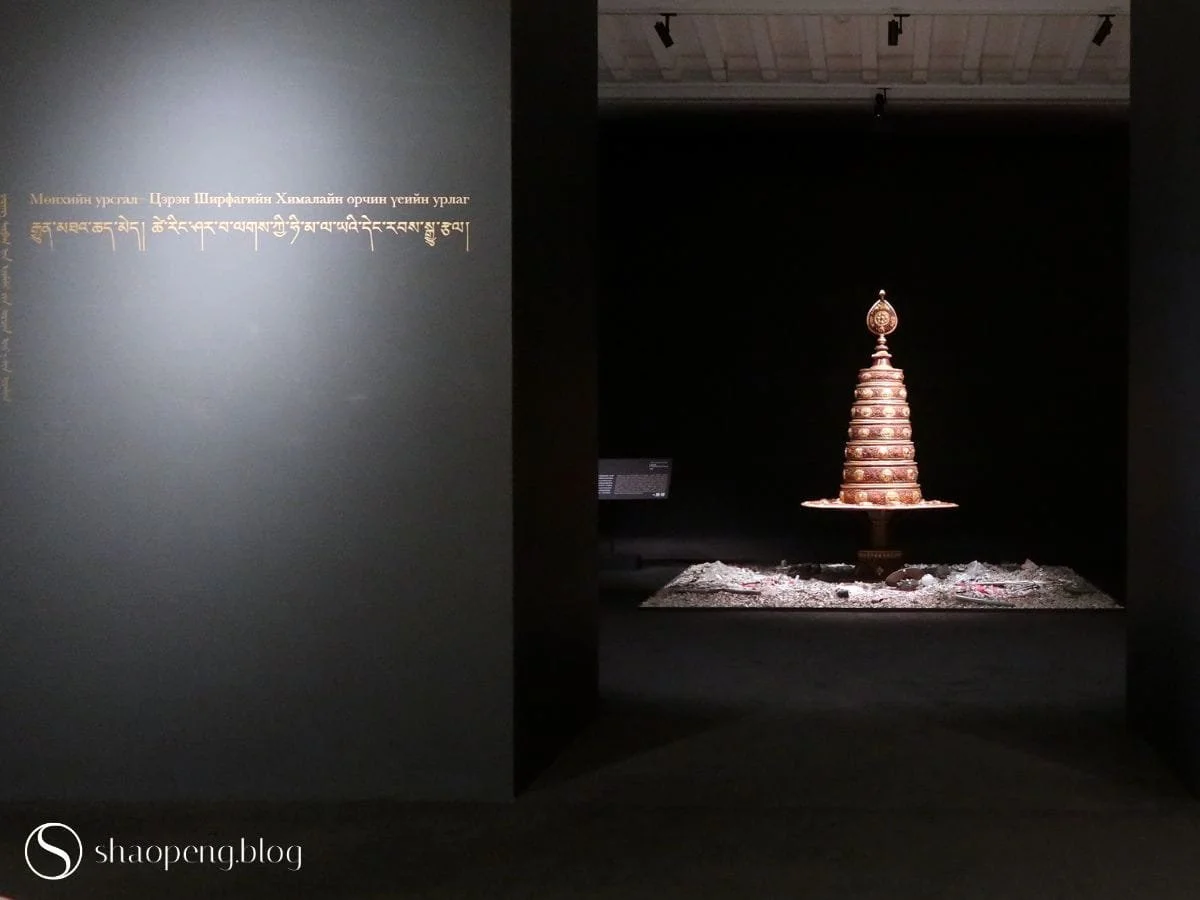
Wish-Fulfilling Tree (2025)
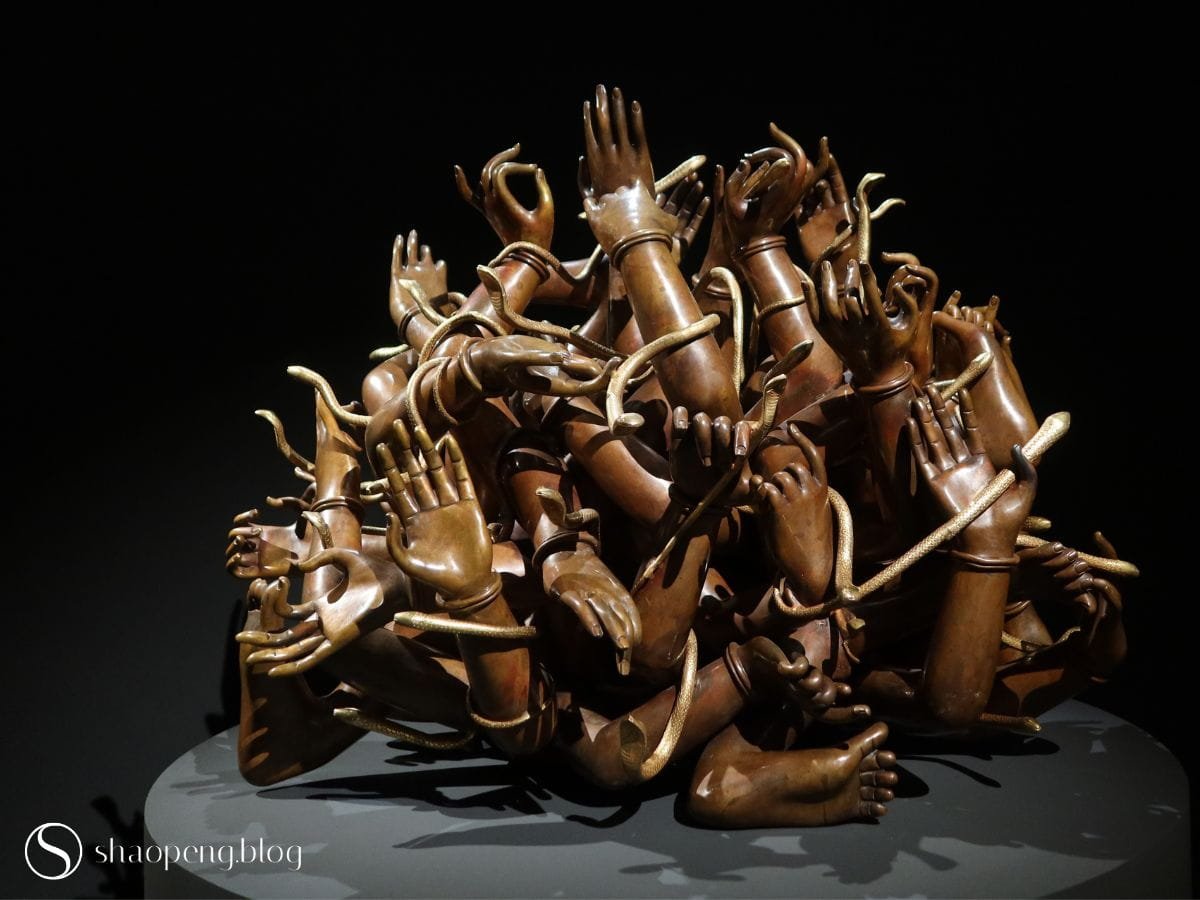
Mudras (2025)
Carpet weaving, once one of Nepal’s largest industries, teeters on the verge of disappearance due to a lack of government support and regulation. Sherpa’s collaboration with local weavers channels his creativity into vast, tactile canvases woven from materials gathered across the region: Tibetan wool, Chinese silk, Nepali allo, and Indian cotton. These works carry not just images, but the entire networks of movement, labour, and memory of the Himalayan region.
In Nepal, artists and artisans alike face the challenge of sustaining themselves and their families through their craft. With creative partnerships, Sherpa has found a way to keep traditions alive. When asked about his father, a traditional thangka painter, and his view on Sherpa’s contemporary approach, he responded with reassuringly positive feedback.
To walk through Endless Flow is to drift between worlds without ever fully leaving one behind. Tsherin Sherpa does not simply merge the sacred with the contemporary but lets them travel, meet, and adapt. In doing so, he offers something more than a reinterpretation of Himalayan traditions. He opens a doorway: a way of seeing that remains grounded yet receptive, inviting us to witness how traditions endure as living practices by wandering from one world to another.
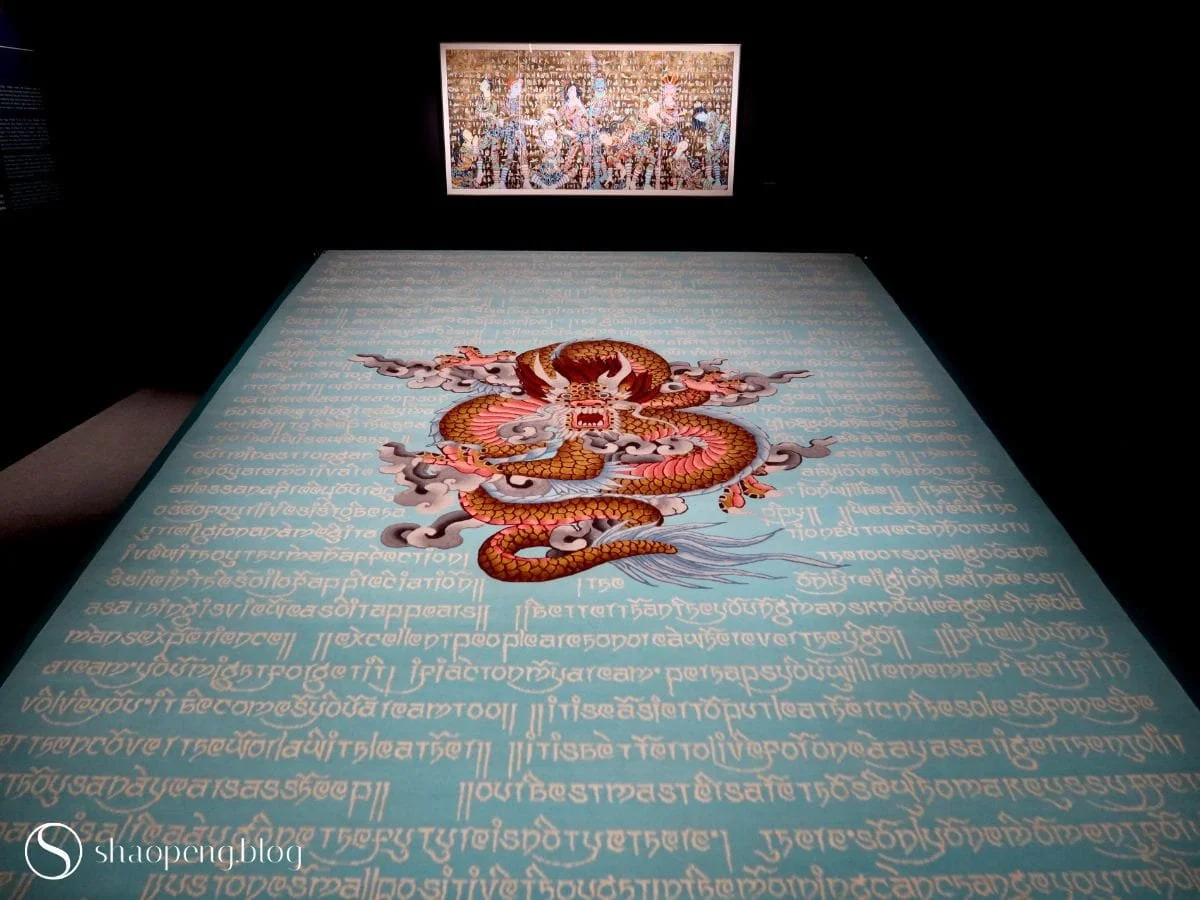
The Way of the Dragon (2022)
Reference:
Gao, Y. Z. (Ed.). (2026). 生生不息: Tsherin Sherpa的喜馬拉雅當代藝術 = Endless Flow: Tsherin Sherpa’s Himalayan contemporary art [Catalogue]. Ministry of Culture, Taiwan.
Tsherin Sherpa (2026, January 31). Tsherin Sherpa’s journey: From traditional to contemporary Himalayan art [才仁.夏爾帕的旅程—從傳統到當代喜馬拉雅藝術] (Lecture, Mongolian and Tibetan Cultural Centre, Taipei, Taiwan).
Endless Flow: Tsherin Sherpa's Himalayan Contemporary Art is on view at the Mongolian and Tibetan Cultural Centre, Taipei, through May 24 2026.