
Wander in Riyadh: National Museum of Saudi Arabia
Next to a former royal palace in Riyadh sits a museum holding 7,000 years of history: a meteorite older than memory, lost gold cities, and the birth of a kingdom.
Sense of Wander: ★★★★☆
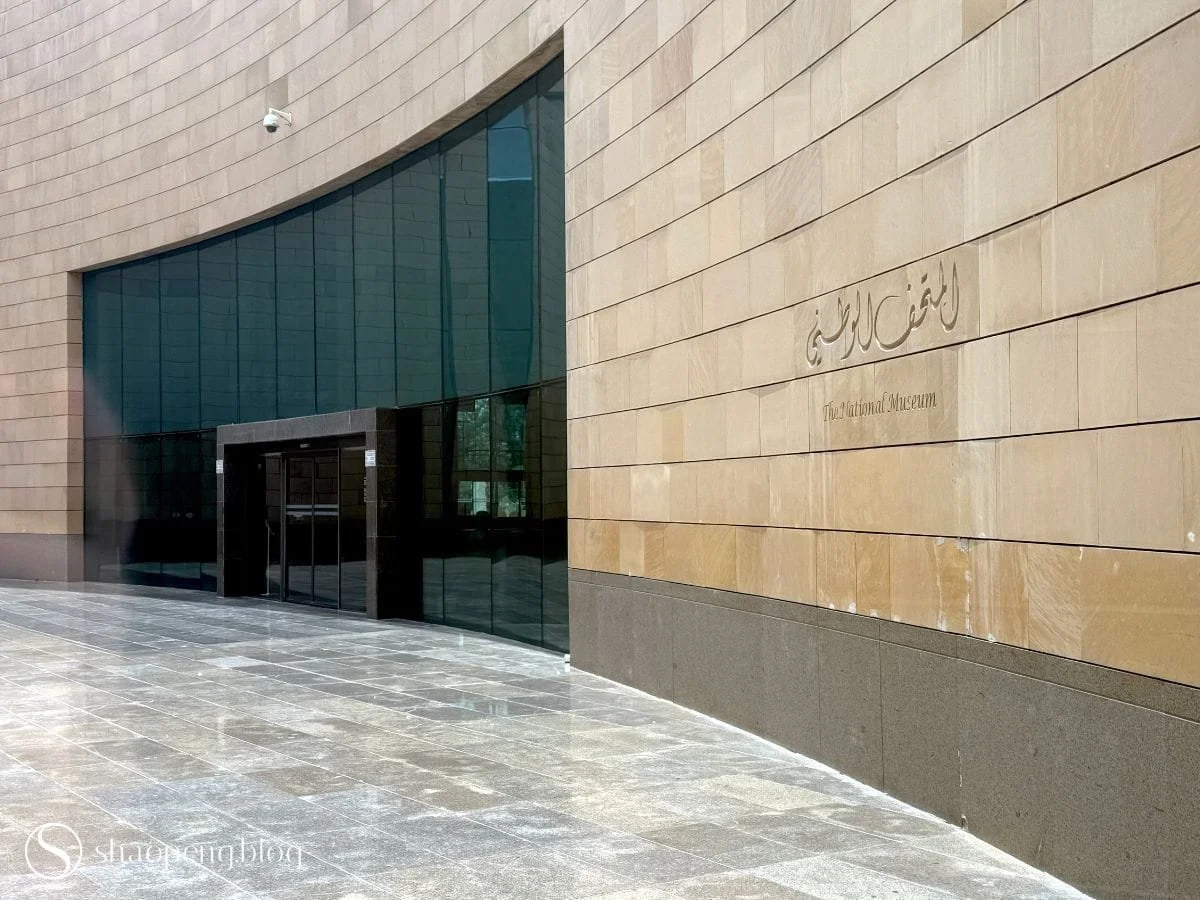
Entrance to the National Museum of Saudi Arabia in Riyadh.
RIYADH, Saudi Arabia — Every time an art history buff like me visit a new city, I head straight to the National Museum. So within hours of my plane landing in Riyadh, that is exactly where I have come.
The museum sits next to Al Murabba Palace — the former residence of King Abdulaziz — inside the King Abdulaziz Historical Centre. Its crescent-shaped, dune-coloured facade curves inward, akin to a humble but welcoming invitation. I hadn’t done much research before arriving, and I’m glad I didn’t. It meant I could wander in the way I like best, allowing one exhibit lead me to the next.
The museum is home to more than 4,000 artefacts, spanning an incredible 7,000 years of history, from prehistory and the earliest civilisations all the way to modern times.
At the entrance to the museum’s permanent exhibition sits a giant rock that fell from outer space. It is part of the Wabar meteorite, a chunk of the “Camel’s Hump,” so nicknamed for its shape, recovered from the Rub’ al Khali, also known as the Empty Quarter, the largest continuous sand sea on Earth, stretching across Saudi Arabiainto Yemen, the UAE, and Oman. Scientists still debate exactly when it fell, with estimates ranging from a few centuries to several millennia ago. Standing in front of it, I like not knowing. It feels right that the story of Arabia should begin with a mystery from outer space.
Where the Story Begins
Past the meteorite, the museum opens into the Man and the Universe Hall, and this is where I first feel the museum is doing something unusual. Your attention is drawn into a mesmerising digital installation that simulates the galaxy and outer space, accompanied by a Quranic recitation:
ٱلَّذِينَ يَذْكُرُونَ ٱللَّهَ قِيَـٰمًۭا وَقُعُودًۭا وَعَلَىٰ جُنُوبِهِمْ وَيَتَفَكَّرُونَ فِى خَلْقِ ٱلسَّمَـٰوَٰتِ وَٱلْأَرْضِ رَبَّنَا مَا خَلَقْتَ هَـٰذَا بَـٰطِلًۭا سُبْحَـٰنَكَ فَقِنَا عَذَابَ ٱلنَّارِ
(Surah Ali’Imran 3:191)
The verse calls on the visitor to reflect on the creation of the heavens and the earth. I’ve walked through a good number of national museums by now, in many countries, and this is the first time I’ve encountered one that chooses to open its national story not with kings or conquests, but with the Creator. The recitation calms my nervous system down and cools me down from the desert heat outside, preparing me and emptying me out a little before the exhibits begin filling me back up.
From there, the hall moves into the kingdom’s geology. It turns out that much of Saudi Arabia’s mineral wealth comes from the Arabian-Nubian Shield, a vast slab of ancient crystalline rock formed over some 300 million years and later split down by the Red Sea, its far half now found in Egypt, Sudan, and the Horn of Africa.
People have been extracting gold, copper, and silver from this shield for at least 5,000 years. One of its ancient mines, Mahd adh-Dhahab — literally the “Cradle of Gold” — is popularly said to be the source of King Solomon’s legendary riches. Historians are quick to point out there’s no real evidence for that particular legend, but I don’t mind the museum letting the story breathe a little. Myths, after all, are also artefacts.
Nearby, a case of gemstone-quality minerals catch my eye more than anything else in the hall: tourmaline from Yanbu, amethyst from Bir ibn Hossany, garnet from Jabal Al-Hamat. My favourite, though, is a desert rose from Abqaiq — a cluster of gypsum crystals and sand that wind and evaporating water have sculpted into something resembling rose petals. Though not a true gemstone or mineral, as someone who designs jewellery, I find myself standing in front of it much longer than I intended.
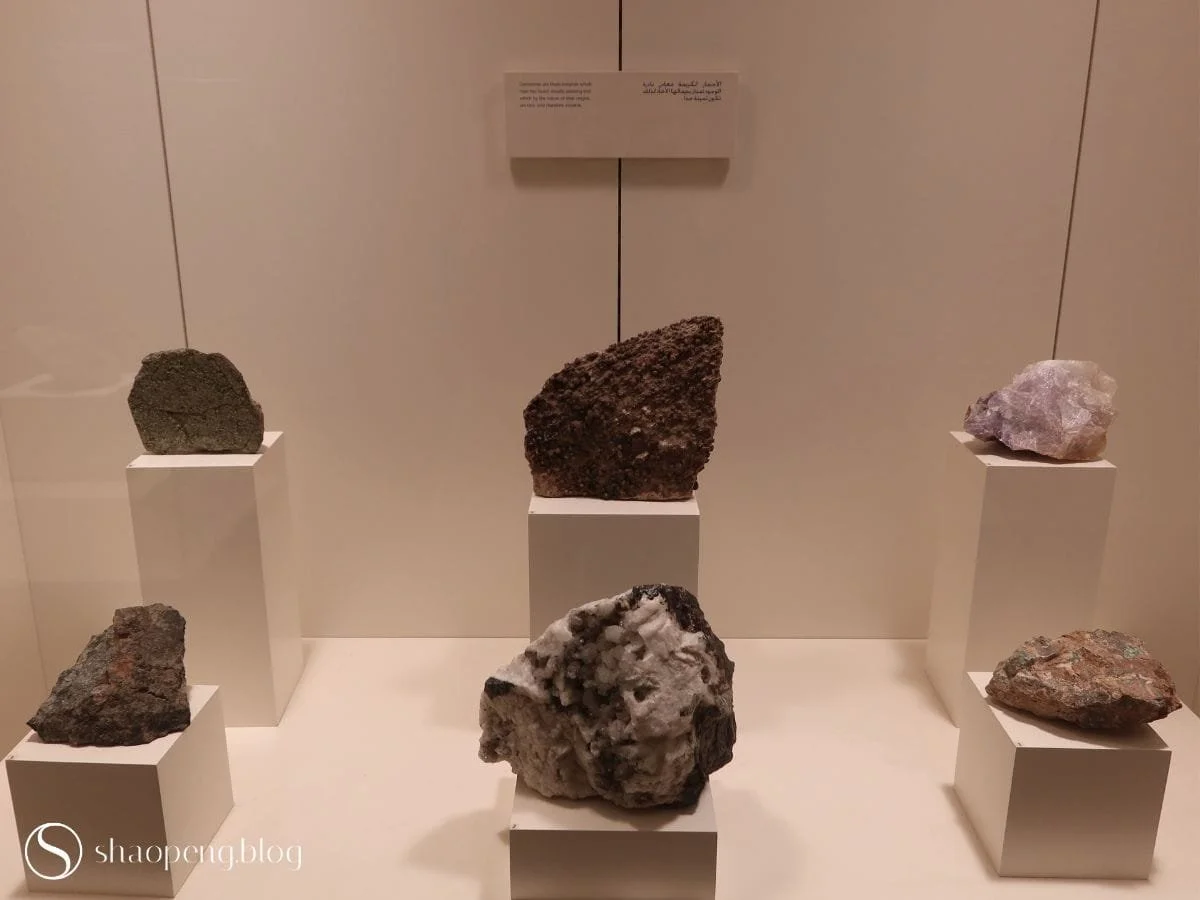
Saudi Arabia is rich in mineral resources, including a variety of minerals that can be polished into gemstones.
The gallery then transports you to the Stone Age, when early humans moved through Arabia as part of the broader migration out of Africa into Eurasia, leaving behind chipped stone and bone tools used for hunting and fishing, display here in a modest, unglamorous row.
What surprises me most, though, is learning how wrong my picture of the kingdom had been. I had imagined Saudi Arabia as “mostly desert.” It isn’t. There are coral reefs and mangroves along the coasts, salt marshes, forested valleys, even snow on the mountain peaks in winter.
In a section explaining the kingdom’s scarce rainfall, the museum label pairs the science with a Quranic verse: “We made from water every living thing” (21:30). Reading this verse over and over again, I realise how scripture is woven into the way this nation tells its own story.
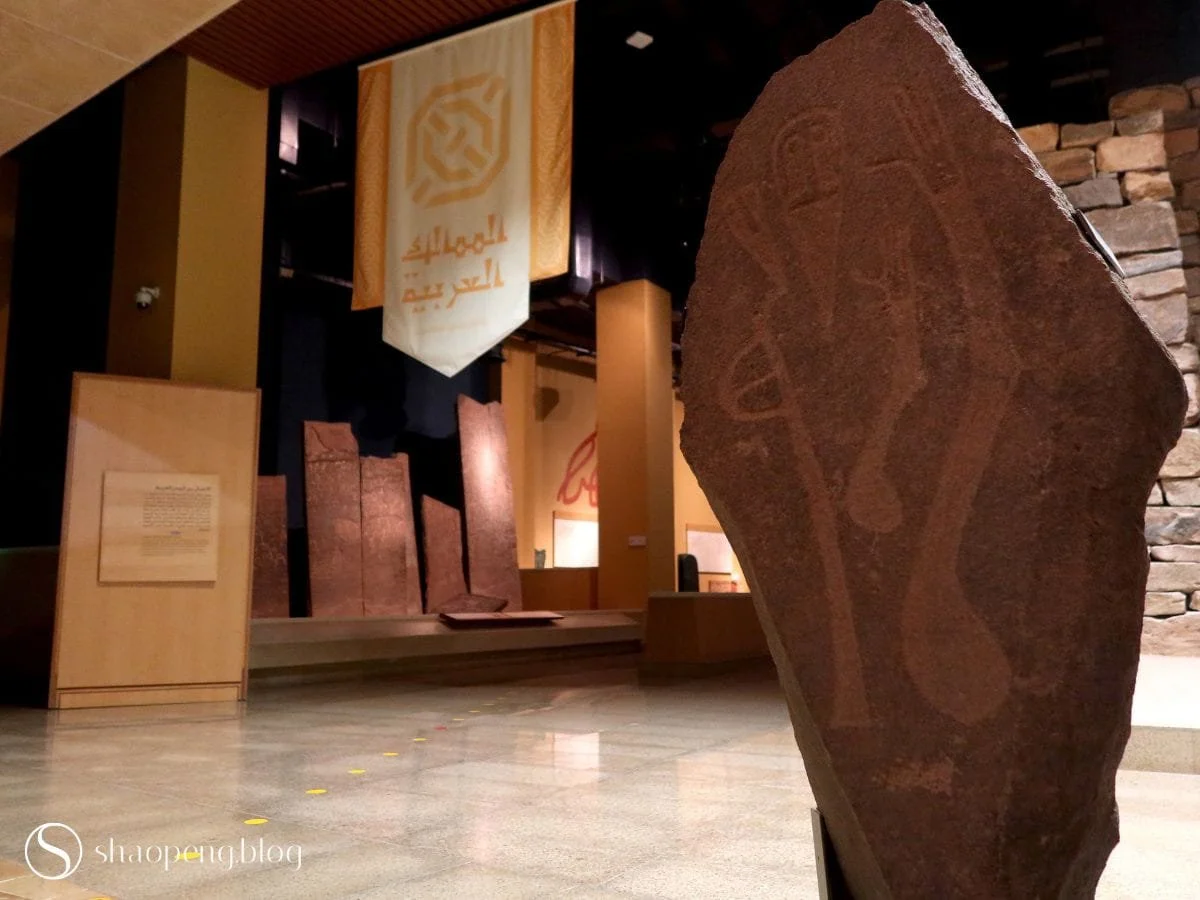
Rock art marks the beginning of the story of the Arabian Kingdoms.
My Favourite Hall: The Arabian Kingdoms
If you asked me to pick one hall to return to, it would be the galleries devoted to the Arabian Kingdoms. Before coming here, my understanding of pre-Islamic Arabia came entirely from postgraduate studies in Islamic art history. Which is to say, the story of Arabia as I knew it began with Islam, and everything that came before was little more than a prelude. This hall corrected that assumption fairly quickly. It covers more than a dozen pre-Islamic kingdoms spanning the 4th millennium BCE to the 4th century CE, opening with the Ubaid culture, whose pottery dates back roughly 7,000 years, older than almost anything else I had expected to find on this peninsula.
By the 3rd millennium BCE, proper towns and trading cultures had taken root in the east and north, and the exhibition traces how these settlements became connected to the wider ancient world.
A cluster of rock art and carved stone slabs, among the oldest surviving monuments in Arabia and dating to the 4th millennium BCE, bear symbols whose meanings are still debated. They stand as proof, as the museum label puts it, that this peninsula was a crossroads long before caravans and camels made it famous.
Around 1000 BCE, two distinct script families emerged here. In the north, the Phoenician-derived alphabet became the ancestor of Hebrew, Aramaic, and eventually much of the alphabetic world. In the south, the Musnad script gave rise to Lihyanite and other South Arabian scripts. Two writing traditions were born on the same peninsula, yet evolved in different directions.
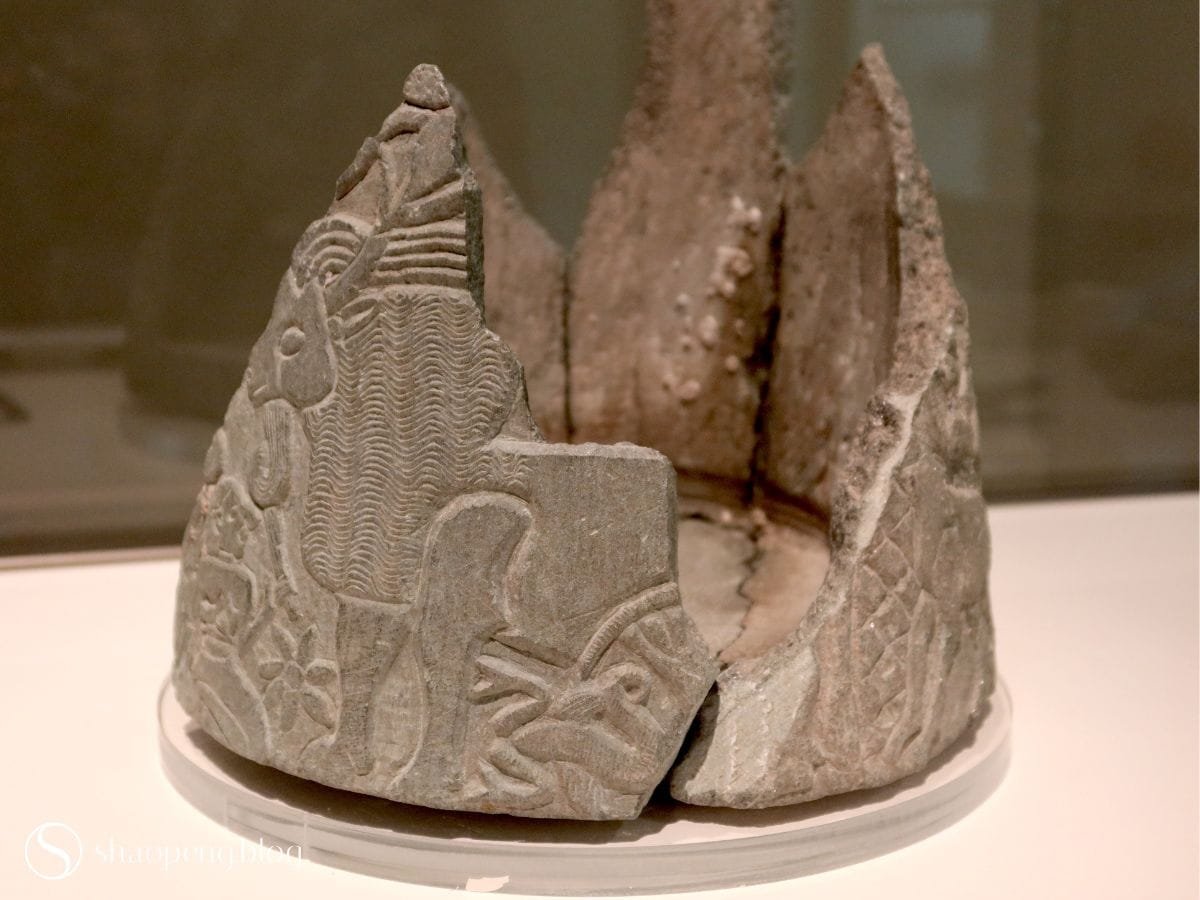
Fragment from Dilmun featuring intricately carved depictions of animals.
Then there is Dilmun, described as something close to paradise, an orchard land nourished by freshwater springs. Archaeologically, Dilmun corresponds to the eastern reaches of present-day Saudi Arabia and Bahrain, and the pottery and soapstone vessels displayed here seem to have travelled as far as Central Asia and the Indus Valley.
By the 1st millennium BCE, the peninsula had become a vital hub of international trade, linking East Africa with South Asia. The southern kingdoms of Saba’, Qataban, Hadhramaut, Ma’in, and Ausan supplied frankincense and myrrh, while northern kingdoms including Edom, Lihyan, and Kinda controlled the trade routes that carried these precious commodities north towards the Levant and Egypt. Trading towns flourished along the way. Qurayyah became associated with the Midianite culture, Dumat al-Jandal served as an important stop between Tayma and Babylon, and Dadan flourished as the capital of the Dadan and Lihyan kingdoms.
Tayma grew wealthy enough to attract the attention of the Babylonian king Nabonidus in the 6th century BCE. Rather than ruling from Babylon, he is said to have based himself in Tayma for a decade, an unexpected historical detour I had never come across before this visit. An obelisk from Tayma is displayed here, bearing an Aramaic dedication to the moon god Salm. Nearby, a cubic stone carved in low relief depicts a worshipper before a bull’s head, accompanied by a crescent and star. It is a peek into Arabia’s own pantheon, long before the rise of monotheism.
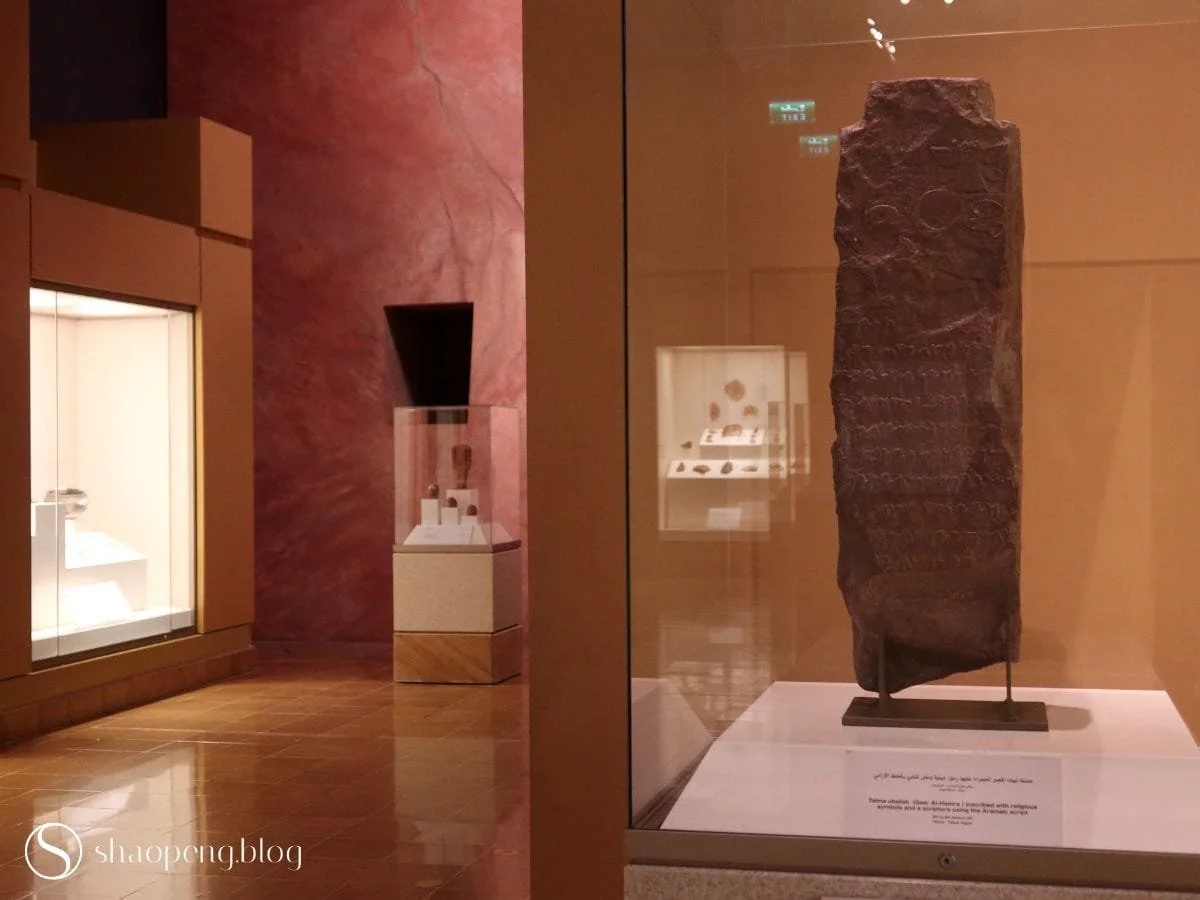
An obelisk from Tayma, inscribed with religious symbols and an Aramaic inscription.
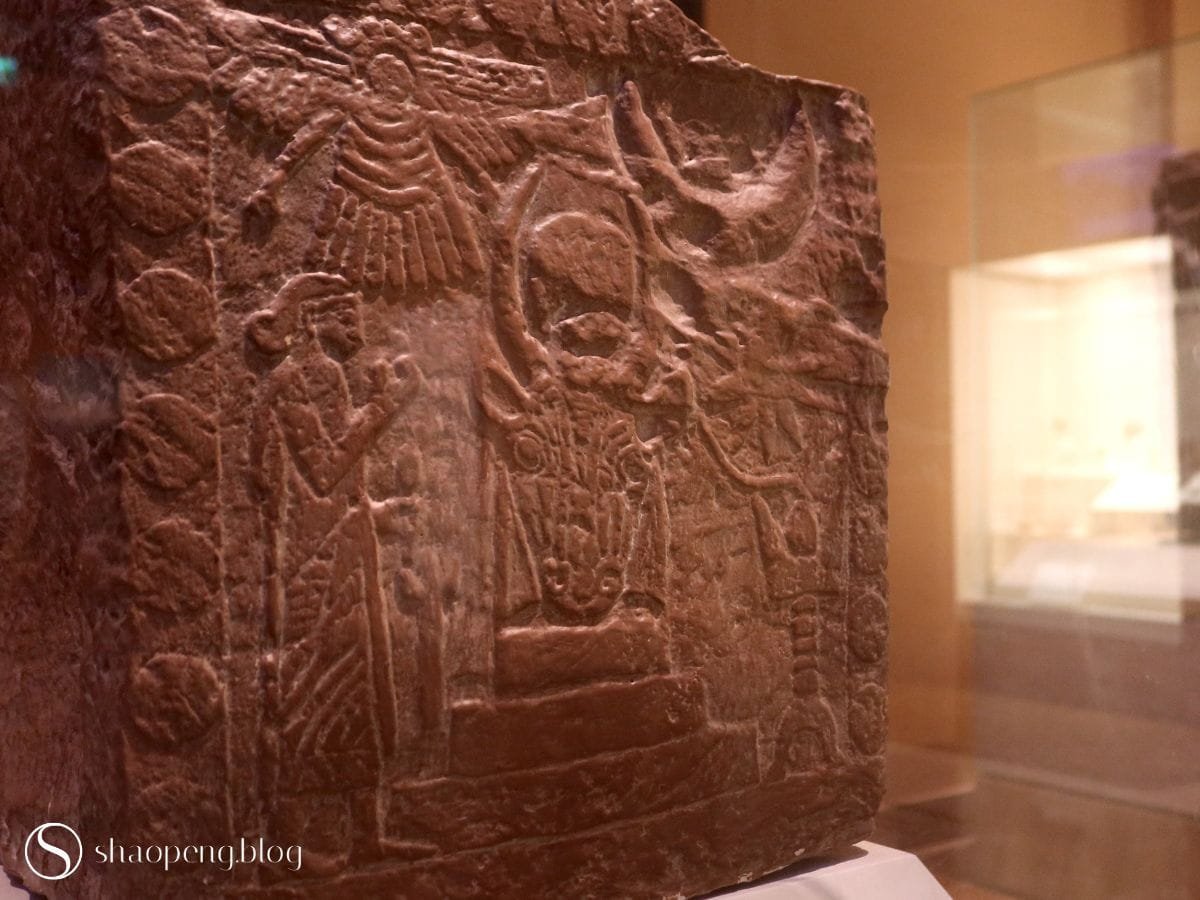
A cube-shaped stone from Tayma, carved with a scene of worship.
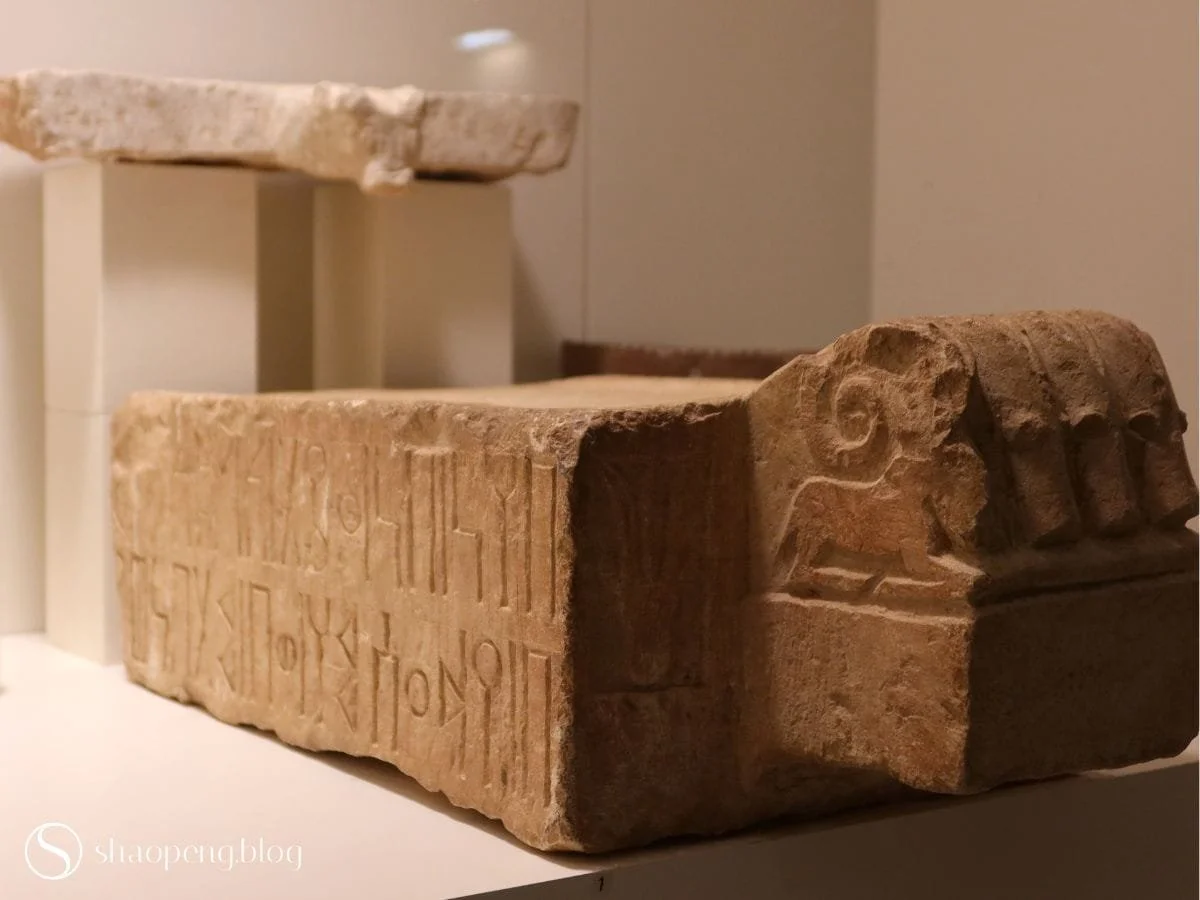
A stone altar from southern part of Saudi Arabia, adorned with ibexes and a Musnad inscription, dating from the 2nd century BCE to the 2nd century CE.
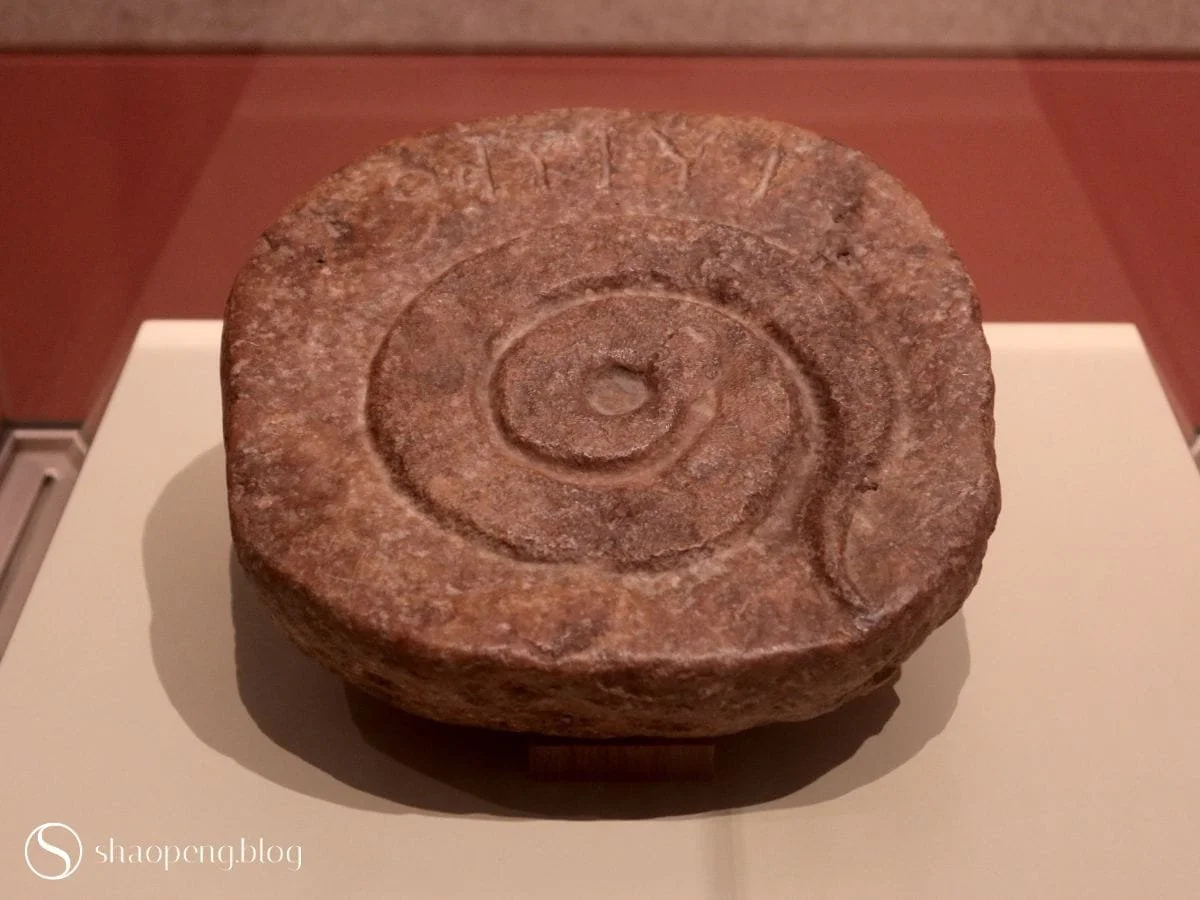
A 2nd-century CE stone from Najran, carved with a Musnad inscription and a coiled snake symbol representing Wad, a deity venerated by caravan leaders.
Qaryat al-Faw, in the middle period of these kingdoms, has yielded one of the largest ancient town sites ever excavated on the peninsula, allowing archaeologists to reconstruct ordinary daily life rather than just royal history. Two wall paintings stand out in particular: one depicts human figures, which is remarkably rare in the surviving art of the region, and another shows horses fording water filled with fish.
Then, for a jewellery designer especially, there is Thaj. In the late 1990s, archaeologists excavated a tomb near this eastern city and uncovered a 1st-century gold funerary mask, together with pearls and precious stones so lavish that some scholars have wondered whether Thaj might be the fabled lost city of Gerrha, celebrated in ancient sources for a wealth that no one could quite locate. Nearby display cases contain repoussé gold ornaments in the form of ducks and human or divine figures, a round pendant set with carved gemstones, and a curious gold object shaped like a human hand.
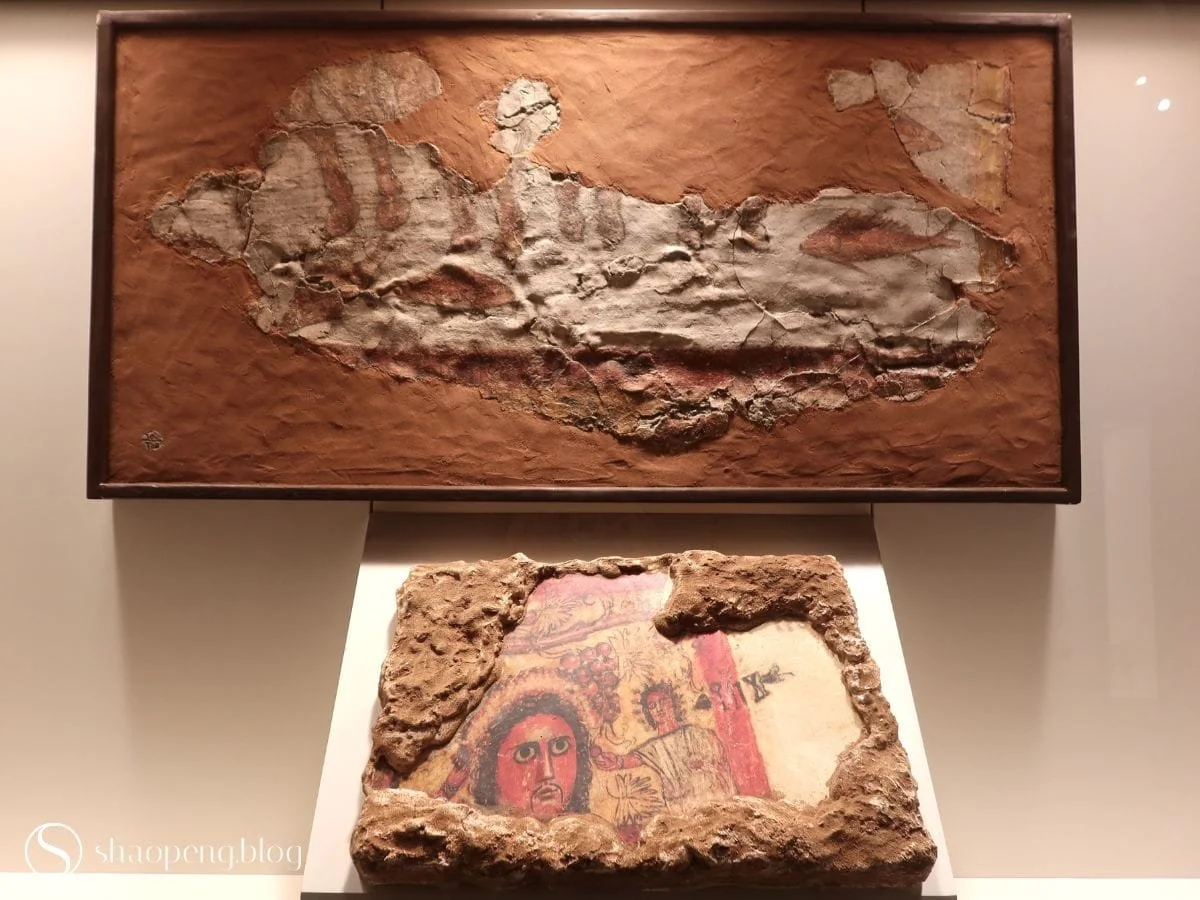
Two mural paintings from Qaryat Al-Faw, dating to the 2nd and 3rd centuries CE.
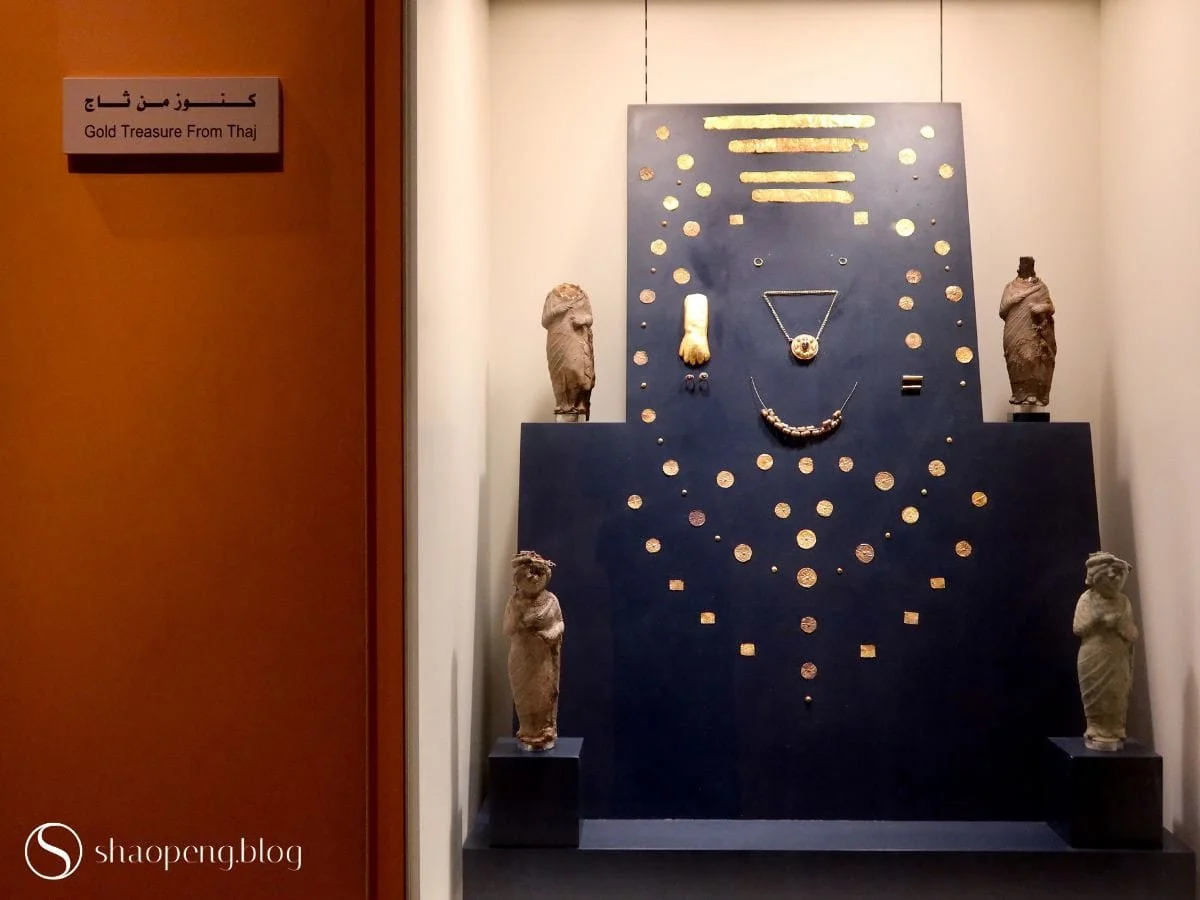
Gold jewellery, ornaments, and coins among the finds from Thaj.
Into War, and Then Into Light
Before Islam, this was a peninsula of many gods and faiths. Zoroastrianism, Christianity, Judaism, and various polytheistic traditions that worshipped both deities and the stars overhead are all presented in the Pre-Islamic Era hall.
Before you know it, you are funnelled into a dim, cave-like corridor filled with the sounds of clashing swords and distant cries. This marks the peninsula’s descent into tribal conflict and chaos. According to Islamic tradition, in the “Year of the Elephant,” around 570 CE, a foreign army marched on Makkah with war elephants, animals virtually unknown in Arabia at the time. That same year also saw the birth of the Prophet Muhammad.
What follows is a seemingly futuristic gallery devoted to the Prophet’s life and lineage: the Prophet’s Mission Hall. It traces the birth of Islam as the force that drew the peninsula’s warring tribes into a single community.
The galleries after that, covering Islam’s spread throughout this part of the world, change atmosphere again. Colonnades of arches evoke the forest of columns found in early mosques, while the objects on display trace the rise of the Umayyad dynasty, the first Islamic empire, and the dynasties that followed.
Among the exhibits, my attention is drawn to one dedicated to the compilation of the Quran, first preserved through oral tradition before being collected into a single text under Caliph Abu Bakr. Alongside a Quran manuscript from around the 15th or 16th century CE sits something far older: a camel bone inscribed in naskh script, displayed beside a basalt stone carved with part of the Throne Verse, both dating to the 9th or 10th century CE. Bone, stone, and paper all carry the same words across five centuries, reminding us how enduring a text can be when a civilisation commits itself to preserving it.
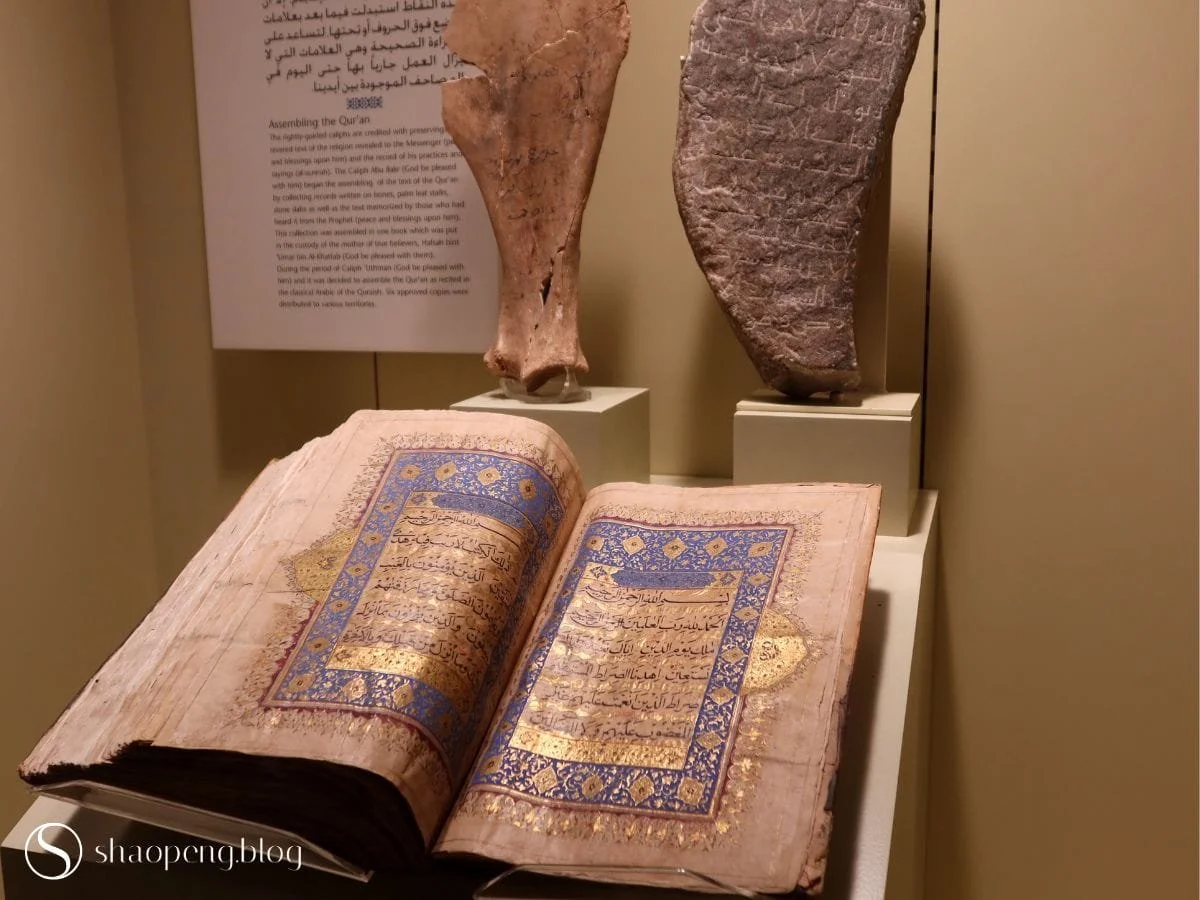
A Quran manuscript written in Naskh and Persian script (front), displayed alongside camel bones inscribed with Naskh script (top left) and a basalt stone carved with the Throne Verse (top right).
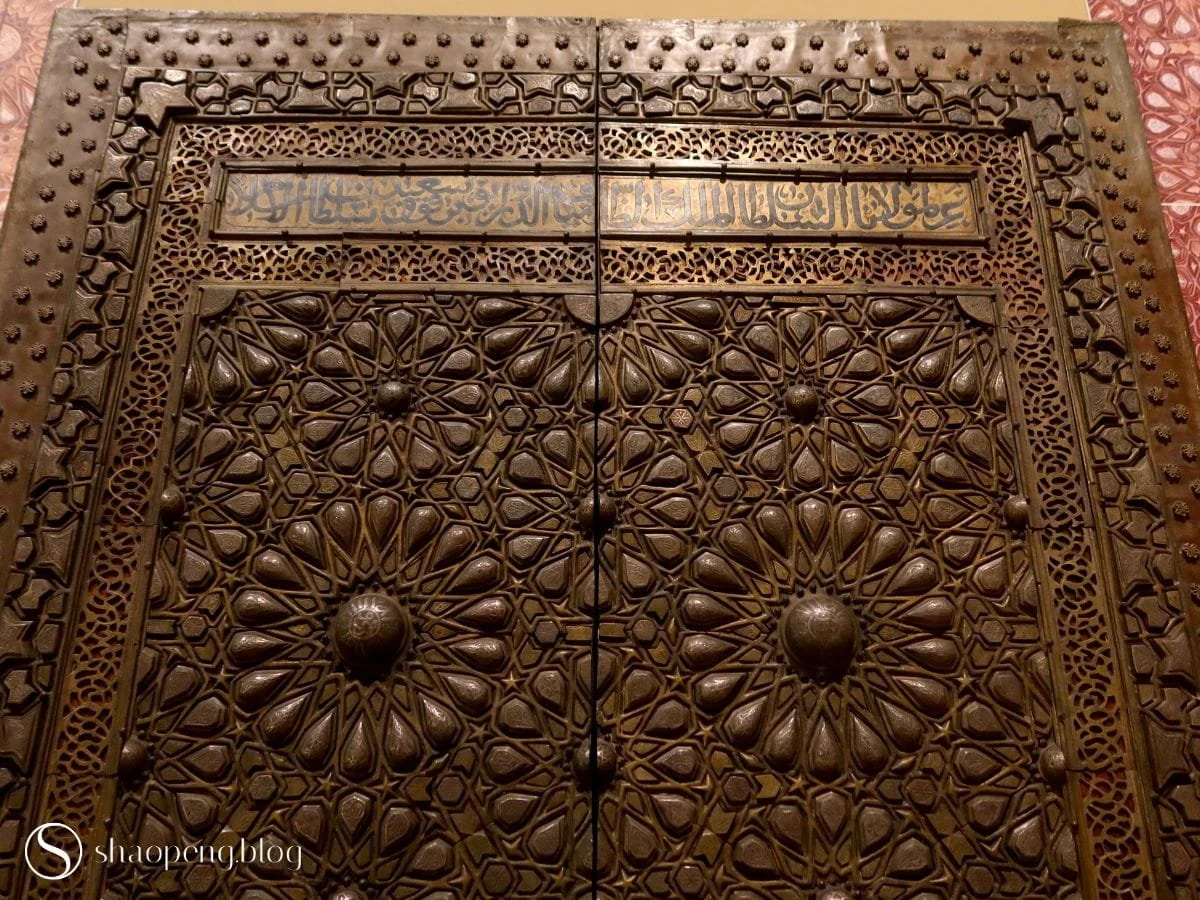
A giant Mamluk door adorned with raised geometric patterns, a hallmark of Islamic art.
Diriyah to Riyadh: How a Kingdom Was Made
The final hall, devoted to the First and Second Saudi States, traces the most recent chapter in the story: how the modern kingdom came to be. It begins in 1446, when Mani’ bin Rabi’ah Al-Muraidi founded Diriyah, the ancestral settlement of the House of Saud. Nearly three centuries later, in 1727, Imam Muhammad bin Saud transformed Diriyah from a small town into the capital of what is now known as the First Saudi State, built on Islamic governance, with the mosque rather than a palace as its symbolic centre.
The state expanded across Najd before extending into eastern Arabia and the Hijaz in the west, until Ottoman forces brought it to an end in 1818. In 1824, Imam Turki bin Abdullah re-established Saudi rule from Riyadh, founding the Second Saudi State, which endured for another six decades before internal rivalries led to its collapse in 1891. The imam at the time, Abd al-Rahman, went into exile with his family, including his young son, the future King Abdulaziz. The years he spent surviving in the desert shaped the resilience and Bedouin instincts that would later enable him to recapture Riyadh on 15 January 1902 and, over the following decades, unite the peninsula’s regions into the country that exists today.
By the time I step back out into the Riyadh sun, I had travelled from before the creation of the Earth to the birth of a modern kingdom, from a meteorite older than memory to a nation not yet a century and a half old.
The National Museum opened in 1999 to mark the hundredth anniversary of Abdulaziz’s recapture of Riyadh, and today it anchors the wider King Abdulaziz Historical Centre. Given how few dedicated history museums Riyadh has, the depth and breadth of what is gathered here make it a truly worthwhile stop for first-time visitors and returning travellers alike, even for those who thought they already knew this part of the world.
If I could ask for one more thing, it would be a research publication devoted to the archaeology of these ancient Arabian kingdoms. So much of what is on display here, from Thaj and Qaryat al-Faw to Dilmun, remains thinly documented outside specialist circles. It would be a gift to readers around the world to have fuller access to a story this old and so rarely told.
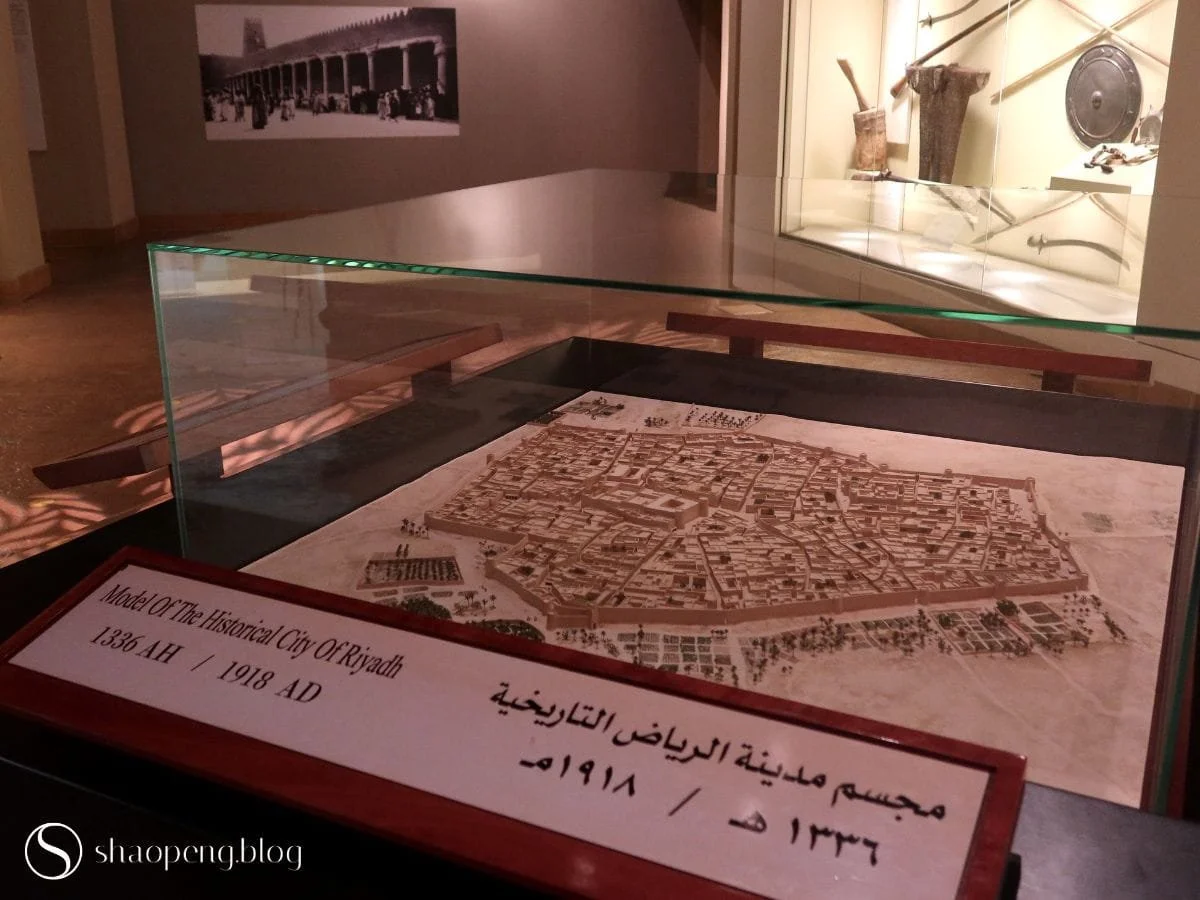
A miniature model of Riyadh in 1918, before the city’s major urban expansion.
Wanderer’s tip — Give yourself plenty of time. This museum is enormous and it’s easy to lose half a day or more wandering through its galleries without even noticing. If you’re interested in learning more about the history of Diriyah, continue your journey at the museum in At-Turaif.