
When Tamerlane Travels: Uzbekistan’s Opera Comes to Dubai
When the curtain rises for Tamerlano at Dubai Opera, Uzbekistan suddenly feels closer than a place on the map — history, power, and art come together onstage, inviting us into an image of Uzbekistan now taking shape.
Sense of Wander: ★★★★☆
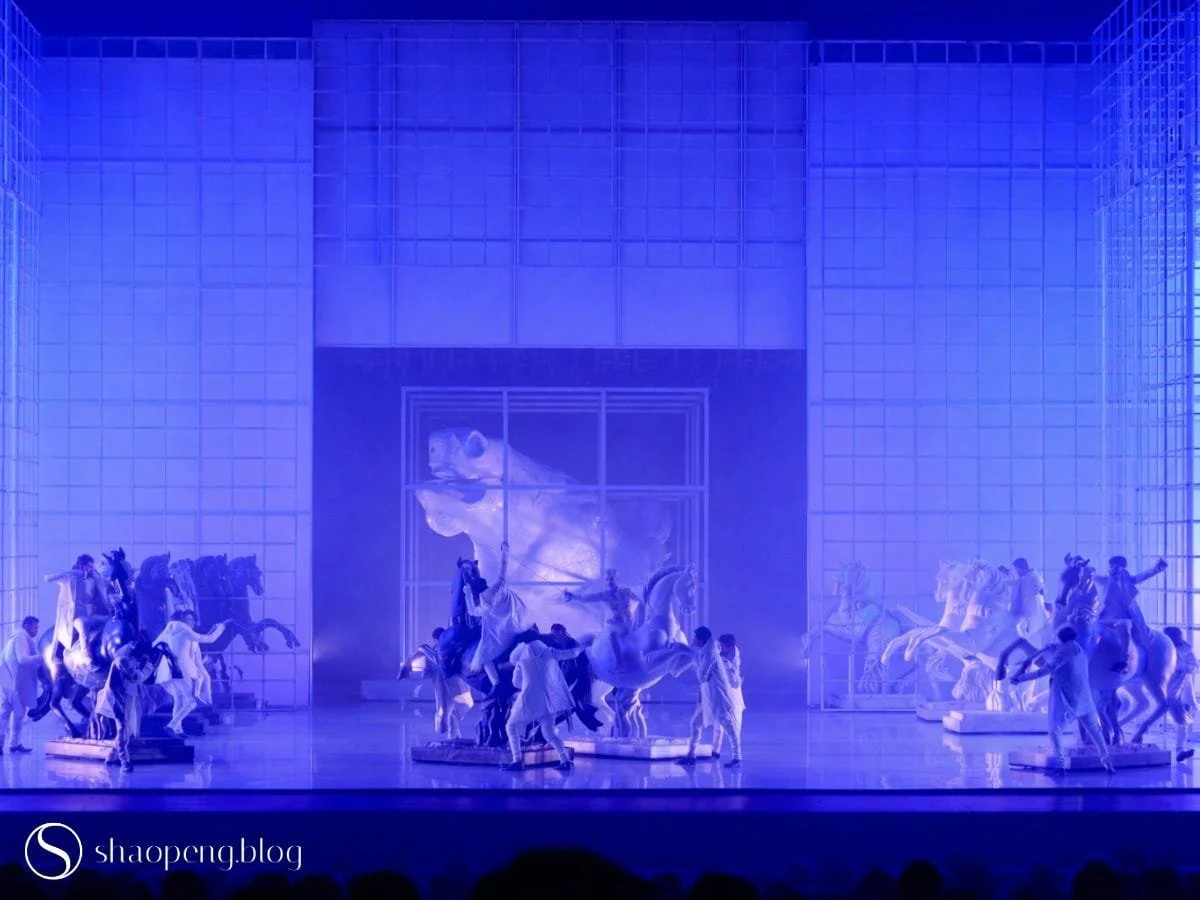
The final battle in Tamerlano is staged with the grandeur that made Tamerlane a legend.
DUBAI, UAE — There’s something thrilling about watching a country discover and shape its voice. Those who have wandered through Uzbekistan may have already felt it: in the scaffolding rising around ancient madrasas, in the intricate tilework that adorns the facades of imperial mausoleums and domes of ancient mosques.
The country is actively carving out its post-Soviet identity, and nowhere more so than in Samarkand and Shahrisabz, where the spirit of Timur (circa 1336–1405) — the great Tamerlane — still feels present.
He was a Turco-Mongol ruler who built the Timurid Empire across what is now Central Asia, Afghanistan, and Iran, defeating the Mamluks of Egypt and Syria, the rising Ottoman Empire, and the declining Sultanate of Delhi along the way — all in pursuit of restoring the great Mongol Empire of Genghis Khan.
In Tashkent, his legacy is cast in bronze: an equestrian statue at the heart of a park bearing his name, the conqueror reared up on horseback, with his famous motto — Power is in Justice — carved at the base in four languages. It's the kind of phrase you jot down in a notebook and carry with you for the rest of your journey.
So when I learned that Uzbekistan had mounted its very first opera production destined for the global stage — with Tamerlane himself as the subject — it felt less like a coincidence and more like a strategy.
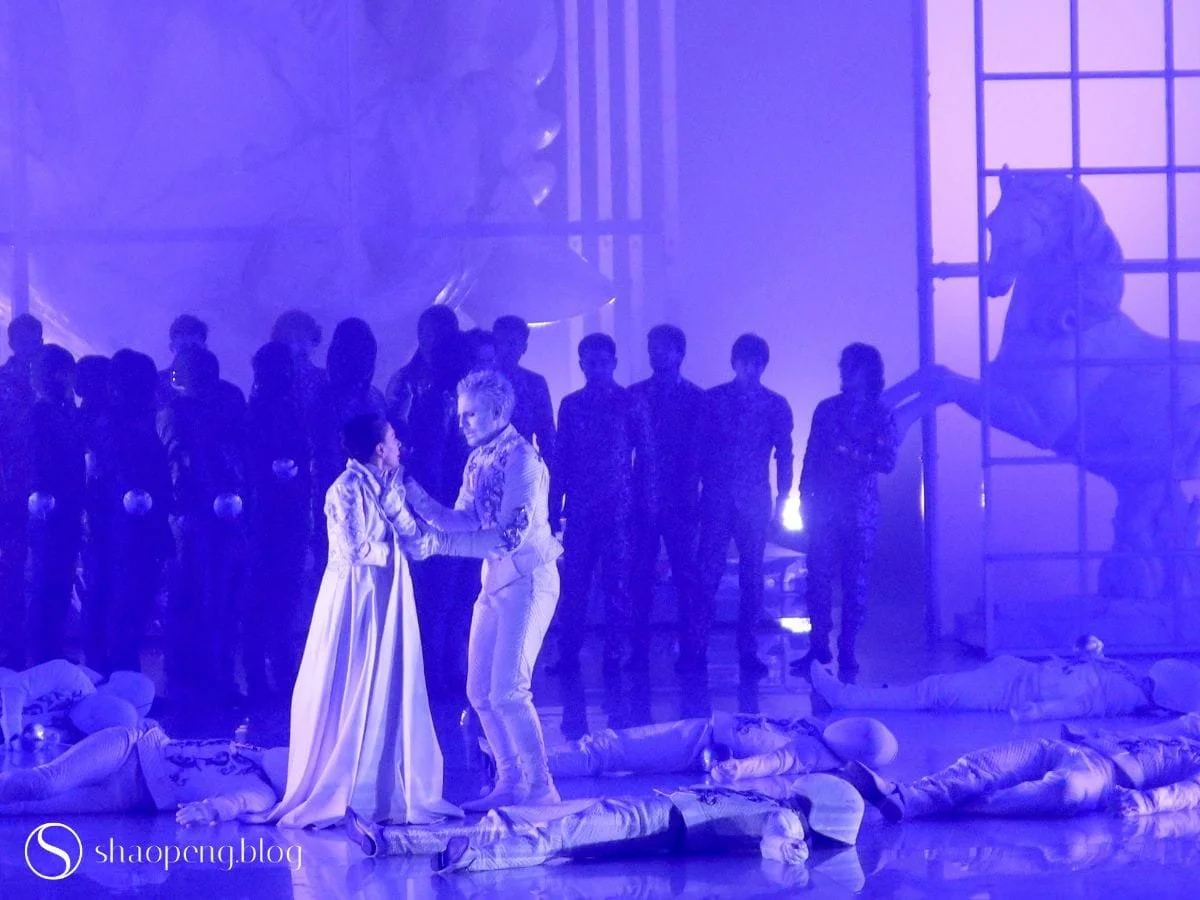
Ottoman Sultan Bayazet I and his daughter Asteria in Tamerlano, Dubai Opera.
The production draws on George Frideric Handel's Baroque masterpiece, Tamerlano, initiated by the Uzbekistan Art and Culture Development Foundation. It premiered in 2024 at the grand State Academic Bolshoi Theatre Alisher Navoi in Tashkent before making its international debut here at Dubai Opera. Directed by Stefano Poda, the production is reimagined as something far more visceral than a conventional opera evening.
The story itself reads like something you’d discover in a dog-eared history book at a guesthouse in Central Asia. It begins in 1402, somewhere near Ankara, where Tamerlane has just crushed the Ottoman Sultan Bayazet I in battle and taken him captive. Then comes the twist of the heart: the great conqueror falls for Asteria, his enemy’s daughter, offering her father’s freedom in exchange for her hand. She agrees — but only to get close enough to eliminate him.
When the plot unravels, Tamerlane’s fury is swift and merciless. The stage fills with the tension of war as the armies prepare for another decisive battle — a breathtaking scene that recalls the conqueror’s famous equestrian statue, bridging past and present.
Yet in the final moment, as Asteria bids farewell to her dying father, something shifts in Tamerlane. The conqueror lowers his sword and lets her go.
He returns to Saray Mulk Khanum, the Mongol princess he was always meant to marry, and asks for forgiveness. She receives him warmly. History knows her as Bibi Khanum.
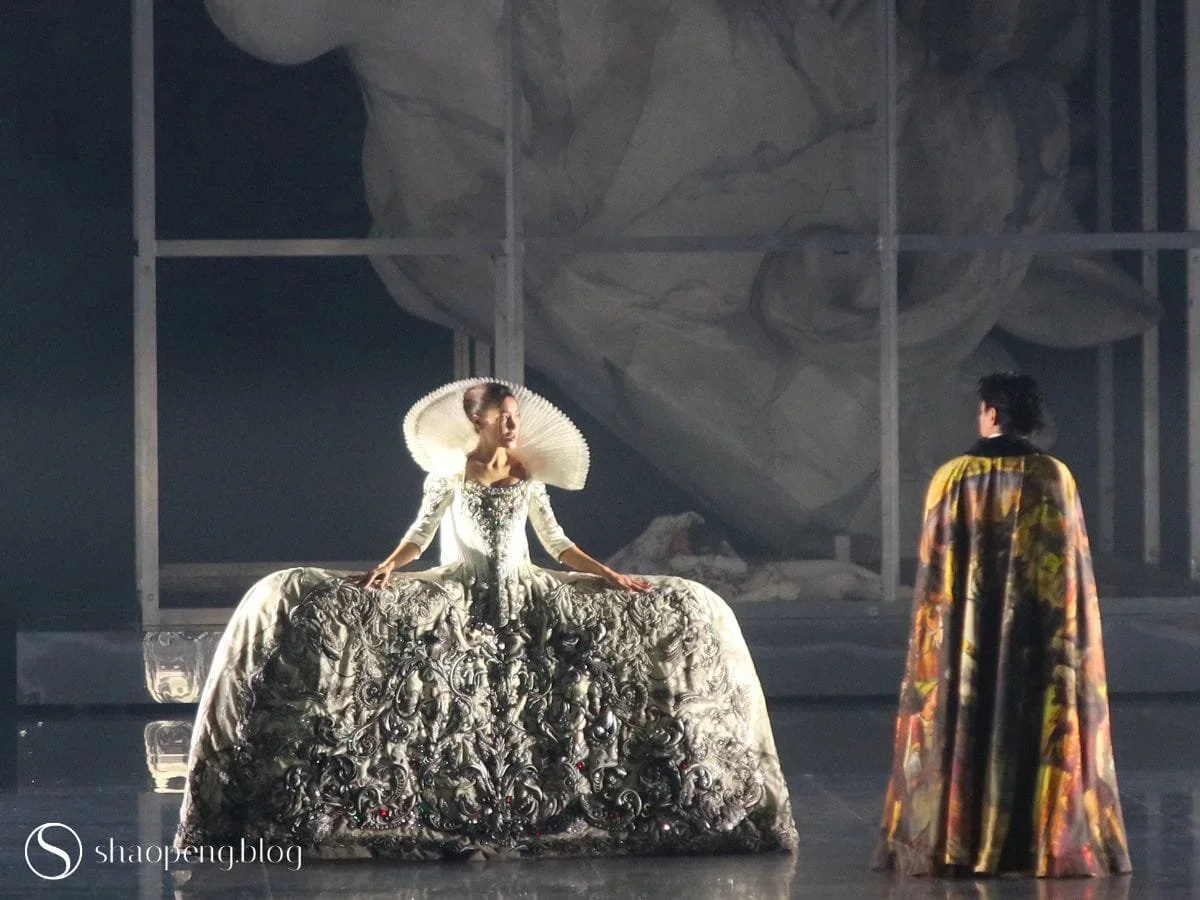
Tamerlane and Saray Mulk Khanum in Tamerlano.
What makes the experience unique is the sound. Handel’s Baroque score is enriched with traditional Uzbek instruments by National Symphony Orchestra of Uzbekistan, giving the entire evening an unmistakably Eastern colour.
The lead role of Tamerlane is carried by Jenisbek Piyazov, People’s Artist of Uzbekistan, with the kind of commanding presence that makes the great equestrian statue back in Tashkent suddenly make sense.
The scenography is where Poda’s signature really shines. It’s poetic, futuristic, and at times genuinely arresting. The moment that stayed with me longest came near the end: a circular installation descending from the ceiling, its layers rotating slowly on a central axis. It brought to mind the astrolabe once commissioned by Ulugh Beg, the grandson of Tamerlane. In a single frame, centuries of Timurid science and beauty seemed to collapse into one haunting visual.
While Tamerlane is often remembered as one of history’s most ruthless conquerors, he was also a great patron of the arts and architecture, fostering what historians sometimes call a “Timurid Renaissance.” Following his military campaigns, he would often spare skilled artisans, poets, and scholars from conquered cities, bringing them back to his capital, Samarkand, to create works of beauty.
One small frustration for the audience was this: the libretto — sung entirely in Italian, with opening lines in Uzbek — came without English subtitles. For those who have sat through enough operas to follow the emotional arc regardless, it was manageable. But I watched more than a few audience members shifting in their seats, trying to focus on the visuals for clues. At an international premiere, that felt like a missed step.
Still, Tamerlano is something worth seeking out. It sits alongside a remarkable wave of cultural diplomacy coming out of Uzbekistan — think of the inaugural Bukhara Biennale last autumn, which made quite a stir in the international art world. The country is opening up, leaning into its extraordinary heritage with a confidence that feels both new and well earned.
For curious travellers who have walked those sun-baked streets, bargained in those bazaars, and stood before the bronze horseman in Tashkent, watching Uzbekistan bring its story to Dubai Opera is its own kind of reward. You leave the place seeing the country through a bolder, more vivid lens than before.
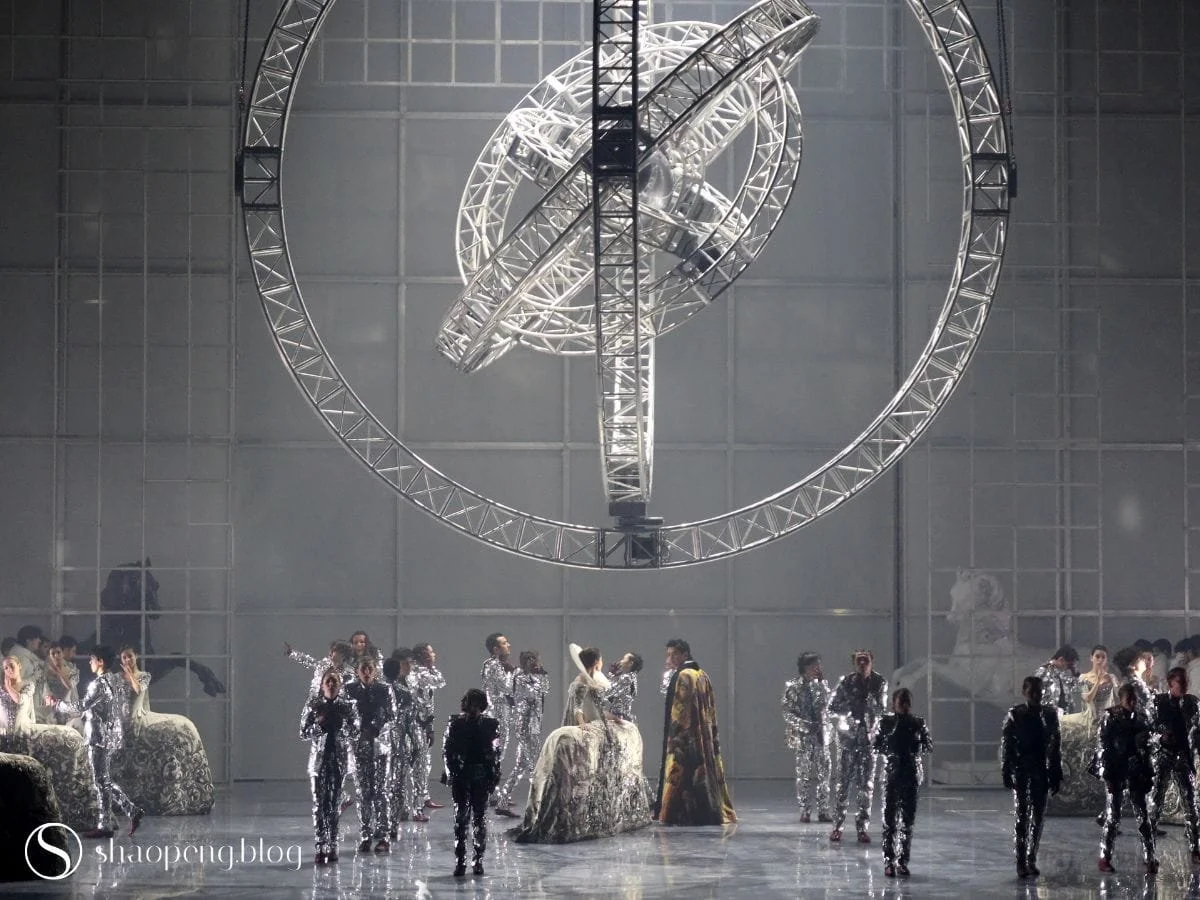
The closing act of Tamerlano at Dubai Opera.
Tamerlano was staged at Dubai Opera on January 10-11, 2026.