
In Puli, a town ringed by forests and mountain peaks, a workshop still makes paper the slow way: one sheet at a time.
Sense of Wander: ★★★★☆
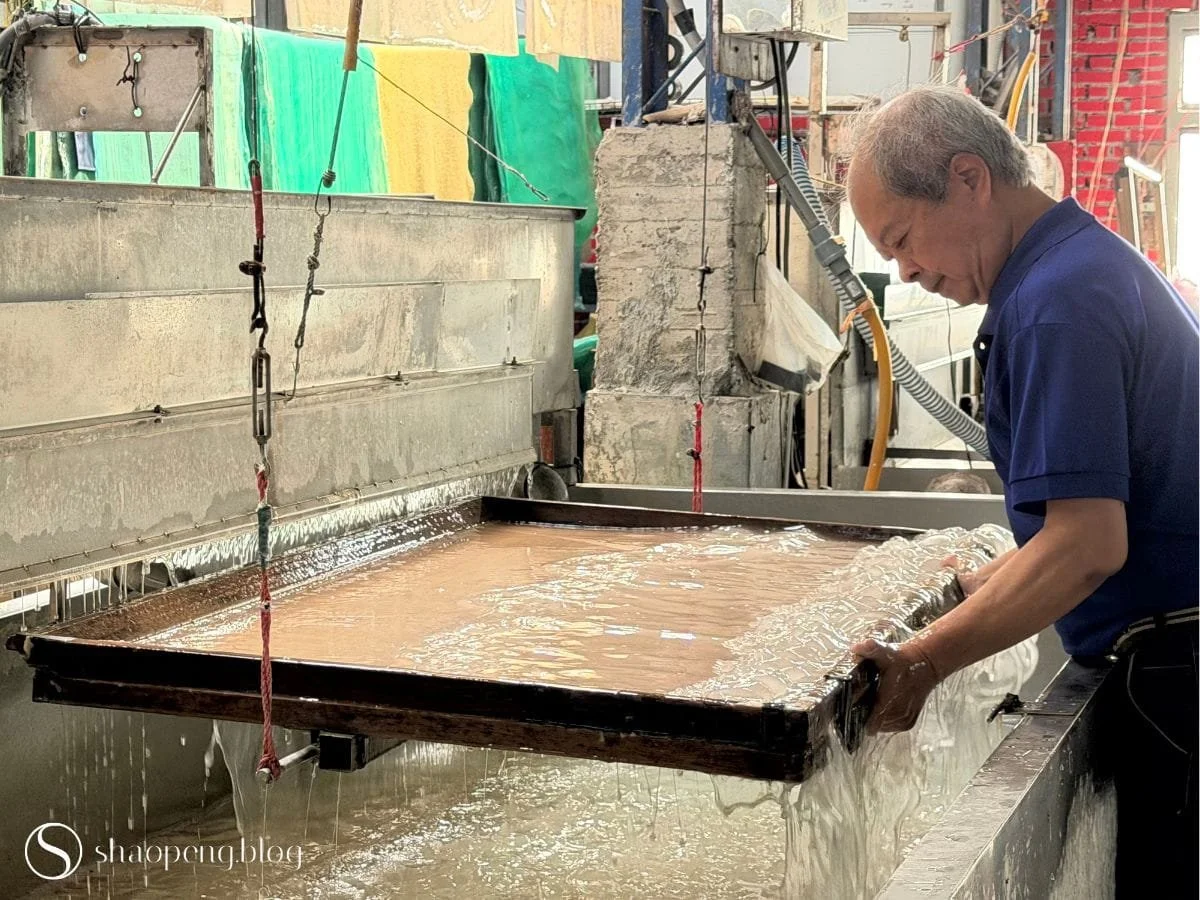
An artisan scoops the paper pulp with precise, rhythmic movements.
PULI, Taiwan — Nowadays, paper is everywhere: printer reams, notepads, and flyers. It’s easy to forget there was a time when paper was precious, and every sheet took skilled, patient hands to make.
I was reminded of this when I took up calligraphy and ink painting. Ink behaves differently depending on the paper it lands on, from the plant fibers it is made from to whether the paper is sized (cooked) or raw. Machine-made paper is cheaper and easier to find, but it lacks much of the warmth and responsiveness of handmade paper. That is especially true of xuan paper, the Chinese paper that drinks in ink in a way ordinary paper simply can’t.
Every few weeks, I visit my usual shop in Taipei to hunt for new xuan paper. I had always assumed that the finest xuan papers come from China. Then I noticed that some of the pricier sheets on the shelf are made in Puli, a mountain-ringed town in Nantou County, in the heart of Taiwan.
I’ve always known Puli for its passion fruit, aromatic and tangy enough to set the standard. I had no idea it is also home to one of Taiwan’s last handmade paper communities, including Guang Xing Paper Mill (廣興紙寮, also spelled Goang Xing). So I set out to see it for myself.
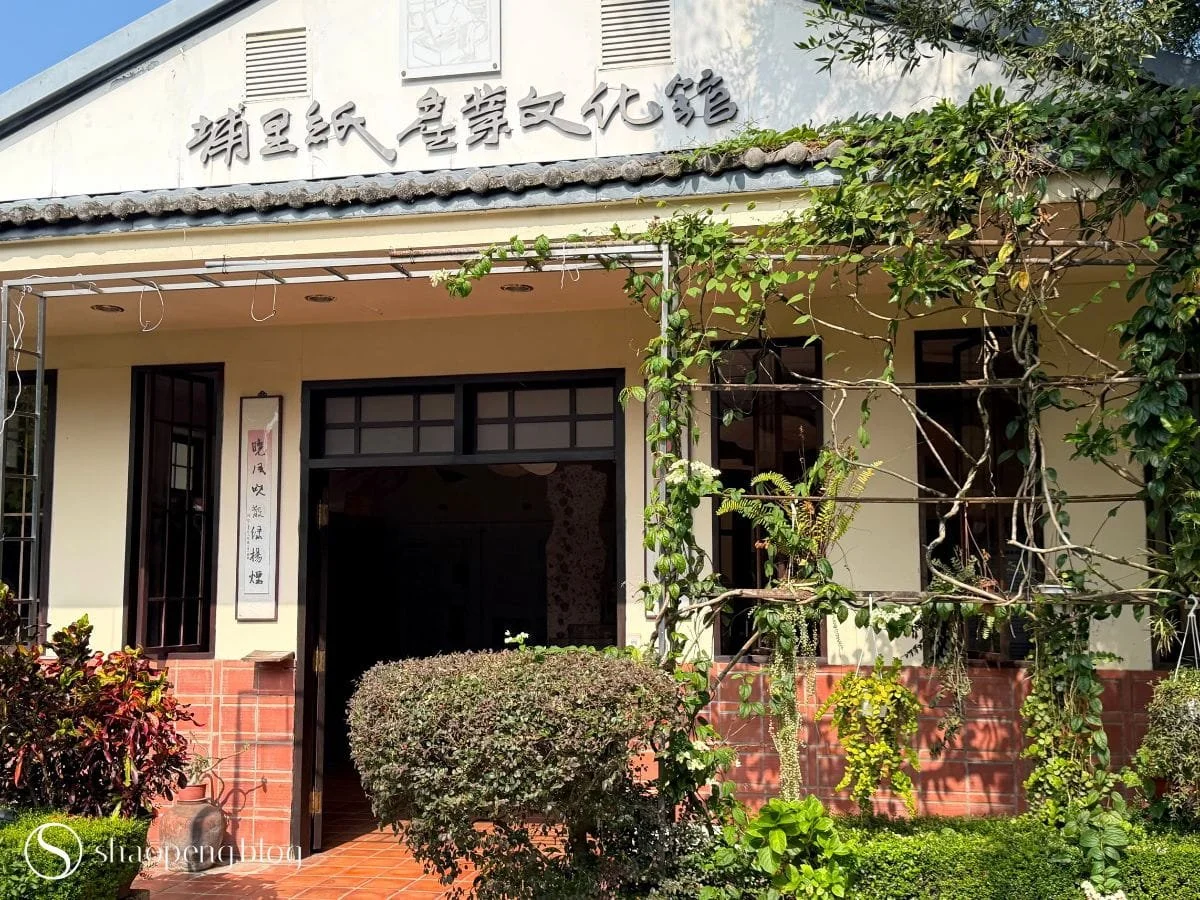
Guang Xing Paper Mill’s Paper Cultural Gallery traces the history of papermaking in Puli.
Why Puli? The Water Knows.
It’s no accident that Puli, of all places in Taiwan, became a centre of handmade paper.
The town sits in a basin, with the Nangang and Mei Rivers winding through it and springs bubbling up across the land. Its springs, especially those on the Ailan Plateau, are famous for their purity. Too much iron can turn paper yellow, while too much lime makes it brittle. Puli’s water avoids both.
The mountains around the basin give Puli a little of everything: high peaks, rolling hills, plains, rivers, and lakes. Together, they provide an unusually rich environment for papermaking, from the raw materials to the water and climate that the craft depends on.
Papermaking arrived here early. Chinese settlers brought basic papermaking techniques during the late Qing dynasty (1644–1912), but the real story began during the Japanese colonial period (1895–1945). The Japanese administration relied on Mino paper, a type of paper used for official documents that was originally shipped from Japan. As the colonial period drew to a close, material shortages and transport problems pushed officials to look for places in Taiwan where it could be produced locally. Puli was one of the places they turned to.
Puli Paper Mill became the town’s first paper factory, with master artisans invited from Japan to produce Mino paper there. It planted the seed for everything that followed.
Guang Xing Paper Mill came later, in 1965, when its founder, Huang Yao-Tong, saw an opportunity as Taiwan’s foreign trade took off. Strong demand from Japan and South Korea helped Puli’s paper industry mushroom, with more than 50 mills eventually operating in the area.
The boom did not last. From the early 1990s onward, cheaper competition, mills relocating overseas, and a shrinking number of people learning calligraphy pushed Puli’s paper industry into steep decline.
Guang Xing survived by reinventing itself. Huang’s son, Huang Huan-Jang, who took over the mill, opened it to visitors and turned it into Taiwan’s first tourist factory dedicated to handmade paper. Today, the mill is run by the family’s third generation. It also experiments with paper made from fruits, vegetables, and agricultural waste, and even produces paper that you can eat.
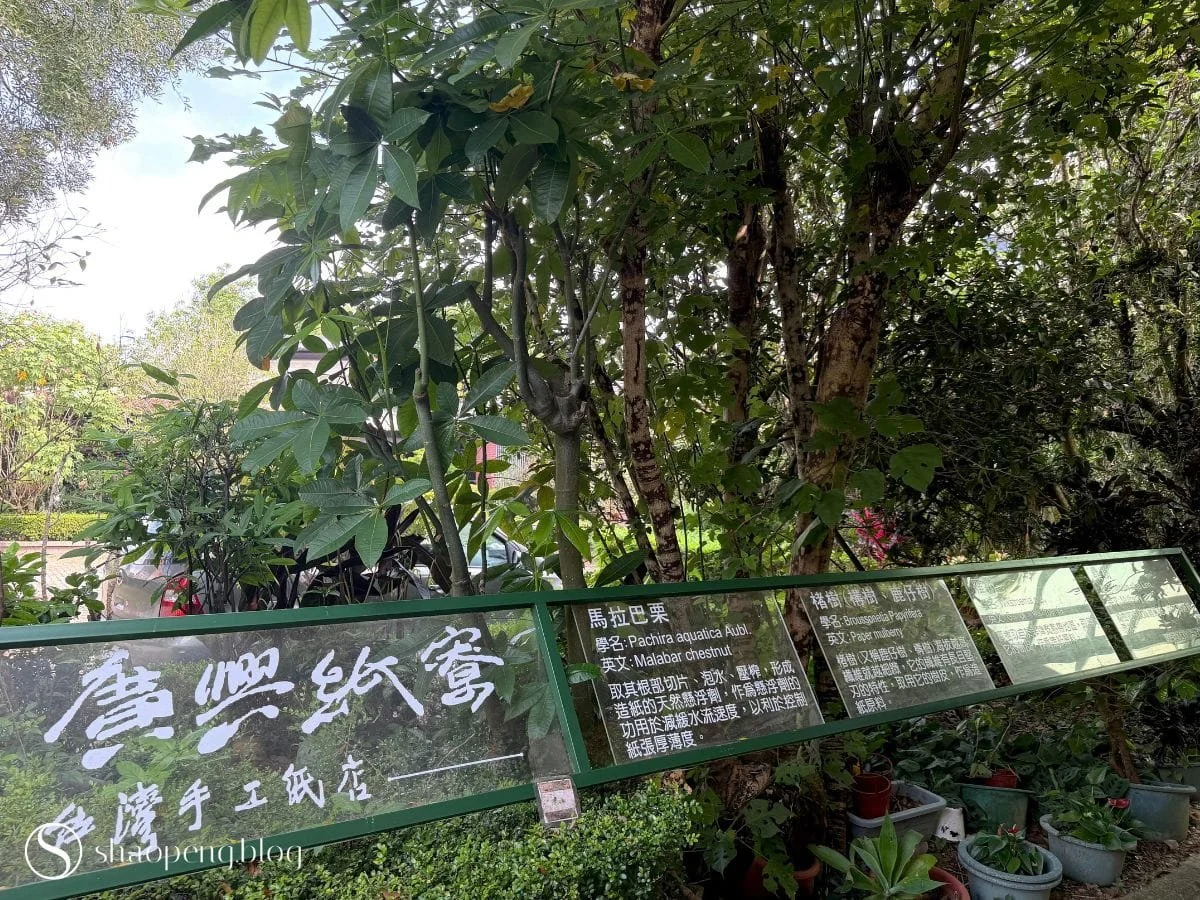
In a quiet corner of the paper mill, the trees used to make paper at Guang Xing Paper Mill are on display.
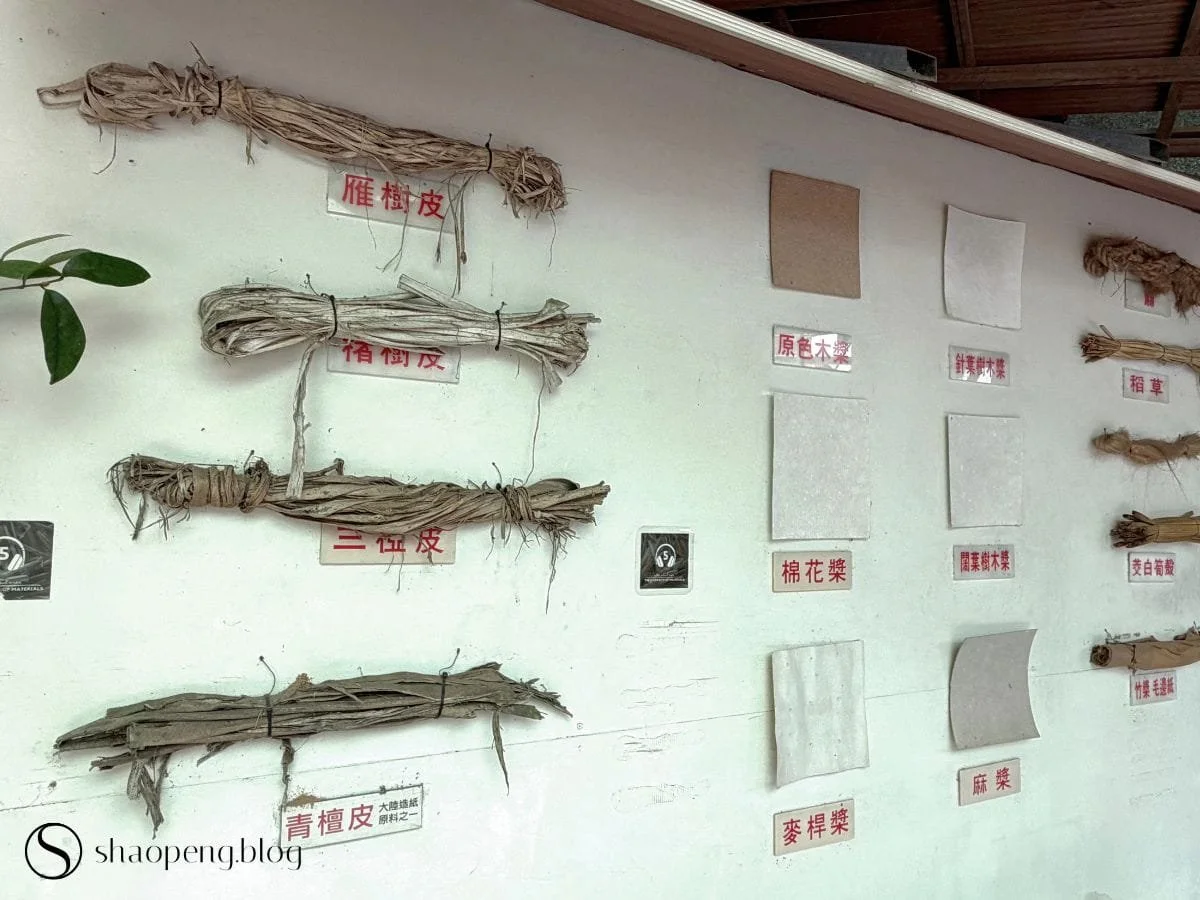
A showcase of the various plant fibres used in papermaking.
From Bark to Sheet: How Paper Is Born
The recipe is simple: plant fibres, clean water, and a natural binder. But turning them into paper takes time, patience, and plenty of skilled hands.
Gathering the fibres. At Guang Xing, fibres come from a wide range of plants: mulberry trees, straw, bamboo, jute, and rattan. In essence, anything with fibre can become paper. The classic choices are paper mulberry bark and gampi bark. Long, strong mulberry fibres are well suited to expressive calligraphy, while the finer gampi fibres are ideal for detailed gongbi painting. Both trees are tropical and are now imported from Southeast Asia.
Soaking and cooking. Once harvested, the raw bark is soaked in clean water to soften the fibres and wash away dirt, soluble impurities, and excess sap. It is then cooked in large vats for a full day.
Rinsing and picking. The cooked fibre bundles are thoroughly rinsed in running water. Whatever remains, from dark bark spots and knots to tiny non-fibrous specks, is meticulously picked out by hand.
Pulping. Next, the clean fibres are beaten into a uniform pulp suspended in water, then transferred to a large vat, where a natural mucilaginous binder is stirred in. You can spot the malabar chestnut that supplies it growing in the mill’s garden. Its viscous sap slows the drainage of water, keeping the fibres evenly suspended and preventing them from clumping together as the paper is scooped.
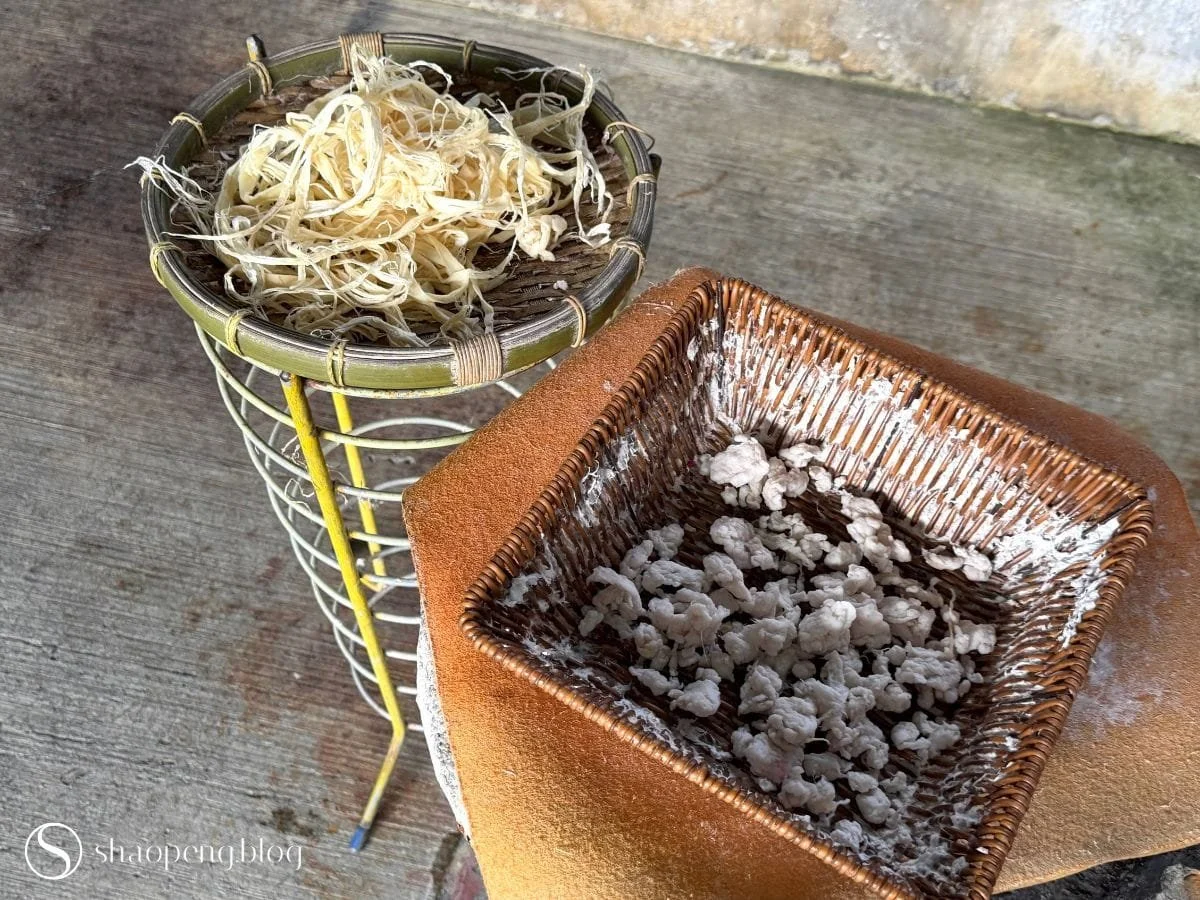
Bleached tree bark (left) and paper pulp (right).
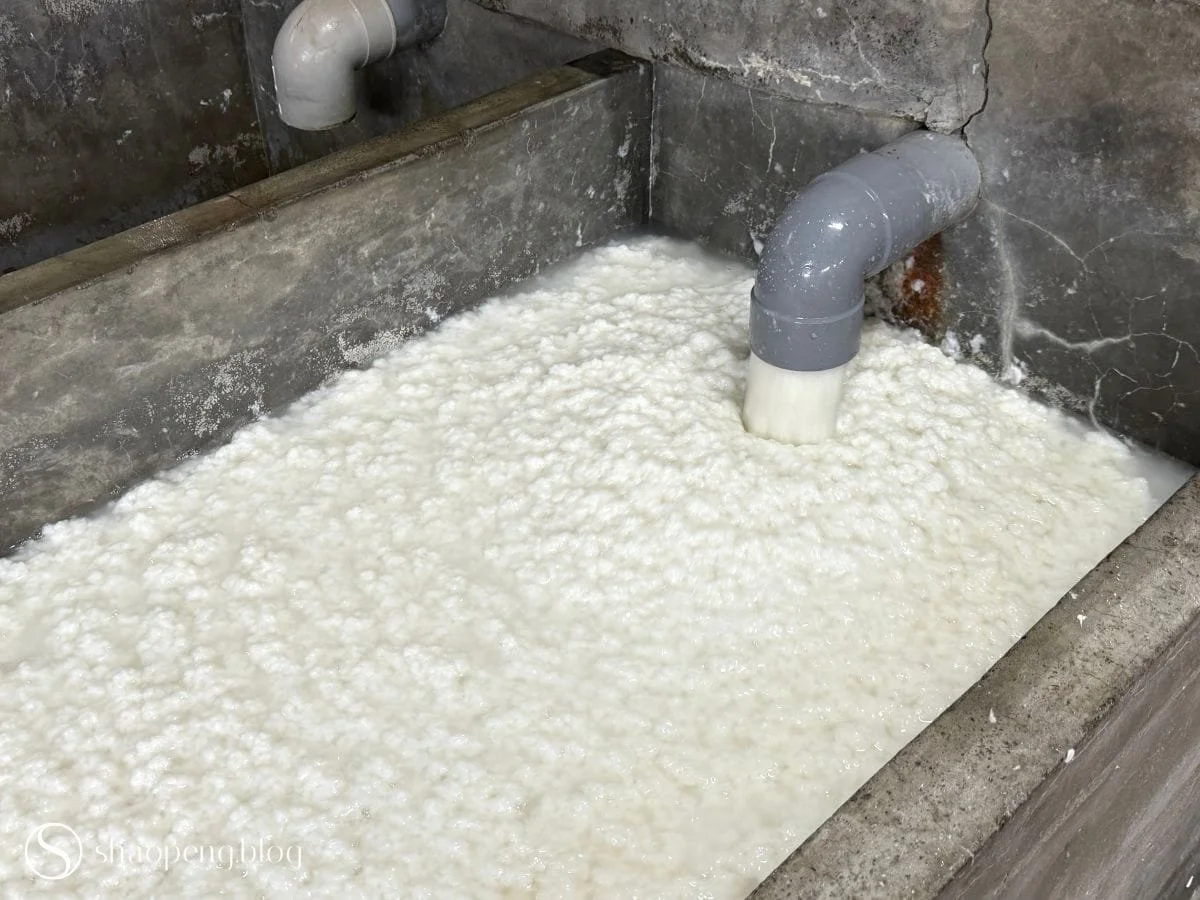
Blending the paper pulp.
Scooping. To form a sheet, the artisan lowers a fine bamboo screen (su), held inside a wooden frame (keta), into the vat. Using the traditional double-dipping or rocking technique, they scoop up the pulp and rock it evenly across the screen before draining away the excess water, allowing the fibres to interlace.
Couching. The screen, now holding a freshly formed wet sheet, is laid onto a table covered with a paper bed. The mat is slowly peeled away, leaving the damp sheet behind. Sheet after sheet is stacked directly on top of the last, with a thin guide thread separating them. Careful alignment keeps the sheets from sticking permanently to one another.
Sometimes, a specially woven bamboo screen is used to create the distinctive patterned xuan paper known as luowen xuan, another specialty of the mill.
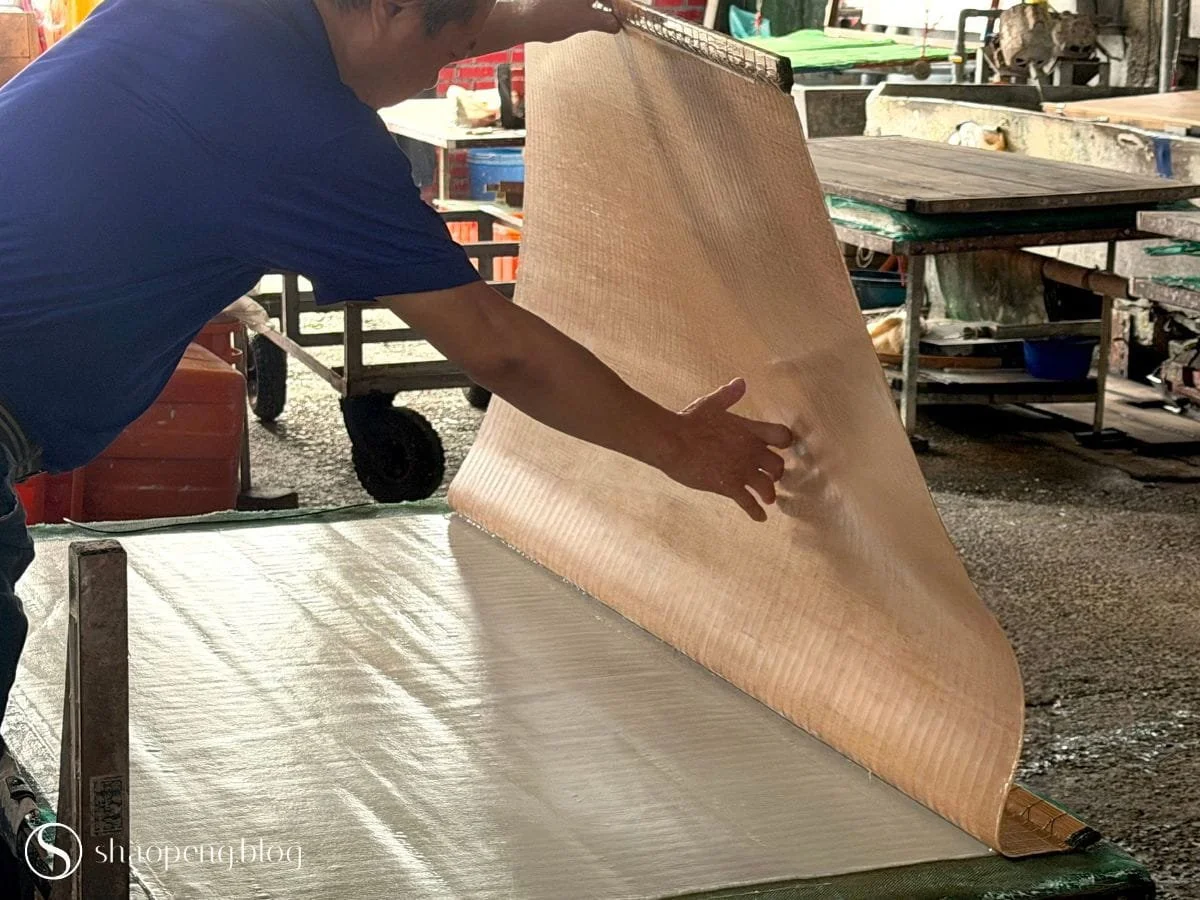
Specially woven bamboo screen is used to make the distinctive patterned xuan paper known as luowen xuan.
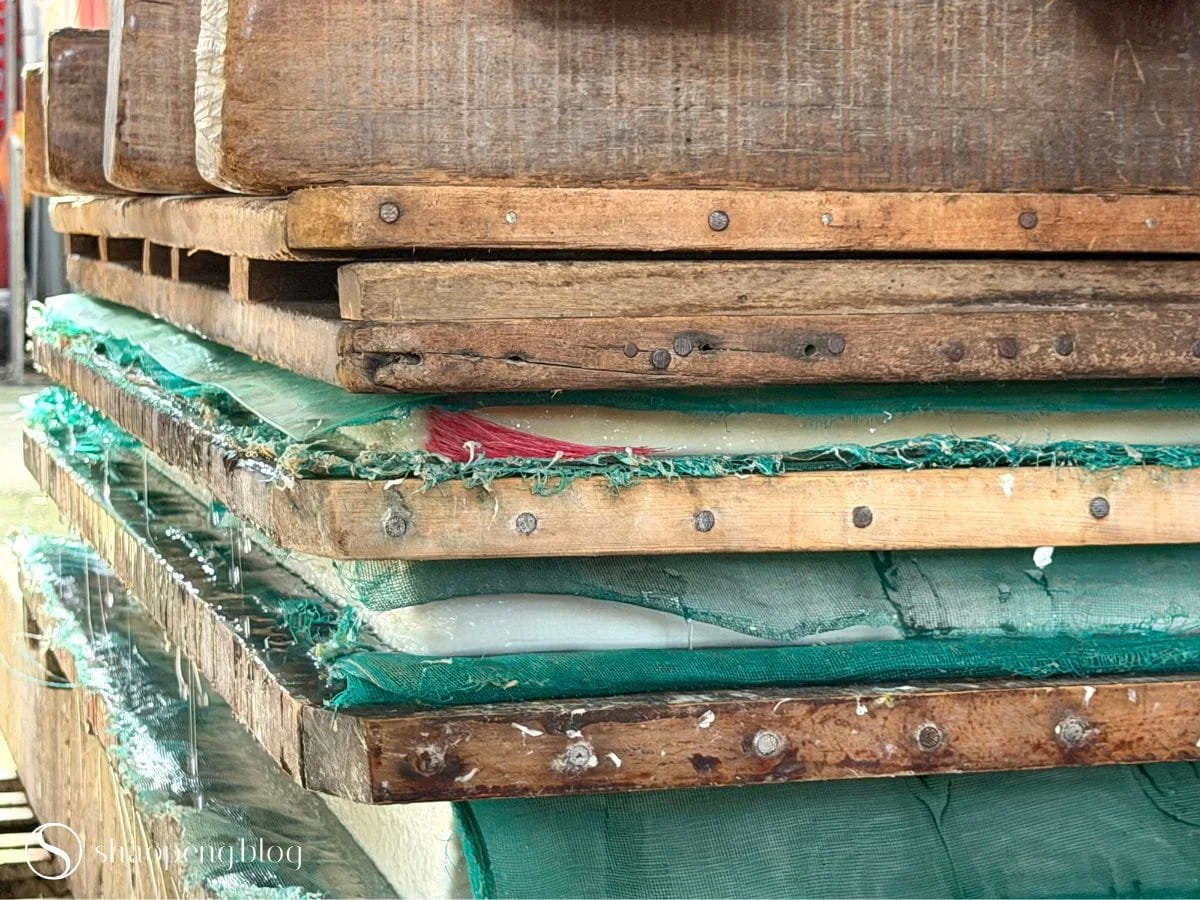
Stacks of paper, known as “dried bean curd,” are pressed under heavy weights to remove excess water.
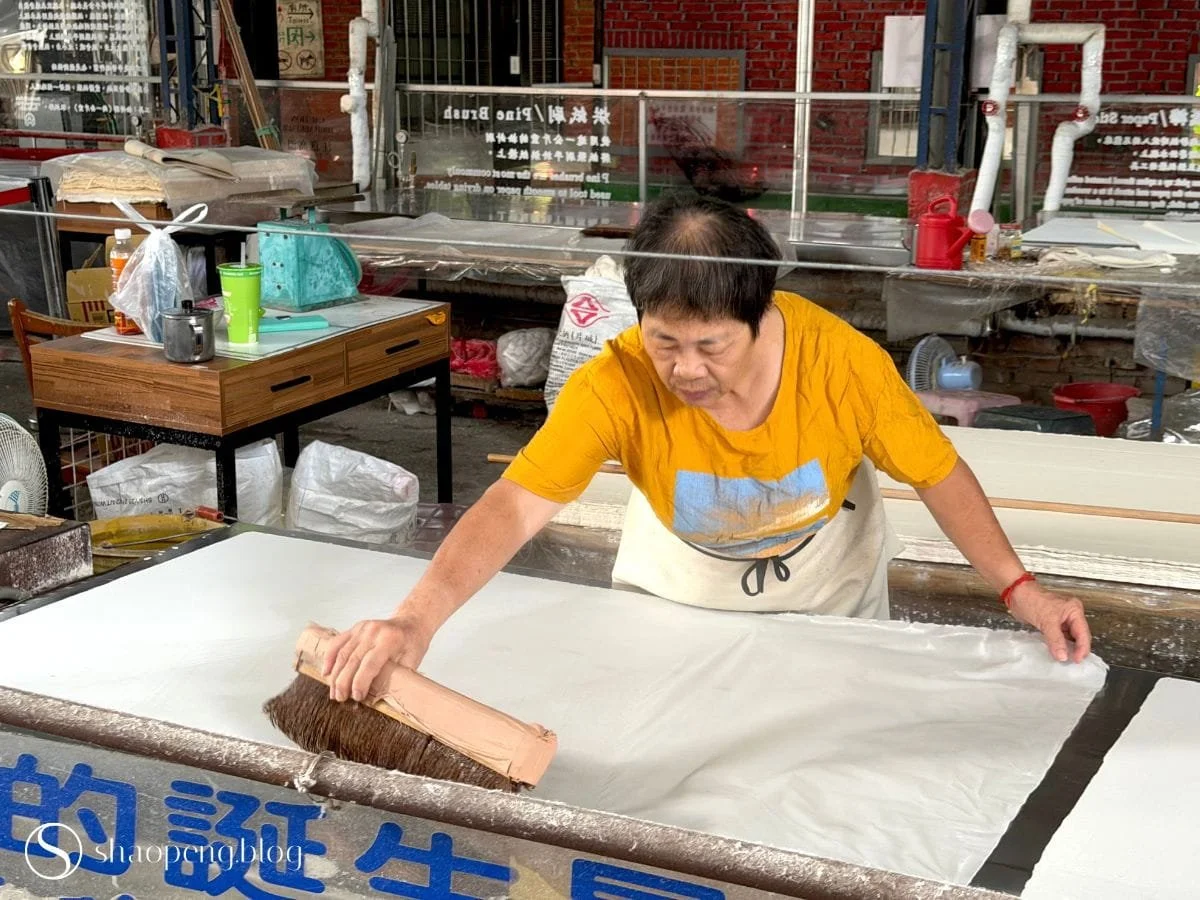
Sheets of paper are dried one by one on a heated plate.
Pressing. The wet stacks, nicknamed “dried bean curd,” are left to rest overnight. The next morning, they go under a mechanical lever or hydraulic press, where pressure builds gradually over several hours. This squeezes out excess water while giving the paper greater density and strength.
Drying on hot plates. Then comes the part that made me sweat just watching. Individual damp sheets are carefully peeled from the pressed stack and brushed onto metal plates heated to 100°C. The artisans use soft pine-needle brushes weighing about one kilogram each. The heat dries the paper flat and smooth within minutes. With no air conditioning, the workstation can reach 40°C in summer. The side that faces the plate becomes the smooth side, the one we usually write and paint on with ink.
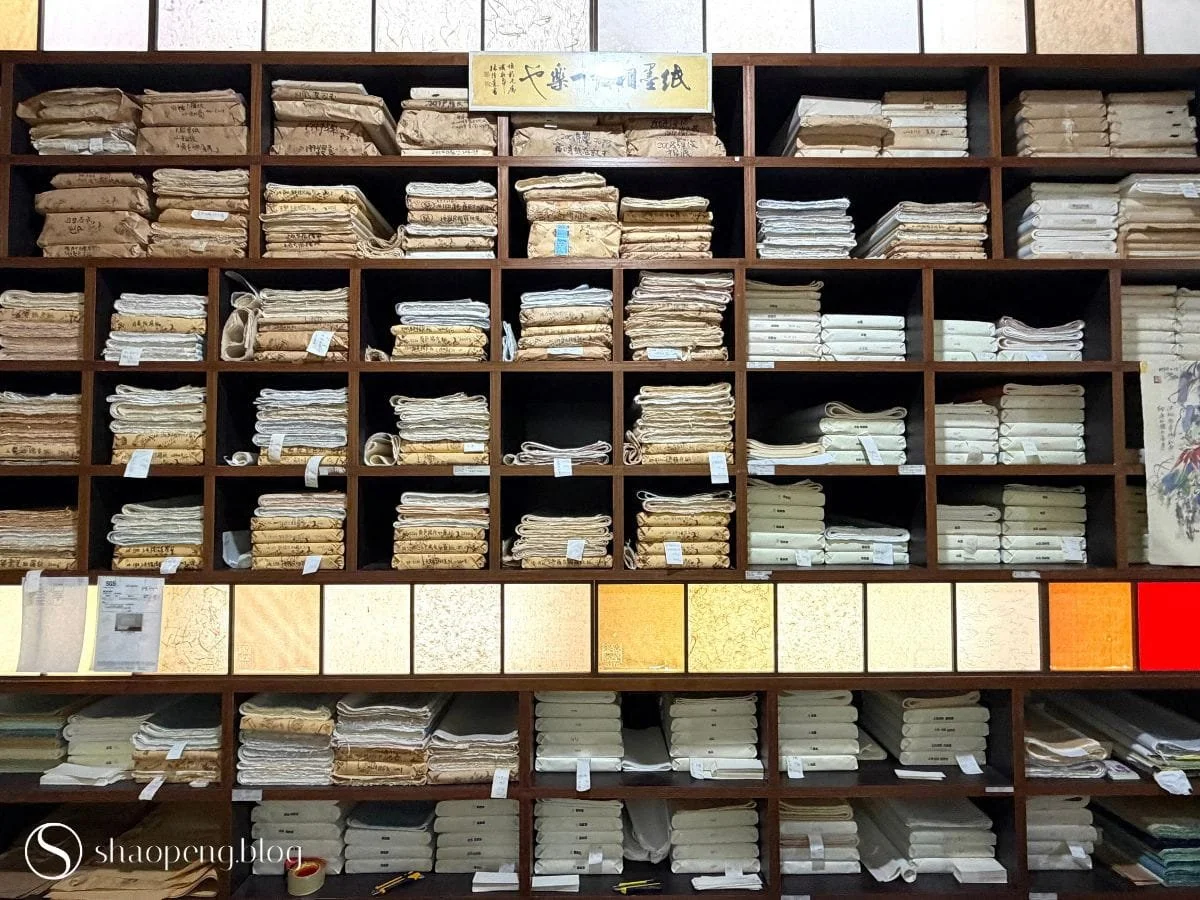
Inside Handmade Paper Shop at Guang Xing Paper Mill.
Paper Hunting: Where Do I Even Begin?
Following my tour of the mill, I make my way to the Handmade Paper Shop, just a short walk away. It carries hundreds of varieties, far more than my usual shop in Taipei, and I find myself standing in front of the shelves, not quite sure where to begin.
I skim through the catalogue and jot down the names of the sheets I’d like to take home and experiment with. I select a few sheets of luowen xuan, curious to see how they differ from the ones I have back home.
While hunting, I also come across a special variety of pastel-coloured xuan paper that shimmers with ultra-fine glitter. I ask for a few colours to try, already thinking I might come back for more.
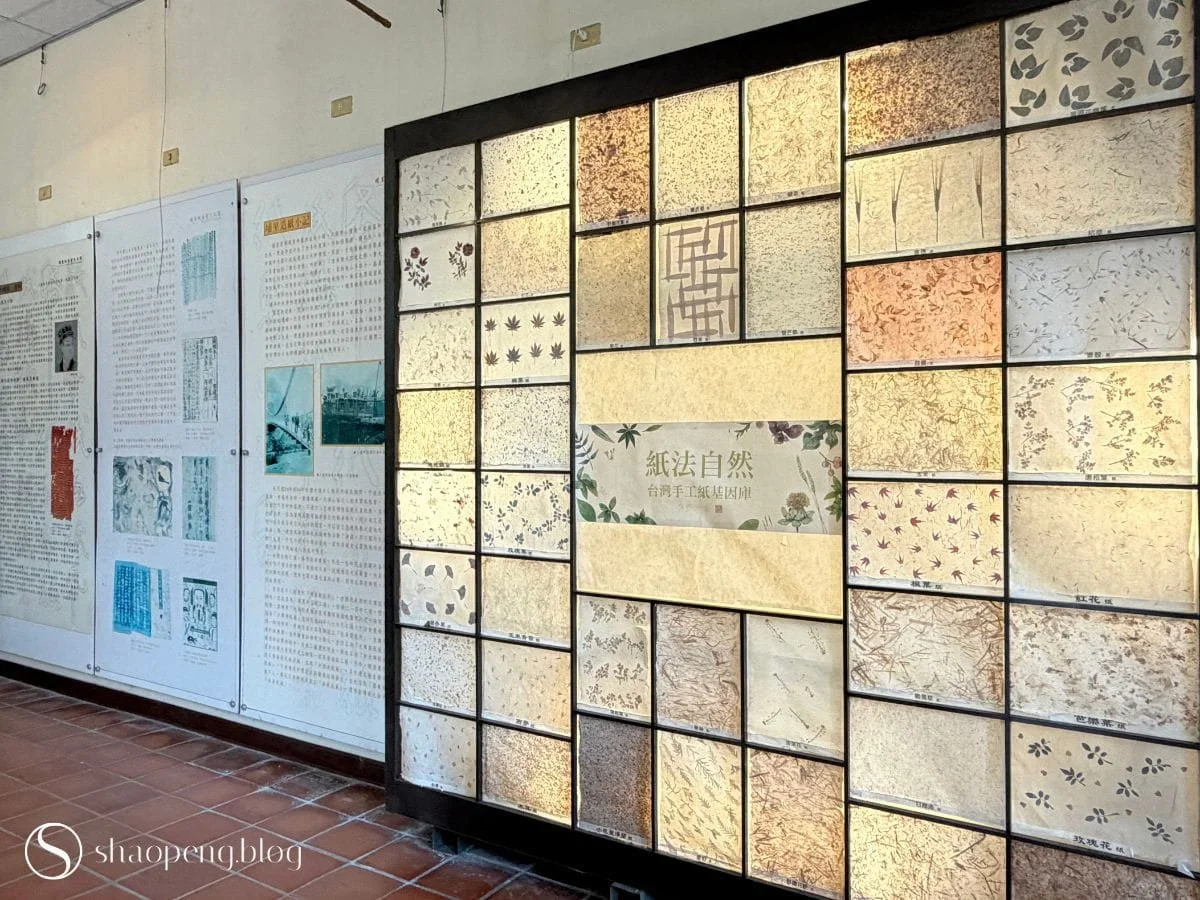
Guang Xing Paper Mill continues to draw inspiration from nature, experimenting with different materials to create new kinds of paper.
I also pick up some sheets that I’ll probably never write or paint on, simply because I love what went into them: tea leaves, garlic chives, sugarcane, and ginger lily, among others. A particularly curious find is Xifu paper, made from the husks of water bamboo, a local crop. Puli grows most of Taiwan’s water bamboo, and the mill turns the leftover husks into good-quality paper. Xifu means “cherish the blessings,” which feels especially fitting for a material that would otherwise be thrown away. I can’t wait to see how my ink behaves on it.
I came to Puli looking for better sheets to hold my ink, and I’m leaving with a new appreciation for what goes into each one. Behind every sheet are days of soaking, cooking, picking, scooping, and pressing, along with artisans standing over hot plates in the summer heat. Somewhere between the vats and the shelves, paper stops being something I take for granted.
Seeing how the mill experiments with unexpected materials also changes the way I think about what paper can be. Now, when my brush touches these handmade surfaces, I think of the mountain-ringed town where the water runs clean and the work is still done one sheet at a time.
If you ever find yourself near Sun Moon Lake, take the detour. And if you practice calligraphy or painting, bring a shopping bag with you!
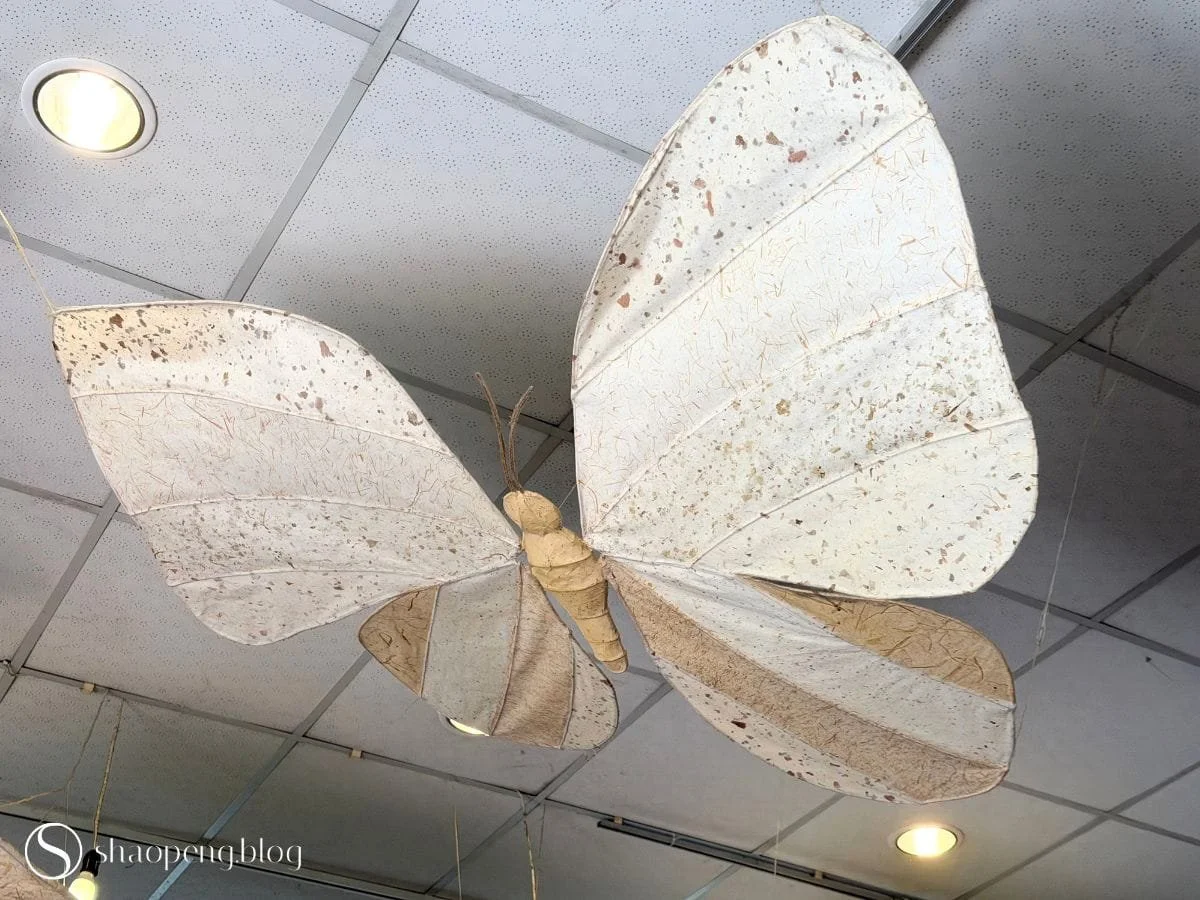
A butterfly installation made from handmade paper, suspended from the ceiling of the Paper Cultural Gallery.
You may also be interested in:
Wanderer’s tip — Give yourself ample time to explore here. Guided tours run every half an hour, and you can get even more hands-on with an on-site papermaking or stone-rubbing experience for an additional fee. Visit their website for more information.
Reference:
Deng, X.-Y., & Wang, W.-F. (2010). 埔里手工造紙業的發展 [The development of Puli’s handmade papermaking industry]. Taiwan Historical Journal, 61(2), 375–394.