
Wander in Abu Dhabi: Zayed National Museum
From a pearl pulled from the seabed 8,000 years ago to a necklace that once graced the neck of the Arab world’s greatest singer, the Zayed National Museum traces the stories of this land, its people, and their connections with the wider world.
Sense of Wander: ★★★★☆
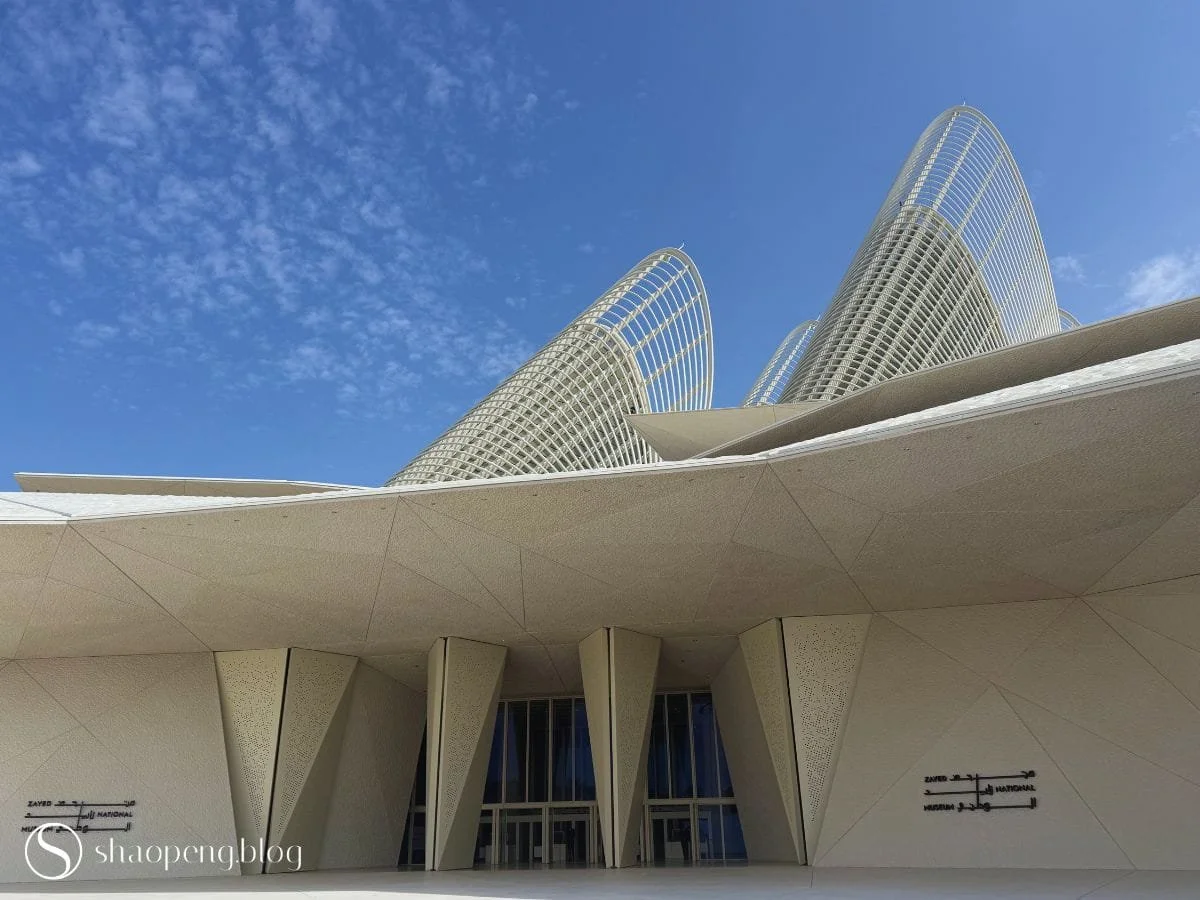
Entrance to Zayed National Museum in Abu Dhabi.
ABU DHABI, UAE — Have you ever felt a kind of hunger that sets in after spending time in a place, with a desire to know more of its story? Who lived here before the city was built? What did this land look like before the high-rises rose from the desert?
Abu Dhabi, for all its ambition, has always known it needed to answer those questions. It has been building those answers, gallery by gallery, on Saadiyat Island, the city’s cultural district.
I’ve wandered through many of the capital’s arts and culture destinations — the majority of which I’ve mapped out in my Wander in Abu Dhabi: An Arts & Culture Guide. But it was the Zayed National Museum, one of the island’s newest cultural landmarks, that left me hungry for more.
The museum is a tribute to Sheikh Zayed bin Sultan Al Nahyan, the UAE’s founding father. Inside, the story it tells stretches far longer than a single lifetime: from the oldest traces of human presence on this land to the nation as it stands today, rendered through immersive display and a curatorial hand that is, at times, genuinely moving.
Six permanent galleries guide you on an itinerary that is clear without overwhelming you with information. You begin with the man himself — his life, his vision, his legacy. From there, the museum recounts the story of the land and its people.
If you’ve spent time in other museums throughout the UAE, some of the narratives here will feel familiar. Its trade connection, the arrival and spread of Islam, and the gradual crystallisation of what we now call Emirati identity have appeared across many cultural institutions in the country. But what sets Zayed National Museum apart is the scale of its ambition.
To Our Ancestors gallery reaches back some 300,000 years, tracing the earliest human activity in the region and the evolution of the land and its people. Standing here, it feels as though you have travelled beyond Abu Dhabi’s glass and steel to a time when the land was sprase, the coastline untamed, and the horizon seemingly endless.
The museum’s collection comprises more than 3,000 objects, with around 1,500 on display alongside loans from institutions around the world. Spanning hundreds of thousands of years, its breadth is difficult to take in in a single visit. So I didn’t try to. Instead, I let myself wander and paid attention to what made me stop.
Here, I have selected nine highlights to share with you. some are grand, while others are easy to overlook. Each of them illuminates a different chapter of the UAE’s story, and has stayed with me to this day:
1. Abu Dhabi Pearl

Abu Dhabi Pearl
Where better to begin than with a pearl?
Not just any pearl, though, but the world’s oldest known natural pearl, dated to somewhere between 5800 and 5600 BCE. More than 8,000 years old, and small enough to sit humbly in its case while the world rushes past it.
It was discovered in 2017 on Marawah Island, just off the Abu Dhabi coast, during excavations whose archaeologists had no idea what they were about to unearth. The pearl likely adorned someone — perhaps as part of a necklace or sewn into a garment — though no sign of a drilled hole has been found. It may instead have been treasured as a precious find, carefully stored by its owner.
What it tells us with certainty is that people were diving for pearls in these waters long before anyone thought to record the practice. Pearl fishing would continue for millennia, sustaining families and driving the coastal economy until the 1930s, when Japan’s cultured pearl industry brought an end to a way of life that had defined this coastline for generations.
The Abu Dhabi Pearl is displayed in To Our Ancestors gallery at Zayed National Museum alongside a second pearl from Delma Island, dated to around 5,000 BCE — its younger sibling by a few centuries.
Wanderer’s tip — This is a small pearl in a gallery filled with objects competing for your attention. I walked right past it on my first visit. If you can’t spot it among the artefacts, don’t hesitate to ask a member of staff for help.
2. Magan Boat
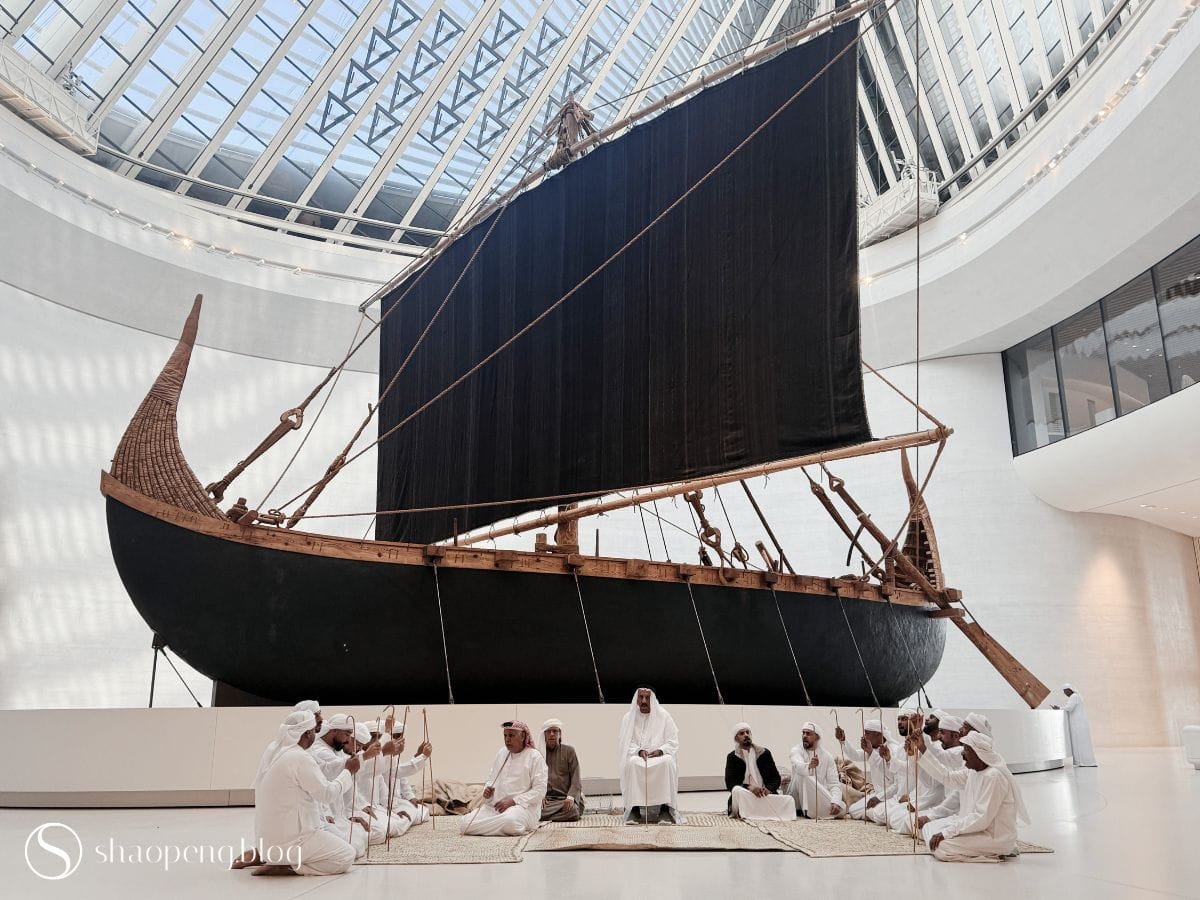
Traditional Emirati performances bring Zayed National Museum to life before the reconstructed Magan Boat.
Long before Abu Dhabi became a crossroads of international air routes, ships connected this corner of the world to distant shores.
The Magan Boat is a full-scale reproduction of a Bronze Age vessel that sailed the waters of the Persian Gulf more than 4,000 years ago. Its design is based on archaeological discoveries in the UAE, where fragments of bitumen-coated reed boats have been unearthed, offering insights to the region’s maritime legacy.
The name “Magan” comes from Mesopotamian texts, which describe a land renowned for its copper and seafaring people. Historians associate Magan with present-day UAE and Oman. From here, merchants crossed the Gulf carrying copper, stone, and other goods to Mesopotamia, returning with commodities and ideas from lands far beyond the horizon.
Standing before the boat, one cannot but admire the ambition of those early sailors. There were no modern GPS, no engines, and no guarantee of a safe return. Yet they ventured across open waters, transforming what might seem like a remote coastline into an active participant in one of the ancient world’s great trade networks.
Magan Boat is a reminder that the story of the UAE did not begin with oil. Long before oil came into play, people living on this coast were already looking outward, engaging with cultures hundreds of kilometres away.
Displayed on the museum’s ground floor, the Magan Boat is perhaps the museum’s most visually striking exhibit. But beyond its impressive size lies a story of curiosity, enterprise, and the enduring human desire to see what lies beyond.
3. Royal Headdress from Ur
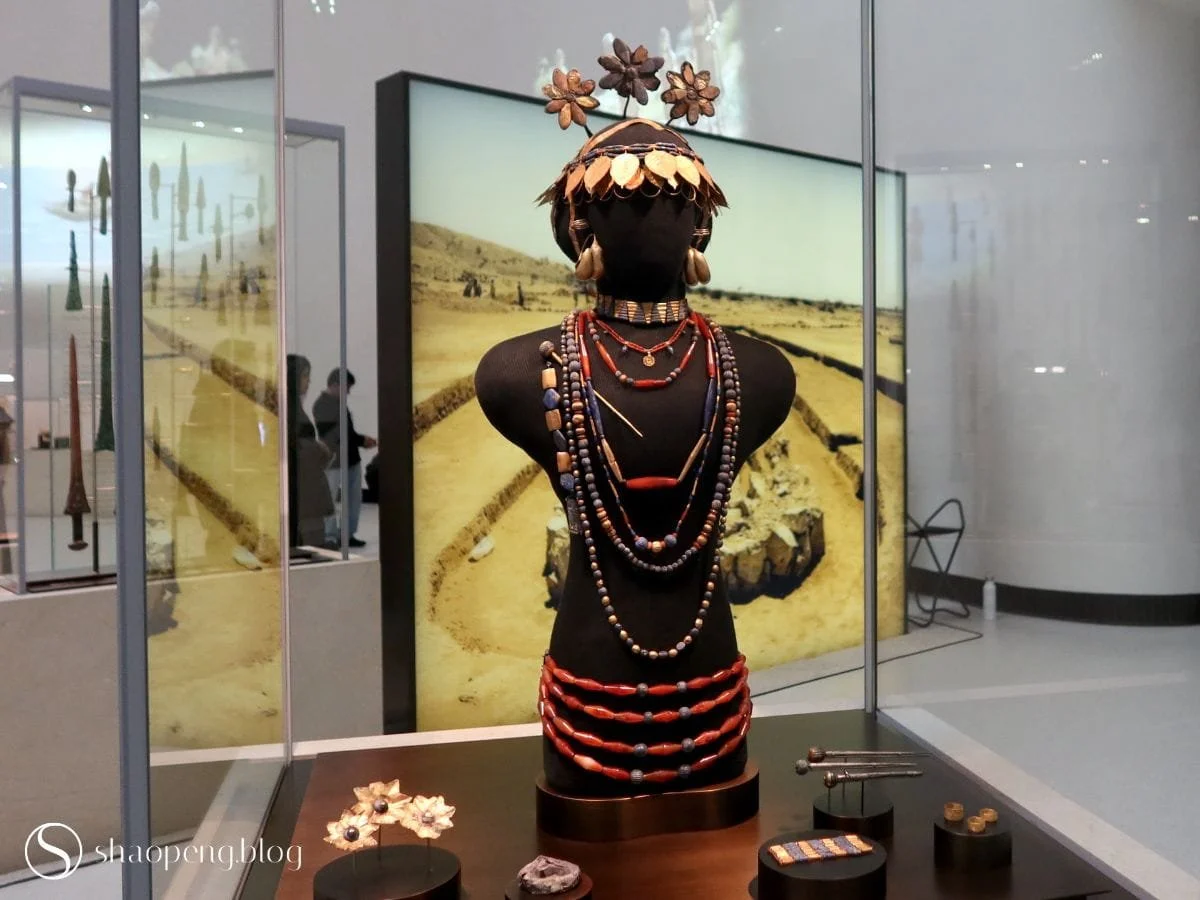
Royal Headdress from Ur
Magan boats carried materials and goods between cultures, and among them were precious objects such as jewellery. A headdress displayed in To Our Ancestors gallery hints at the kinds of adornments and luxury materials that once travelled across these maritime routes, exchanged between distant civilizations.
The Royal Headdress from Ur is more significant than it appears. Dating to around 2600–2450 BCE, this intricately crafted headpiece comes from the ancient city of Ur in Mesopotamia, in what is now modern-day Iraq. It is made of finely worked gold and precious materials, formed into delicate floral motifs that would once have caught the light during ritual or courtly display.
Objects like this were not merely decorative, but signified status, authority, and participation in a highly structured world of kingship and religion. In the courts of Ur, such regalia would have marked the wearer as someone positioned at the intersection of political power and sacred order. It is also regarded as one of the earliest iconic examples in the history of jewellery.
Currently on loan from the University of Pennsylvania Museum of Archaeology and Anthropology in Philadelphia, its presence within the UAE’s national narrative may feel unexpected at first. Yet it speaks to a broader thread running through the museum: that ideas of beauty, power, and identity have always travelled across lands and seas, and that this region shared cultural horizons with the great civilisations of Mesopotamia.
4. Making of an Arabian Identity
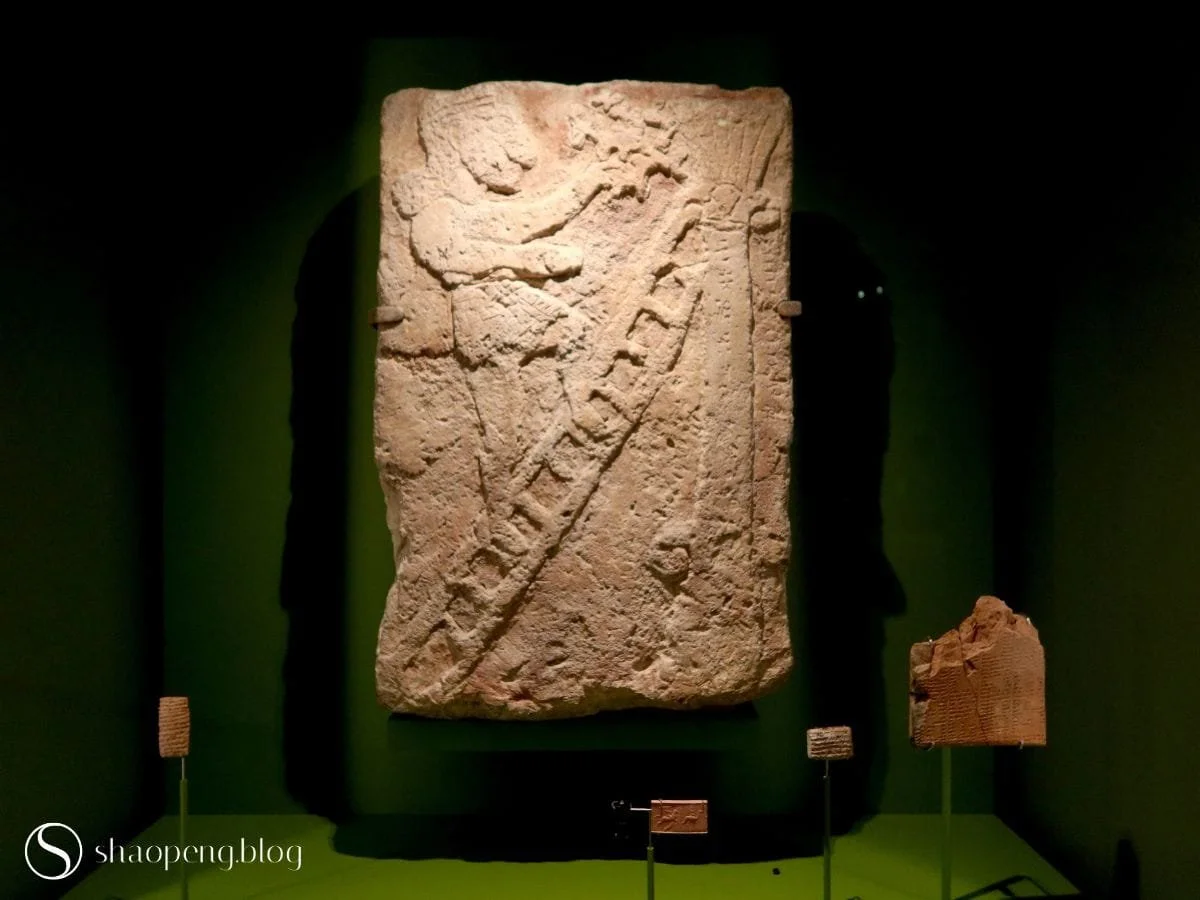
Relief of a man on a ladder (centre) from Syria, dated to 1,000–800 BCE, is displayed among ancient clay tablets from Iraq.
There’s a curatorial choice that Zayed National Museum makes early on. Rather than telling the story of this land only from the inside out, it also turns the lens around and asks: How did the rest of the world see it?
In Through Our Connections gallery, you will find the answers.
This was a land known by many names. Ancient records from Iraq and the neighbouring regions referred to it as Magan, Makan, Qade, and Maka — different names for what was, to the civilisations that recorded them, a place worth knowing. A place worth trading with.
Archaeological finds across the UAE point to trade networks that stretched to Africa, Greece, Rome, and the far reaches of South Asia. Goods moved in both directions along these routes, but so did something far more difficult to excavate: ideas, beliefs, and traditions.
As you wander through the gallery, you encounter evidence of these connections in objects whose very presence invites questions. Ancient clay tablets from Iraq. Millennia-old relief sculptures from Syria. Alabaster plaques carved with Musnad, the earliest known script to emerge in southern Arabia some 3,000 years ago. Though ancient, Musnad was in use across the region of what is known as the UAE by the 8th century.
Despite its origin, each object serves as a reminder that identity is rarely formed in isolation; it is shaped through encounters, exchanges, and the movement of people, goods, and ideas across borders.
5. Temple of Shams
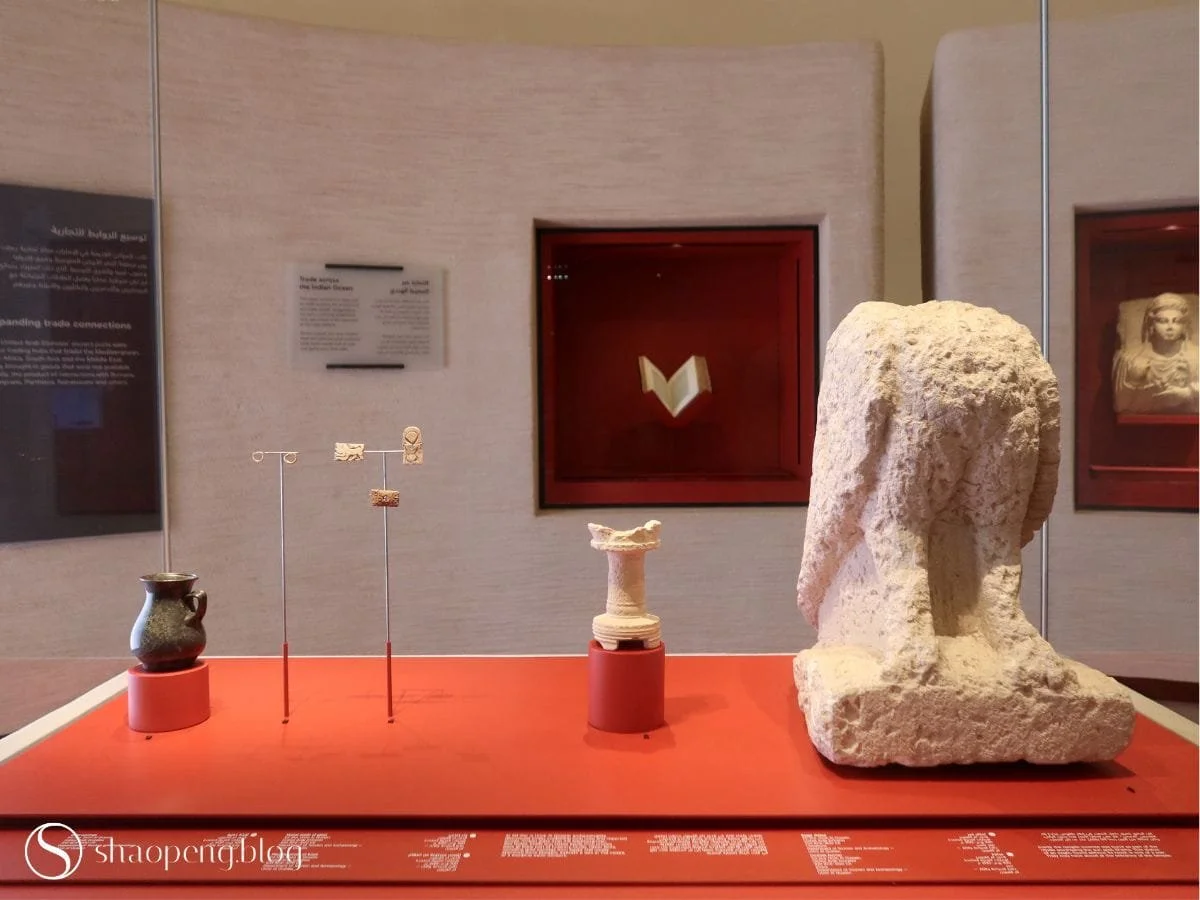
Artefacts unearthed from Ed-Dur, Umm Al Quwain.
The Temple of Shams at Ed-Dur is one of the most significant pre-Islamic religious sites in the UAE, named after the ancient Arabian sun deity Shams. Excavated along the northern coast of present-day Umm Al Quwain, the site dates back to the late 1st century BCE and 1st century CE.
What survives today are fragments of that history: foundations, votive remains, and traces of a sanctuary. Archaeological evidence suggests the temple was part of a broader religious landscape in which the sun played a central role in ritual practice and seasonal understanding.
Among the finds are objects that hint at both devotion and daily life: vessels, offerings, and architectural fragments that suggest a space where commerce, travel, and worship may have overlapped. Ed-Dur was one of the ports that connected the region to distant cities such as Palmyra in Syria and other trading centres around the Mediterranean.
On display is a video showing a digital reconstruction of the temple, built from stone blocks and plaster. Its design, particularly its Corinthian-style capitals, reflects Roman architectural influence. Exhibits also include the remains of a headless eagle statue, one of a pair that likely stood at the temple entrance, as well as a incense burner used in ritual practice.
Featured in To Our Ancestors gallery, this section is perhaps one of the most unexpected encounters one would come across in Zayed National Museum — and well worth pausing for if you are curious about the region’s pre-Islamic religious landscape.
6. Sir Bani Yas Monastery
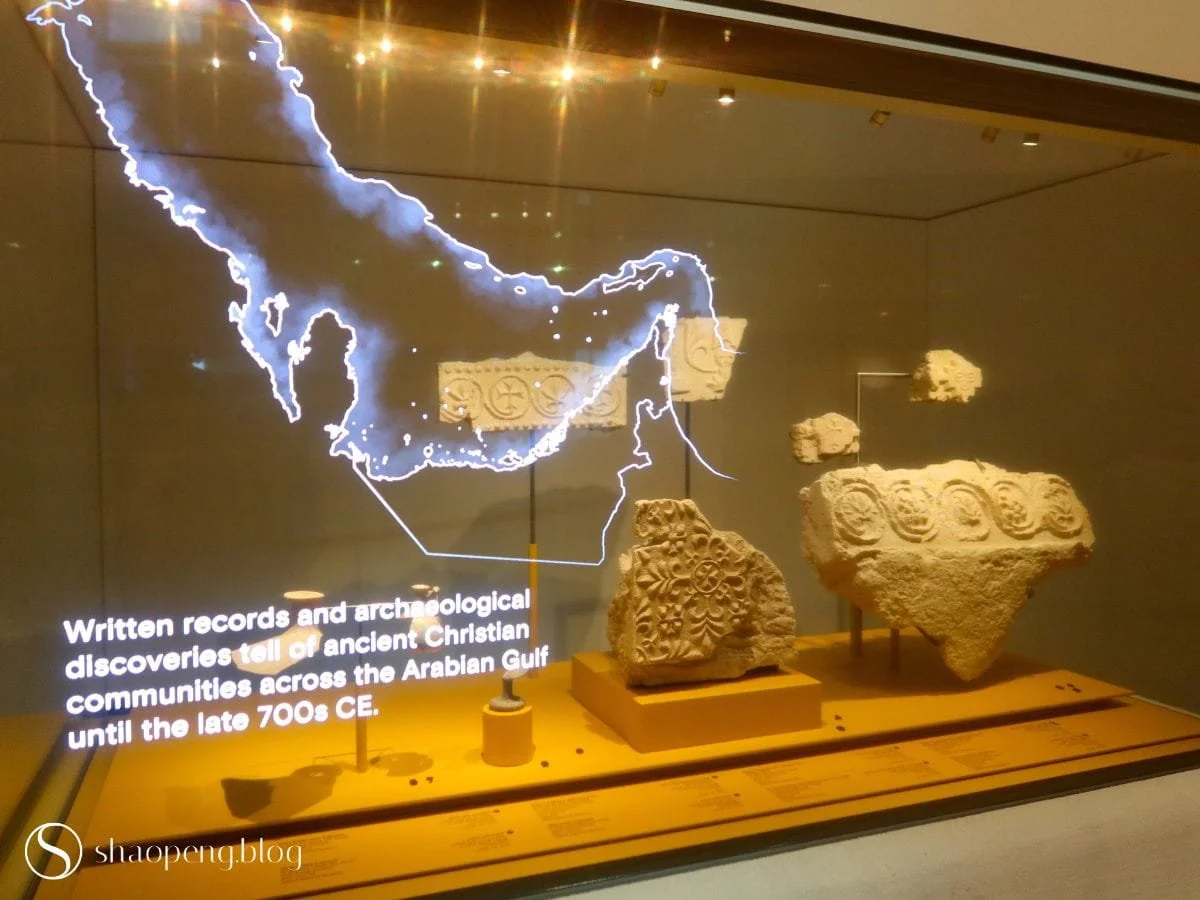
Architectural remains from Sir Bani Yas Island, Abu Dhabi.
In 1992, on Sir Bani Yas Island — an island just off the Abu Dhabi coast — archaeologists uncovered something no one had expected: a church and monastery.
The discovery this 7th-century settlement reshaped, in small but significant ways, the religious history of the region. This is not only the UAE’s oldest known Christian site, but also evidence of a wider Christian network across the Gulf — one that flourished here before the arrival of Islam.
Fragments from the site are now part of the Zayed National Museum’s permanent collection: architectural elements carved from gypsum, their surfaces decorated with low-relief motifs of crosses, vines, and scrolling motifs.
Among the artefacts is a gypsum plaque bearing a cross, set within what appears to be an ecclesiastical arch. It was this cross, and others like it found across the site, that first led archaeologists to identify the settlement as Christian, drawing comparisons with early churches elsewhere along the Persian Gulf.
Besides the cross, the palm tree — a distinctly local motif — was among the visual language that inspired the artisans who worked on the gypsum surfaces. It is as though the people who built this place were already finding ways to make a foreign faith feel like home.
Wanderer’s tip — The church and monastery on Sir Bani Yas Island are open to visitors. The site itself, nearly 1,400 years old, is well worth the journey beyond the museum walls.
7. Blue Quran
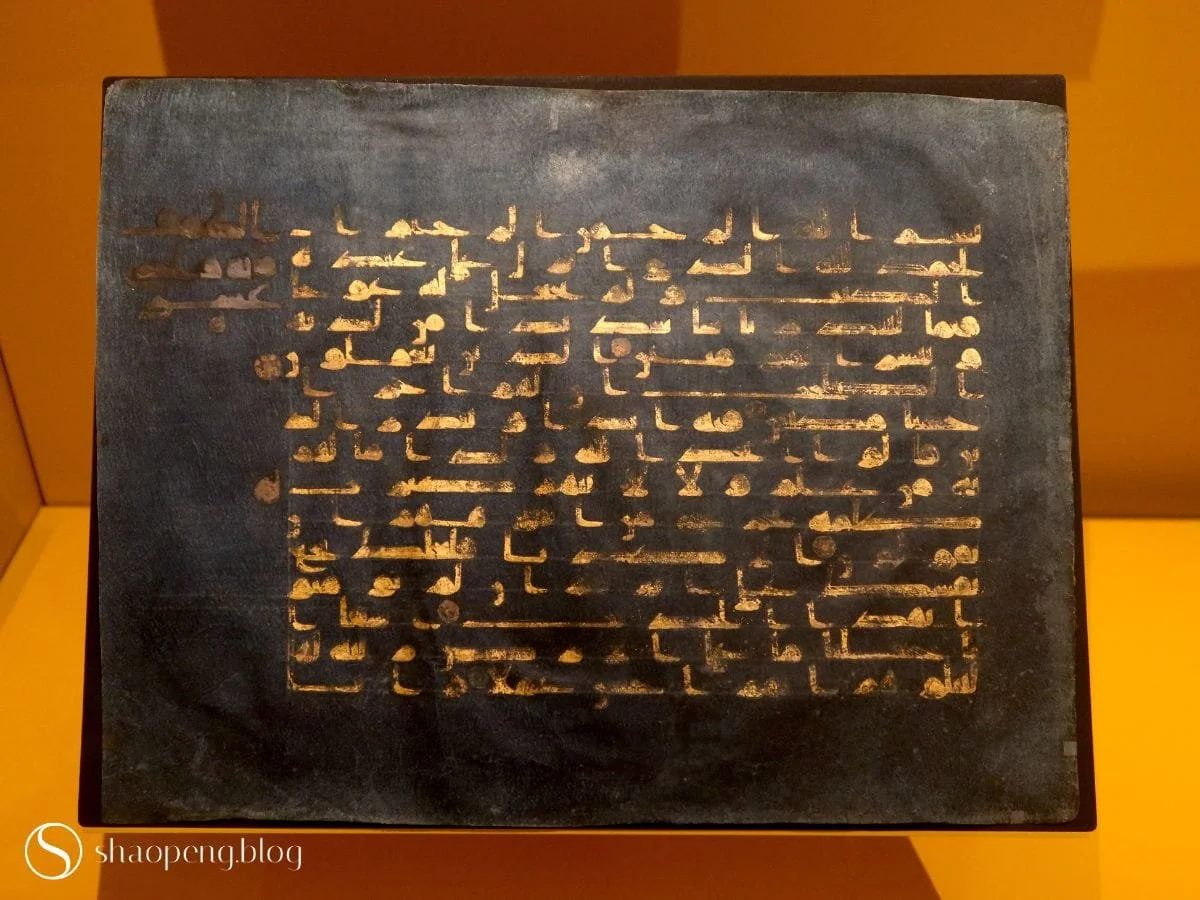
A folio of the Blue Quran.
Islam began in 610 CE in Mecca, in present-day Saudi Arabia, when the Prophet Muhammad, at the age of 40, received his first divine revelation from God (Allah) through the Angel Gabriel. These revelations, first transmitted orally, were later written down and compiled to form the Quran, the sacred text of Islam.
Muslims believe the Quran to be the literal and unaltered word of Allah. Over the centuries, countless copies have been produced across the vast reaches of the Islamic world. Yet no manuscript is as celebrated as the Blue Quran.
Dated to the 9th–10th century, the Blue Quran takes its name from its distinctive indigo-dyed pages, inscribed with verses in Kufic script written in gold and accented with silver decoration. The manuscript is believed to have originally comprised around 600 parchment sheets made from sheepskin, though only about 100 pages survive today in museum and private collections around the world.
Zayed National Museum holds five pages of the Blue Quran, presented in Through Our Connections gallery as part of its exploration of the spread of Islam across regions.
What is compelling, though, is the museum’s recent research using multispectral imaging, which reveals traces of text that have faded over time and are no longer visible to the naked eye. It has also been suggested that some of the decoration may have been added to correct a calligrapher’s error — an aspect of manuscript production that has rarely been highlighted in previous studies of the Blue Quran.
8. Quran from China
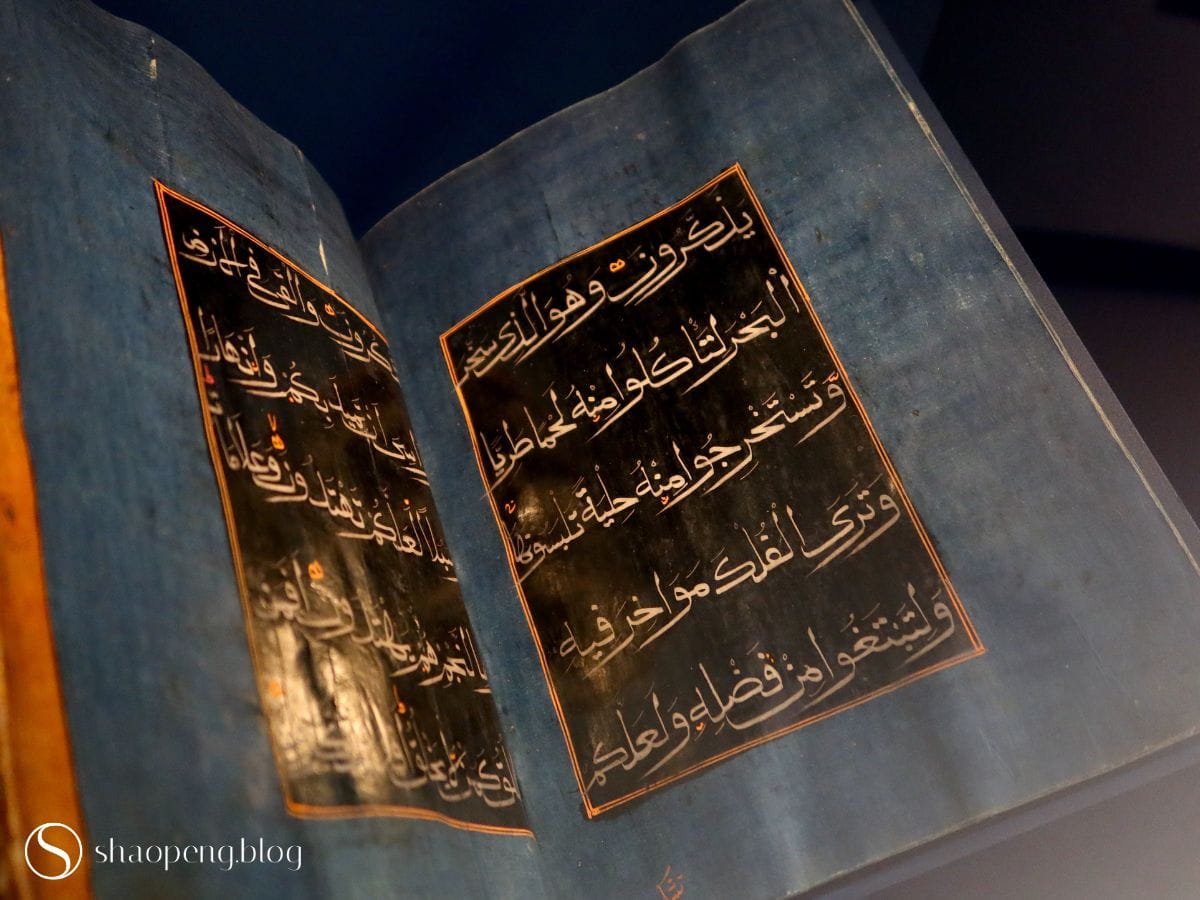
This 18th-century Chinese Quran recalls the celebrated Blue Quran.
The region has been connected to the wider world through trade since the Bronze Age. Ships sailing from Africa, India, and East Asia brought goods, materials, and cultural influences that helped shape life along this coast. This history is explored in the By Our Coasts gallery.
Julfar, a port city in present-day Ras Al Khaimah, was an active maritime trading centre by the mid-17th century, linking the region to the wider Indian Ocean world. Ahmad Ibn Majid (born circa 1432), the renowned Arab navigator often associated with this seafaring tradition, is believed to have come from Julfar.
Among the objects on display is a Chinese Quran dated 1743. Its verses are rendered in white against a black background, framed by indigo borders that recall the aesthetic of the celebrated Blue Quran. Chinese Qurans of this period are rare, and this is an unusual example — the first of its kind I have seen.
Within the Quran, verse 14 of Surah Al-Nahl speaks directly to the maritime world the gallery seeks to evoke, reflecting how people reaped its reward from God-given bounties from the sea:
“It is He who made the sea of benefit to you: you eat fresh fish from it and bring out jewellery to wear; you see the ships cutting through its waves so that you may go in search of His bounty and give thanks.”
Wanderer’s tip — In the same gallery, you will also find fragments of blue-and-white porcelain made in the imperial kilns of the Ming Dynasty, discovered in Julfar.
9. Umm Kulthum's Necklace
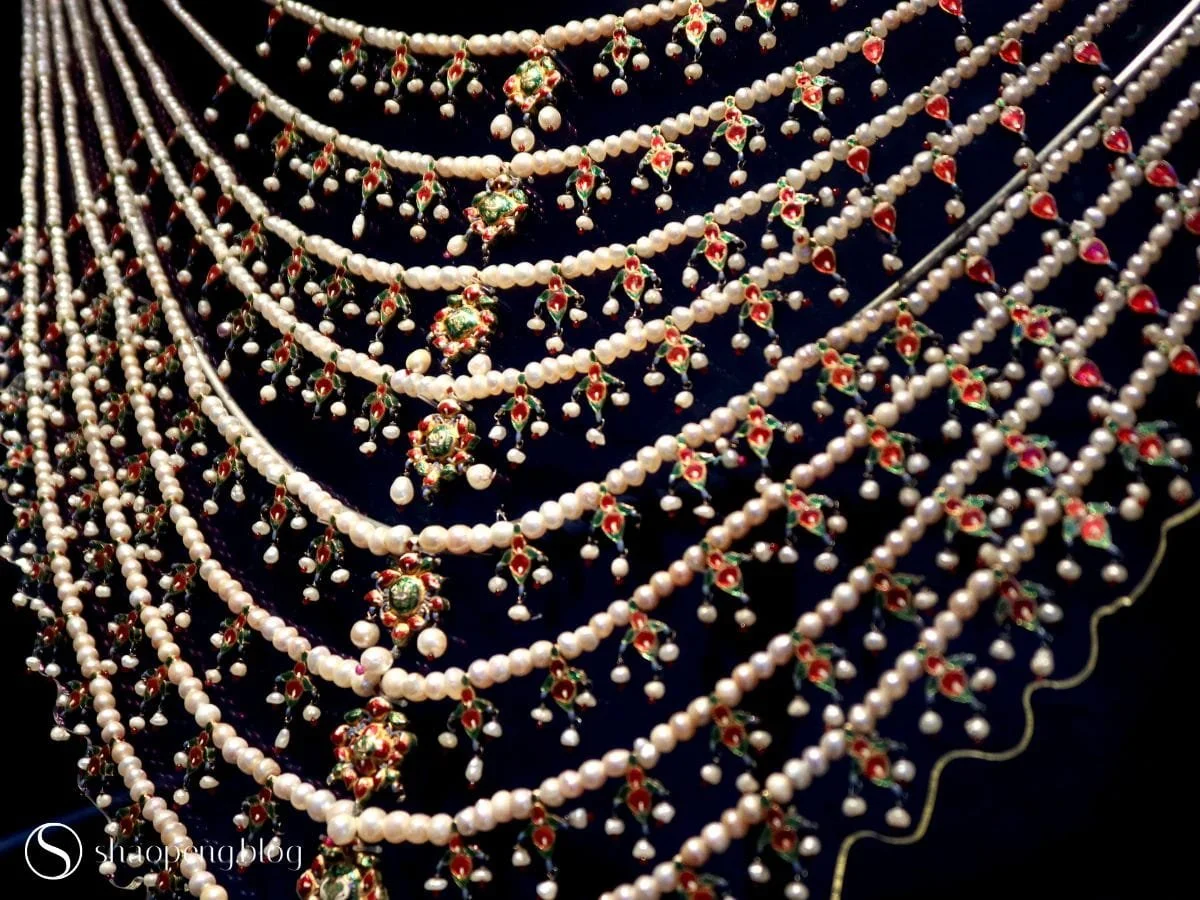
Close-up view of a pearl necklace that once belonged to Umm Kulthum.
Pearls are among the God-given bounties mentioned in the Quran.
The pearling story has been told many times across museums in the UAE: the diving weights, the nose clips, the dyeen bag drawn down into the darkness. By now, most visitors to the region will have encountered some version of it.
The Zayed National Museum takes a different approach. Here, the narrative is lighter on labour and heavier on lustre. The display brings together examples of exquisite pearl jewellery: natural pearls selected and crafted into pieces of extraordinary refinement. One of them once belonged to Umm Kulthum.
If the name does not immediately resonate, she was, for much of the 20th century, the most beloved voice in the Arab world. The entire city would fall silent when she was broadcast. This necklace — dated to the 1880s and predating her birth — feels fitting for a figure of her stature.
The piece is built around strands of natural pearls, forming the structural base for enamelled floral and vegetal motifs whose colours carry an unmistakable Mughal influence. It is, quite literally, a confluence of worlds.
Standing before the sheer number of natural pearls involved, it is easy to forget that each one was once retrieved by hand from the seabed, the result of a diver’s repeated descent into the Gulf. In the early 1900s, the Bani Yas of Abu Dhabi — under the leadership of Sheikh Zayed bin Khalifa — operated one of the largest pearling fleets in the region: around 410 boats and more than 5,500 men whose livelihoods depended on what lay beneath the surface of the sea. To look at this necklace while holding that number in mind is to briefly feel the weight of what pearling once meant to the land and its people.