
Wander in Dubai: Al Shindagha Museum
Before Dubai had a skyline, it had a creek. Follow it far enough, and you’ll discover how a fishing and pearling village became the world’s most dazzling city.
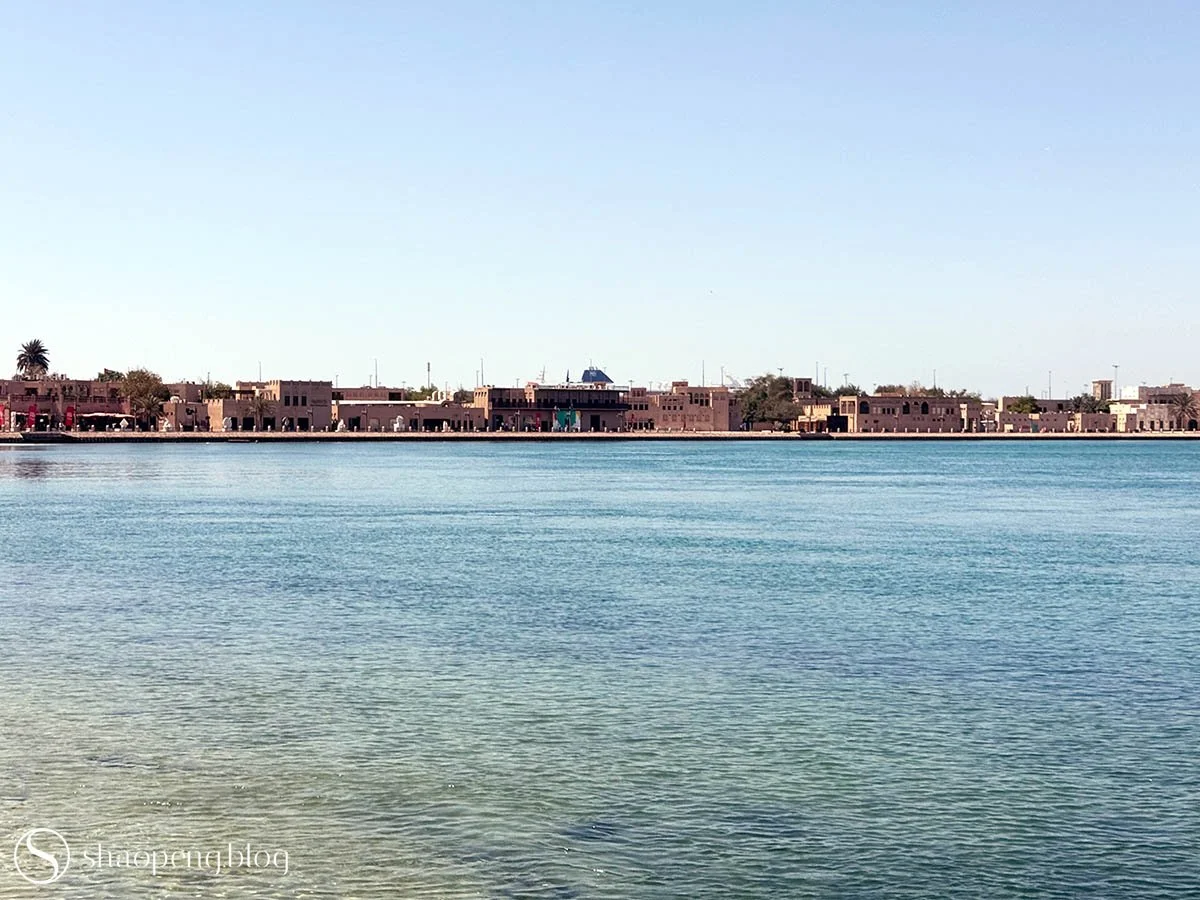
Al Shindagha Museum stretches along the tranquil waters of Dubai Creek.
DUBAI, UAE — Most people arrive in Dubai chasing the future: its vertiginous skyline, palm tree-shaped archipelago, and luxurious resorts. Few stop to wonder what came before all of this. Even fewer can picture it: a fishing village where residents cast nets and dived for pearls beneath an unforgiving sun.
That village is where Dubai begins. Founded in the early 18th century along a modest saltwater inlet, it grew — at a meteoric speed — into one of the world’s most renowned metropolis. How that transformation took place is a story worth seeking out. And for the curious wanderer hoping to explore the soul beneath Dubai’s polished surface, there’s one place that tells it better than anywhere else.
Al Shindagha stretches along Dubai Creek, the lifeline of old Dubai that separates the historic districts of Deira and Bur Dubai. The moment you set foot into the neighbourhood, the rhythm of the modern emirate begins to fade, giving way to a labyrinth of heritage houses and open courtyards. Together, they form Al Shindagha Museum, where each space traces a different thread of Emirati life, tradition, and memory.
I wander through the museum slowly, as places like this ask you to. What I find is a richly layered experience that deserves far more attention than it receives — something that remains, strangely, almost absent online.
So consider this a guide put together by a curious wanderer’s first-hand encounter. Of the many pavilions scattered across the district, these are the ones I’d urge you not to miss:
Dubai Creek: Birth of a City
Sense of Wander: ★★★★★
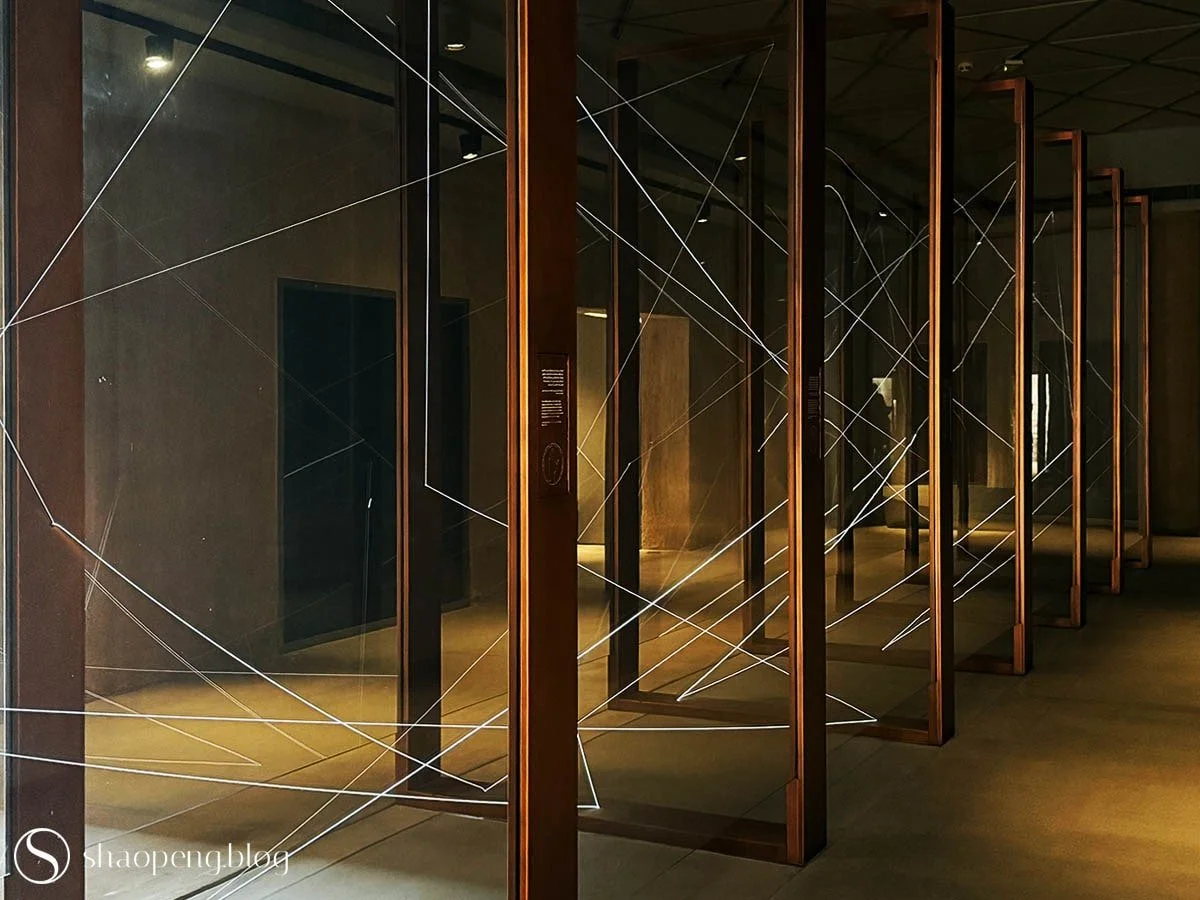
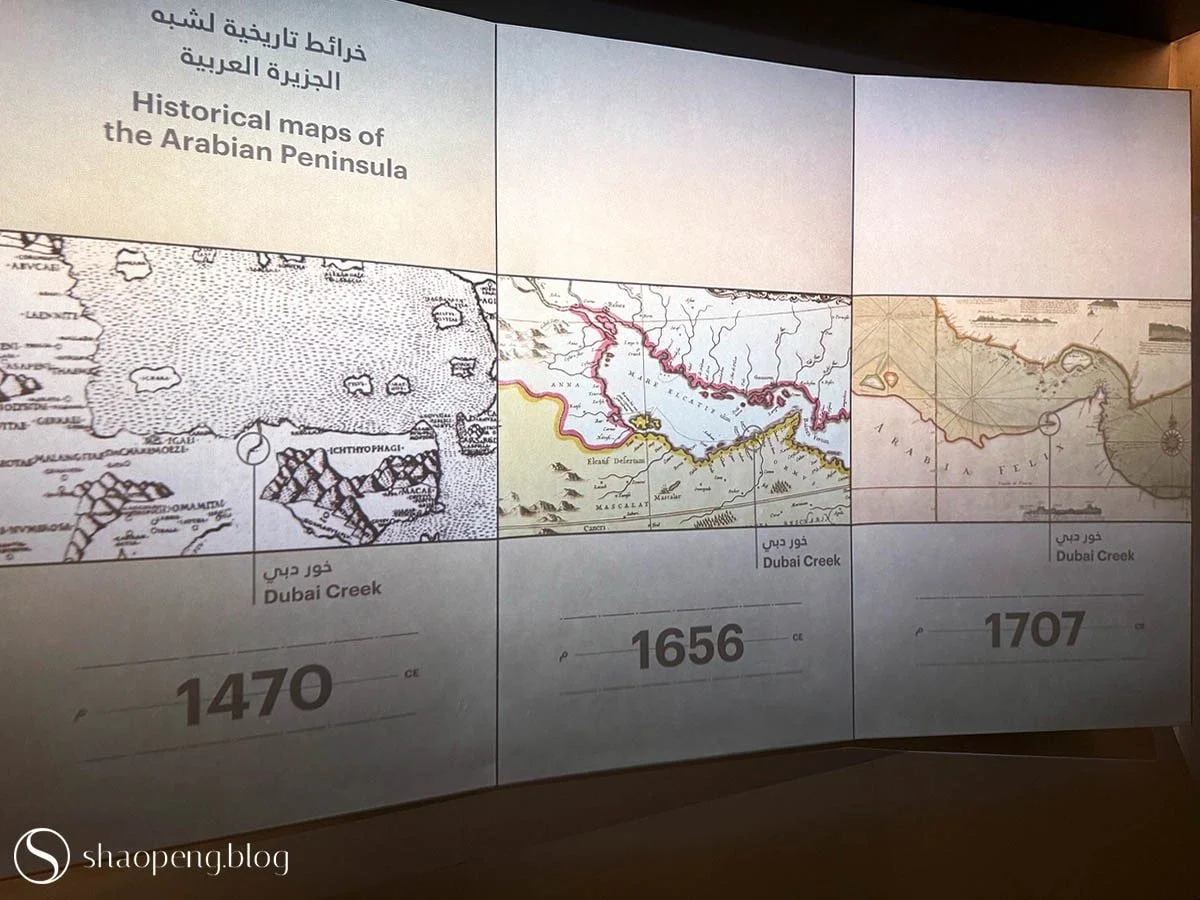
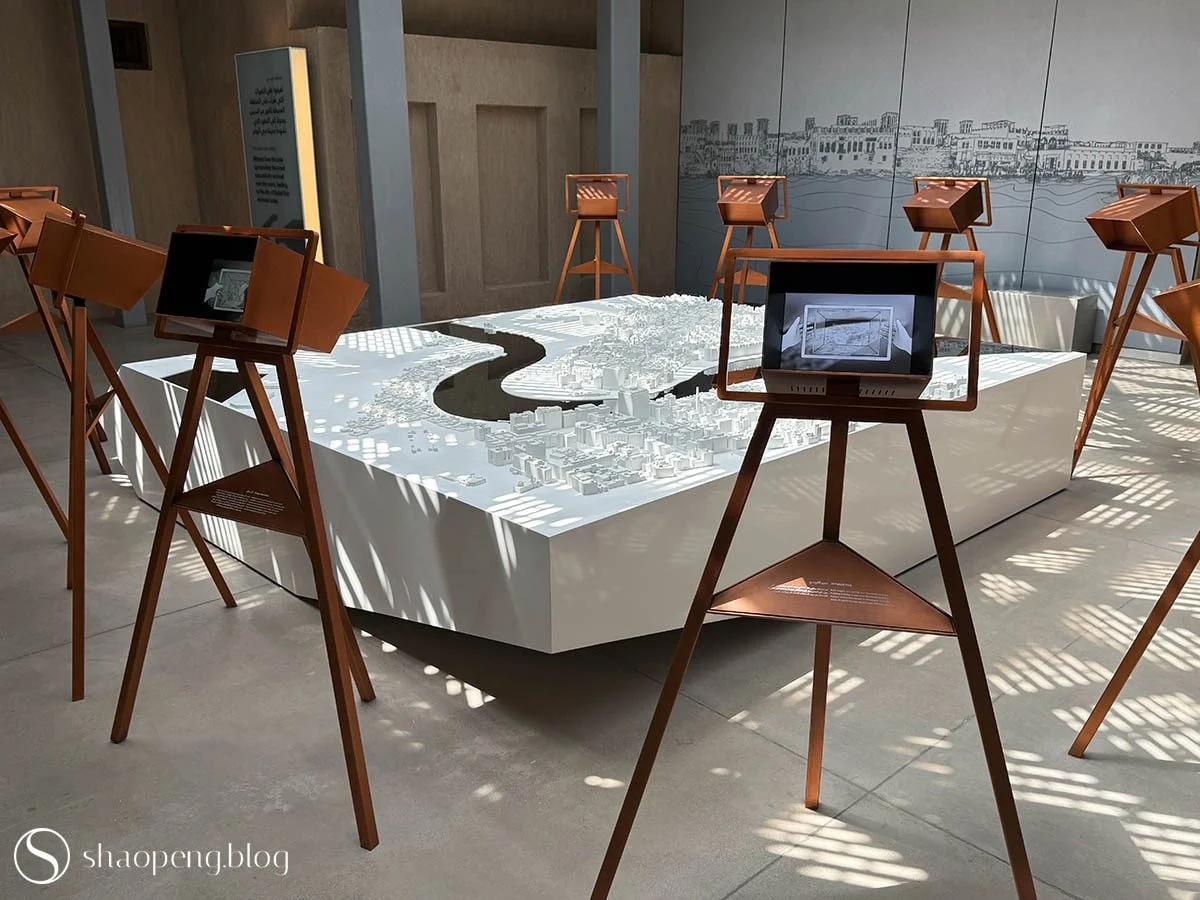
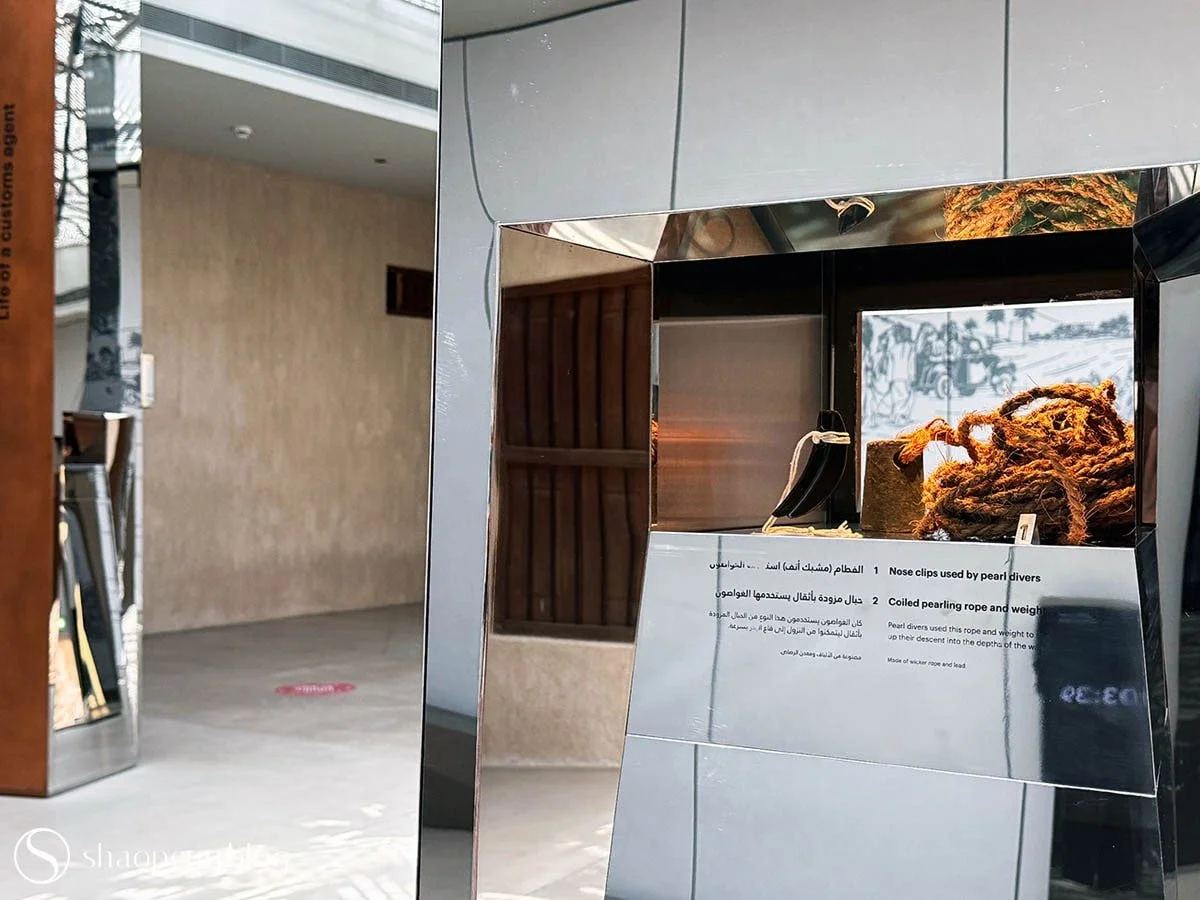
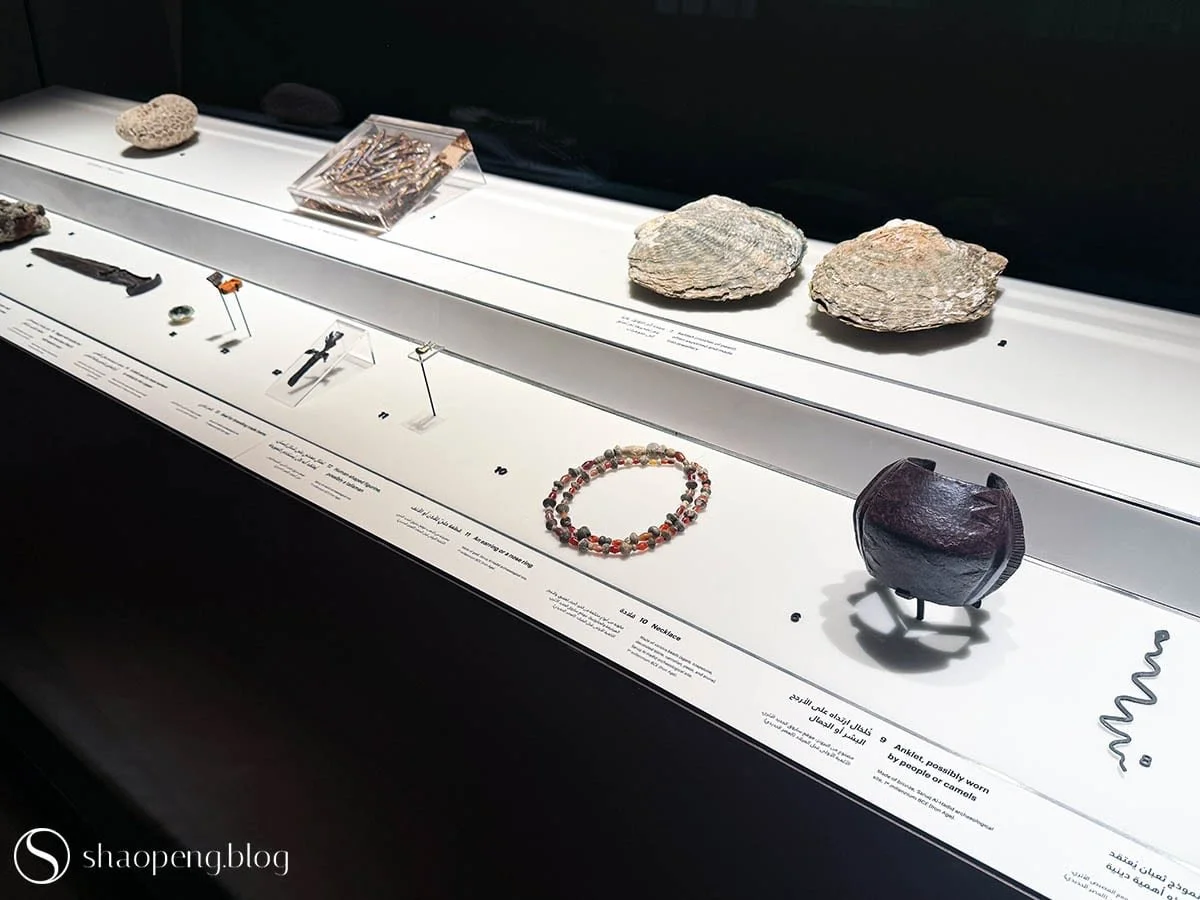
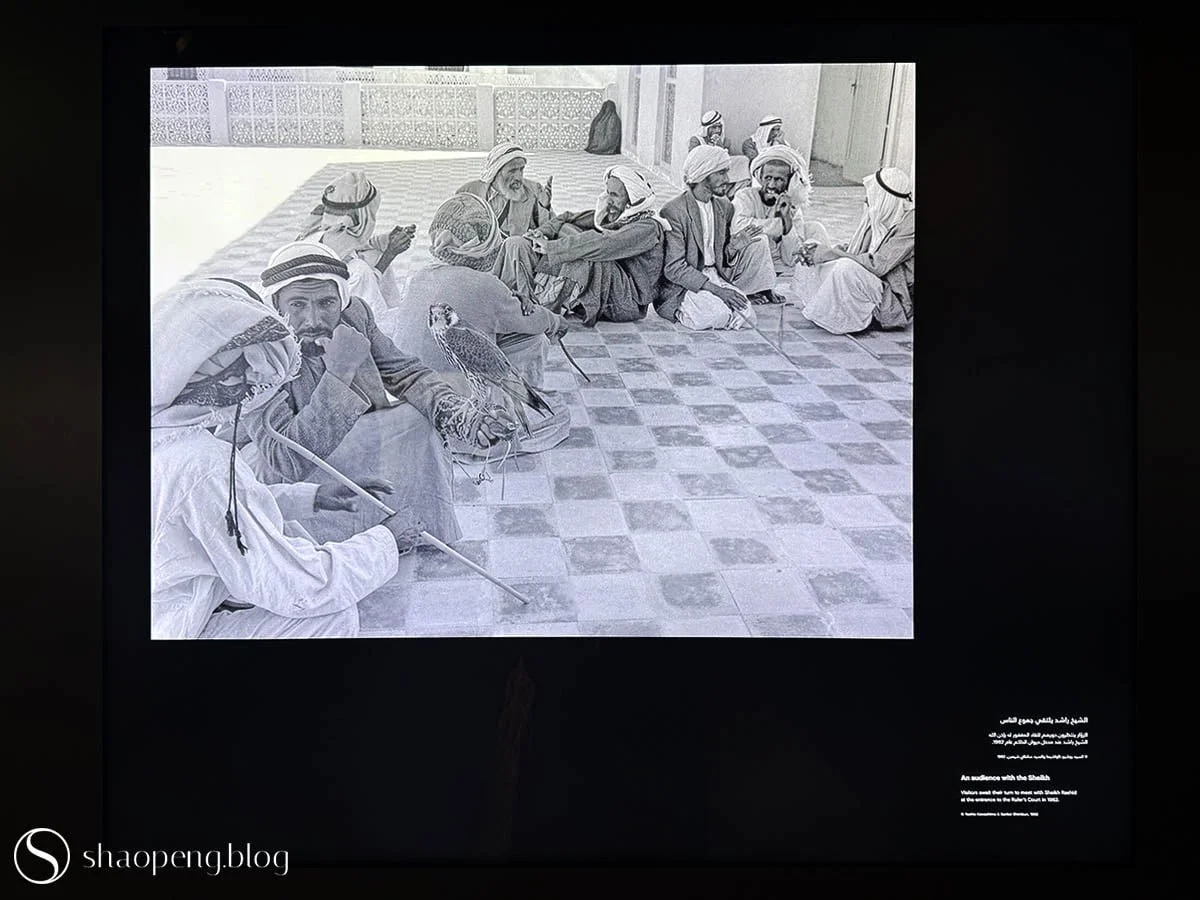
All visitors to Al Shindagha Museum begin their journey at Dubai Creek: Birth of a City.
Long before the high-rises and the supercars, there was the khor, the local word for the saltwater inlet that cuts through old Dubai, and where everything begins. Centuries ago, this modest waterway was the very reason people settled here at all: a lifeline in the desert, a corridor for trade, a place to cast nets and dive for pearls.
The exhibition opens with a provocative installation of wood and glass. Touch a wooden beam, and streaks of light begin threading across the space, branching and multiplying into a luminous, web-like display. It’s an elegant metaphor for the creek’s true nature: a living network of trade, movement, and human connection.
Explore further, and you find yourself tracing five thousand years of commerce. A series of trade maps reveals how Dubai and the wider Gulf were never peripheral; they sat at the crossroads of ancient worlds, linked to Persia, Babylon, and the distant cities of the Indus Valley long before anyone thought to build a skyscraper here.
My favourite is a gallery dedicated to the people of the creek. Merchants, seafarers, boatbuilders, and artisans are brought to life through interviews and exhibits that feel genuinely intimate. Listening to their stories, you begin to understand what it took to build a city from a shoreline.
Another gallery charts Dubai’s rapid transformation from creek settlement to global metropolis, milestone by milestone: the first produce market, the first bank, the first school. Each offers a window into a pivotal moment; together, they map a journey that still feels almost impossible in its speed and scale.
In 1959, under the patronage of the late Sheikh Saeed bin Maktoum Al Maktoum, Dubai embarked on an ambitious dredging project to deepen and widen the creek. The work continued through the 1960s and 1970s, opening the waterway to larger vessels and cementing Dubai’s rise as a dominant force in regional trade.
Wanderer’s tip — Begin with the film screening, where a vivid, atmospheric portrait of the creek’s evolution unfolds. Start here, and everything else falls into place.
Saruq Al-Hadid Archaeological Museum
Sense of Wander: ★★★★★
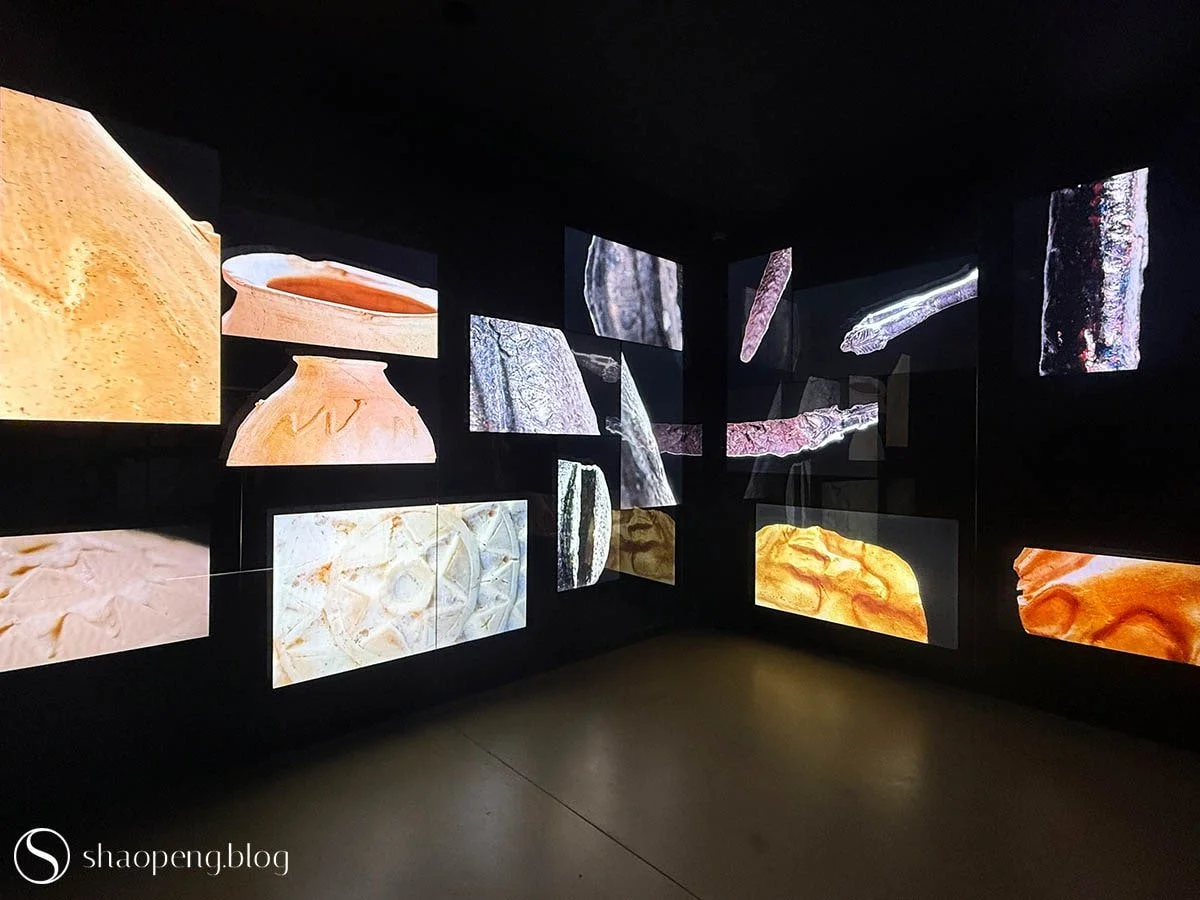
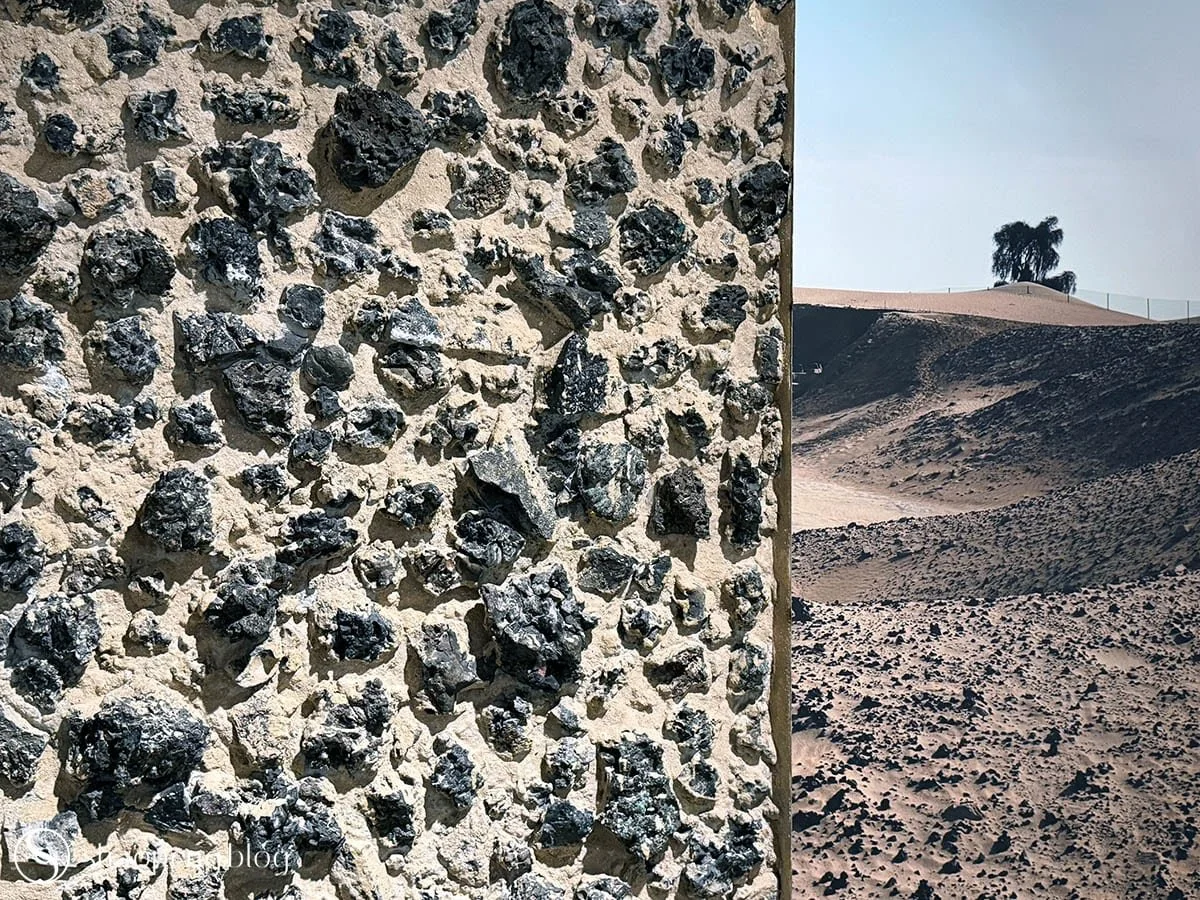
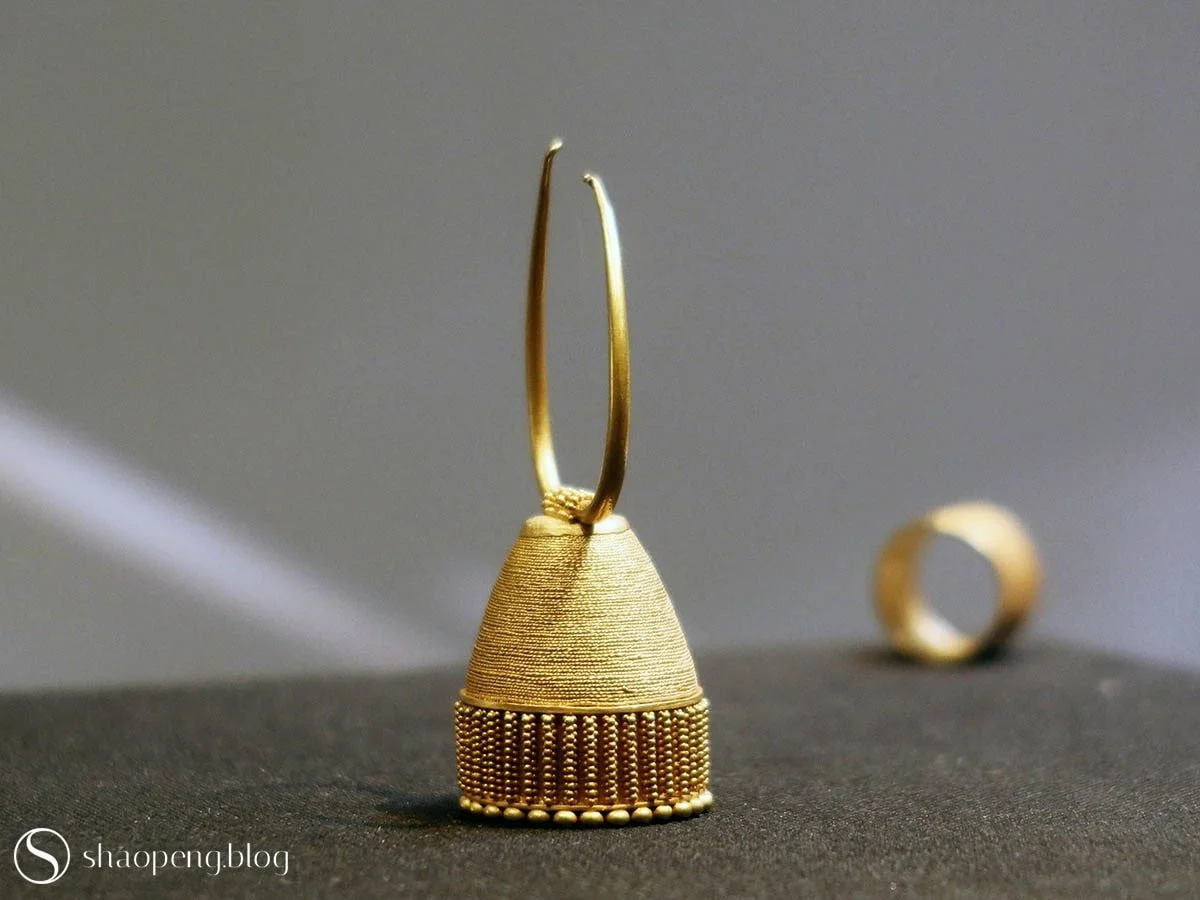
Beneath the vast desert to the south of Dubai lies something extraordinary, hidden for millennia. No one knew it was there until the early 21st century.
Saruq Al-Hadid is the kind of discovery that makes you reconsider what you thought you knew about a place. A sprawling trade centre dating back to the Umm Al Nar period (2600–2000 BCE), it sat buried under the dunes for thousands of years before archaeologists finally began to uncover its secrets.
What they found was staggering: more than 12,000 artefacts have been excavated so far, making it one of the most significant archaeological sites in the Arabian Peninsula. Here is evidence of a civilisation over five thousand years old, hidden in plain sight beneath the sand.
To begin, you’re invited to watch an immersive film that sets the scene, transporting you to Saruq Al-Hadid itself. Then, the objects begin to speak.
Between roughly 1300 and 800 BCE, the site appears to have functioned as a centre for metalwork production. The evidence lies in the sheer volume of tools, weapons, and — most tellingly — slag, the stony waste left behind from smelting and refining. You don’t accumulate slag like that without serious, sustained industry.
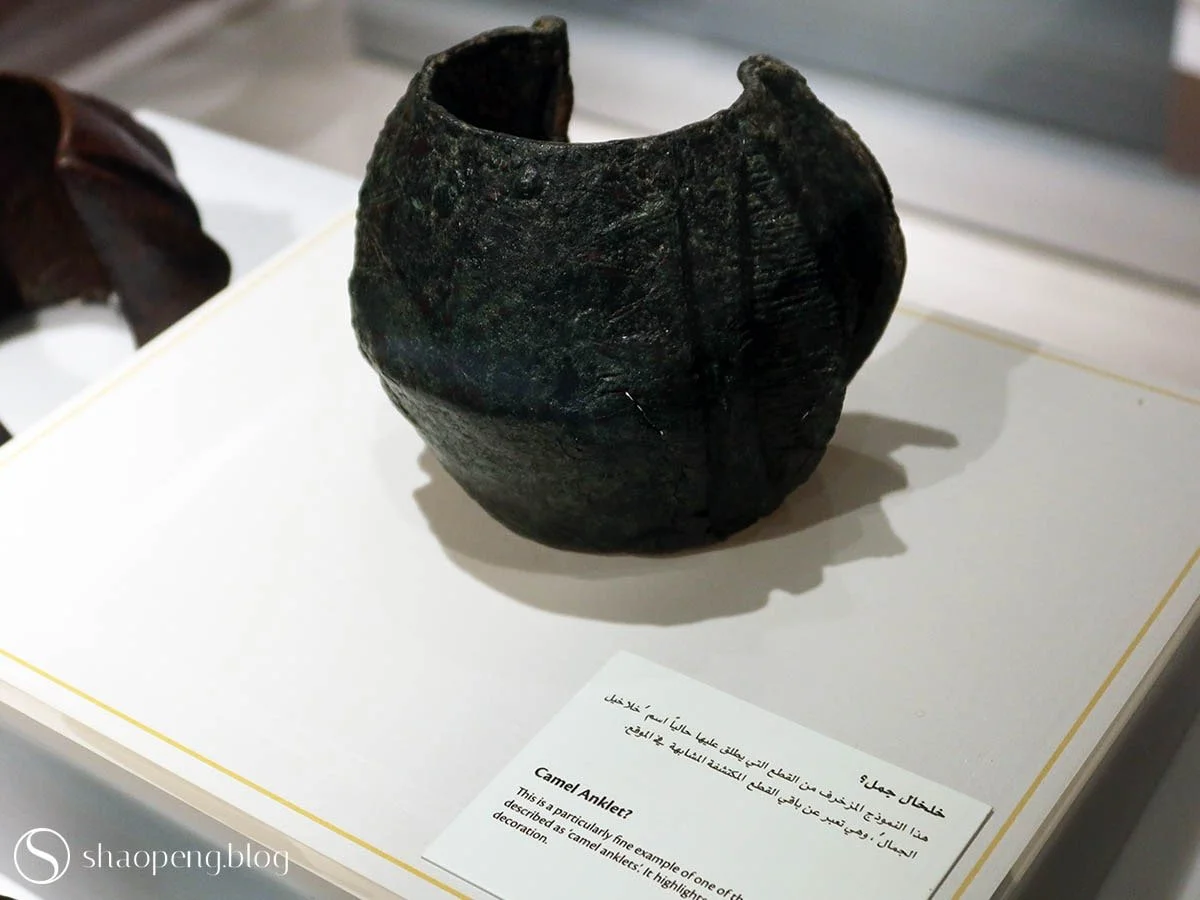
Among the more puzzling finds are thick, bangle-like objects cast in bronze, far too heavy to have been worn by a person. The leading theory? Camel anklets. Though even that remains speculation.
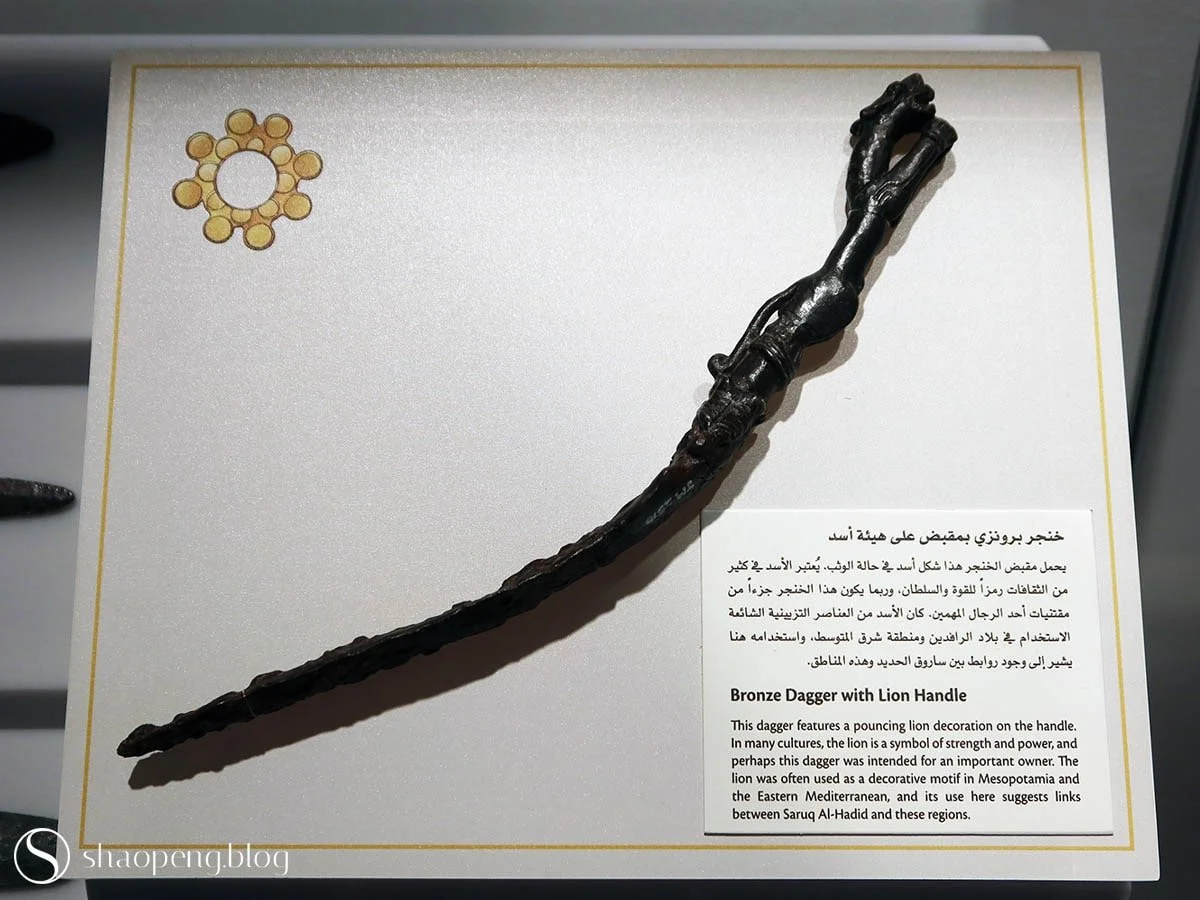
What strikes you next is how connected this desert site was to the wider ancient world. An incense burner shaped with bull hooves in a style common to northern Mesopotamia; fragments of olive wood — possibly arrow shafts — that may have travelled from the eastern Mediterranean; carnelian beads likely brought from the Indus Valley. For a site buried in the desert, Saruq Al-Hadid was anything but isolated.
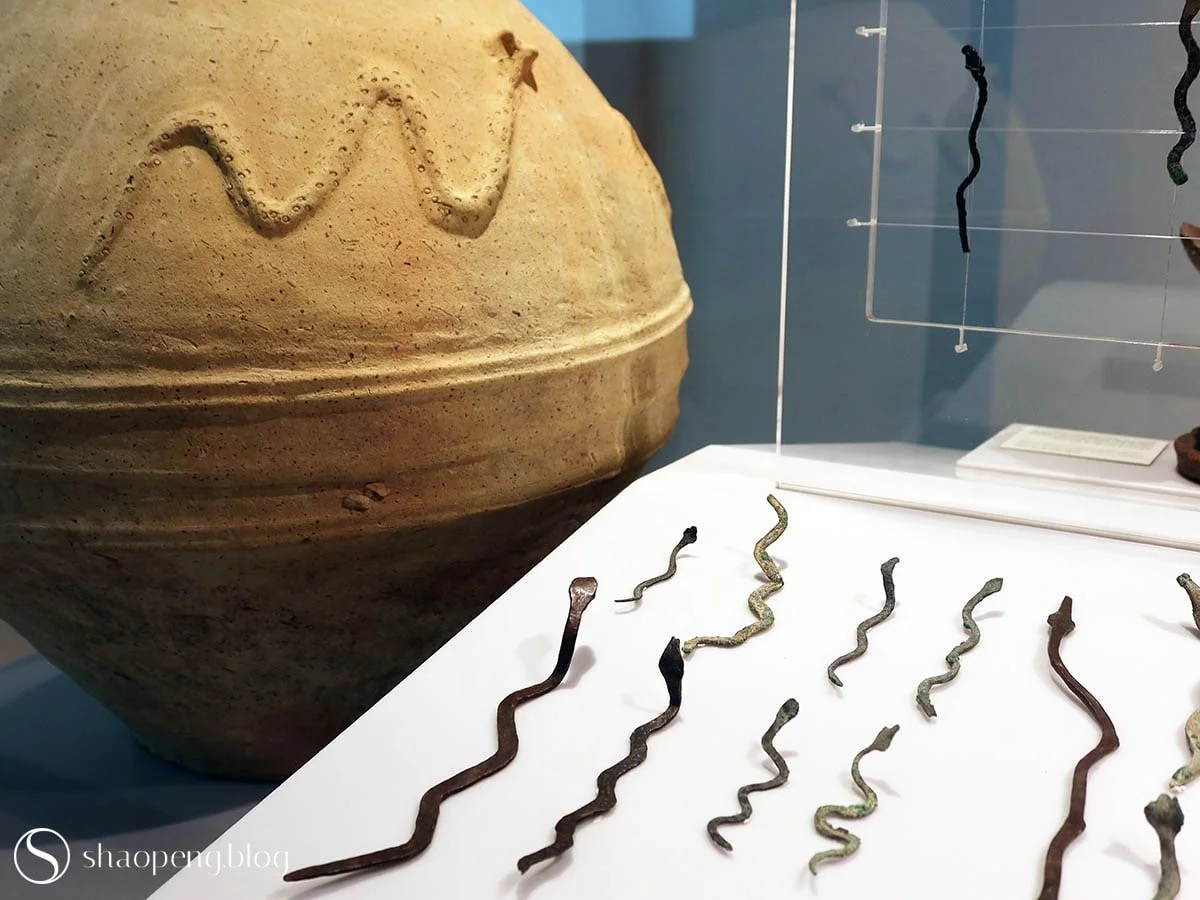
Then there are the snakes. The motif recurs across the site’s pottery with an insistence that feels deliberate. And the bronze snakes themselves, with their distinctive diamond-shaped heads, are among the most arresting objects in the museum. Their exact purpose remains uncertain, but they point to a regional belief system in which the snake held deep symbolic power.
And just when you think you’ve taken it all in, your breath is caught by intricate gold beads, rings, and jewellery executed with a level of craftsmanship that feels almost impossible for its era. Look closely at one particular earring and you’ll find filigree and granulation so fine it operates at nano scale. Nearby, a collection of ornate gold rings carries a remarkable footnote: they are said to have inspired the logo of Dubai’s Expo 2020.
Research at Saruq Al-Hadid is still ongoing, and what’s on display represents only the earliest phase of its discovery. Much remains unknown, but the site has already been woven into Dubai’s broader narrative: a millennia-old hub of manufacturing and trade, neatly aligned with the emirate’s present identity as a global powerhouse. It’s a connection that is, as one might note, very good branding. Whether coincidence or careful framing, it works.
Wanderer’s tip — Ask for a guided tour at the reception desk. The artefacts are fascinating on their own, but with a guide, the layers of meaning (the speculation, the mystery, the connections to distant civilisations) open up in ways no display label can match.
Al Maktoum Residence
Sense of Wander: ★★★☆☆
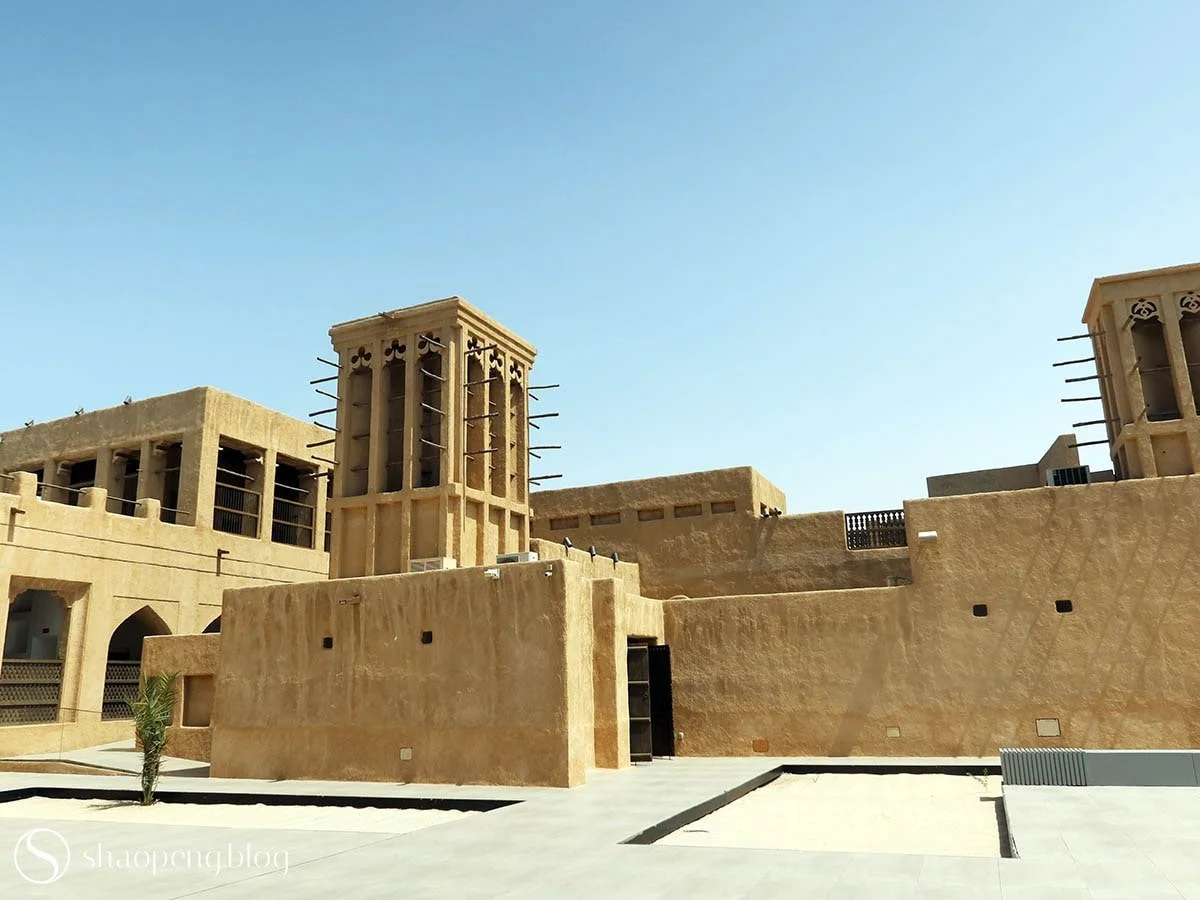
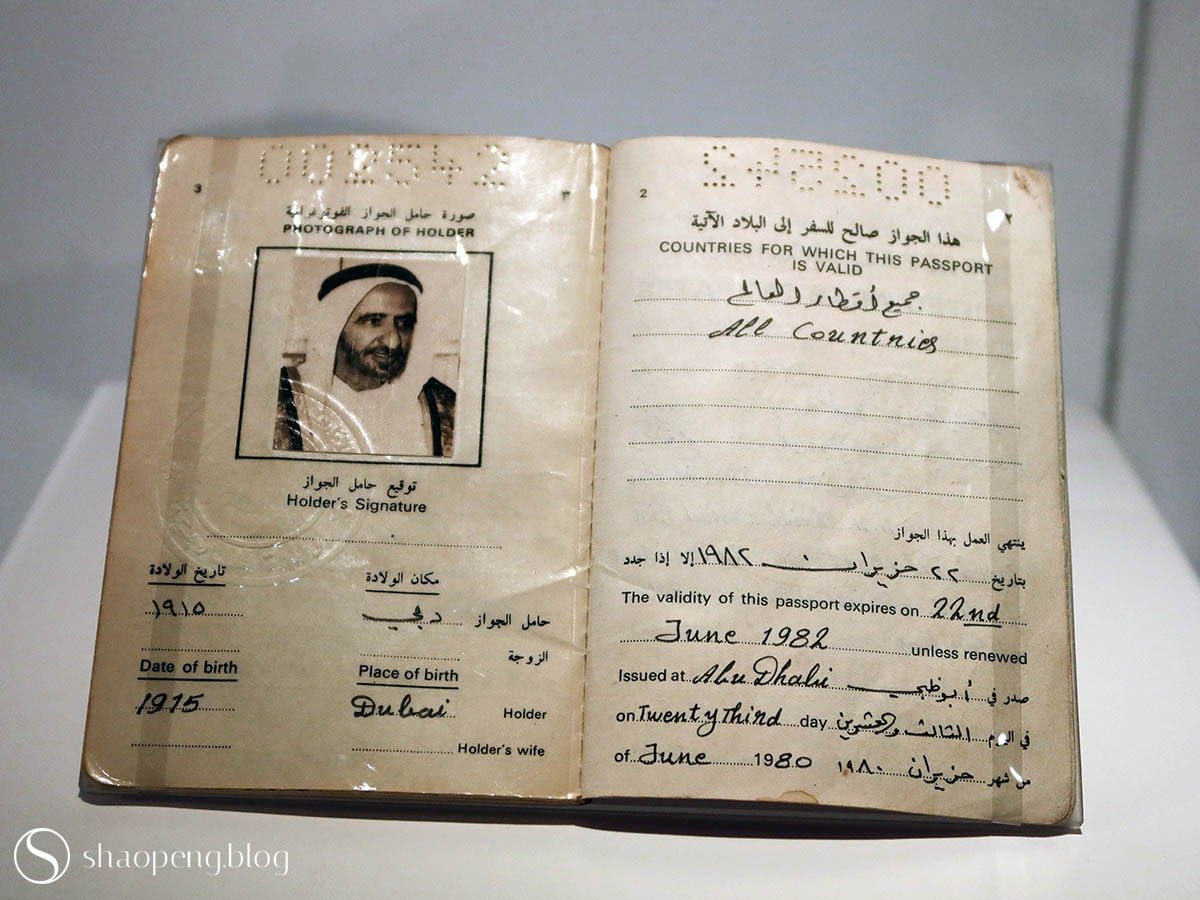
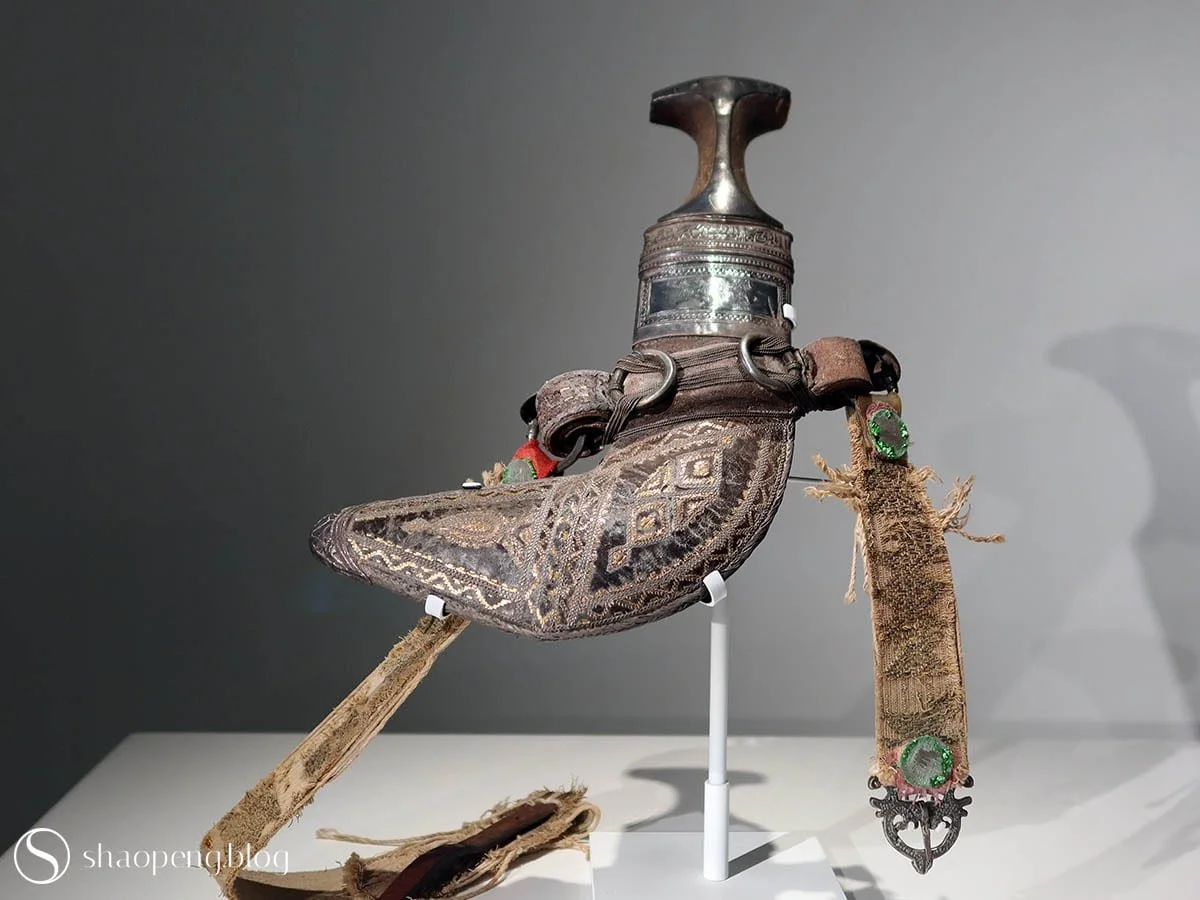
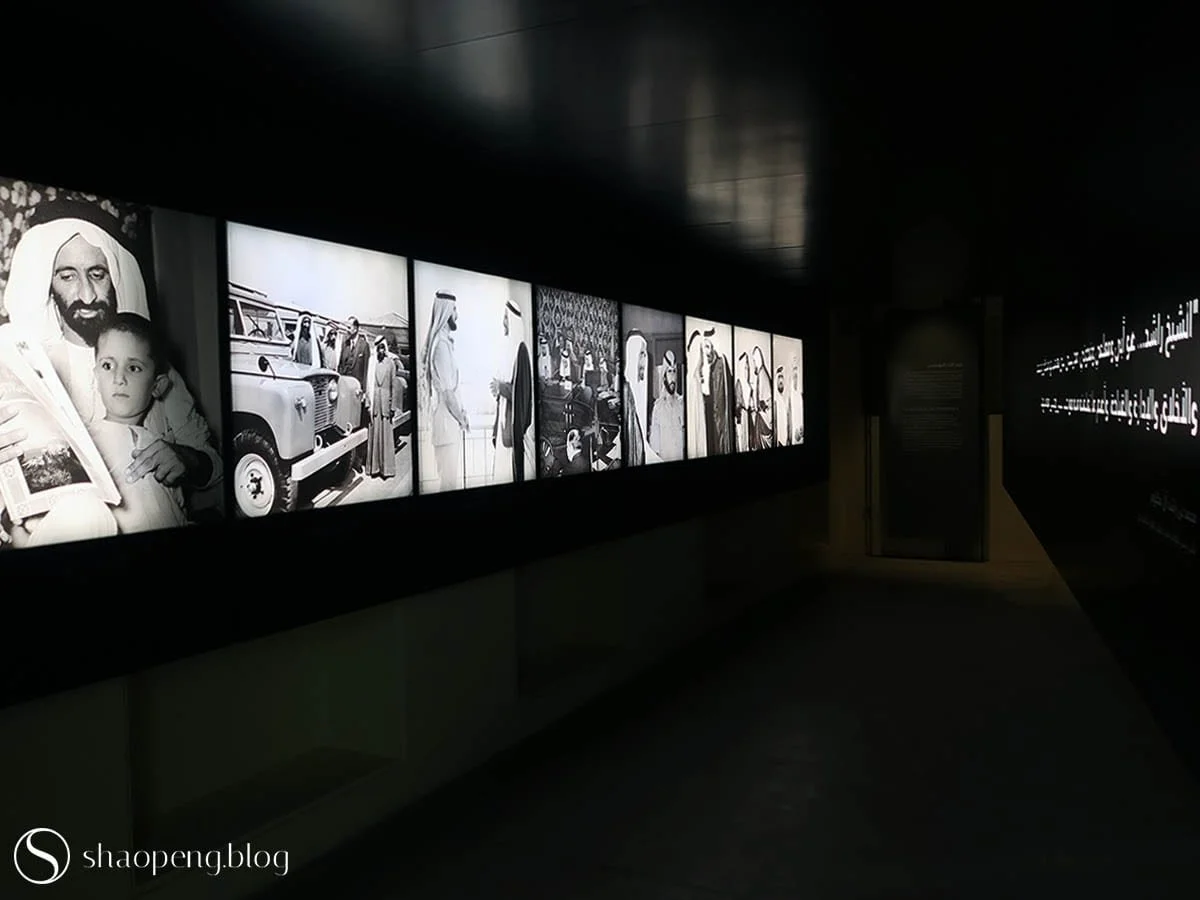
To understand Dubai, you have to understand the family that shaped it.
In 1833, a branch of the Bani Yas tribal confederation made a decision that would alter the course of history in this part of the world. Led by the Al Maktoum family, they settled along Dubai Creek, and from that moment, the village began to change. They welcomed newcomers, cultivated trade, and created the conditions for growth. What emerged, eventually, is one of the most remarkable cities on earth.
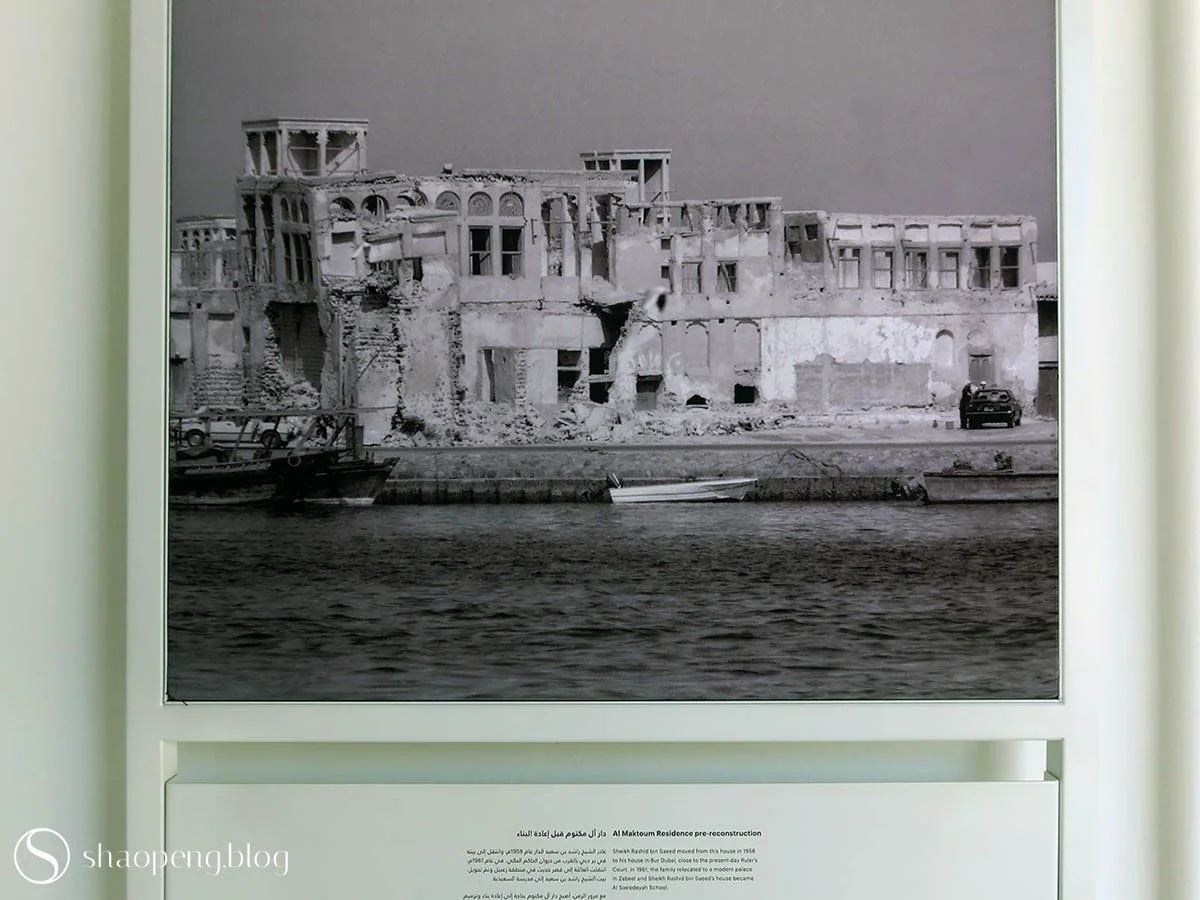
The residence that bears their name still stands in Al Shindagha, as it always has. Built in 1896, it was among the few structures in the district made of coral stone at a time when most homes were simple arish dwellings woven from palm fronds. The coral walls carry a weight and permanence that feels fitting for a family whose influence would prove just as enduring.
Step inside the courtyard house and you move through private quarters used by the Al Maktoum family well into the 20th century. The residence as it stands today took its current form in 1912, evolving from an earlier fortified structure. Look up, and you’ll notice the chandal wood beams — timber carried by sea from across the Indian Ocean.
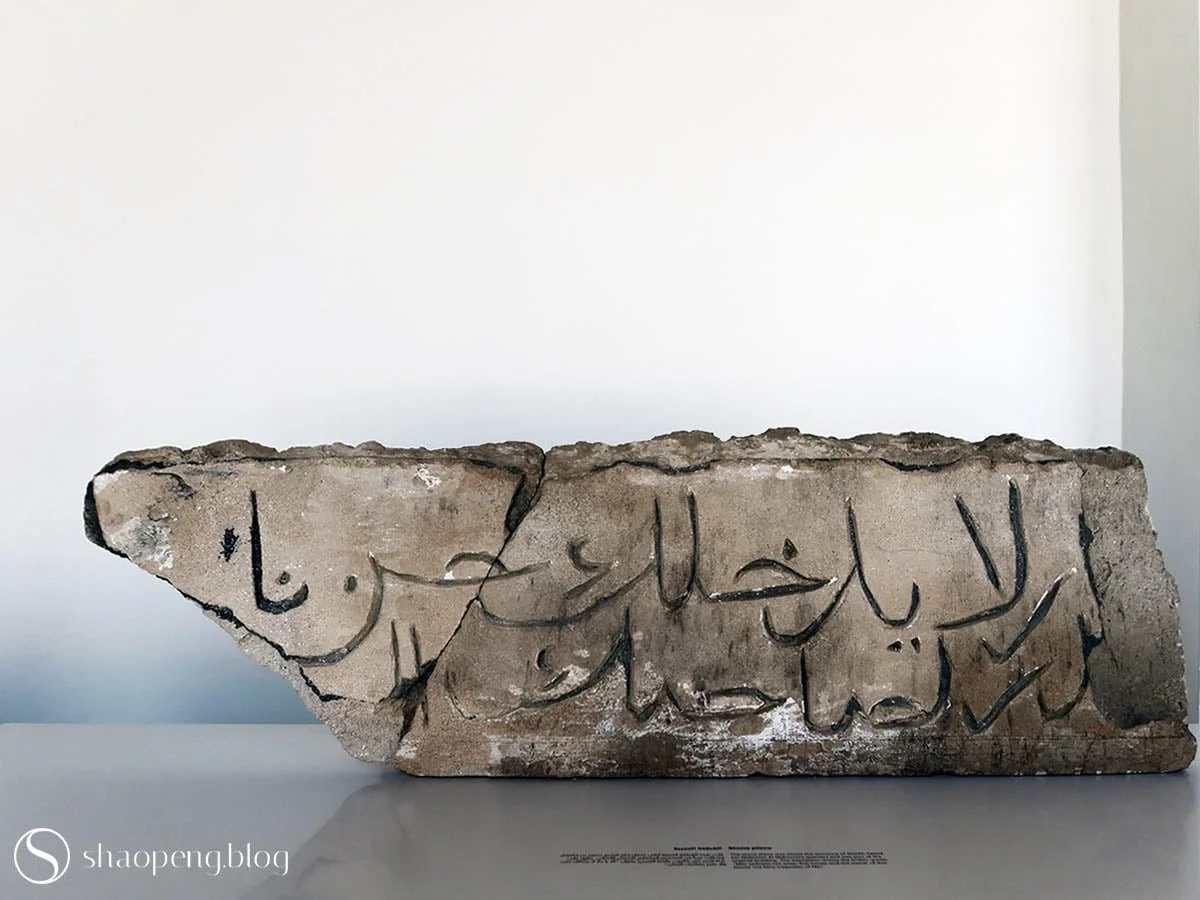
What is easy to overlook is a stone inscription once mounted above the entrance to Sheikh Saeed bin Maktoum Al Maktoum’s quarters. Carved in Arabic, it reads:
"May sadness not enter this house and the owners of the house not face tragedies of life."
There is something moving about finding these words here. Perhaps because they remind you that behind the grand arc of history, there are always human lives.
The Al Maktoum family lived here among their community until 1958, close to the creek, close to the people, at the heart of a village in transition. Wandering through these rooms, it is not difficult to imagine the weight of decisions made within these coral walls, or the conversations that shaped a trading settlement into a city the world would one day come to know.
Traditional Crafts House
Sense of Wander: ★★★★☆
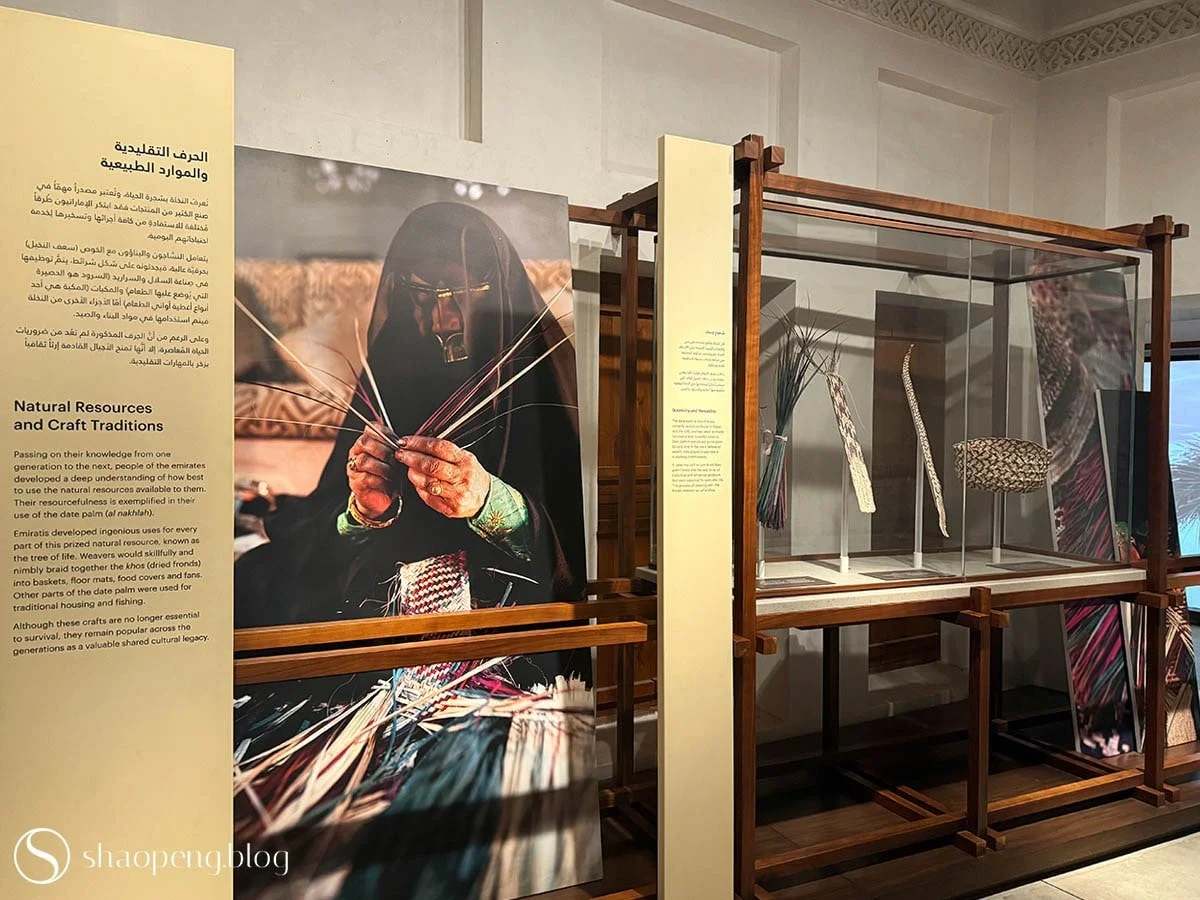
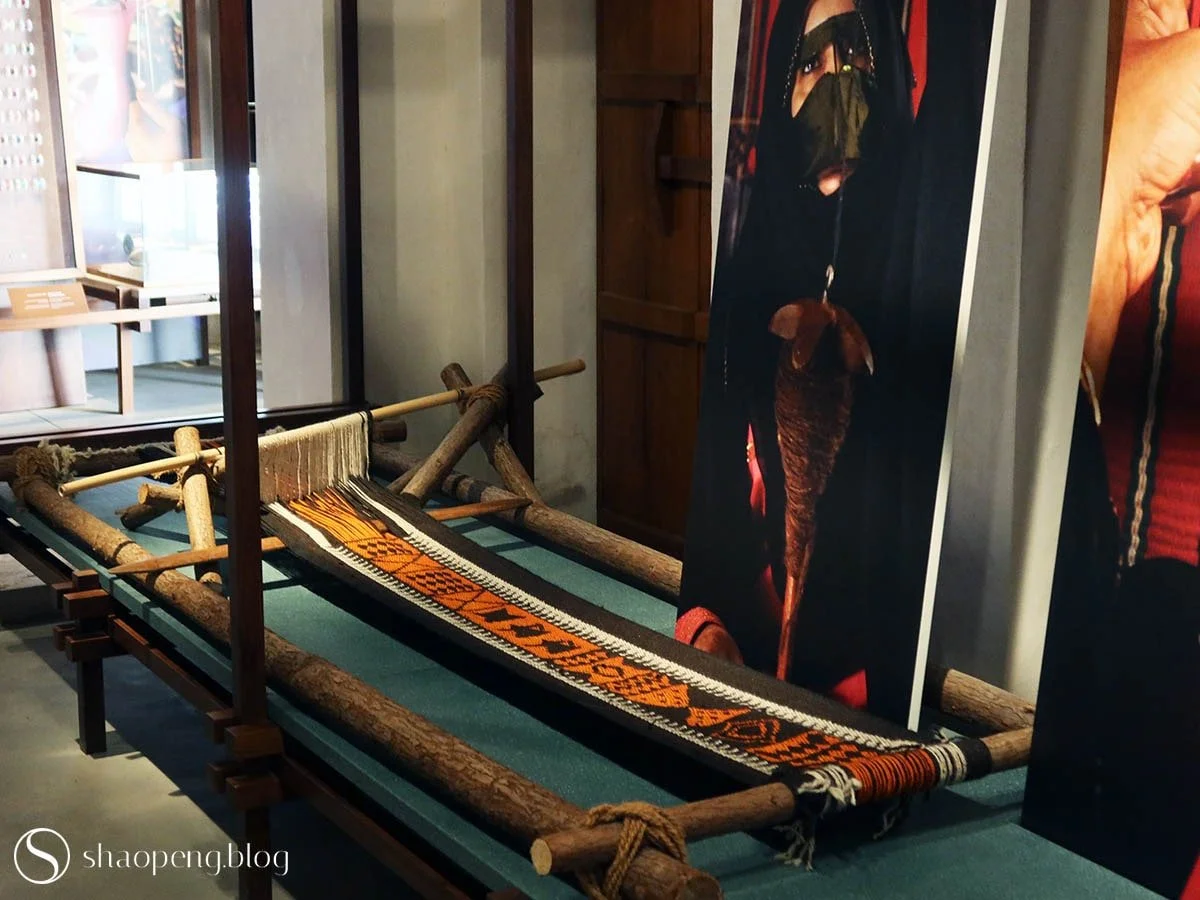
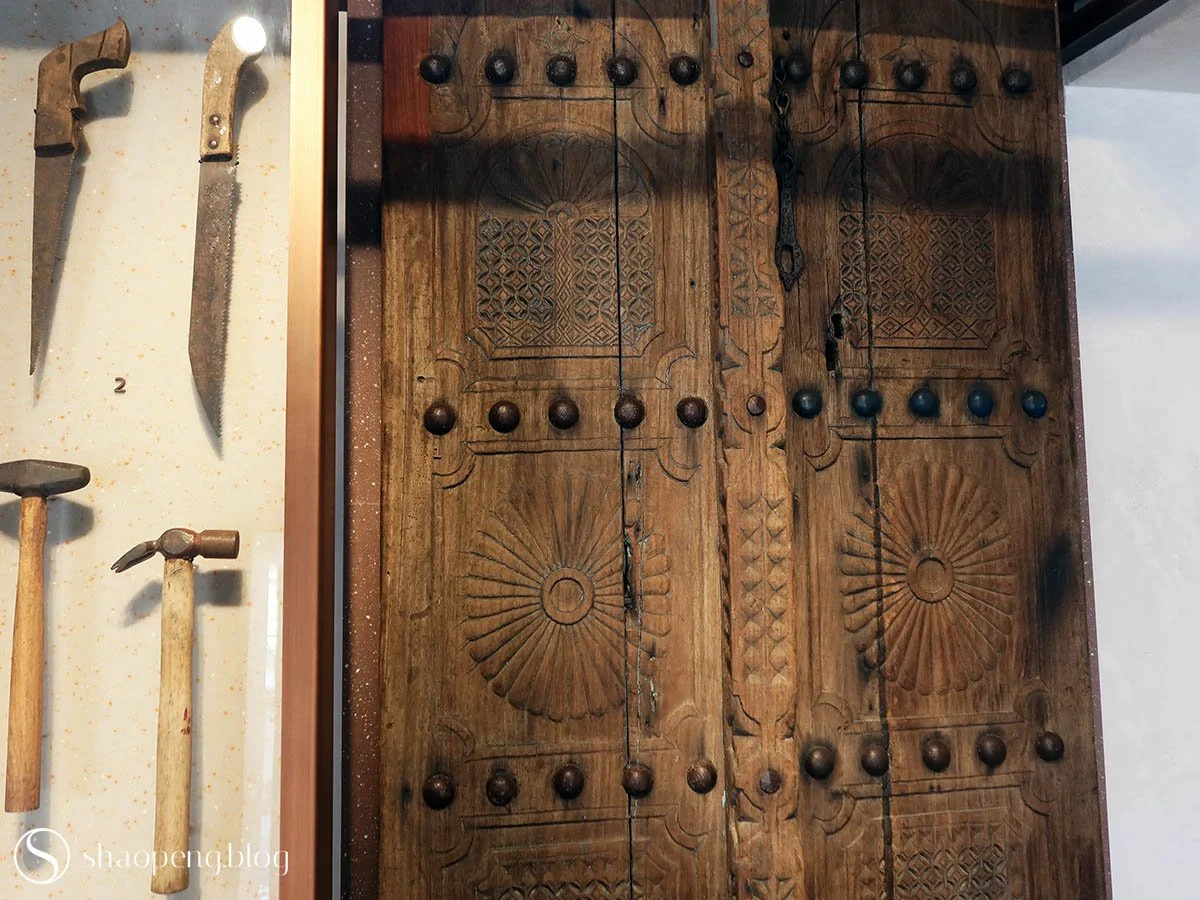
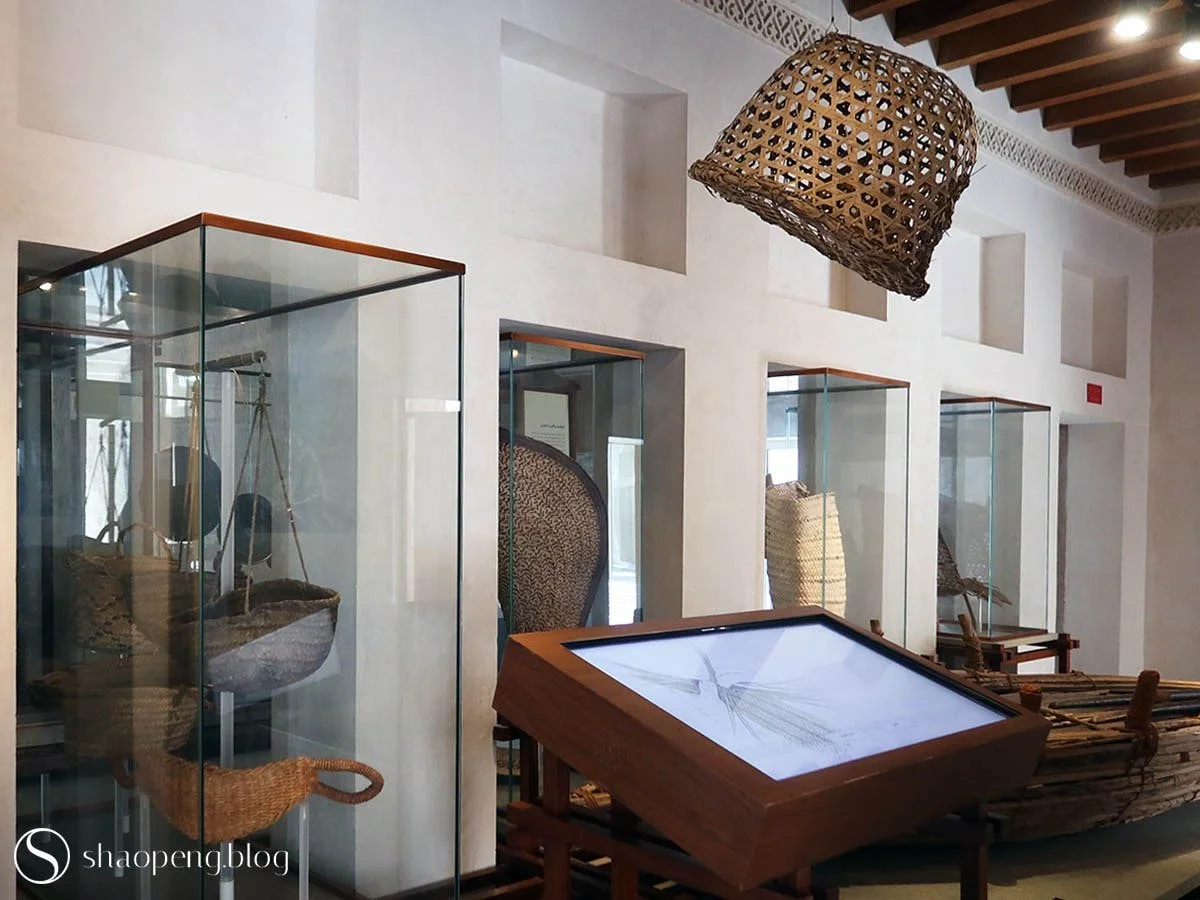
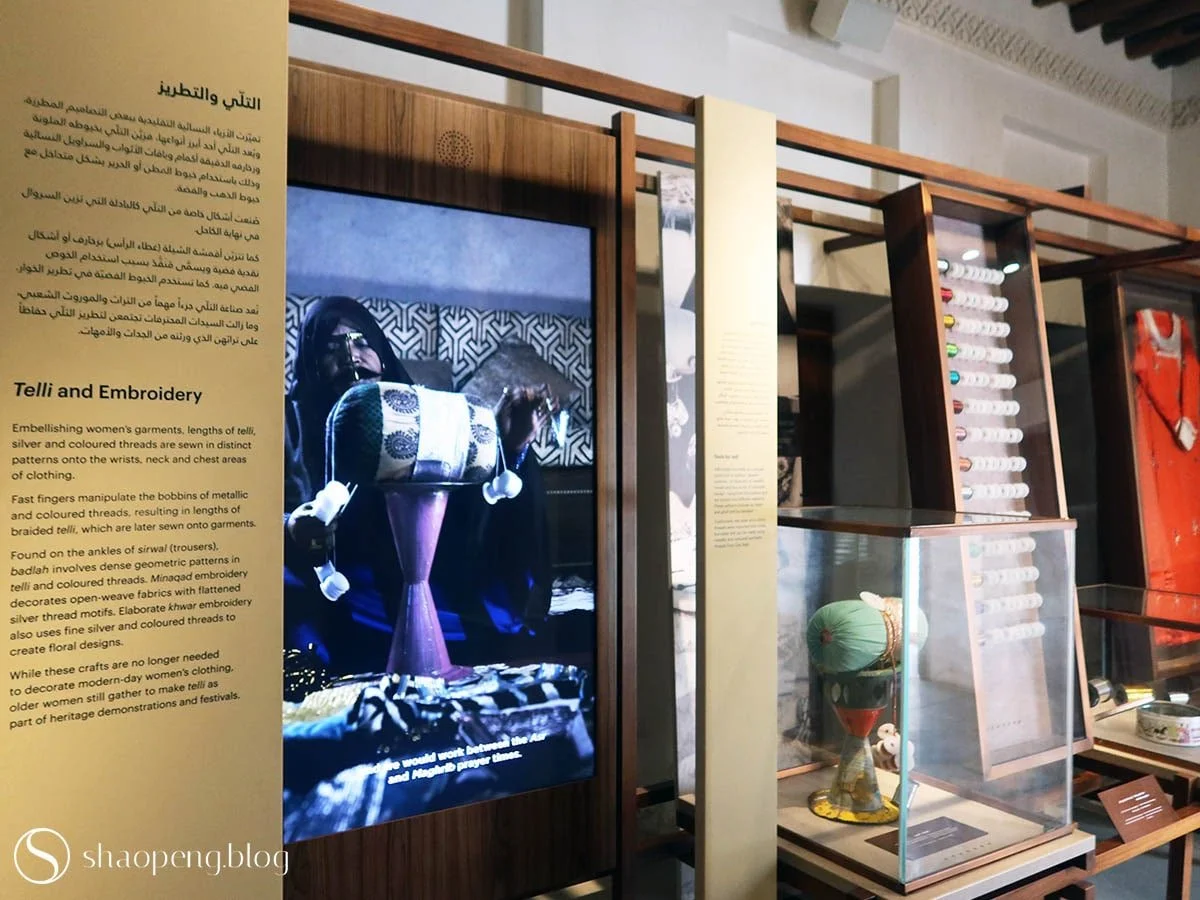
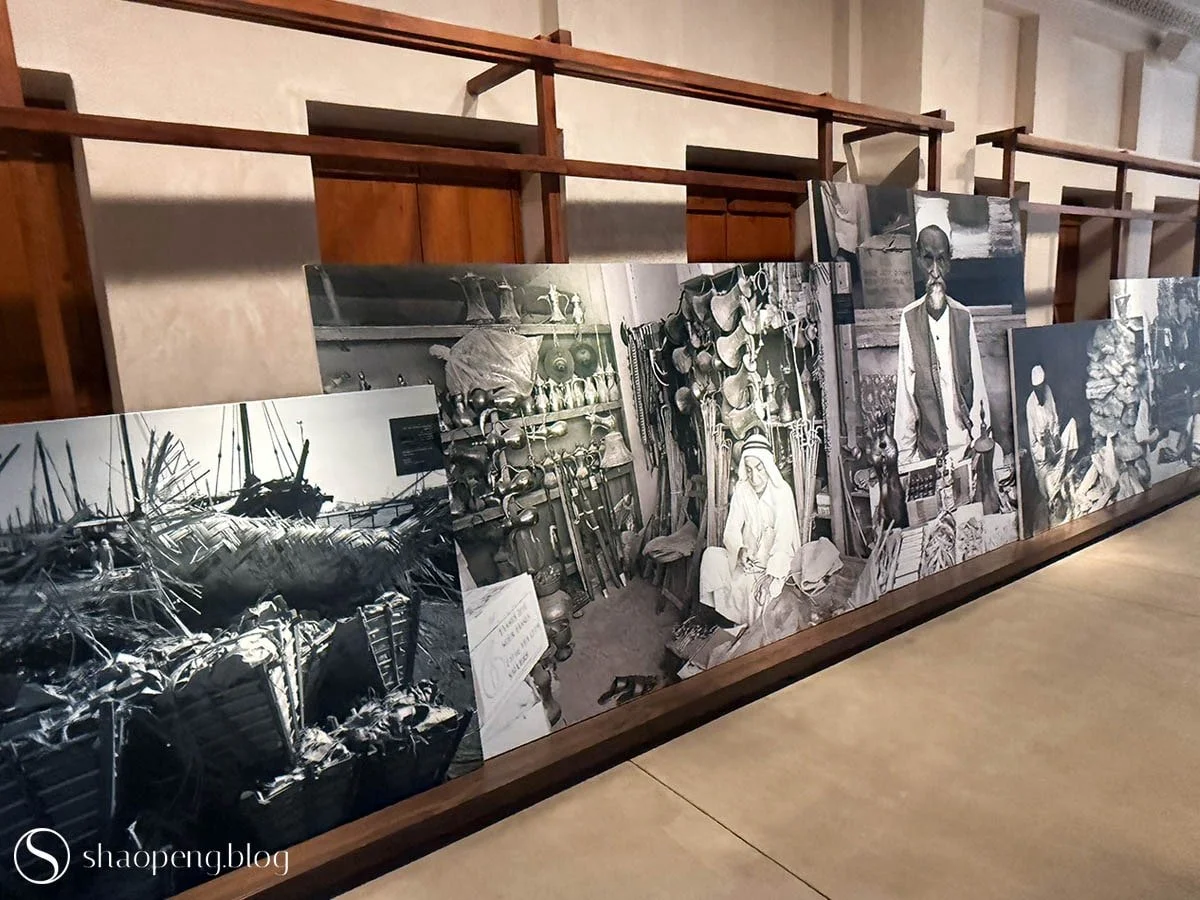
If there’s one place in the UAE where I learn the most about the region’s crafts, it’s here at the Traditional Crafts House in Al Shindagha Museum.
Craft has a way of being overlooked. It does not carry the prestige of fine art. It simply exists in the background of everyday life, shaped by necessity rather than display. Traditional crafts were never made for galleries or vitrines, but born from the human need to survive and adapt in a demanding environment.
In the UAE, that environment is threefold: the gulf, the desert, and the mountains. Each landscape shaped its people differently, and the objects they made reflect this, practical and beautiful, fashioned from whatever the land and sea could offer: date palm, wood, earthen clay, and animal hair.
The Traditional Crafts House introduces visitors to the full breadth of Emirati craft: al khous, the intricate weaving of palm fronds; al sadu, the bold geometric textiles woven by Bedouin communities from animal hair; al talli, a delicate local embroidery technique; and the arts of metalwork, woodcarving, and pottery. Each carries traces of the people who made them and the landscapes that shaped them.
But the story does not end here. Dubai’s position as a trading hub meant that its crafts were never purely local, but continuously moulded by what passed through its waters. From India came cotton and silk threads that entered textile traditions, and teak that gave local carpenters a material worthy of their skill. From East Africa came chandal, or sandalwood, which became an essential material in coastal construction along the creek. The crafts of Dubai form a map of the connections that shaped the city.
Wanderer’s tip — If you are interested in crafts, also visit the House of Artisans in Abu Dhabi and Al Ain Museum in Al Ain, both of which present Emirati craft heritage from different angles, contributing to a remarkably full picture of what Emirati hands have long been capable of.
Traditional Jewellery
Sense of Wander: ★★★★★
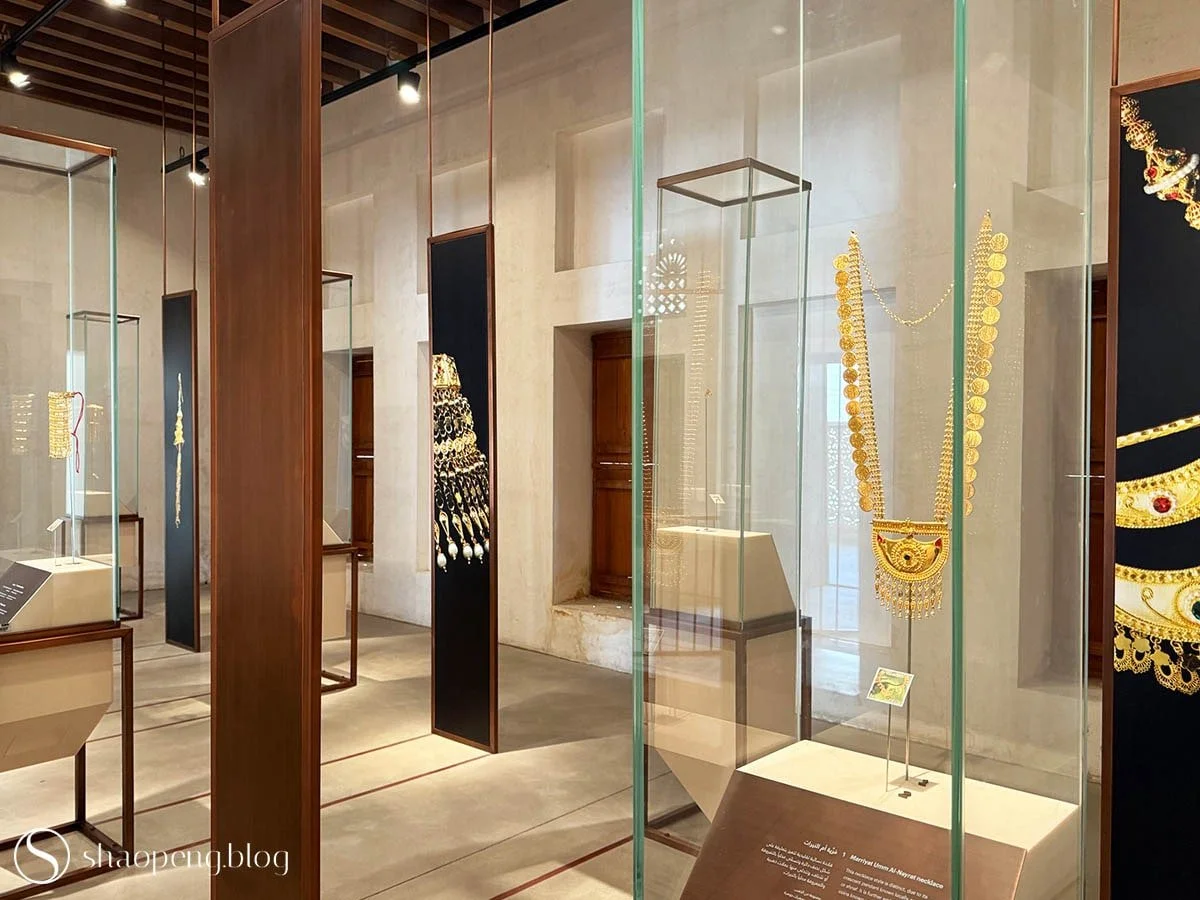
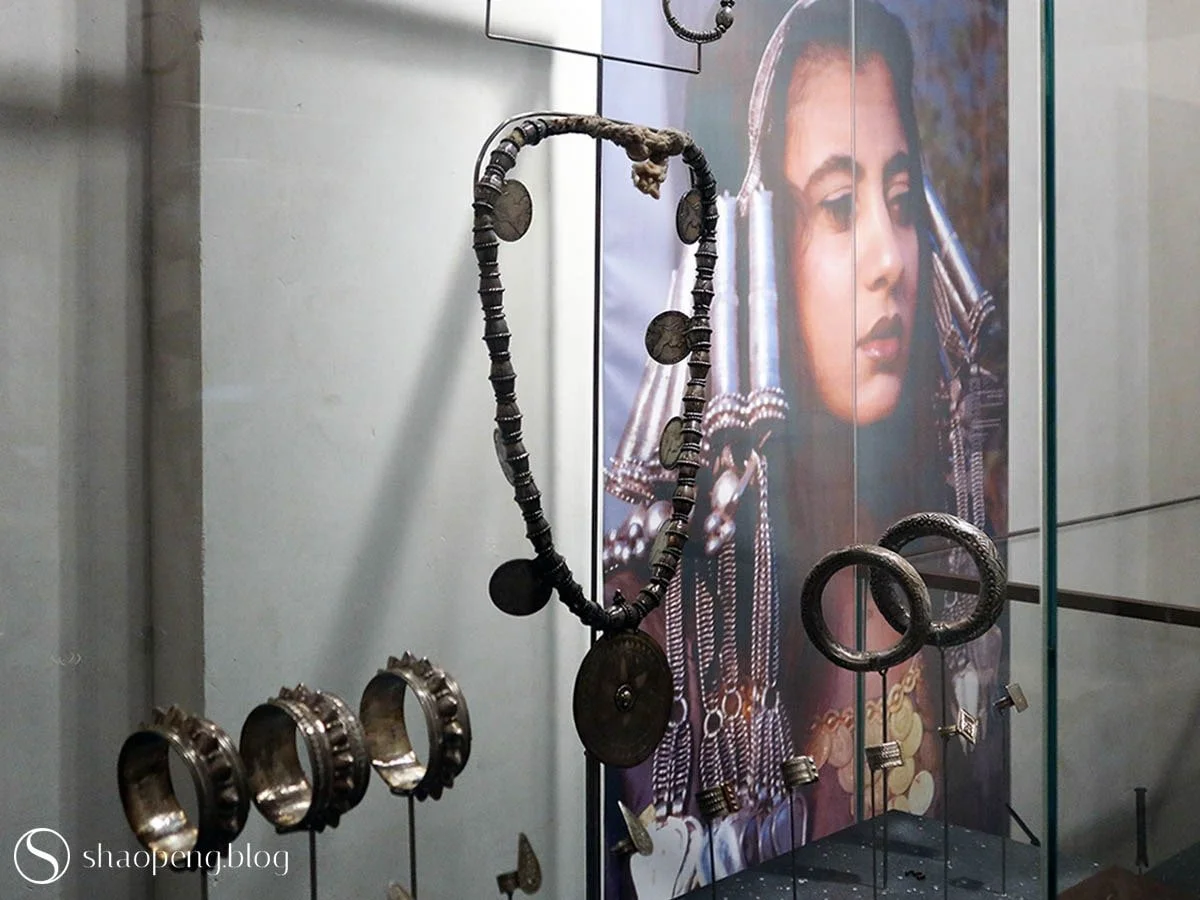
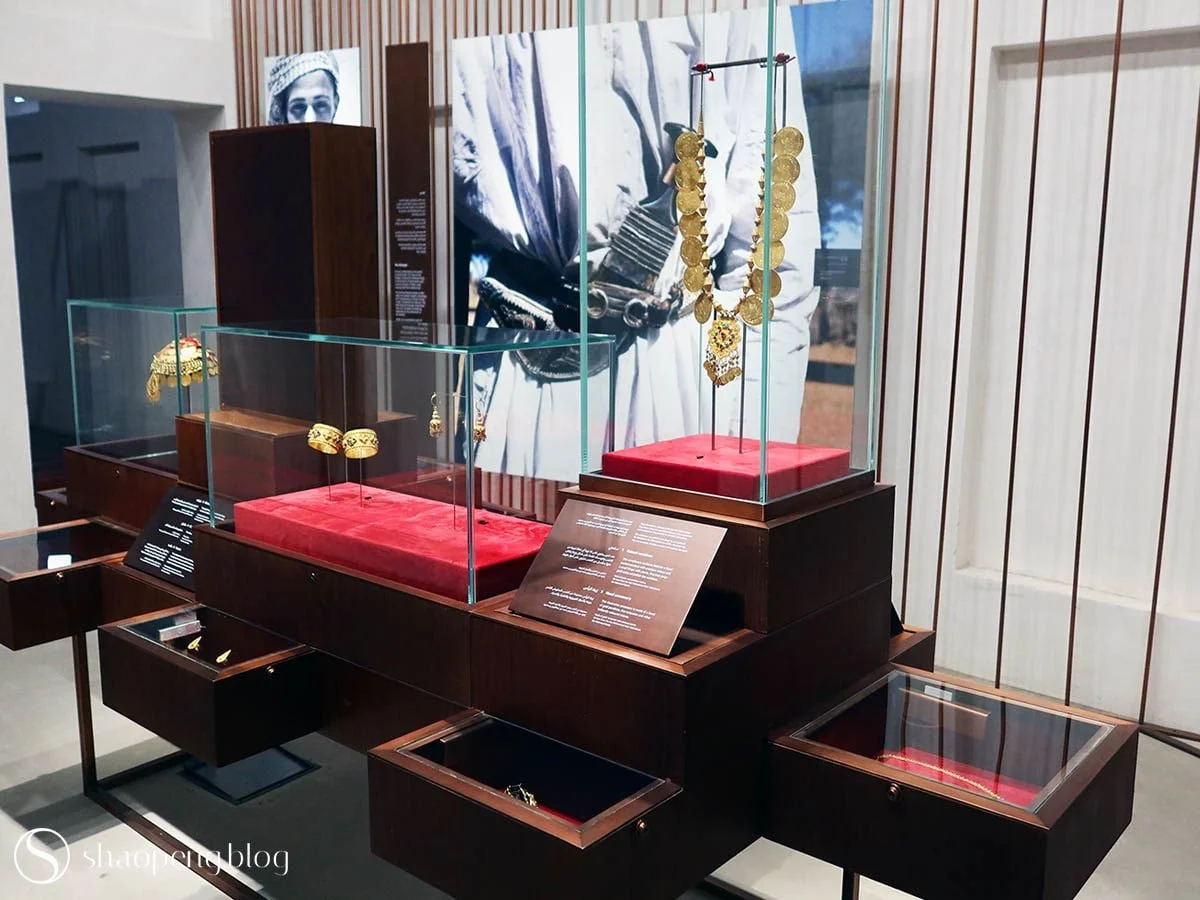
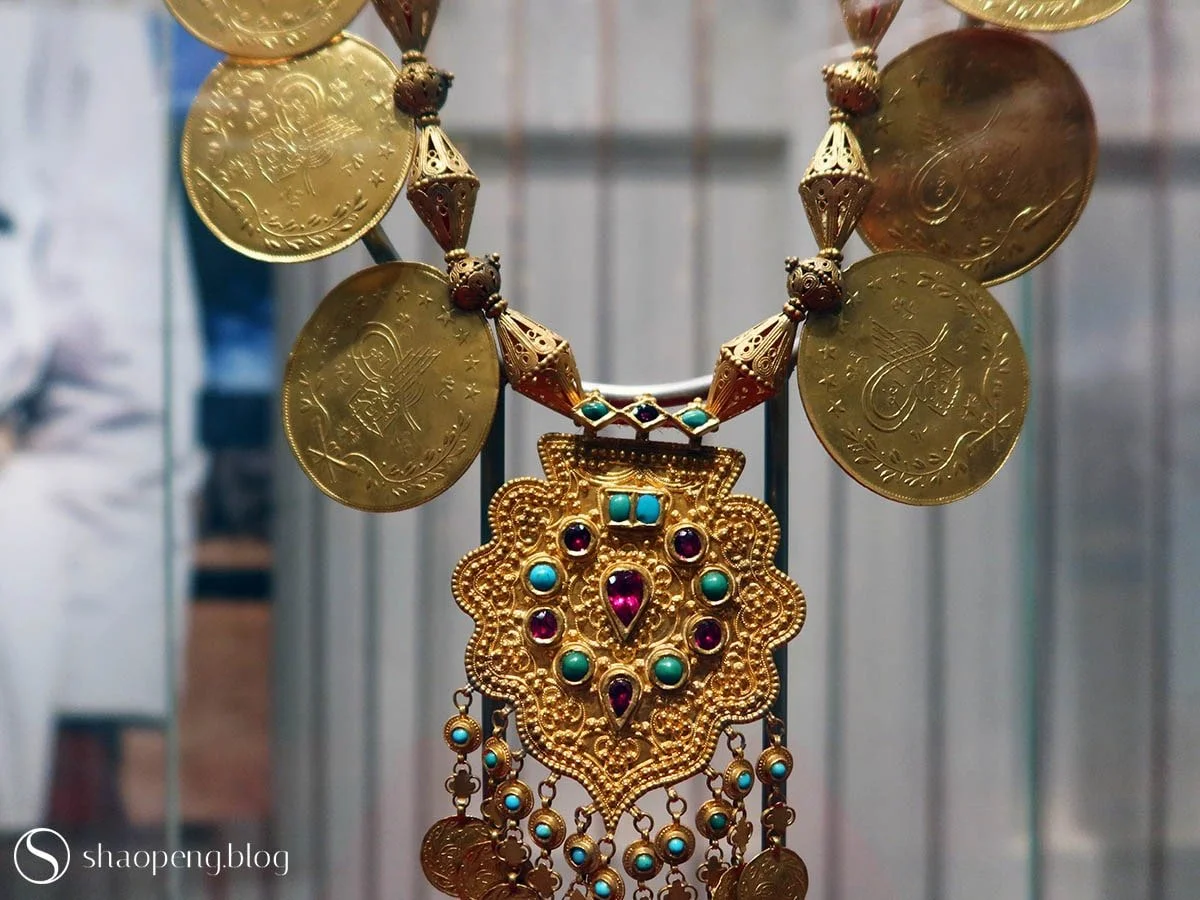
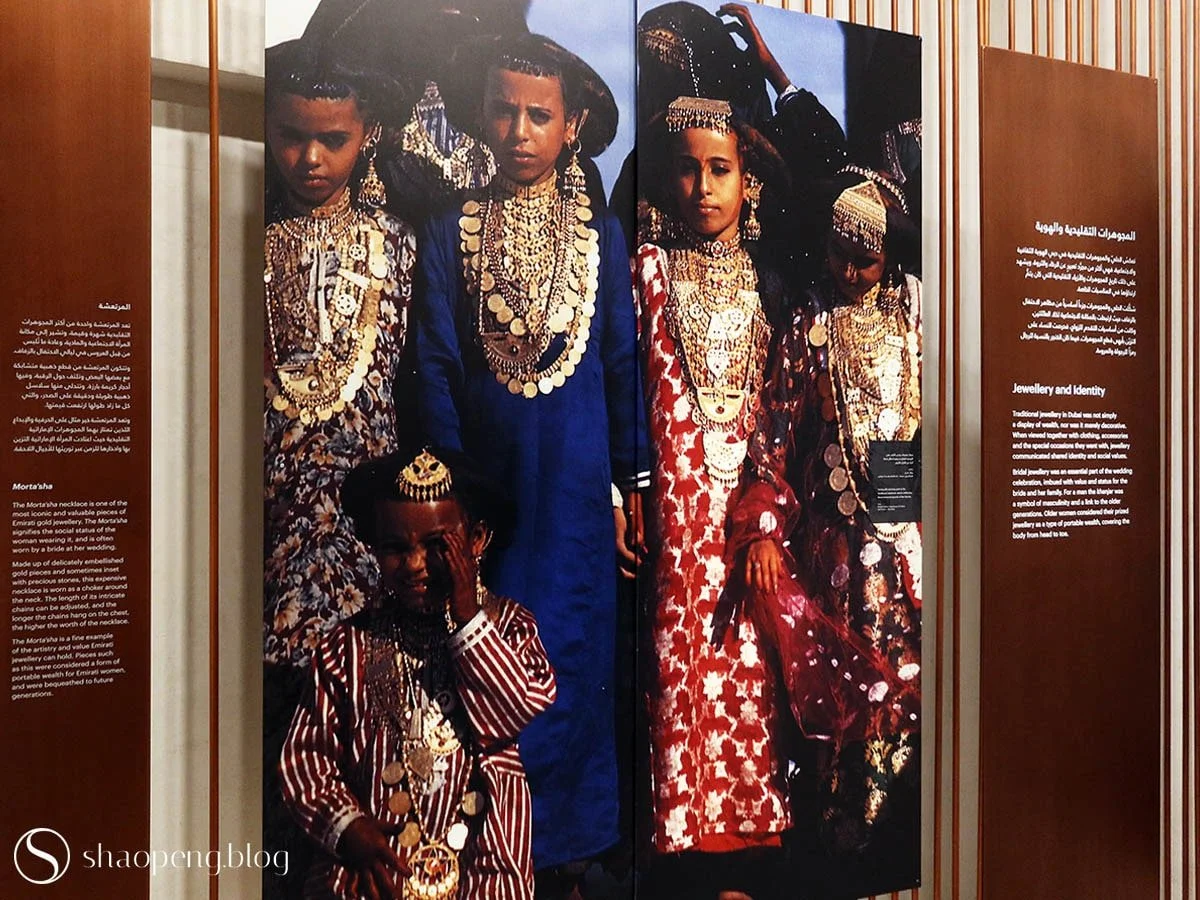
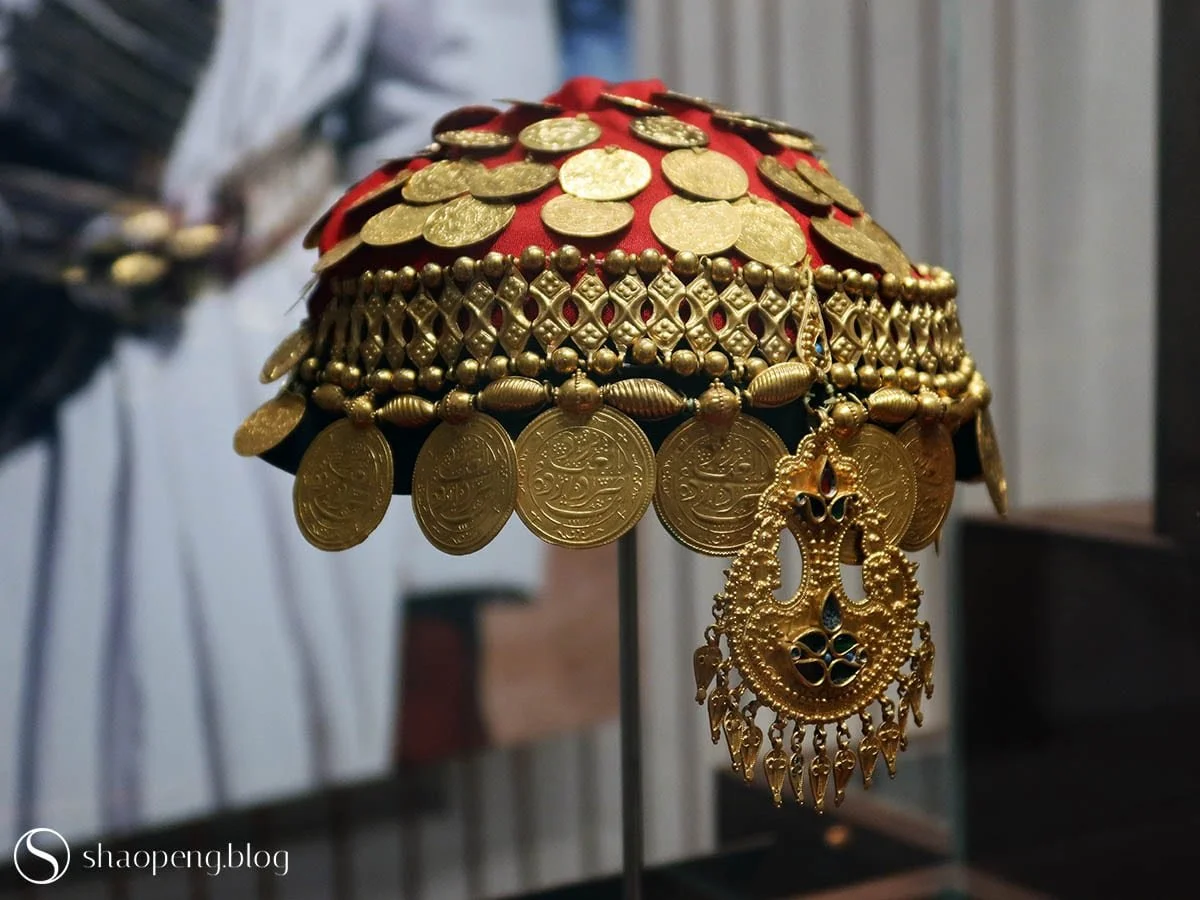
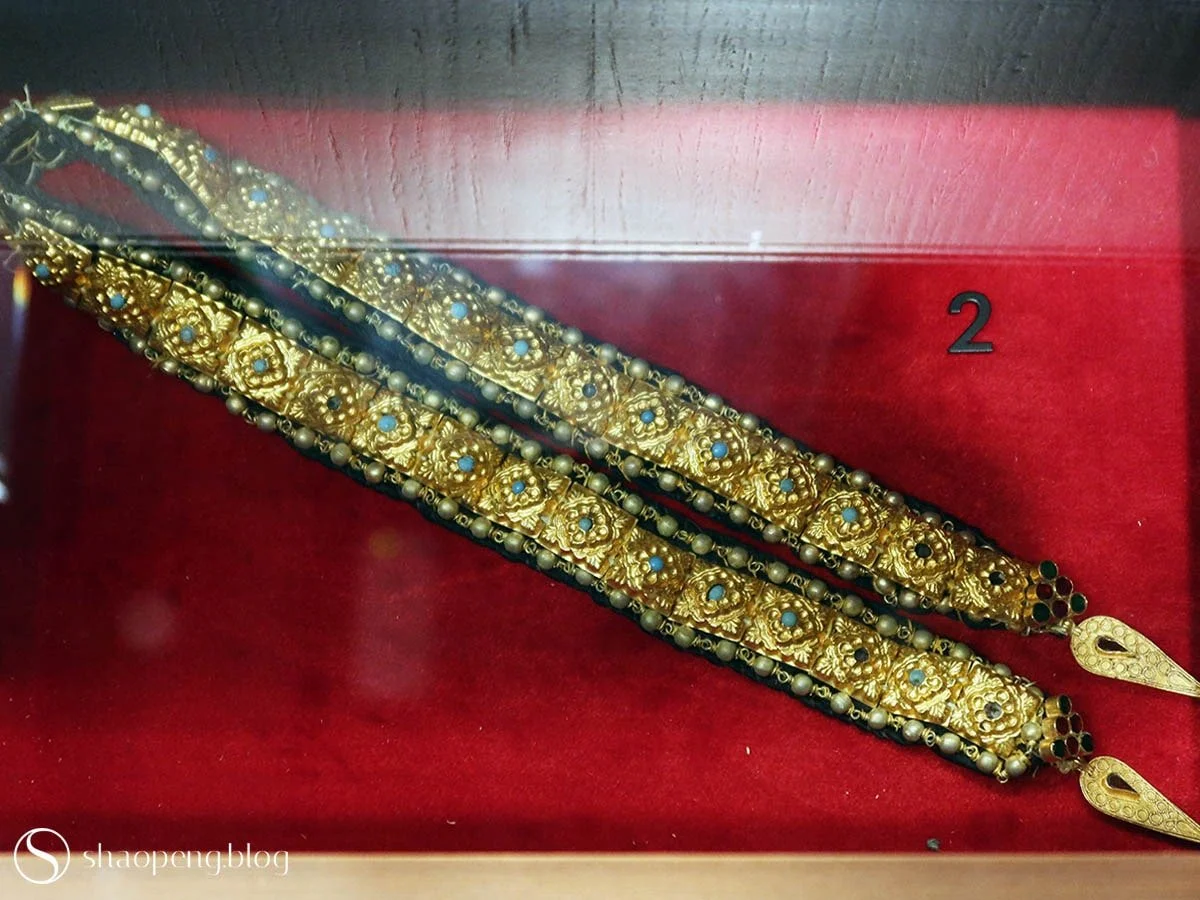
In Emirati culture, jewellery is ritual, identity, wealth, and memory all at once, worn on the body as a kind of living archive of who you are and where you came from.
The pavilion dedicated to traditional jewellery understands this, opening with a gallery of the region’s most iconic pieces — so significant they were immortalised on UAE postage stamps in 2006. Here you’ll find tassah head ornaments, the layered marriyat umm al-nayrat necklace, the mortasha necklace, the shaghab bu al-shouk earrings, a pair of bu al-shouk bangles, and the shadid, a ring worn specifically on the right index finger.
Explore further, and the story of materials begins to unfold along a long corridor: an exploration of the raw elements, mostly sourced from abroad, that give Emirati jewellery its distinctive character. The corridor reads almost like a trade route in miniature, a reminder that Dubai’s jewellery was never made in isolation.
Pearls, of course, are given their own space. A dedicated gallery traces the pearl trade that once formed the lifeblood of this coastline, with testimonies from pearl merchants that bring the era vividly to life.
Silver came largely from neighbouring Oman and from Europe, its quality making it the natural choice for bold, elaborate pieces that carry a distinctly Bedouin spirit. Among the objects on display are traditional necklaces incorporating the Maria Theresa thaler — a silver coin of exceptional purity that circulated widely across the Arabian Peninsula until the 1960s. Seeing it repurposed as adornment feels entirely fitting for a city built on exchange.
Gold tells a different story. Its malleability allows goldsmiths to hammer it into fine sheets and shape it into forms silver could not achieve. As local demand for gold jewellery grew through the mid-20th century, Dubai’s traders established their own workshops rather than relying on imports from Bahrain or India.
My favourite corner is titled Jewellery and Identity, a survey of how these pieces were worn not merely for beauty or wealth, but as expressions of cultural self. Head to toe, the display maps the full constellation of traditional jewellery once worn by Emirati women in everyday and ceremonial life. The majority of pieces here are on generous loan from the family of the late Mohammad Noor Abdulkarim Bin Mahmood.
The exhibition closes in a way that bridges past and present: a collection of pearl jewellery by Jawhara Jewellery, a Dubai-based brand with roots stretching back more than a century. The motifs are unmistakably traditional, yet the execution is contemporary, as if underscoring that old forms do not disappear — they evolve and find new hands.
Wanderer’s tip — If the jewellery here leaves you wanting more, make a note to visit the Sharjah Heritage Museum, whose collection offers yet another perspective on the region’s jewellery traditions.
Perfume House
Sense of Wander: ★★★★★
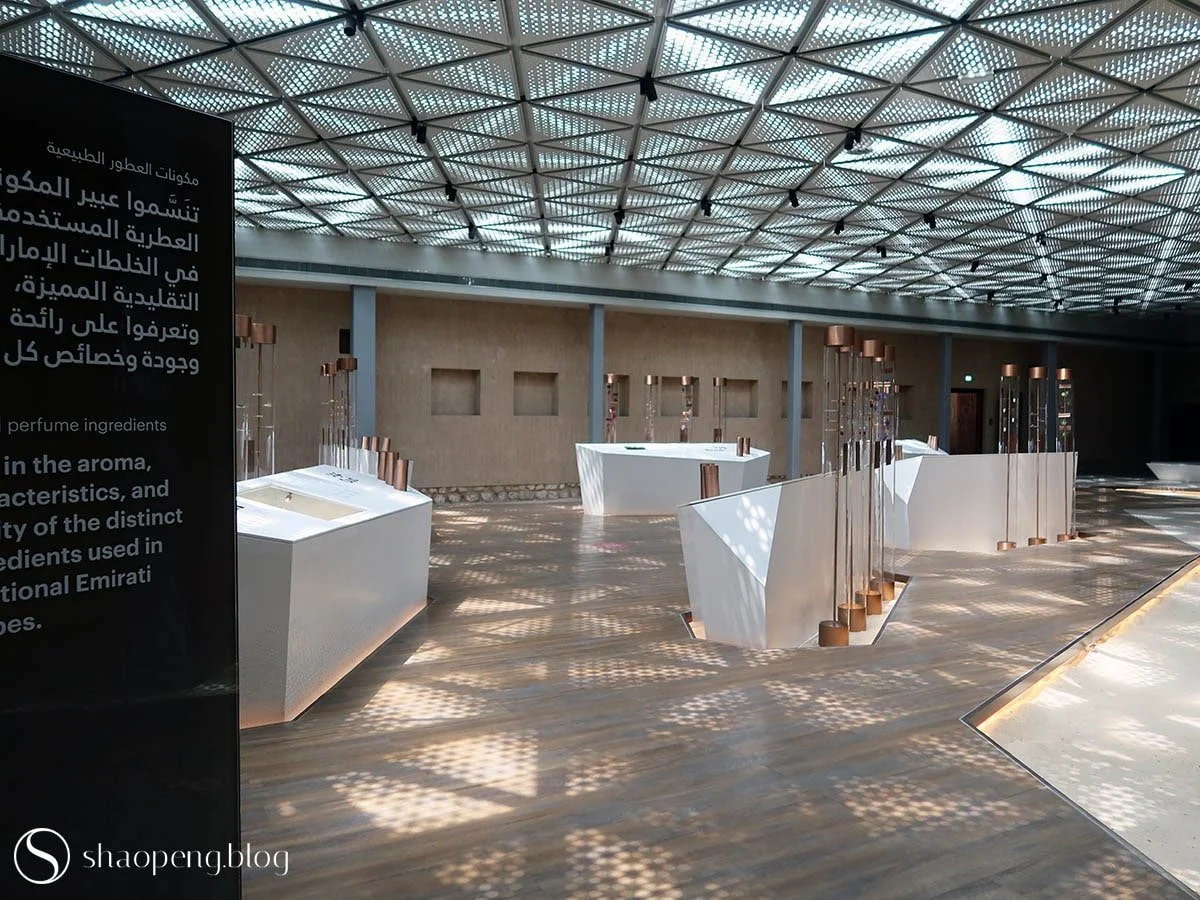
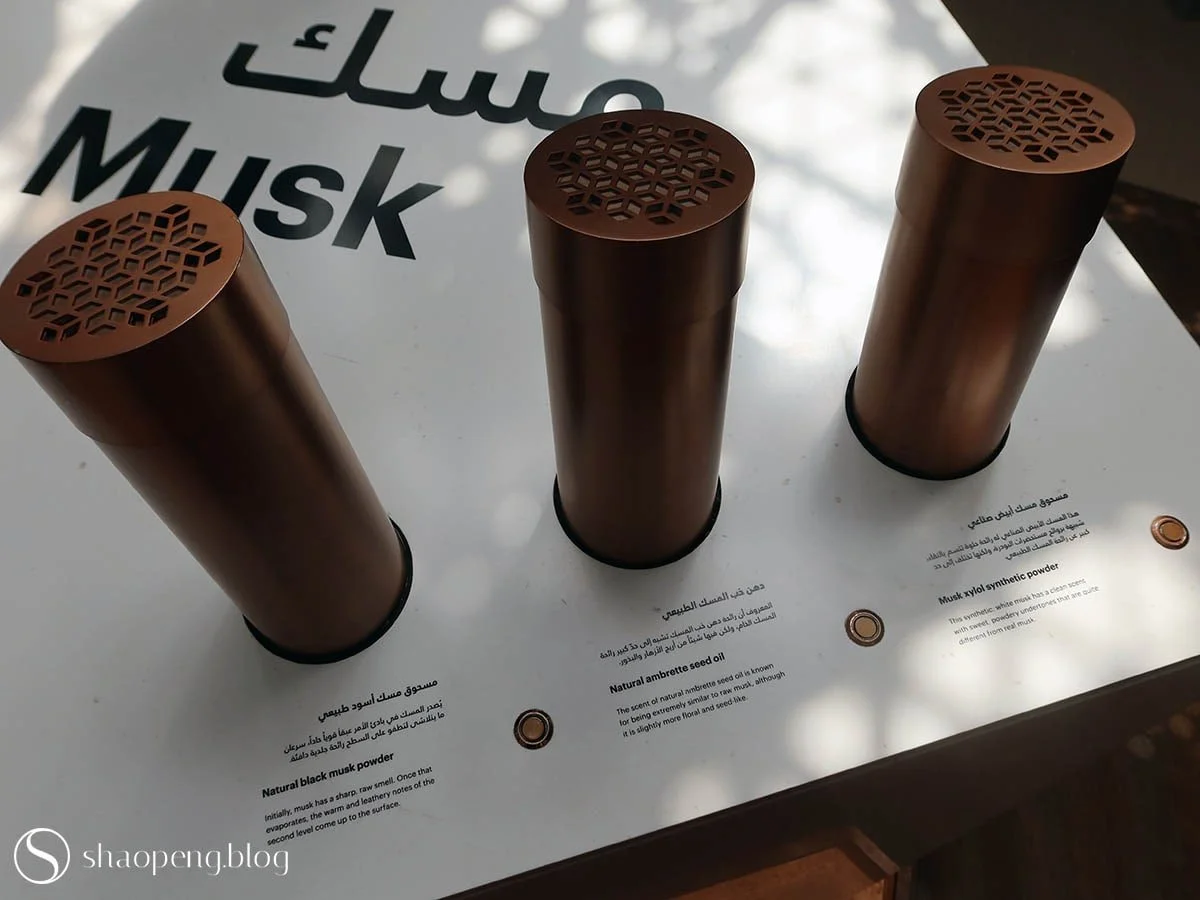
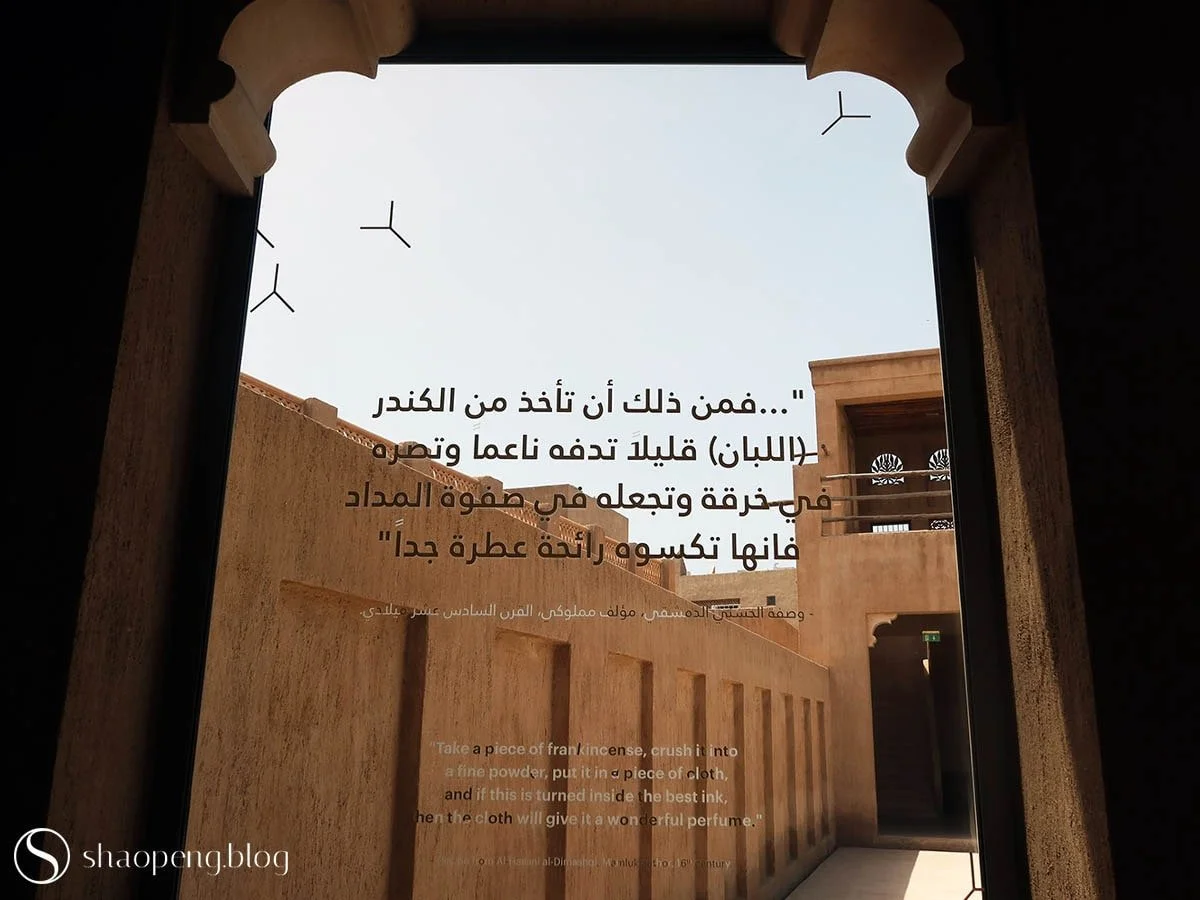
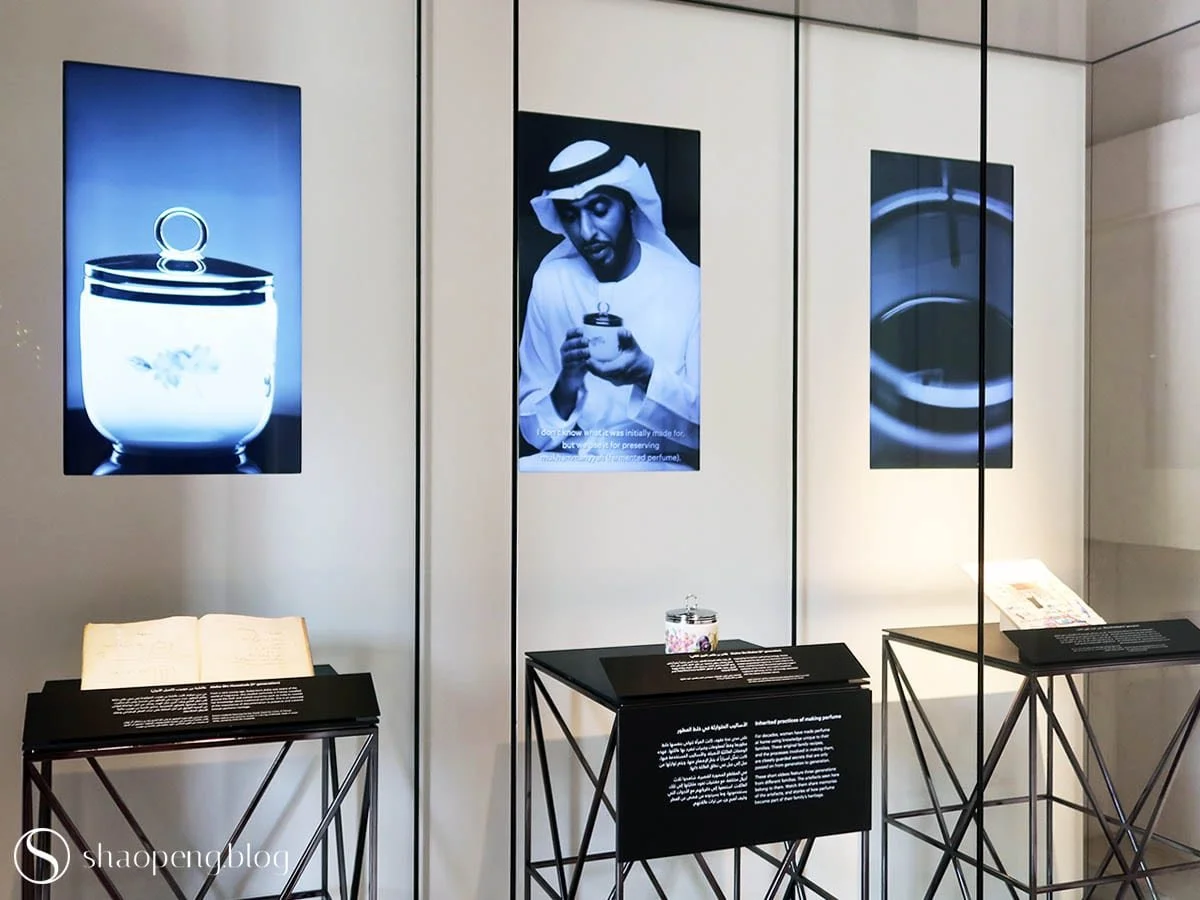
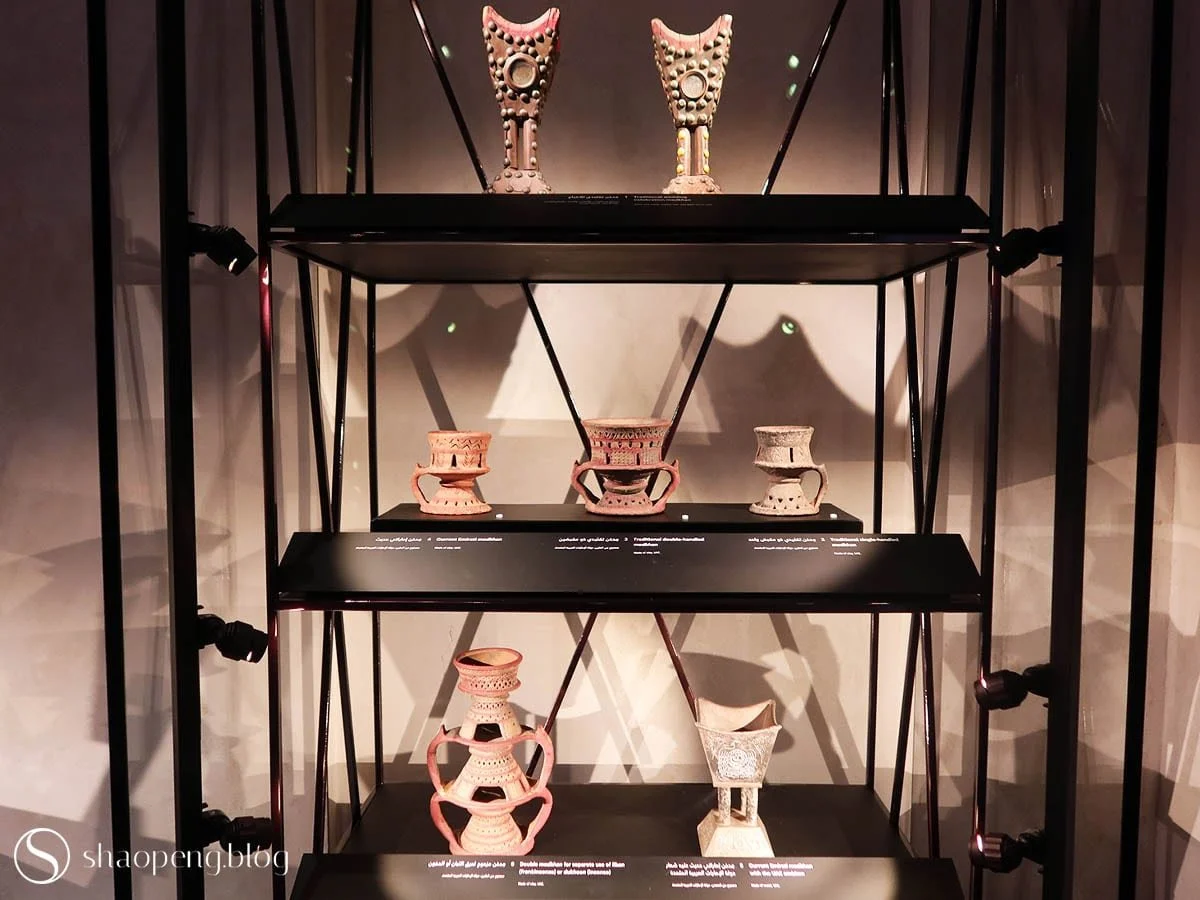
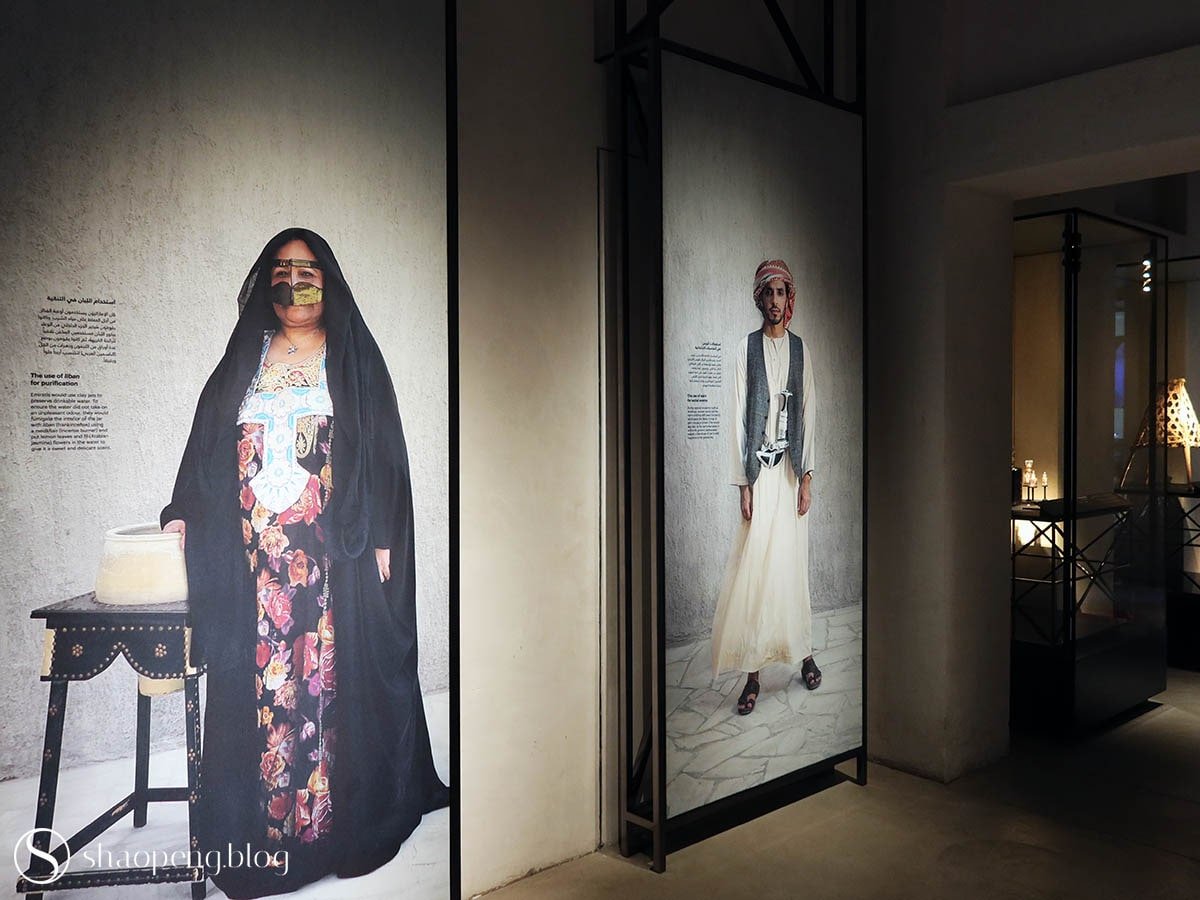
Perfume in Emirati culture is not an accessory but a presence that is as much a part of daily life as food or prayer.
The Perfume House is, fittingly, one of the most sensory experiences on offer at Al Shindagha Museum.
The journey begins in a courtyard, where you are invited to slow down and acquaint yourself with the five pillars of traditional perfumery: oud, musk, saffron, rose, and amber. Each ingredient is presented in its natural state — raw, unprocessed, and often surprising in form — alongside its extracted scent. What makes this experience unique is the opportunity to compare natural aromas with synthetic versions designed to mimic them. The differences, once you begin to notice them, are quite obvious.
Besides these five imported ingredients, the house also introduces local botanicals that give Emirati perfumery its distinctly regional character, including mashmoom (a variety of basil), mahlab (an aromatic spice drawn from the seeds of a particular cherry species), yas (myrtle), khozaama (a local lavender variety), al yshin (lichen), sea salt, and fil (Arabian jasmine). Together, they paint a landscape expressed through scent, distilling the olfactory identity of the UAE.
Inside the exhibition halls, you learn how perfume is woven into the rituals of Emirati hospitality: offered to guests as a gesture of welcome, burned in the home as a form of blessing, and worn as an expression of identity. And then, in what might be the most memorable moment for me personally, is to watch how traditional perfume being made step by step from natural ingredients — and smell the result.
Wanderer’s tip — Bring a handful of coffee beans with you. With so many scents available to explore, your nose will fatigue faster than you expect. Coffee beans are the classic remedy, resetting your olfactory senses between samples so you can keep experiencing each one with more clarity.
Traditional Food House
Sense of Wander: ★★★★☆
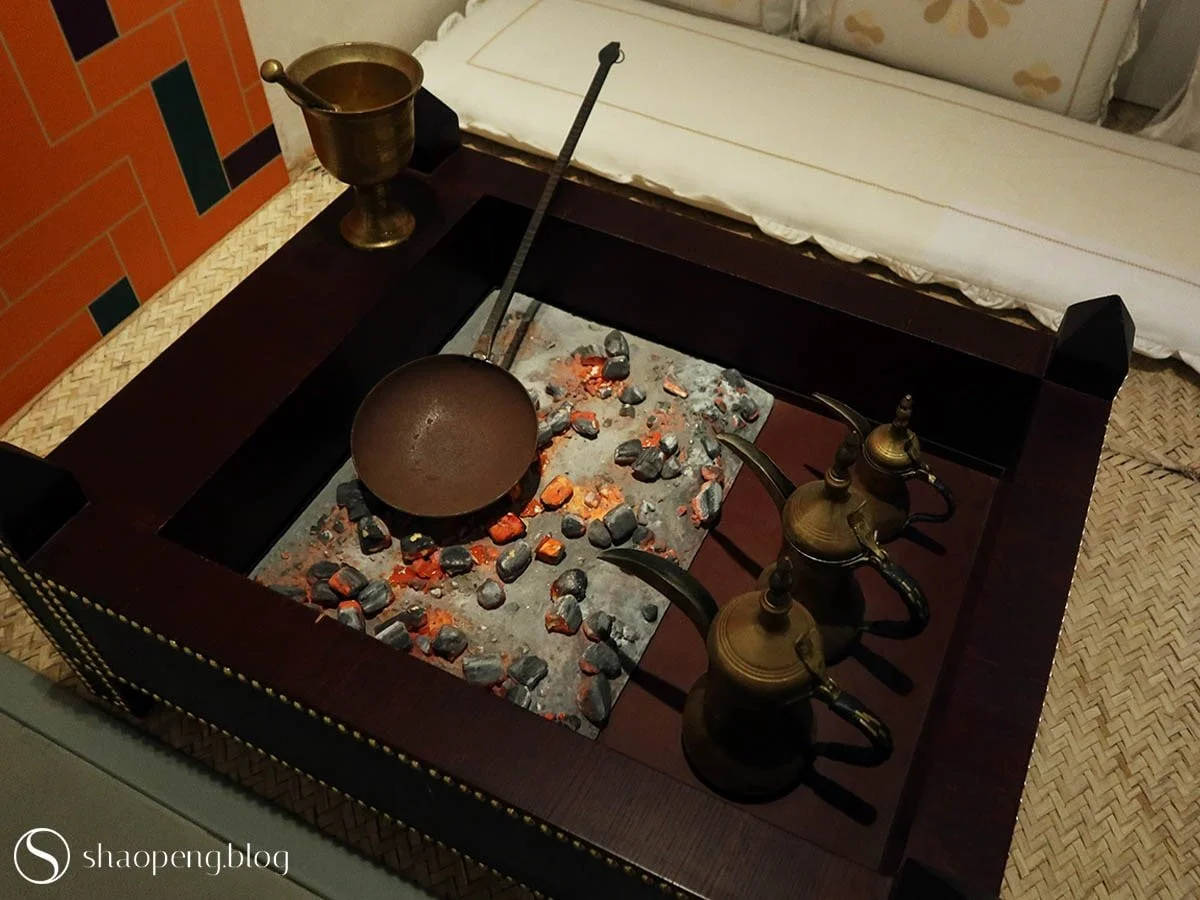
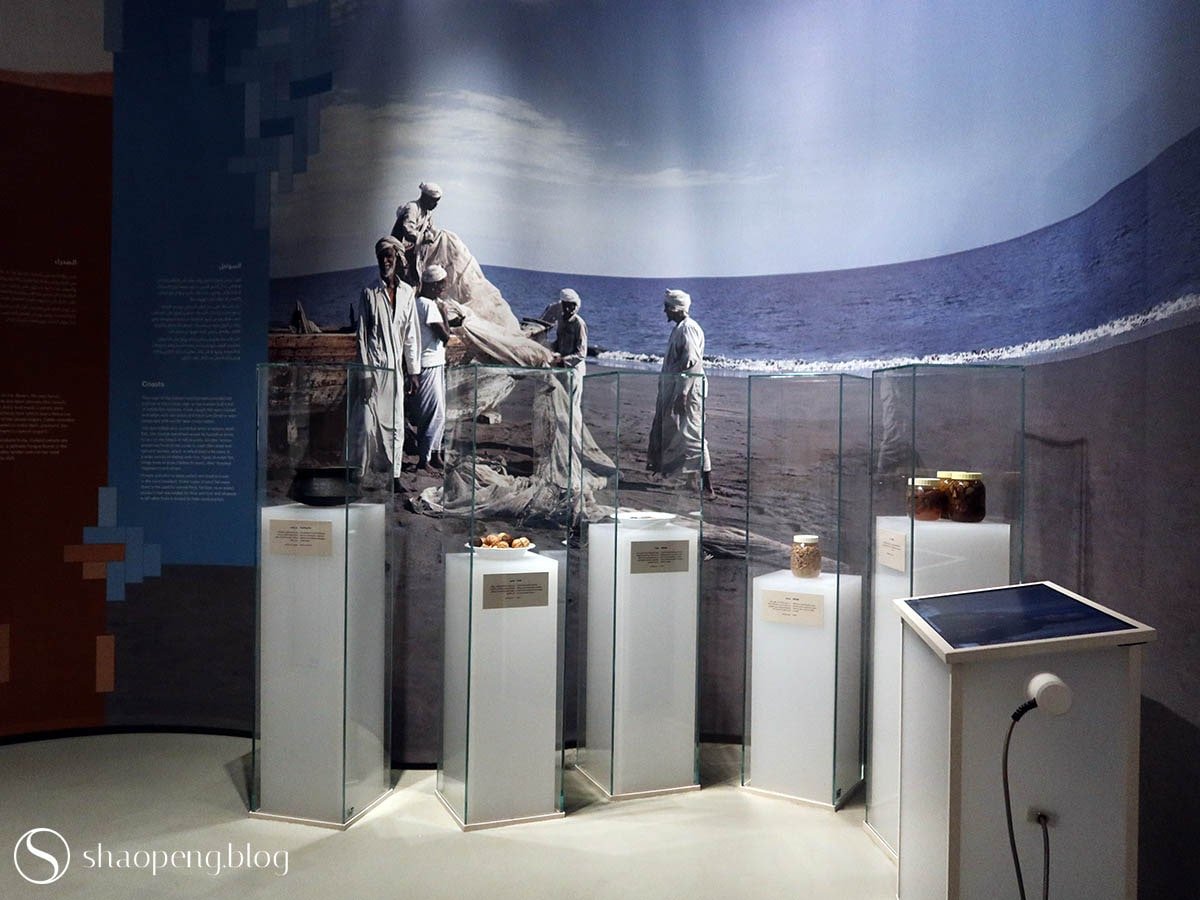
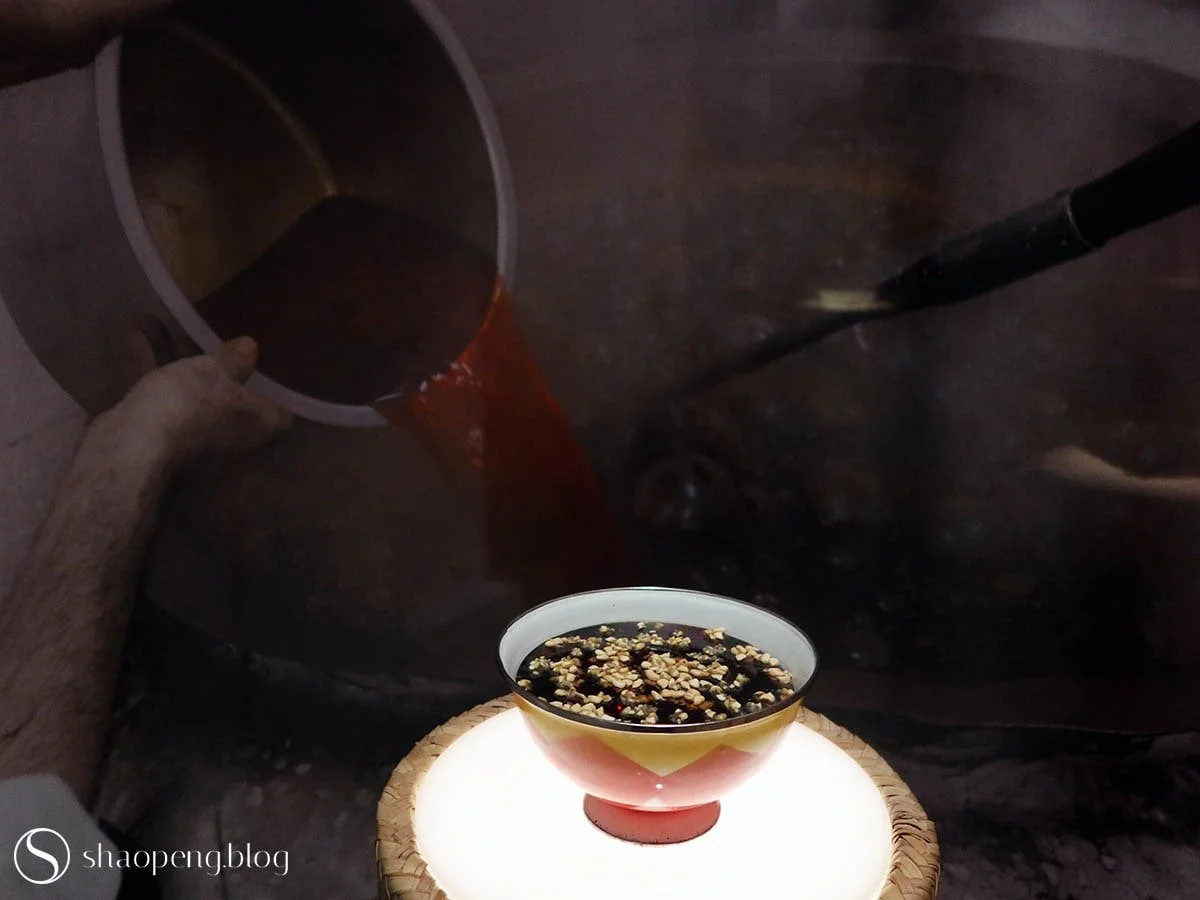
Food is a defining part of every culture. In the UAE, where desert, sea, and mountain have shaped daily life in equal and sometimes competing ways, the cuisine that emerged is as rich as the landscape itself.
The Traditional Food House begins, as any Emirati welcome does, with coffee. The opening gallery introduces Sanaa El-Qahwa — the etiquette of coffee, a ritual of hospitality so refined and deliberate that it functions almost as a language of its own. Coffee is followed by fualah, an offering of snacks, fruits, and sweets that completes the gesture of welcome. Here, the act of eating — of sharing food and hosting — is deeply intertwined with a culture of generosity and hospitality.
From there, the exhibition opens outward into the landscapes that shaped the cuisine. The desert, the sea, and the mountains each brought their own ingredients. What people ate was always, first and foremost, a response to where they lived.
My favourite corner is devoted to Trade and Exchange. It comes as no surprise that a city built on commerce would have a cuisine marked by everywhere it traded with — and here, those influences are named and celebrated. Omani halwa. Indian samosa. Dishes that arrived as foreign curiosities and stayed to become beloved staples, absorbed so completely into the local food culture that their origins are sometimes forgotten. Dubai has always been a city of arrivals, and its food tells that story deliciously.
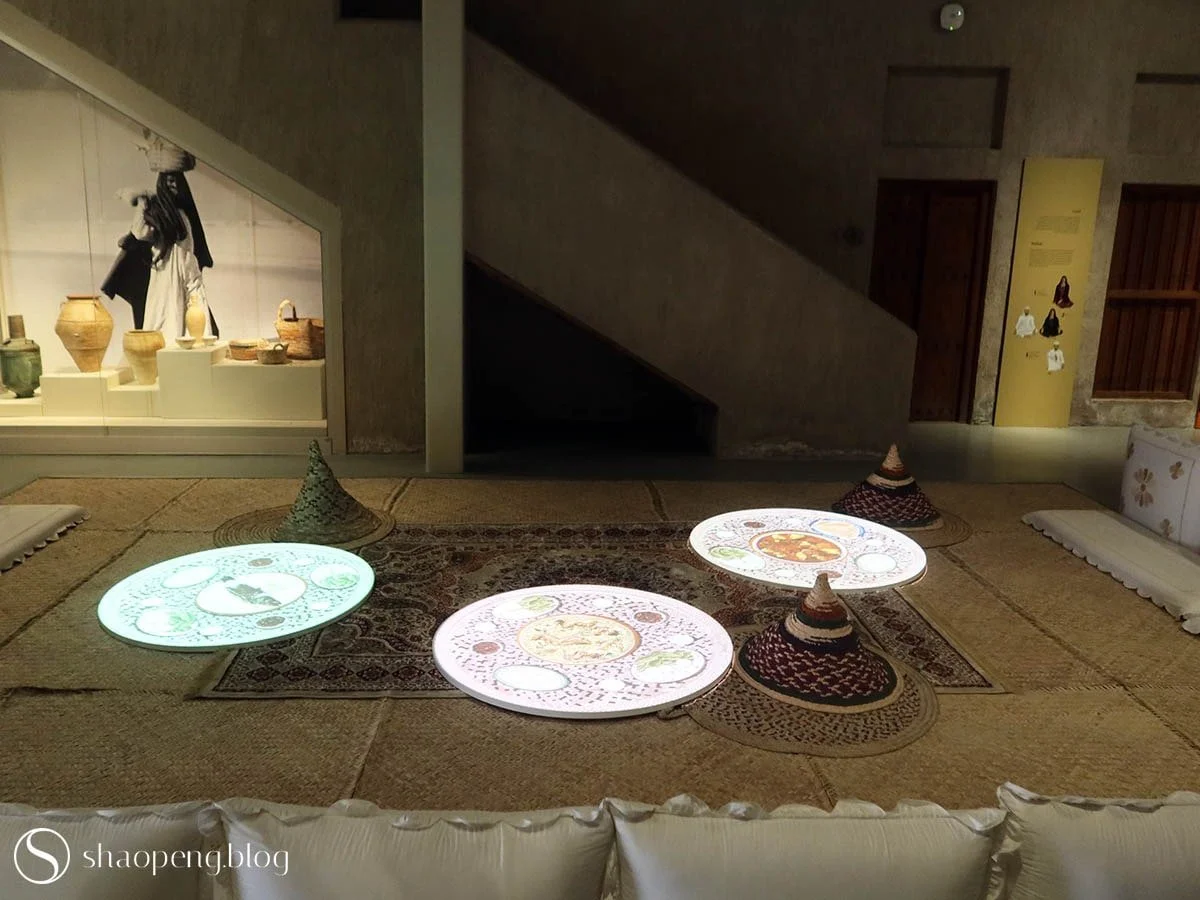
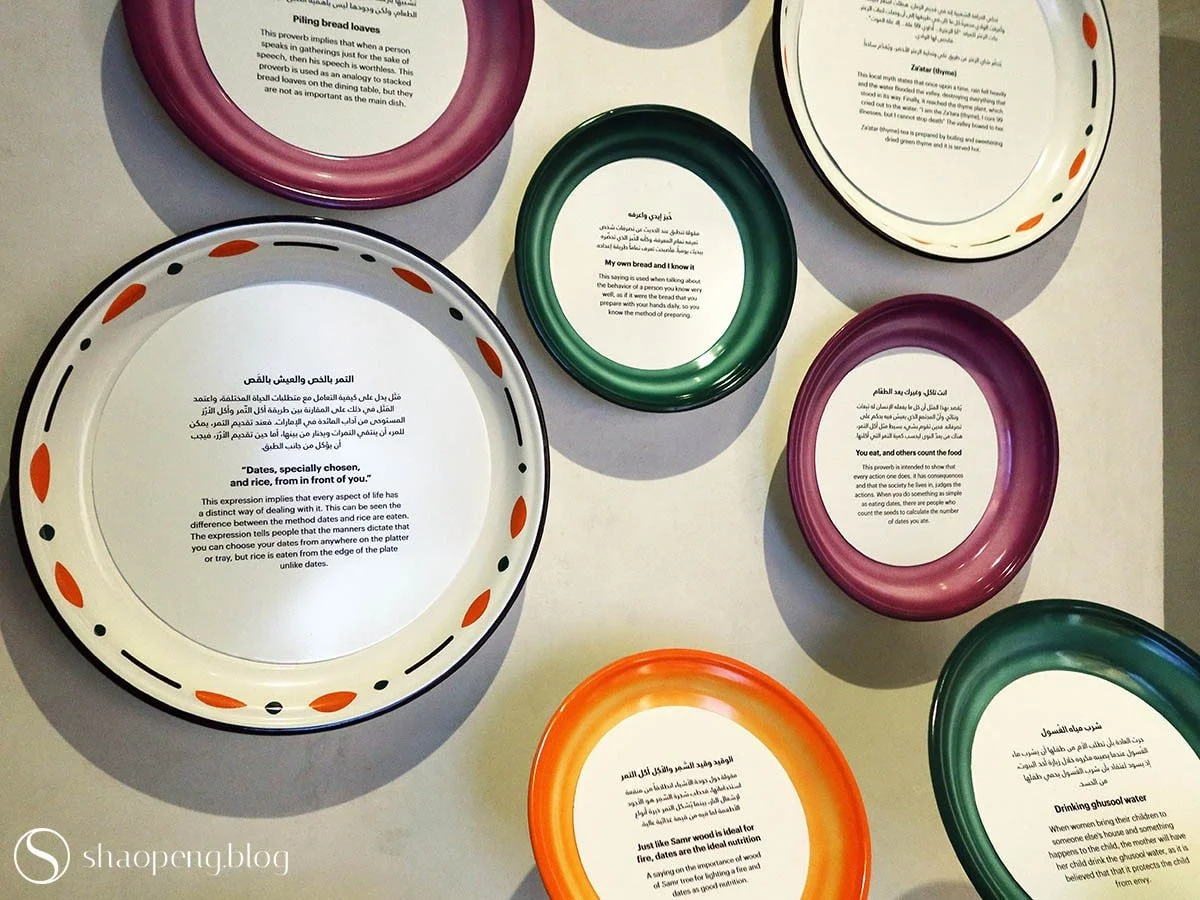
Nearby, an installation of plates draws you in: each plate bears a proverb or phrase reflecting on food, its pleasures, its remedies, and its place in everyday life. Some speak to nourishment, others to the almost medicinal role certain ingredients have long played in Emirati tradition. Food here was never just sustenance, but knowledge passed down through generations at the table.
Wanderer’s tip — Inside the main hall, you’ll find a majlis, a traditional sitting area where you can sink into cushioned comfort and simply rest for a while. After a long day moving through Al Shindagha, this is exactly the kind of pause your feet will thank you for.
Culture of the Sea
Sense of Wander: ★★★★★
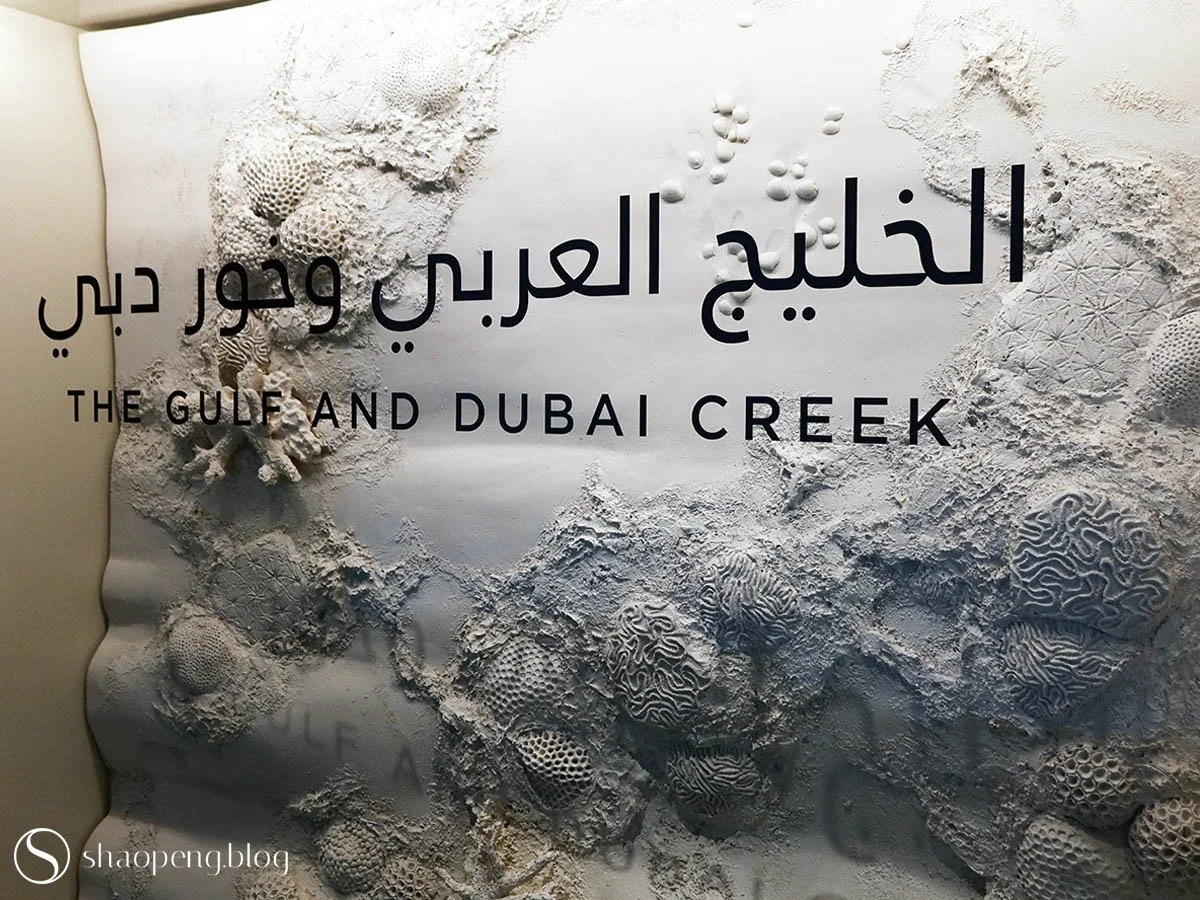
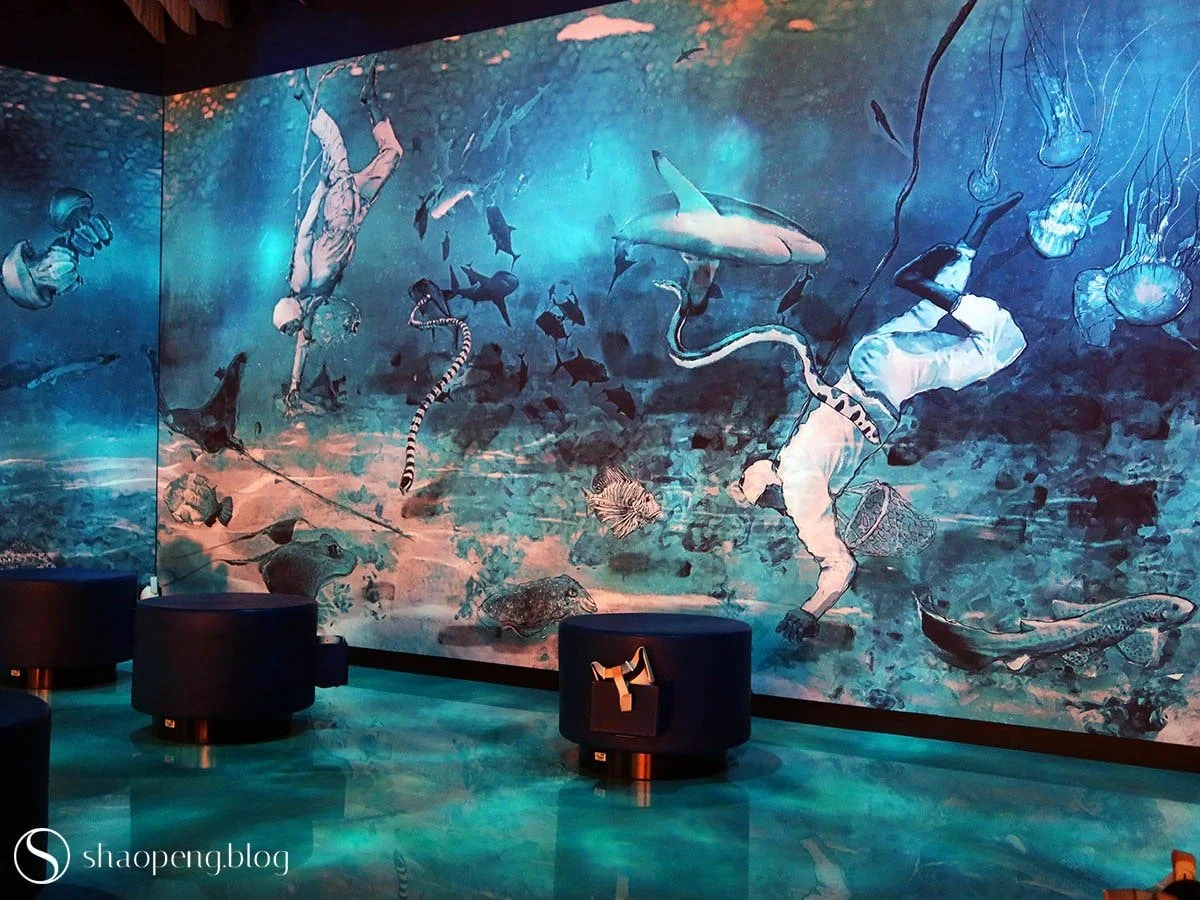
For all the time spent wandering through pavilions that speak of desert life, Bedouin craft, and inland trade, it is easy to forget that Dubai was, first and foremost, a city shaped by water.
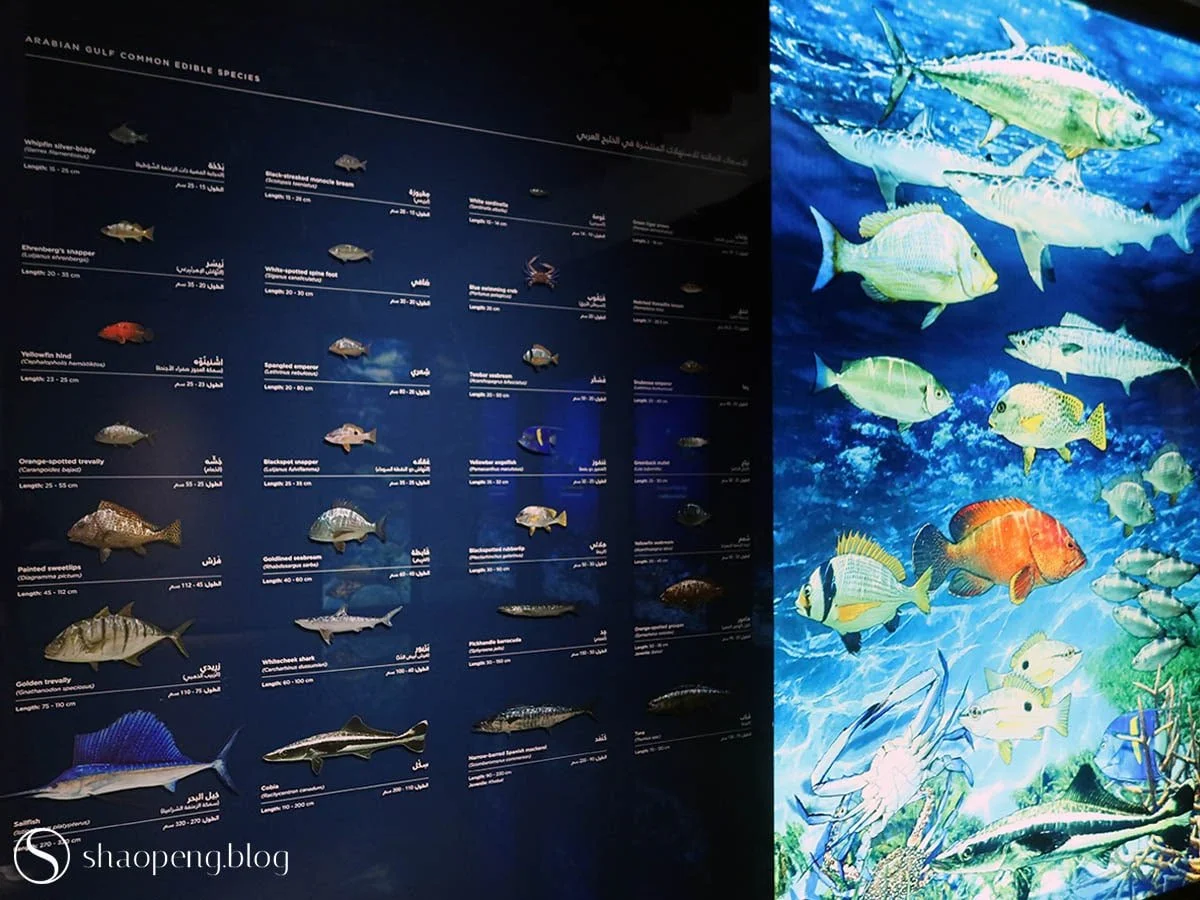
The creek is right there. And the people who built this place didn’t just live beside it, they lived with it. They fished its depths, built their dhows along its banks, sailed its routes to forge trade networks that stretched far beyond the horizon, and dove beneath its surface in search of the pearls that would, for a time, define the region’s economy.
The Culture of the Sea pavilion is where that story is told, and it is told exceptionally well.
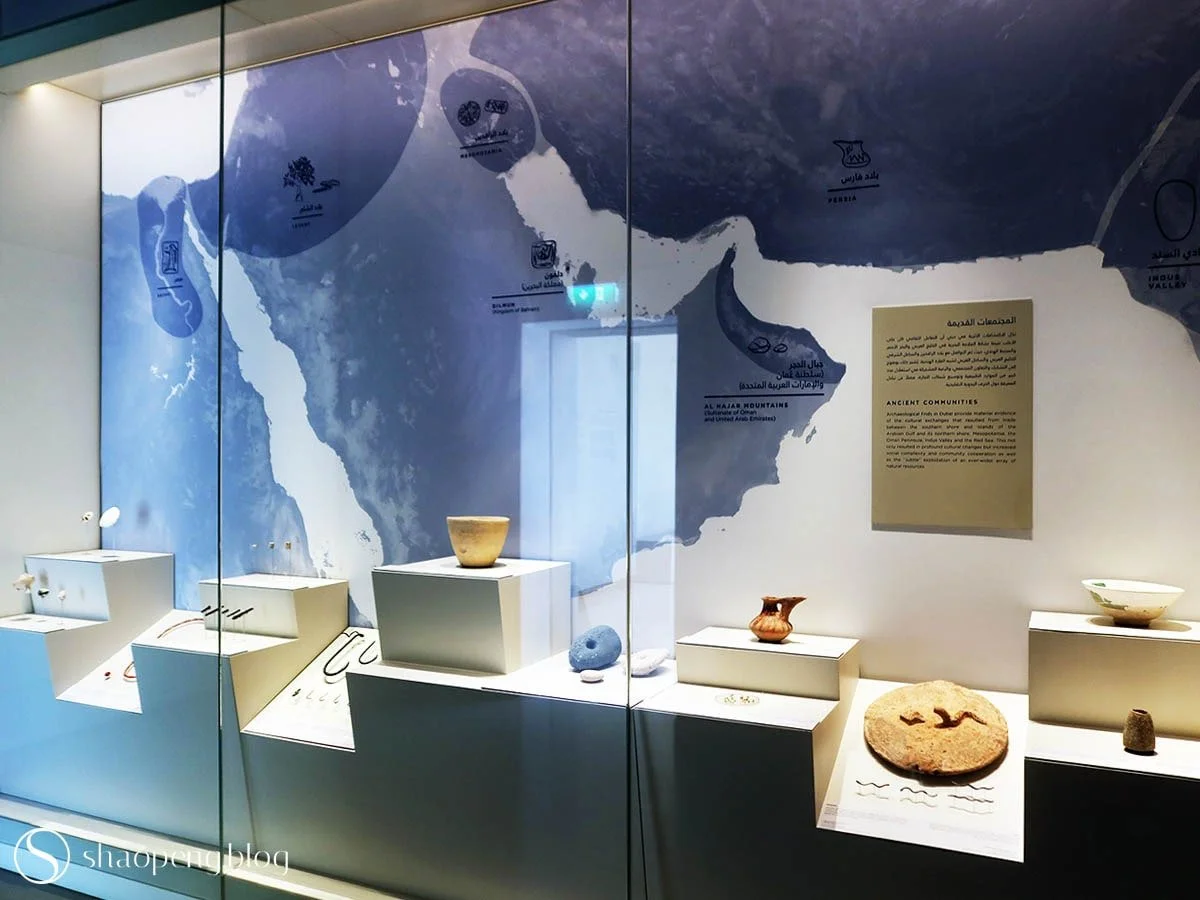
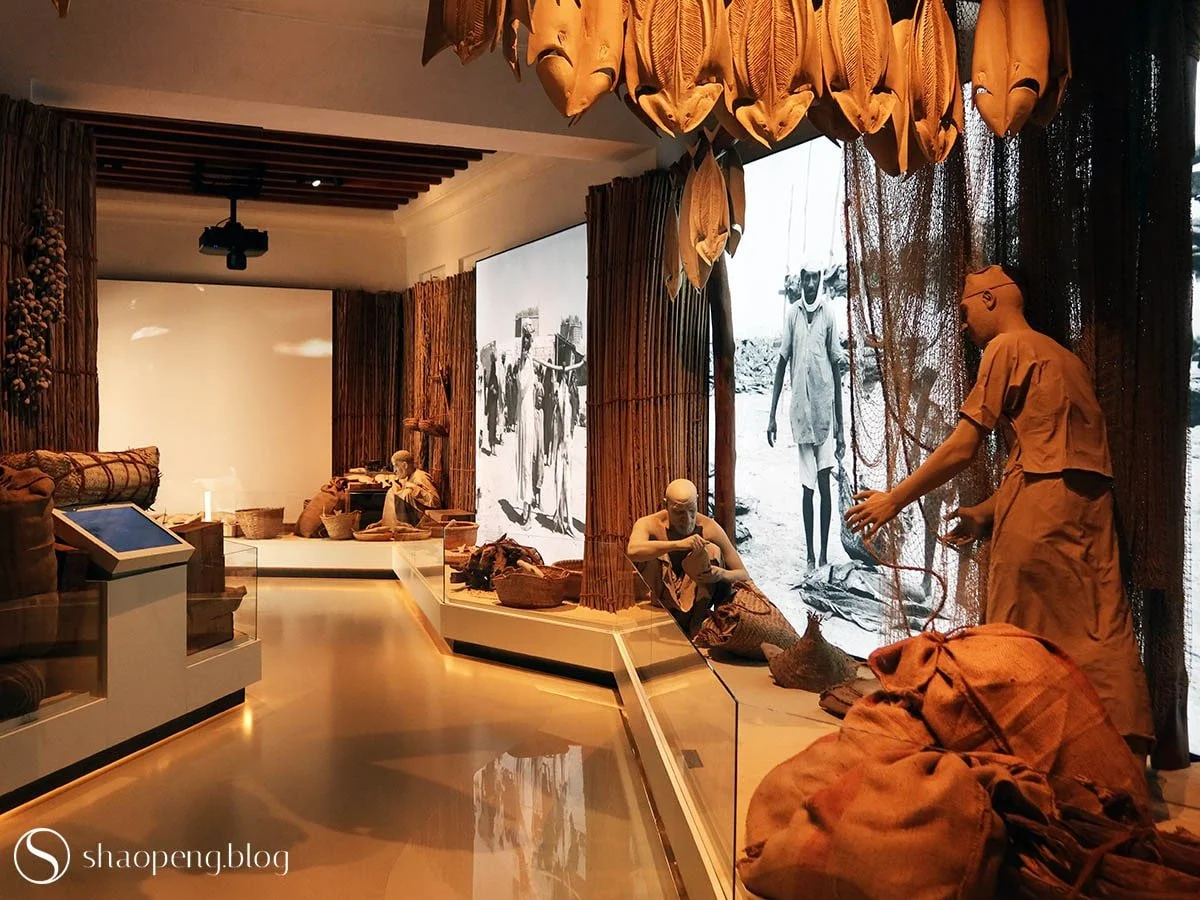
It begins at the very beginning, some 7,000 years ago, with archaeological finds that trace trade connections across the Arabian Gulf and into the wider ancient world. From there, the exhibition moves into coastal life, its seasonal rituals, trades, and the skills that bound communities to the water. A simulation of a traditional fish souk offers a glimpse of the street markets that began appearing in Dubai in the mid-19th century.
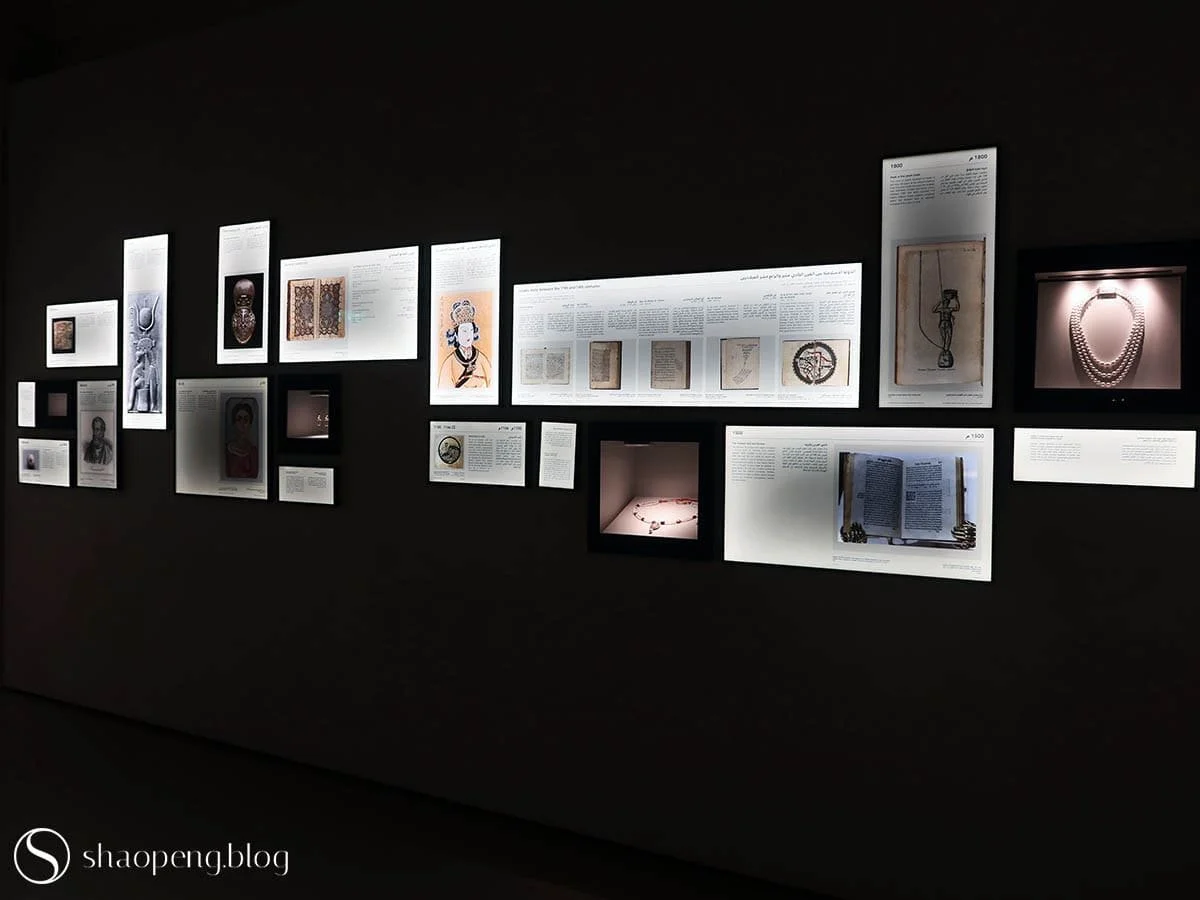
Between the late 18th century and the early 20th, pearling transformed the Gulf. It was the industry upon which fortunes were built, until Mikimoto‘s cultured pearls arrived and dismantled it almost overnight. The Culture of the Sea pavilion offers the most comprehensive account of this world I have encountered in the UAE. It does not simply tell you that pearling was important, it brings you into it: the recruitment of crews for the pearling season, the careful logistics of arranging an expedition, the techniques used to locate oyster beds in the darkness below. And then, if you are willing, it takes you further into a VR pearling experience, where you find yourself underwater alongside a diver, close enough to feel the weight and the danger of what these men endured, season after season, for generations.
By the time you reach the exquisite pearl jewellery on display, it almost feels like an afterthought — though it is, by any measure, dazzling.
Wanderer’s tip — The Culture of the Sea pavilion sits at the northeastern tip of the complex. Save your energy from the long walk and hop on one of the buggies to get there.
Emerging City
Sense of Wander: ★★★★☆
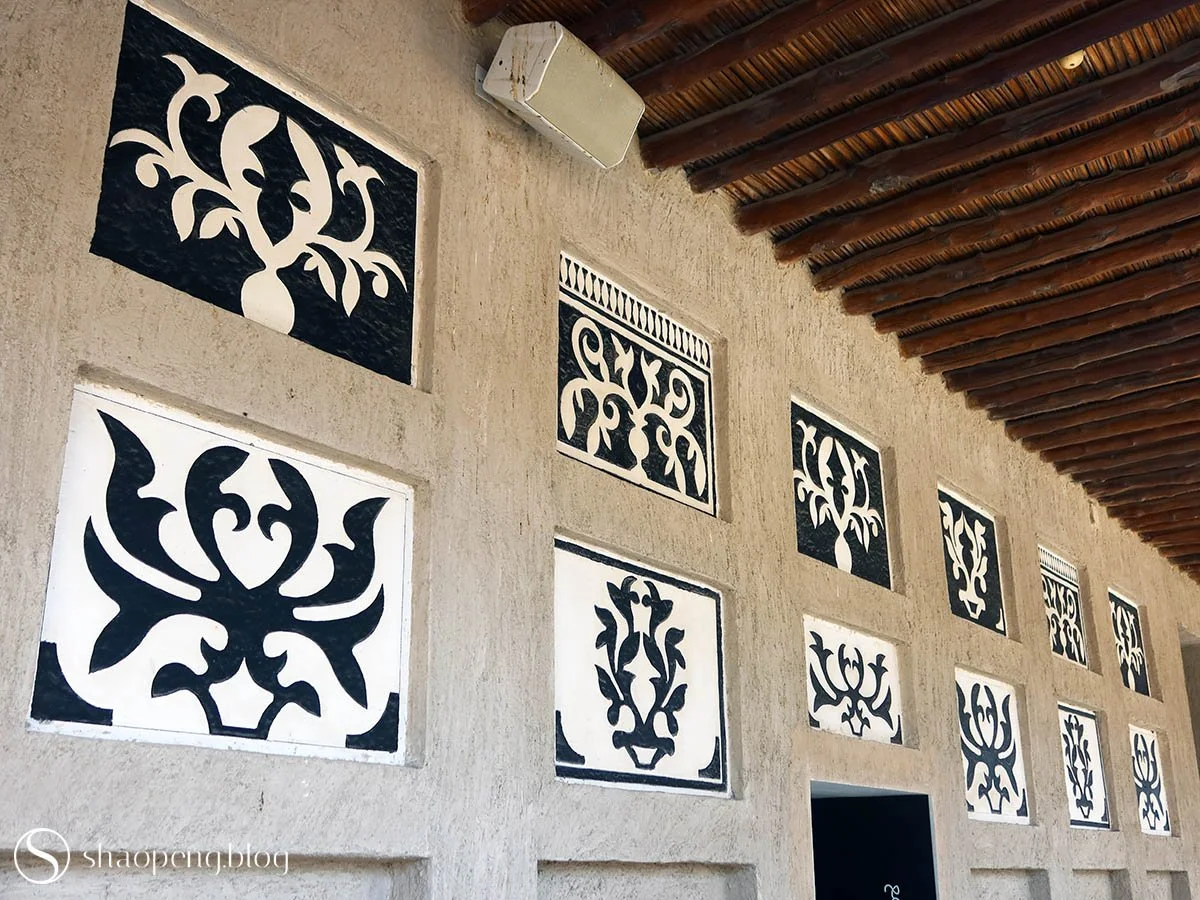
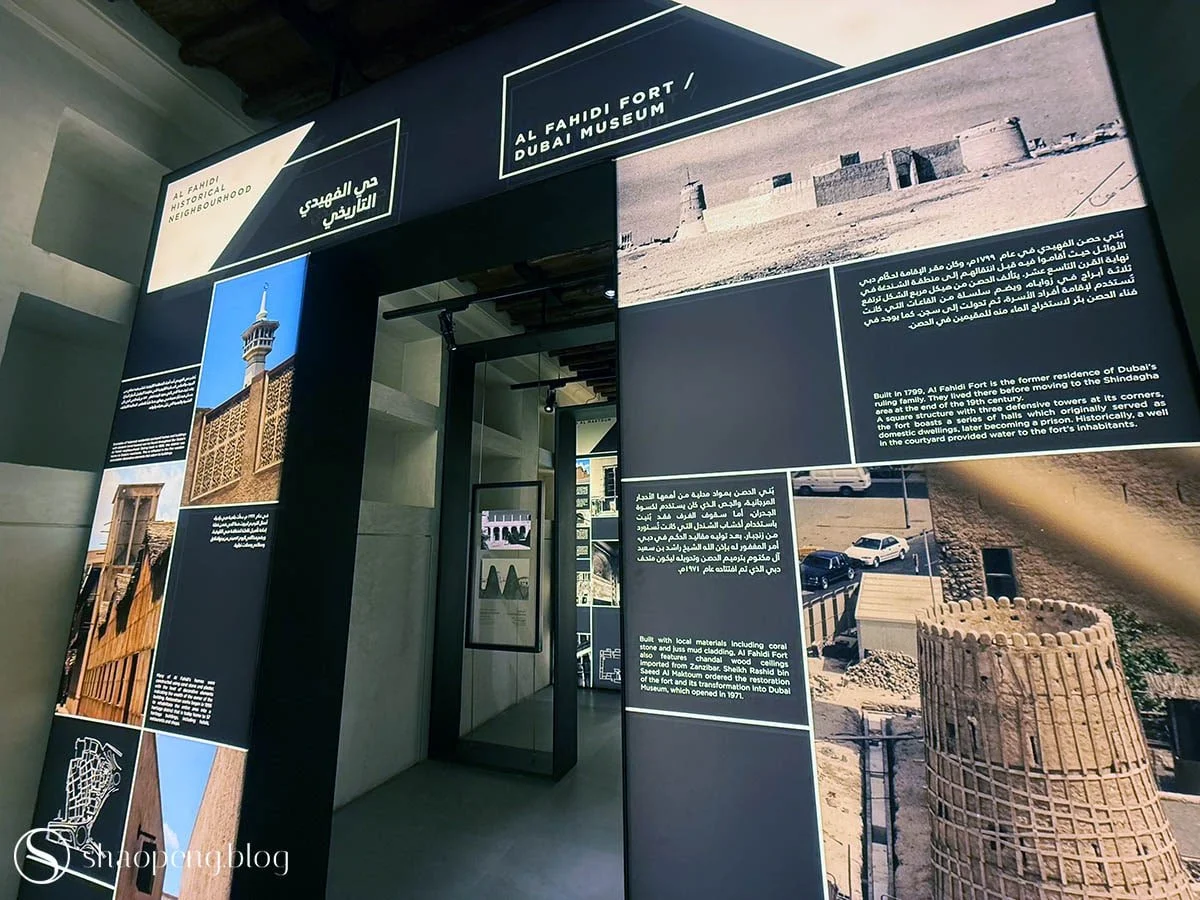
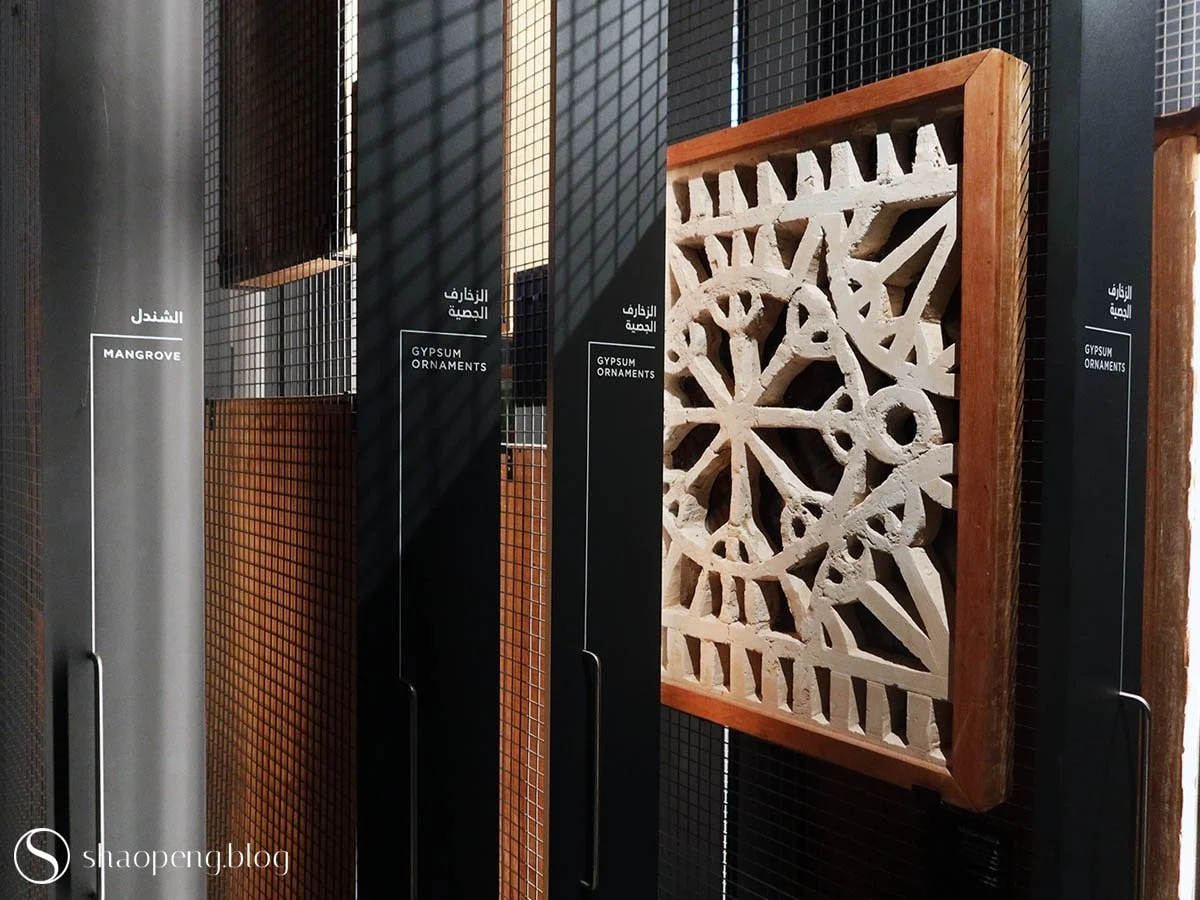
By the time you reach here, you have already travelled far. You have moved through centuries of craft and trade, sat with pearl divers and perfumers, and traced the routes of ancient merchants alongside the rituals of Emirati hospitality. Now, at last, comes the question that has been hovering over the entire visit: how did all of this — this creek-side village of fishermen and pearl divers — become that out there, the glittering, vertiginous city rising beyond the edges of the old district?
The Emerging City pavilion is where Dubai's transformation is laid bare.
Before rapid expansion, people lived in arish homes — simple, ingenious dwellings woven from palm fronds, still in use as late as the 1960s. From the 1920s onward, coral-stone buildings began to appear, constructed from fesht, blocks of coral, and farush, shell stone, both sourced locally from the gulf. These were buildings made from the sea itself, shaped by hands that wasted nothing.
Then came Sheikh Rashid bin Saeed Al Maktoum, and with him, a pace of change that remains difficult to fully absorb. Within six years of his rule, Dubai had a modern port, a bridge, electricity, and running water. The village was becoming a city, and it was doing so at a speed that left little time to look back.
The very pavilion that houses this history is itself part of the story. The Juma and Obaid Bin Thani House exemplifies the architectural language discussed within it. Its design is a lesson in adaptation: screens that cast deep shade, coral-stone walls that act as natural insulators against the punishing heat, high windows positioned to draw in the breeze. The building does not simply contain the exhibition; it is an exhibition in its own right.
From here, the story expands to Dubai’s historic neighbourhoods — Al Shindagha, Al Fahidi, Bur Dubai, and Deira — and the determined efforts to preserve them. That commitment began as early as the 1970s, on the orders of Sheikh Rashid himself, a detail that adds an unexpected facet to the narrative of a ruler so often associated with replacing the old with the new.
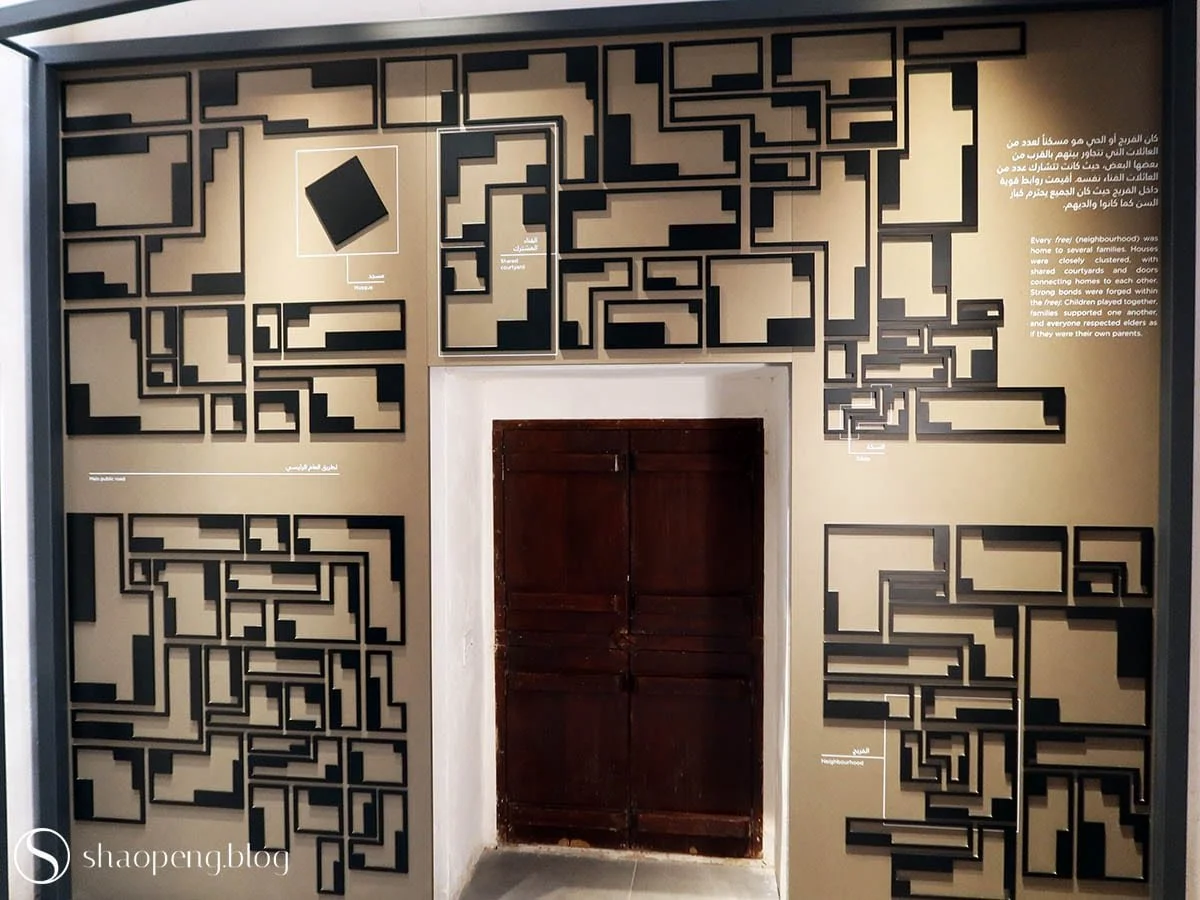
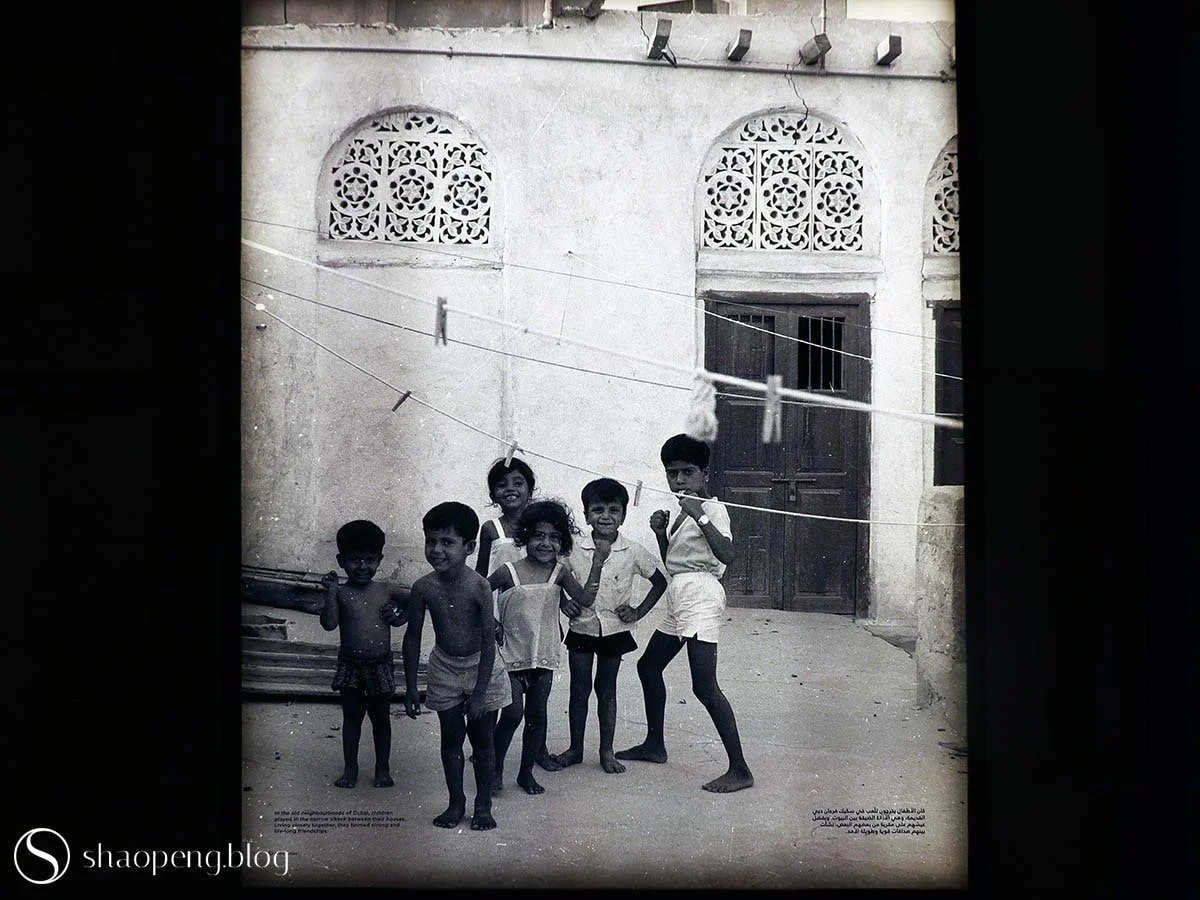
There is also a beautiful section on the traditional freej, the neighbourhood unit of clustered houses arranged around shared courtyards and connected by narrow alleyways called sikka, where the design of space naturally fostered bonds between families.
My favourite part is a time-lapse video, and I would urge you not to walk past it. Over the course of what feels like a single minute, it traces a full 24 hours inside a traditional house, showing how the building breathes, shifts, and responds to the sun and wind as the hours pass. You watch its inhabitants move through different spaces throughout the day, following shade, catching the breeze, living in harmony with their environment. It is a humbling reminder that architecture shapes the way we live with nature.
Wanderer’s tip — Head over to Al Fahidi Historic Neighbourhood nearby and let yourself wander for a while. After everything you have seen and learned, you may find yourself looking at its wind towers and coral-stone walls with entirely new eyes.
Reference:
Al Maktoum, M. B. R. (2025). My Story: 50 Memories From 50 Years of Service. Explorer Publishing.