
Tucked away in Gion is Kahitsukan, a museum currently exhibiting works by 20th-century artists, none of them trained calligraphers, who brought their own sensibilities to the art of ink and brush.
Sense of Wander: ★★★★☆
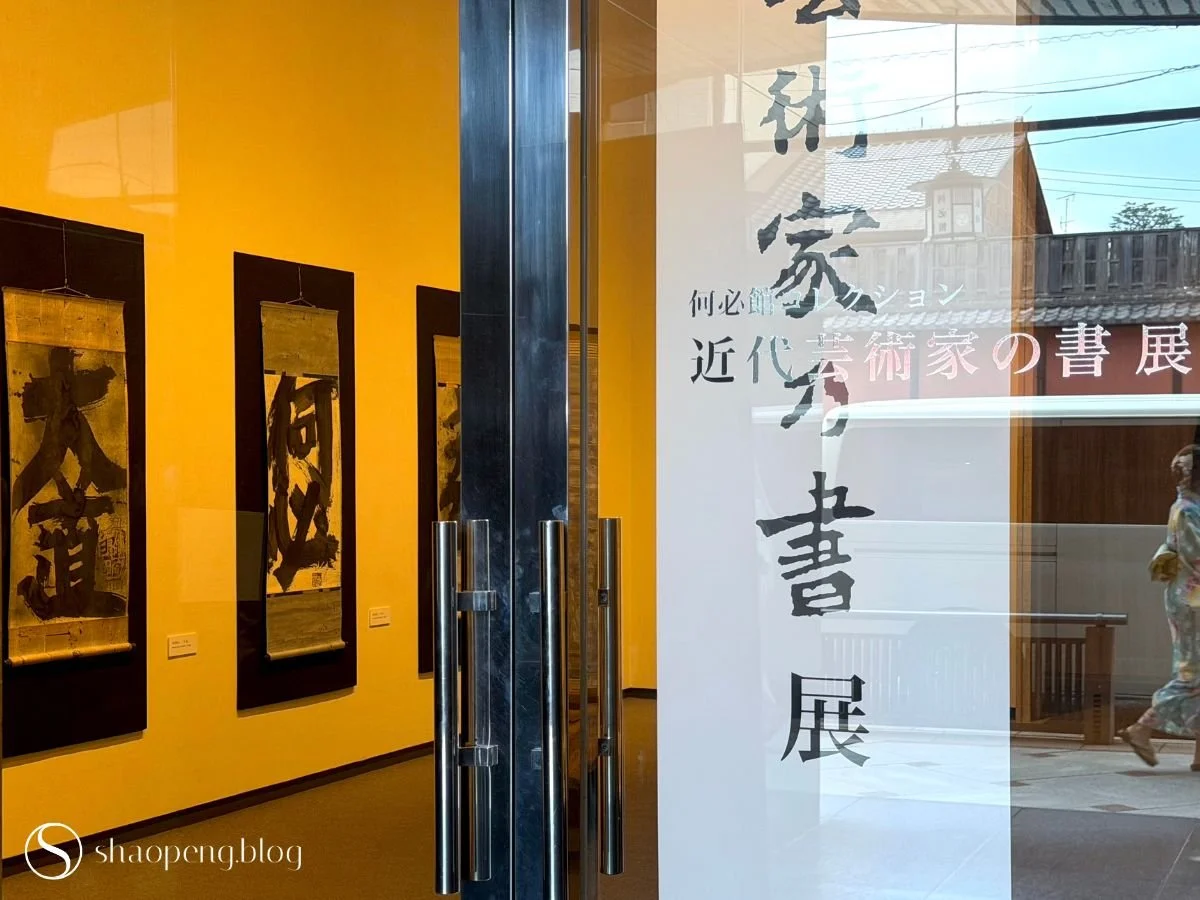
Entrance to the Calligraphy by Modern Artists exhibition at Kahitsukan, Kyoto Museum of Contemporary Art.
KYOTO, Japan — I must have walked past this museum a dozen times without knowing it was there. Gion is always busy performing its role as Kyoto’s historic geisha quarter, with something to catch your eye at every turn. But tucked among the latticed machiyas is a private museum I somehow never noticed: Kahitsukan, Kyoto Museum of Contemporary Art, founded in 1981 by its director, Kajikawa Yoshitomo.
The moment you step through the door, the noise of Gion dissolves behind you.
I’ve come here for an exhibition called Calligraphy by Modern Artists. What draws me here isn’t the promise of more shoka (professional calligraphers), but the opposite: around 60 works from Kahitsukan’s own collection, created by some of 20th-century Japan’s most celebrated painters, sculptors, ceramicists, and literary figures. I’m curious to see what happens to a brushstroke when the hand holding it has spent its life somewhere else.
The first works I encounter are by Suda Kokuta (須田 剋太, 1906–1990). Suda was self-taught, and it shows in the best possible way. His lines are aggressive, almost rebellious, full of a raw spontaneity that seems to dare you to look away first. But you can’t. There is a weathered, provocative quality to the strokes that keeps pulling you back in.
Suda spoke of wanting to paint and write “like a child,” without the refinement that trained artists inevitably bring to the canvas. Standing in front of his work, I believe him. I’ve spent years practicing Chinese calligraphy, chasing the discipline of shufa, and Suda’s brush feels like watching someone break every rule I’ve been taught to revere.
Among the pieces on display are the bold character hana (華), meaning “flower”; Kahitsu (何必), the very name of the museum, meaning “why must it necessarily be so?”, superimposed on a white ground; and Daido (大道), “the way,” written across a gold-powdered surface.
Suda’s devotion to Zen runs through all of it. Where classical calligraphers often look to poetry, he reaches for a single philosophical phrase, or a fragment of Zen text that recalls a katsu: the sudden shout used by Zen masters to cut through overthinking and drop a student into the present moment.
He mixes his ink with mineral pigments, crushed stone, even oil, building up a tactile quality to his words that you can almost feel from across the room. Then there’s the mounting: gold and silver leaf adorning the surface of the hanging scroll, a treatment traditionally associated with silk brocade borders and formal paintings. Suda takes that decorative language and adapts it into something modern. It makes me think of the essence of The Art of Zhuangbiao, where mounting is never simply a frame — it becomes an extension of the work itself because the format, material, and colour surrounding a piece would influence how it will be read.
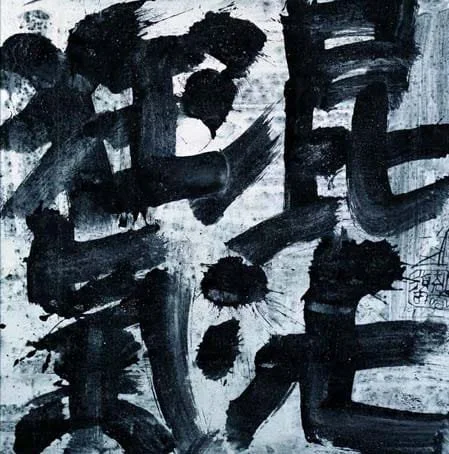
Kon-Ton-Kyo-Ki by Suda Kokuta. Image courtesy of Kahitsukan.
Kajikawa, the museum’s director, has said that Suda used to visit often and would speak of how the combination of contradictions, the flaws sitting alongside the strengths, is what makes something feel truly real. Standing there, that feels exactly right. The imperfection is what makes the work breathe.
Suda’s calligraphy also nods, whether he meant to or not, toward a debate much older than himself. In 1882, the painter Koyama Shotaro published an essay titled Sho wa bijutsu narazu, “Calligraphy Is Not Art,” arguing that calligraphy (shodo) was little more than functional writing: a set of language symbols lacking the emotional universality of Western-style fine art (bijutsu). The essay sparked a debate that rippled through Japanese art institutions for decades.
Suda’s work feels like a decisive answer to Koyama: proof that a brushstroke can be as radically abstract and expressive as any modern painting. Suda himself once described the line in brush writing as a universal expressive language, no less than abstract painting.
Nearby, Mu-jin-zo by Munakata Shiko (棟方 志功, 1903–1975) awaits viewers’ attention. Munakata made his name as a woodblock printmaker, shaped early on by the Mingei folk-crafts movement of Soetsu Yanagi and Kanjiro Kawai. You can feel that rustic, primal energy in everything he touched. In 1956, he won the Grand Prix at the Venice Biennale, an honour that earned him the nickname “Munakata of the World.”
Mu-jin-zo means “the infinite storehouse,” a Buddhist term referring to the boundless workings of the Buddha. In a sense, this was the wellspring Munakata drew from throughout his life. He didn’t believe artists “created” their work. He believed it was born, and that he was merely the midwife who helped bring it into this world. You can see that conviction in his vigorous and aboslute brushstroke. Even if you can’t read a single character, something in it reaches you.
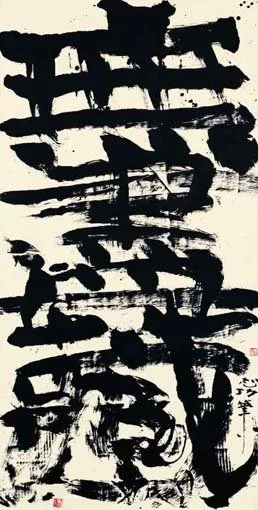
Mu-jin-zo by Shiko Munakata. Image courtesy of Kahitsukan.
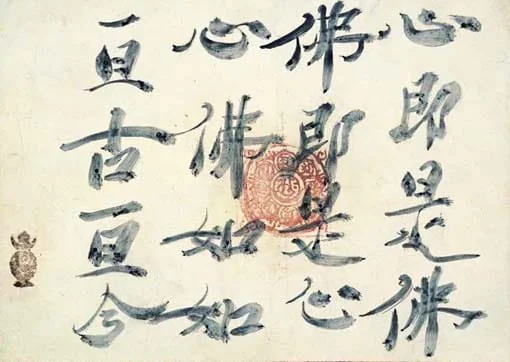
Shin-Soku-Ze-Butsu by Murakami Kagaku. Image courtesy of Kahitsukan.
Buddhist phrases surface here and there throughout the exhibition. Murakami Kagaku’s (村上 華岳, 1888–1939) piece carries a line of enlightenment that can be translated as:
“The mind is the Buddha, the Buddha is the mind; such are mind and Buddha, through all time past and present.”
The characters sit over a red seal stamped with a Sanskrit letter at the centre, and the whole composition has an otherworldly stillness to it, as if it is speaking from somewhere just outside of time.
Murakami is one of modern Japanese painting’s great enigmas. His devotion to Buddhist subjects, including his well-known Prince Gautama Meditating Beneath the Tree, is in fact what first drew Kahitsukan’s director toward fine art. For Murakami, painting wasn’t a display of technique. It was something akin to a meditative practice. That same stillness appears in his calligraphy with an ethereal clarity that seems to carry something restless underneath.
Not every hand on display worked only in ink. Kitaoji Rosanjin (北大路 魯山人, 1883–1959), a man who moved between calligraphy, seal carving, painting, ceramics, lacquerware, and cuisine, took Su Dong-Po’s 11th-century masterpiece Sekibeki no Fu (Ode on the Red Cliff) and carved it directly onto a screen. Standing in front of it, I can’t help wondering whether Rosanjin saw something of his own future in Su’s tragic, magnificent life.
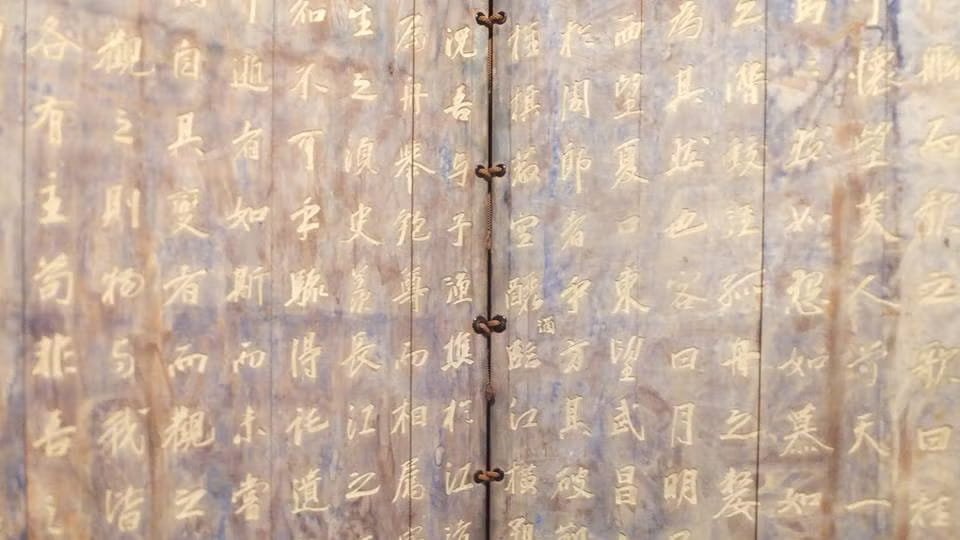
Detail of Sekibeki no Fu by Kitaoji Rosanjin. Image courtesy of Kahitsukan.
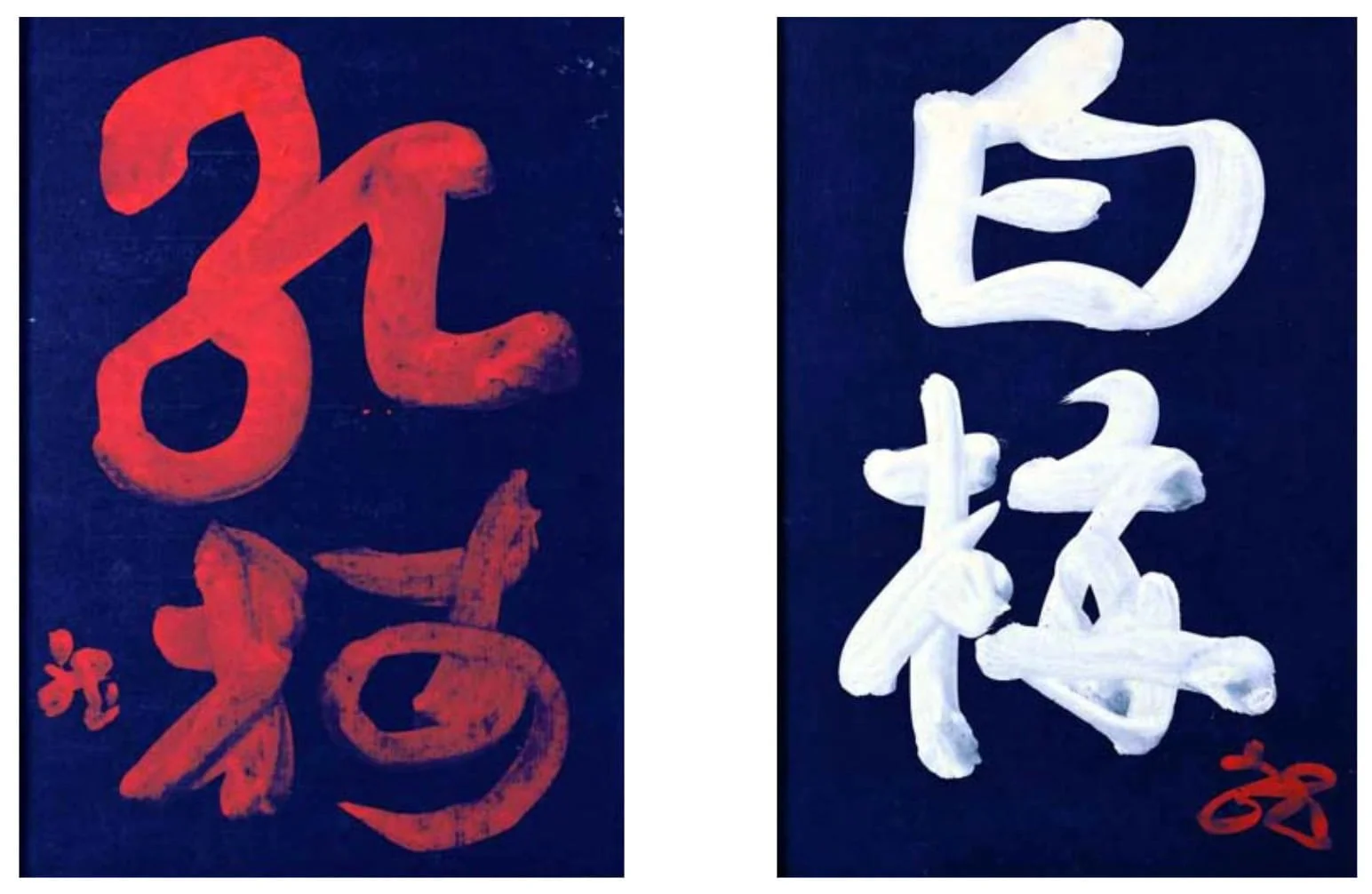
Ko-bai (left) and Haku-bai (right) by Umehara Ryuzaburo. Image courtesy of Kahitsukan.
Then there is Umehara Ryuzaburo (梅原 龍三郎, 1888–1986), whose Ko-Bai (Red Plum) and Haku-Bai (White Plum) use cinnabar and white ink on dark blue konshi paper. The two works look so much like paintings that calling them calligraphy almost feels like an understatement. Umehara went to France at twenty to study under Renoir, and you can feel his Western training meeting his Japanese sensibility.
A small room on the museum’s fifth floor is dedicated to the works of Kumagai Morikazu (熊谷 守一, 1880–1977), one of Japan’s most beloved modern painters. His subjects here, Jinsei kontei nashi (Life Has No Roots or Stems), Yume (Dream), and Honrai muichimotsu (Originally, Not a Single Thing Exists), all circle the same idea: the transience of this worldly life. His brushwork has a free-flowing, unbothered spirit that seems to embody the Buddhist notion of muichimotsu, the idea of possessing nothing.
Kumagai spent his last thirty years barely leaving his small house and garden in Ikebukuro, watching insects and plants for hours at a time. Standing in front of his calligraphy, I find myself wondering whether that distance from the world, and that intentional narrowing of focus, are what allowed his brush to move so freely.
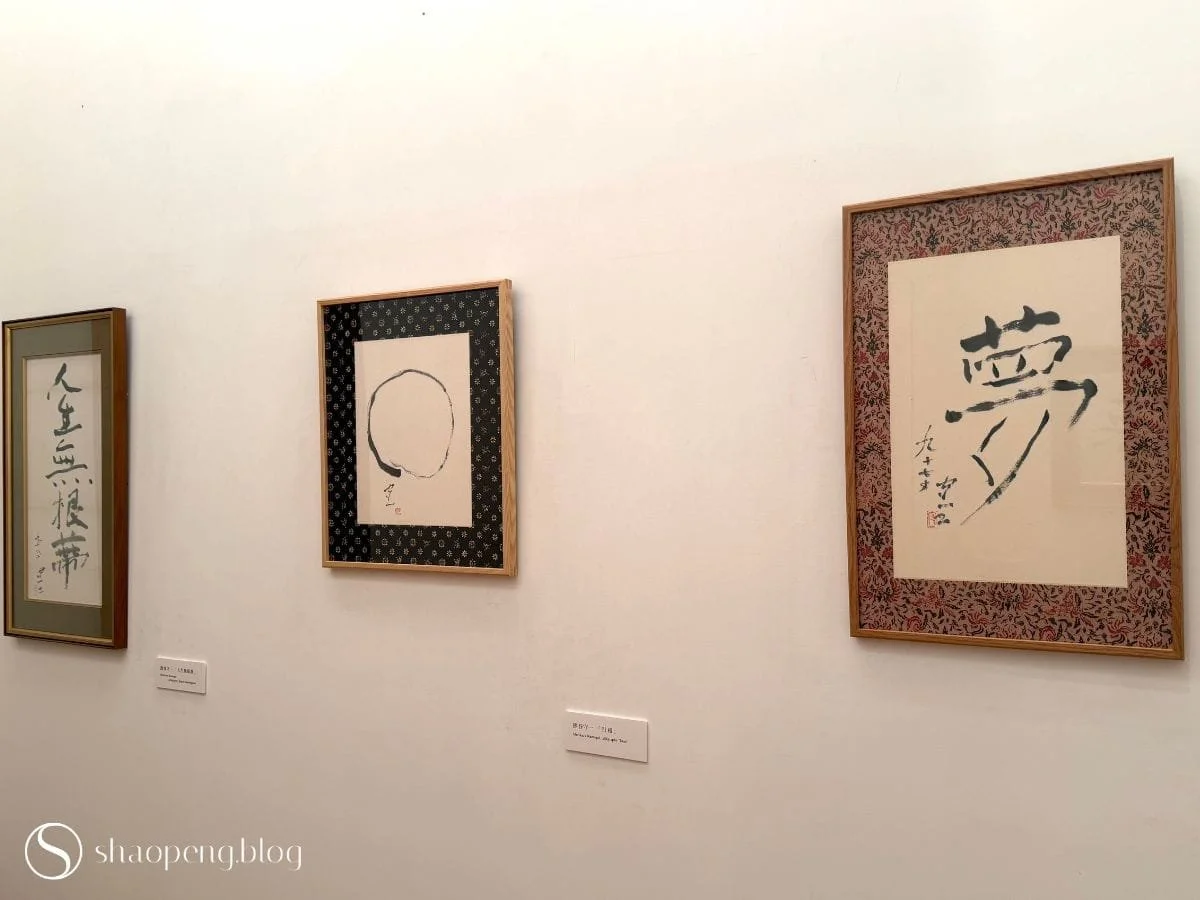
A selection of calligraphy works by Kumagai Morikazu.
Calligraphy by Modern Artists is only a sliver of what Kahitsukan holds, but it shows how artists who never called themselves calligraphers kept returning to ink and brush because some things can only be expressed through written words.
As a Chinese and Arabic calligraphy practitioner, I’m caught between reverence for the classical tradition and the pull to let the brush say something that is mine. Wandering through these works by some of Japan’s great modern artists seems to pull me further toward the latter.
I end up in the museum’s Sun Garden, looking up through the open roof at a circular Kyoto sky. I’m still pondering the question, but there is no hurry to answer it.
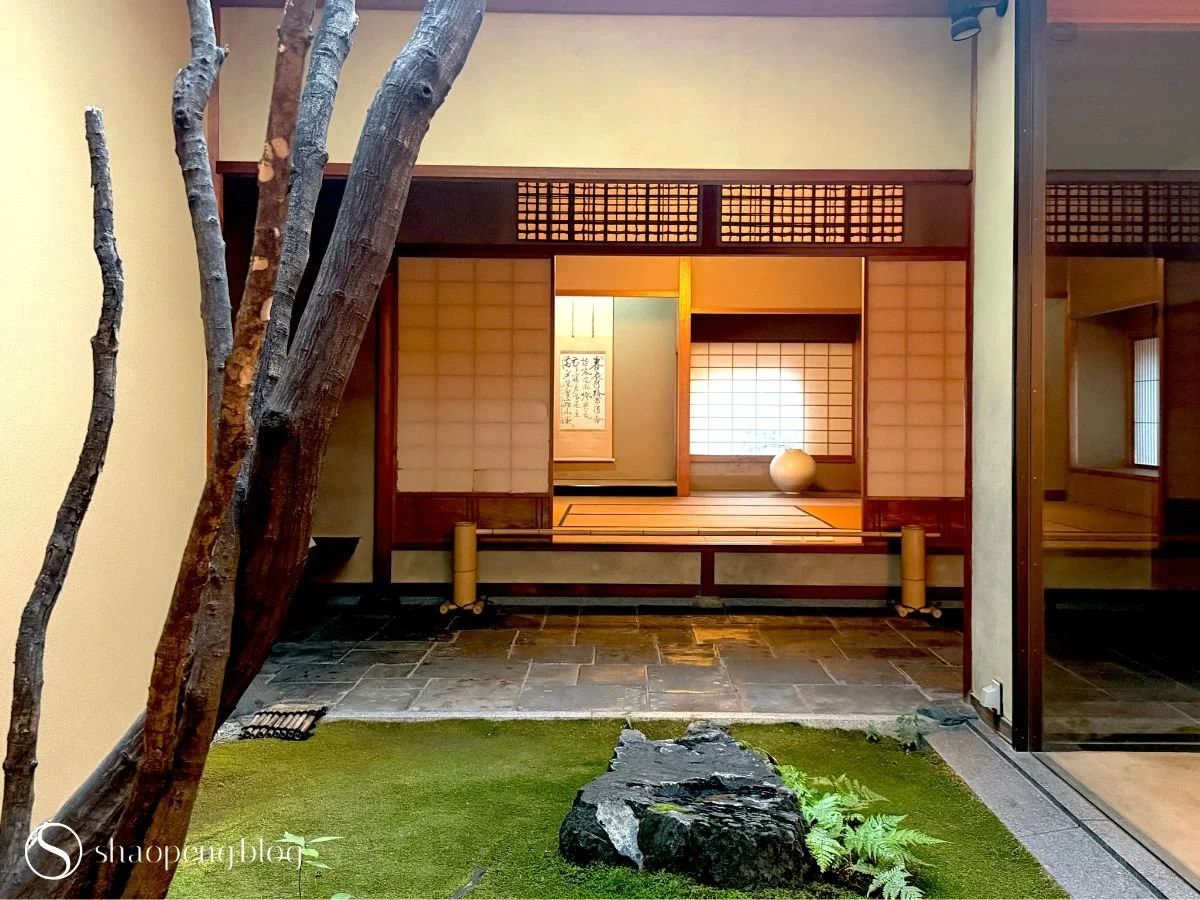
A calligraphy work by Murakami Kagaku hangs inside the traditional tea room on the museum’s upper floor.
Reference:
Kajikawa, Y. (2005). Kindai geijutsuka no sho [Calligraphy by modern artists]. Kahitsukan, Kyoto Museum of Contemporary Art.
Calligraphy by Modern Artists runs through September 27, 2026.