
Witnesses to a Nation: Inside “Observers of Change” at Etihad Museum
To wander is to notice what others have grown too familiar to see. In Observers of Change, it is the artists and creatives who are perhaps the most discerning observers of all, chronicling a nation’s transformation through their art and eye.
Sense of Wander: ★★★★☆
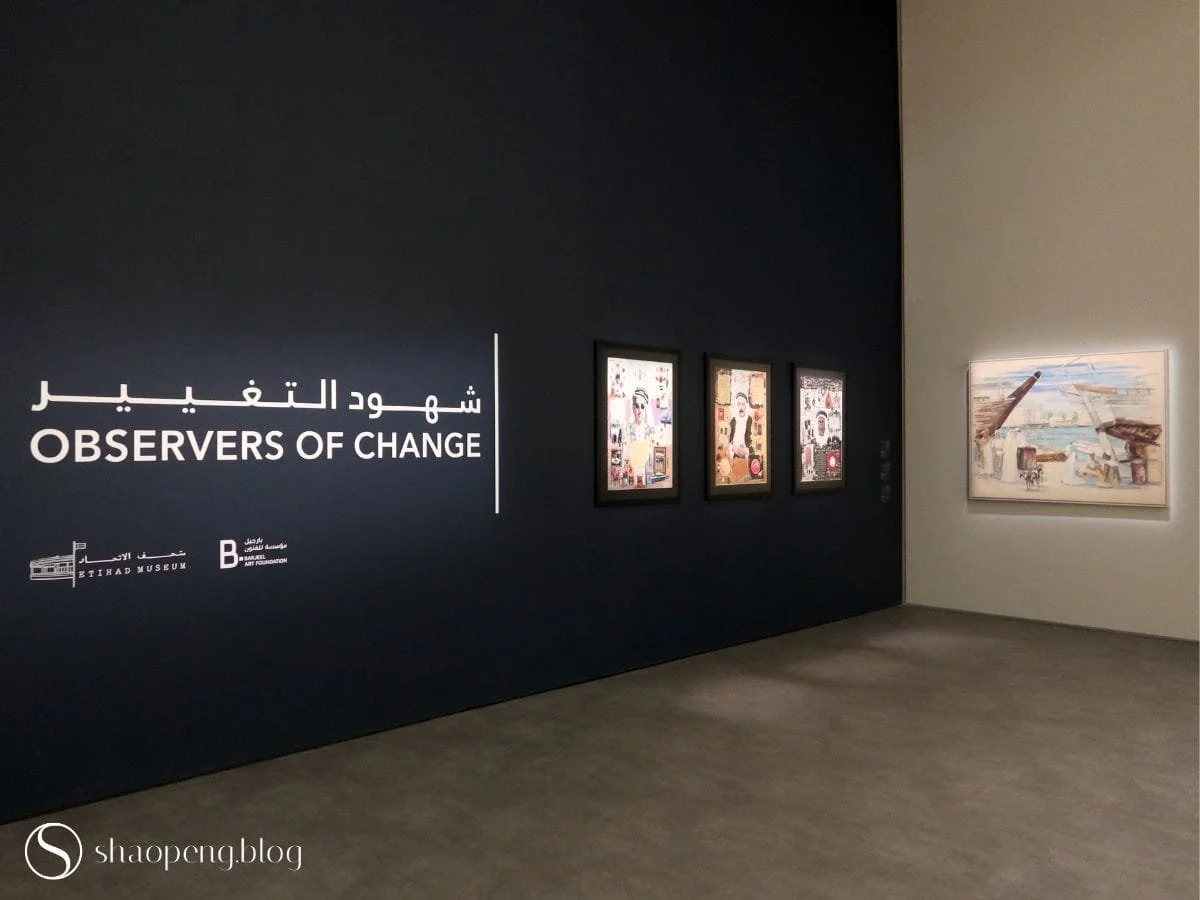
Entrance to Observers of Change at Etihad Museum, Dubai.
DUBAI, UAE — Standing amid the city’s glass-and-steel skyline, it’s almost impossible to imagine that, fifty years ago, this was a fishing village where men hauled nets along the creek and pearl divers set out to the distant horizon of the Gulf. Today, little of Dubai’s past remains visible, which is perhaps why I find myself grateful to step into the Etihad Museum and let an exhibition do the remembering for me.
Observers of Change: Art from the UAE, curated by Rémi Homs and drawn from the collection of the Barjeel Art Foundation, brings together over sixty works by Emirati and regional artists — paintings, sculptures, photographs, and mixed media — to trace the story of a nation in the making. Some of these works have never been shown publicly before. Wandering through them feels like leafing through the UAE’s private journals.
Before entering, you come face to face with three portraits: the Kuwaiti poet Fahad Al-Askar, and the Bahraini musicians Mohammed bin Faris and Dhahi Bin Walid. They carry an uncanny presence, as though they are watching you. Only up close do you realise they are not painted but composed through intricate collage, by Emirati artist Ali Al Abdan — himself a poet and researcher in musical anthropology. The three men stare at you like the “observers” of the exhibition’s title.
Just around the corner, Hala Al-Kouatli’s painting of old Dubai pulls you sideways in time. The Syrian artist, who moved here in the late 1970s, spent years documenting scenes most people passed without noticing. The Creek in Old Dubai (1979) feels unexpectedly familiar: the dhows, the low buildings, and the crowd gathering along the creek. Bur Dubai, only a short ride from here, still carries traces of that world.

From left to right: Fahad Al-Askar, Mohammed bin Faris, and Dhahi Bin Walid, all created in 2007 by Ali Al Abdan.
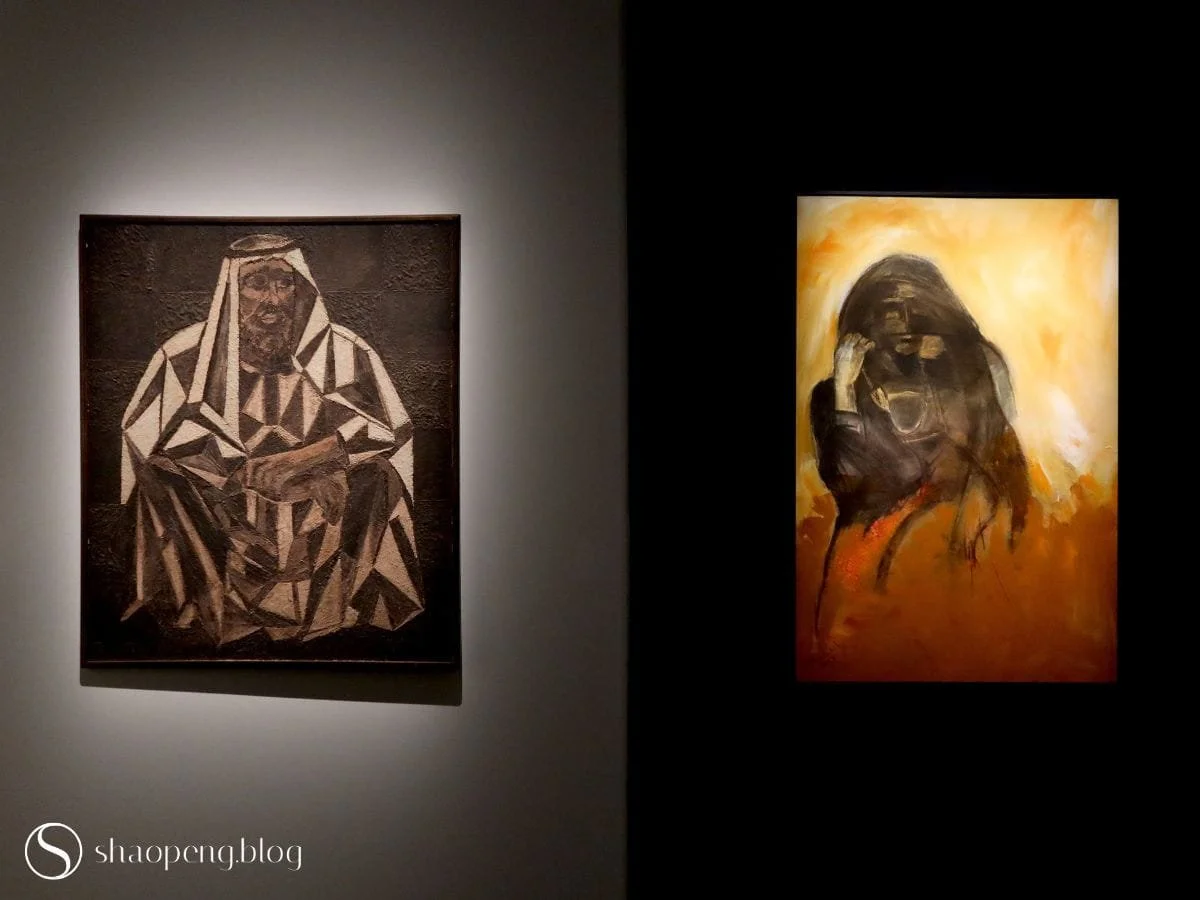
Serenity (1976) by Munira Nuseibeh on the left, and Untitled (2008) by Fatma Lootah on the right.
The exhibition opens with Munira Nuseibeh’s intimate portrait of Sheikh Zayed bin Sultan Al Nahyan, the UAE’s founder. Yet, it is not what one might anticipate from an official portrait. Titled Serenity (1976), he is shown squatting in traditional attire, in a way that is more like a friendly neighbour than a head of state. Look closer, however, and the surface begins to contradict the title: the lines are bold, raw, and decisive.
Nuseibeh, a Palestinian artist who spent fifteen years in Abu Dhabi, paints using a medium she invented — a mixture of sand, tar, and oil. The alchemy feels meaningful here: a nation built on sand and oil, rendered through sand and oil.
Next to it hangs Fatma Lootah’s depiction of a woman whose identity dissolves beneath her burqa. She moves nonchalantly through a wash of orange-gold abstraction that can only be the desert at the hour before dark, a familiar sight in this part of the world.
The work appears to enter into conversation with the painting next to it, by Syria-born Ismail Al Rifai. A lone tree — a less common subject in this region’s visual language — flickers like candlelight in a melancholic, monochrome field. This recalls the faces that recur in Al Rifai’s practice: watchful presences that stand as silent witnesses to the region’s ongoing turmoil.

Untitled (1986) by Mohammed Ibrahim Al Qassab on the left, and Untitled (Beit Al Shamsi Tree Series) (2022) by Ismail Al Rifai on the right.
If the exhibition’s first gallery captures the look of the land and its people, the second turns inward. Titled “In Search for Abstraction,” it traces the emergence of experimental art in the UAE, much of it nurtured by the Emirates Fine Arts Society, founded in Sharjah in 1980 by artists including Abdul Qader Al Rais and the brothers Hassan and Hussain Sharif.
Abstraction, where colours, forms, and textures evoke emotion rather than depict it, can feel alienating to many viewers. Yet, it enables artists a way to respond to the rapid transformations of the world around them.
The section opens with Najat Makki’s round-shaped canvas. The first formally trained Emirati woman artist, she layers colours in a way that recalls a landscape receiving nightfall. It’s worth noting a gallery dedicated to her work is currently on view in the House of Arts’s inaugural exhibition, Interwoven. Hussain Sharif’s work, nearby, is the opposite: horizontal brushstrokes that capture the visual residue of a city in perpetual motion.
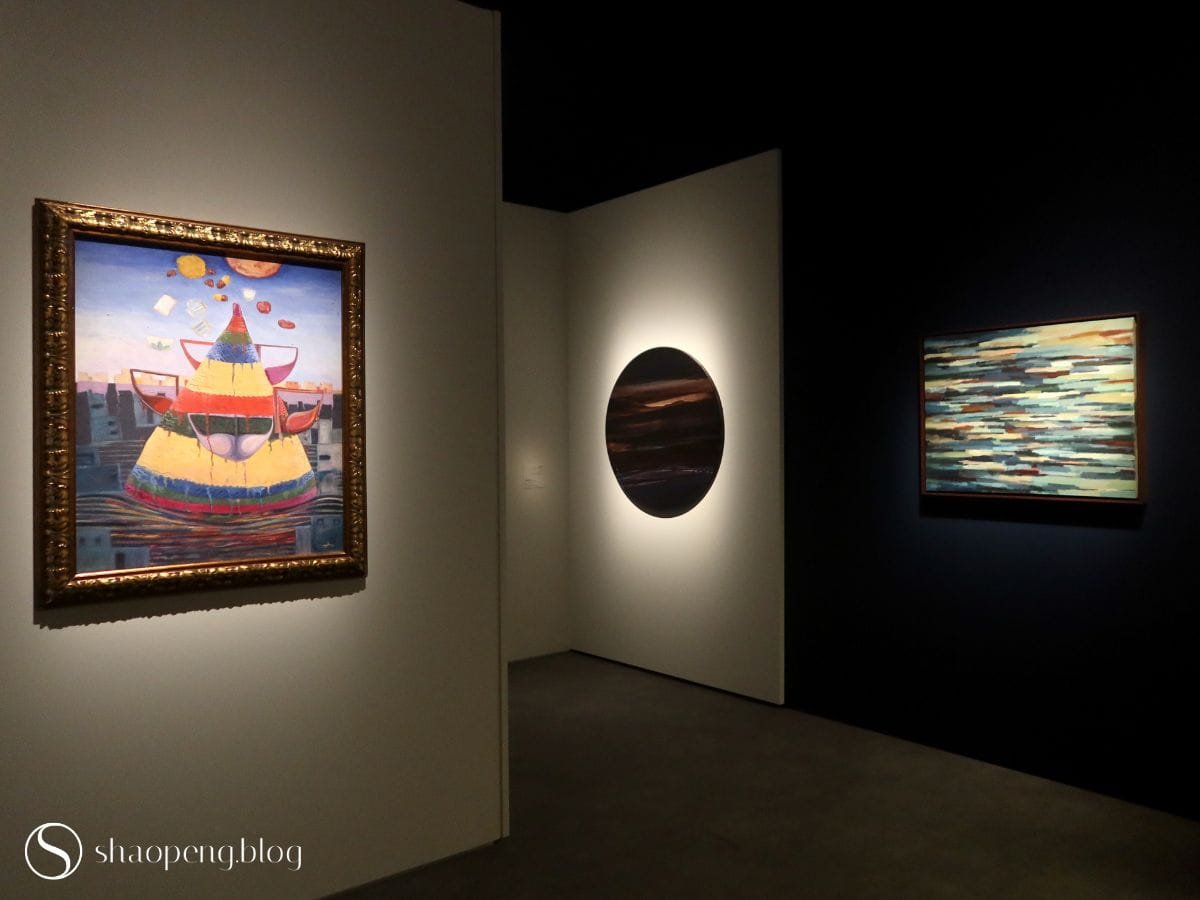
Inside the gallery dedicated to “In Search of Abstraction.”
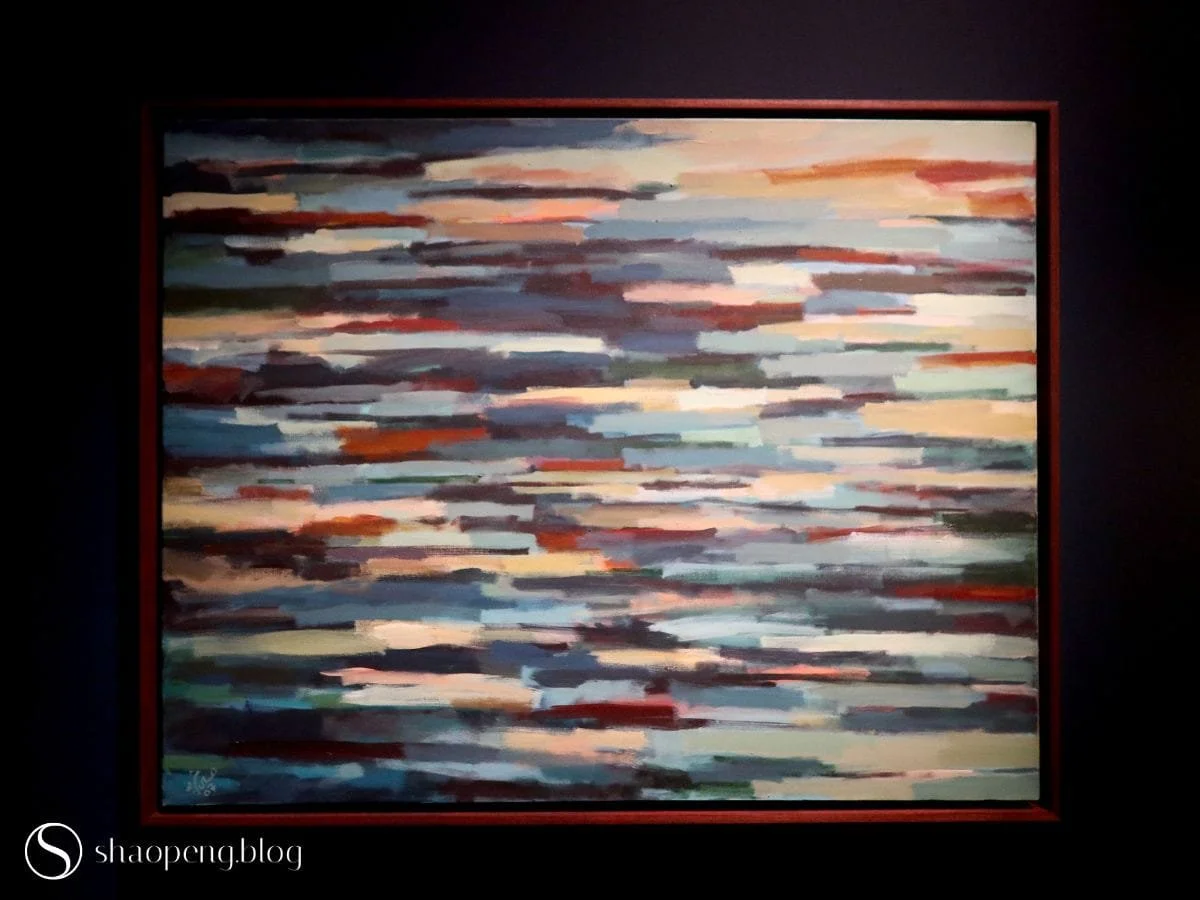
Untitled (2007) by Hussain Sharif
My favourite section is, of course, dedicated to calligraphy.
In the second half of the 20th century, a movement known as Hurufiyya swept across the Arab art world. Artists began weaving Islamic calligraphic traditions into modern art, reflecting on beauty, spirituality, and abstraction.
Mohammed Mandi’s four gouaches, inspired by Quranic verses, carry a devotional intensity. He is the first Emirati professional calligrapher whose work can be found in everyone’s wallet. Nearby, Diaa Allam’s The Daring Adventure (2021) interlaces letters into forms that feel almost architectural.
Most arresting is Abdul Qader Al Rais’ Calligraphy (2009), where individual Arabic letters — waw (و), haa (هـ) — fall through a blazing red field like embers from a fire. Here, the letters cease to be language; they become shape, movement, and colour.
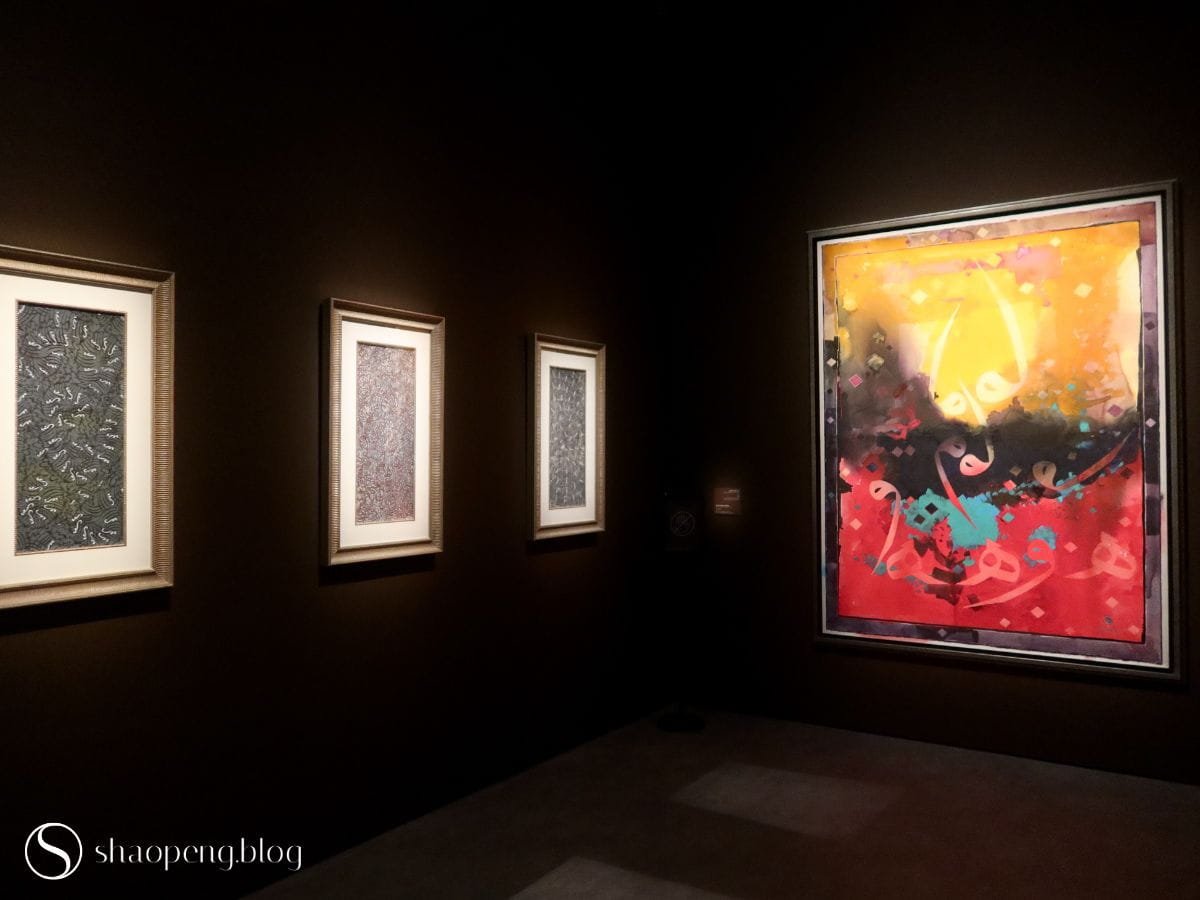
Mohammed Mandi’s calligraphy series engage in dialogue with Abdul Qader Al Rais’ Calligraphy (2009) on the right.

A close-up detail from Mohammed Mandi’s Basmala (2008).
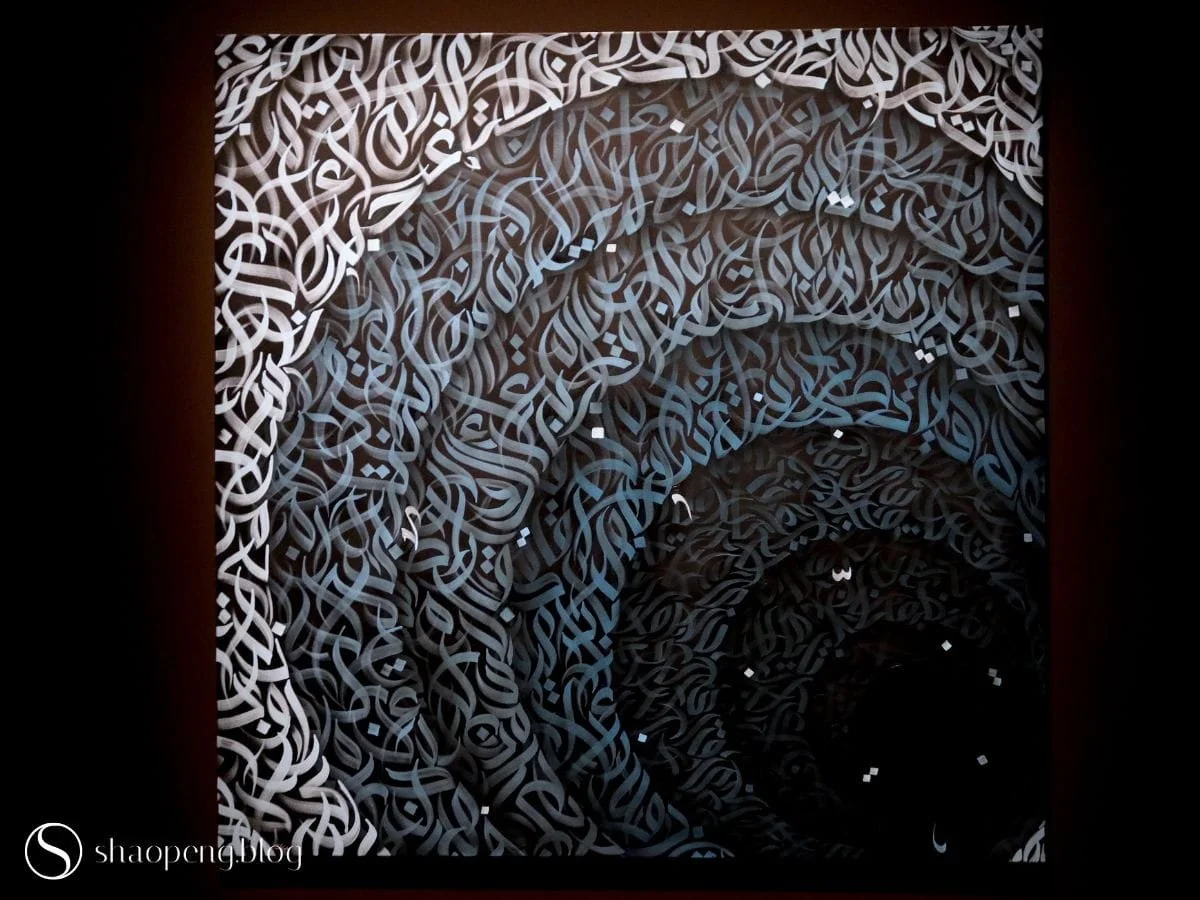
The Daring Adventure (2021) by Diaa Allam
The exhibition borrows its name from a photographic series by Lateefa Bint Maktoum, shown at the UAE Pavilion at the 2011 Venice Biennale. Her Observer of Change I is presented here: upturned palm trees, captured through the gaze of someone trying to make sense of what their homeland is becoming.
Nearby, her Oral Tradition (2014) depicts a man and a woman in traditional attire, seated on the ground with their backs to the viewer, watching the Dubai skyline from its outskirts. Between them rests a glittering dallah — a traditional Arab coffee pot — as if urging us to hold onto ritual and tradition, even as everything around us is replaced.
This stands in stark contrast to a poignant work by Mohammed Kazem in the next gallery, where construction workers are dwarfed by the skyline they helped building. Its title, Even the Shade Does Not Belong to Them (2018), says everything.
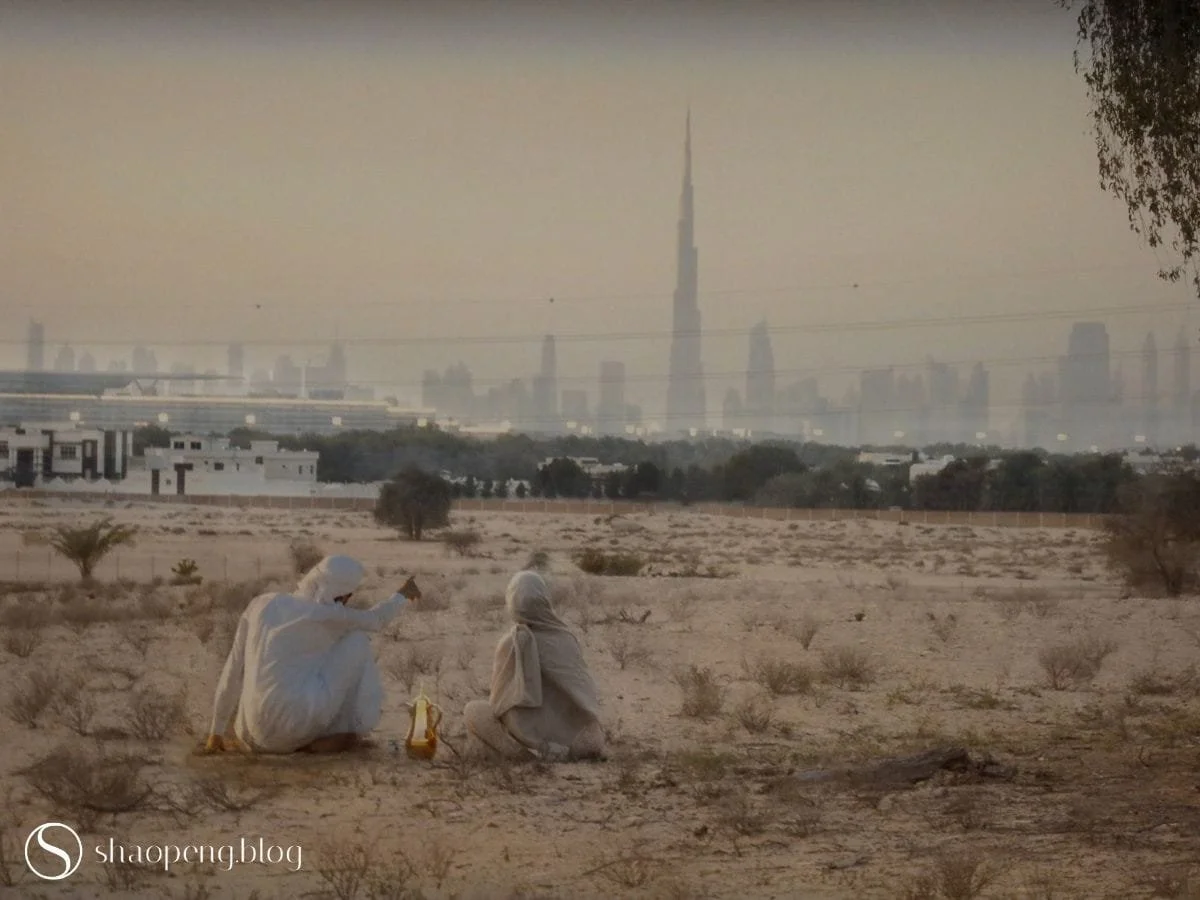
Oral Tradition (2014) Lateefa Bint Maktoum
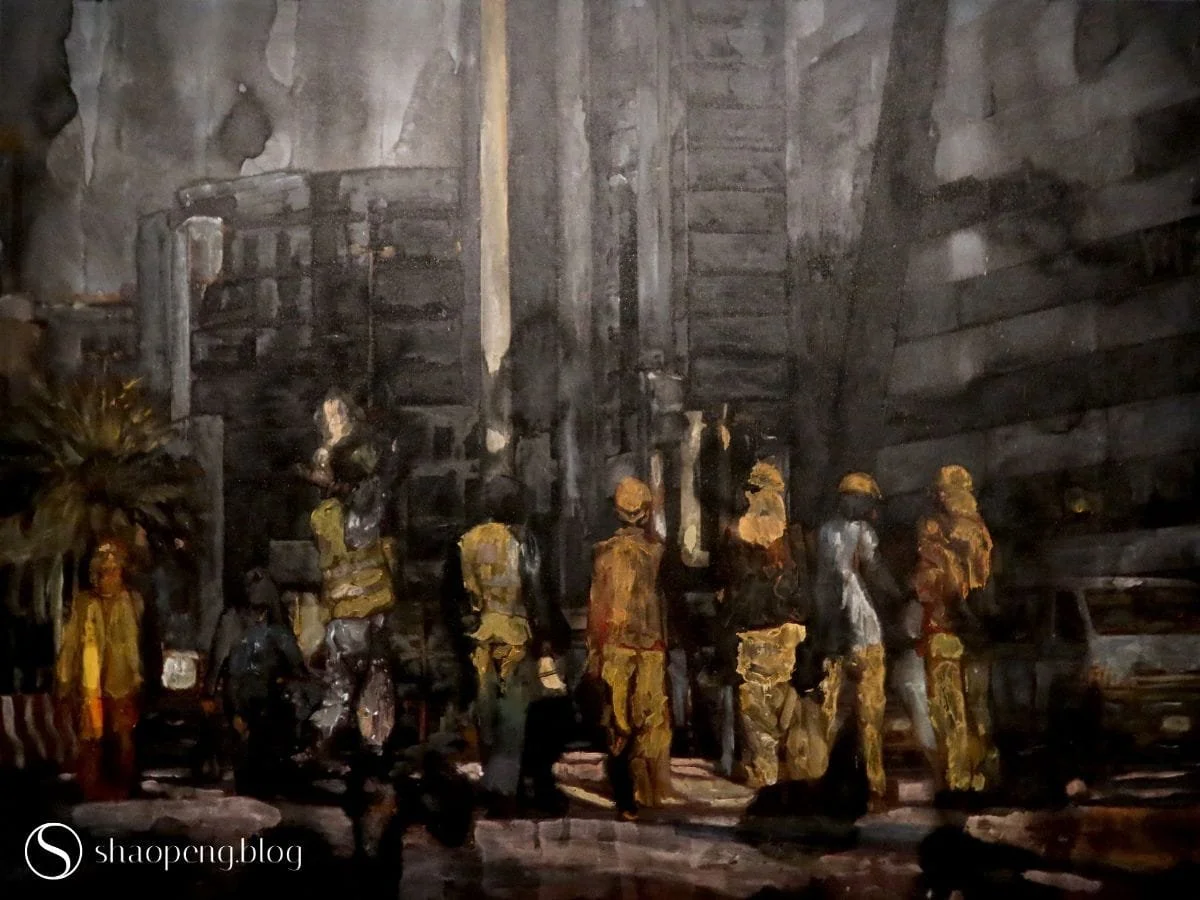
Even the Shade Does Not Belong to Them (2018) by Mohammed Kazem
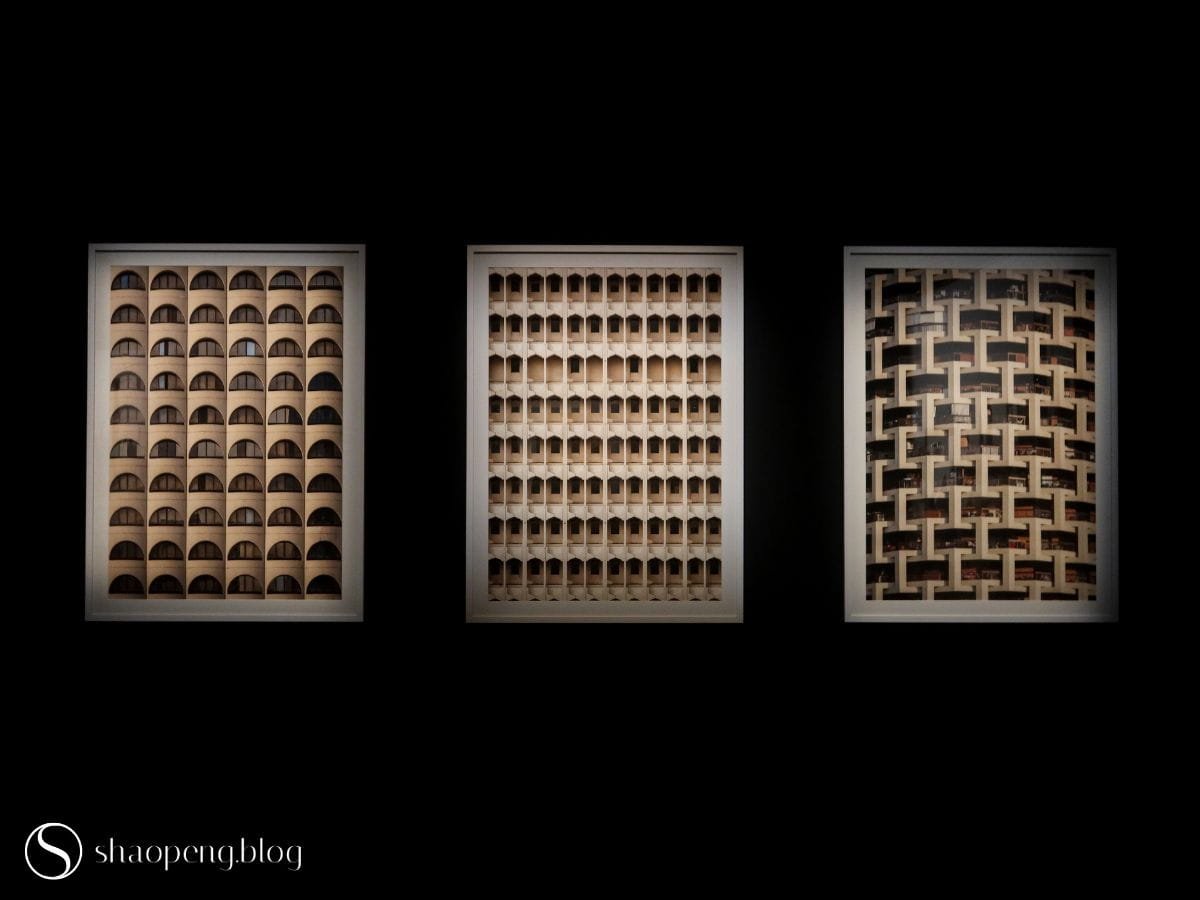
From left to right: Airport Road 3 (2019), Dubai World Trade Center (2018), and Al Ibrahim (2018), all by Hussain AlMoosawi.
There’s a series of photographs by Hussain AlMoosawi that rewards a second look. He has turned his lens on structures you think you already know — the Dubai World Trade Centre among them — but cropped in so closely that what remains is pure geometry: grids, curves, repetitions that seem to multiply and expand the longer you stare. Here, your familiar building dissolves into abstraction.
In the final rooms, Ebtisam Abdulaziz’s Autobiography (2012) assembles found objects from her travels into a sculpture rendered entirely in white. Their original identities have dissolved, leaving only their shape and form.
Nearby, eL Seed’s Traces (2019) comes as a surprise. What appears to be the artist’s signature “calligraffiti” turns out to be embroidery, made in collaboration with weavers from the Ain Al Helweh refugee camp in Lebanon.
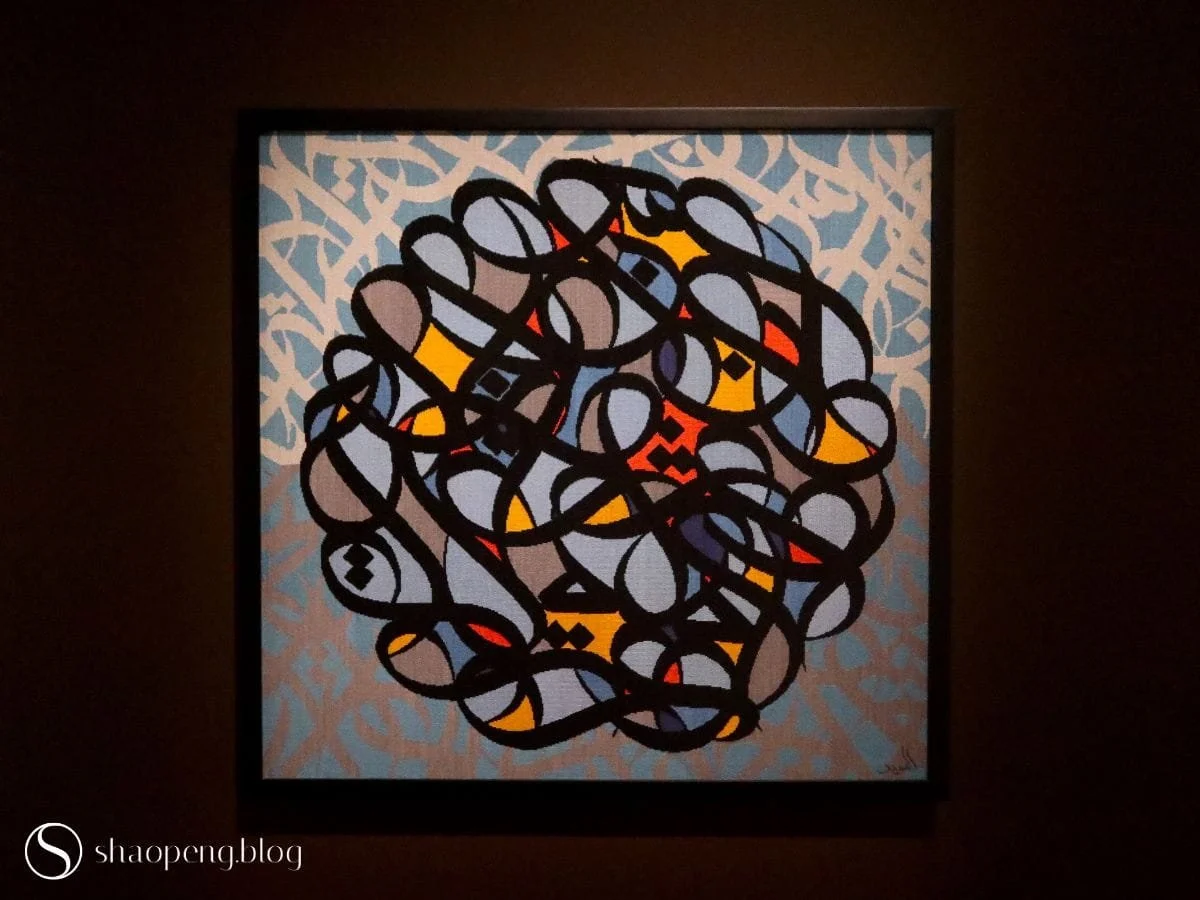
Traces (2019) by eL Seed

órdoba and Granada (2022) by Driss Ouadahi
The exhibition concludes with a section dedicated to emerging talents in the UAE. Before I know it, Driss Ouadahi’s Córdoba and Granada (2022) stops me entirely. It depicts Bank Street in Sharjah, a historic commercial thoroughfare that I’ve walked past many times. Its 1970s modernist buildings are overlaid with ghostly glass towers, where geometry and perspective dissolves into one another.
I leave the exhibition behind me, unable to put into words what I have learned, yet certain that something in the way I see has shifted. Now, I make my way toward the museum’s permanent collection, carrying with me a more assured understanding of the UAE’s evolving artistic landscape, and a few more ways of seeing than when I first arrived.
Observers of Change: Art from the UAE is on view at the Etihad Museum, Dubai, through June 30, 2026.